Botanical field guide
Adansonia digitata
African baobab
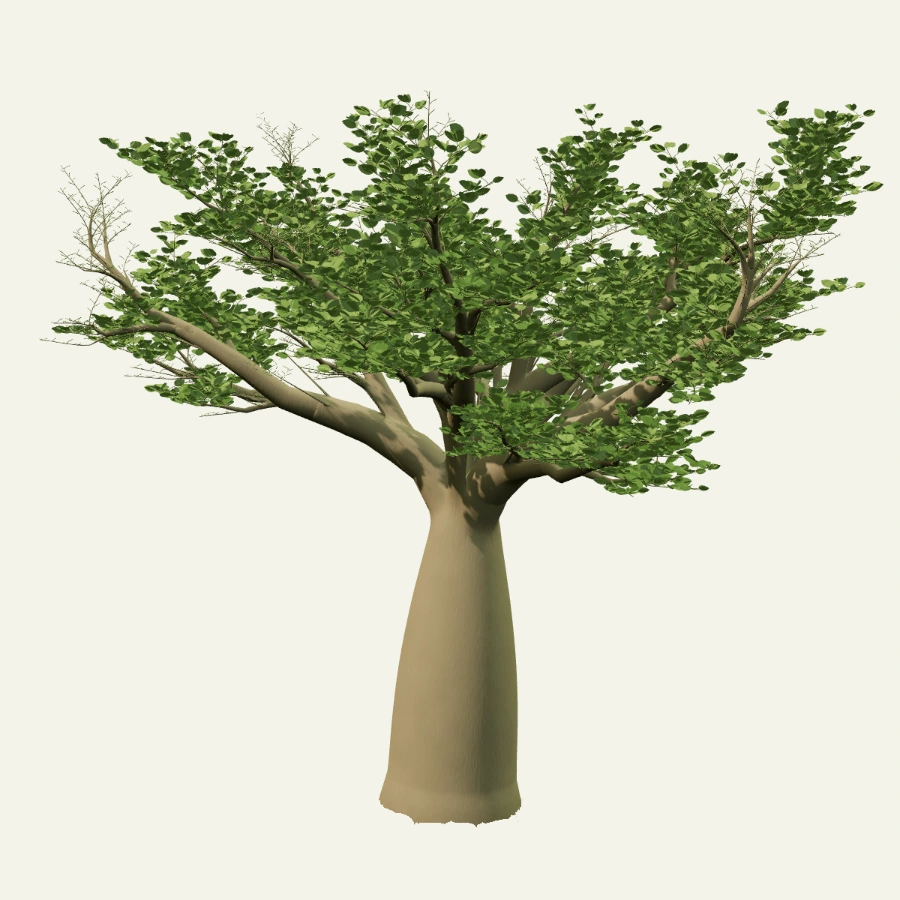
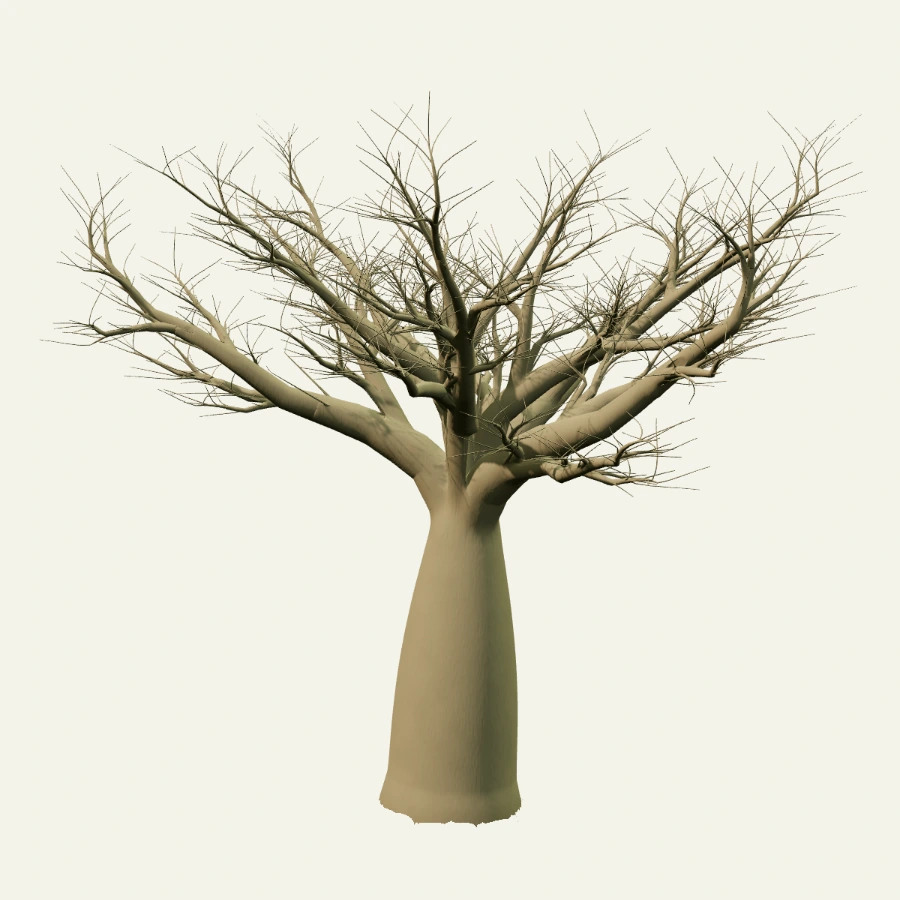
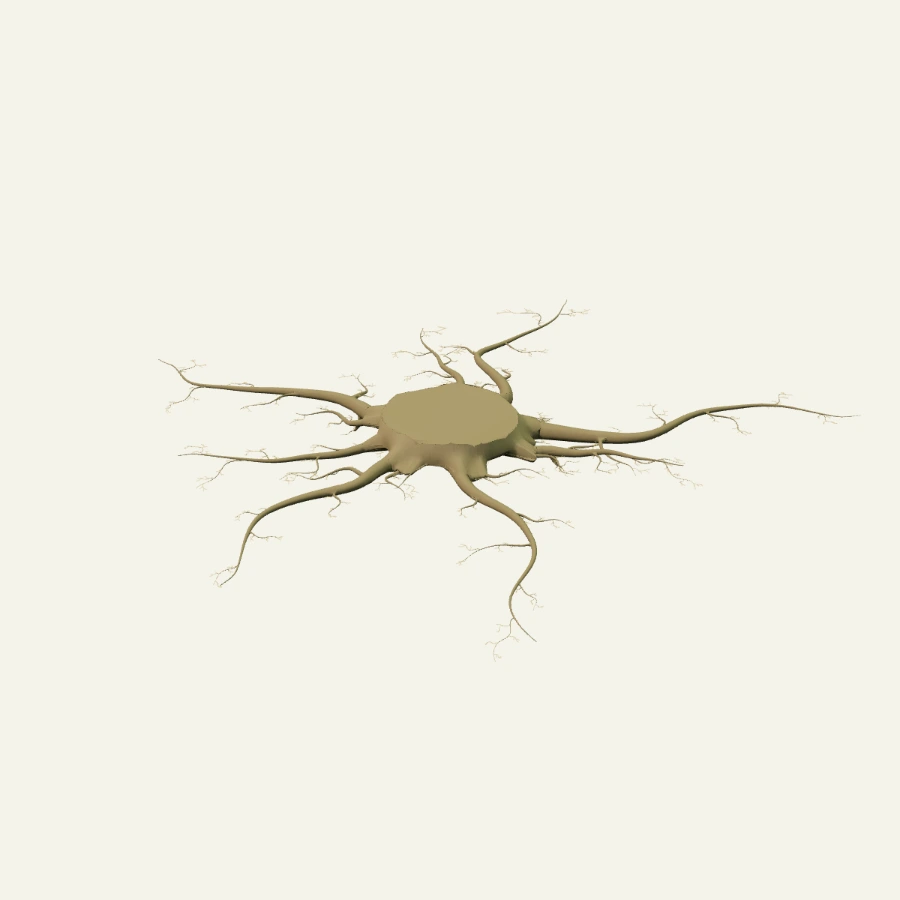
Tree / Malvaceae
The plant, in detail
Seasonally dry tropical woodland and savanna in frost-free regions.
- Reference height
- 10–25 m
- Foliage habit
- Deciduous
- USDA zones
- 10–12
- Light
- Not documented
The model illustrates a single-stem African baobab. Stem water storage, dry-season phenology, multiple stems and radiocarbon age reconstruction are not simulated.
Crown
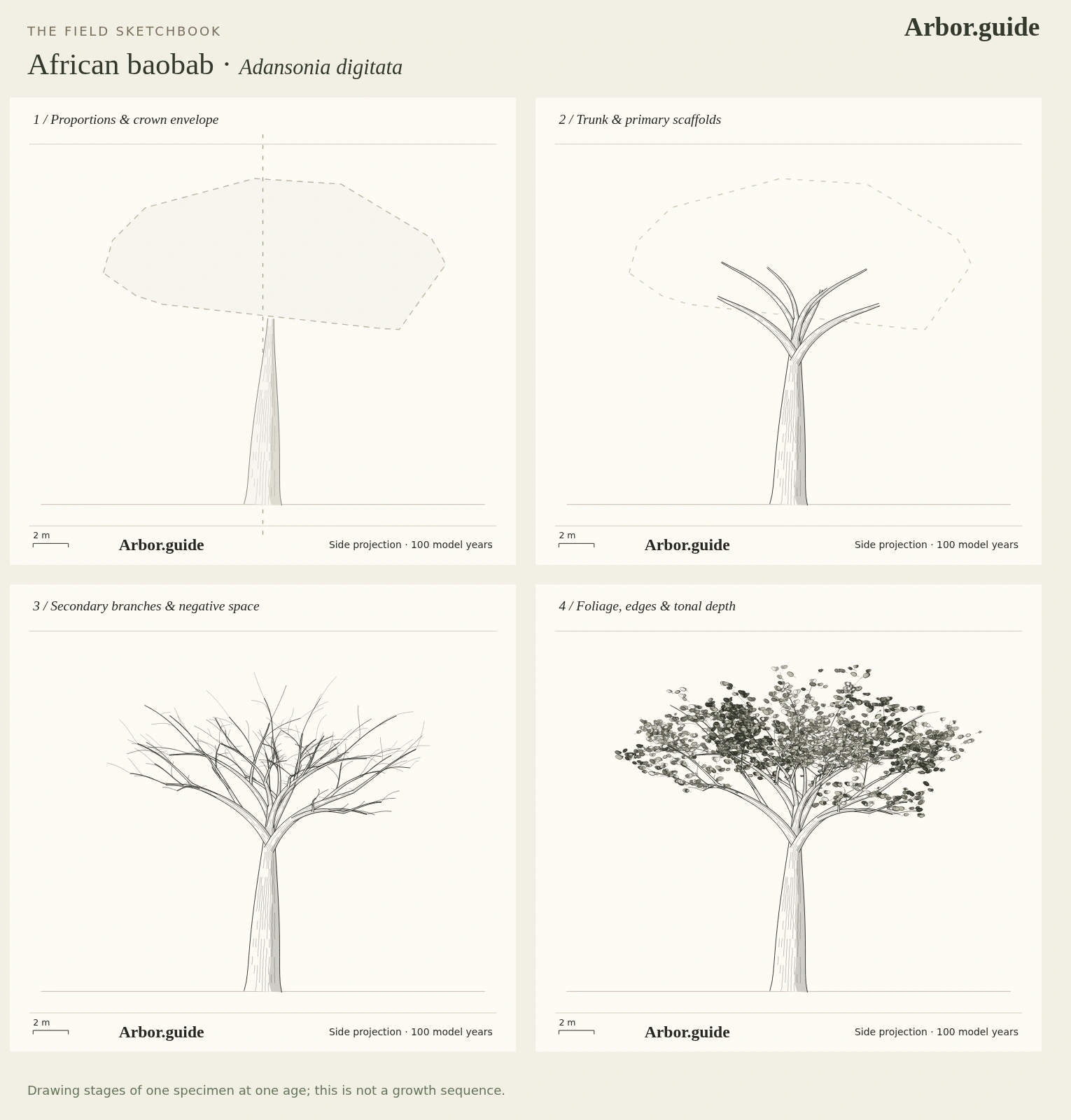
A massive swollen trunk supports relatively few thick, tapering limbs and a spreading crown. Young saplings are much more slender than old trees. The swollen mature form must not be applied to a seedling unchanged.
Branching
Stout framework branches divide into smaller crown shoots. Large old trees may have complex or multiple stems; the single trunk illustration is only one representative arrangement, not a universal anatomical plan.
Bark
Gray to brown, comparatively smooth bark can become folded and scarred. The trunk contains water-rich tissues, but it is not a hollow barrel that fills automatically with free water.
Roots
Seedlings develop a substantial primary root; established trees have extensive lateral roots. Field measurements show soil and rainfall strongly influence fine-root distribution. Many absorbing roots can occupy upper soil layers even beneath a massive trunk.
The shape of growth
Stylized real-world examples
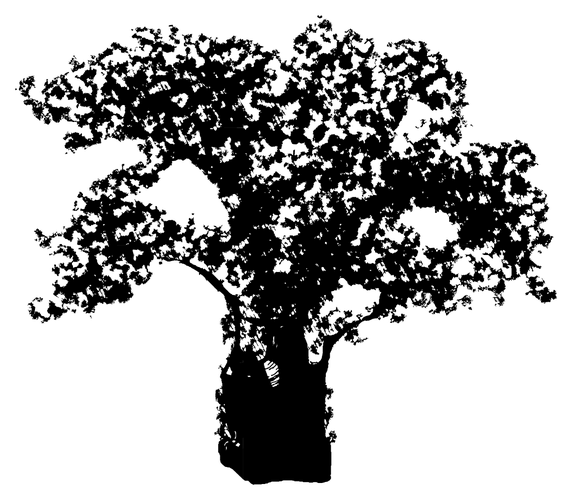
Silhouettes are sized independently.
02 / Seasons
Through the seasons
Four portraits. One plant.
Read the crown, foliage and reproductive structures together. The four views compare seasonal appearances; the reference notes explain what is actually documented.
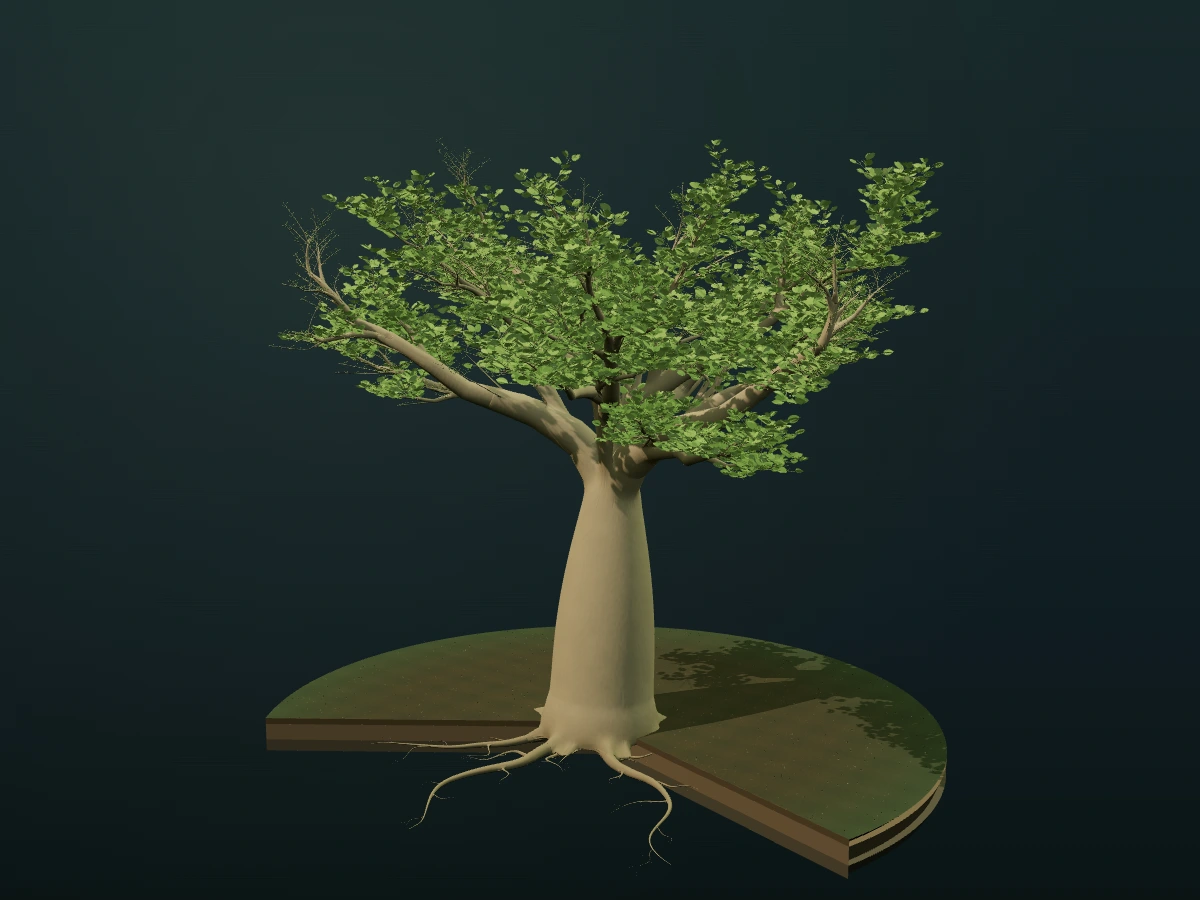
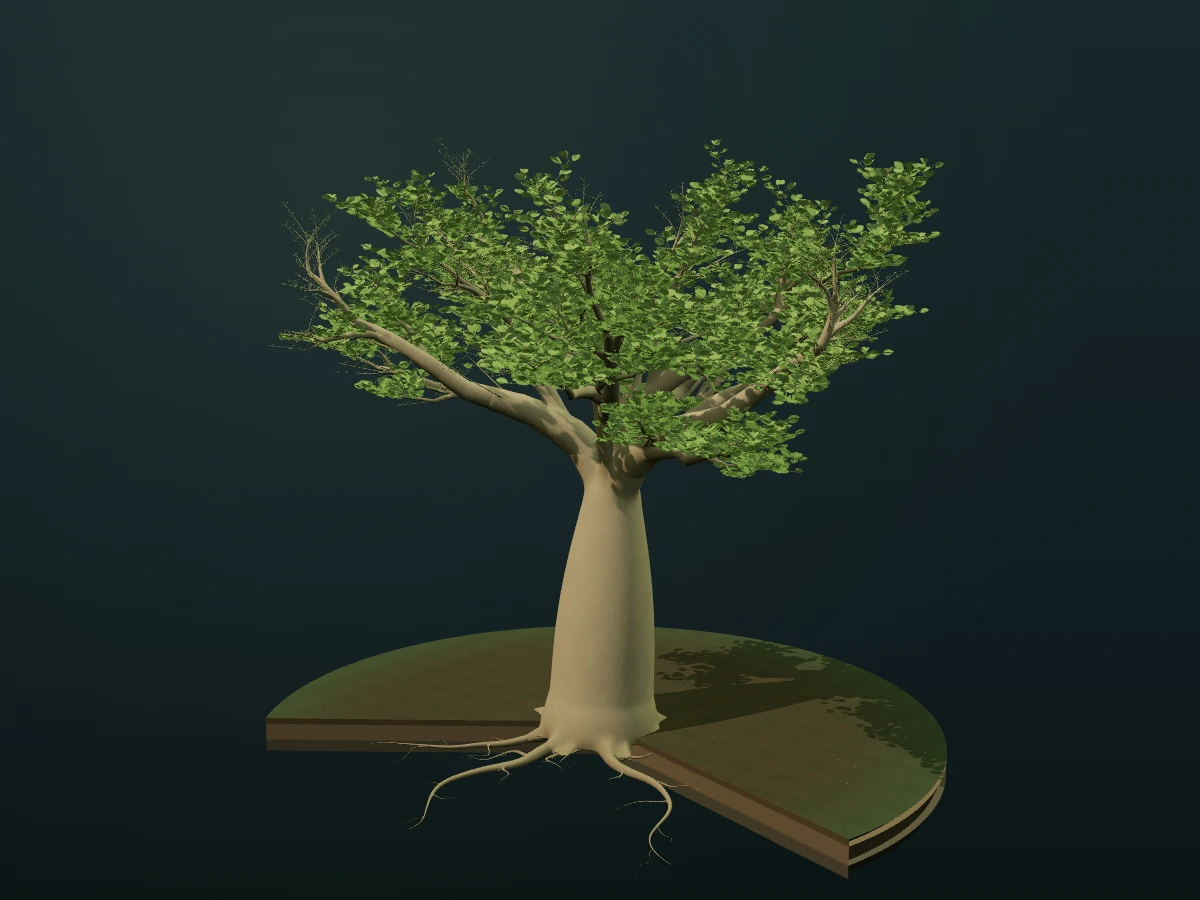
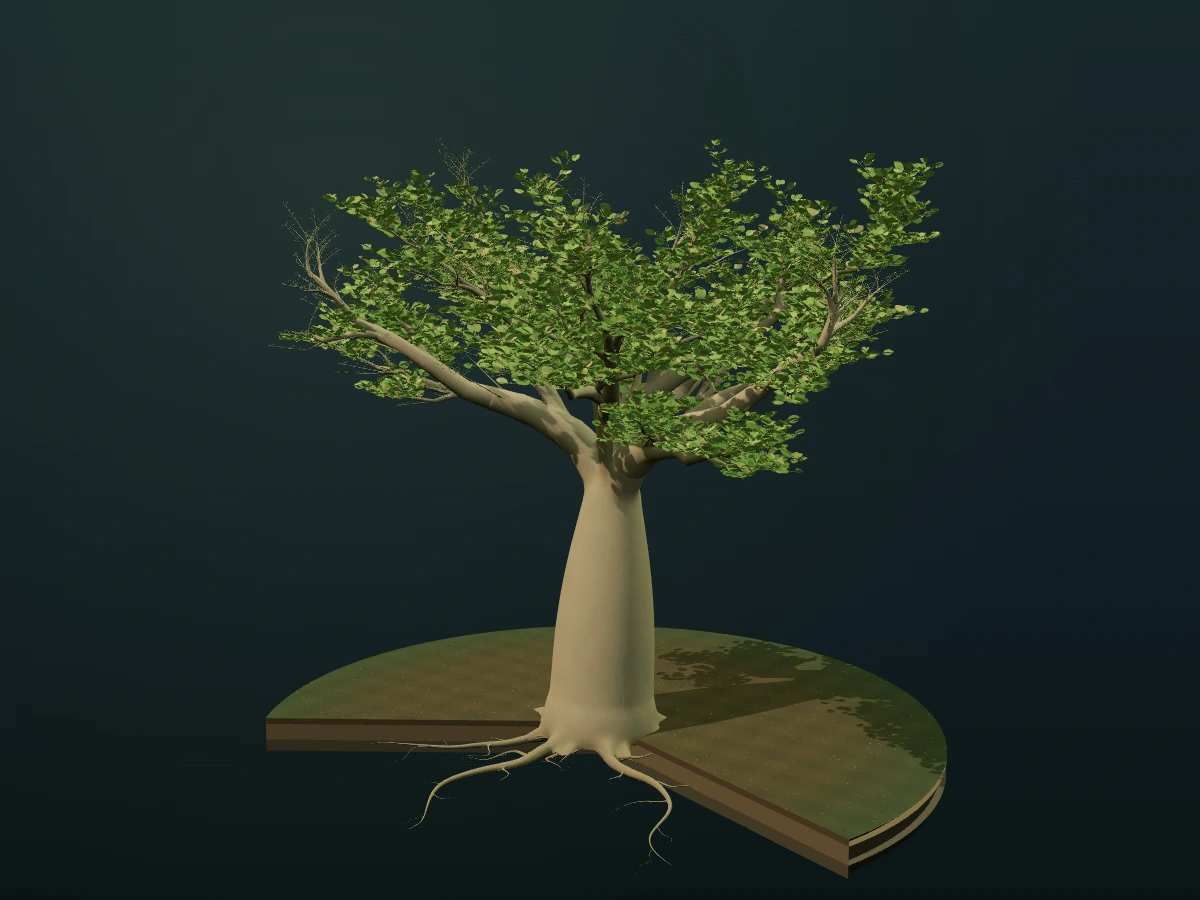

Seasonal illustration; the same plant, age and camera across four views.
Seasonal record
Reference region not specified in this record.
- Flowering
- Timing not documented
- Fruiting / dispersal
- Timing not documented
Leaf renewal
Leaf loss follows a dry-season cycle in the record. A leafless model therefore illustrates a rest phase, not necessarily a Northern Hemisphere winter.
Reading these views
Season names organize these four views, not a universal calendar. Hemisphere, local climate, cultivar and management can change timing; months are shown only when explicitly recorded. The record links leaf loss or rest to dry conditions. Wet and dry phases cannot be assigned to these four calendar labels without a local observation record.
The views emphasize crown structure. Buds, small flowers, individual retained leaves and fine reproductive changes may be unresolved; model age and fruit count are not production forecasts.
No separate on-tree fruit display is configured for this record.
Seasonal references
- apps.worldagroforestry.org ↗apps.worldagroforestry.org
- SANBI · African baobab ↗pza.sanbi.org
- Kew · African baobab morphology ↗powo.science.kew.org
03 / Leaves & flowers
A closer look at the organs
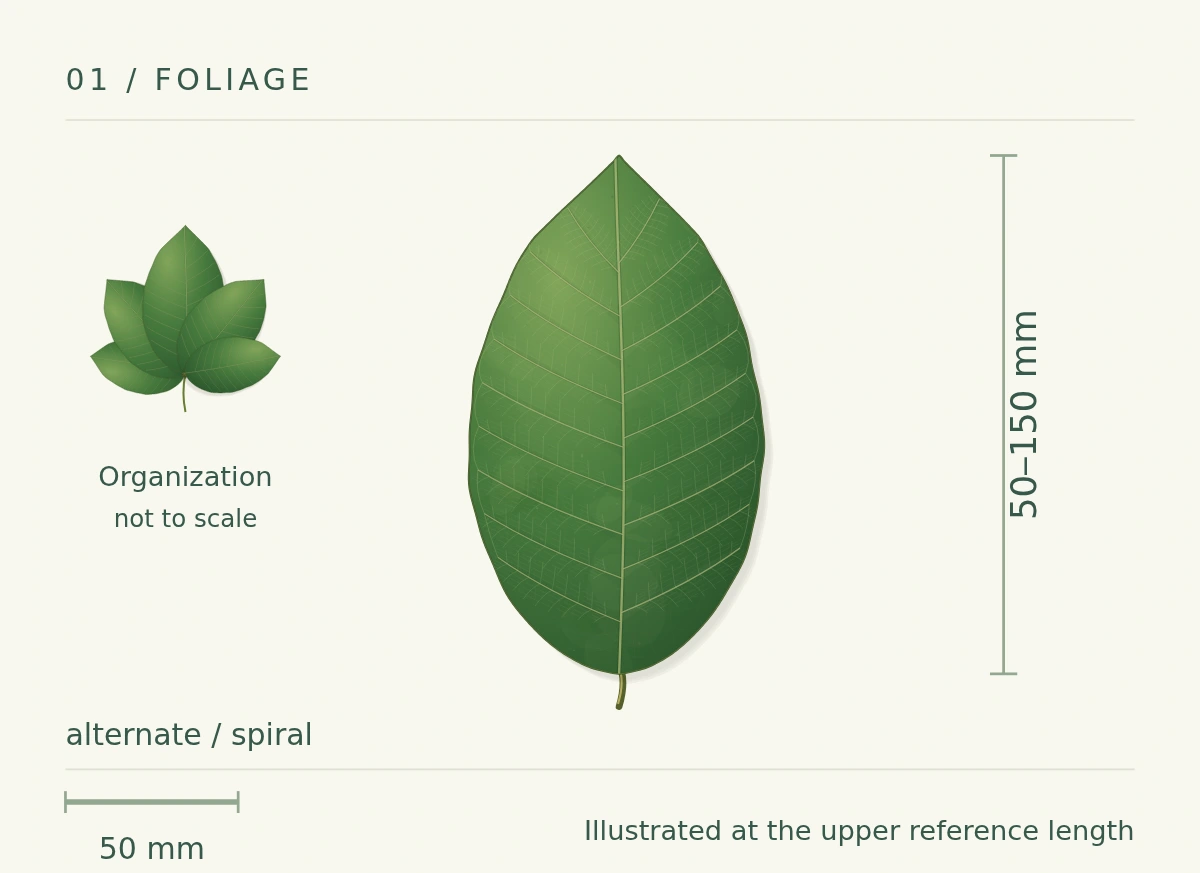
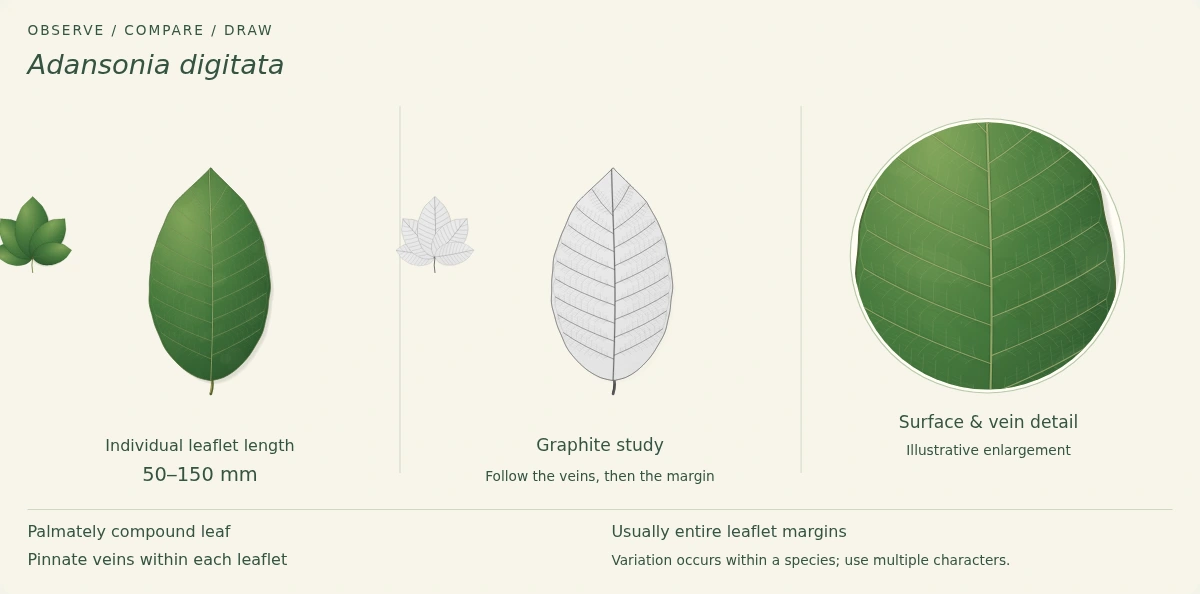
Leaves
- Individual leaflet length
- 50–150 mmSource notes
Mature leaves are palmately compound, often with five to seven leaflets. Young seedlings can have simple leaves. Seasonal leaf loss is linked to dry-season conditions; a temperate four-season animation is not a literal baobab calendar.
Palmately compound leaf · Usually entire leaflet margins · Pinnate veins within each leaflet · alternate / spiral
Seasonal notes
Drought-deciduous: leaf loss follows the dry season, not a Northern Hemisphere autumn timetable. Colour here illustrates senescence, not a verified autumn palette.
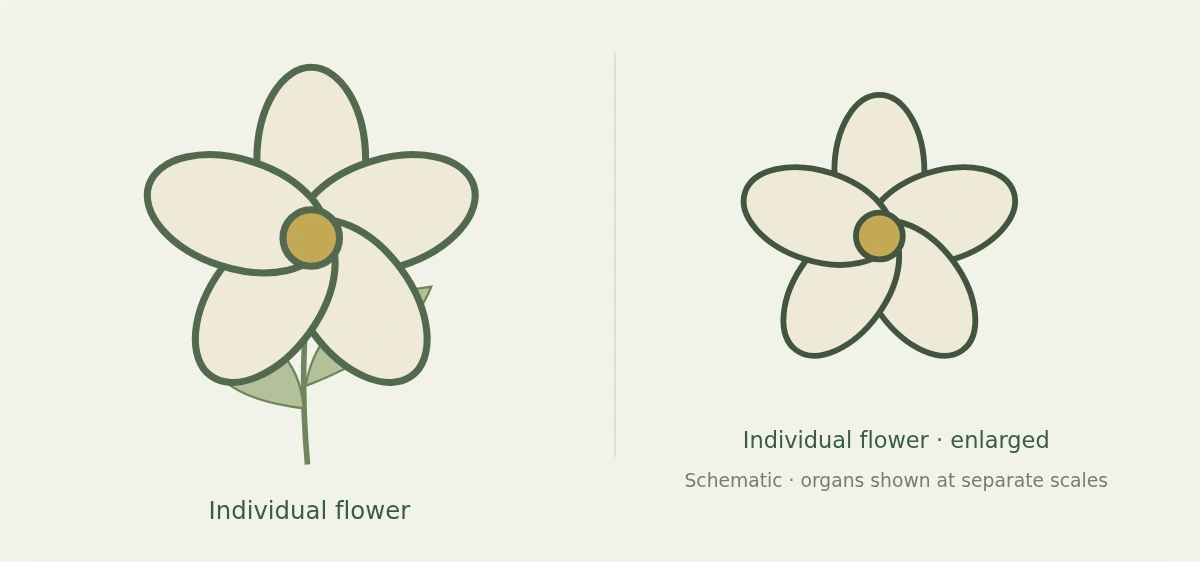
- Flowering reference
- Not documented
04 / Fruit & seed
Named structures, separate scales
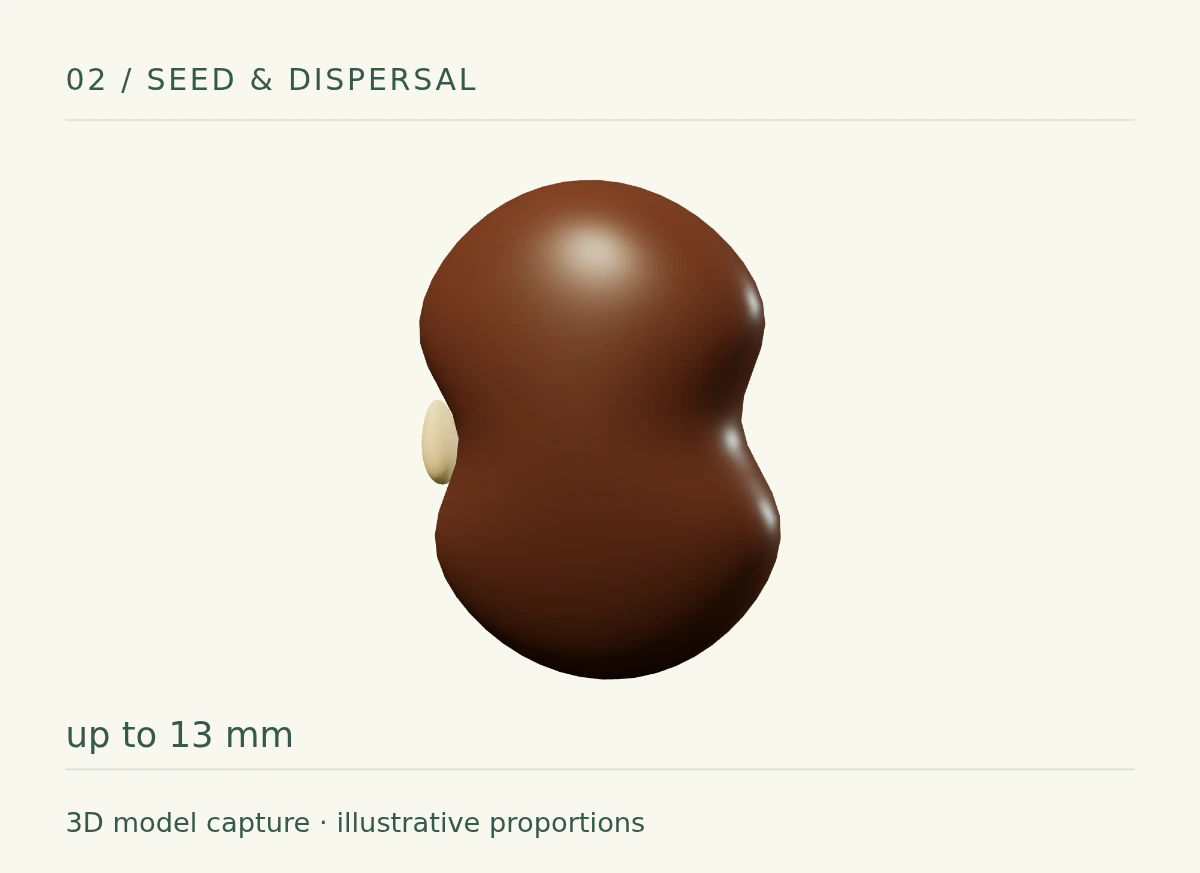
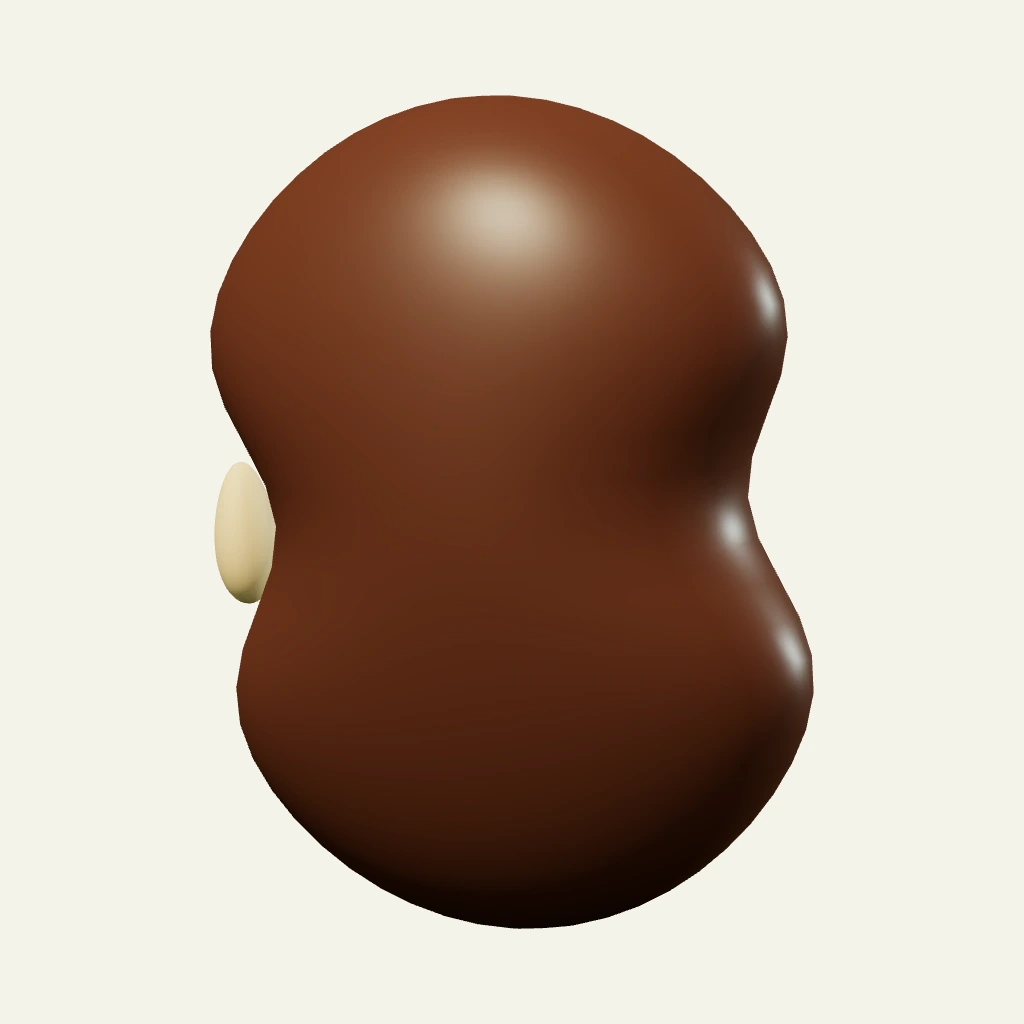
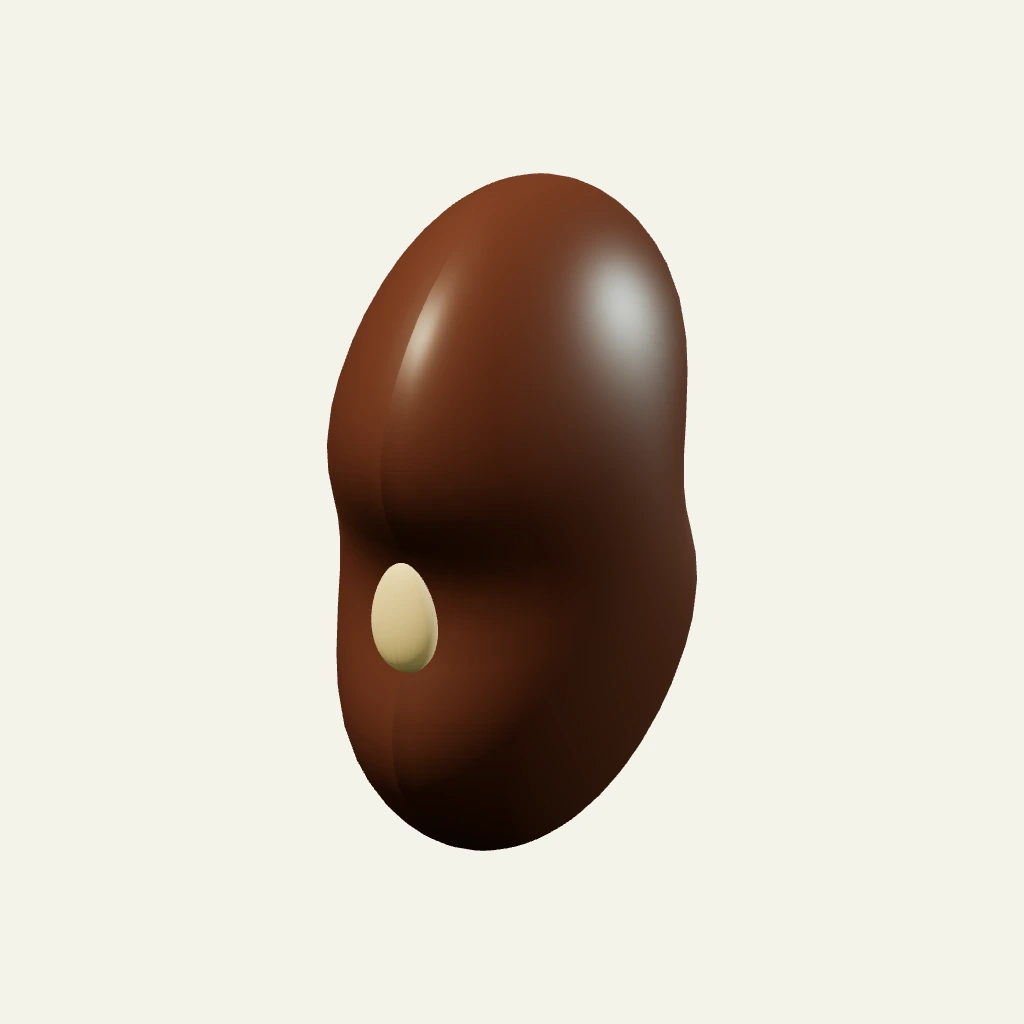
Seed
- Seed body length
- ≤ 13 mmSource notes
A smooth, hard-coated, kidney-shaped seed; the hilum marks its former attachment.
- Fruiting reference
- Not documented
Organs are enlarged independently. Refer to the named measurement, not image size.
05 / Habitat
Native range & growing context
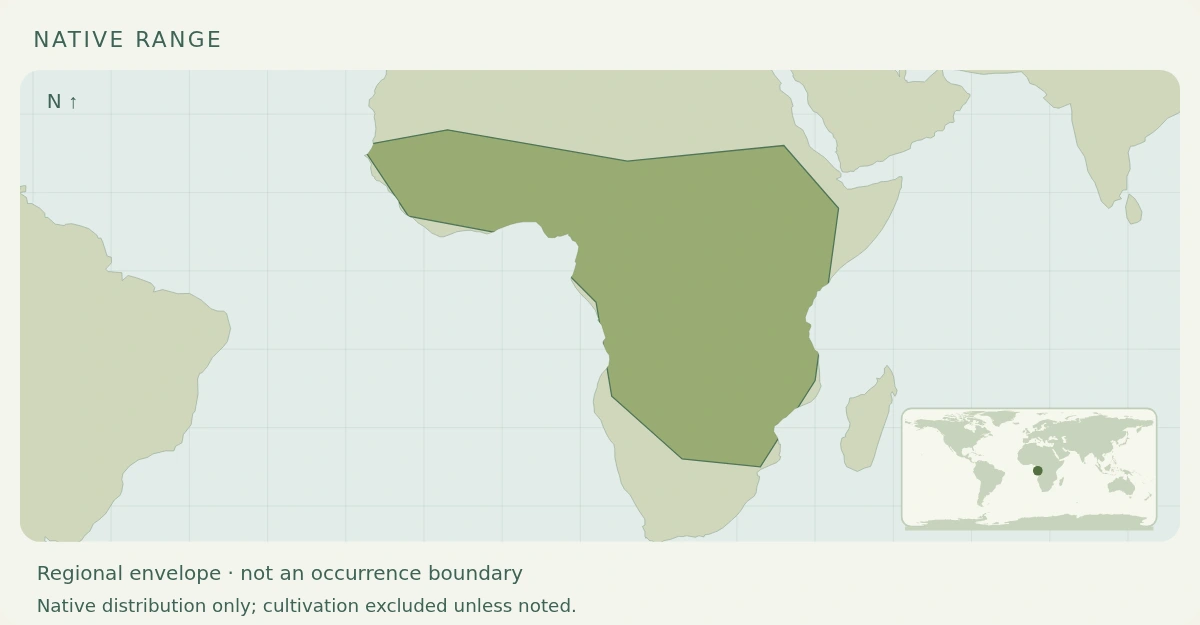
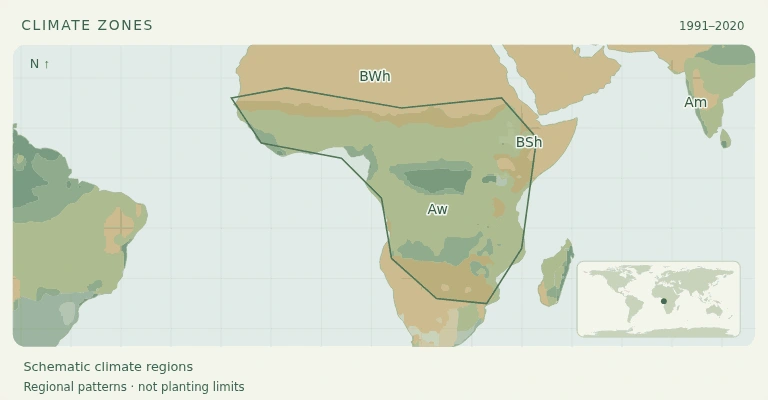
Native range & growing context
Much of sub-Saharan Africa; human transport has also shaped its wider distribution.
- Reference spread
- Not documented
- Moisture
- Not documented
- Growth tendency
- Slow
- Life span
- Some individuals survive for more than 1,000 years; complex stems complicate age estimation.
Regional context, not a measured occurrence or suitability map.
06 / Sources & interpretation
Read the evidence behind the illustration
Names & classification
- Family
- Malvaceae
- Genus
- Adansonia
- Synonyms
- —
- Digitata refers to the hand-like arrangement of leaflets.
- Young and adult foliage differ.
- Baobab age should not be estimated by applying a simple diameter-to-age conversion.
The model illustrates a single-stem African baobab. Stem water storage, dry-season phenology, multiple stems and radiocarbon age reconstruction are not simulated.
ArborAI teaching geometry; coefficients and ages are not measured species constants.
- Kew · African baobab morphology ↗powo.science.kew.org
- SANBI · African baobab ↗pza.sanbi.org
- World Agroforestry · Baobab profile ↗apps.worldagroforestry.org
- CIRAD · Root distribution study, 2023 ↗publications.cirad.fr
- Plants For A Future · Adansonia digitata ↗pfaf.org
Plant data and references · 4
| Native range | Much of sub-Saharan Africa; human transport has also shaped its wider distribution.Transferred from the existing catalogue; independent botanical review remains pending.powo.science.kew.org |
|---|---|
| Leaf lengthmm | [50, 150]Transferred from the existing catalogue; independent botanical review remains pending.apps.worldagroforestry.org |
| Seed lengthmm | [null, 13]Transferred from the existing catalogue; independent botanical review remains pending.powo.science.kew.org |
| Usda hardinesscategory | {"system": "USDA", "zones": [10, 12], "source": "usda-hardiness"}Reported horticultural recommendation; winter minimum only, not a heat or overall suitability limitpfaf.org |