Botanical field guide
Abies balsamea
Balsam fir
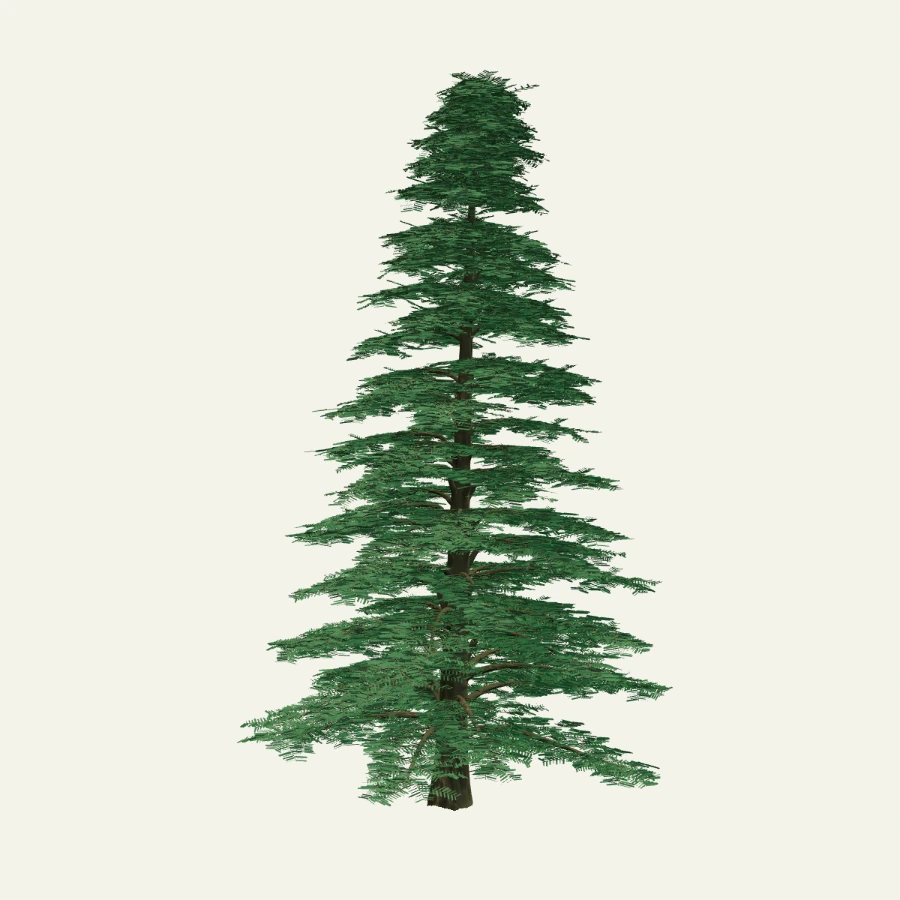
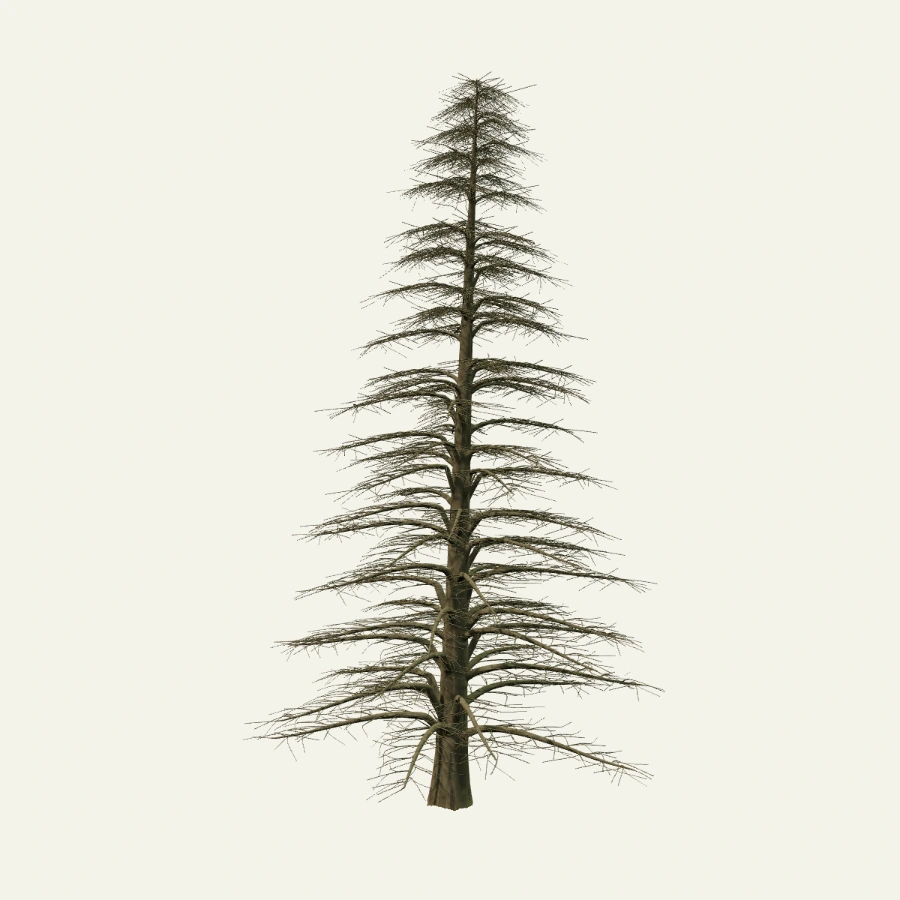
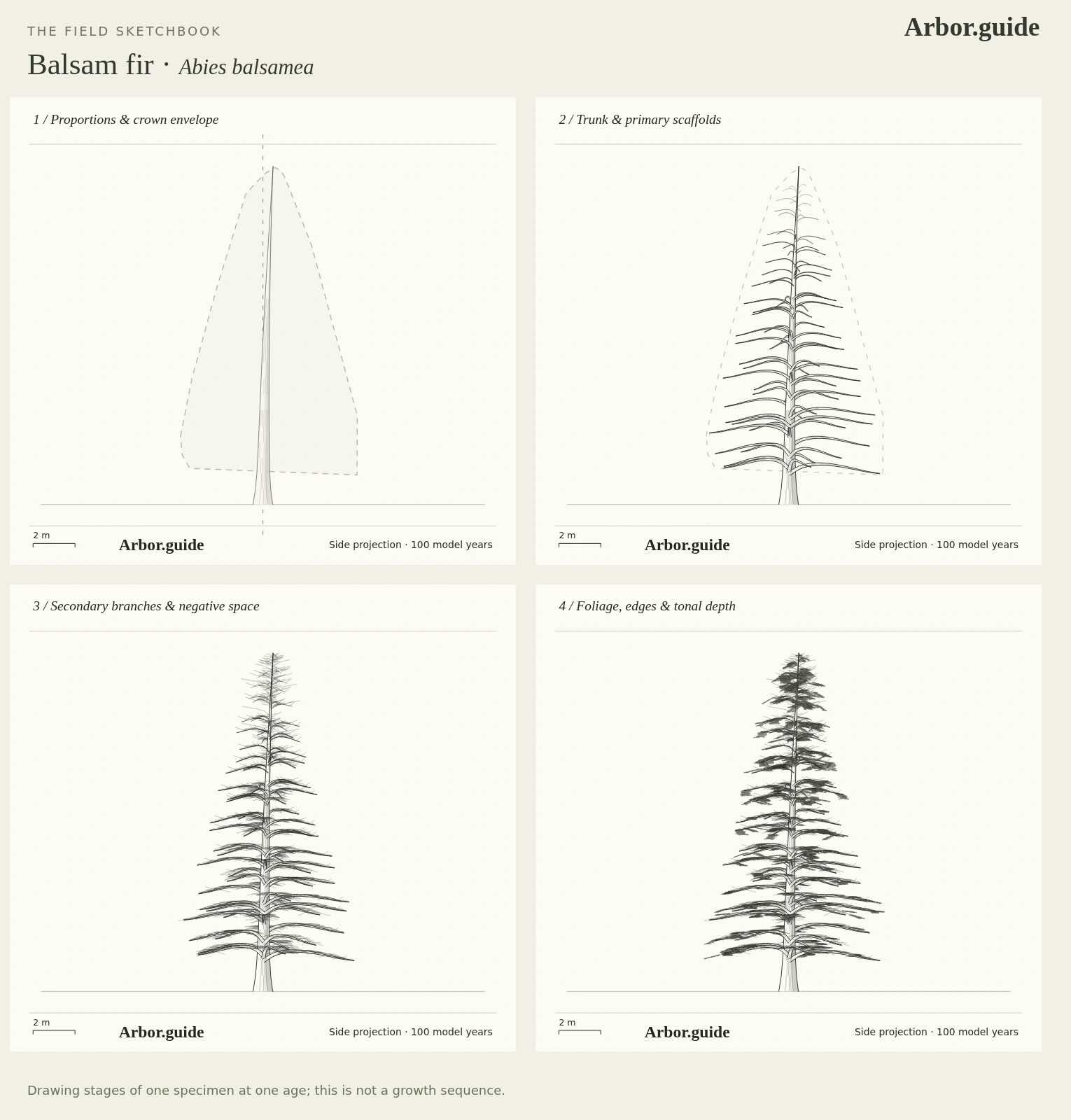
Tree / Pinaceae
The plant, in detail
Cool moist acidic forest soils.
- Reference height
- 12–21 m
- Foliage habit
- Evergreen
- USDA zones
- 3–7
- Light
- Not documented
Approximate stature from the cited account; equal bounds indicate a reported upper or approximate height, not a measured population interval. Cultivation and forest conditions differ.
Crown
A narrow symmetrical spire with regular spreading branch tiers.
Branching
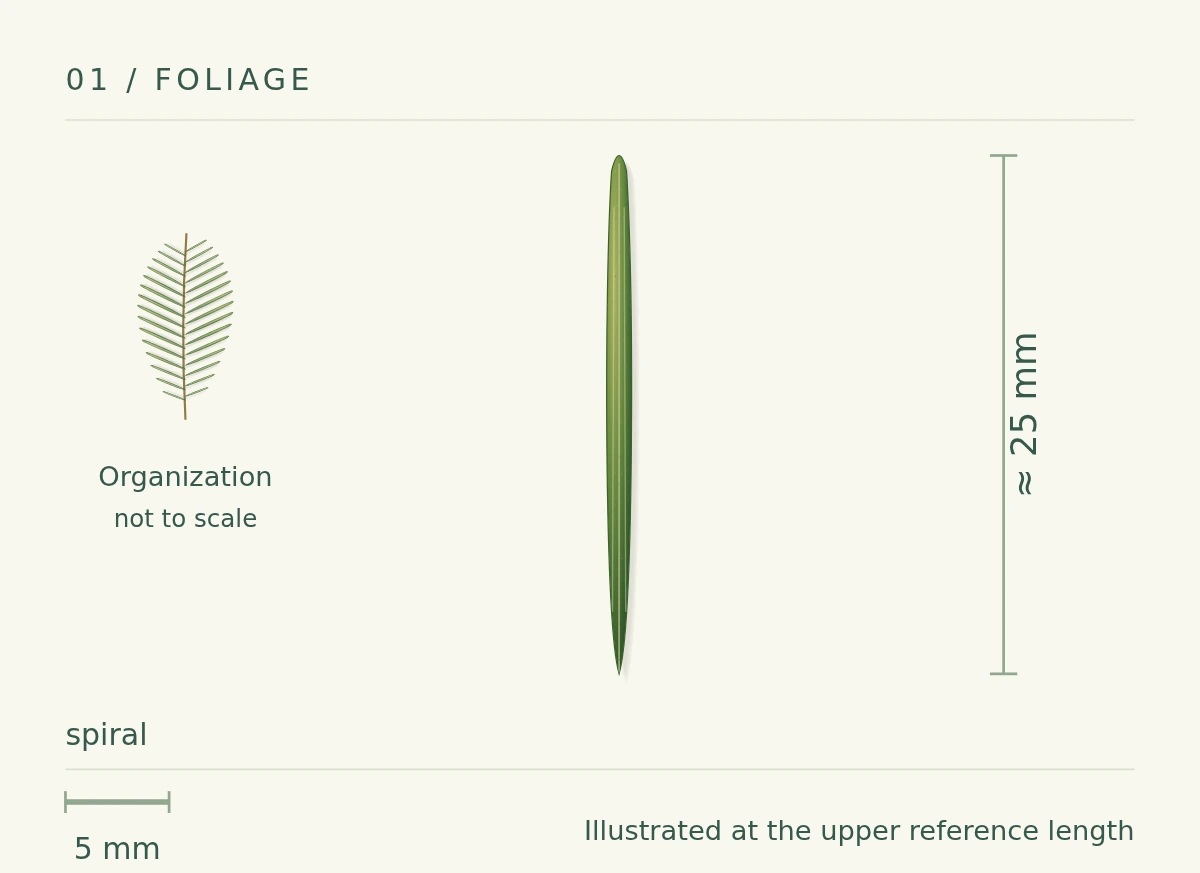
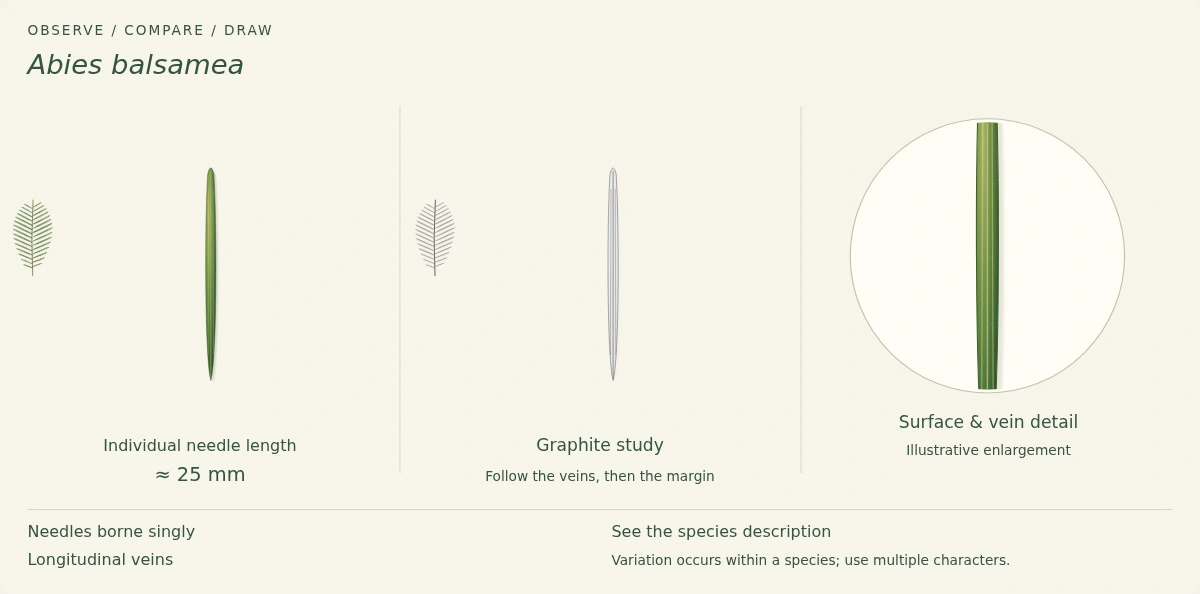
Single flattened needles have blunt or slightly notched tips and two pale stomatal bands underneath.
Bark
Smooth young gray bark bears resin blisters; old bark becomes rough.
Roots
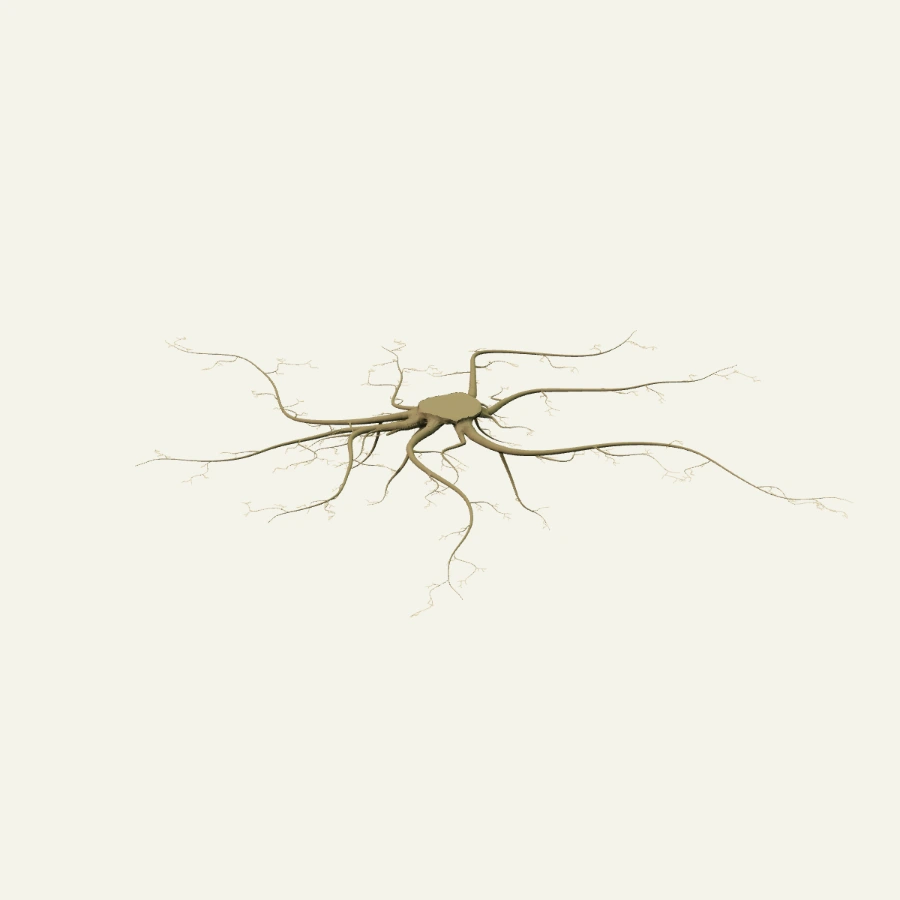
The root drawing is an ArborAI soil scenario: curved structural laterals and descending axes, not a measured species root map. Depth depends on soil, water table, establishment and damage; fine absorptive roots are unresolved.
The shape of growth
Stylized real-world examples
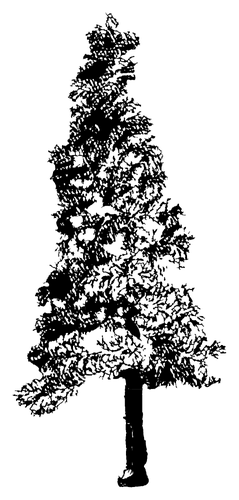
Silhouettes are sized independently.
02 / Seasons
Through the seasons
Four portraits. One plant.
Read the crown, foliage and reproductive structures together. The four views compare seasonal appearances; the reference notes explain what is actually documented.
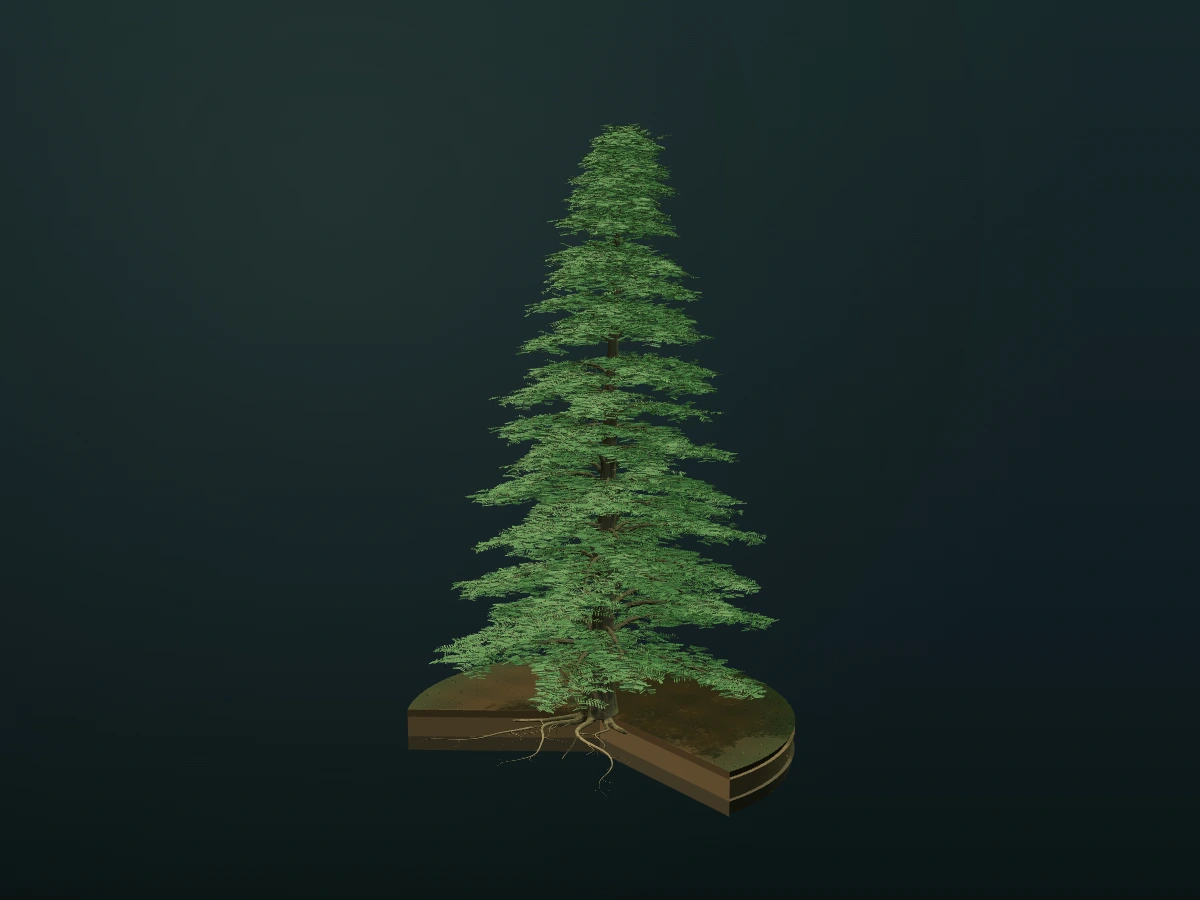
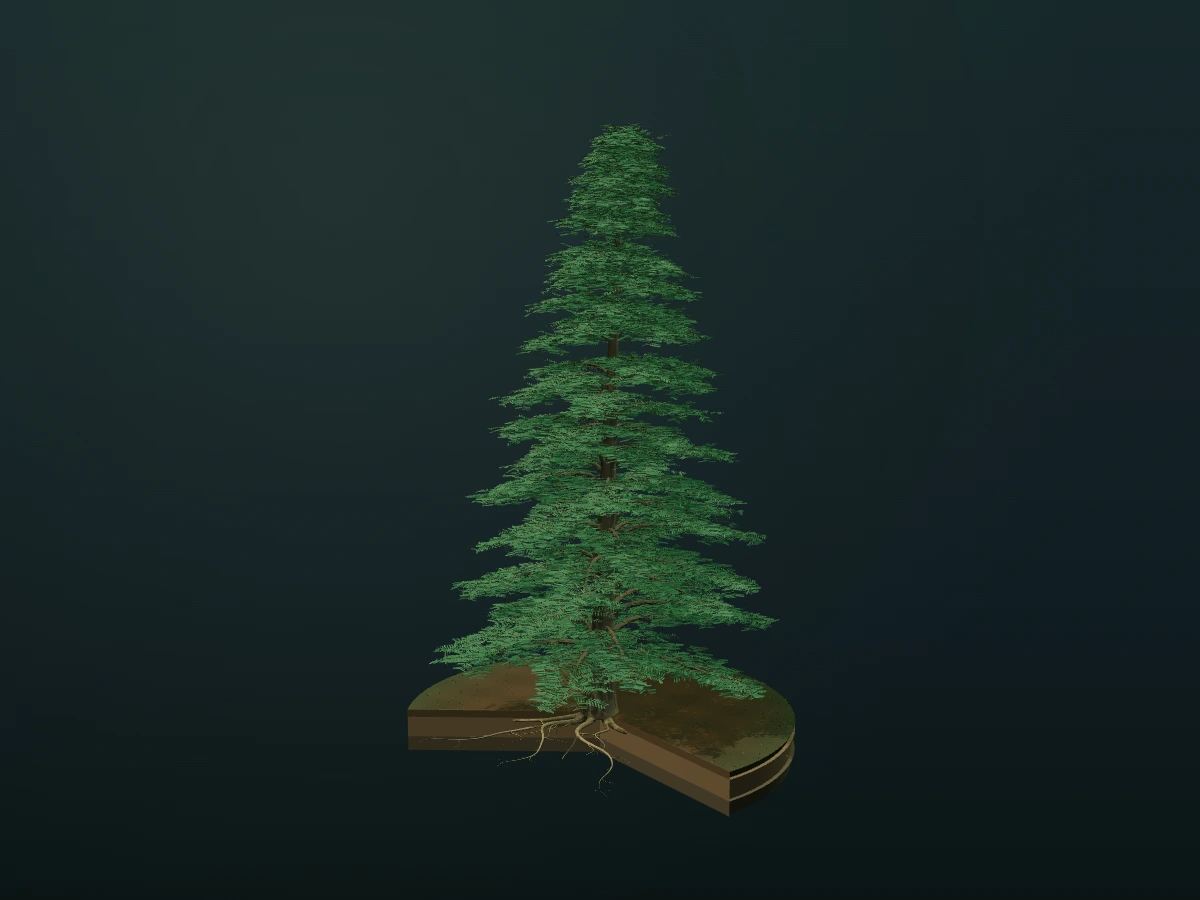
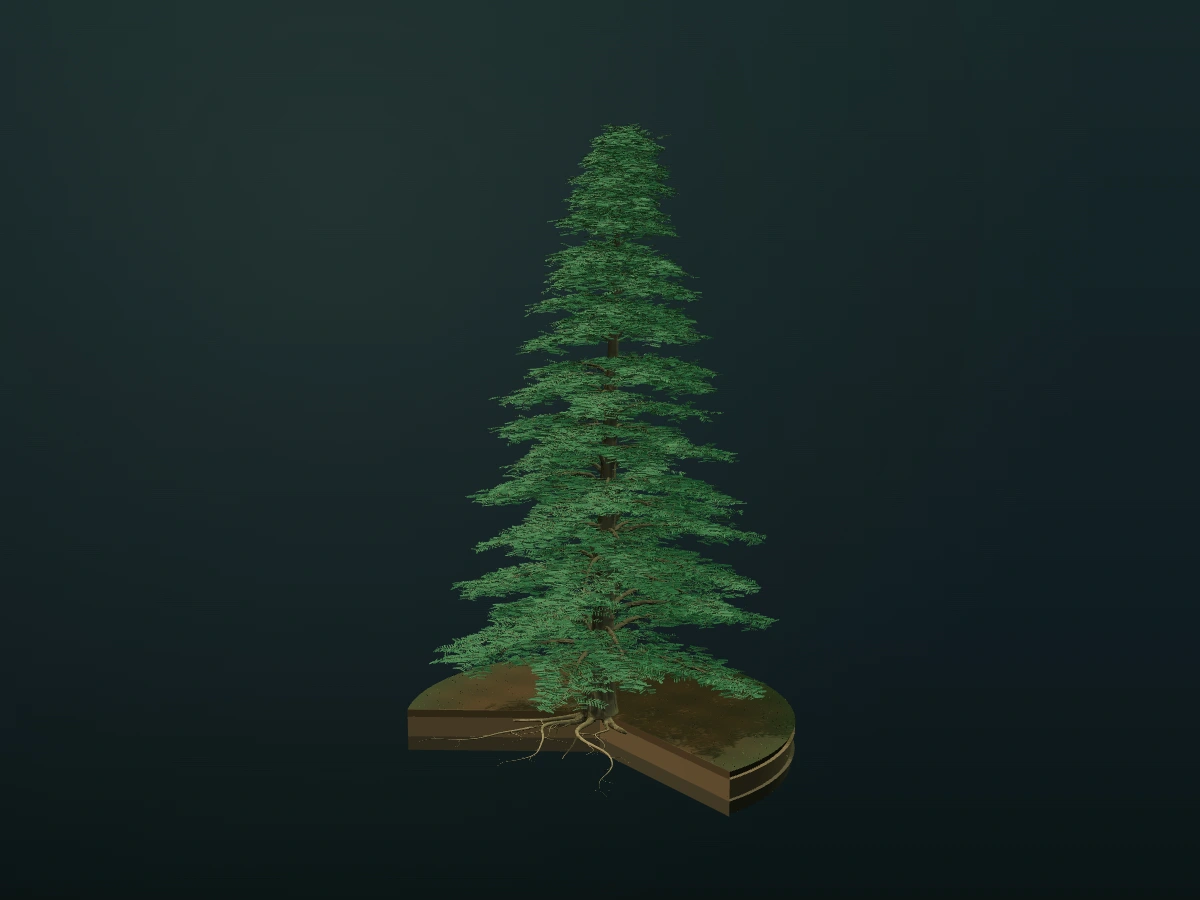
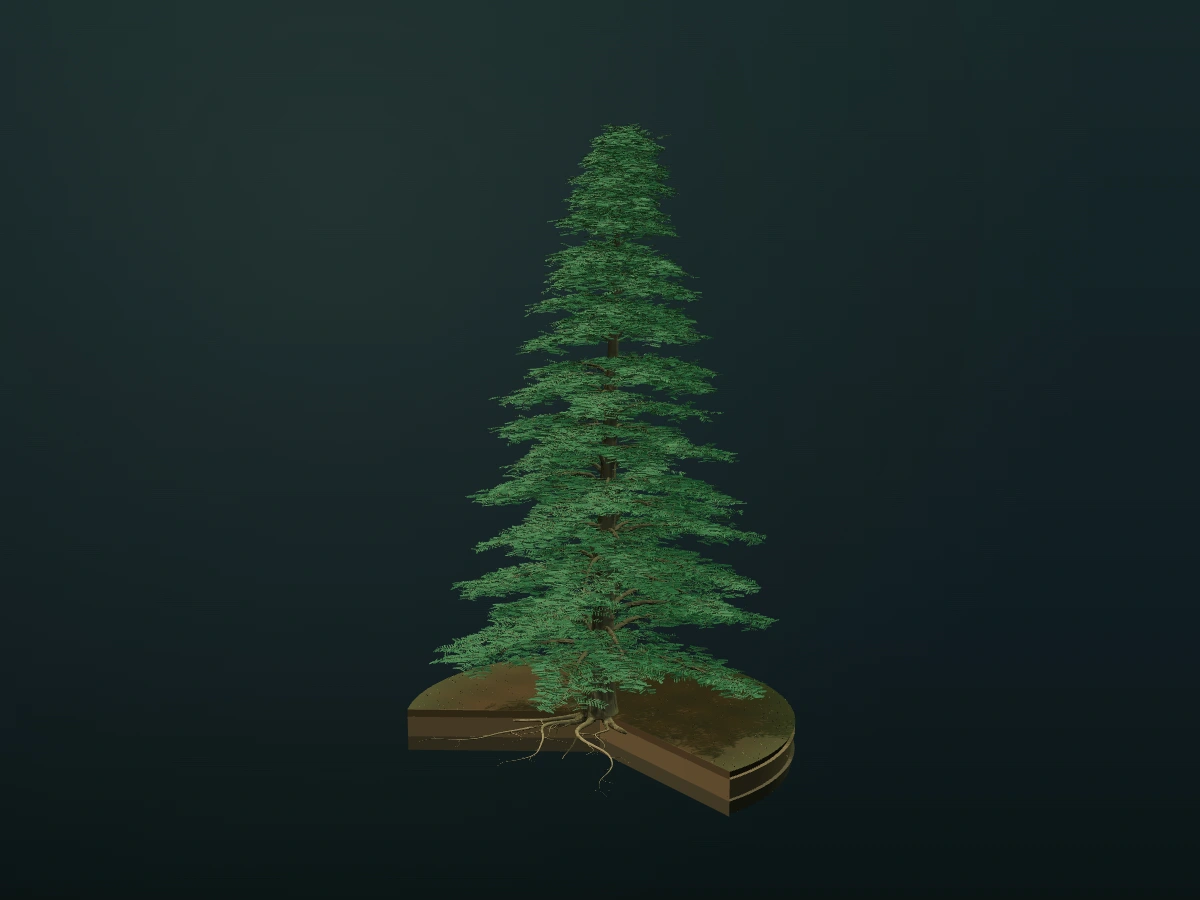
Seasonal illustration; the same plant, age and camera across four views.
Seasonal record
North Carolina botanical account
Leaf renewal
Evergreen[1]
A green canopy can persist while individual leaves age and are replaced. Evergreen does not mean that every leaf lasts indefinitely or that flowering and fruiting are continuous.
Reading these views
Season names organize these four views, not a universal calendar. Hemisphere, local climate, cultivar and management can change timing; months are shown only when explicitly recorded.
The views emphasize crown structure. Buds, small flowers, individual retained leaves and fine reproductive changes may be unresolved; model age and fruit count are not production forecasts.
No separate on-tree fruit display is configured for this record.
Seasonal references
- NC State Extension · Abies balsamea ↗plants.ces.ncsu.edu
03 / Foliage
A closer look at the organs
Leaves
- Individual needle length
- ≈ 25 mmSource notes
Single flattened needles have blunt or slightly notched tips and two pale stomatal bands underneath.
Needles borne singly · See the species description · Longitudinal veins · spiral
Seasonal notes
Evergreen foliage is retained across seasons; older leaves or needles are still shed. Colour and retention vary with site and weather.
04 / Fruit & seed
Named structures, separate scales
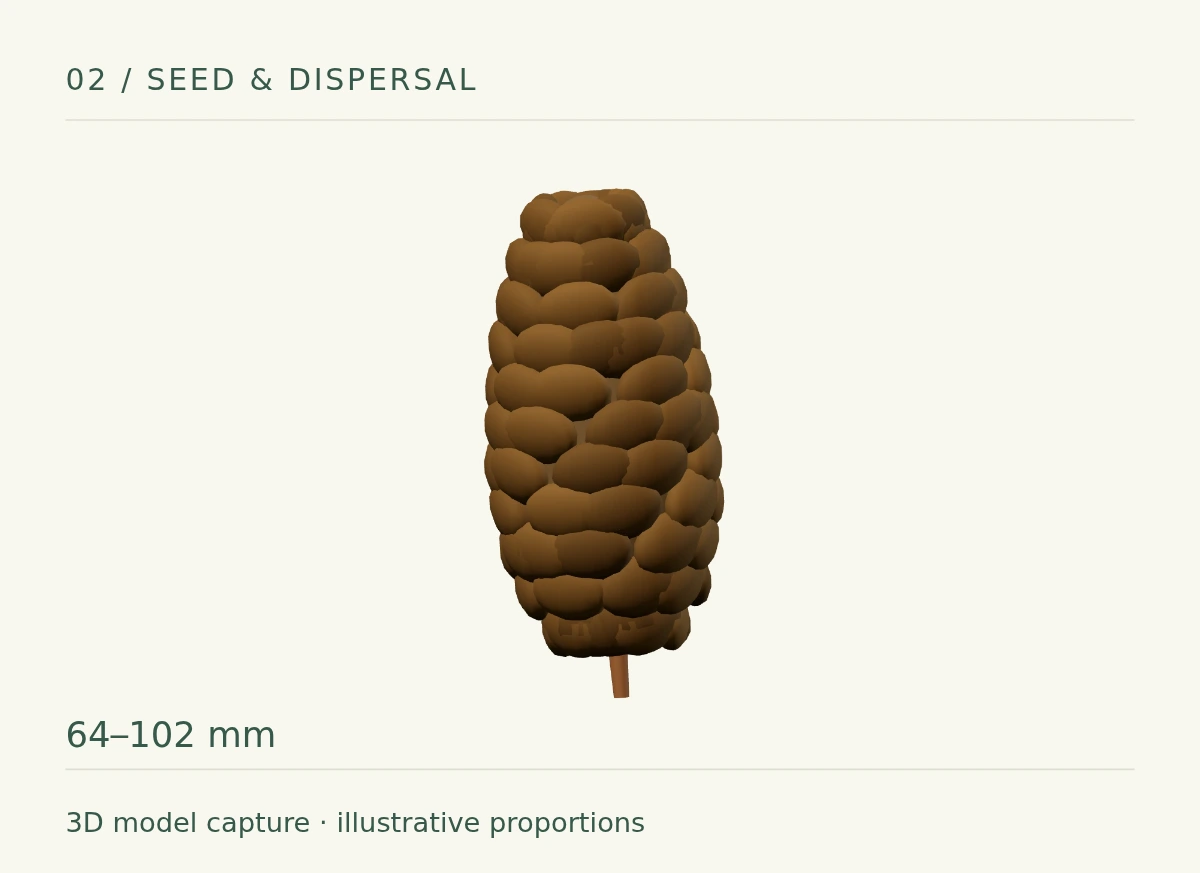
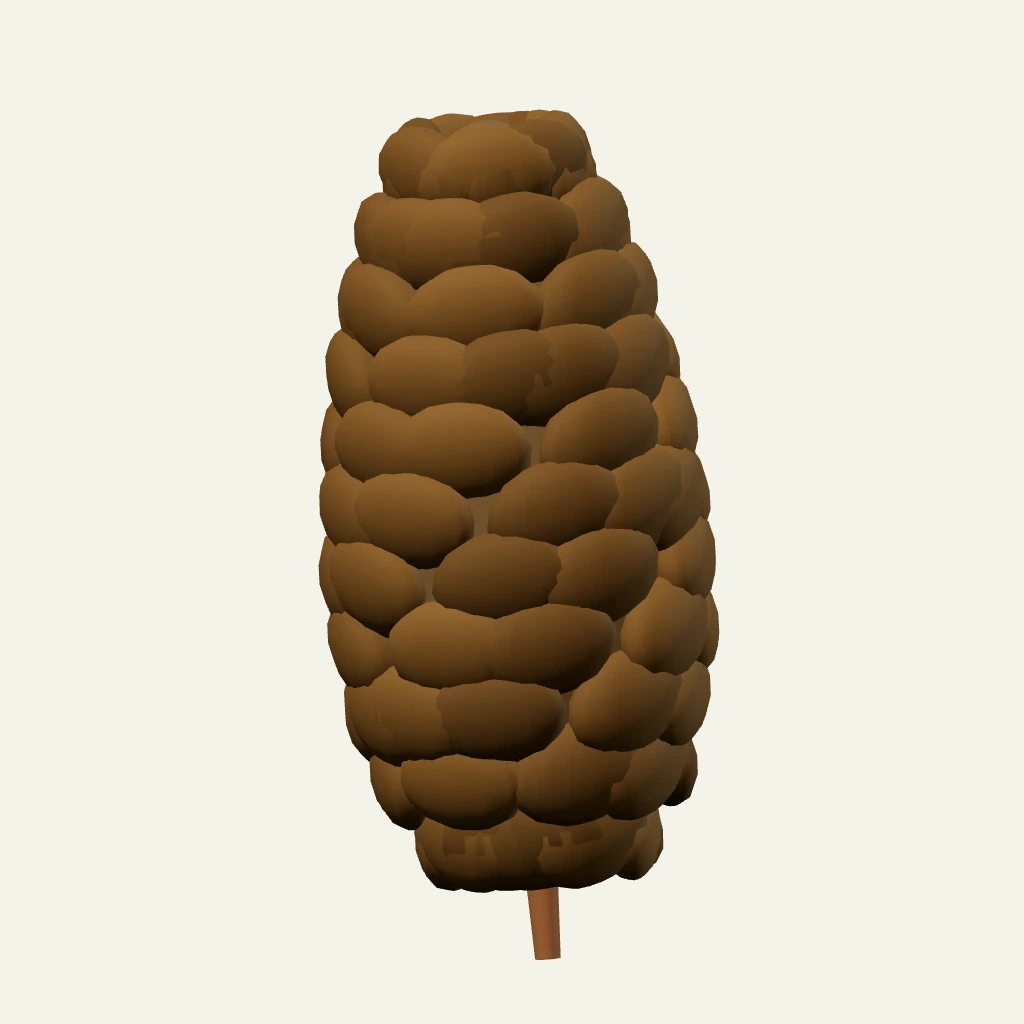
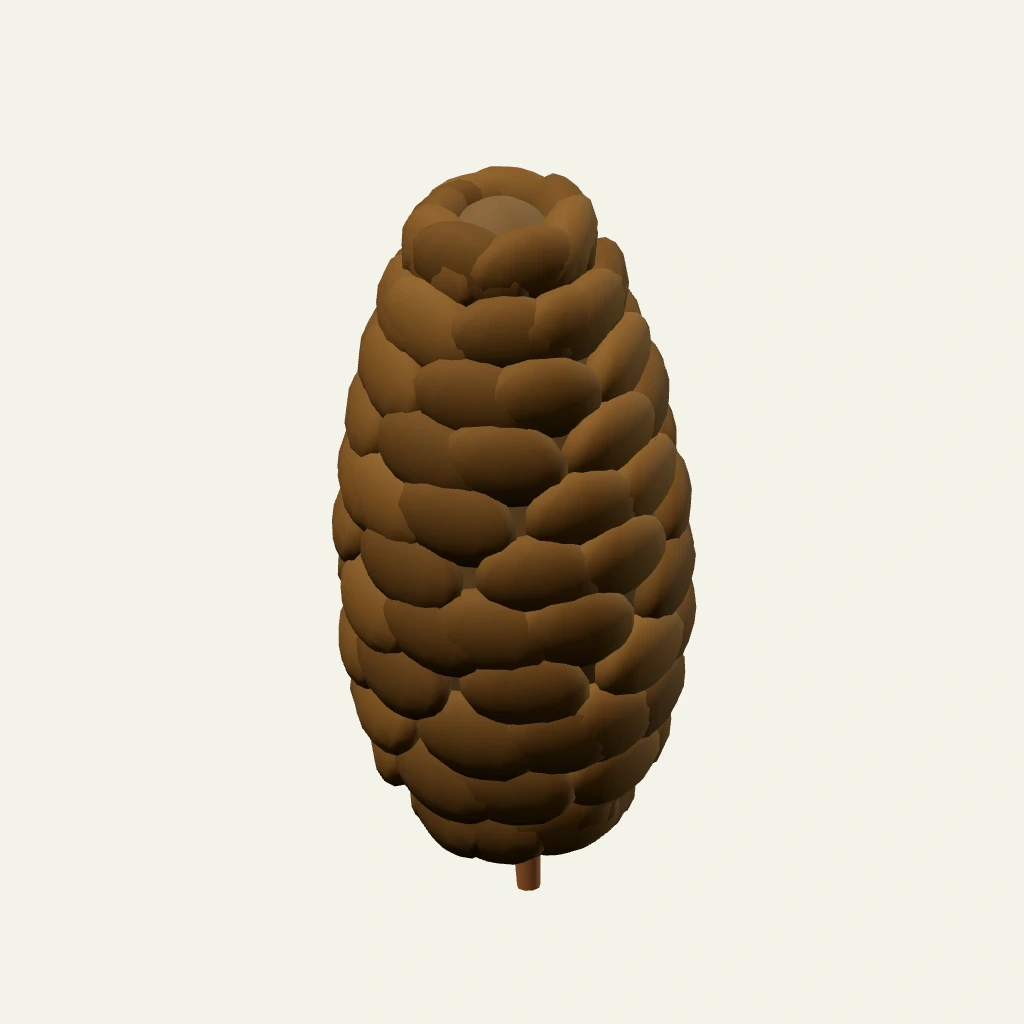
Seed cone
- Seed cone length
- 64–102 mmSource notes
Upright resinous cones disintegrate on the tree, leaving an axis after scales and seeds fall.
- Fruiting reference
- Autumn
North Carolina botanical account
Organs are enlarged independently. Refer to the named measurement, not image size.
05 / Habitat
Native range & growing context
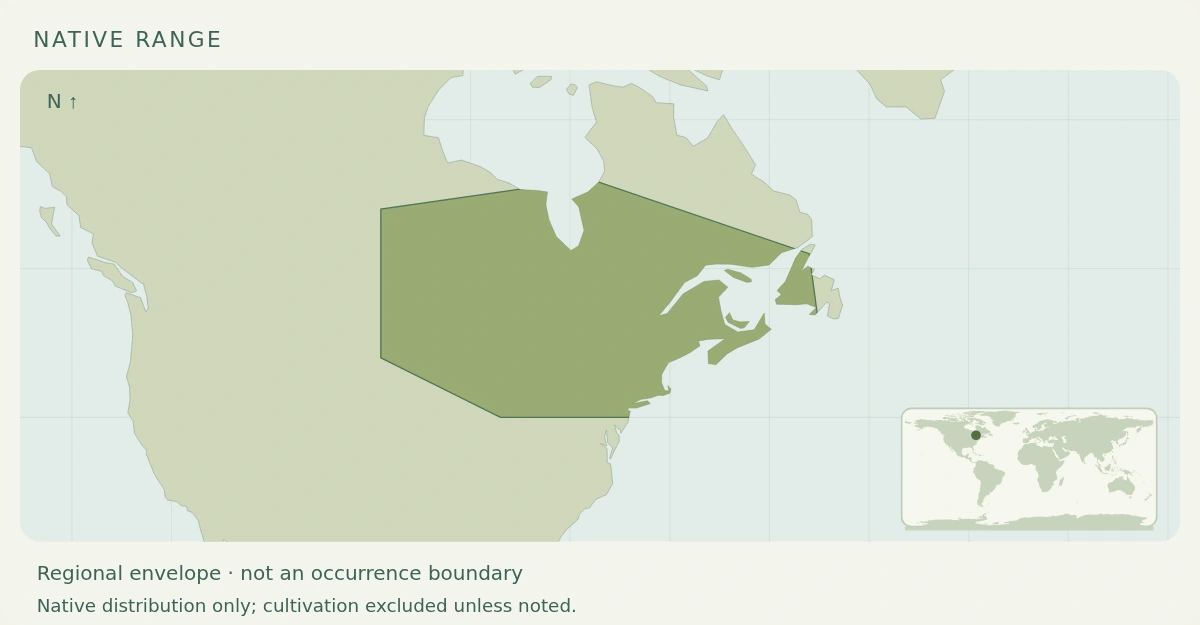
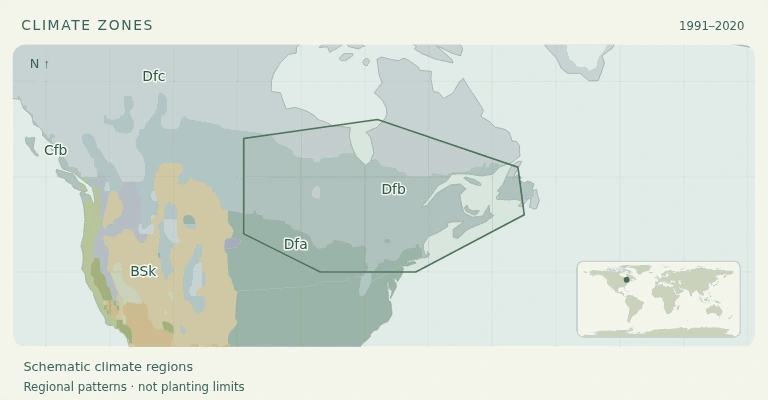
Native range & growing context
Eastern and central Canada and the northeastern United States, extending south in the Appalachians.
- Reference spread
- Not documented
- Moisture
- Not documented
- Growth tendency
- Moderate
- Life span
- No numerical lifespan is assigned from these references. Model age is not a survival forecast.
Regional context, not a measured occurrence or suitability map.
06 / Sources & interpretation
Read the evidence behind the illustration
Names & classification
- Family
- Pinaceae
- Genus
- Abies
- Synonyms
- —
- Single flattened needles have blunt or slightly notched tips and two pale stomatal bands underneath.
- Upright resinous cones disintegrate on the tree, leaving an axis after scales and seeds fall.
Source-informed teaching reconstruction, not a surveyed specimen. Crown dimensions, branch counts, growth ages and root geometry are ArborAI. Individual trees vary with provenance, competition, climate and management.
ArborAI teaching geometry; coefficients and ages are not measured species constants.
- NC State Extension · Abies balsamea ↗plants.ces.ncsu.edu
Plant data and references · 5
| Native range | Eastern and central Canada and the northeastern United States, extending south in the Appalachians.Transferred from the existing catalogue; independent botanical review remains pending.plants.ces.ncsu.edu |
|---|---|
| Leaf lengthmm | [25, 25]Transferred from the existing catalogue; independent botanical review remains pending.plants.ces.ncsu.edu |
| Seed lengthmm | [64, 102]Transferred from the existing catalogue; independent botanical review remains pending.plants.ces.ncsu.edu |
| Reference phenologycategory | {"flowering": {"seasons": []}, "fruiting": {"seasons": ["autumn"]}, "reference": "North Carolina botanical account", "source": "https://plants.ces.ncsu.edu/plants/abies-balsamea/", "reviewed": "2026-10-16"}Regional observations. Fruit display may include persistence and is not automatically ripening. Missing dates remain unspecified. Independent botanical review remains pending.plants.ces.ncsu.edu |
| Usda hardinesscategory | {"system": "USDA", "zones": [3, 7], "source": "usda-hardiness", "subzones": ["3a", "7b"]}Reported horticultural recommendation; winter minimum only, not a heat or overall suitability limitplants.ces.ncsu.edu |