Botanical field guide
Carya texana
Black Hickory
Tree / Juglandaceae
The plant, in detail
See the cited species account for habitat and site context.
- Reference height
- ≤ 41 m
- Foliage habit
- Deciduous
- USDA zones
- 5–9
- Light
- Not documented
Usually a smaller tree; the source includes exceptional wild stature of 41 m.
Crown
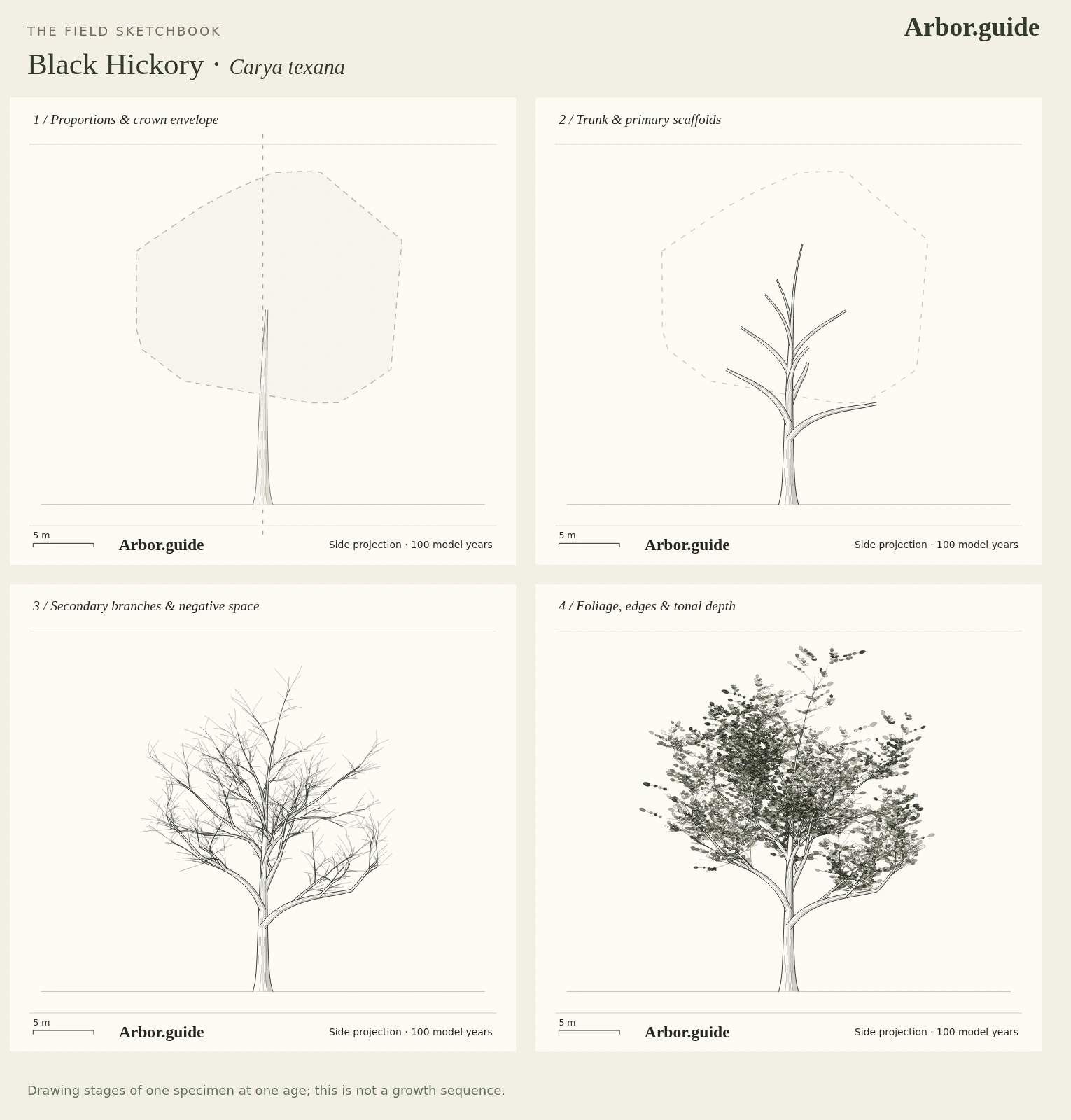
An ArborAI round crown envelope guided by the botanical account.
Branching
Alternate leaf insertion; branch coordinates are illustrative.
Bark
Illustrative furrowed bark treatment; source descriptions distinguish age-dependent bark characters.
Roots
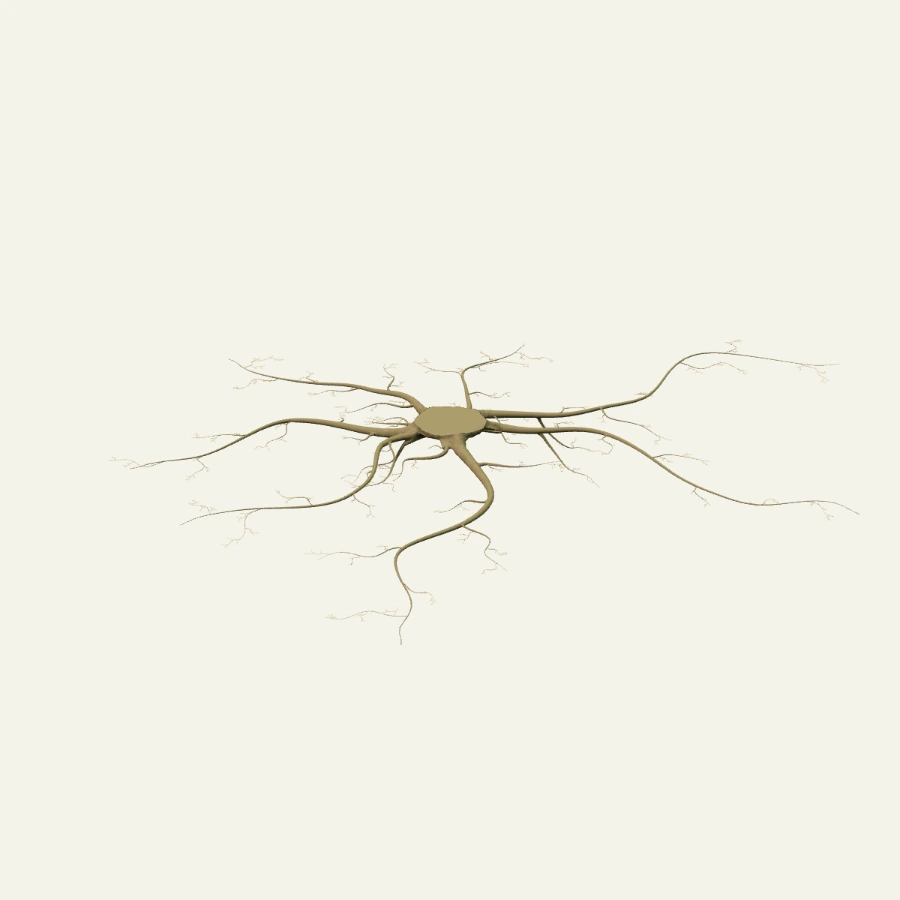
Illustrative spreading roots. No measured root depth or radius is assigned.
02 / Seasons
Through the seasons
Four portraits. One plant.
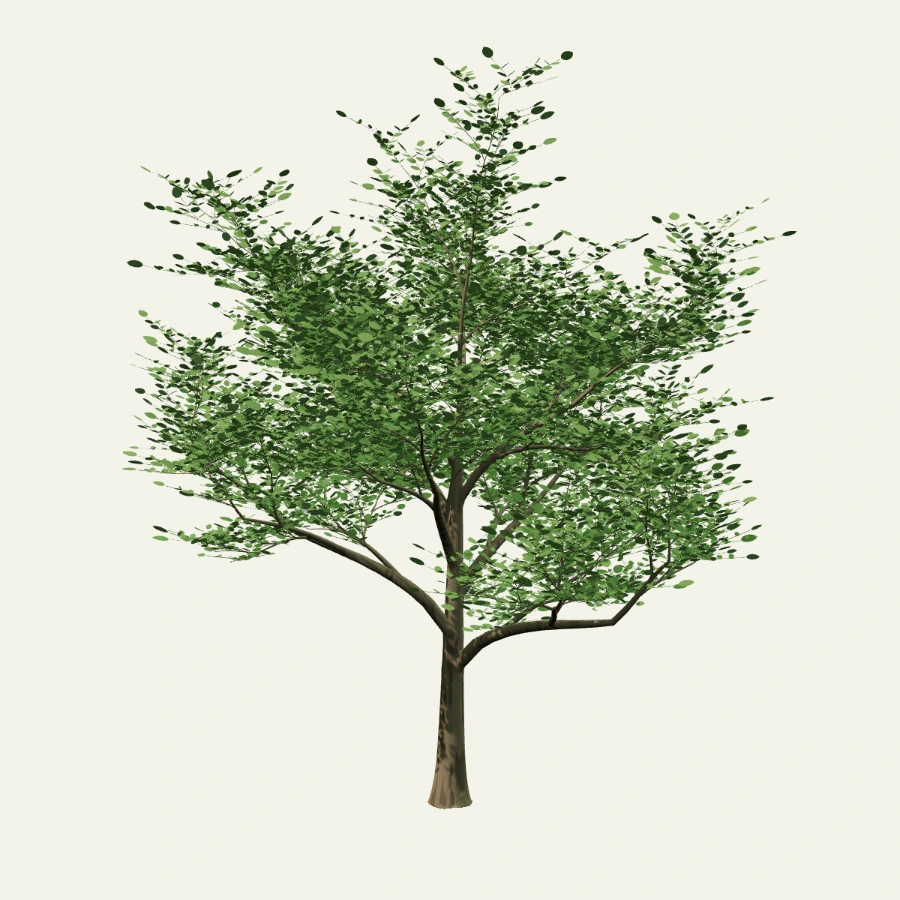
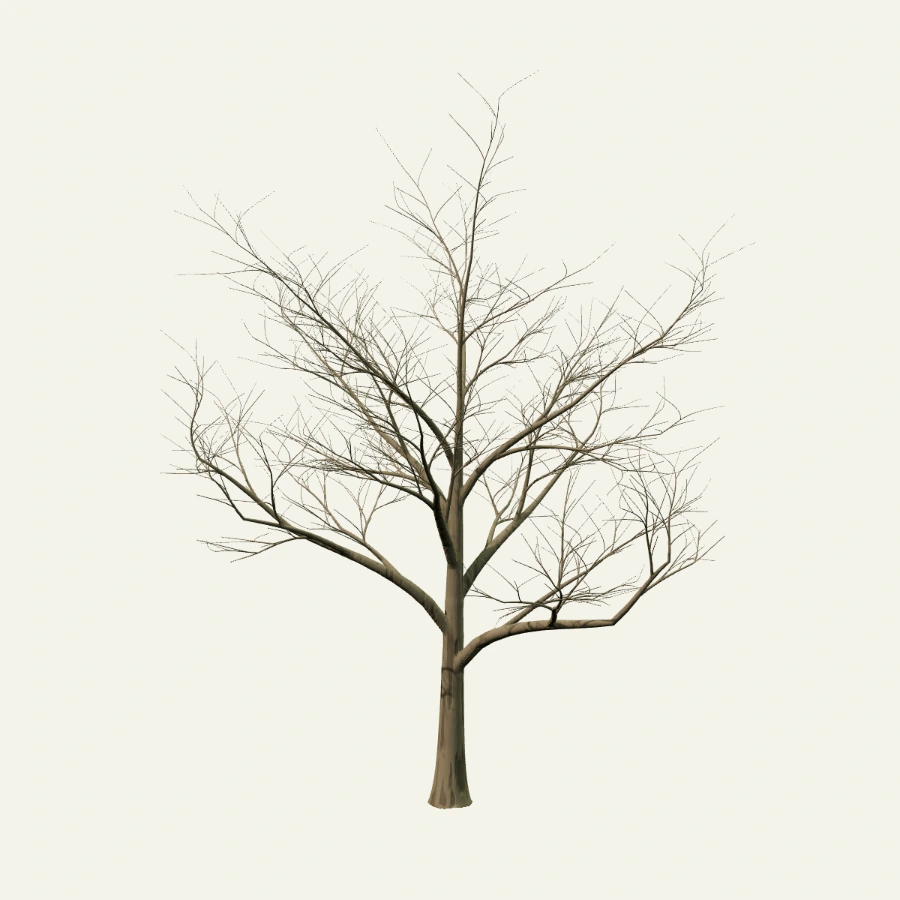
Read the crown, foliage and reproductive structures together. The four views compare seasonal appearances; the reference notes explain what is actually documented.
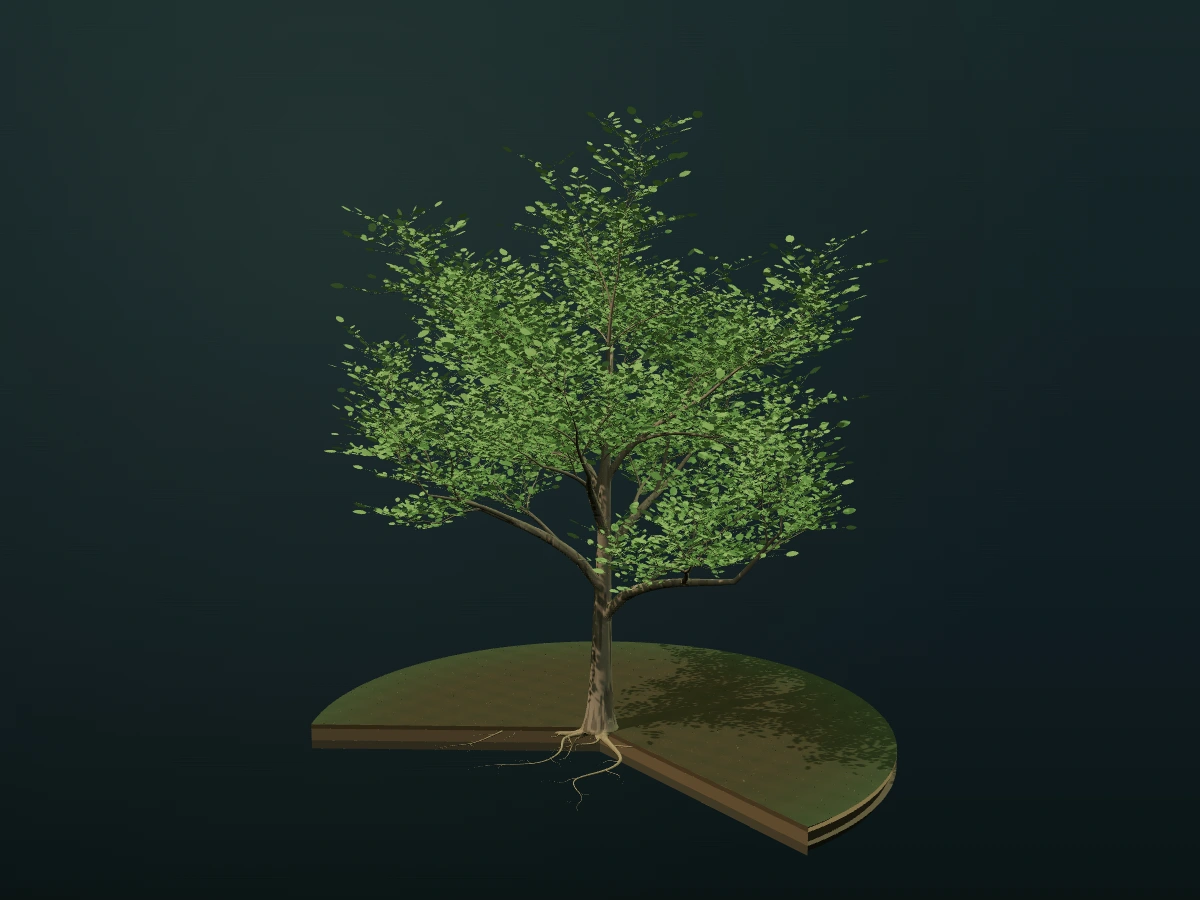
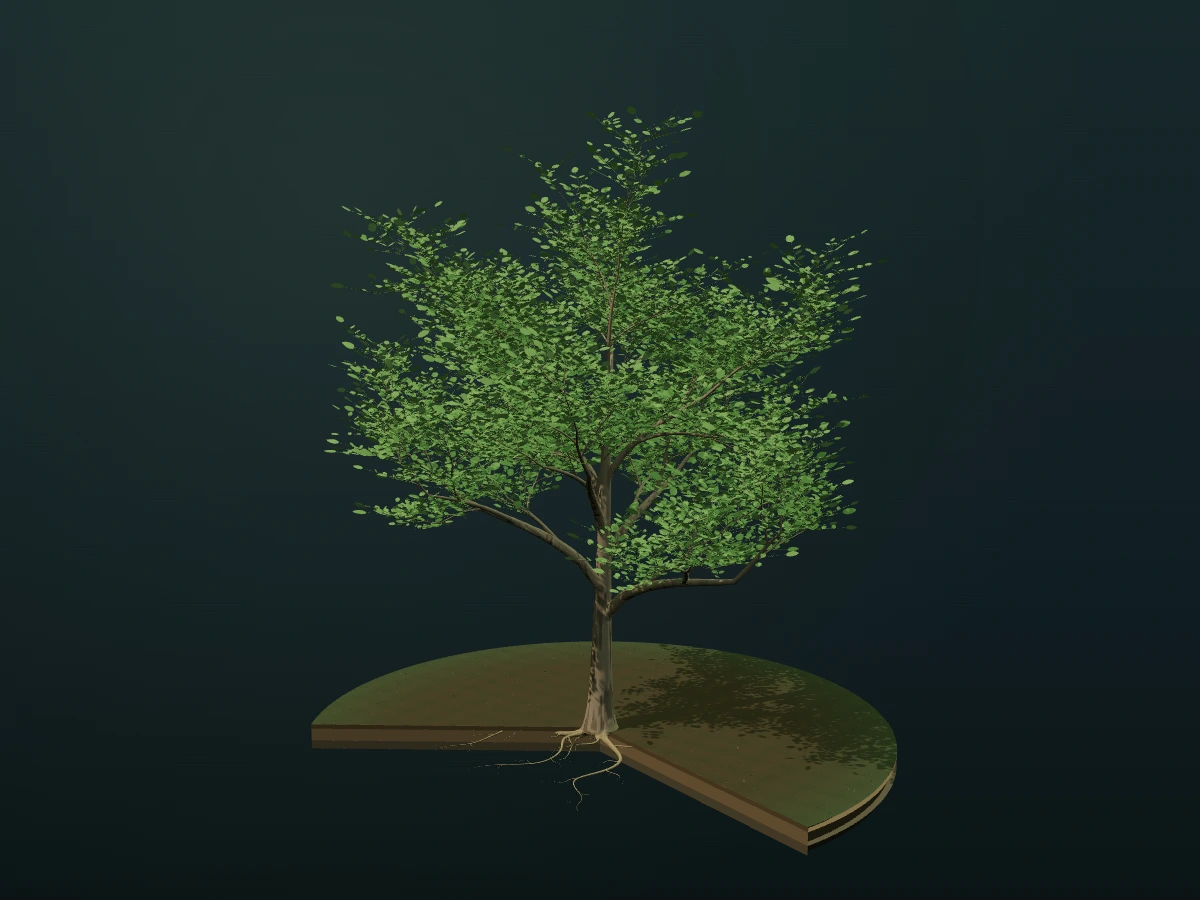
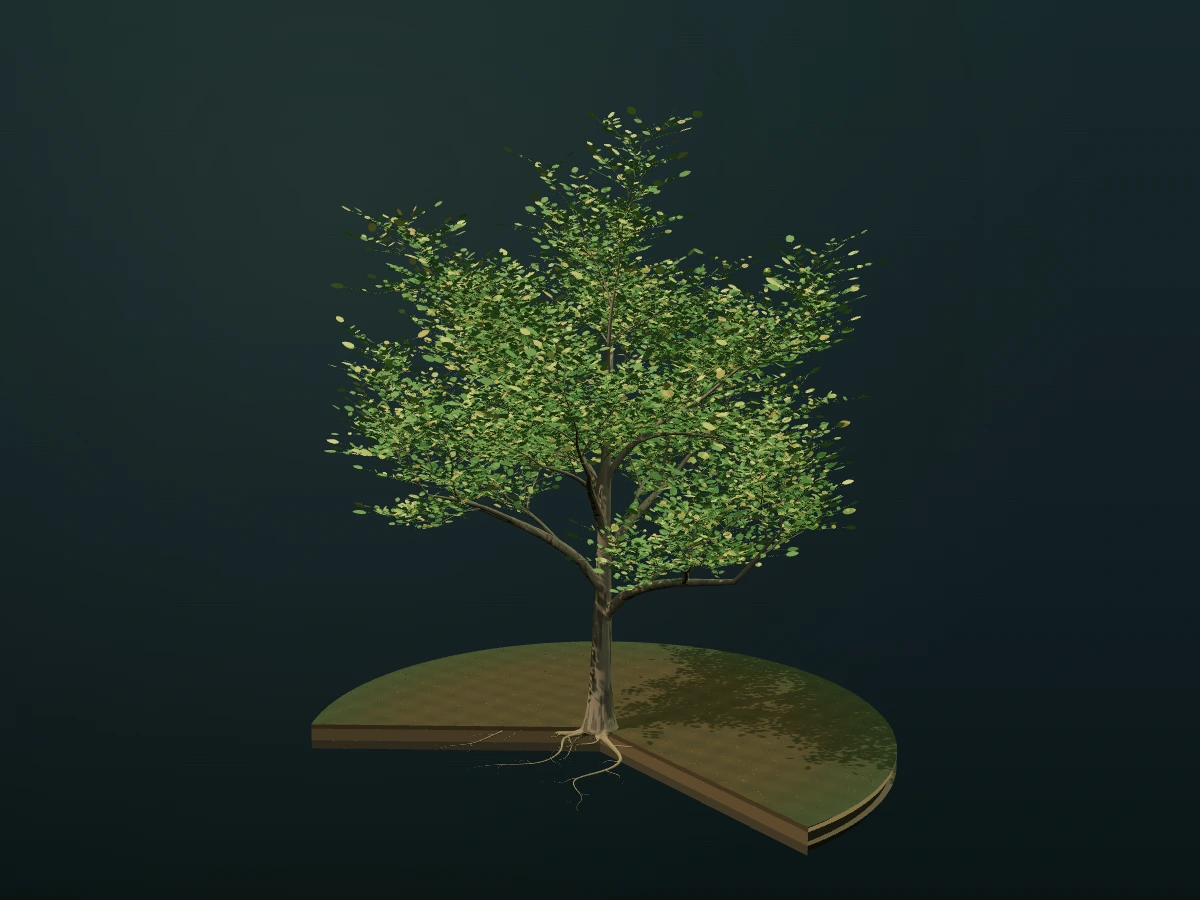
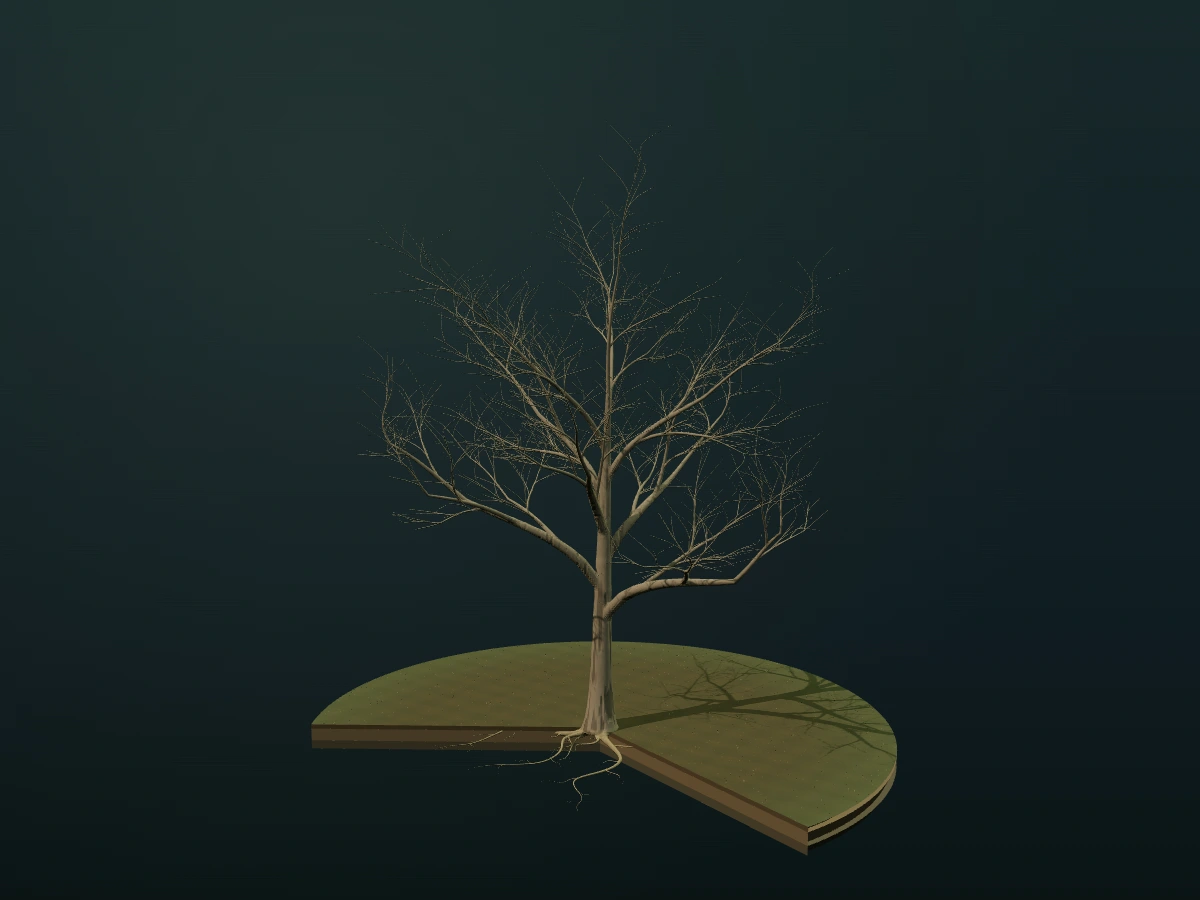
Seasonal illustration; the same plant, age and camera across four views.
Seasonal record
Reference region not specified in this record.
- Flowering
- Timing not documented
- Fruiting / dispersal
- Timing not documented
Leaf renewal
Deciduous[1]
The record describes a deciduous plant: foliage is renewed after a leafless or reduced-leaf phase. The named views illustrate that cycle without fixing its dates at a planting site.
Reading these views
Season names organize these four views, not a universal calendar. Hemisphere, local climate, cultivar and management can change timing; months are shown only when explicitly recorded.
The views emphasize crown structure. Buds, small flowers, individual retained leaves and fine reproductive changes may be unresolved; model age and fruit count are not production forecasts.
No separate on-tree fruit display is configured for this record.
Seasonal references
- International Dendrology Society · Carya texana ↗www.treesandshrubsonline.org
03 / Leaves & flowers
A closer look at the organs
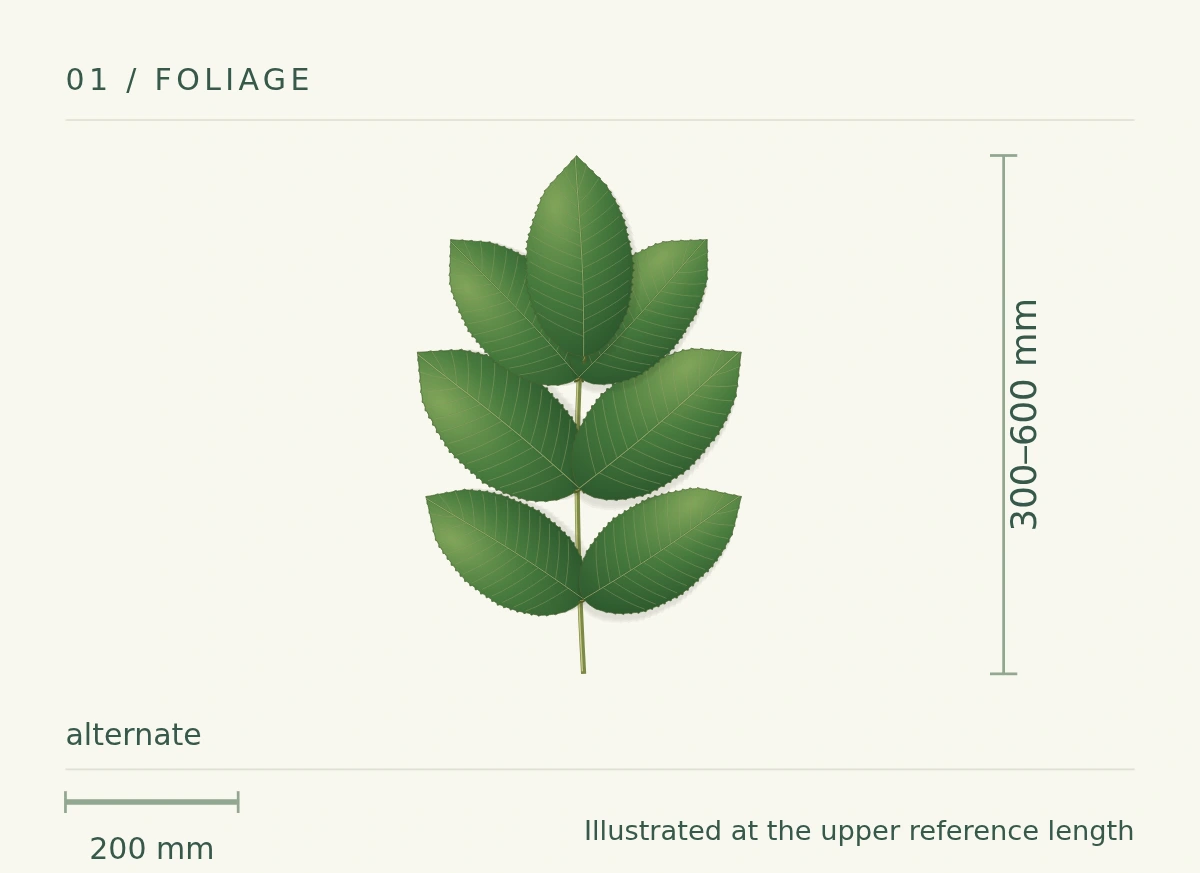
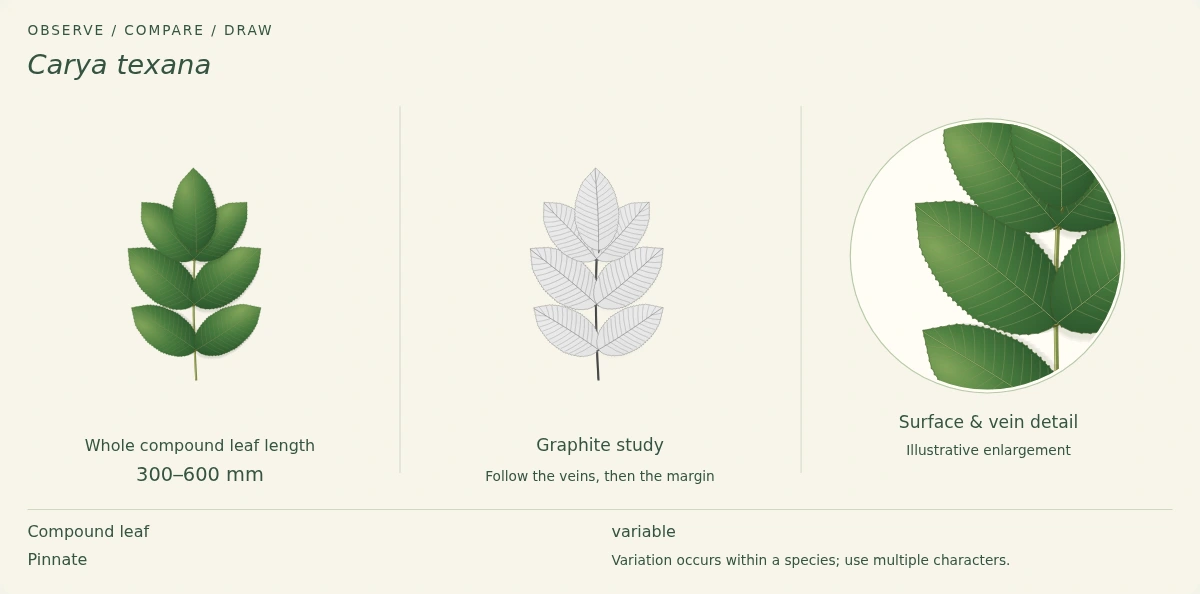
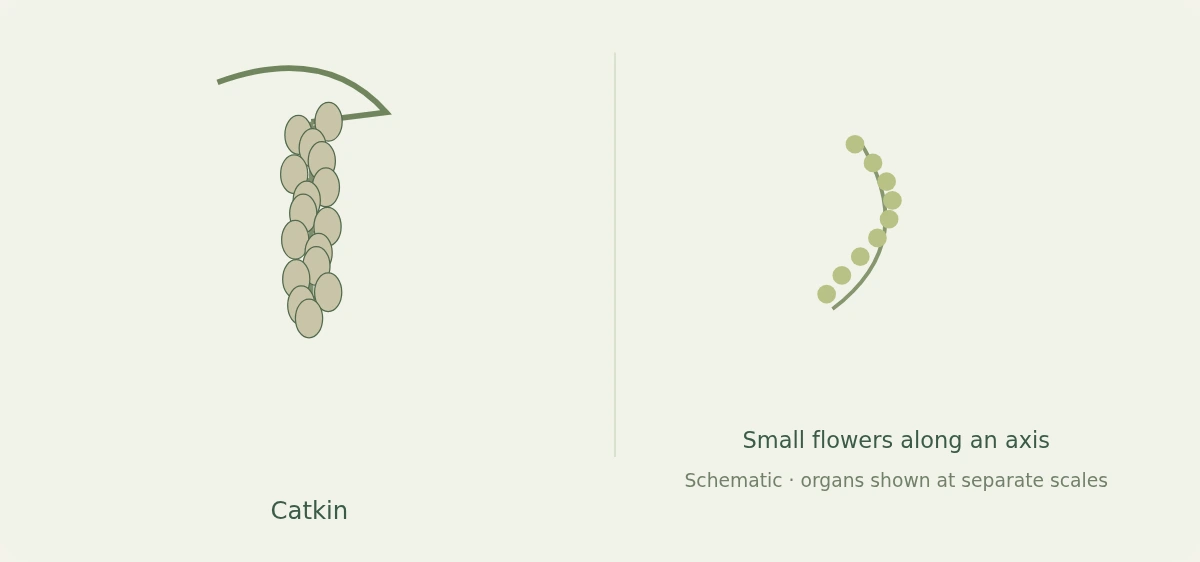
Leaves
- Whole compound leaf length
- 300–600 mmSource notes
Pinnate leaves carry paired leaflets along a rachis and a terminal leaflet.
Compound leaf · variable · Pinnate · alternate
Seasonal notes
Seasonal colours and dates are illustrative and vary with climate.
- Flowering reference
- Not documented
04 / Fruit & seed
Named structures, separate scales
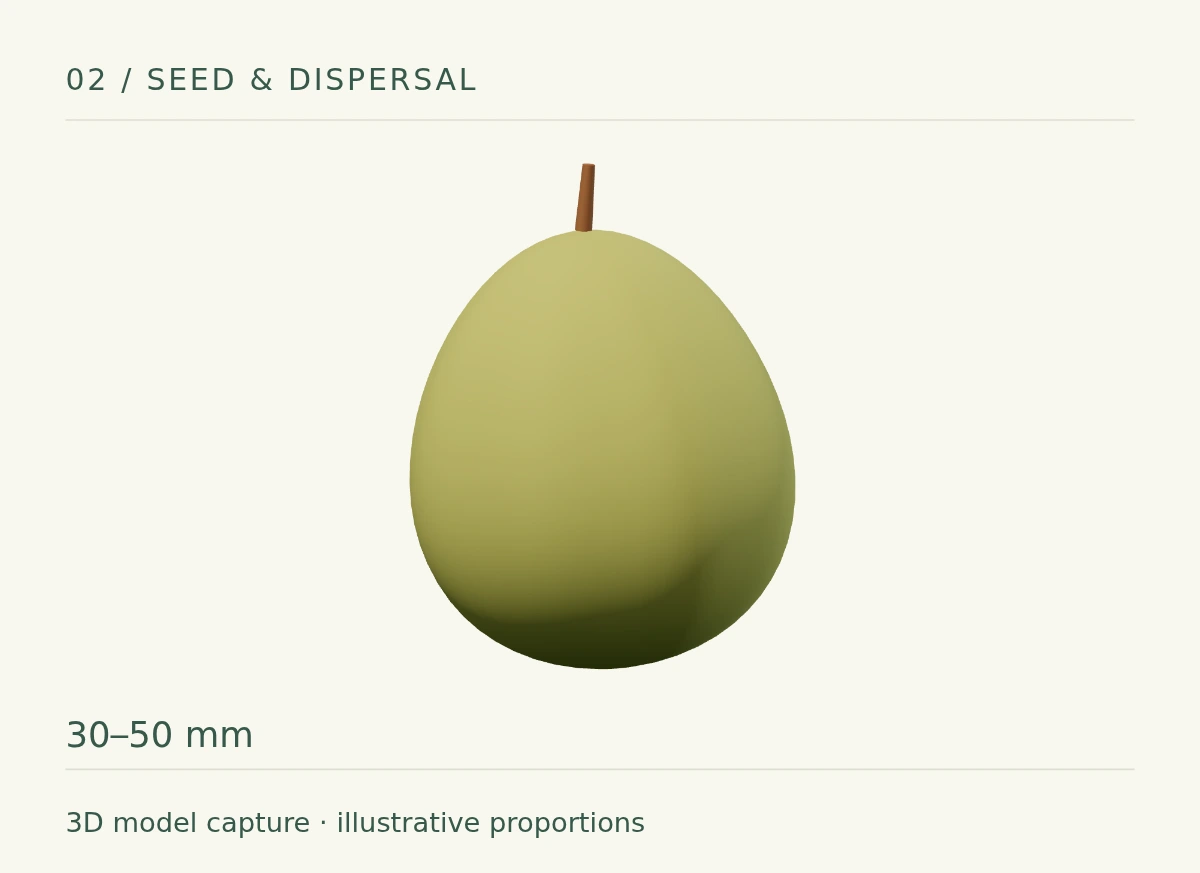
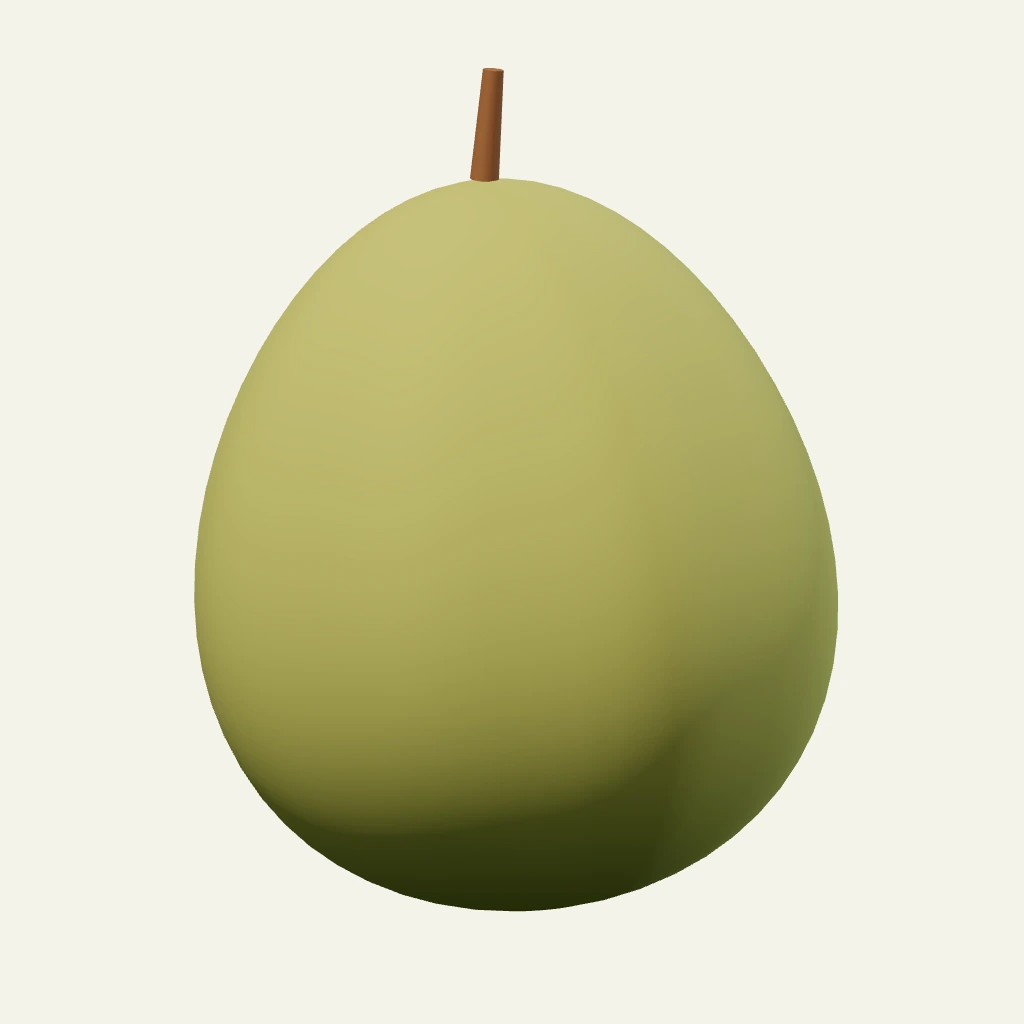
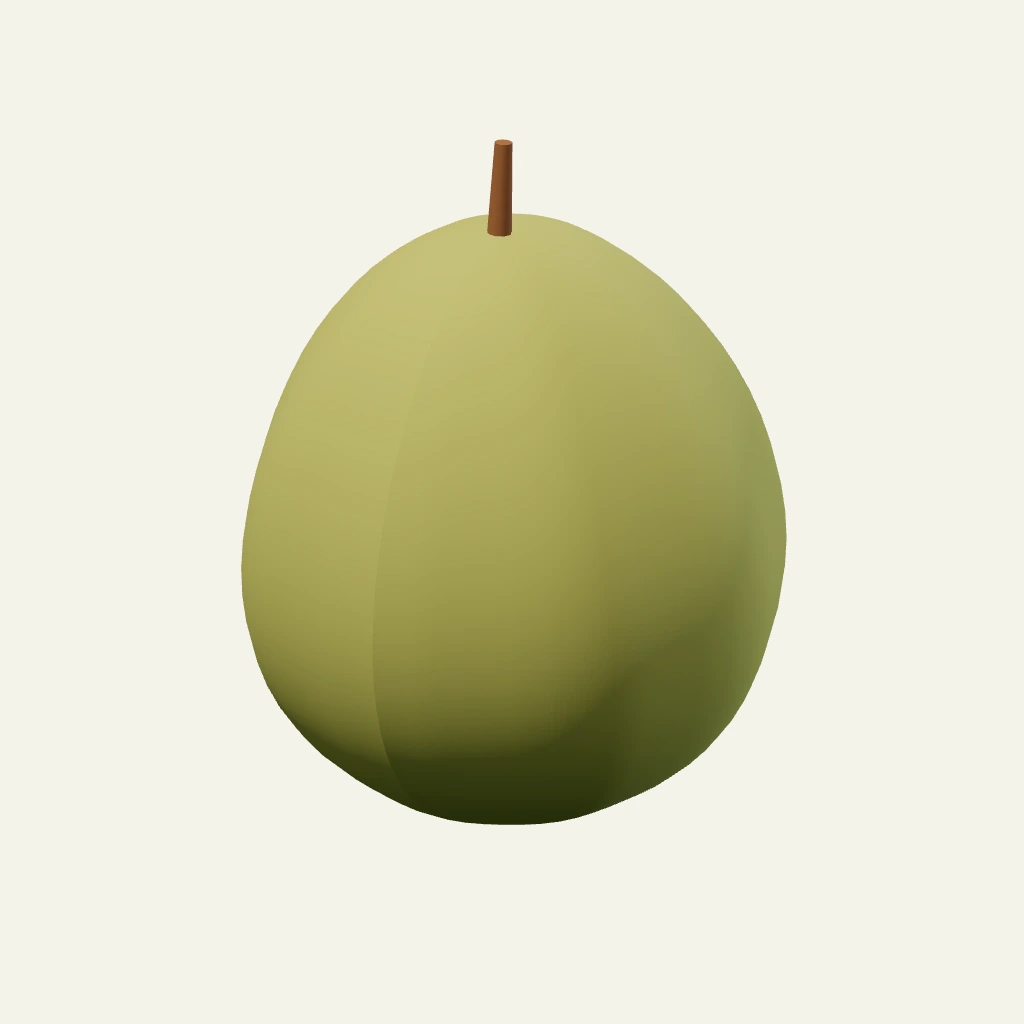
Fruit / dispersal unit
- Whole fruit length · husk included
- 30–50 mmSource notes
A husk encloses the hard nut. Length of the named reproductive unit, not the enclosed seed body.
- Fruiting reference
- Not documented
Organs are enlarged independently. Refer to the named measurement, not image size.
05 / Habitat
Native range & growing context
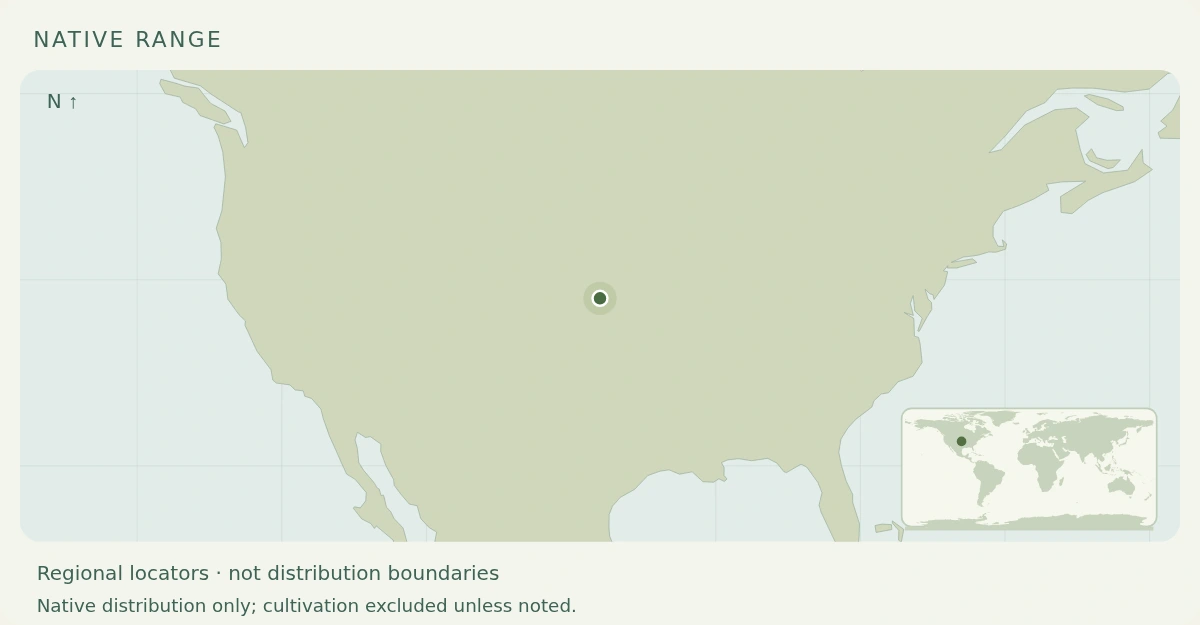
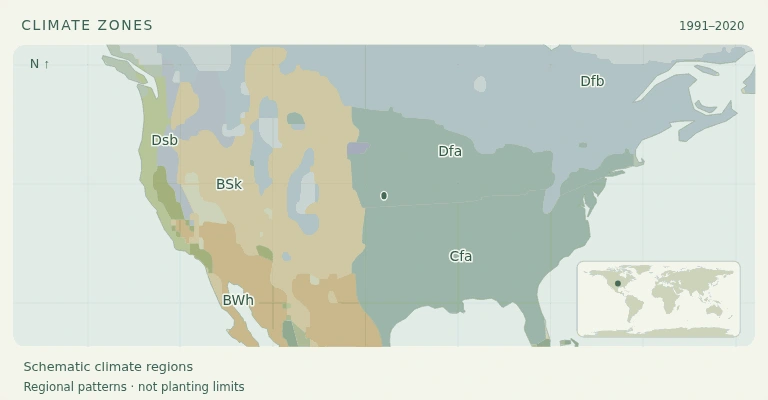
Native range & growing context
United States.
- Reference spread
- Not documented
- Moisture
- Not documented
- Growth tendency
- Not quantified in this account.
- Life span
- No numerical lifespan is assigned. Model age controls an illustration.
Regional context, not a measured occurrence or suitability map.
06 / Sources & interpretation
Read the evidence behind the illustration
Names & classification
- Family
- Juglandaceae
- Genus
- Carya
- Synonyms
- —
- Pinnate leaves carry paired leaflets along a rachis and a terminal leaflet.
- A husk encloses the hard nut.
Source-informed botanical illustration. Branch coordinates, crown proportions, colours, root extents and model ages are ArborAI. Leaves are enlarged for legibility. This is not a surveyed specimen or a calibrated growth forecast.
Source-informed botanical illustration. Branch coordinates, crown proportions, colours, root extents and model ages are ArborAI. Leaves are enlarged for legibility. This is not a surveyed specimen or a calibrated growth forecast.
- International Dendrology Society · Carya texana ↗www.treesandshrubsonline.org
- GBIF backbone · Carya texana ↗www.gbif.org
Plant data and references · 13
| Heightm | [null, 41]Usually a smaller tree; the source includes exceptional wild stature of 41 m.www.treesandshrubsonline.org |
|---|---|
| Spreadm | Not documentedUsually a smaller tree; the source includes exceptional wild stature of 41 m.www.treesandshrubsonline.org |
| Nativerange | United States.Usually a smaller tree; the source includes exceptional wild stature of 41 m.www.treesandshrubsonline.org |
| Leafhabitcategory | DeciduousUsually a smaller tree; the source includes exceptional wild stature of 41 m.www.treesandshrubsonline.org |
| Architecture leaves | Pinnate leaves carry paired leaflets along a rachis and a terminal leaflet.Usually a smaller tree; the source includes exceptional wild stature of 41 m.www.treesandshrubsonline.org |
| Architecture reproduction | A husk encloses the hard nut.Usually a smaller tree; the source includes exceptional wild stature of 41 m.www.treesandshrubsonline.org |
| Botany organs leaf lengthmm | [300, 600]Length describes the complete compound leaf; individual leaflet lengths are separate.www.treesandshrubsonline.org |
| Botany organs seed lengthmm | [30, 50]Length of the named reproductive unit, not the enclosed seed body.www.treesandshrubsonline.org |
| Botany shoot arrangementcategory | alternateUsually a smaller tree; the source includes exceptional wild stature of 41 m.www.treesandshrubsonline.org |
| Taxonomy familycategory | JuglandaceaeUsually a smaller tree; the source includes exceptional wild stature of 41 m.www.gbif.org |
| Lightcategory | []Usually a smaller tree; the source includes exceptional wild stature of 41 m.www.treesandshrubsonline.org |
| Moisturecategory | []Usually a smaller tree; the source includes exceptional wild stature of 41 m.www.treesandshrubsonline.org |
| Hardinesscategory | {"system": "USDA", "zones": [5, 9], "source": "ids", "zoneLabels": ["5", "9"], "basis": "reported-range", "sourceReported": "5-9"}Usually a smaller tree; the source includes exceptional wild stature of 41 m.www.treesandshrubsonline.org |