Botanical field guide
Dalbergia sissoo
Indian rosewood
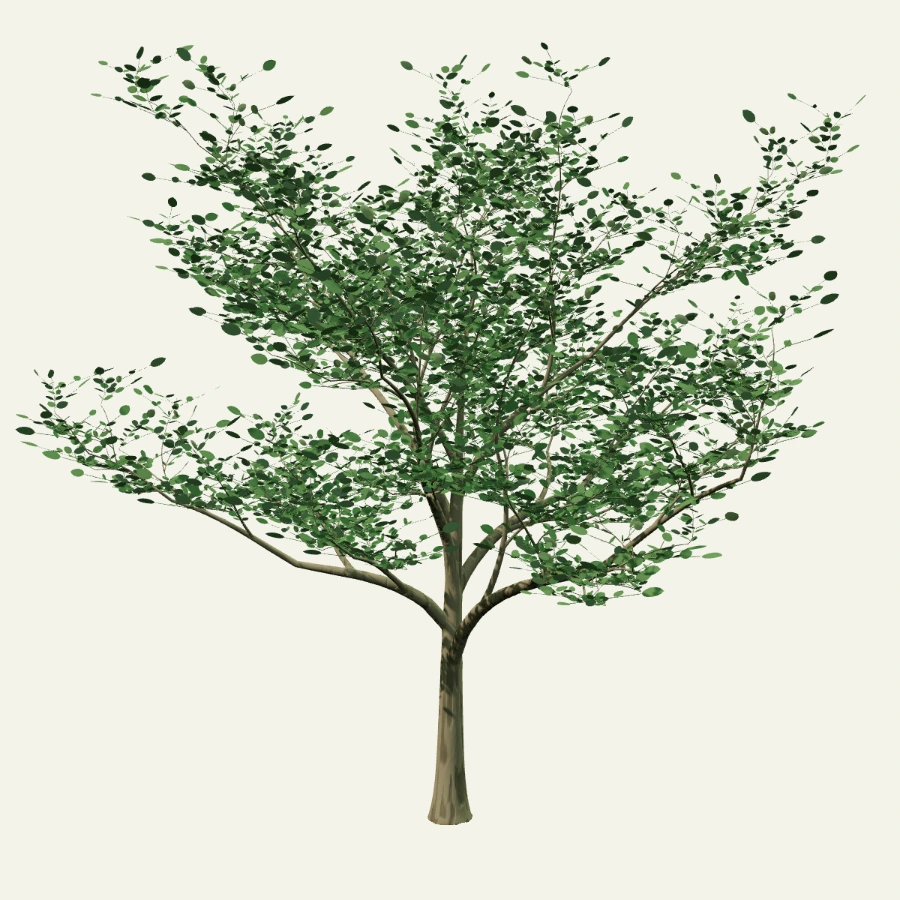
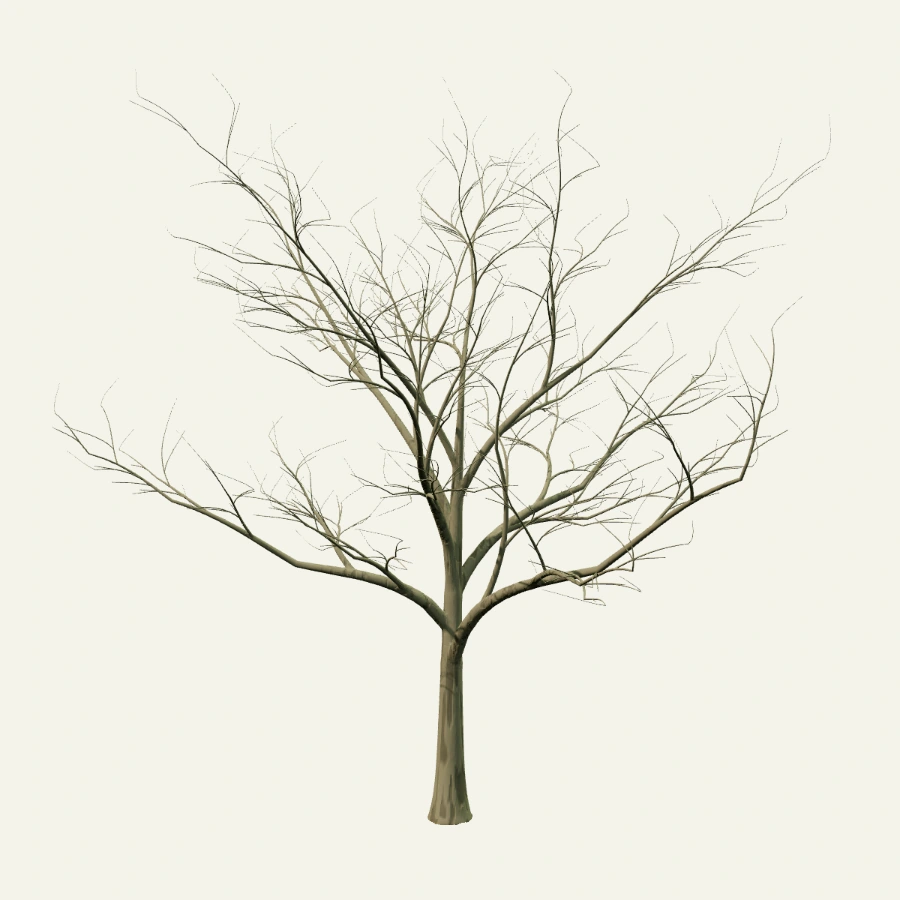
Tree / Fabaceae
The plant, in detail
Native biome in the Kew account: seasonally dry tropical.
- Reference height
- ≤ 30 m
- Foliage habit
- Deciduous
- USDA zones
- Not documented
- Light
- Not documented
Reference adult stature from the cited account; geography, growing conditions and management affect size. This is not a universal maximum or a planting prescription.
Crown
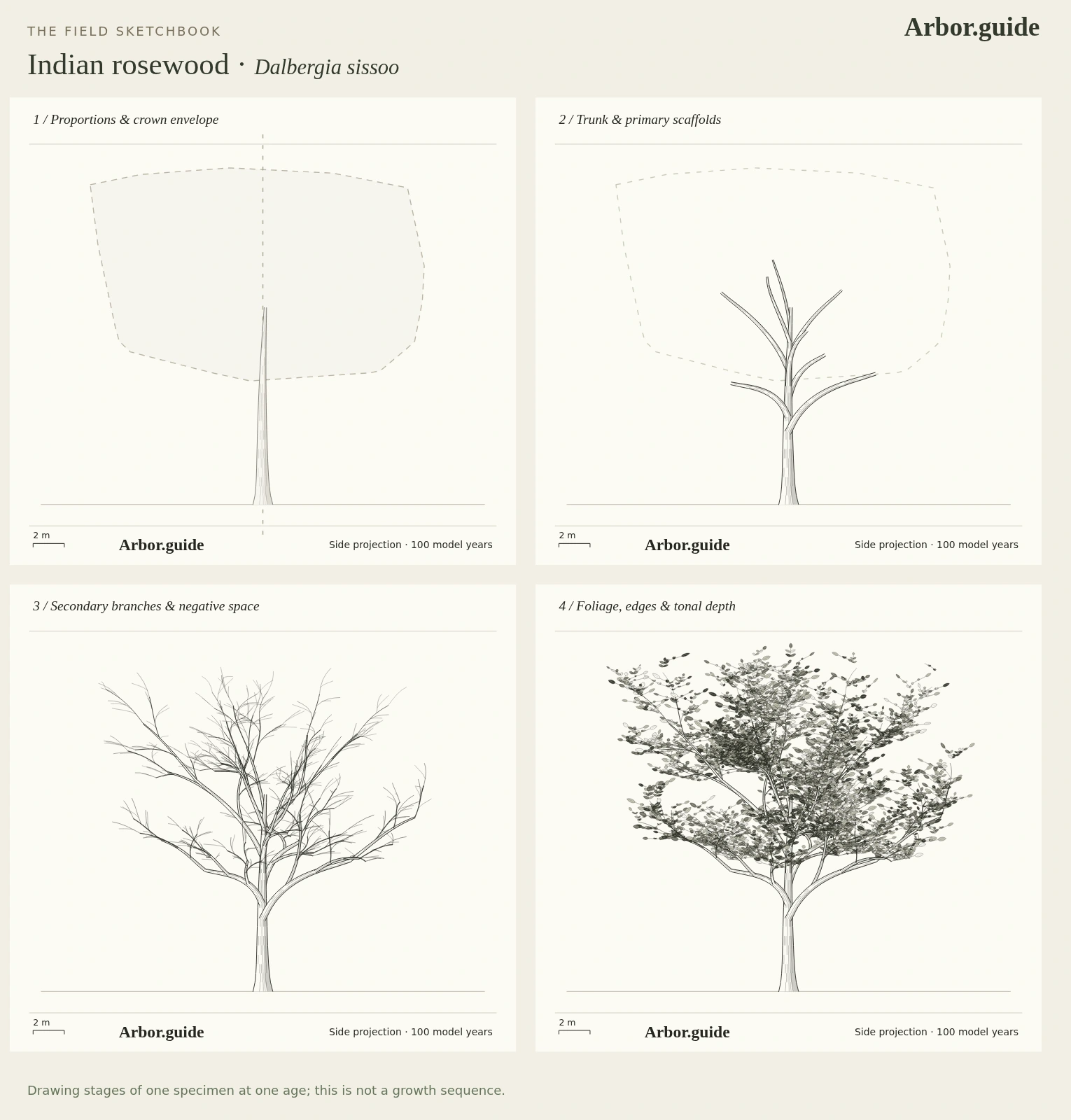
A spreading, open crown rises above rough, longitudinally fissured bark.
Branching
A spreading, open crown rises above rough, longitudinally fissured bark.
Bark
A spreading, open crown rises above rough, longitudinally fissured bark.
Roots
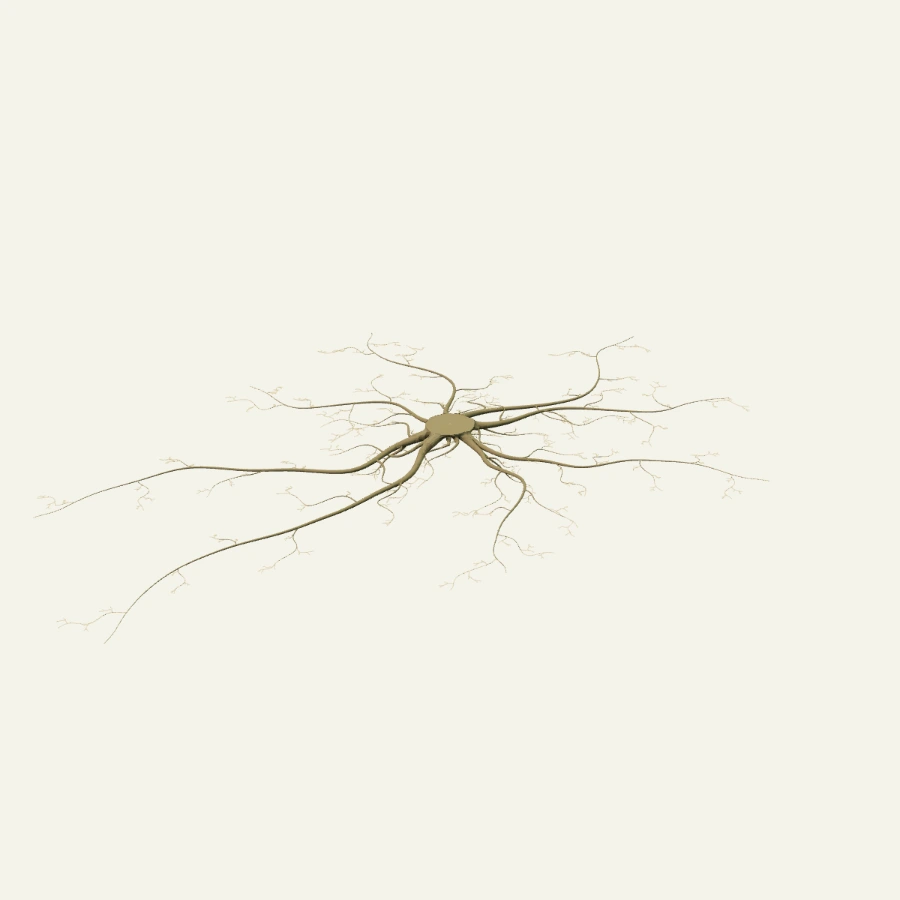
Root paths, depth and spread are schematic; no measured root survey is assigned.
The shape of growth
Stylized real-world examples
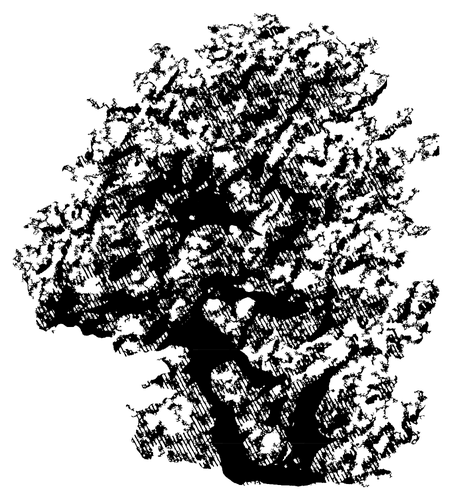
Silhouettes are sized independently.
02 / Seasons
Through the seasons
Four portraits. One plant.
Read the crown, foliage and reproductive structures together. The four views compare seasonal appearances; the reference notes explain what is actually documented.
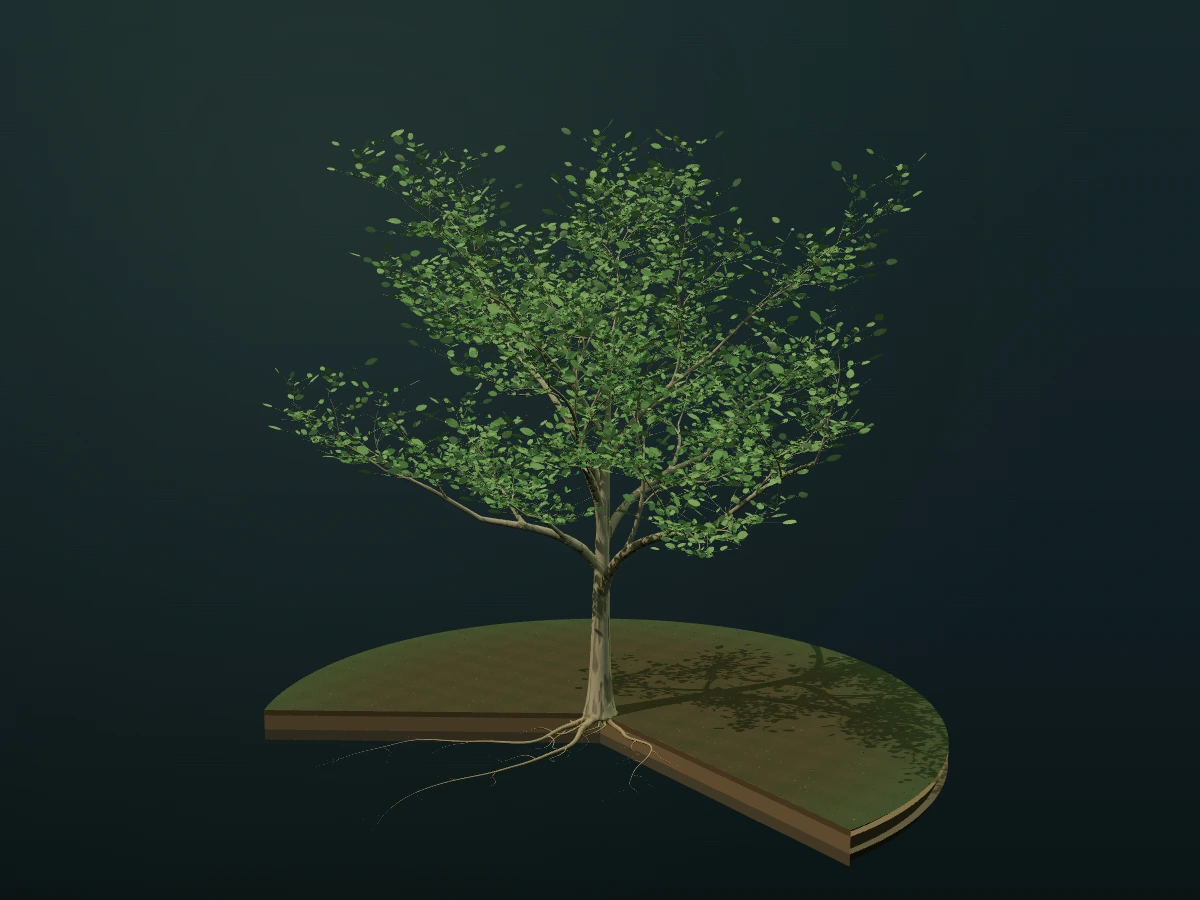
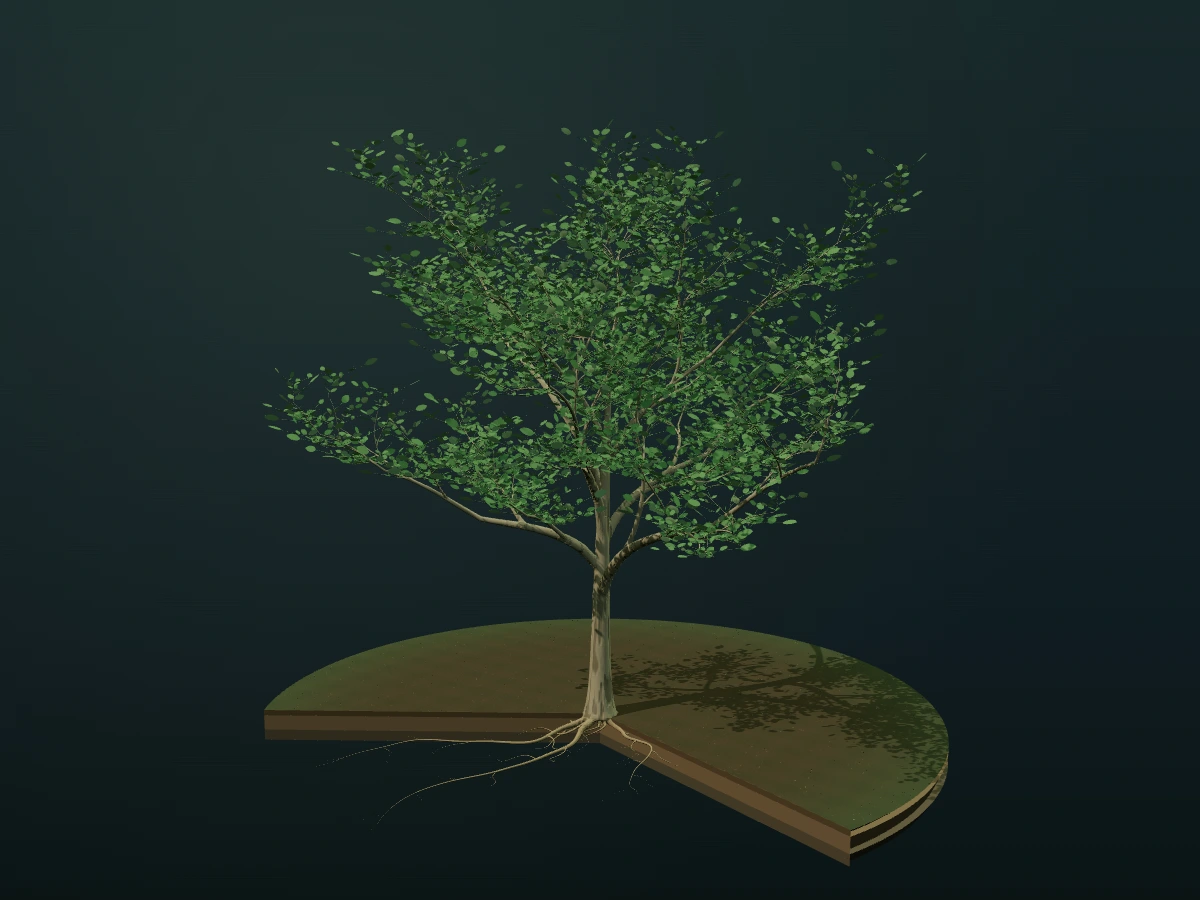
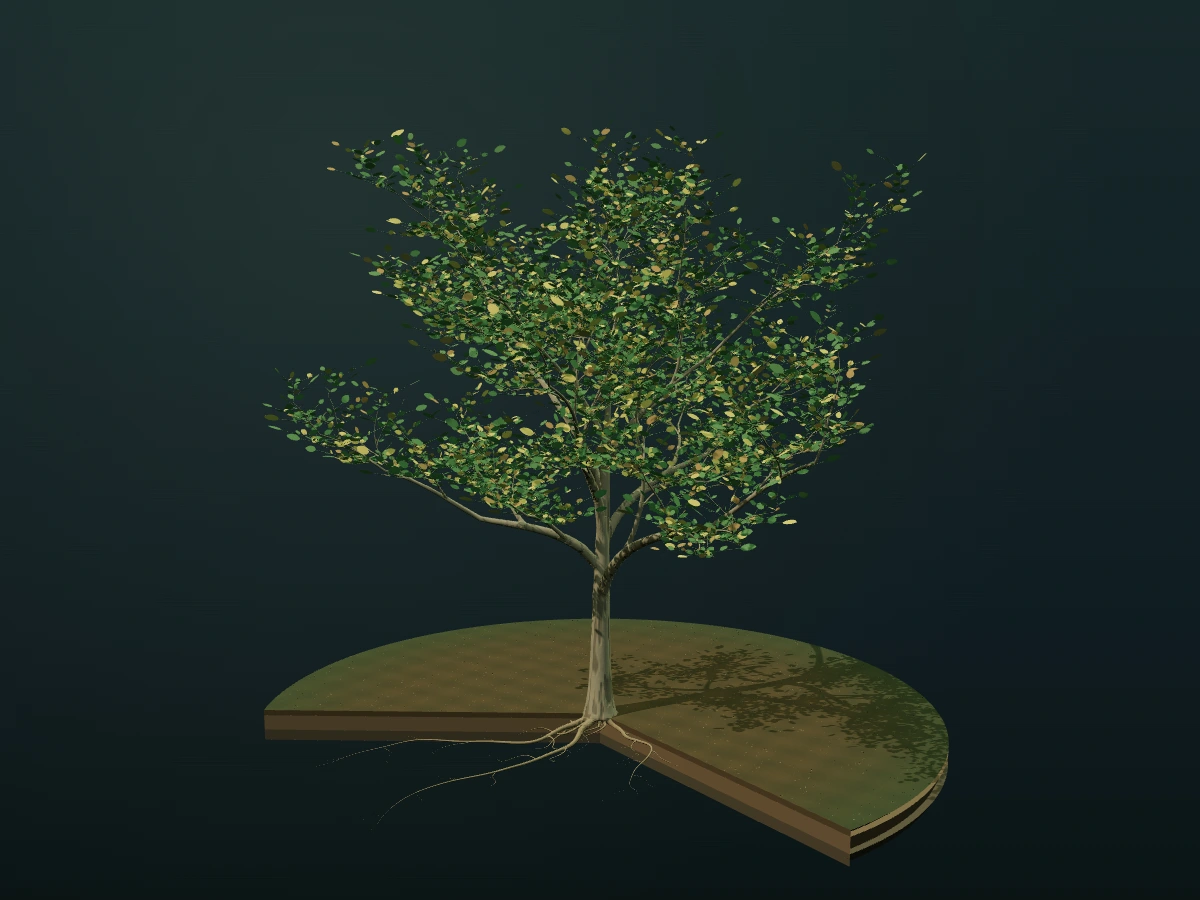
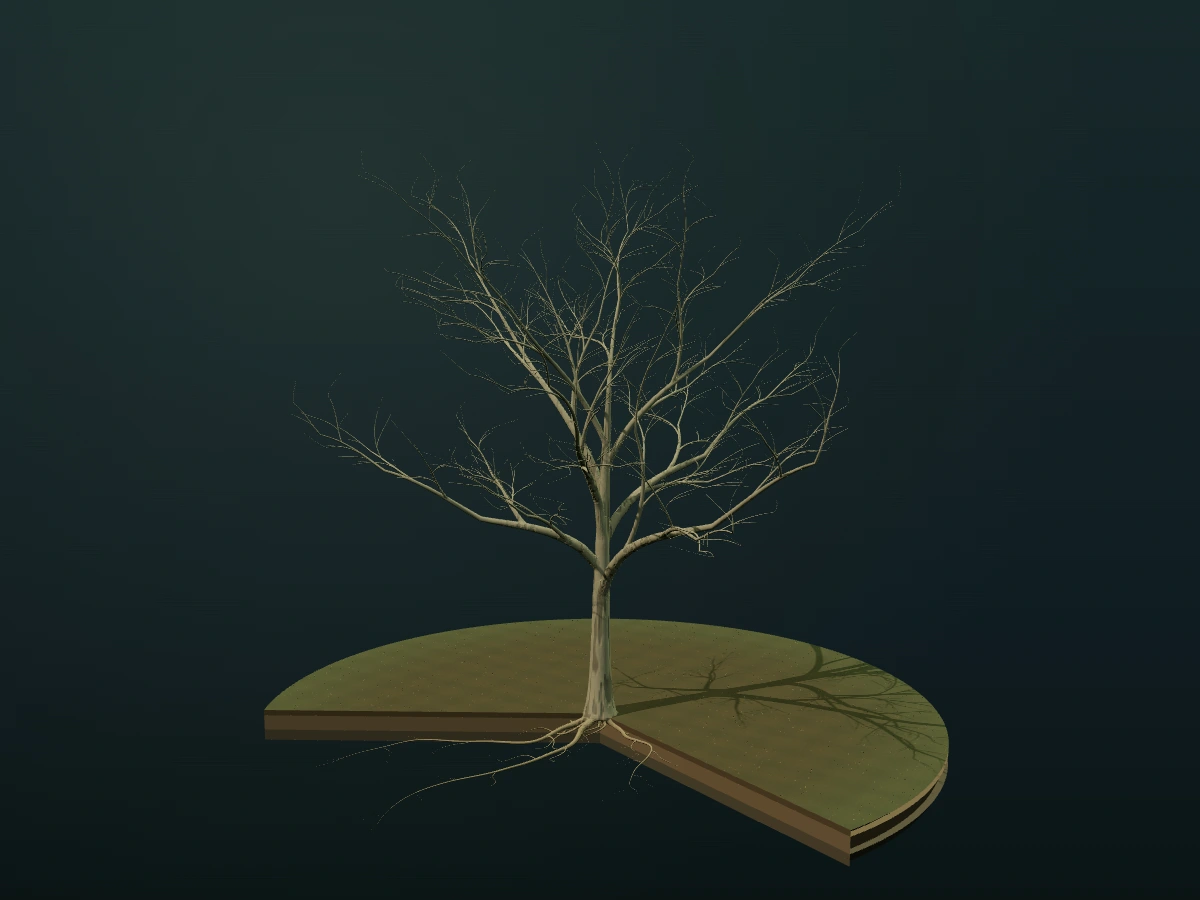
Seasonal illustration; the same plant, age and camera across four views.
Seasonal record
No fixed regional flowering or fruiting calendar is assigned from the reviewed sources.
- Flowering
- Timing not documented
- Fruiting / dispersal
- Timing not documented
Leaf renewal
Deciduous[1]
The record describes a deciduous plant: foliage is renewed after a leafless or reduced-leaf phase. The named views illustrate that cycle without fixing its dates at a planting site.
Reading these views
Season names organize these four views, not a universal calendar. Hemisphere, local climate, cultivar and management can change timing; months are shown only when explicitly recorded. In tropical or monsoonal settings, rainfall and growth flushes may matter more than four temperate seasons. The guide does not invent a wet/dry-season schedule.
The views emphasize crown structure. Buds, small flowers, individual retained leaves and fine reproductive changes may be unresolved; model age and fruit count are not production forecasts.
No separate on-tree fruit display is configured for this record.
Seasonal references
- World Agroforestry · botanical account ↗apps.worldagroforestry.org
03 / Foliage
A closer look at the organs
Leaves
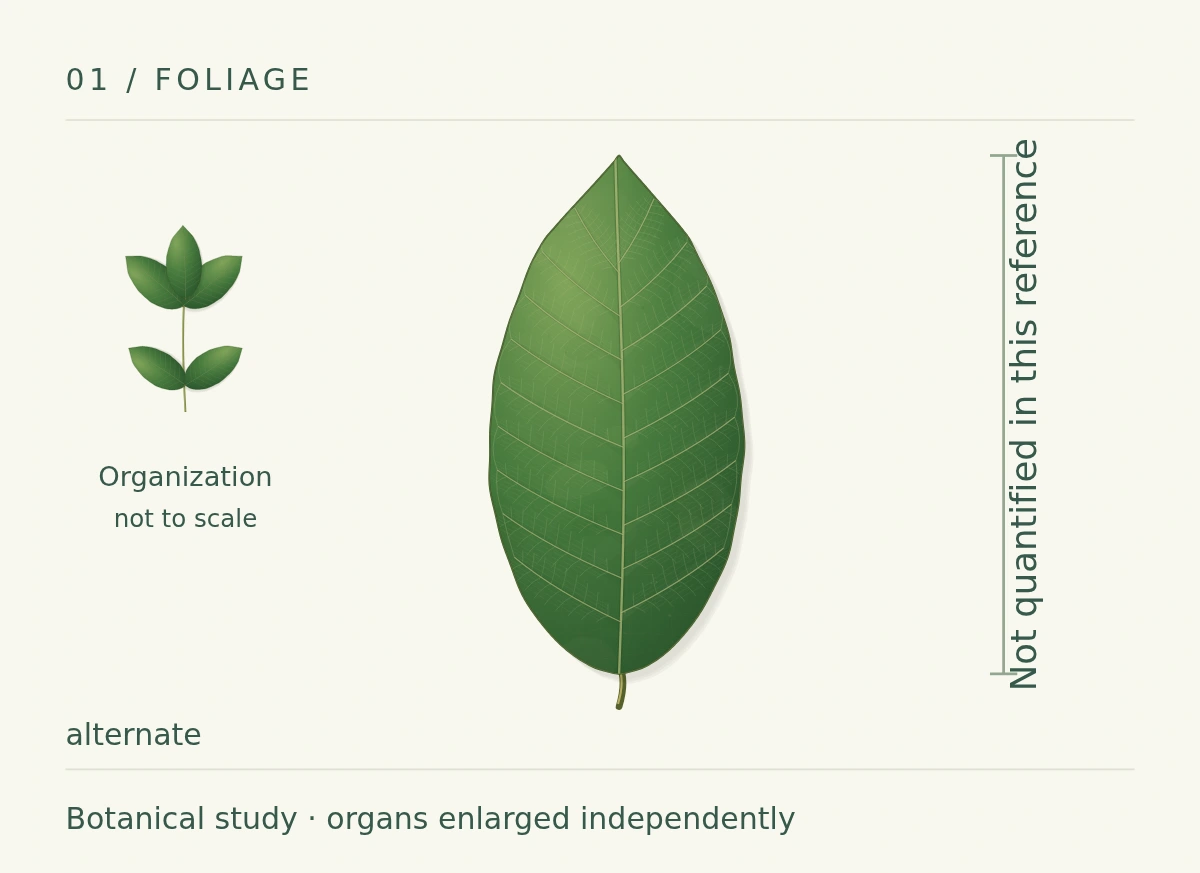
- Individual leaflet length
- Not documentedSource notes
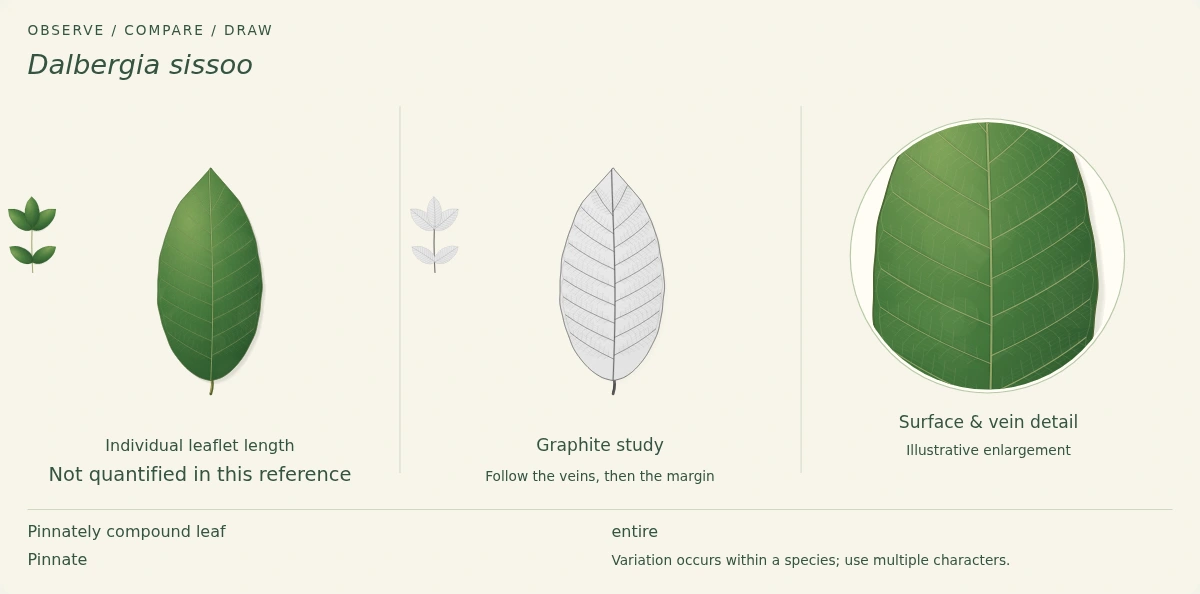
Pinnate leaves carry a few broad, pointed leaflets on slender stalks.
Pinnately compound leaf · entire · Pinnate · alternate
Seasonal notes
The four-season rendering is an ArborAI comparison; local rainfall and temperature control actual leaf turnover.
- Flowering reference
- Not documented
04 / Fruit & seed
Named structures, separate scales
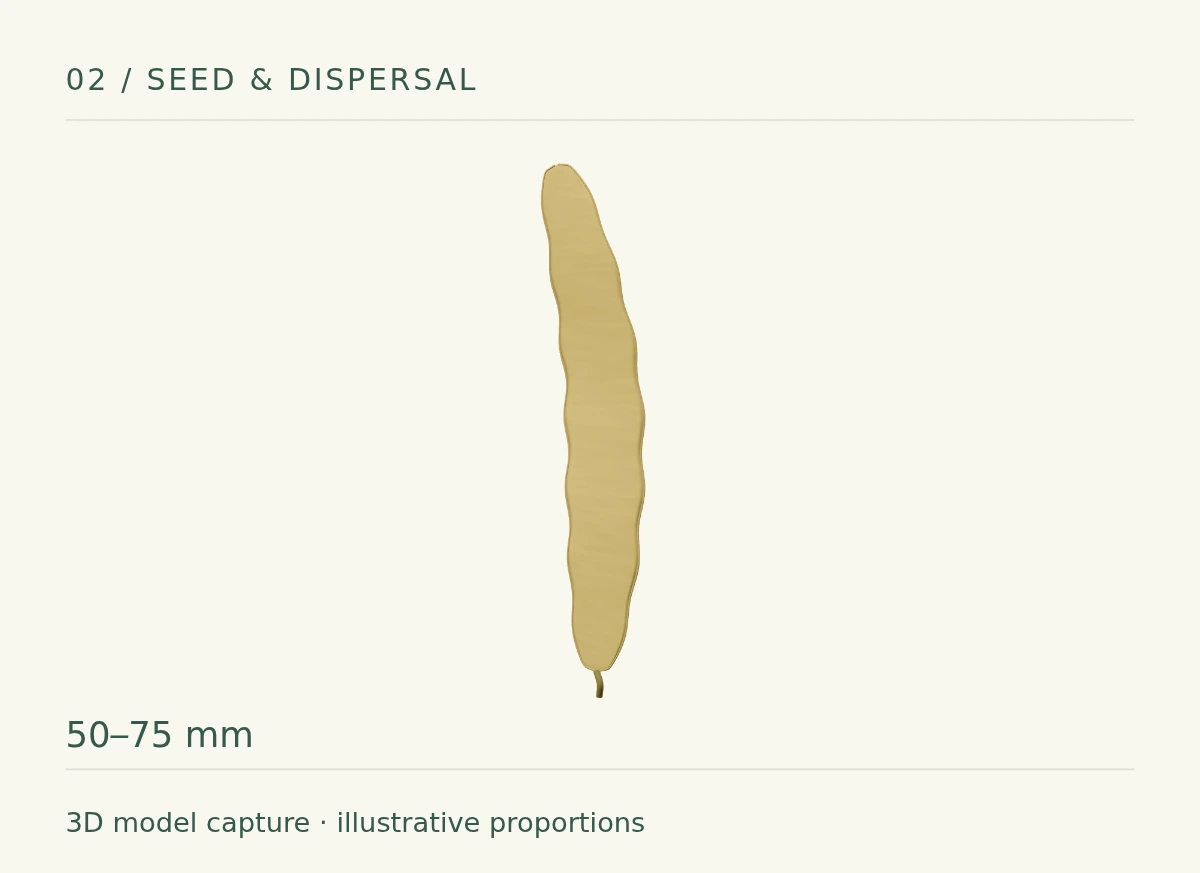
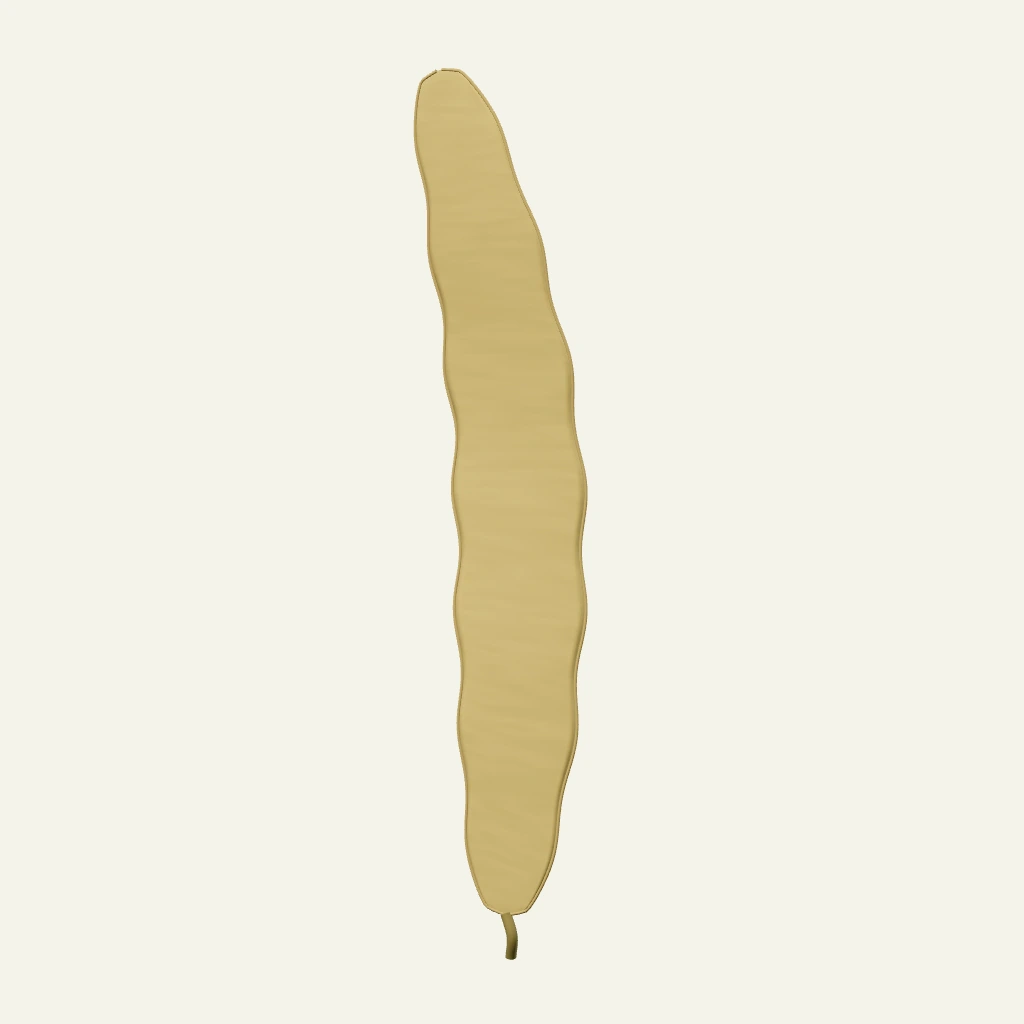
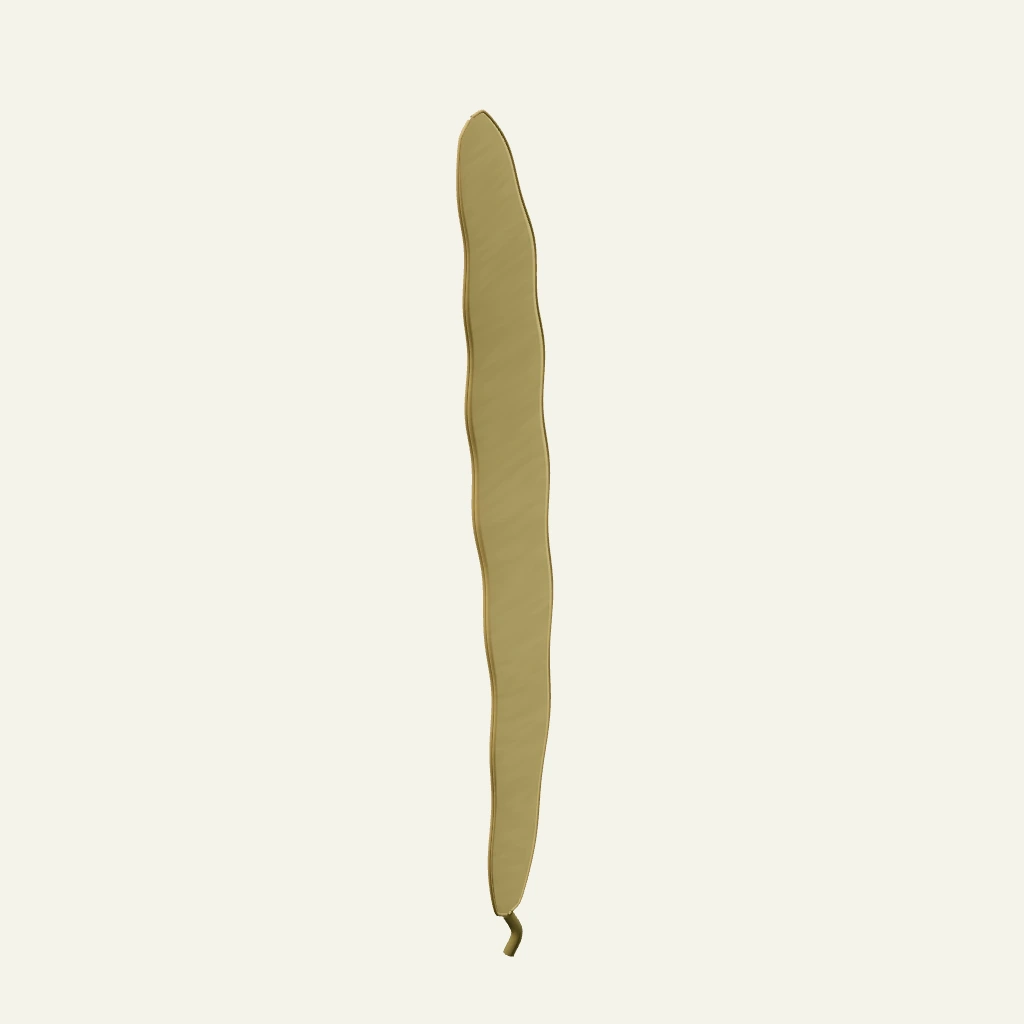
Fruit / dispersal unit
- Whole pod length
- 50–75 mmSource notes
Thin, flat, pale-brown pods enclose separate seeds and remain closed at maturity.
- Fruiting reference
- Not documented
No fixed regional flowering or fruiting calendar is assigned from the reviewed sources.
Organs are enlarged independently. Refer to the named measurement, not image size.
05 / Habitat
Native range & growing context
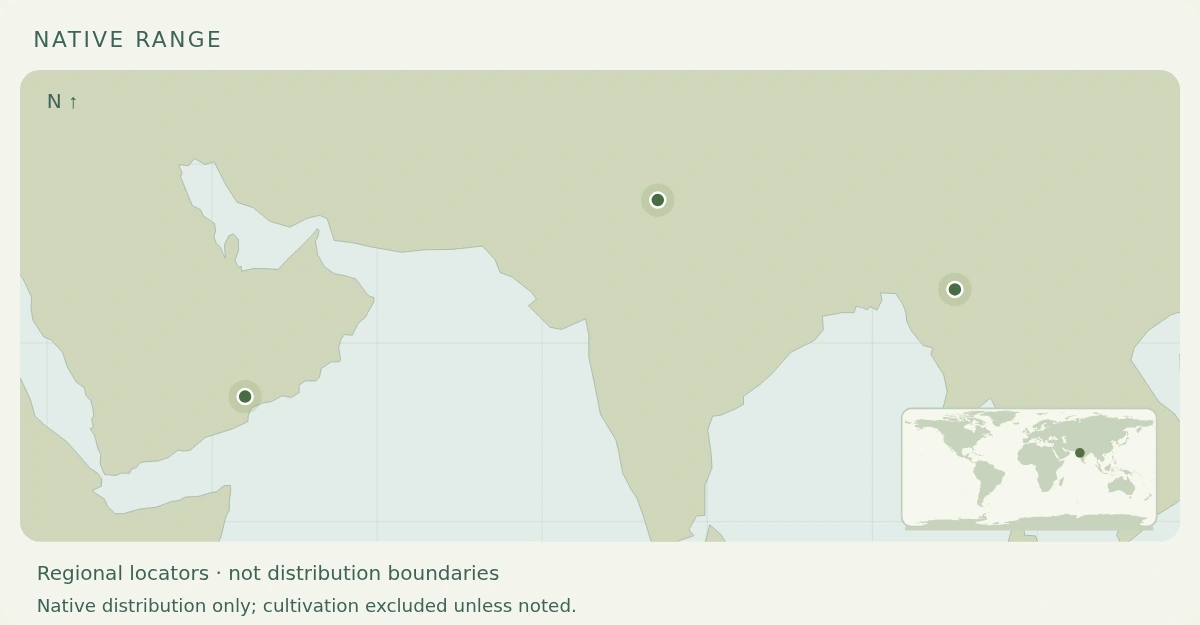
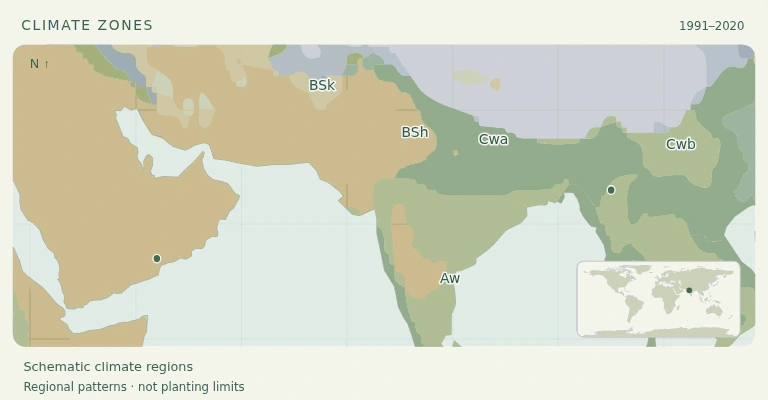
Native range & growing context
Southern Arabian Peninsula to Myanmar.
- Reference spread
- Not documented
- Moisture
- Not documented
- Growth tendency
- Not documented
- Life span
- No numerical lifespan is assigned; model age is an ArborAI illustration parameter.
Regional context, not a measured occurrence or suitability map.
06 / Sources & interpretation
Read the evidence behind the illustration
Names & classification
- Family
- Fabaceae
- Genus
- Dalbergia
- Synonyms
- —
- Pinnate leaves carry a few broad, pointed leaflets on slender stalks.
- Thin, flat, pale-brown pods enclose separate seeds and remain closed at maturity.
- A spreading, open crown rises above rough, longitudinally fissured bark.
ArborAI botanical teaching models. Branch positions, crown proportions, root paths, organ display sizes and model ages are illustrative, not measured specimens or calibrated growth forecasts.
ArborAI botanical teaching models. Branch positions, crown proportions, root paths, organ display sizes and model ages are illustrative, not measured specimens or calibrated growth forecasts.
- World Agroforestry · botanical account ↗apps.worldagroforestry.org
- Royal Botanic Gardens Kew · Plants of the World Online ↗powo.science.kew.org
Plant data and references · 8
| Reference heightm | [null, 30]Reference adult stature from the cited account; geography, growing conditions and management affect size. This is not a universal maximum or a planting prescription.apps.worldagroforestry.org |
|---|---|
| Native range | Southern Arabian Peninsula to Myanmar.Current accepted species distribution; model locators are authored.powo.science.kew.org |
| Leaf measurementmm | Not documentedThe measurement describes the named leaf unit; petiole length and the dimensions of a whole compound leaf are separate.apps.worldagroforestry.org |
| Seed measurementmm | [50, 75]Length of the named reproductive unit. The measurement describes the named reproductive unit; enclosed seeds and visible accessory structures are separate.apps.worldagroforestry.org |
| Leaf morphology | Pinnate leaves carry a few broad, pointed leaflets on slender stalks.Diagnostic adult foliage; illustrated positions and counts remain authored.apps.worldagroforestry.org |
| Reproductive morphology | Thin, flat, pale-brown pods enclose separate seeds and remain closed at maturity.Named reproductive structure; fruit walls, seeds and accessory structures are distinguished.apps.worldagroforestry.org |
| Reference retentioncategory | DeciduousThe four-season rendering is an authored comparison; local rainfall and temperature control actual leaf turnover.apps.worldagroforestry.org |
| Architecture | A spreading, open crown rises above rough, longitudinally fissured bark.Qualitative architecture; all geometric proportions remain authored.apps.worldagroforestry.org |