Arbor.guide

Botanical field guide

Quercus robur

English oak

0295 / 2,347

Tree / Fagaceae

The plant, in detail

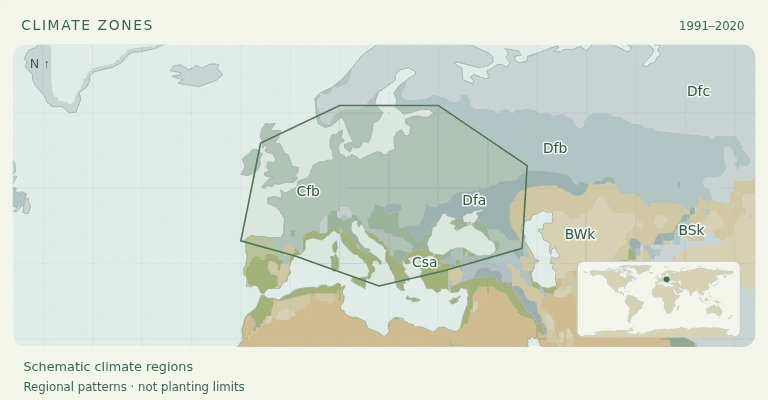
Temperate woodland, lowlands and open parkland; many soil types where rooting conditions permit.

Reference height
20–30 m
Foliage habit
Deciduous
USDA zones
5–8
Light
Not documented

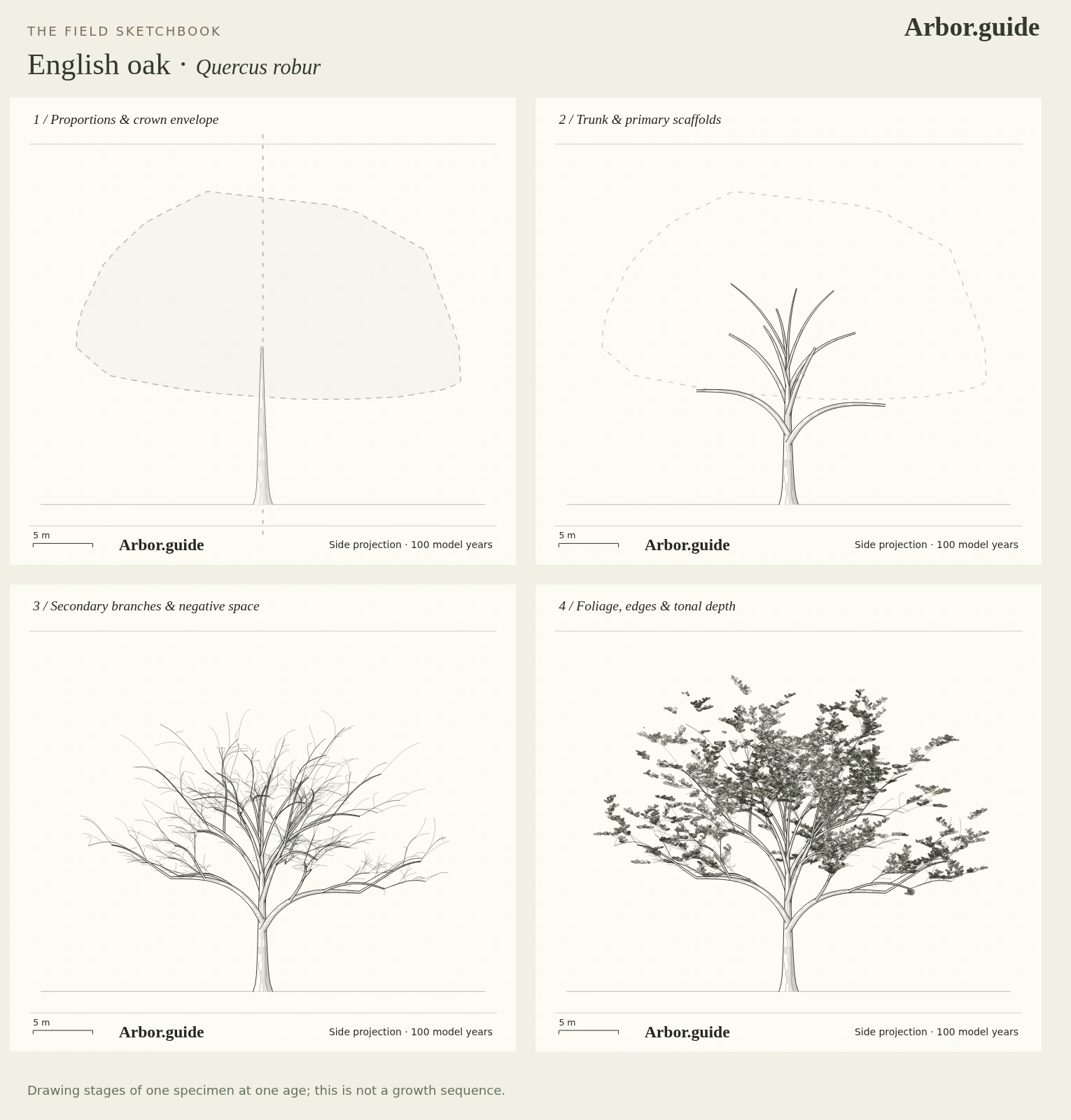
The spreading model represents an open-grown tree. Its stage ages and dimensions do not predict an individual oak; veteran hollowing and crown retrenchment are not simulated.

Crown

An open-grown oak develops a broad, irregular dome supported by substantial limbs. Crowded woodland trees tend to carry smaller crowns above longer clear trunks. Veteran crowns may retrench as limbs die and new shoots develop lower down.

Branching

Alternate buds and shoots build an irregular framework. A strong juvenile axis can give way to several major limbs; light, browsing and damage shape the result. The characteristic mature structure is not a repeated, perfectly symmetric fork.

Bark

Young stems are comparatively smooth. With increasing girth the bark becomes dark, ridged and deeply fissured; this surface change records expansion and weathering rather than the number of years directly.

Roots

Young oaks can establish a strong primary root. Mature architecture includes extensive lateral roots and, where soil allows, descending roots. Shallow or restrictive soils favor a different geometry; a single deep taproot is not a universal lifelong template.

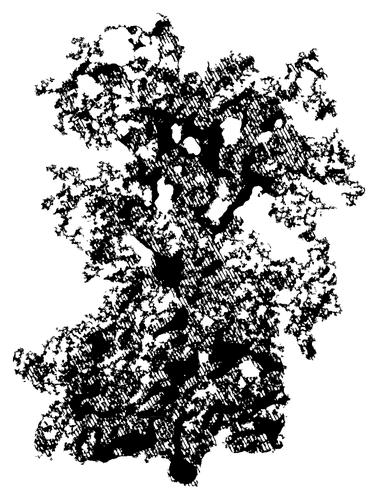
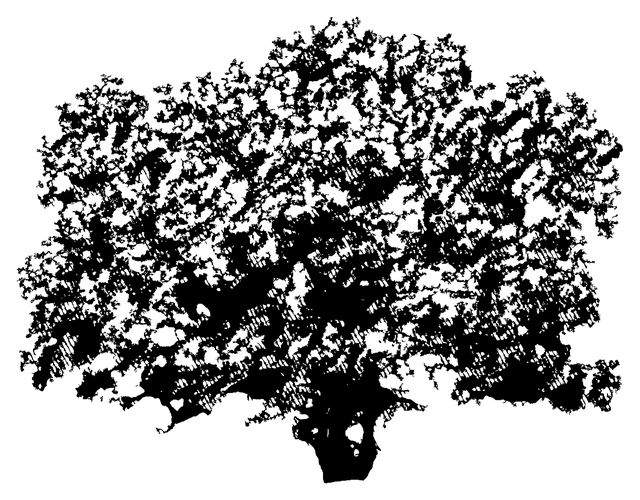
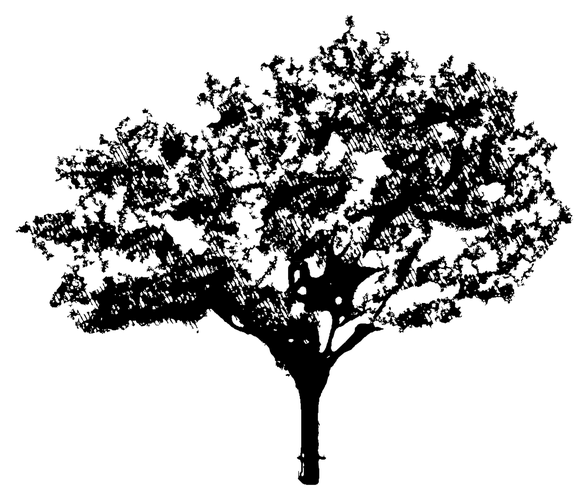
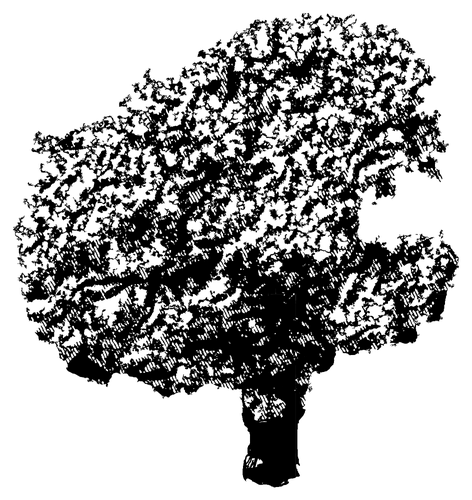
The shape of growth

Stylized real-world examples

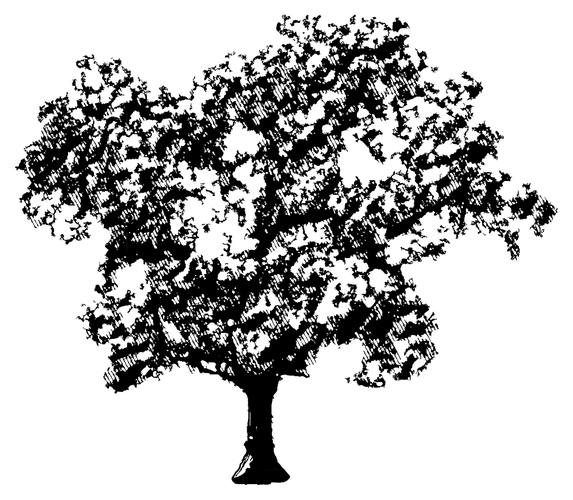
  • Tree silhouette 1
  • Tree silhouette 2
  • Tree silhouette 3
  • Tree silhouette 4
  • Tree silhouette 5

Silhouettes are sized independently.

Root studies

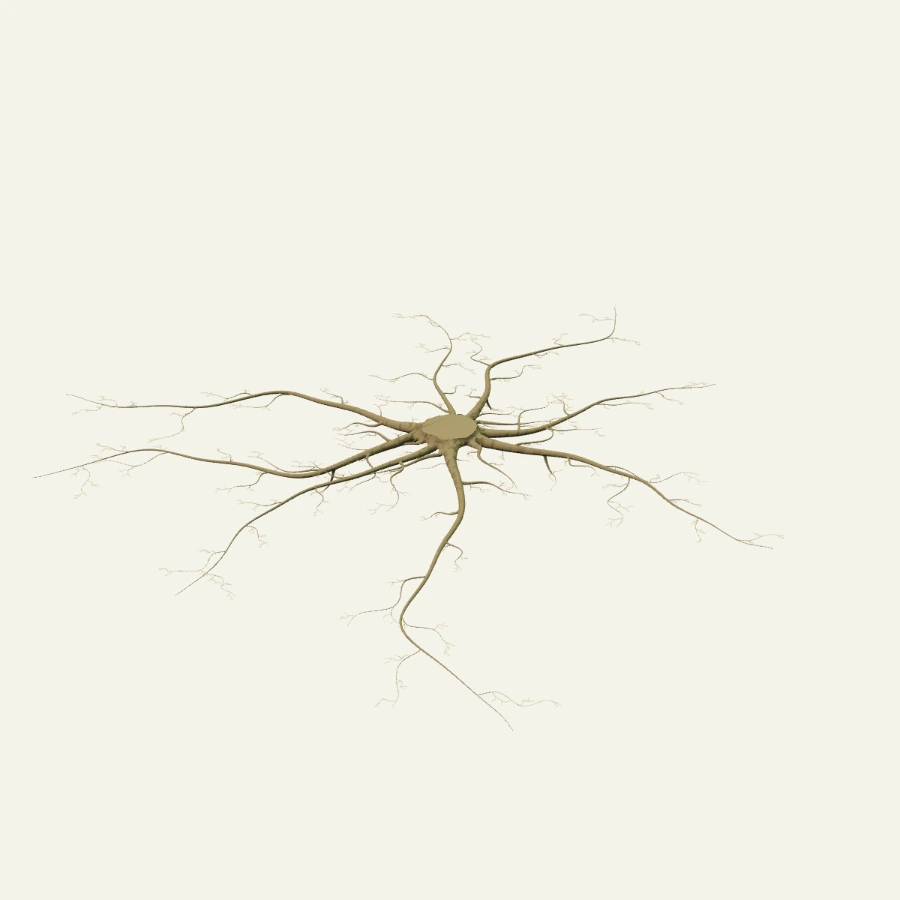
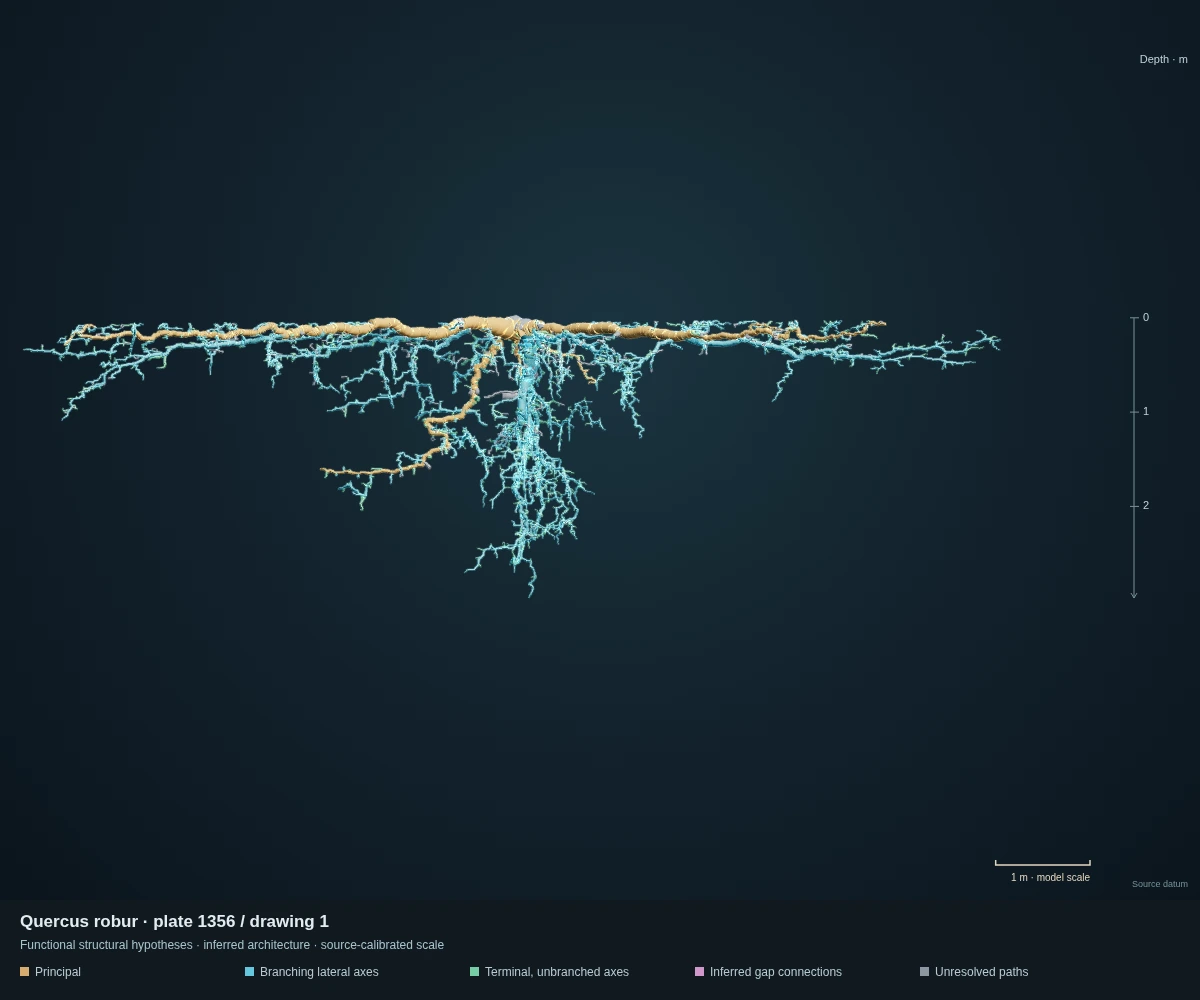
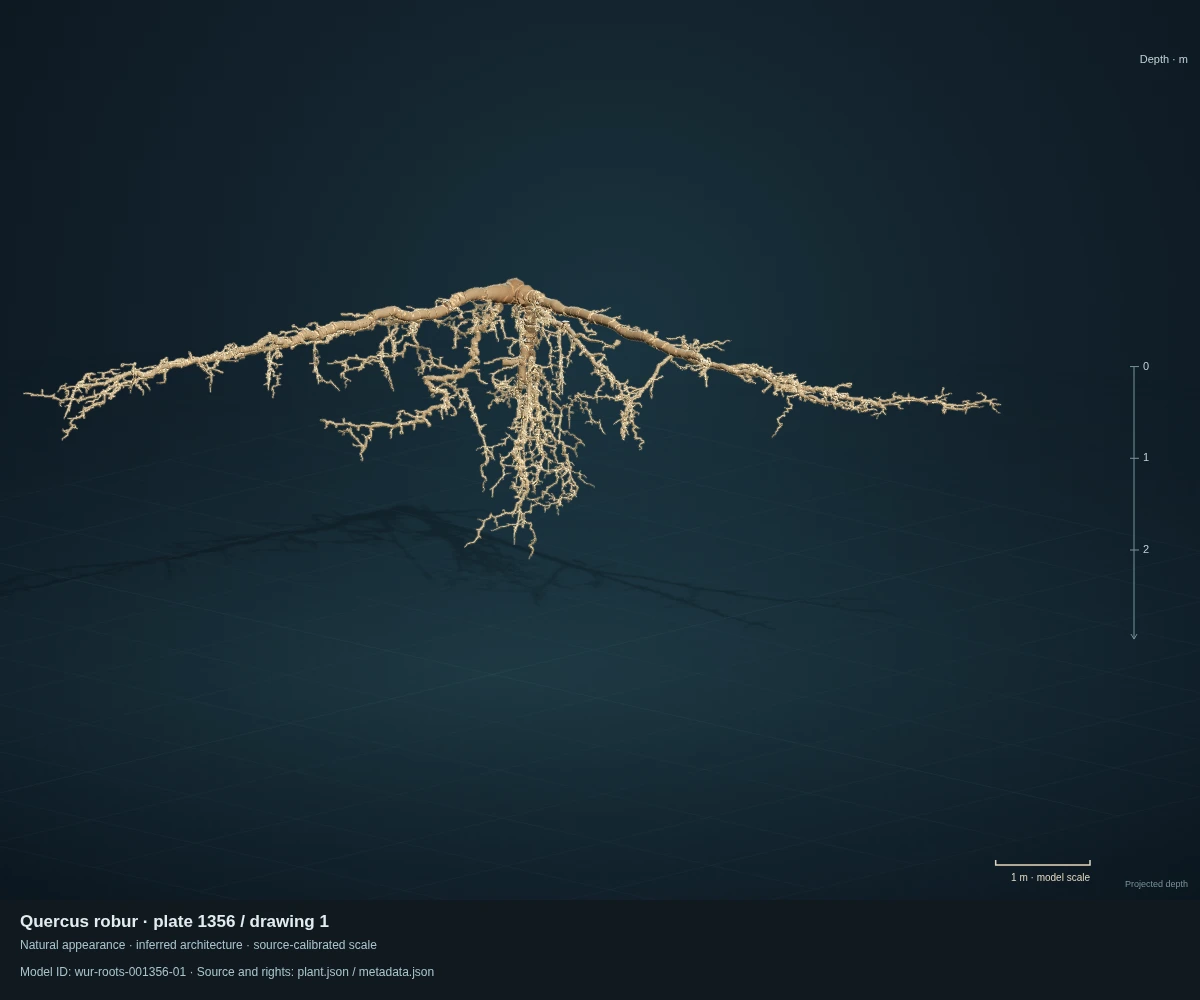
These reconstructions follow archived root drawings. Colour identifies the modelled structural role of each root.

Functional view
Natural view
Source projection
Side view
Calibration
Source-calibrated
Vertical extent
2.95 m
Inferred axes
2298
Model metrics and plate observations

Model metrics

Depth follows the printed scale. Equal horizontal scale and hidden depth are modeling assumptions; root thickness is illustrative.

Vertical extent
2.95 m
Horizontal span (x)
7.97 m
Horizontal span (z)
8.8 m
Centreline length
272 m
Inferred axes
2298
Branching sites
2158
Terminal paths
2179
Mean modelled diameter
2.31 cm
Surface area proxy
20.3 m²
Volume proxy
227,000 cm³
Inferred connection length
7.41 cm
Projected length
226 m
Mean angle from vertical
57.1°

Dimensions reported on the source plate

Plant height
380 cm plate_1356
Root depth
280 cm plate_1356
Root-system diameter
980 cm plate_1356

Drawing observations

  • long spreading lower branches and narrow ascending top
  • very broad shallow field with numerous short descenders
  • thick root descends from collar then branches repeatedly
  • several looplike curves beside main axis
  • dense winding paths and wide unequal lateral extensions
  • several irregular descenders and outward forks
  • numerous short forks across upper and lower fields

Biologically constrained spatial reconstruction from source morphology. Root azimuths, hidden placement, growth responses, circular sections, thickness and proposed connections are inferred. The separate source trace retains exact drawing coordinates. No measured 3D anatomy or observed growth sequence is claimed.
Source and attribution

Study 1356 · Model 01

Quercus robur · Wageningen University & Research archive

02 / Seasons

Through the seasons

Four portraits. One plant.

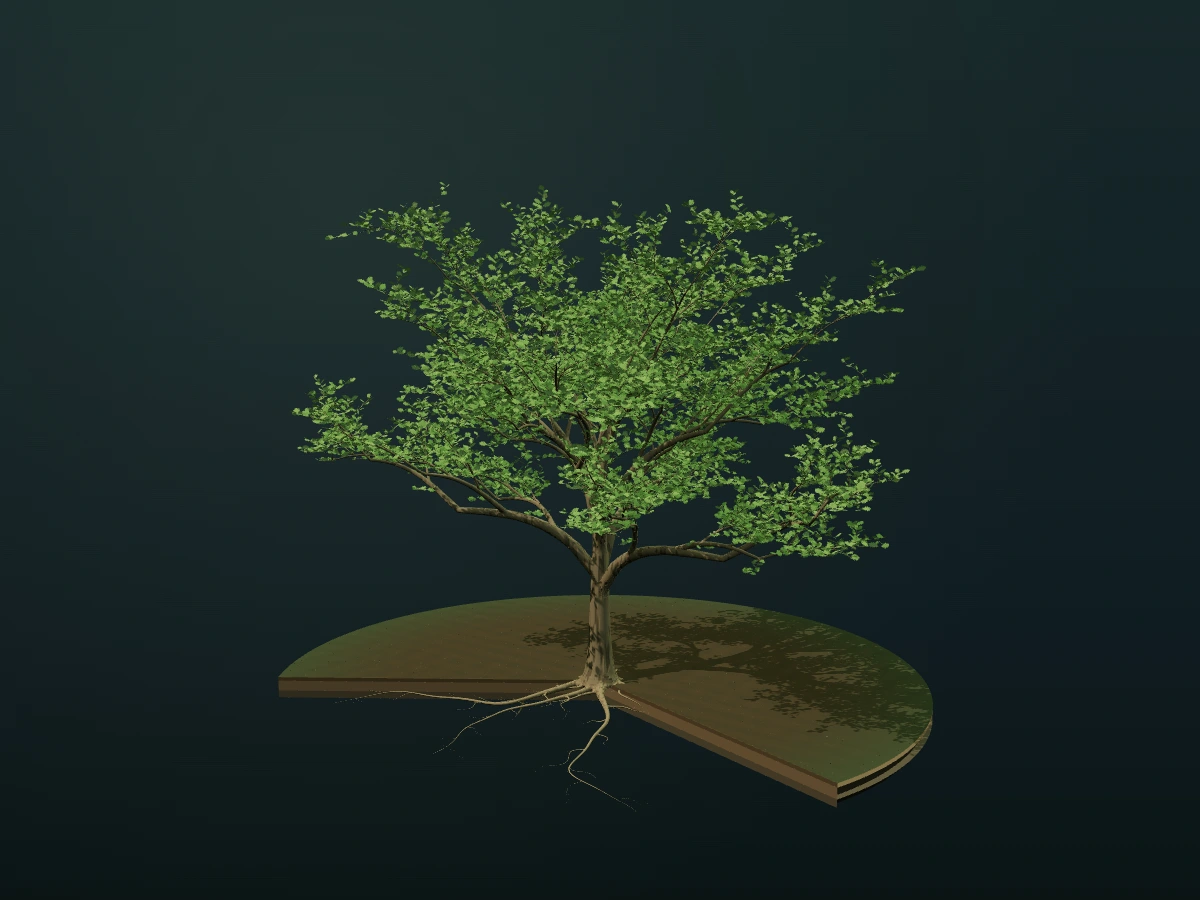
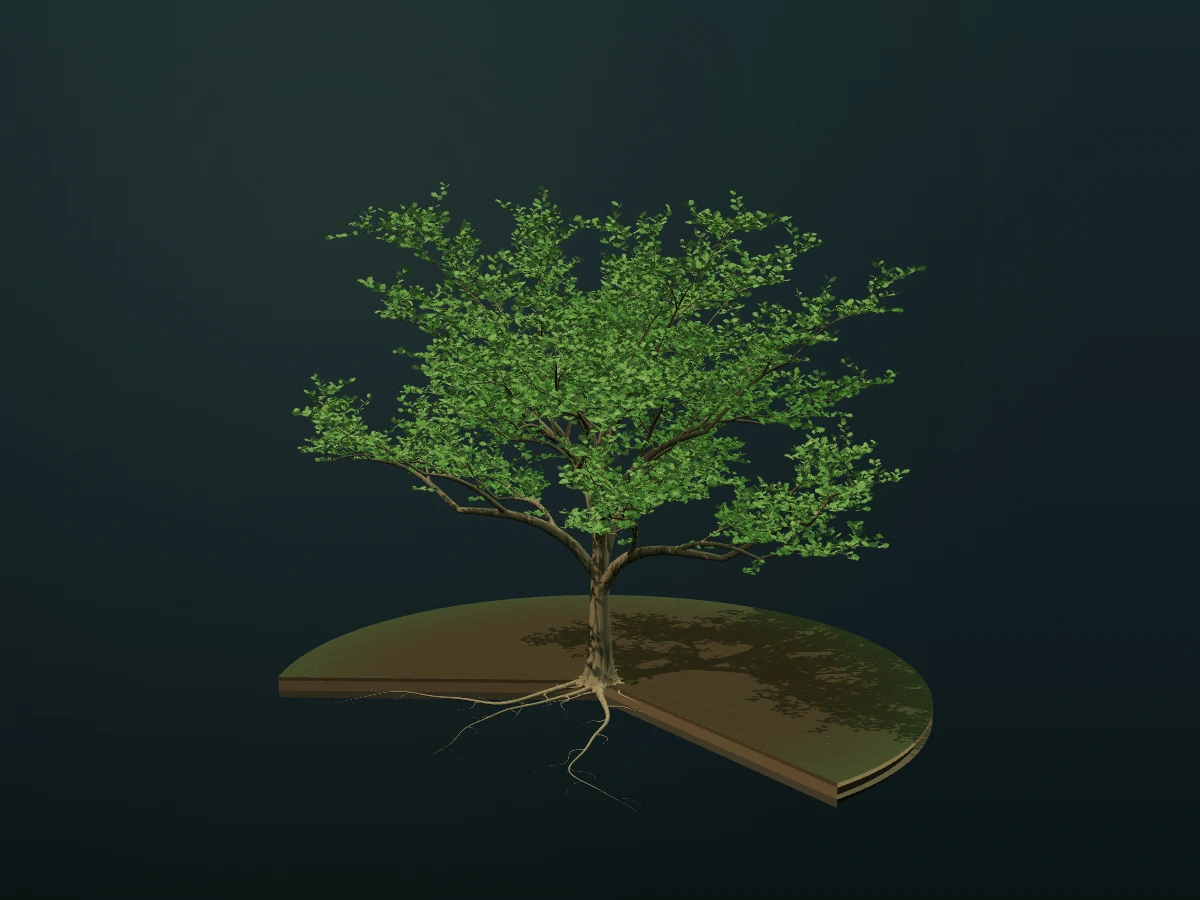
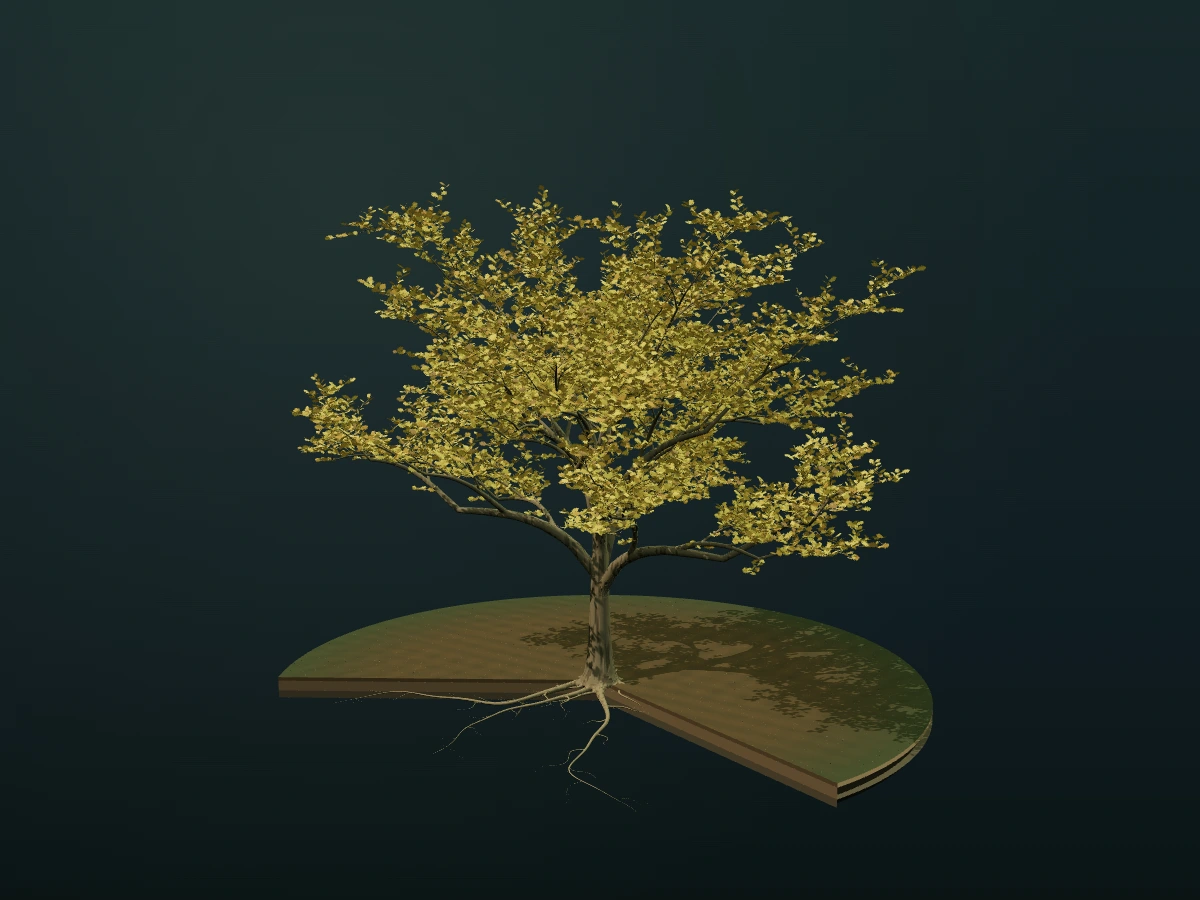
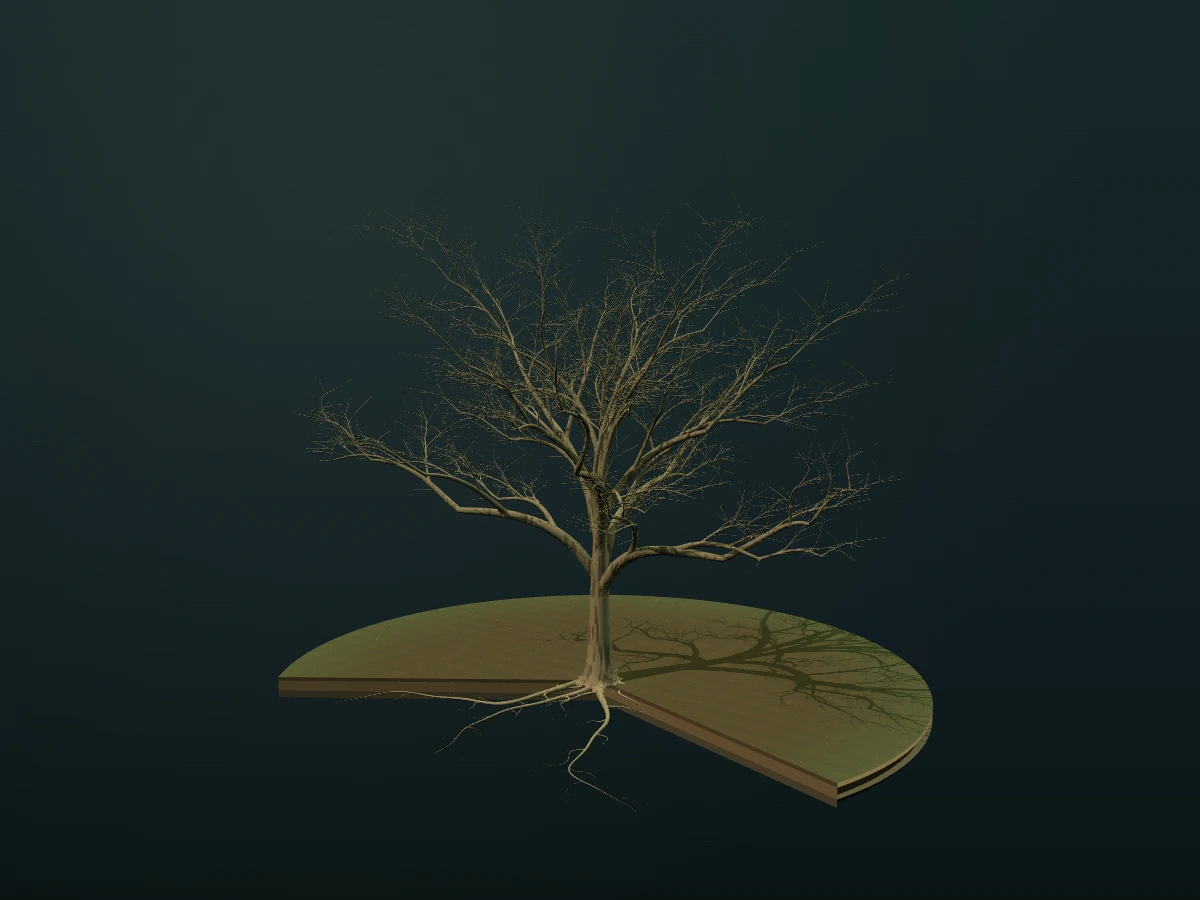
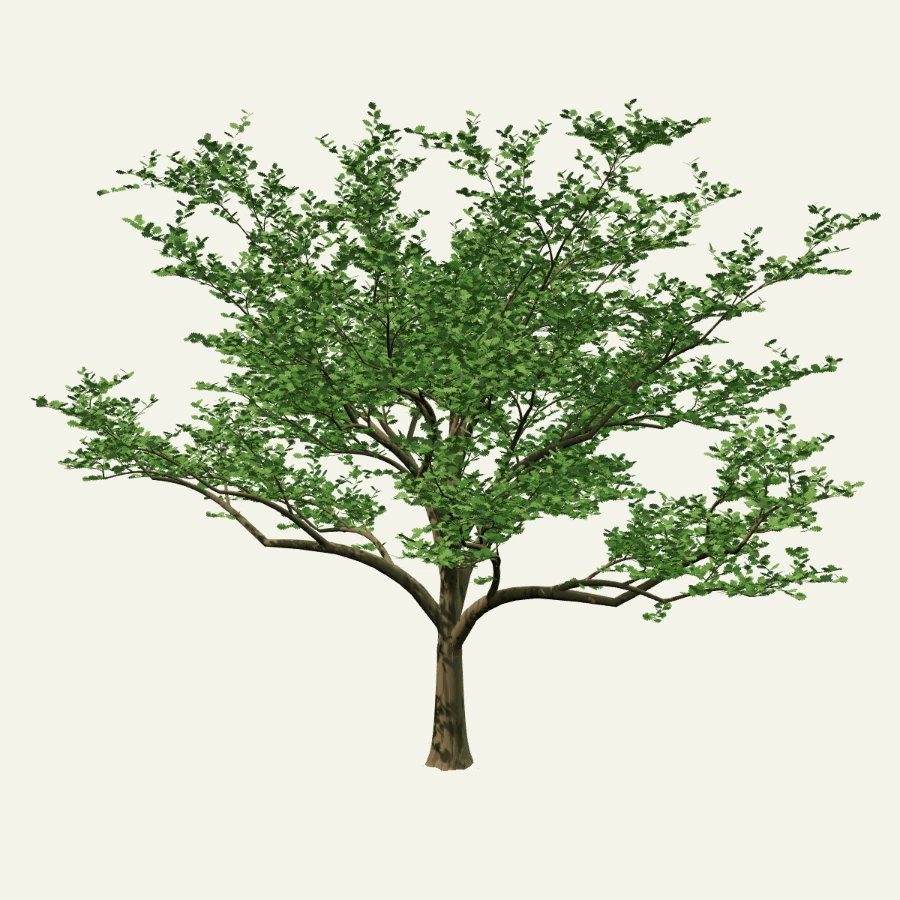
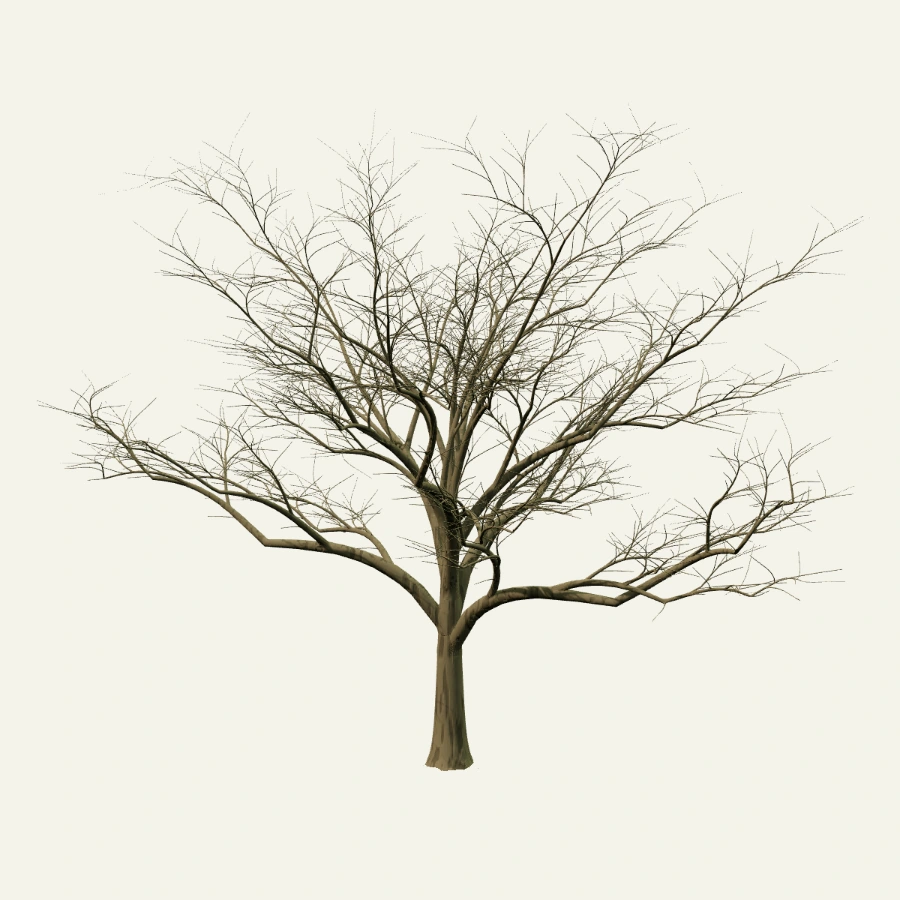
Read the crown, foliage and reproductive structures together. The four views compare seasonal appearances; the reference notes explain what is actually documented.

Seasonal illustration; the same plant, age and camera across four views.

Seasonal record

North Carolina botanical account

Flowering
Spring[1]
Fruiting / dispersal
Autumn[1]

Leaf renewal

Deciduous[1]

The record describes a deciduous plant: foliage is renewed after a leafless or reduced-leaf phase. The named views illustrate that cycle without fixing its dates at a planting site.

Colour notes

Gold / yellow · Brown / copper · Ochre[1]

These are recorded colour possibilities. The shades and their distribution are illustrative; a particular autumn can look different.

Marcescence is recorded: some dead leaves can remain attached after senescence. Their number, position and duration are not quantified.

Reading these views

Season names organize these four views, not a universal calendar. Hemisphere, local climate, cultivar and management can change timing; months are shown only when explicitly recorded.

The views emphasize crown structure. Buds, small flowers, individual retained leaves and fine reproductive changes may be unresolved; model age and fruit count are not production forecasts. The simplified winter render can omit retained dead leaves; a bare model does not negate the recorded marcescence.

No separate on-tree fruit display is configured for this record.

Seasonal references

  1. NC State Extension · seasonal observations ↗plants.ces.ncsu.edu

03 / Leaves & flowers

A closer look at the organs

Leaves

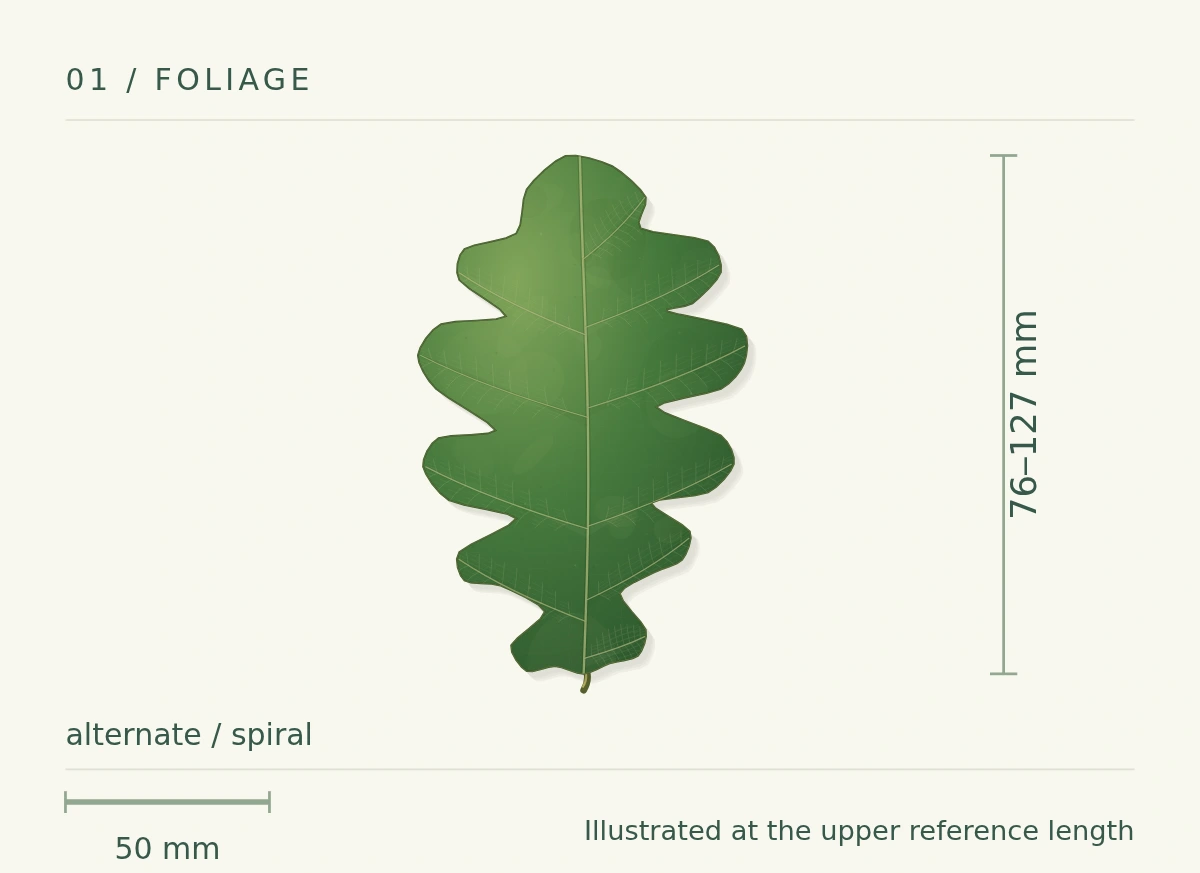
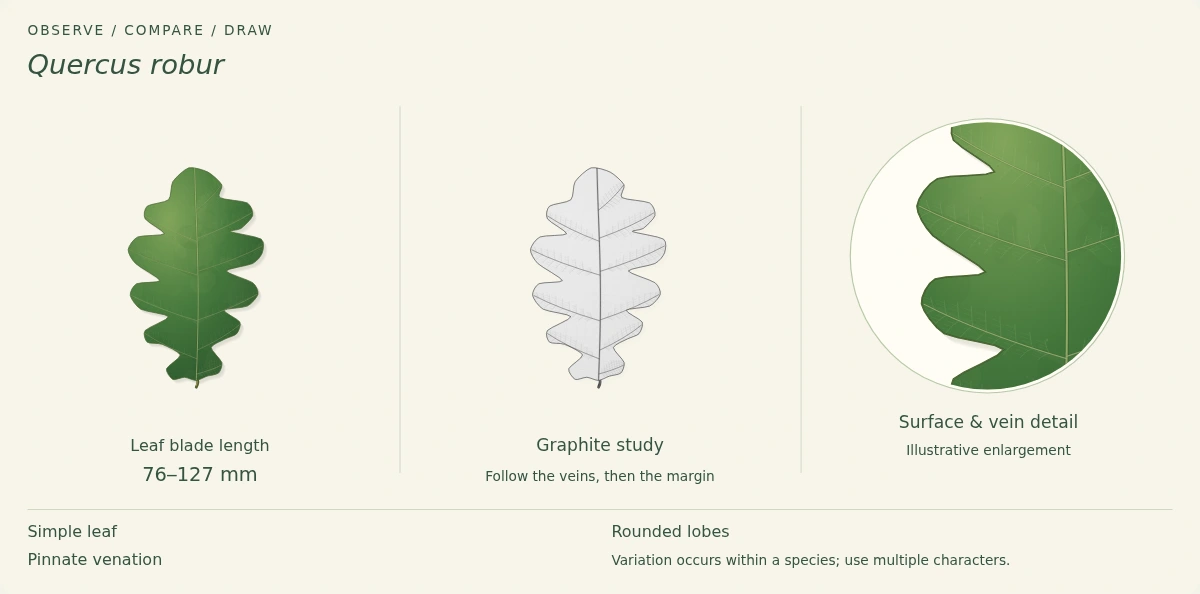
Leaf blade length
76–127 mmSource notes

Simple leaves are arranged alternately. Rounded lobes, a very short petiole and small ear-like lobes at the base help distinguish this species from sessile oak. Autumn colors usually range from yellow to brown.

Simple leaf · Rounded lobes · Pinnate venation · alternate / spiral

Seasonal notes

Colour varies with genotype, site, weather and leaf exposure. Phases show a plausible sequence, without assigning dates or predicting intensity.

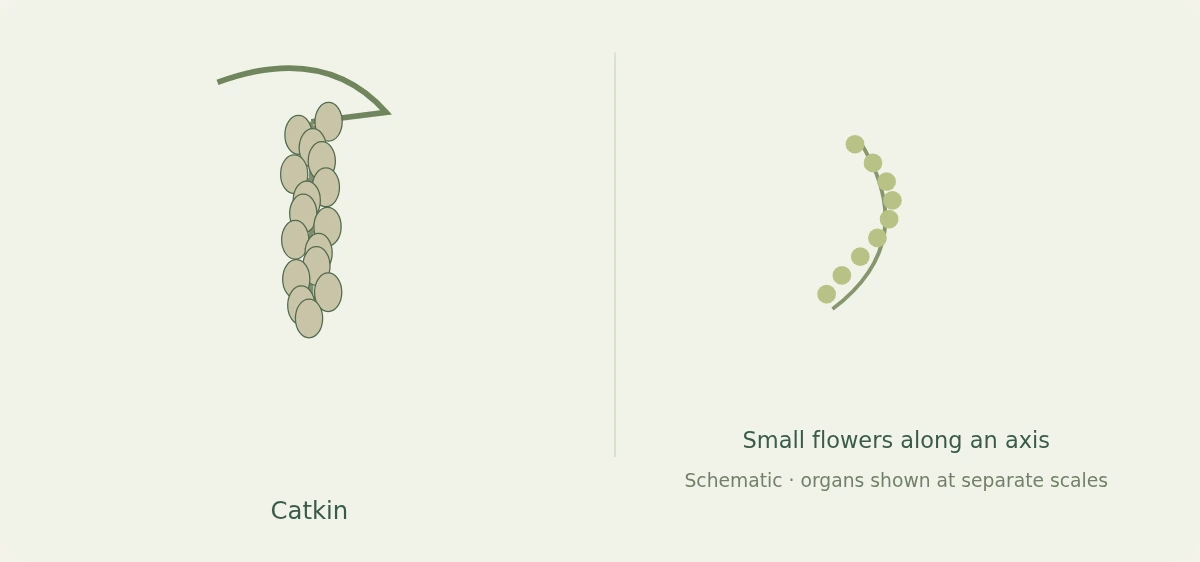
Flowering reference
Spring

04 / Fruit & seed

Named structures, separate scales

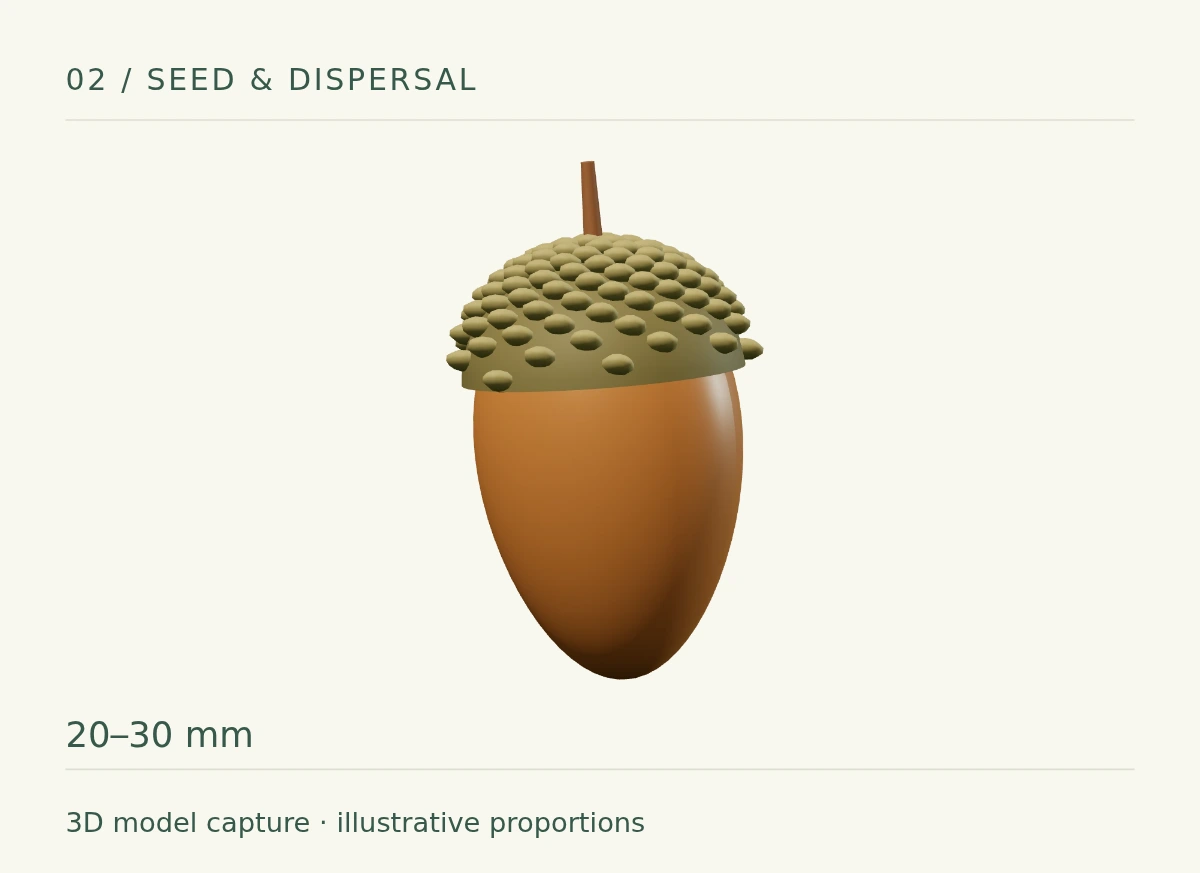
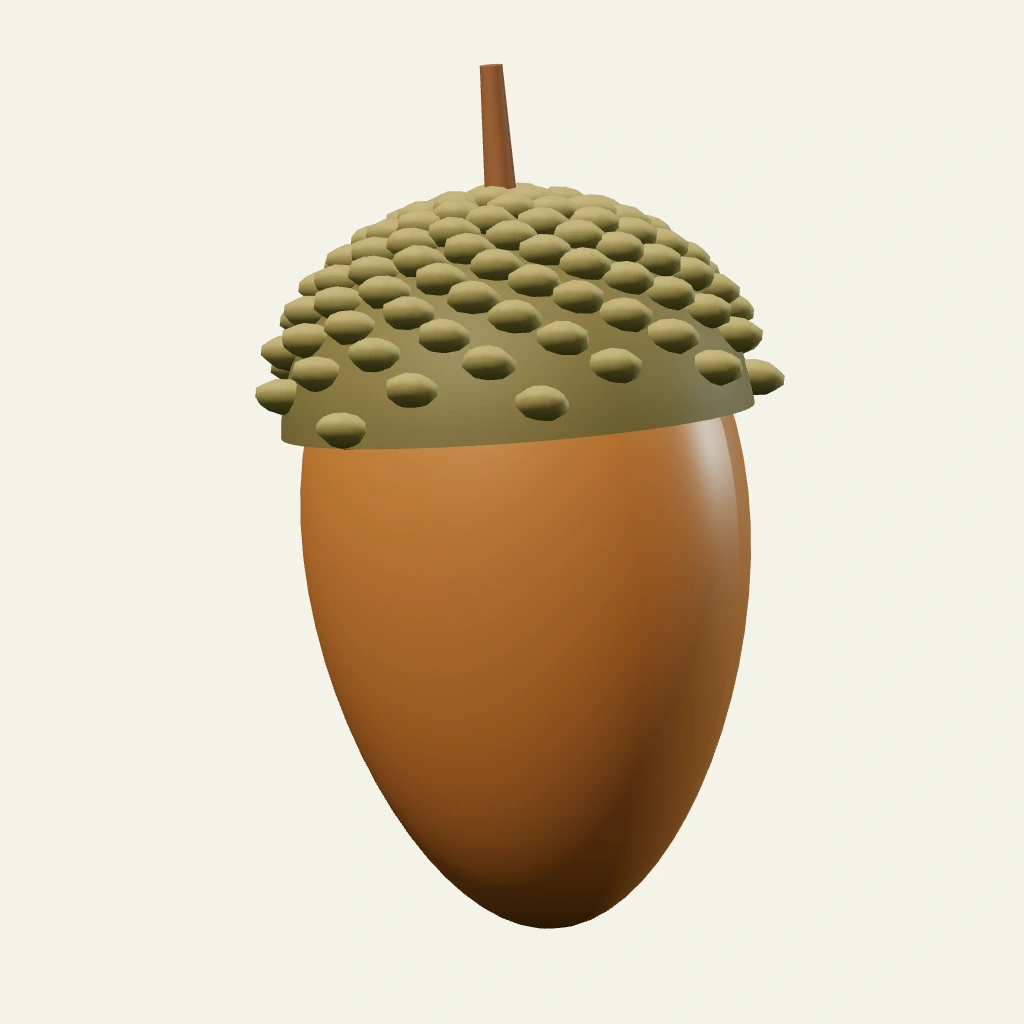
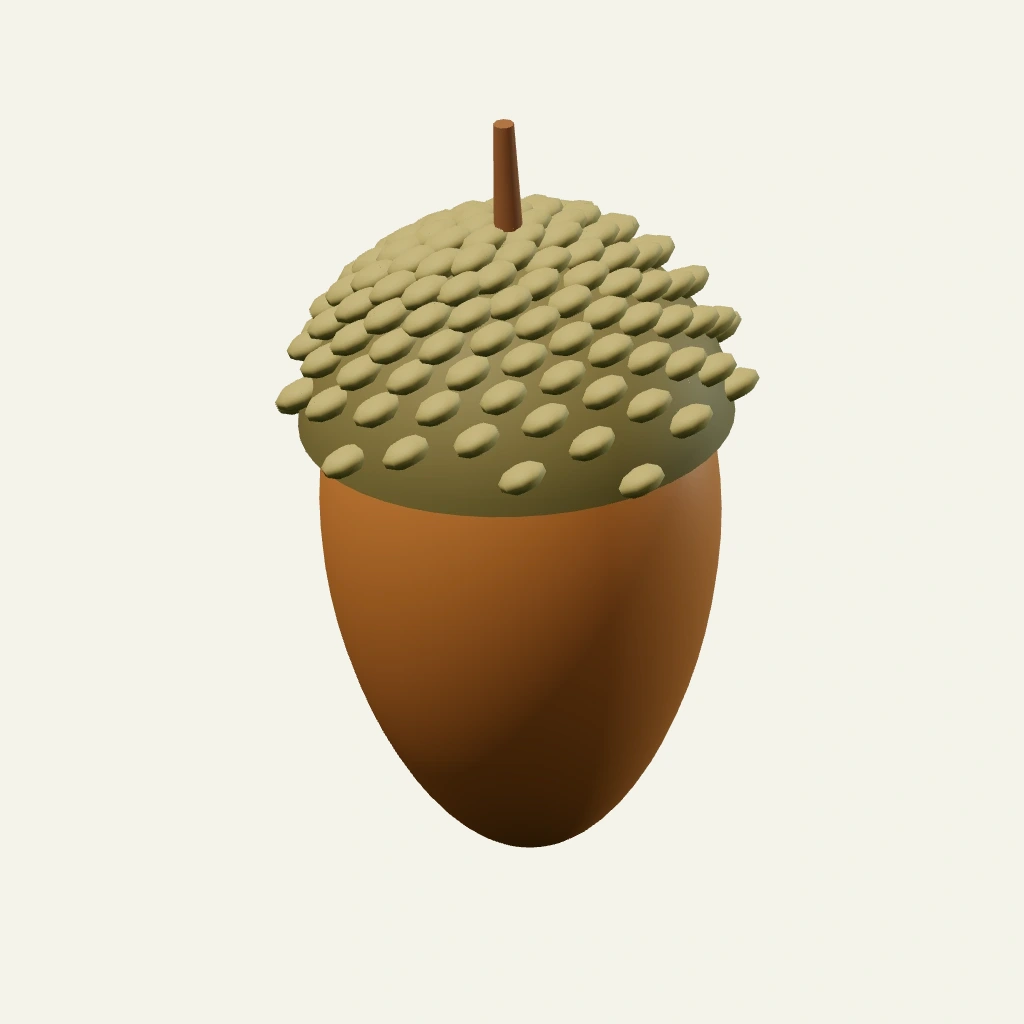
Acorn · fruit

Acorn length · fruit
20–30 mmSource notes

A one-seeded nut held in a cupule. The cup and brown fruit wall surround the seed.

Fruiting reference
Autumn

North Carolina botanical account

Organs are enlarged independently. Refer to the named measurement, not image size.

05 / Habitat

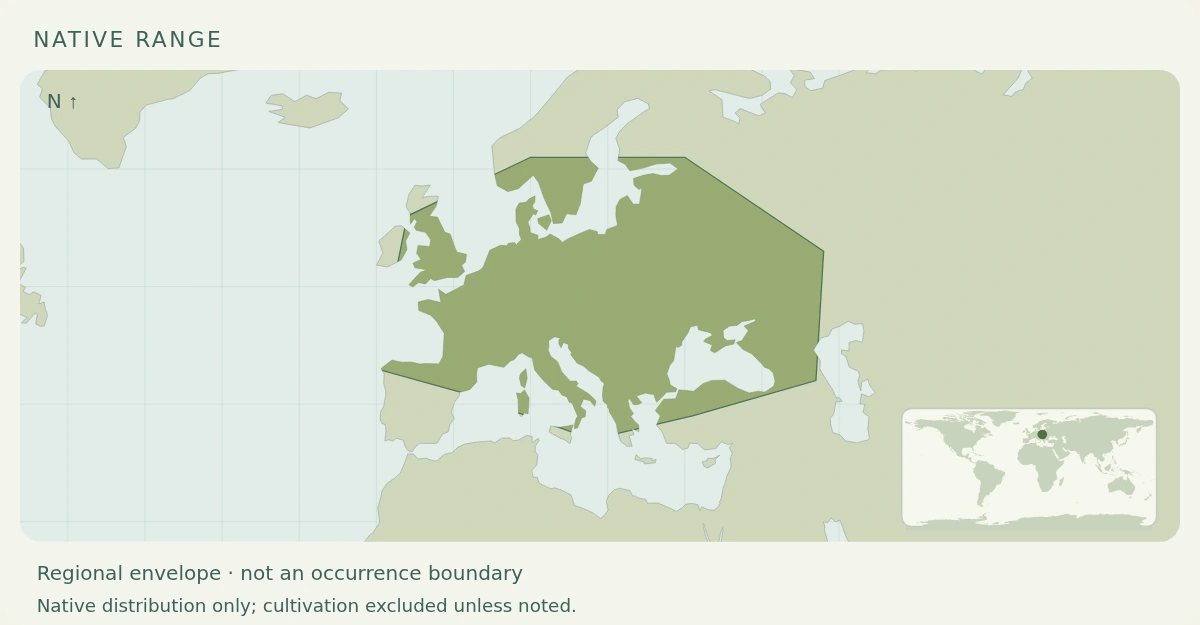
Native range & growing context

Native range & growing context

Europe to western Asia, including Iran.

Reference spread
Not documented
Moisture
Not documented
Growth tendency
Slow
Life span
Several centuries; exceptional veterans can exceed 1,000 years.

Regional context, not a measured occurrence or suitability map.

06 / Sources & interpretation

Read the evidence behind the illustration

Names & classification

Family
Fagaceae
Genus
Quercus
Synonyms
—
  • Pedunculate oak refers to the long stalk bearing the acorns.
  • Acorn dispersal, establishment and survival are separate processes; abundant seed does not ensure regeneration.
  • Oak form varies greatly between parkland, woodland and managed trees.

The spreading model represents an open-grown tree. Its stage ages and dimensions do not predict an individual oak; veteran hollowing and crown retrenchment are not simulated.

ArborAI teaching geometry; coefficients and ages are not measured species constants.

  1. Kew · Common oak ↗www.kew.org
  2. Forest Research · Agroforestry species guide ↗cdn.forestresearch.gov.uk
  3. Annals of Forest Science · Oak taproot study ↗annforsci.biomedcentral.com
  4. Natural England · Veteran tree assessment ↗publications.naturalengland.org.uk
  5. NC State Extension · seasonal observations ↗plants.ces.ncsu.edu
Plant data and references · 5
Native rangeEurope to western Asia, including Iran.Transferred from the existing catalogue; independent botanical review remains pending.www.kew.org
Leaf lengthmm[76, 127]Transferred from the existing catalogue; independent botanical review remains pending.plants.ces.ncsu.edu
Seed lengthmm[20, 30]Transferred from the existing catalogue; independent botanical review remains pending.plants.ces.ncsu.edu
Reference phenologycategory{"flowering": {"seasons": ["spring"]}, "fruiting": {"seasons": ["autumn"]}, "reference": "North Carolina botanical account", "source": "https://plants.ces.ncsu.edu/plants/quercus-robur/", "reviewed": "2026-10-16"}Regional observations. Fruit display may include persistence and is not automatically ripening. Missing dates remain unspecified. Independent botanical review remains pending.plants.ces.ncsu.edu
Usda hardinesscategory{"system": "USDA", "zones": [5, 8], "source": "usda-hardiness", "subzones": ["5a", "8b"]}Reported horticultural recommendation; winter minimum only, not a heat or overall suitability limitplants.ces.ncsu.edu