Botanical field guide
Ginkgo biloba
Ginkgo
Tree / Ginkgoaceae
The plant, in detail
Long cultivated in temperate landscapes; grows best with light and suitable drainage.
- Reference height
- 15–24 m
- Foliage habit
- Deciduous
- USDA zones
- 3–9
- Light
- Not documented
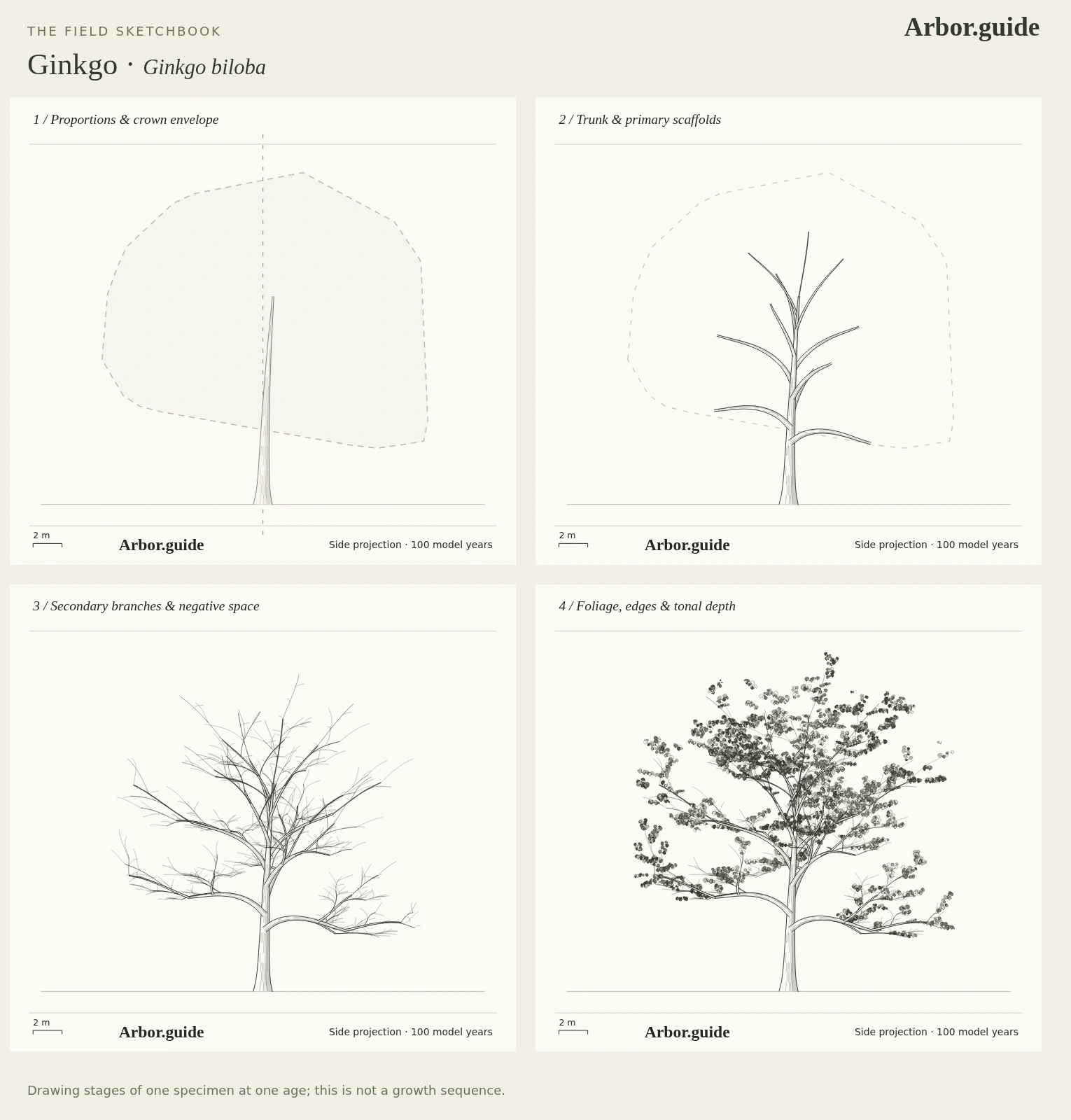
One mature landscape form is illustrated; cultivar, site and management can produce different crowns. Connected long shoots and clustered short-shoot leaves are simplified. Root architecture and model ages are illustrative, not a calibrated growth forecast.
Crown
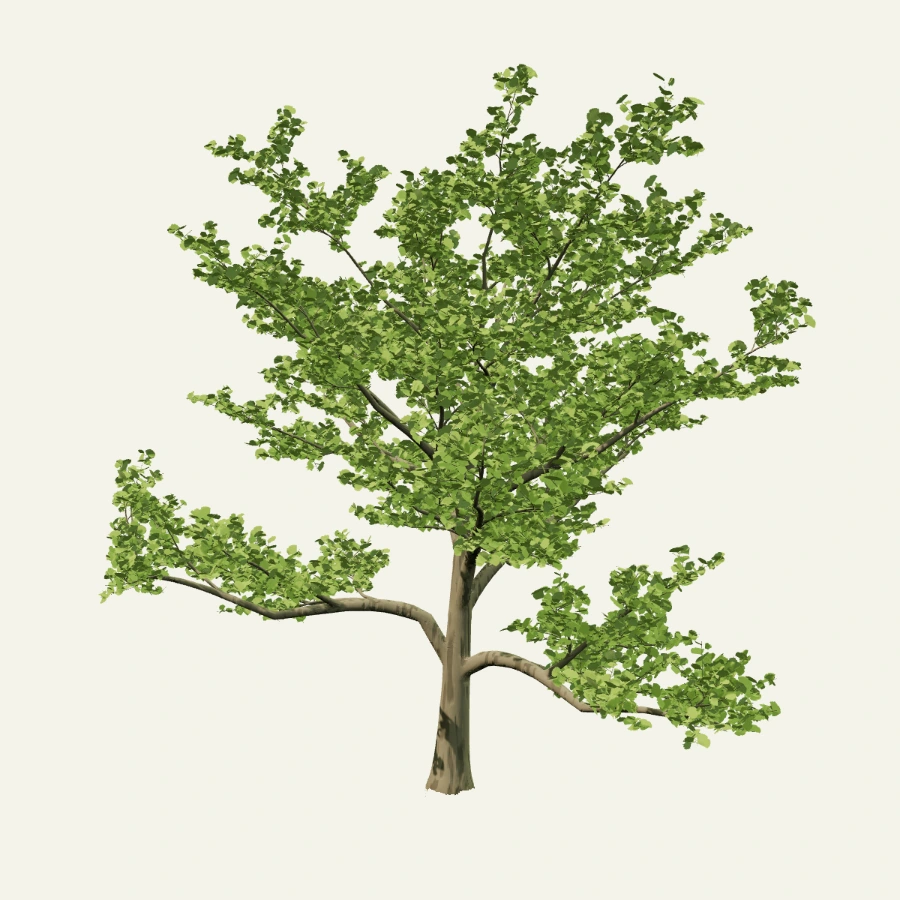
Often pyramidal when young, becoming broader and more irregular with age. The illustrated mature landscape form has a central stem, substantial spreading lower limbs and ascending upper branches. Cultivars and growing conditions can produce narrower or more open crowns.
Branching
Long shoots extend the branch framework; compact short shoots bear clustered leaves and reproductive structures. Preserving that distinction is more informative than treating every visible leaf cluster as a new long branch.
Bark
Gray to brown bark develops longitudinal ridges. Trunk girth accumulates over time, but cultivated form, damage and management can substantially change the shape of an old tree.
Roots
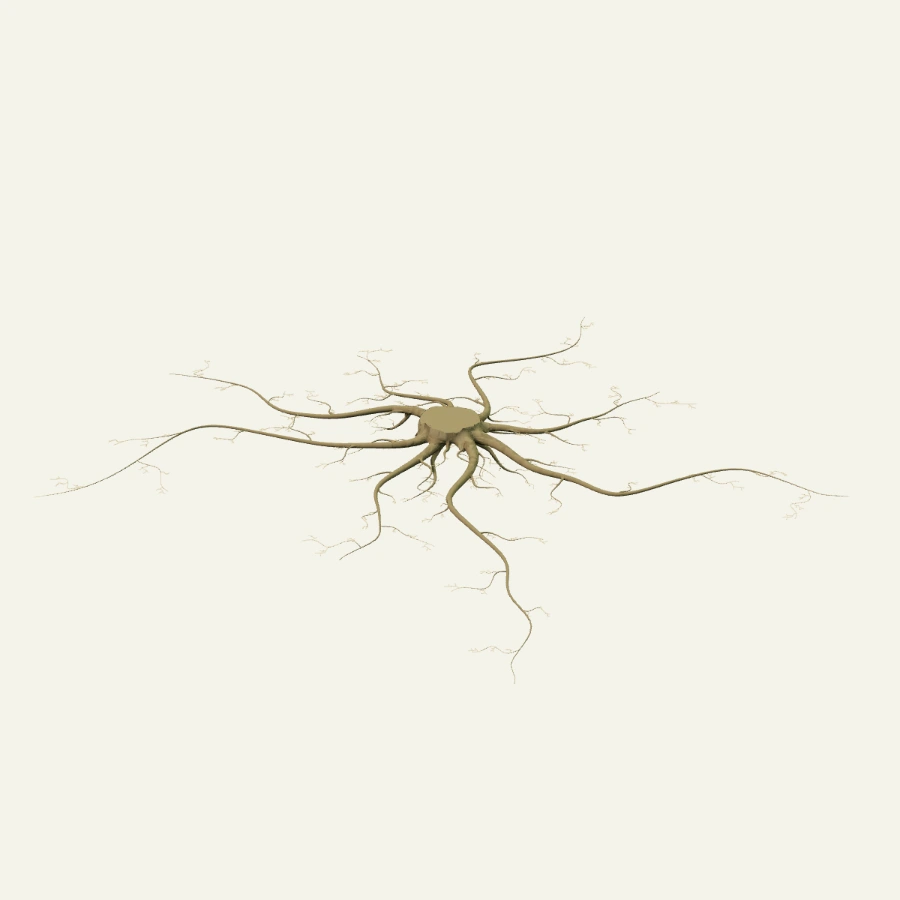
Woody roots provide anchorage and transport, while smaller roots explore available soil. This catalogue does not specify a universal ginkgo rooting depth or a calibrated species-specific root geometry; the cutaway illustrates those functions only.
The shape of growth
Stylized real-world examples
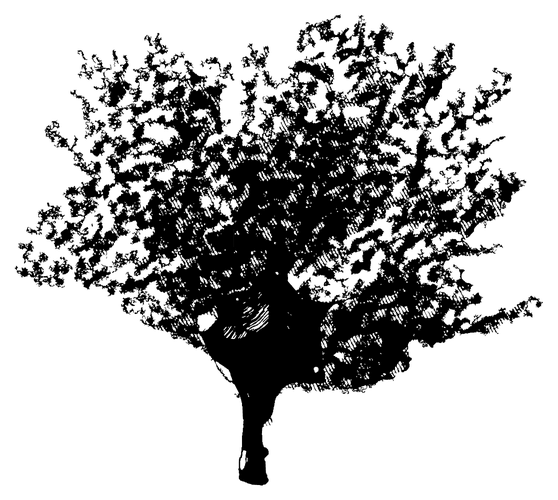
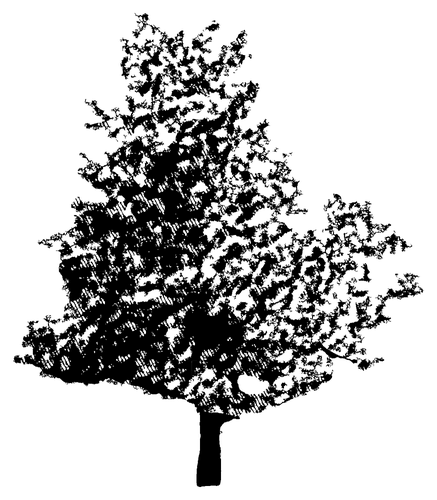
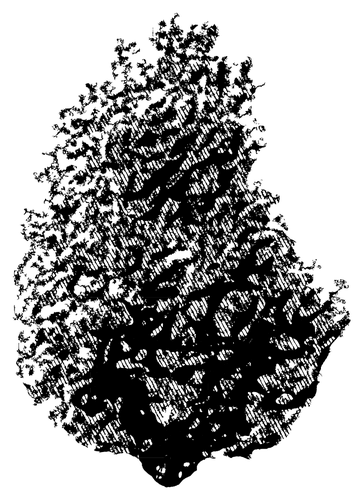
Silhouettes are sized independently.
02 / Seasons
Through the seasons
Four portraits. One plant.
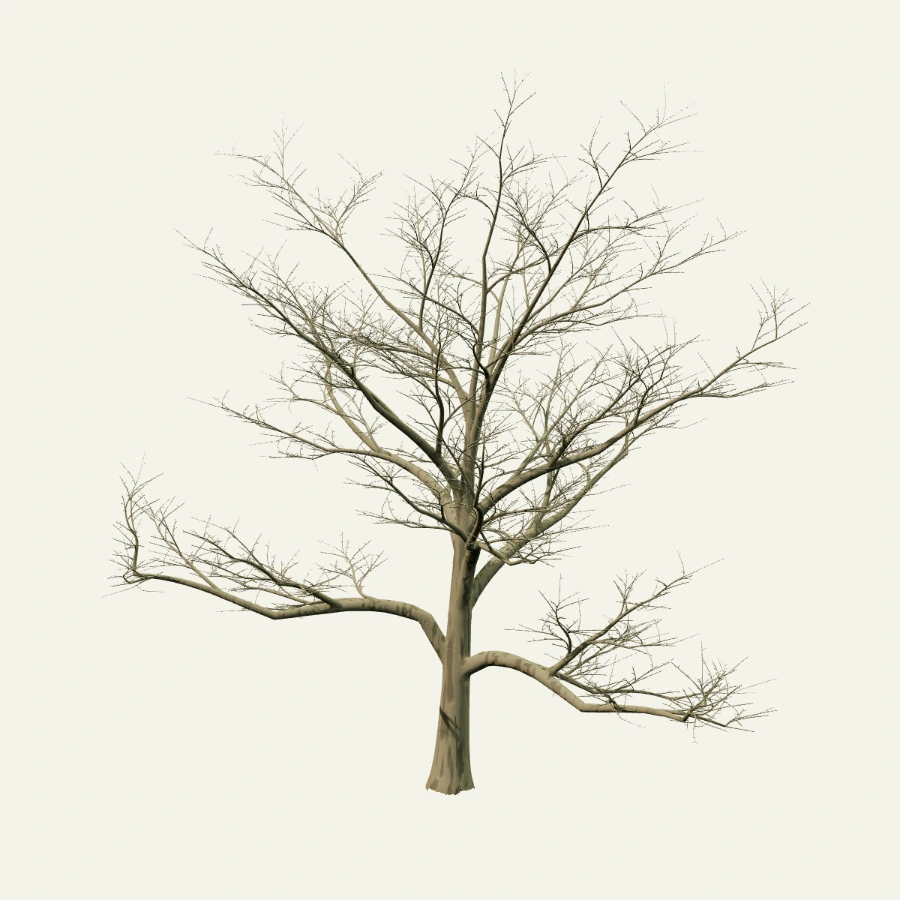
Read the crown, foliage and reproductive structures together. The four views compare seasonal appearances; the reference notes explain what is actually documented.
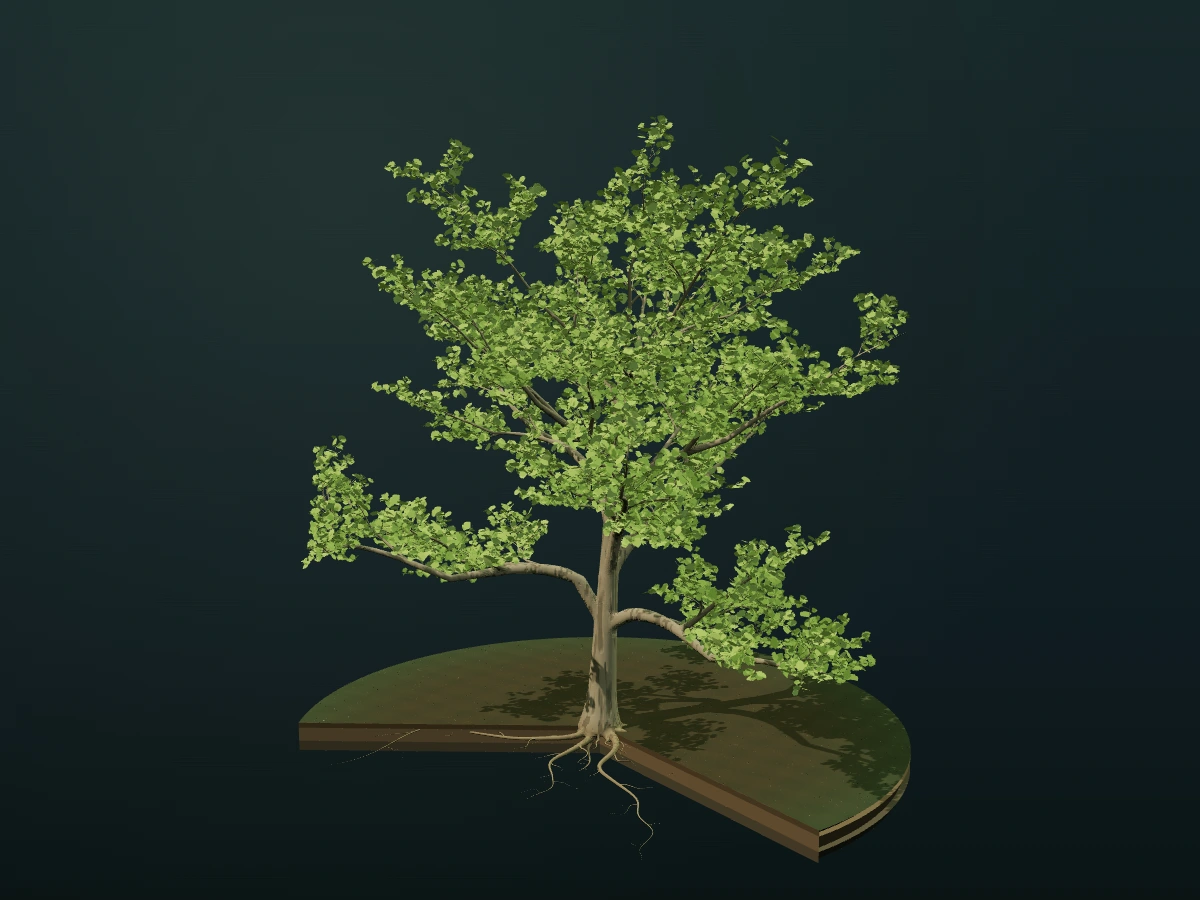
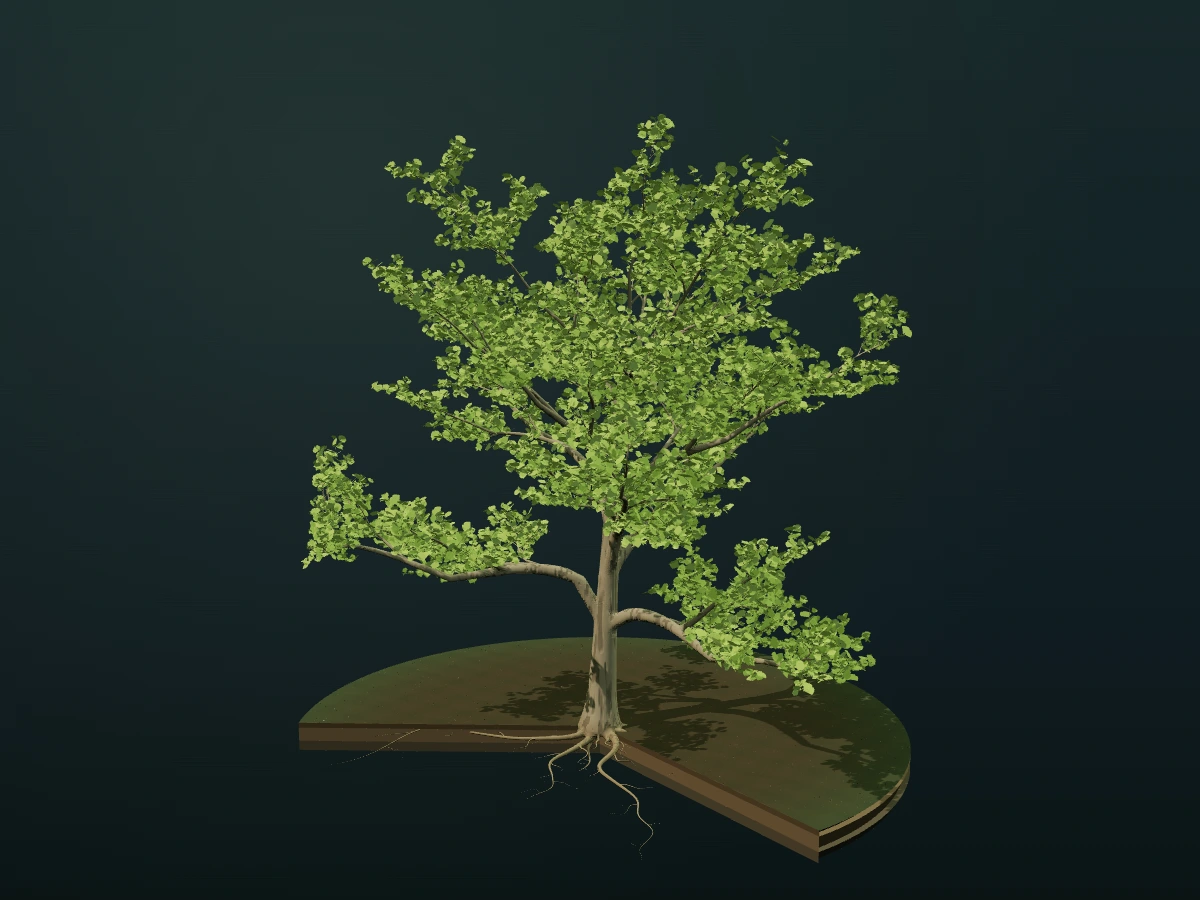
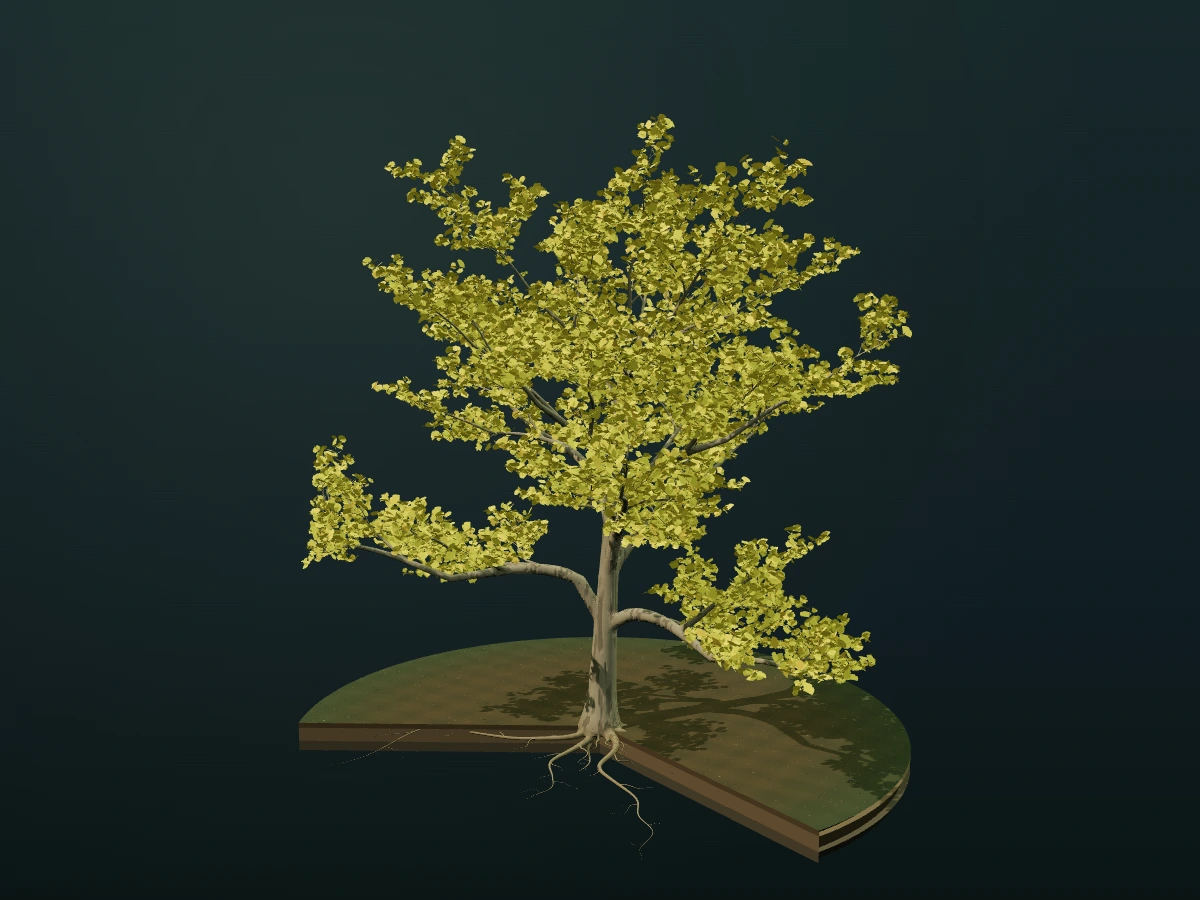
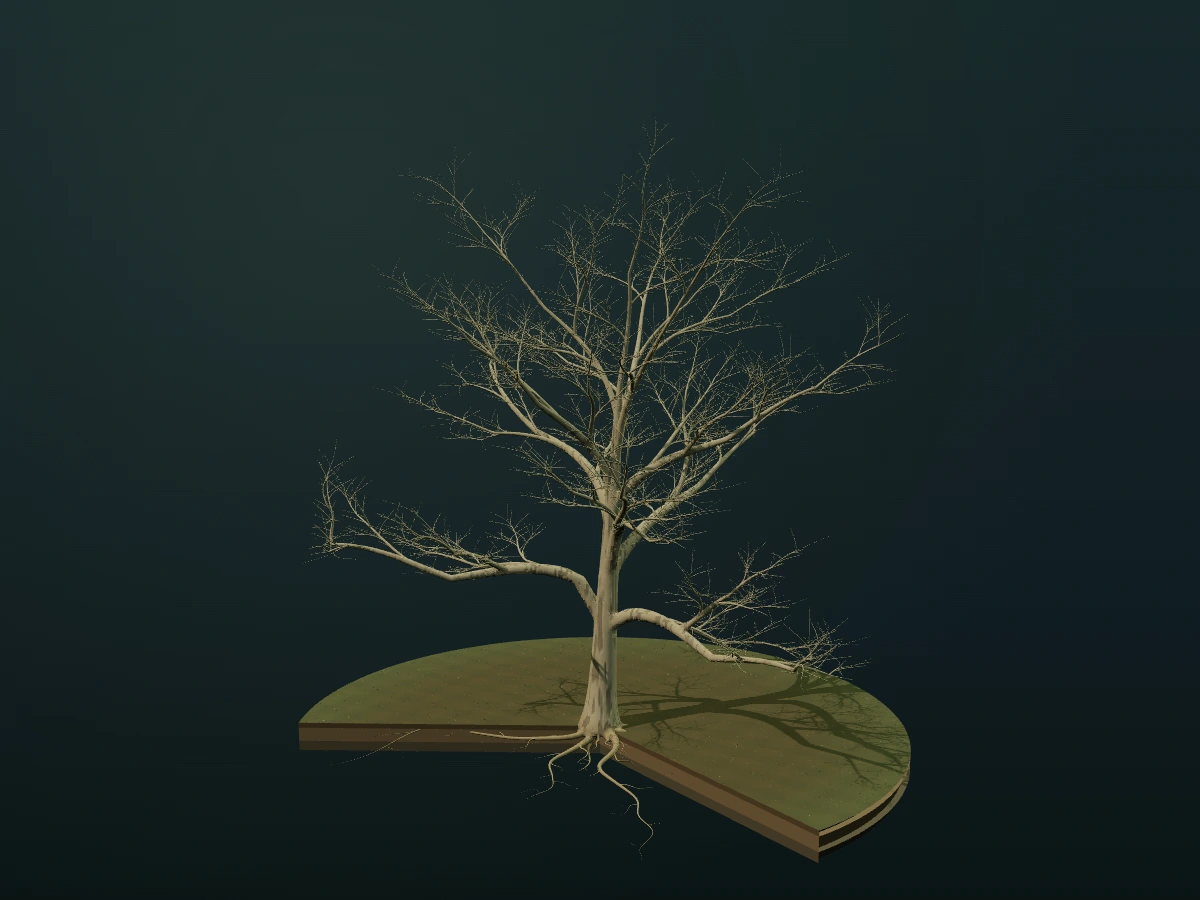
Seasonal illustration; the same plant, age and camera across four views.
Seasonal record
North Carolina botanical account
Leaf renewal
The record describes a deciduous plant: foliage is renewed after a leafless or reduced-leaf phase. The named views illustrate that cycle without fixing its dates at a planting site.
Colour notes
Gold / yellow[2]
These are recorded colour possibilities. The shades and their distribution are illustrative; a particular autumn can look different.
Reading these views
Season names organize these four views, not a universal calendar. Hemisphere, local climate, cultivar and management can change timing; months are shown only when explicitly recorded.
The views emphasize crown structure. Buds, small flowers, individual retained leaves and fine reproductive changes may be unresolved; model age and fruit count are not production forecasts.
No separate on-tree fruit display is configured for this record.
Seasonal references
- www.efloras.org ↗www.efloras.org
- NC State Extension · Ginkgo ↗plants.ces.ncsu.edu
03 / Foliage
A closer look at the organs
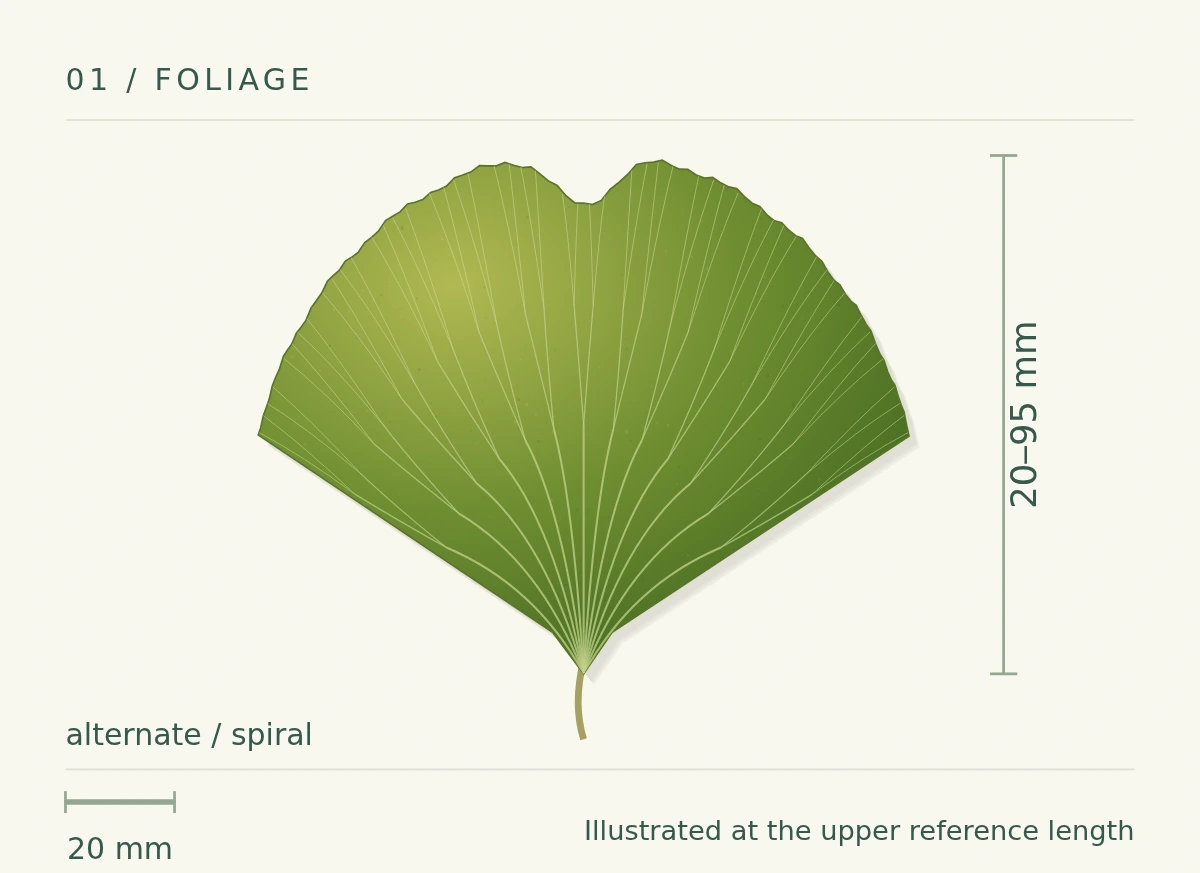
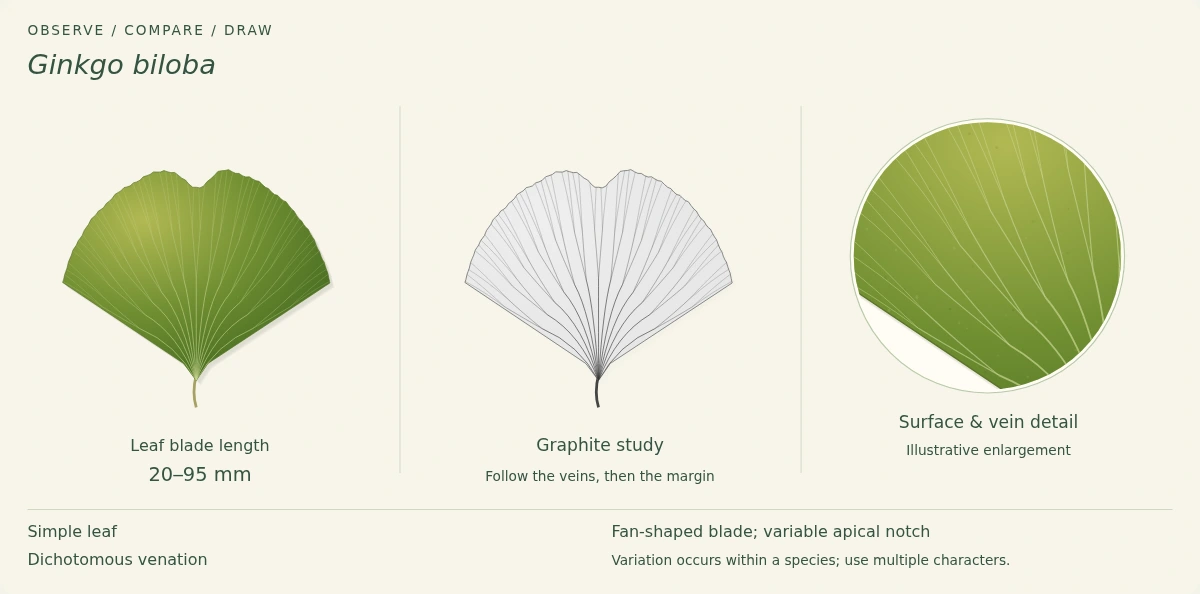
Leaves
- Leaf blade length
- 20–95 mmSource notes
Fan-shaped leaves have repeatedly forked veins. They occur along long shoots and in clusters on short shoots. The notch implied by biloba is variable; many leaves are not deeply divided. Autumn color is typically yellow.
Simple leaf · Fan-shaped blade; variable apical notch · Dichotomous venation · alternate / spiral
Seasonal notes
Golden-yellow foliage can be followed by rapid leaf fall. The drawing does not predict the duration of the display.
04 / Fruit & seed
Named structures, separate scales
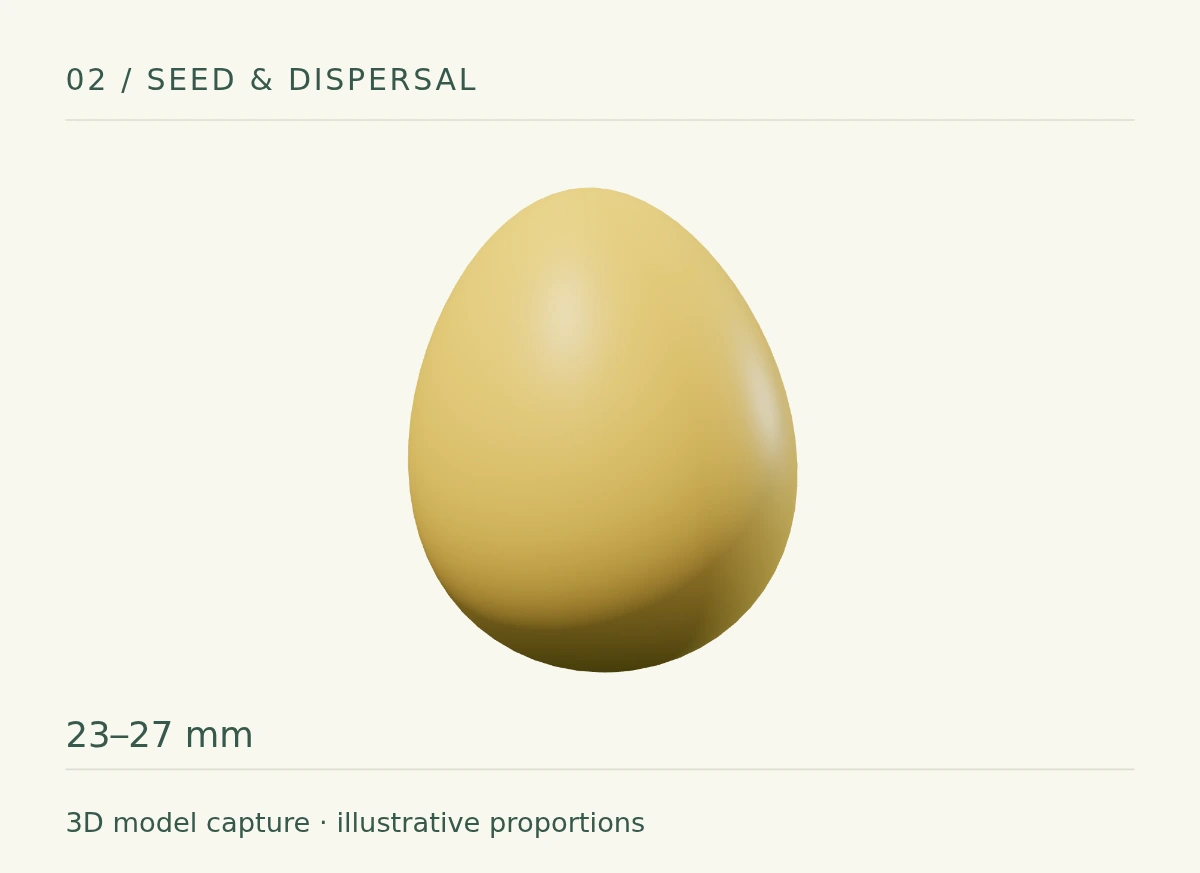


Seed
- Seed including fleshy coat
- 23–27 mmSource notes
The fleshy outer layer is seed coat. Ginkgo has neither a fruit wall nor an enclosing ovary.
- Fruiting reference
- Autumn
North Carolina botanical account
Organs are enlarged independently. Refer to the named measurement, not image size.
05 / Habitat
Native range & growing context
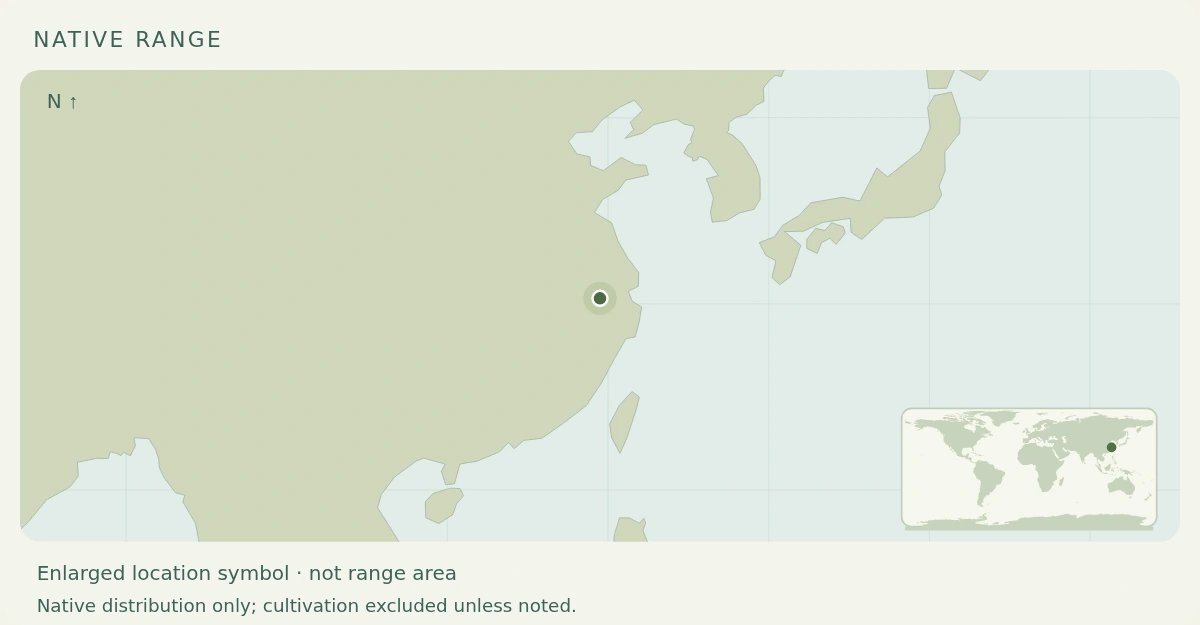
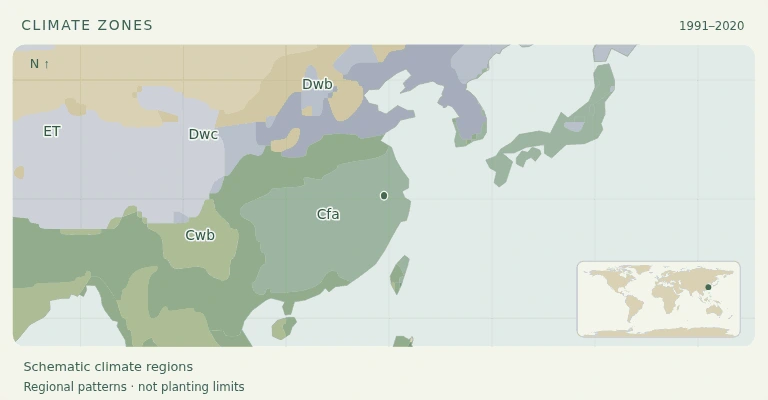
Native range & growing context
China; centuries of cultivation complicate identification of truly wild populations.
- Reference spread
- Not documented
- Moisture
- Not documented
- Growth tendency
- Moderate
- Life span
- Can persist for many centuries; claims for ancient cultivated trees need careful dating.
Regional context, not a measured occurrence or suitability map.
06 / Sources & interpretation
Read the evidence behind the illustration
Names & classification
- Family
- Ginkgoaceae
- Genus
- Ginkgo
- Synonyms
- —
- Ginkgo is broad-leaved but is not a flowering tree or a conifer.
- Its fleshy seed coat is not a fruit wall.
- The species is the sole living representative of its distinctive lineage.
One mature landscape form is illustrated; cultivar, site and management can produce different crowns. Connected long shoots and clustered short-shoot leaves are simplified. Root architecture and model ages are illustrative, not a calibrated growth forecast.
ArborAI teaching geometry; coefficients and ages are not measured species constants.
- NC State Extension · Ginkgo ↗plants.ces.ncsu.edu
- Kew · Ginkgo species profile ↗powo.science.kew.org
- University of Florida · Ginkgo ↗ask.ifas.ufl.edu
- Arnold Arboretum · Ginkgo reproduction ↗arboretum.harvard.edu
- Oregon State University · Ginkgo habit and shoots ↗landscapeplants.oregonstate.edu
Plant data and references · 6
| Native range | China; centuries of cultivation complicate identification of truly wild populations.Transferred from the existing catalogue; independent botanical review remains pending.powo.science.kew.org |
|---|---|
| Leaf lengthmm | [20, 95]Transferred from the existing catalogue; independent botanical review remains pending.www.efloras.org |
| Seed lengthmm | [23, 27]Transferred from the existing catalogue; independent botanical review remains pending.www.efloras.org |
| Reference phenologycategory | {"flowering": {"seasons": ["spring"]}, "fruiting": {"seasons": ["autumn"]}, "reference": "North Carolina botanical account", "source": "https://plants.ces.ncsu.edu/plants/ginkgo-biloba/", "reviewed": "2026-10-16"}Regional observations. Fruit display may include persistence and is not automatically ripening. Missing dates remain unspecified. Independent botanical review remains pending.plants.ces.ncsu.edu |
| Crown habit | Often pyramidal when young, becoming broader and more irregular with age. The illustrated mature landscape form has a central stem, substantial spreading lower limbs and ascending upper branches. Cultivars and growing conditions can produce narrower or more open crowns.The model selects a broad mature landscape form using the supplied photograph. Geometry, branch counts and growth timing are ArborAI illustration choices; cultivars and sites vary. Independent botanical review remains pending.plants.ces.ncsu.edu |
| Usda hardinesscategory | {"system": "USDA", "zones": [3, 9], "source": "usda-hardiness", "subzones": ["3a", "9b"]}Reported horticultural recommendation; winter minimum only, not a heat or overall suitability limitplants.ces.ncsu.edu |