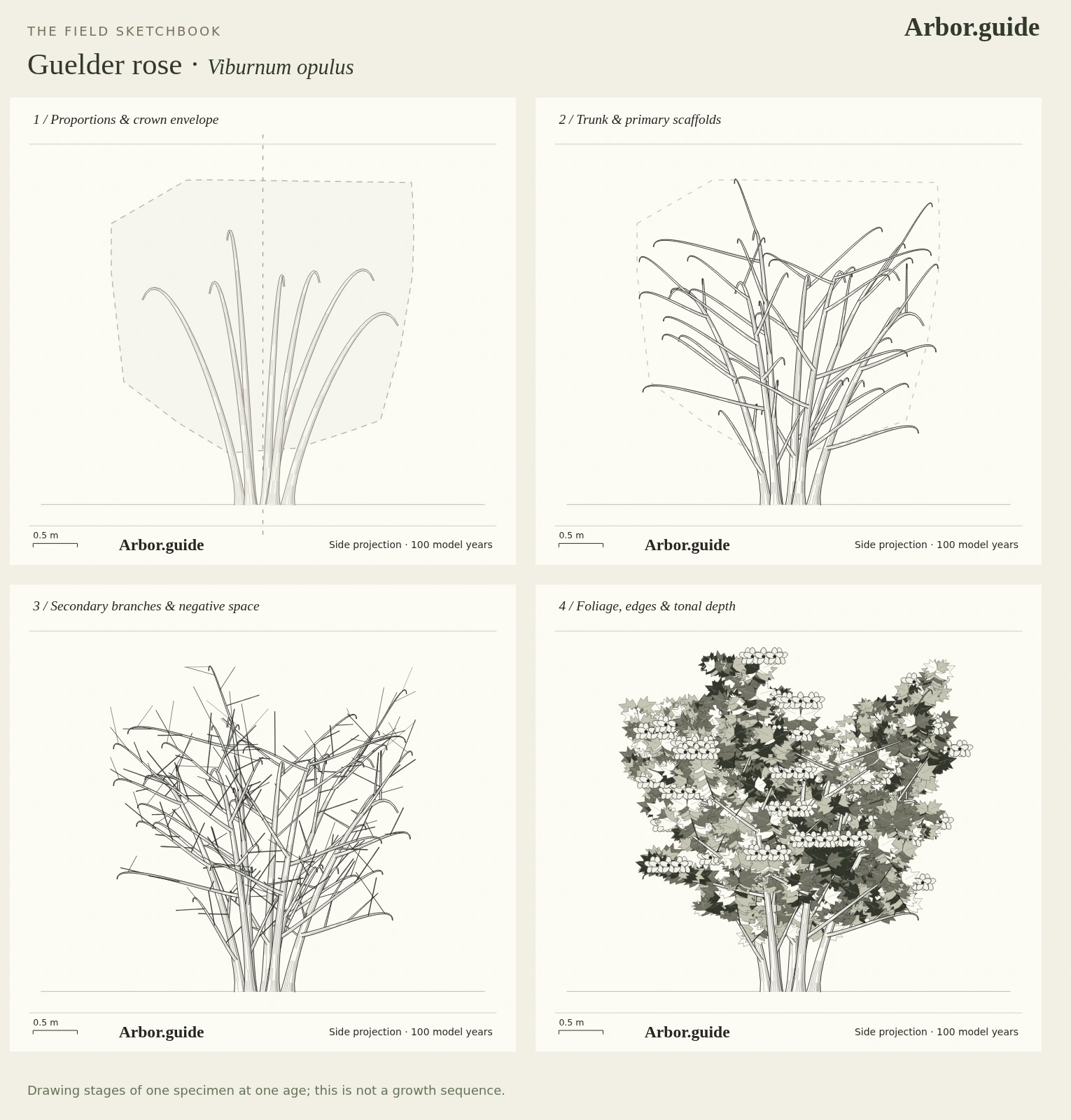
Arbor.guide

Botanical field guide

Viburnum opulus

Guelder rose

1474 / 2,347

Shrub / Viburnaceae

The plant, in detail

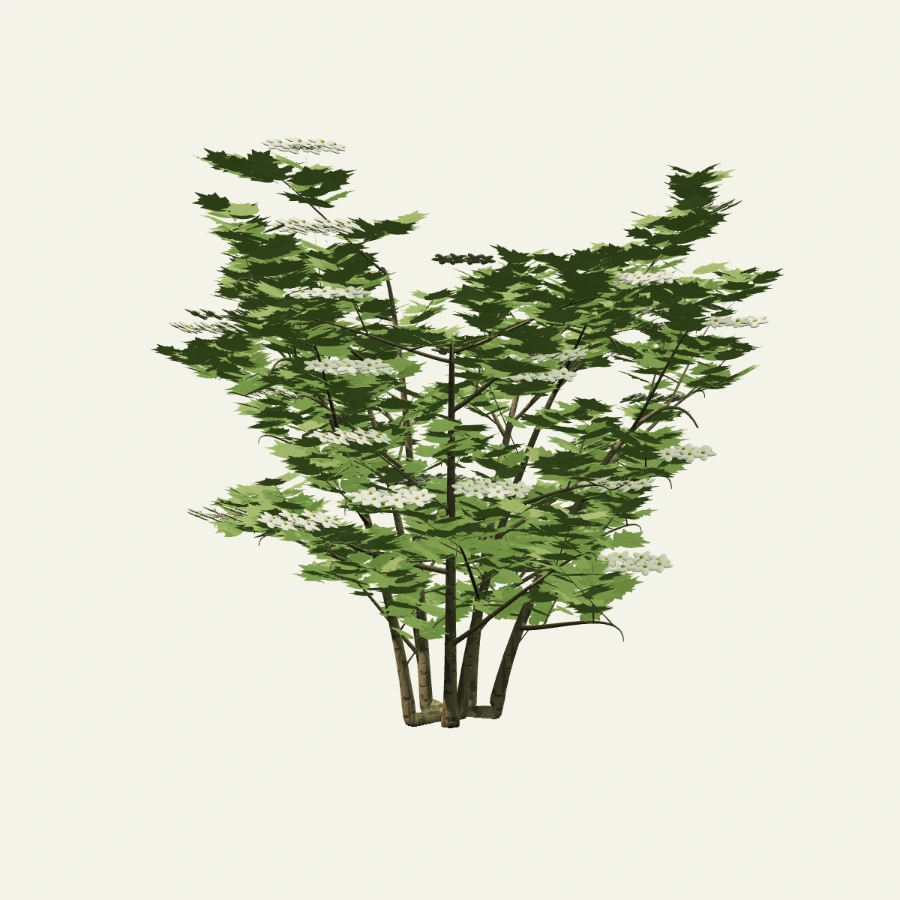
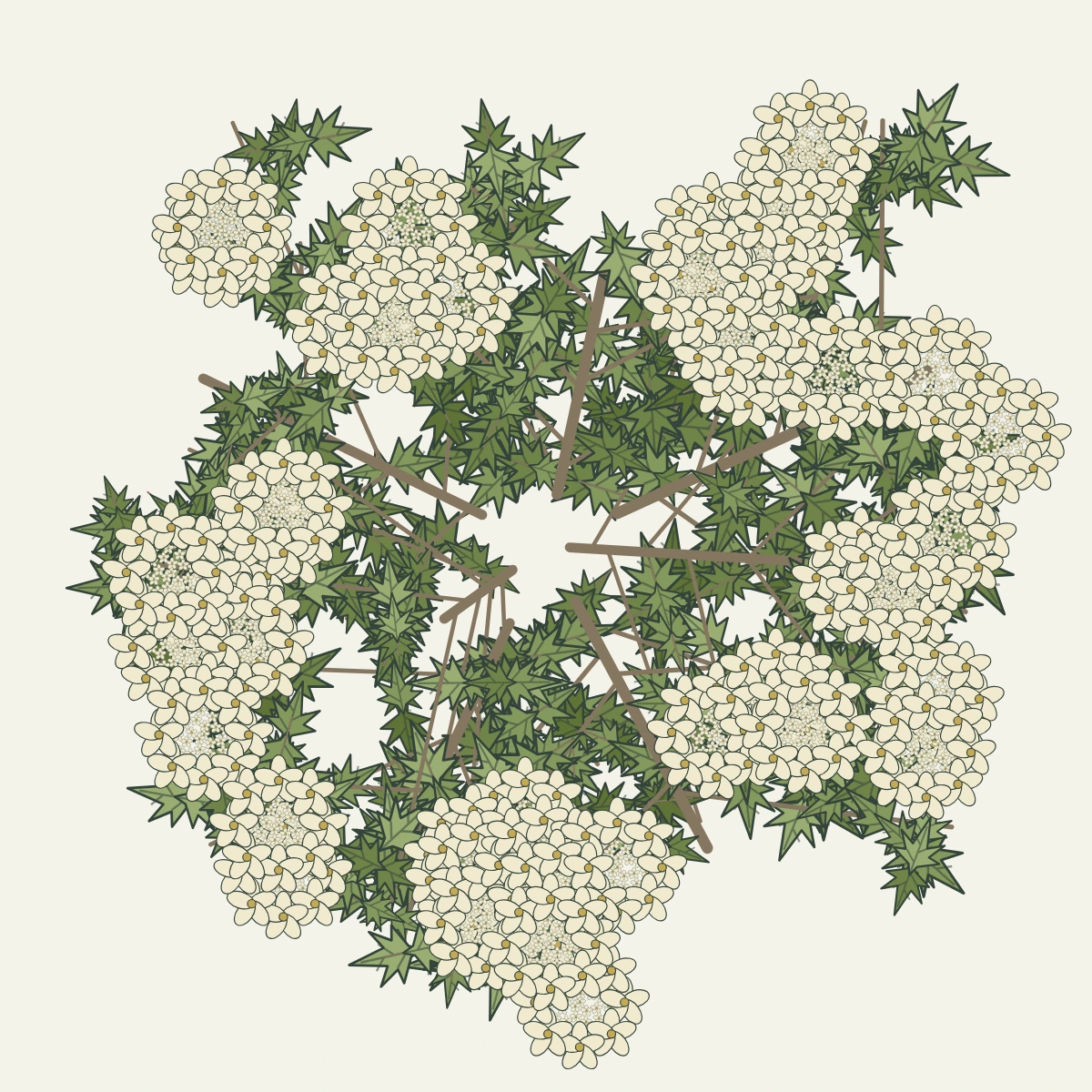
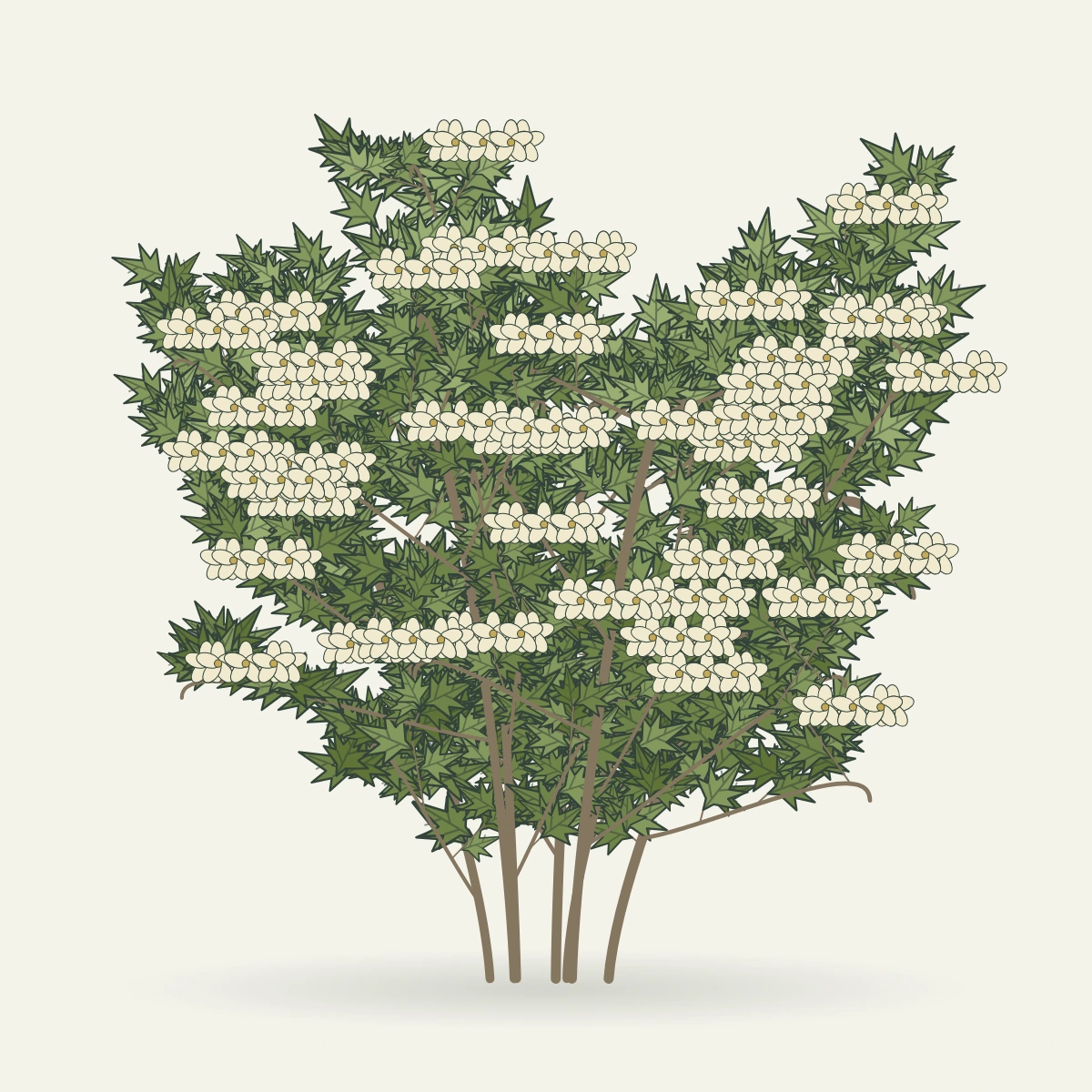
Guelder rose has a arching · dense · erect · multi-stemmed · rounded · spreading habit. Simple; Ovate; Lobed · Serrate; opposite insertion. Gold/Yellow · White flowers; spring · summer.

Reference height
3.7–4.9 m
Foliage habit
Deciduous
USDA zones
2–8
Light
Full sun · Partial shade

Horticultural reference range in metres. Cultivars and site conditions can differ; this range is not a species maximum.

Crown

Arching · dense · erect · multi-stemmed · rounded · spreading.

Branching

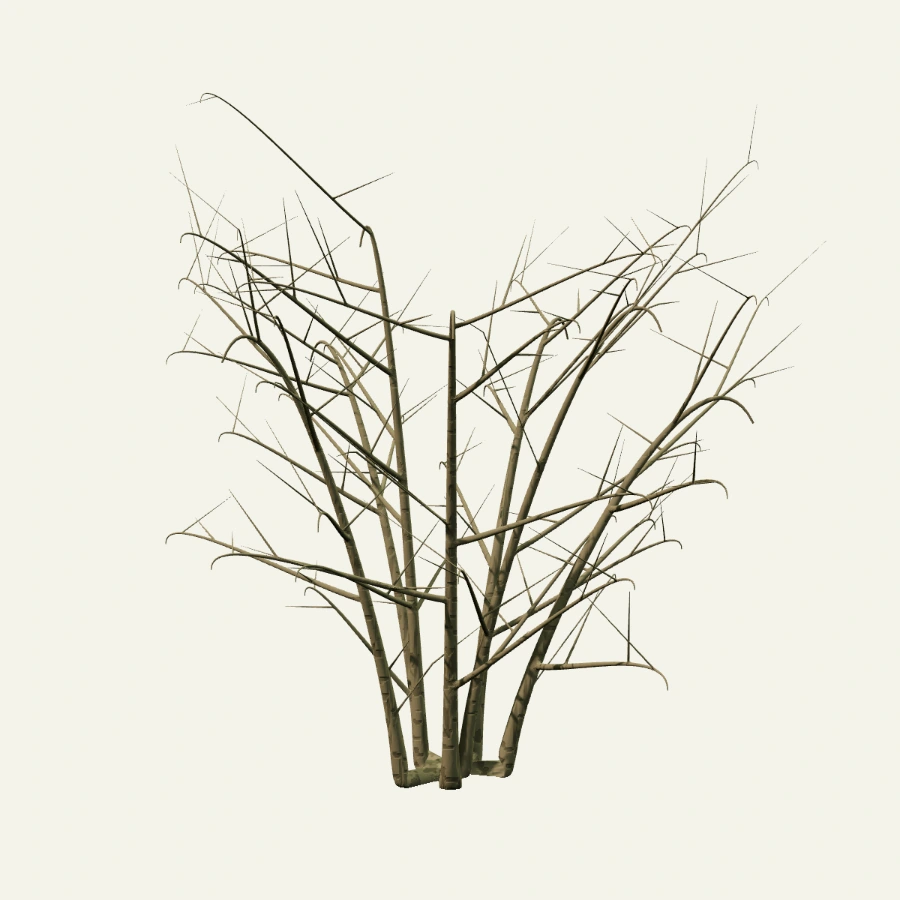
Opposite leaf insertion; branch positions in the reconstruction are ArborAI.

Bark

Dark Brown · Dark Gray; texture described in the source.

Roots

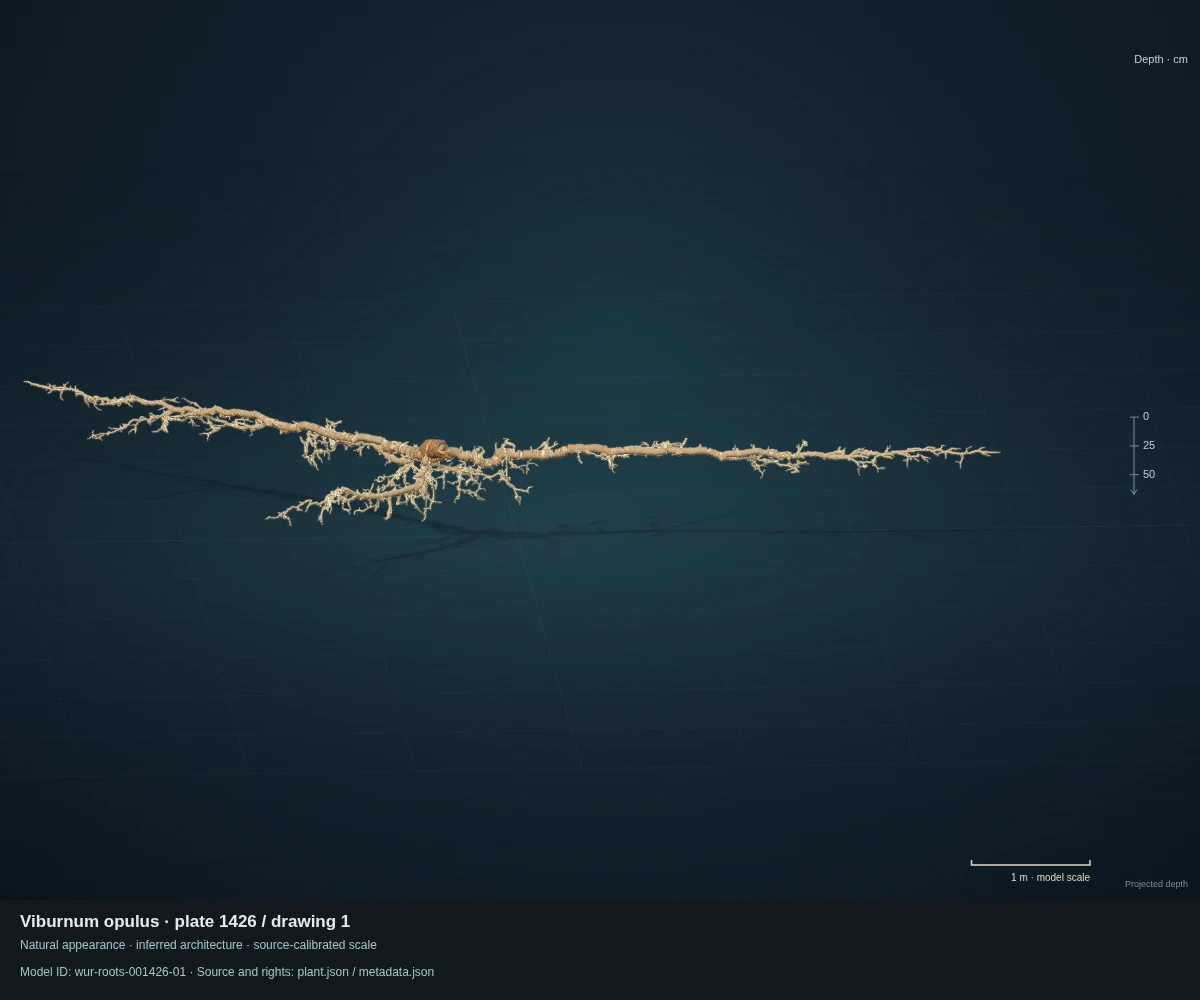
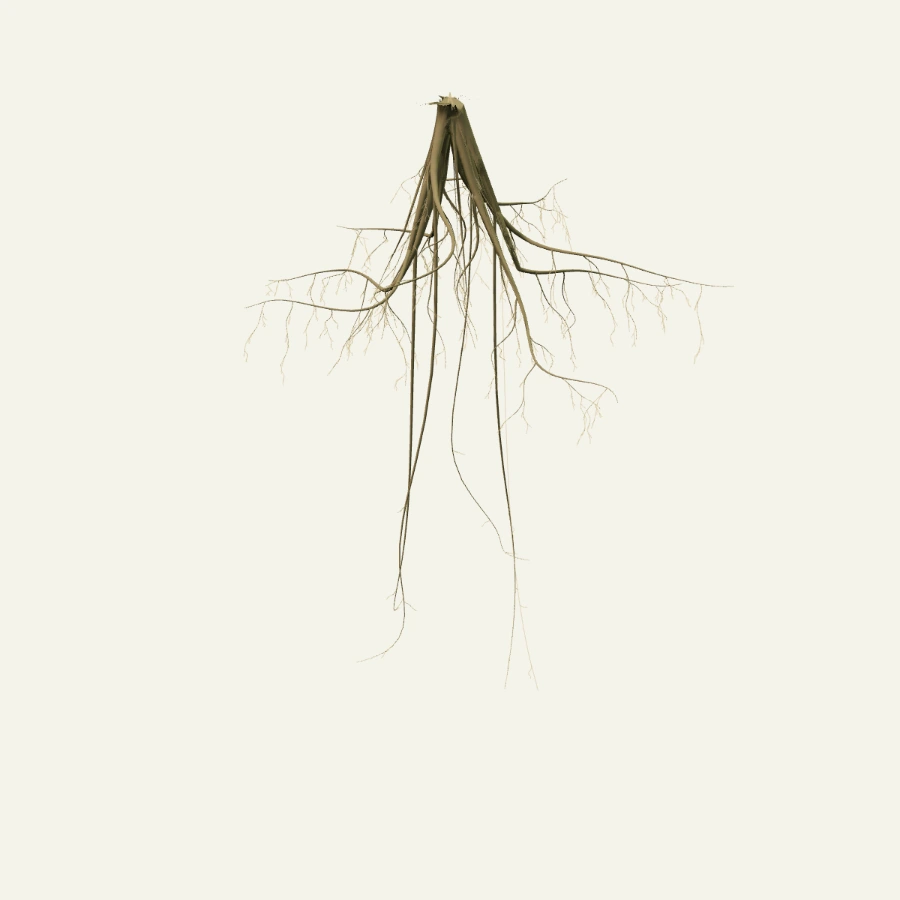
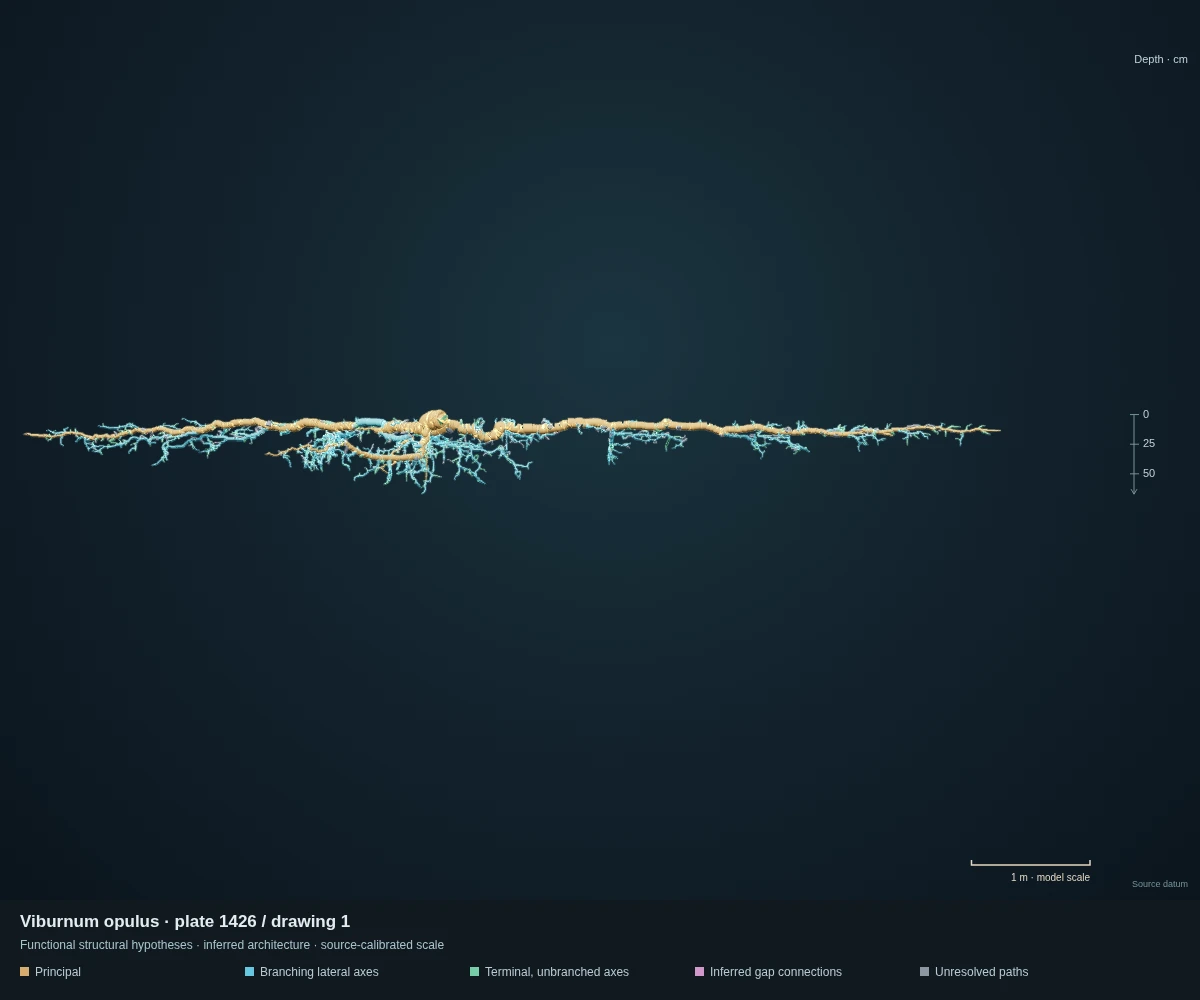
A schematic spreading root framework. The selected source does not quantify root depth or radius.

Root studies

These reconstructions follow archived root drawings. Colour identifies the modelled structural role of each root.

Functional view
Natural view
Source projection
Side view
Calibration
Source-calibrated
Vertical extent
65.2 cm
Inferred axes
1188
Model metrics and plate observations

Model metrics

Depth follows the printed scale. Equal horizontal scale and hidden depth are modeling assumptions; root thickness is illustrative.

Vertical extent
65.2 cm
Horizontal span (x)
8.06 m
Horizontal span (z)
4.5 m
Centreline length
99.7 m
Inferred axes
1188
Branching sites
1086
Terminal paths
1102
Mean modelled diameter
1.88 cm
Surface area proxy
6.12 m²
Volume proxy
55,900 cm³
Inferred connection length
9.11 cm
Projected length
95.4 m
Mean angle from vertical
56.1°

Dimensions reported on the source plate

Plant height
400 cm plate_1426
Root depth
65 cm plate_1426
Root-system diameter
862 cm plate_1426

Drawing observations

  • leafy shrub with many basal axes above shallow root profile
  • long shallow roots extend bilaterally
  • coarse curved and looplike paths beneath adjacent stems
  • dense short descenders and repeated small forks

Biologically constrained spatial reconstruction from source morphology. Root azimuths, hidden placement, growth responses, circular sections, thickness and proposed connections are inferred. The separate source trace retains exact drawing coordinates. No measured 3D anatomy or observed growth sequence is claimed.

Source and attribution

Study 1426 · Model 01

Viburnum opulus · Wageningen University & Research archive
02 / Seasons

Through the seasons

Four portraits. One plant.

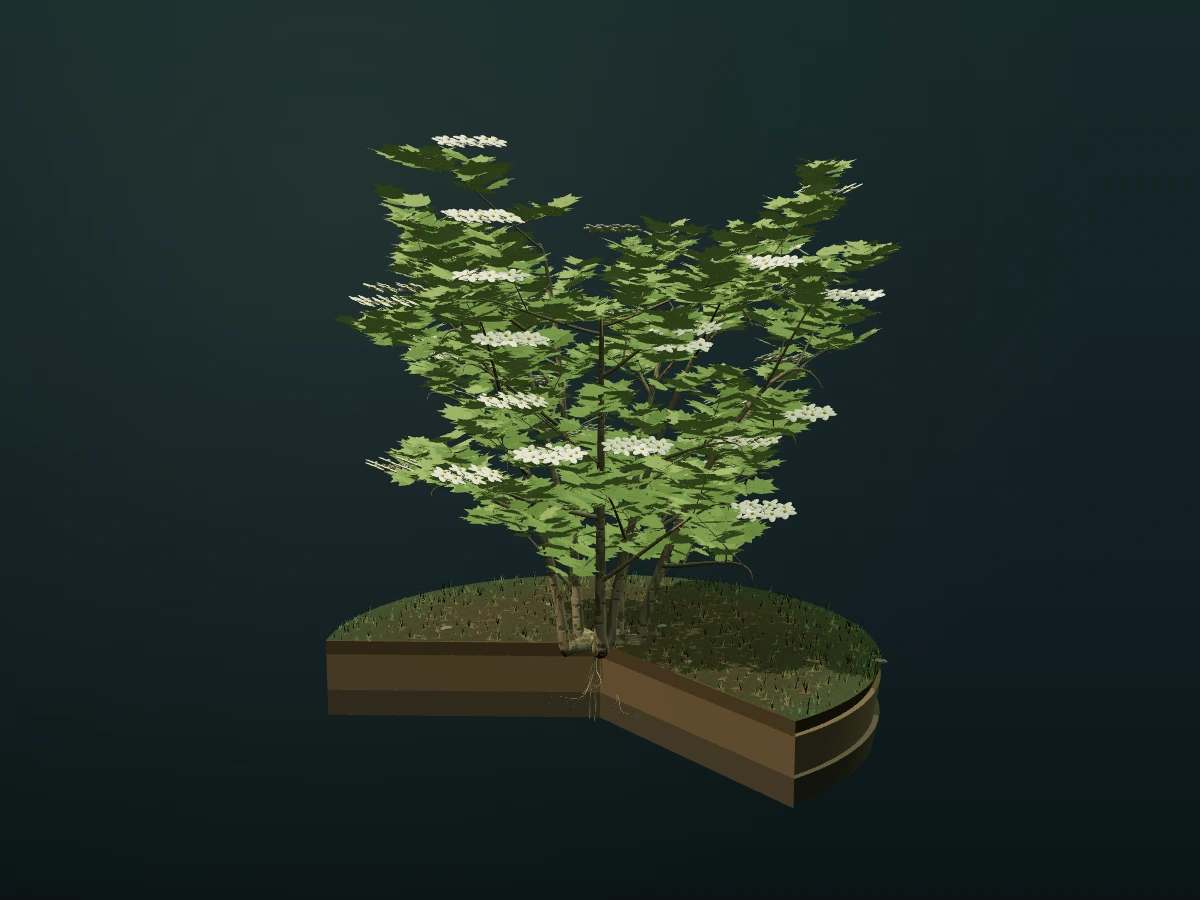
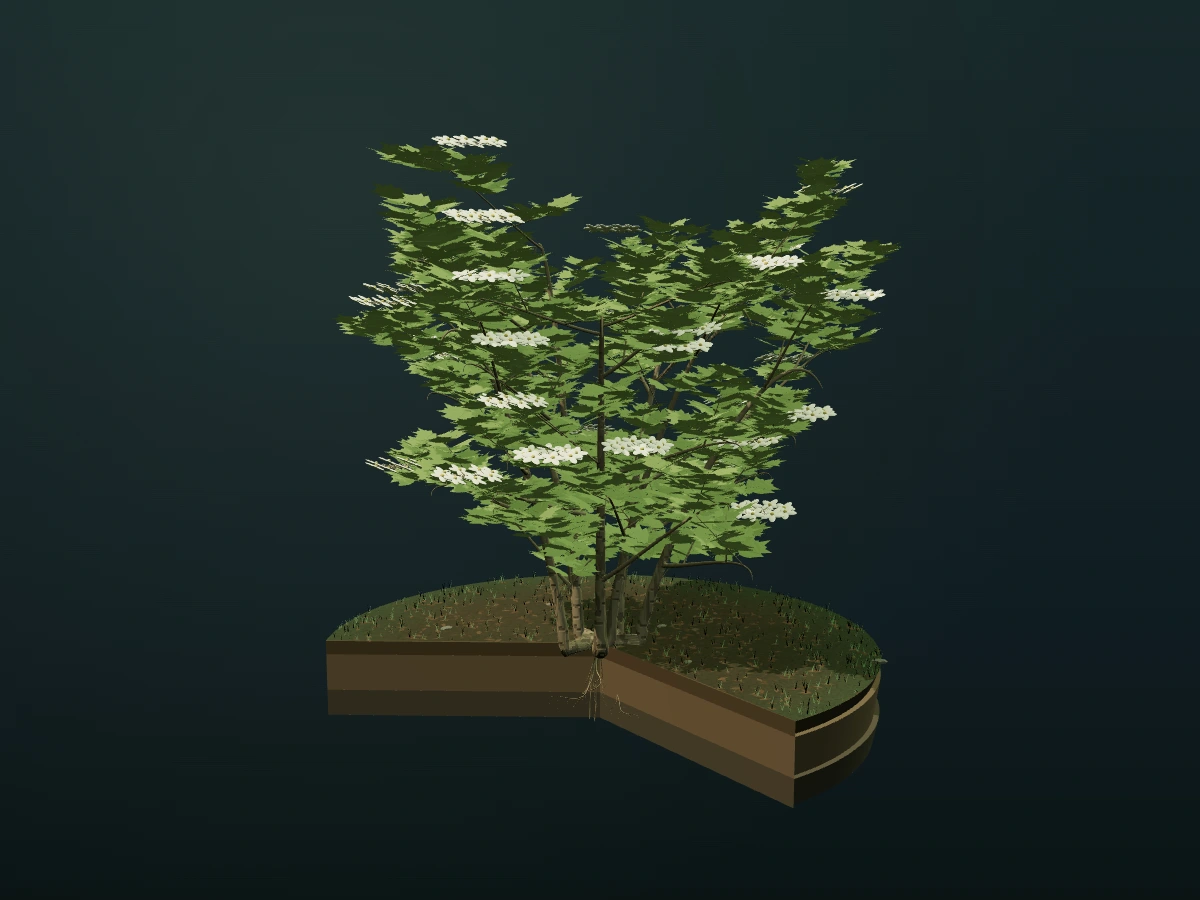
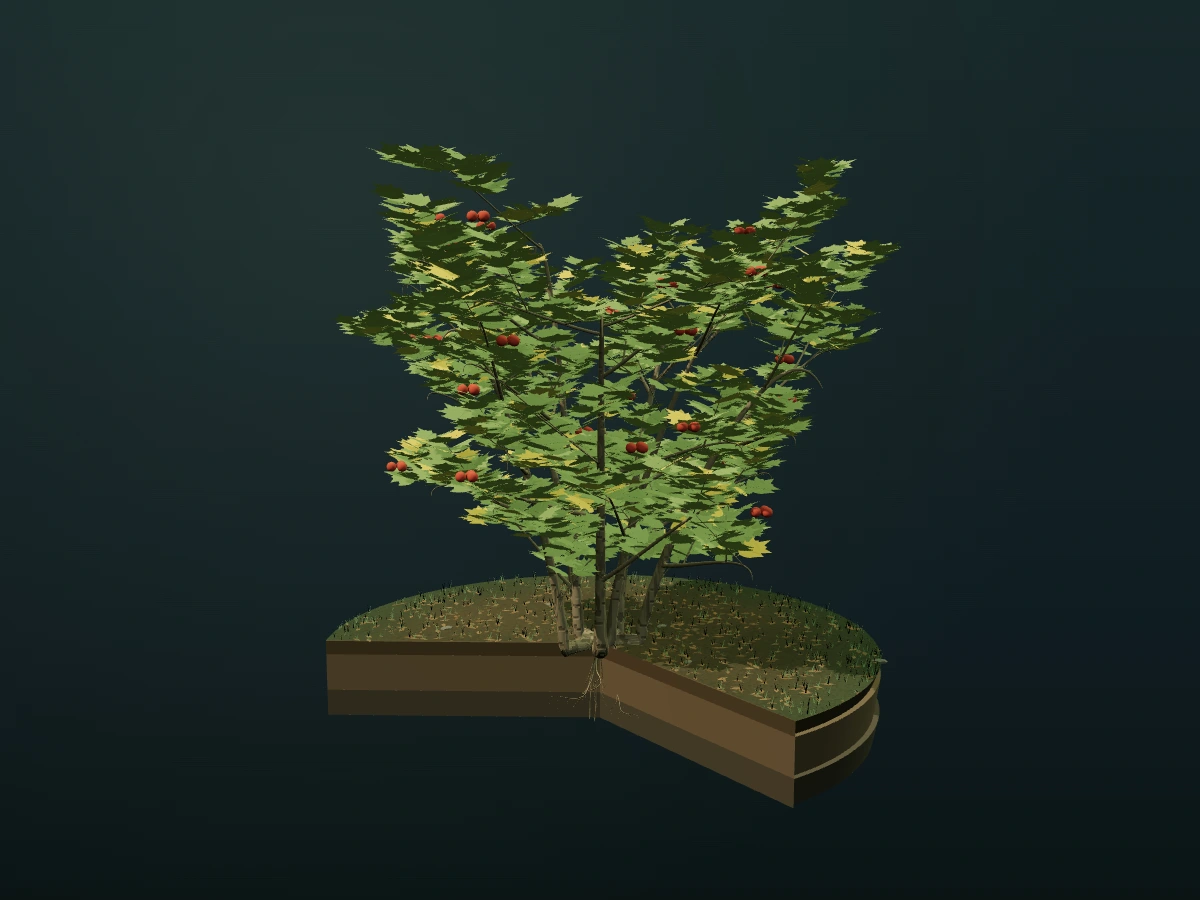
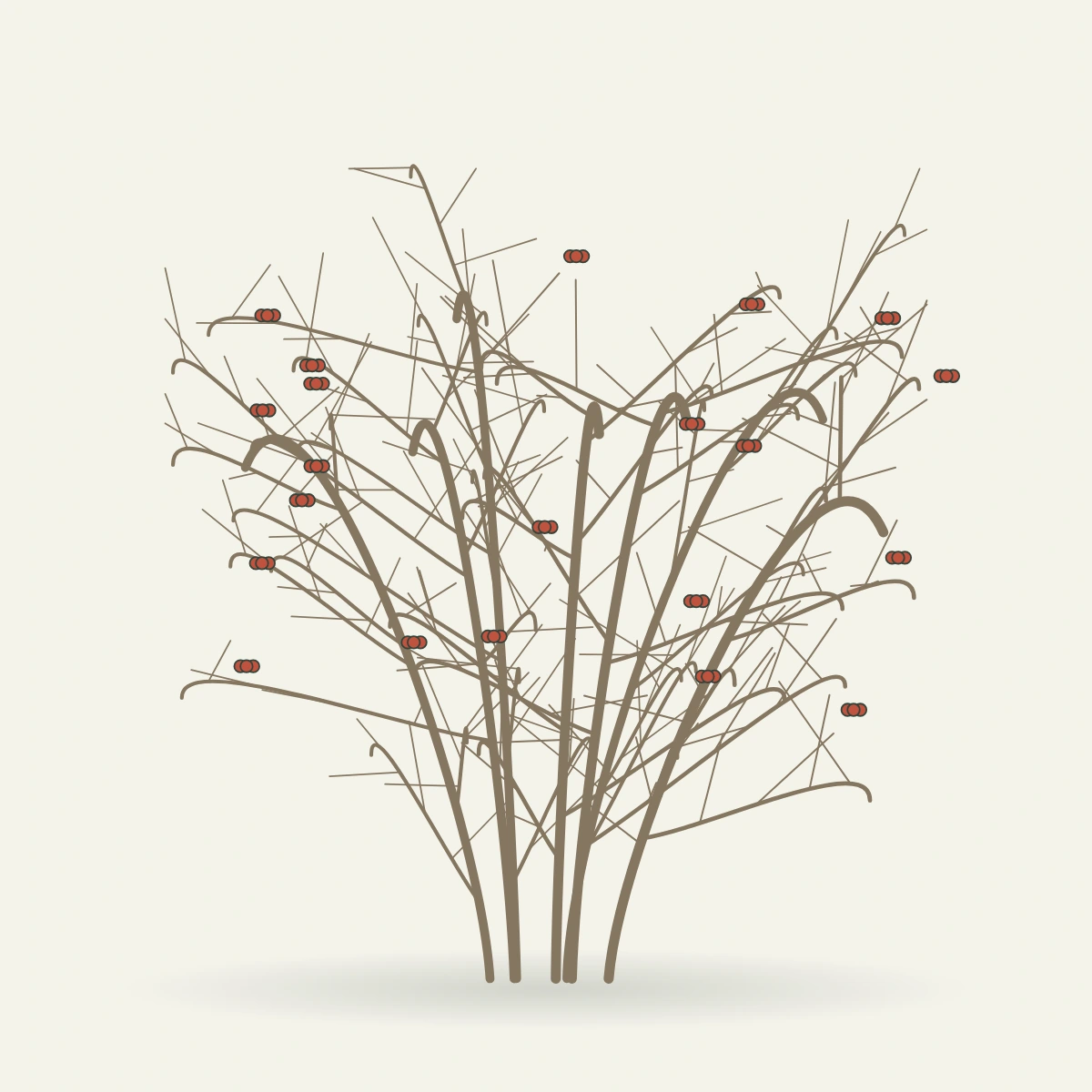
Read the crown, foliage and reproductive structures together. The four views compare seasonal appearances; the reference notes explain what is actually documented.

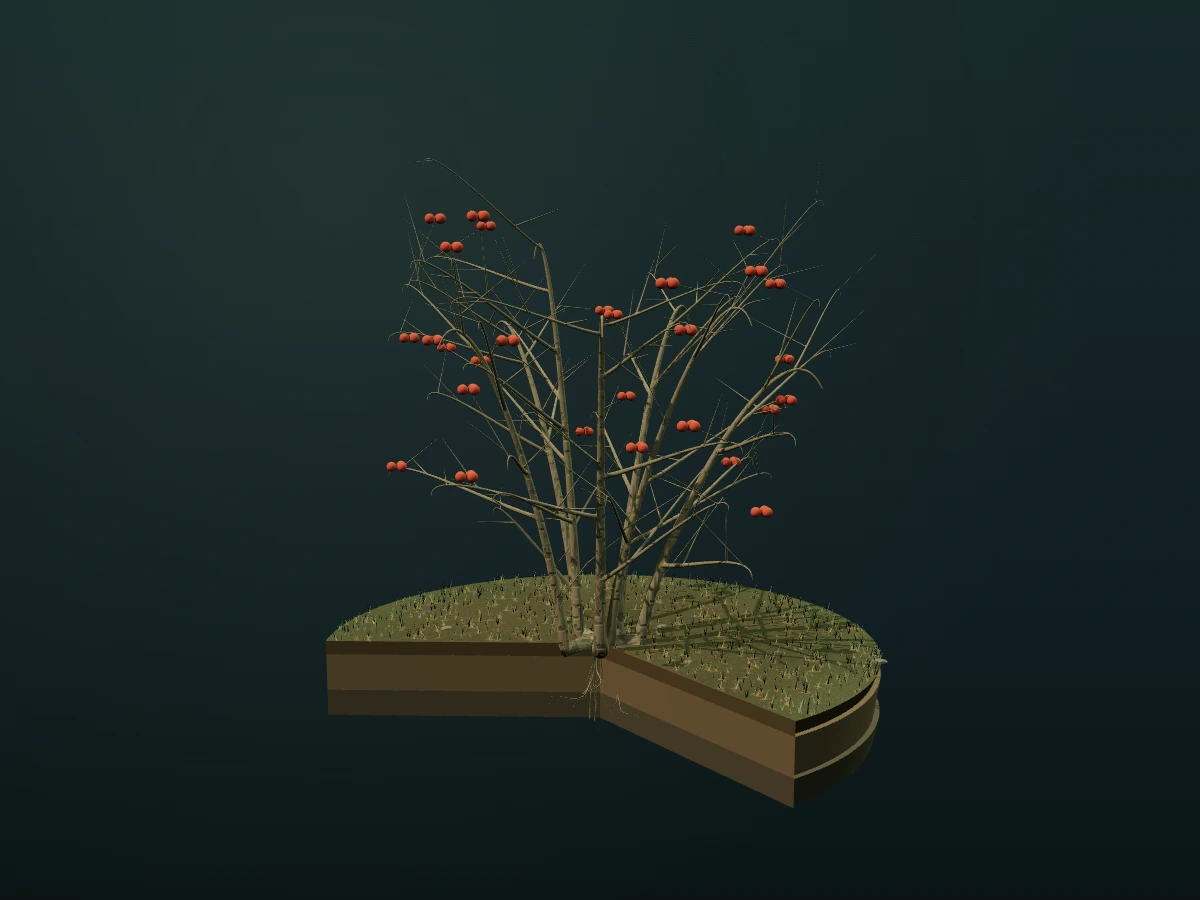
Seasonal illustration; the same plant, age and camera across four views.

Seasonal record

North Carolina botanical account

Flowering
Spring · Summer[1]
Fruiting / dispersal
Autumn · Winter[1]

Leaf renewal

Deciduous[1]

The record describes a deciduous plant: foliage is renewed after a leafless or reduced-leaf phase. The named views illustrate that cycle without fixing its dates at a planting site.

Colour notes

Red / burgundy · Gold / yellow · Purple / lavender[1]

These are recorded colour possibilities. The shades and their distribution are illustrative; a particular autumn can look different.

Reading these views

Season names organize these four views, not a universal calendar. Hemisphere, local climate, cultivar and management can change timing; months are shown only when explicitly recorded.

The views emphasize crown structure. Buds, small flowers, individual retained leaves and fine reproductive changes may be unresolved; model age and fruit count are not production forecasts.

No separate on-tree fruit display is configured for this record.

Seasonal references

  1. NC State Extension · Viburnum opulus ↗plants.ces.ncsu.edu

03 / Leaves & flowers

A closer look at the organs

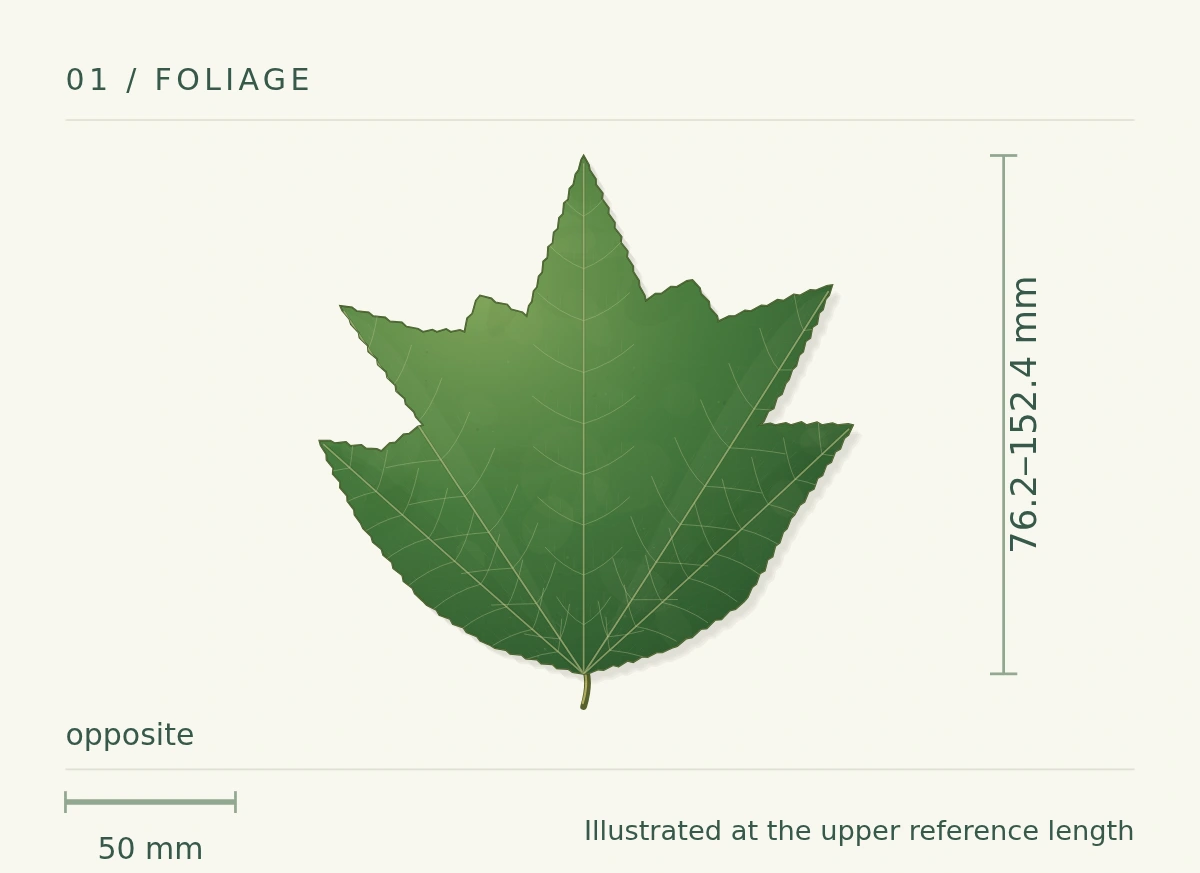
Leaves

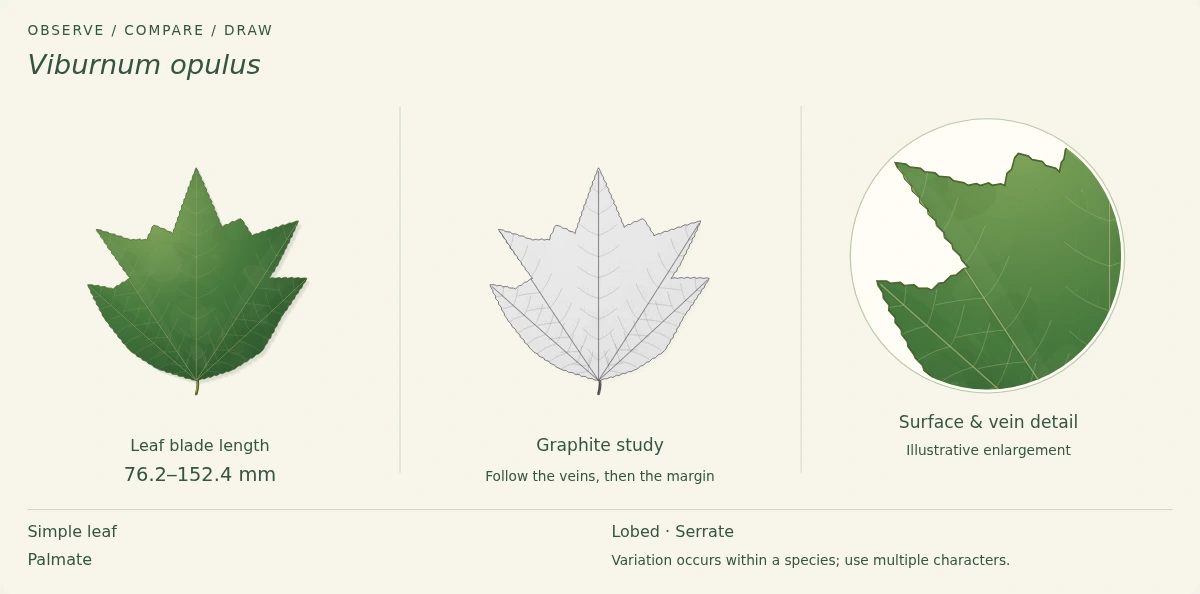
Leaf blade length
76.2–152.4 mmSource notes

Simple; Ovate; Lobed · Serrate; opposite insertion.

Simple leaf · Lobed · Serrate · Palmate · opposite

Seasonal notes

Seasonal palette follows reported colour categories; dates and saturation vary with site and weather.

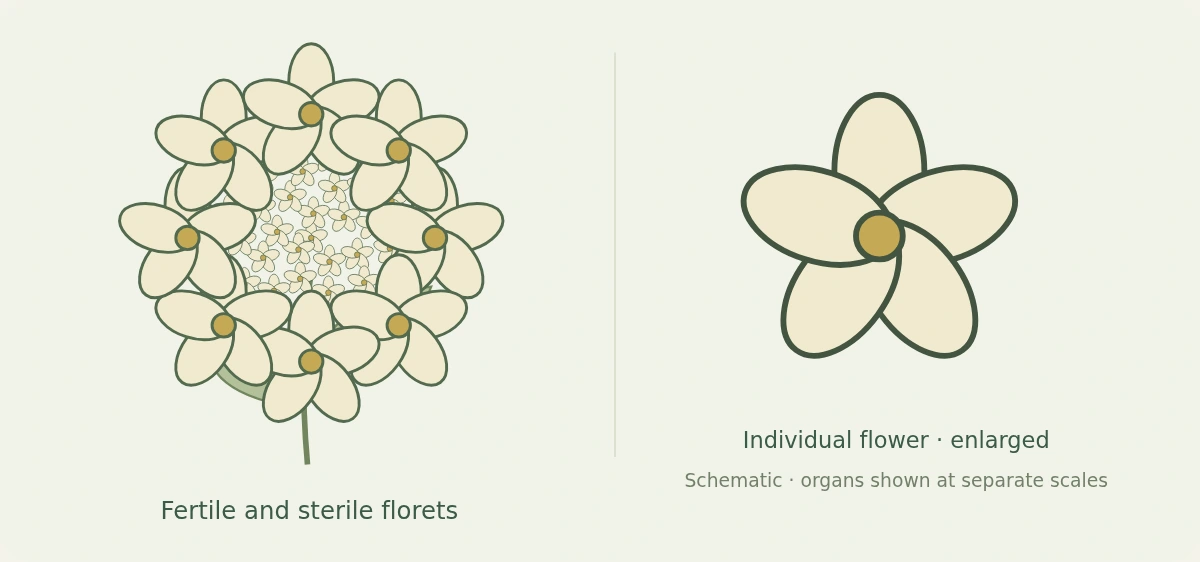
Flowering reference
Spring · Summer

04 / Fruit & seed

Named structures, separate scales

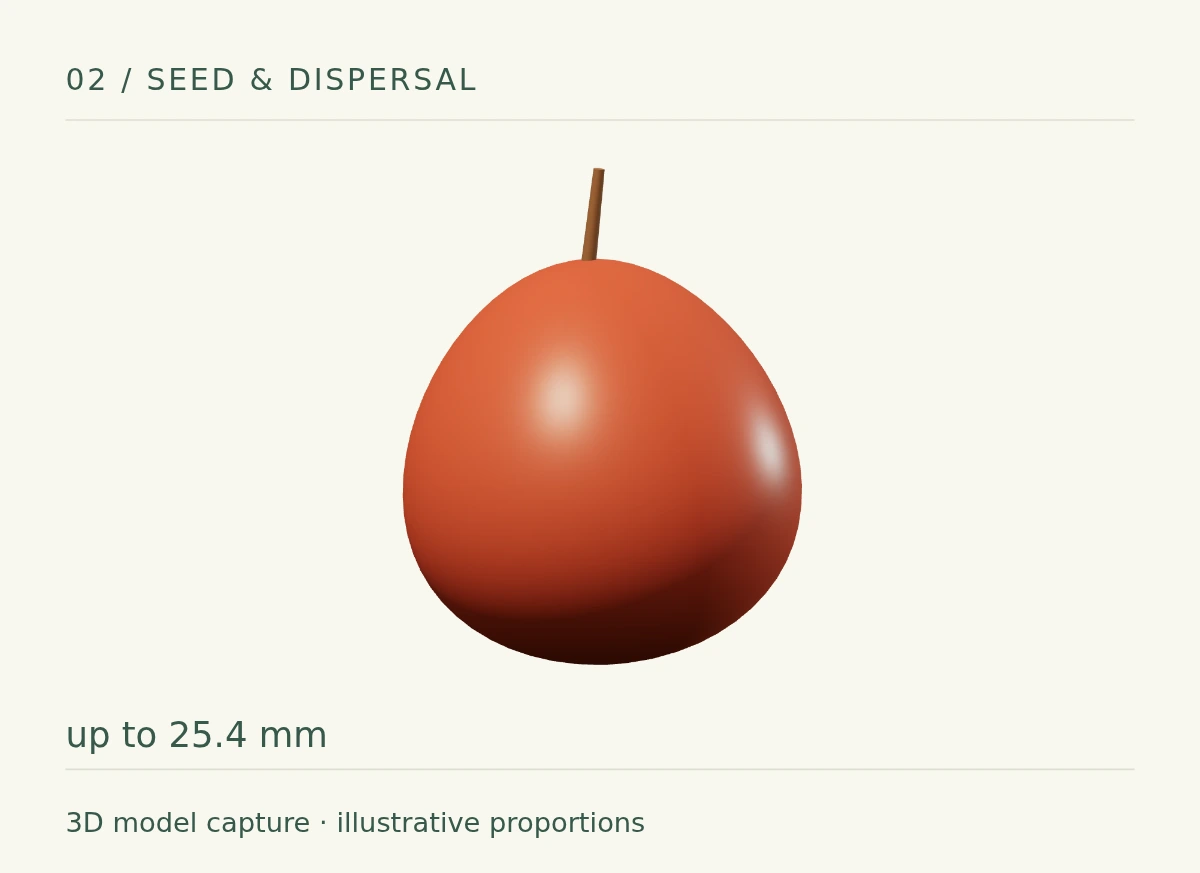
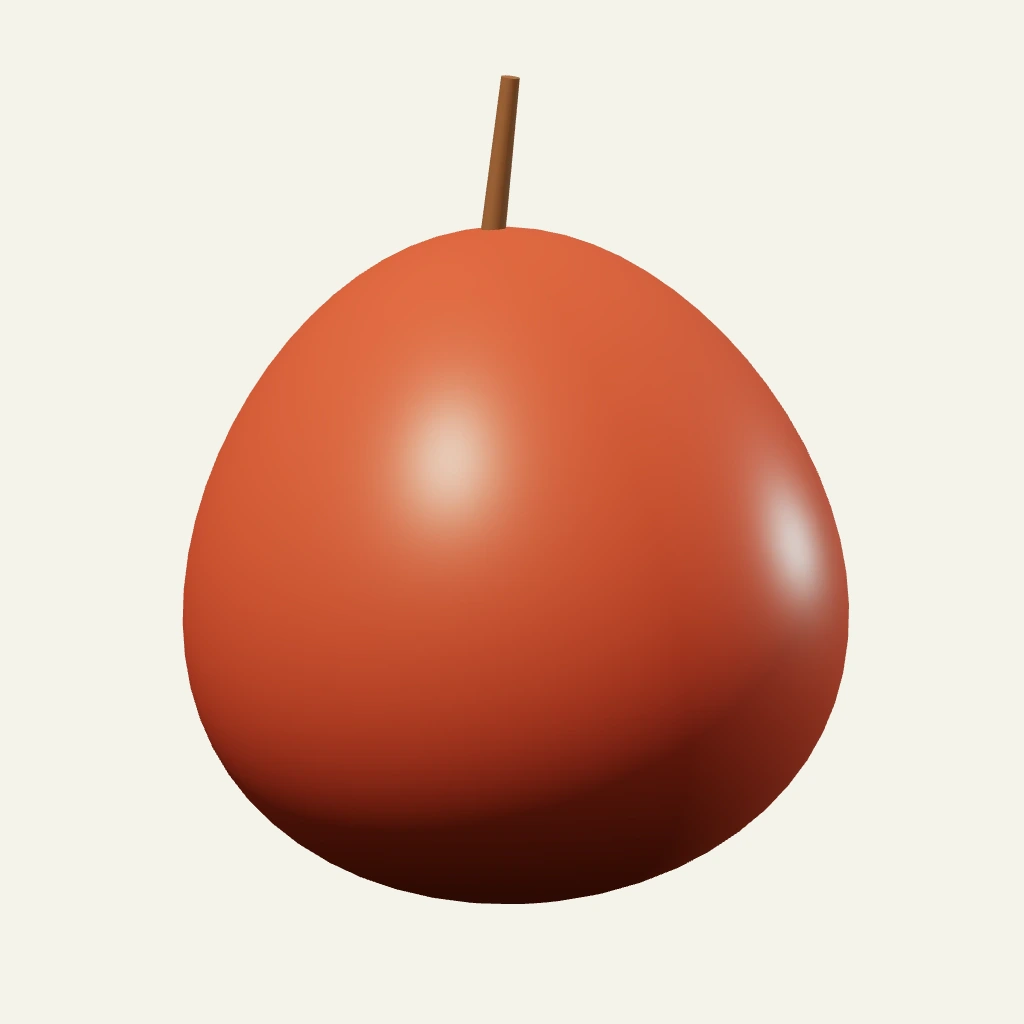
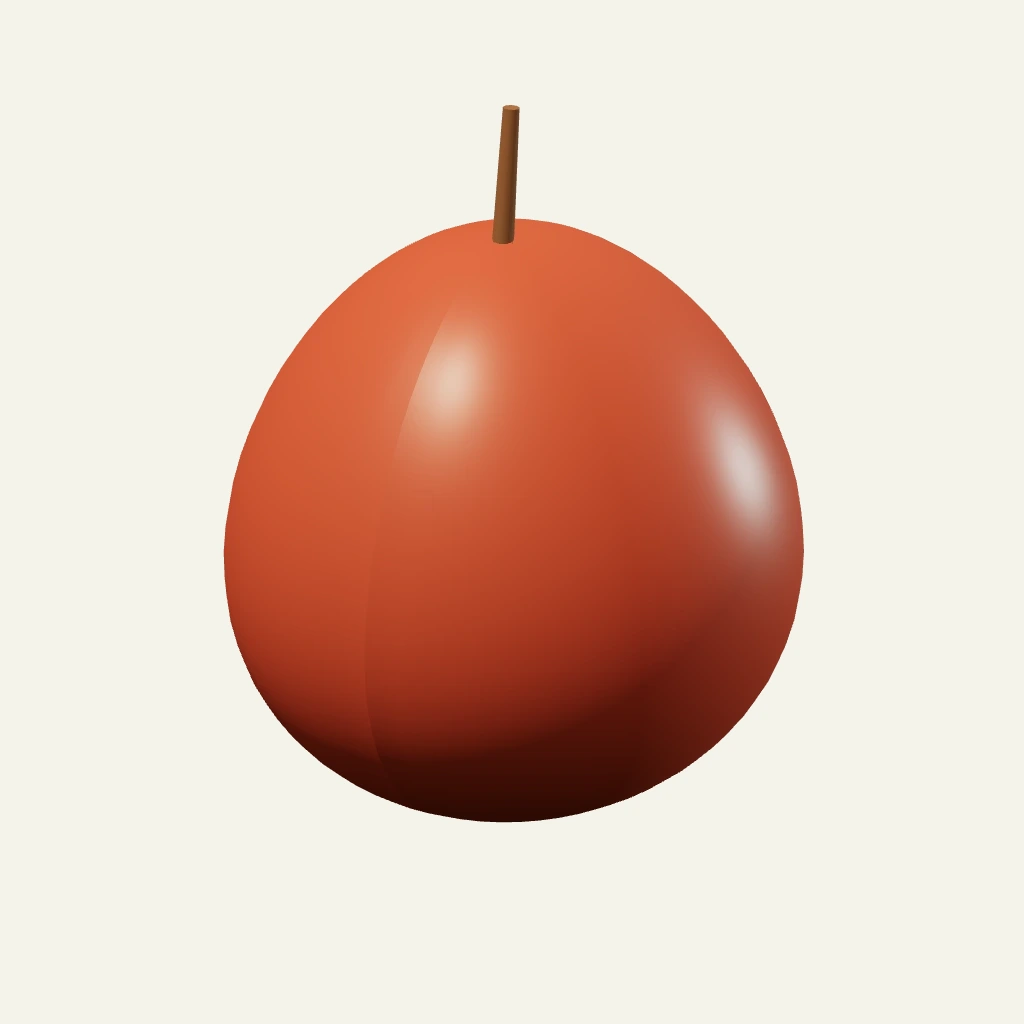
Fruit / dispersal unit

Whole drupe length
≤ 25.4 mmSource notes

Source structure: drupe. The illustration represents the reproductive unit, not a separately measured enclosed seed.

Fruiting reference
Autumn · Winter

North Carolina botanical account

Organs are enlarged independently. Refer to the named measurement, not image size.

05 / Habitat

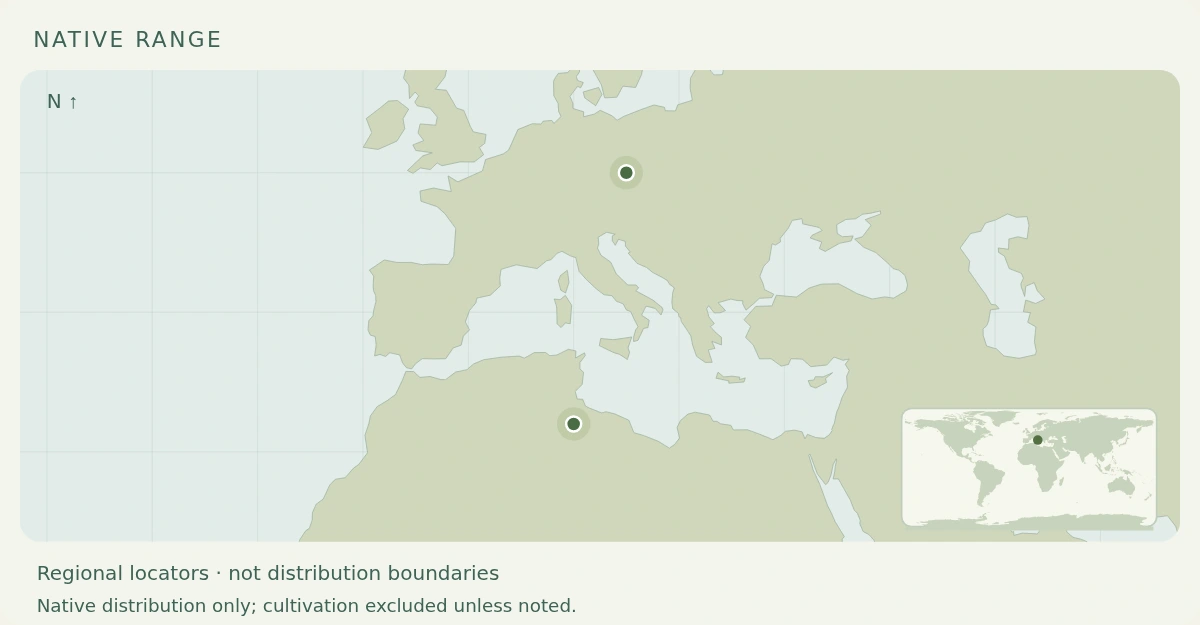
Native range & growing context

Native range & growing context

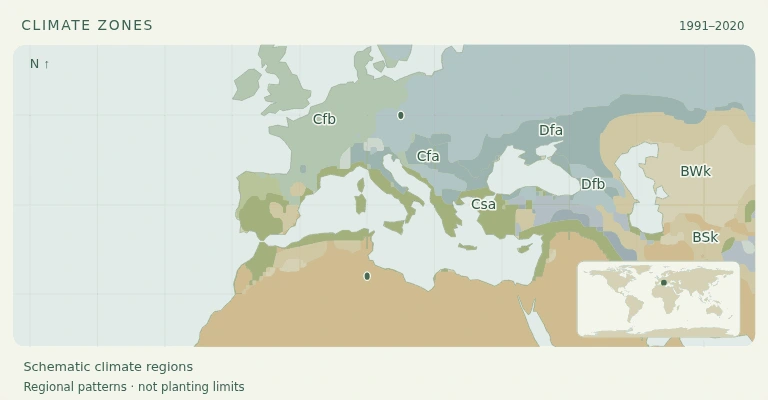
Europe, Asia and northern Africa

Reference spread
2.4–4.6 m
Moisture
drained · Moist · Wet
Growth tendency
Medium
Life span
No numerical lifespan is established by this reference. Model age is an illustration parameter.

Regional context, not a measured occurrence or suitability map.

06 / Sources & interpretation

Read the evidence behind the illustration

Names & classification

Family
Viburnaceae
Genus
Viburnum
Synonyms
—
  • Guelder rose has a arching · dense · erect · multi-stemmed · rounded · spreading habit. Simple; Ovate; Lobed · Serrate; opposite insertion. Gold/Yellow · White flowers; spring · summer.
  • Propagation methods recorded: Seed · Stem Cutting.

ArborAI teaching geometry. Branch positions, ages, root extents and colours are illustrative; foliage is enlarged. Not a surveyed specimen or calibrated growth forecast.

ArborAI maintained-size design envelope; dimensions are editable and do not forecast growth. Seasonal appearance is illustrative.

  1. NC State Extension · Viburnum opulus ↗plants.ces.ncsu.edu
Plant data and references · 9
Heightm[3.6576000000000004, 4.8768]Source-level landscape reference. Site and cultivar variation apply. No independent specialist validation is claimed.plants.ces.ncsu.edu
Spreadm[2.4384, 4.572]Source-level landscape reference. Site and cultivar variation apply. No independent specialist validation is claimed.plants.ces.ncsu.edu
NativerangeEurope, Asia and northern AfricaSource-level landscape reference. Site and cultivar variation apply. No independent specialist validation is claimed.plants.ces.ncsu.edu
LeafhabitcategoryDeciduousSource-level landscape reference. Site and cultivar variation apply. No independent specialist validation is claimed.plants.ces.ncsu.edu
Lightcategory["sun", "partial"]Source-level landscape reference. Site and cultivar variation apply. No independent specialist validation is claimed.plants.ces.ncsu.edu
Moisturecategory["drained", "moist", "wet"]Source-level landscape reference. Site and cultivar variation apply. No independent specialist validation is claimed.plants.ces.ncsu.edu
Hardinesscategory{"system": "USDA", "zones": [2, 8], "source": "ncsu"}Source-level landscape reference. Site and cultivar variation apply. No independent specialist validation is claimed.plants.ces.ncsu.edu
DescriptionGuelder rose has a arching · dense · erect · multi-stemmed · rounded · spreading habit. Simple; Ovate; Lobed · Serrate; opposite insertion. Gold/Yellow · White flowers; spring · summer.Source-level landscape reference. Site and cultivar variation apply. No independent specialist validation is claimed.plants.ces.ncsu.edu
Reference phenologycategory{"flowering": {"seasons": ["spring", "summer"]}, "fruiting": {"seasons": ["autumn", "winter"]}, "reference": "North Carolina botanical account", "source": "https://plants.ces.ncsu.edu/plants/viburnum-opulus/", "reviewed": "2026-10-16"}Regional observations. Fruit display may include persistence and is not automatically ripening. Missing dates remain unspecified. Independent botanical review remains pending.plants.ces.ncsu.edu