Botanical field guide
Aralia elata
Japanese angelica tree
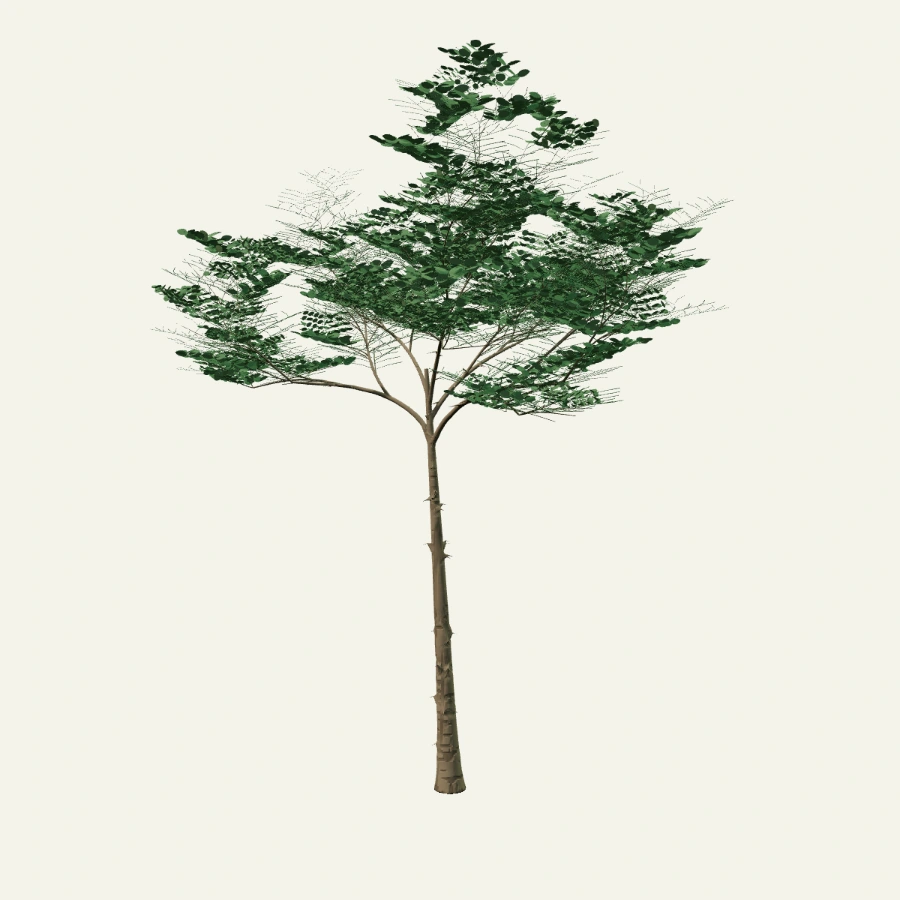
Tree / Araliaceae
The plant, in detail
Recorded conditions: Full sun (6 or more hours of direct sunlight a day) · Partial Shade (Direct sunlight only part of the day, 2-6 hours); Good Drainage · Moist.
- Reference height
- 2.4–6.1 m
- Foliage habit
- Deciduous
- USDA zones
- 4–9
- Light
- Full sun · Partial shade
Horticultural dimensions in NC State Extension; not a species maximum or a forecast for an individual tree.
Crown
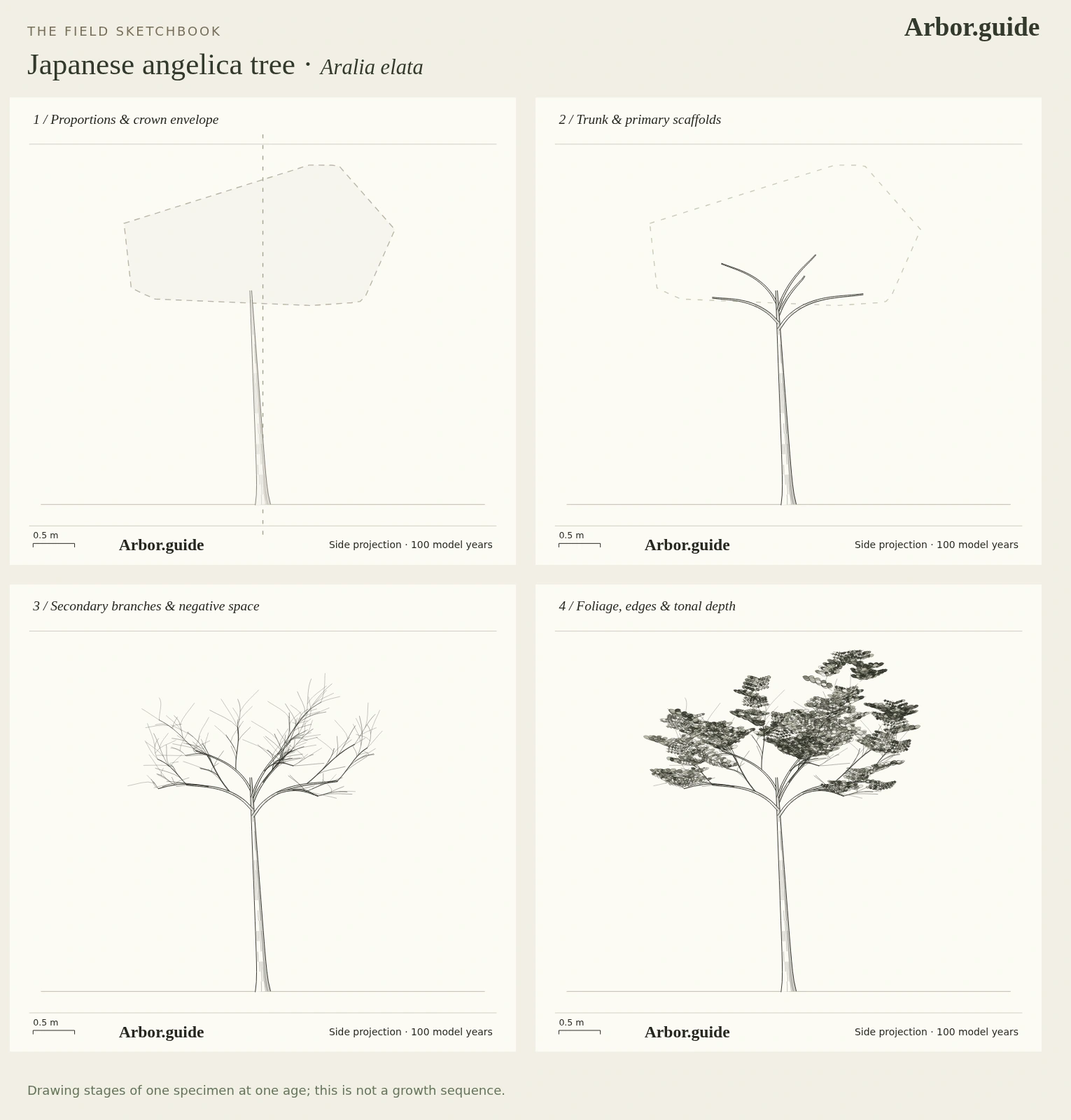
Umbrella reference crown. Reported height and spread guide the envelope.
Branching
Alternate foliage insertion; scaffold placement is ArborAI.
Bark
Colour varies with stem age; texture described in the source.
Roots
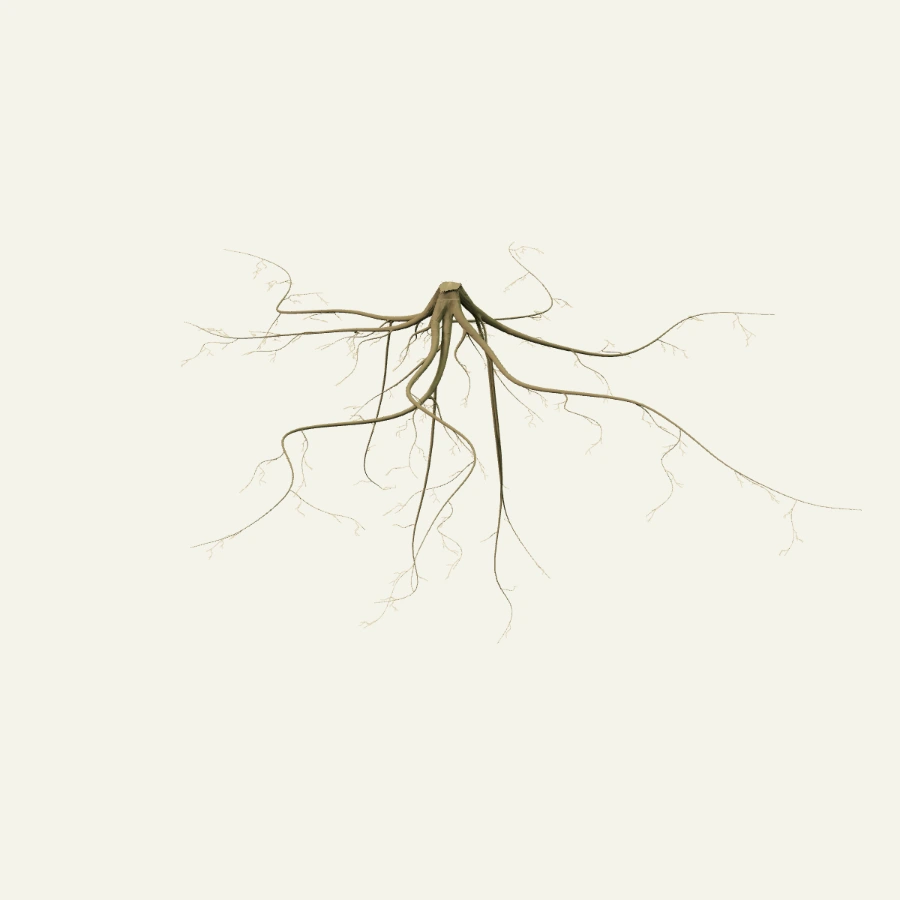
A schematic spreading root framework. The selected source does not quantify root depth or radius.
02 / Seasons
Through the seasons
Four portraits. One plant.
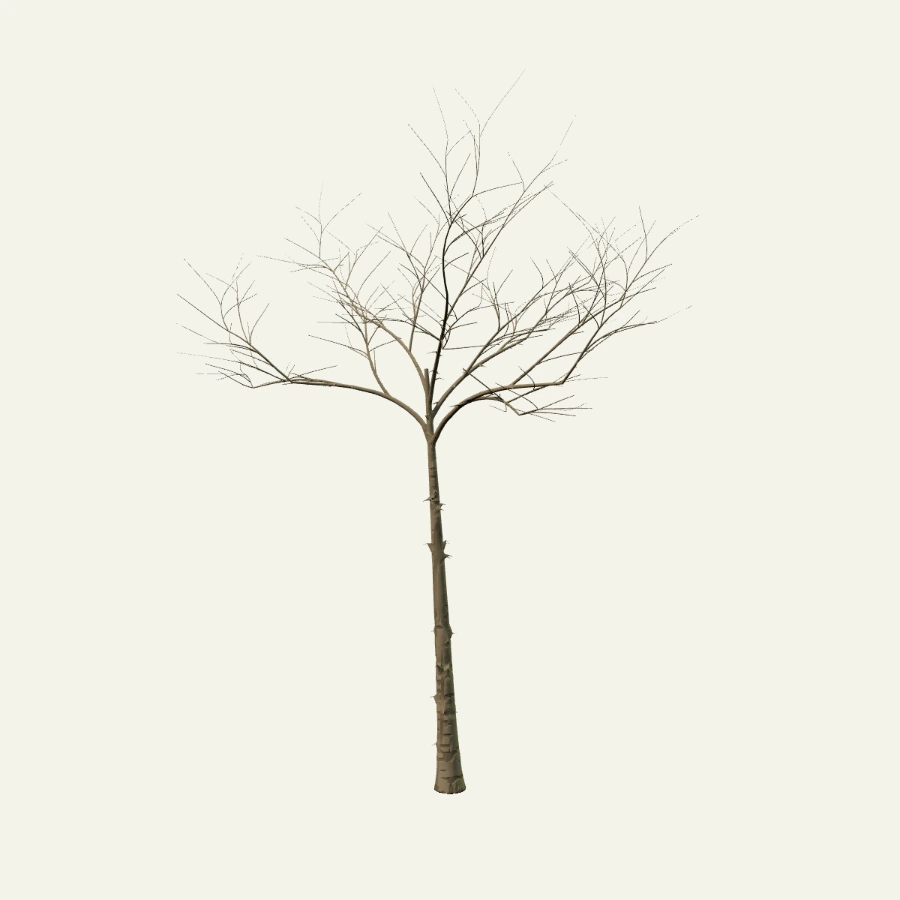
Read the crown, foliage and reproductive structures together. The four views compare seasonal appearances; the reference notes explain what is actually documented.
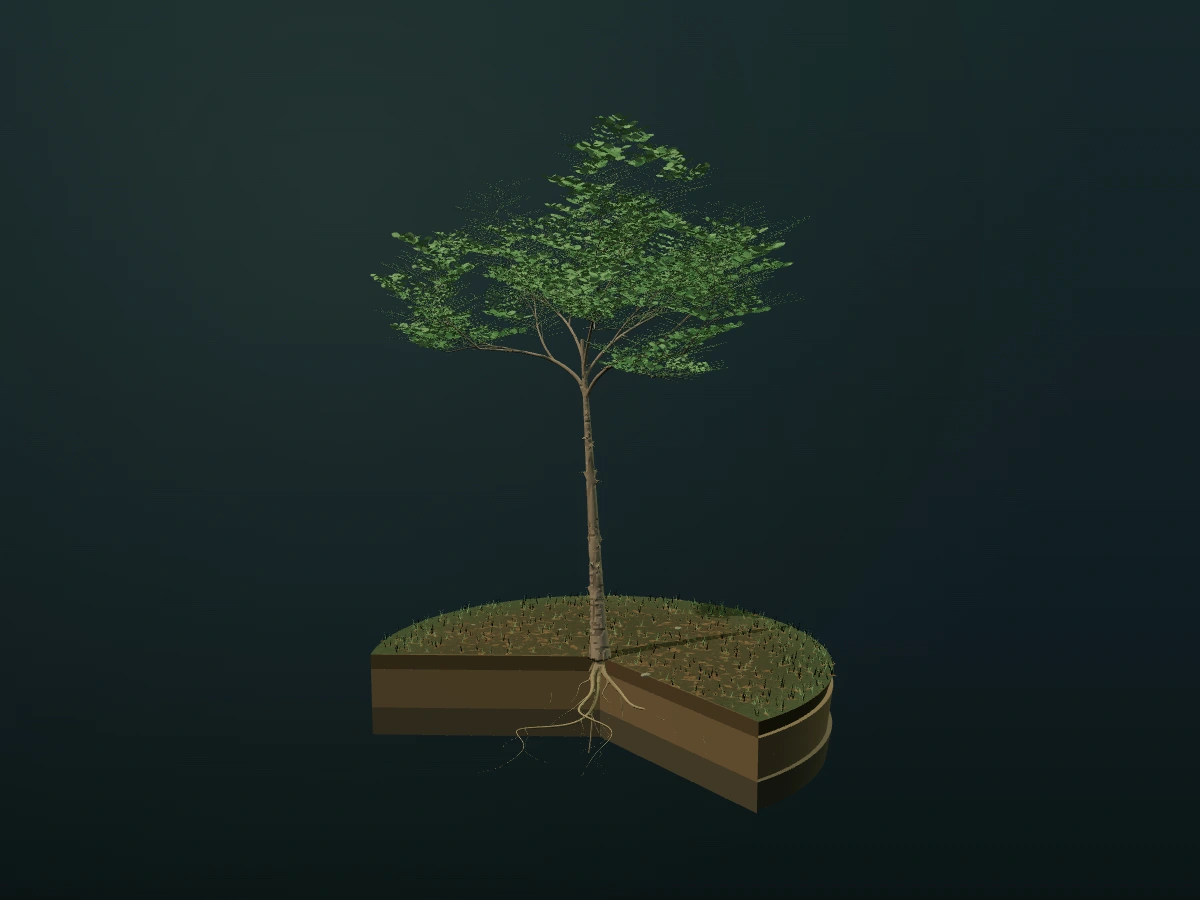
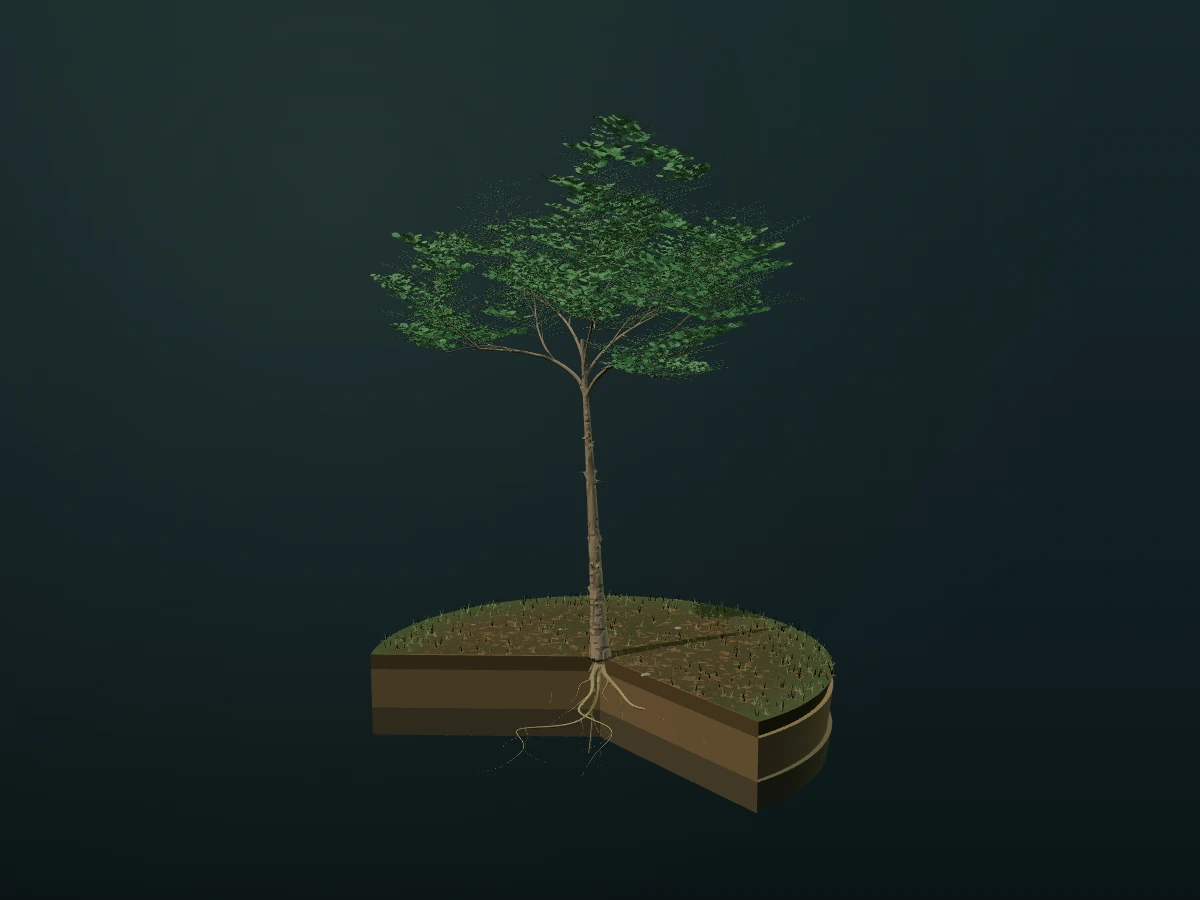
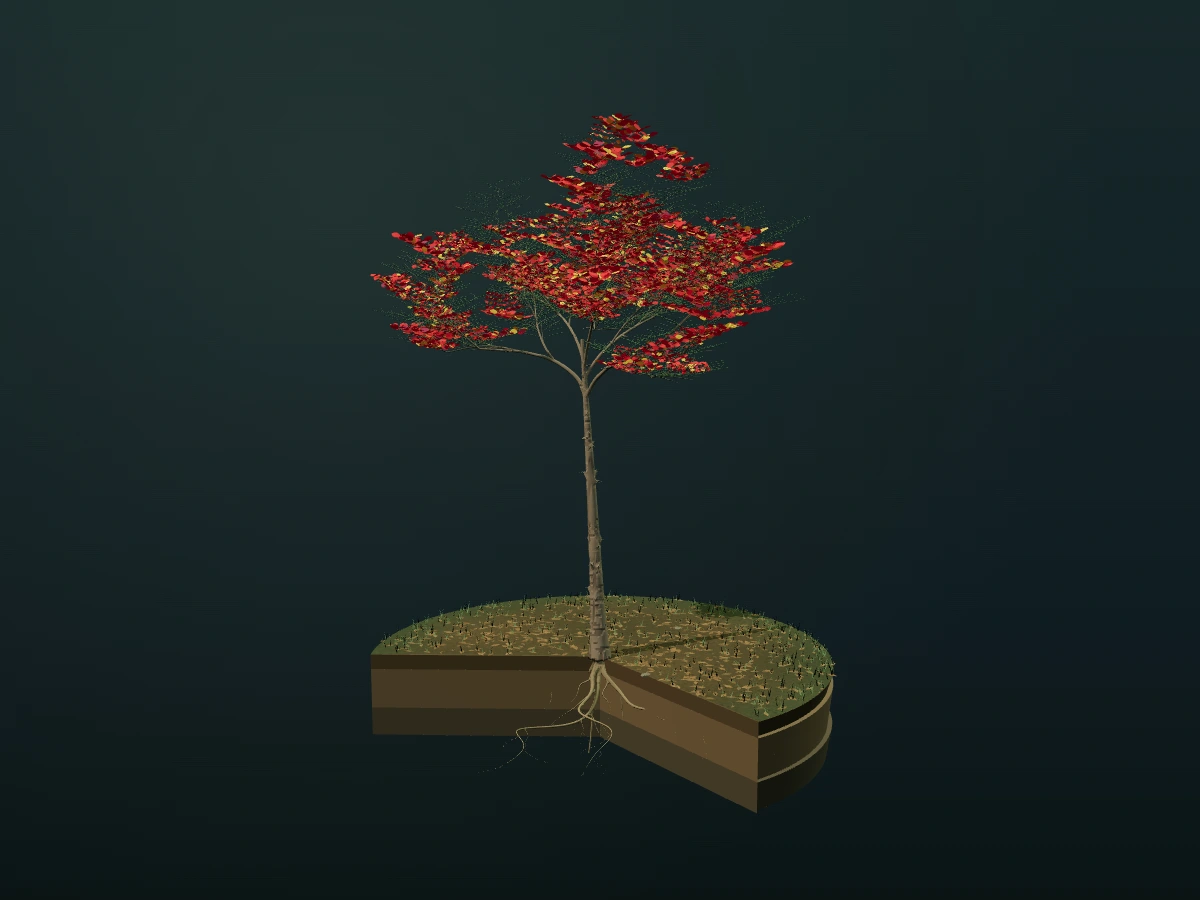
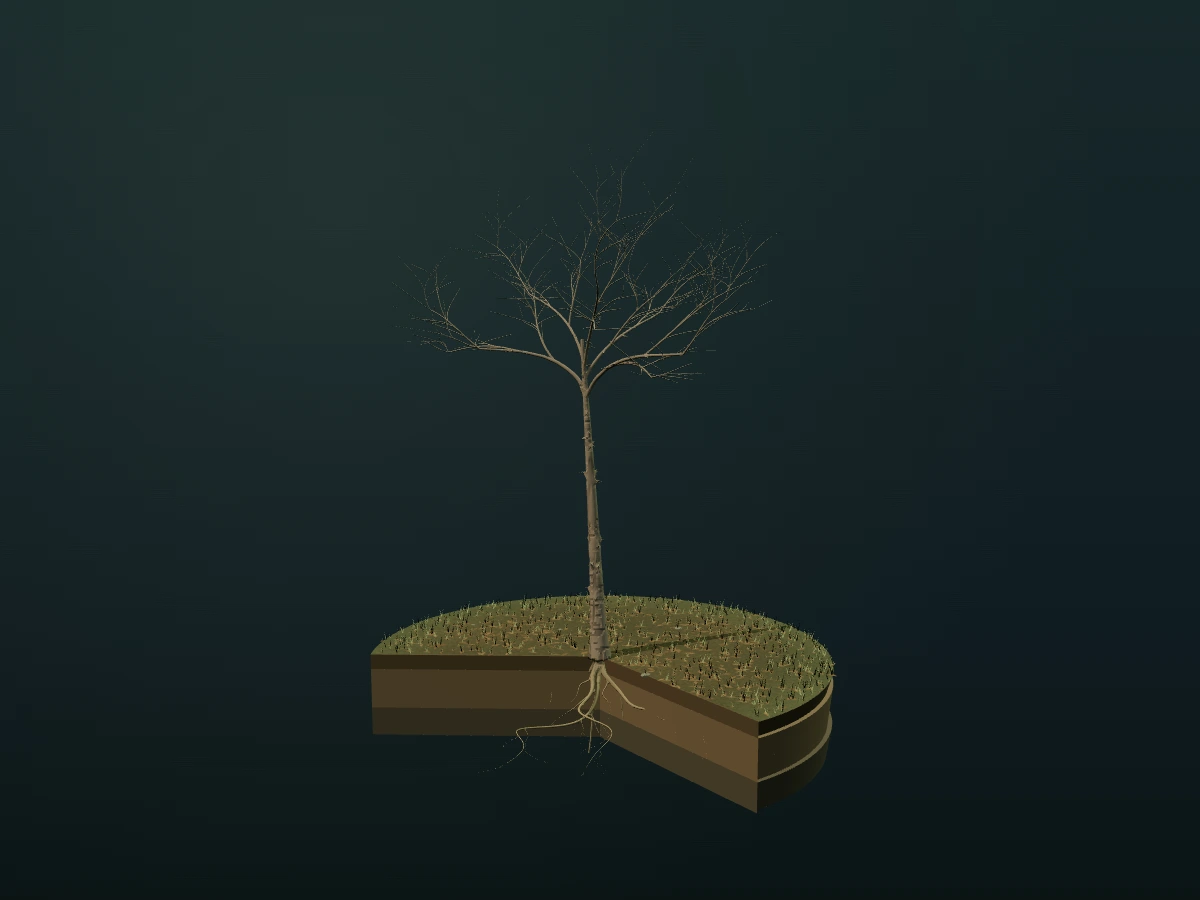
Seasonal illustration; the same plant, age and camera across four views.
Seasonal record
North Carolina botanical account
Leaf renewal
The record describes a deciduous plant: foliage is renewed after a leafless or reduced-leaf phase. The named views illustrate that cycle without fixing its dates at a planting site.
Colour notes
Red / burgundy · Gold / yellow · Purple / lavender[2]
These are recorded colour possibilities. The shades and their distribution are illustrative; a particular autumn can look different.
Reading these views
Season names organize these four views, not a universal calendar. Hemisphere, local climate, cultivar and management can change timing; months are shown only when explicitly recorded.
The views emphasize crown structure. Buds, small flowers, individual retained leaves and fine reproductive changes may be unresolved; model age and fruit count are not production forecasts.
No separate on-tree fruit display is configured for this record.
Seasonal references
- Oregon State University · Aralia elata ↗landscapeplants.oregonstate.edu
- NC State Extension · Aralia elata ↗plants.ces.ncsu.edu
03 / Leaves & flowers
A closer look at the organs
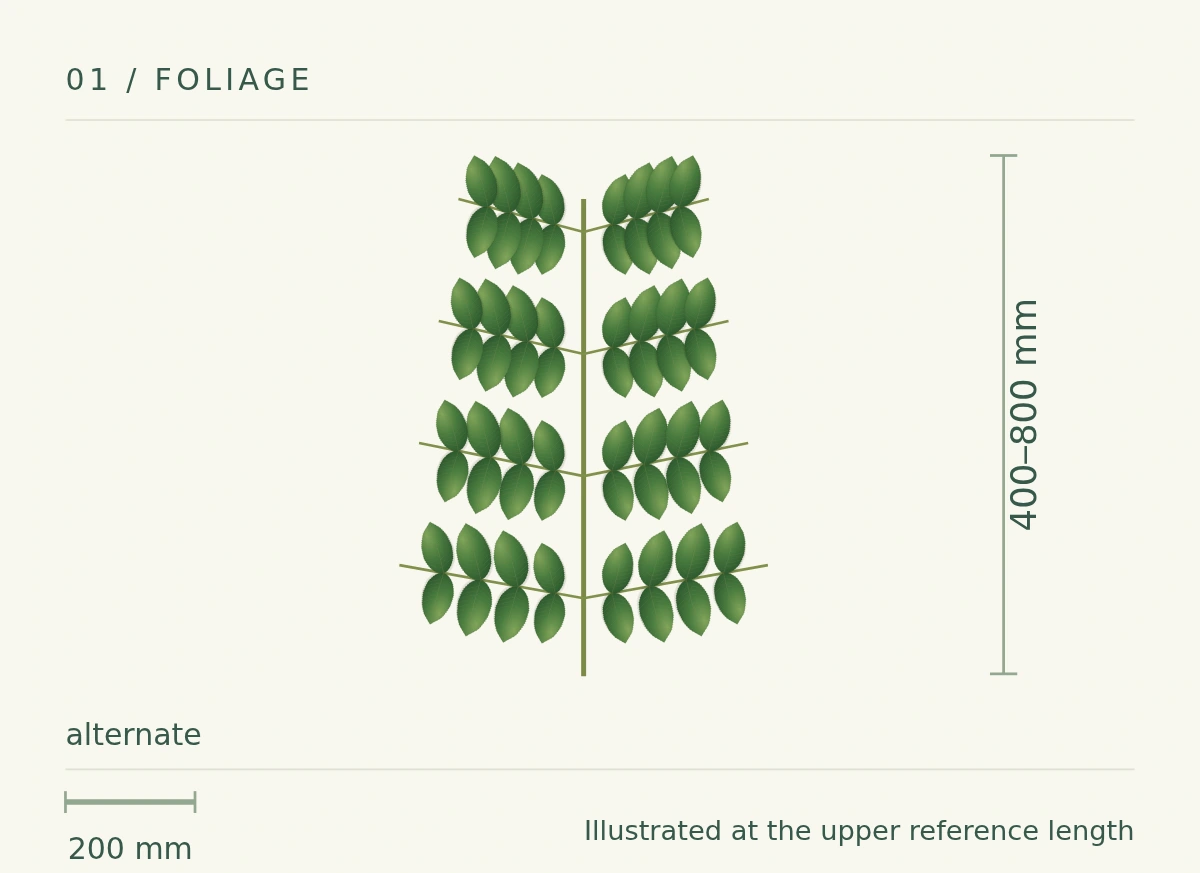
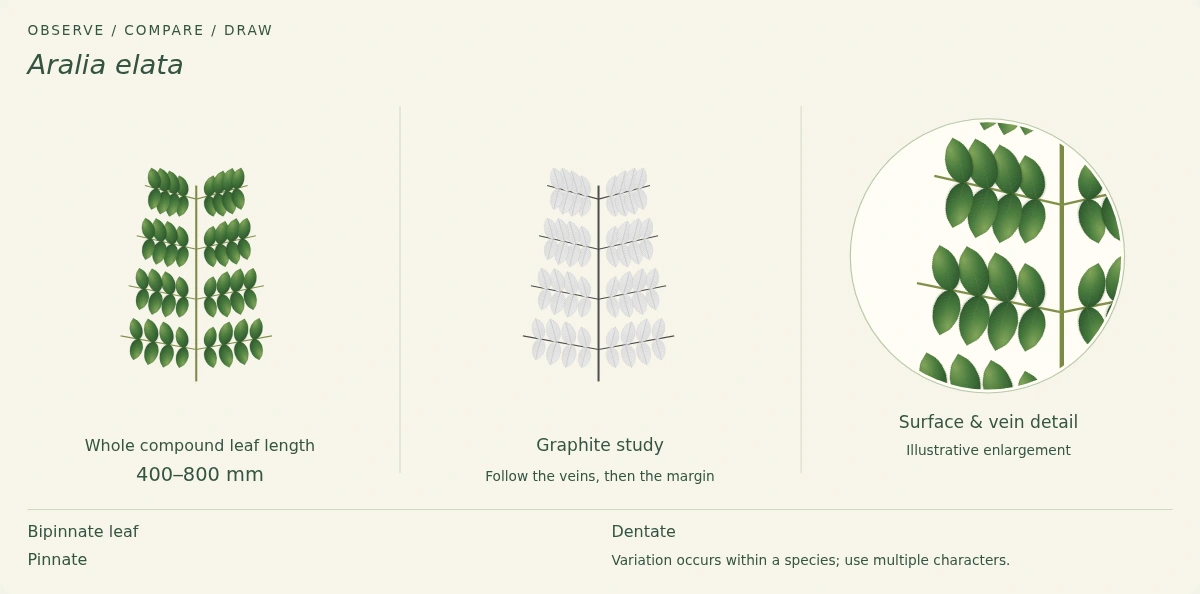
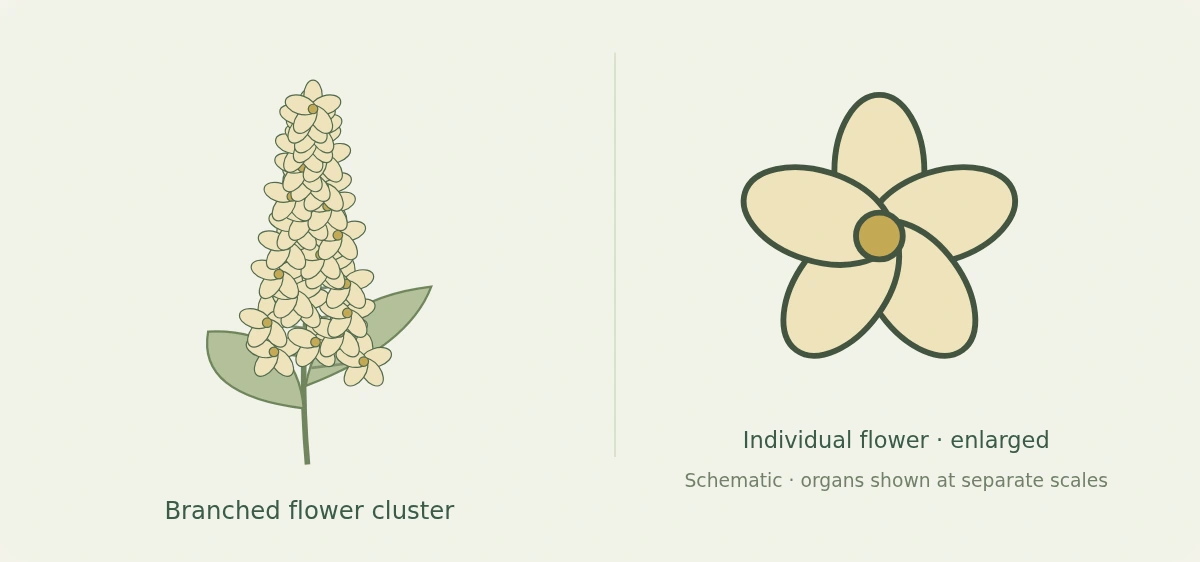
Leaves
- Whole compound leaf length
- 400–800 mmSource notes
Very large, twice-divided leaves cluster near stout shoot ends. Toothed leaflets and prickly stems give the crown an open, coarse texture.
Bipinnate leaf · Dentate · Pinnate · alternate
Seasonal notes
Representative autumn colours. Genotype, light and weather change their balance and intensity; phases are illustrative, not calendar dates.
- Flowering reference
- Summer
04 / Fruit & seed
Named structures, separate scales
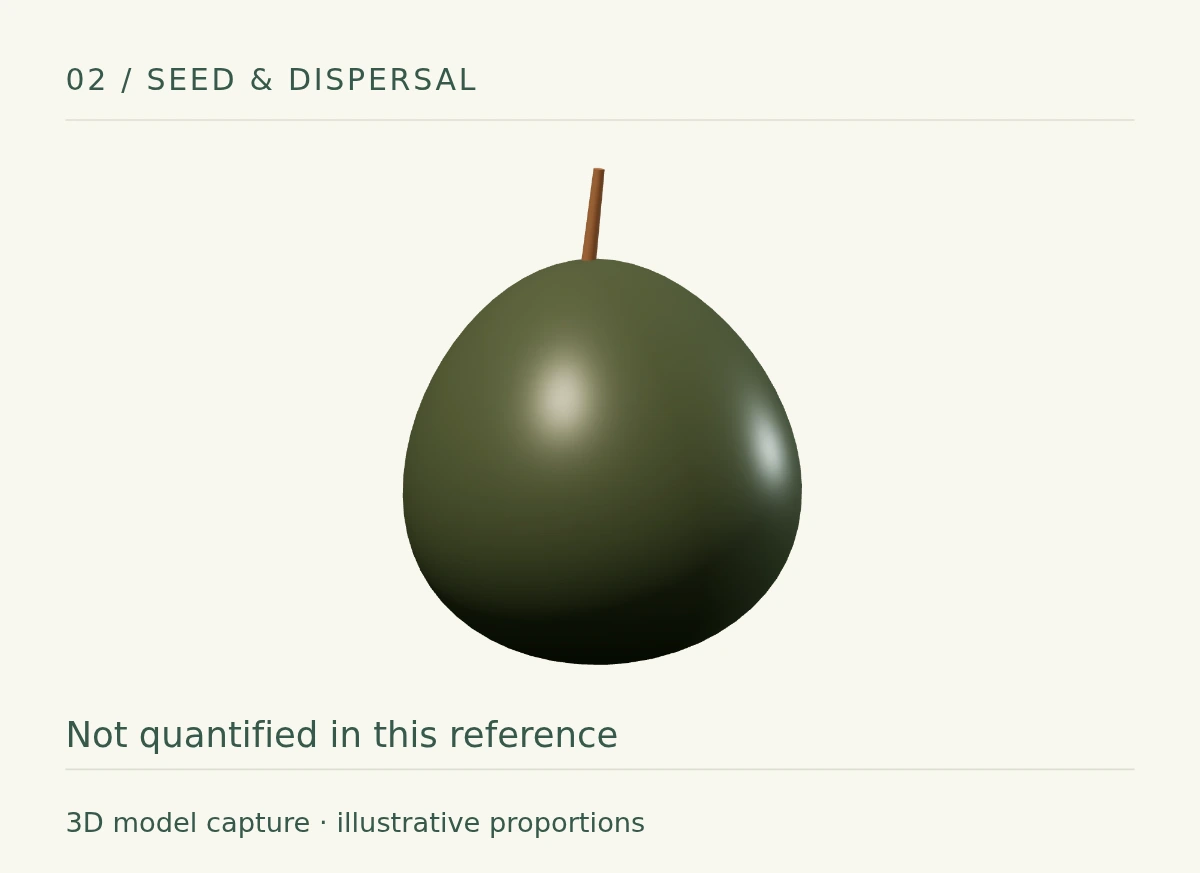
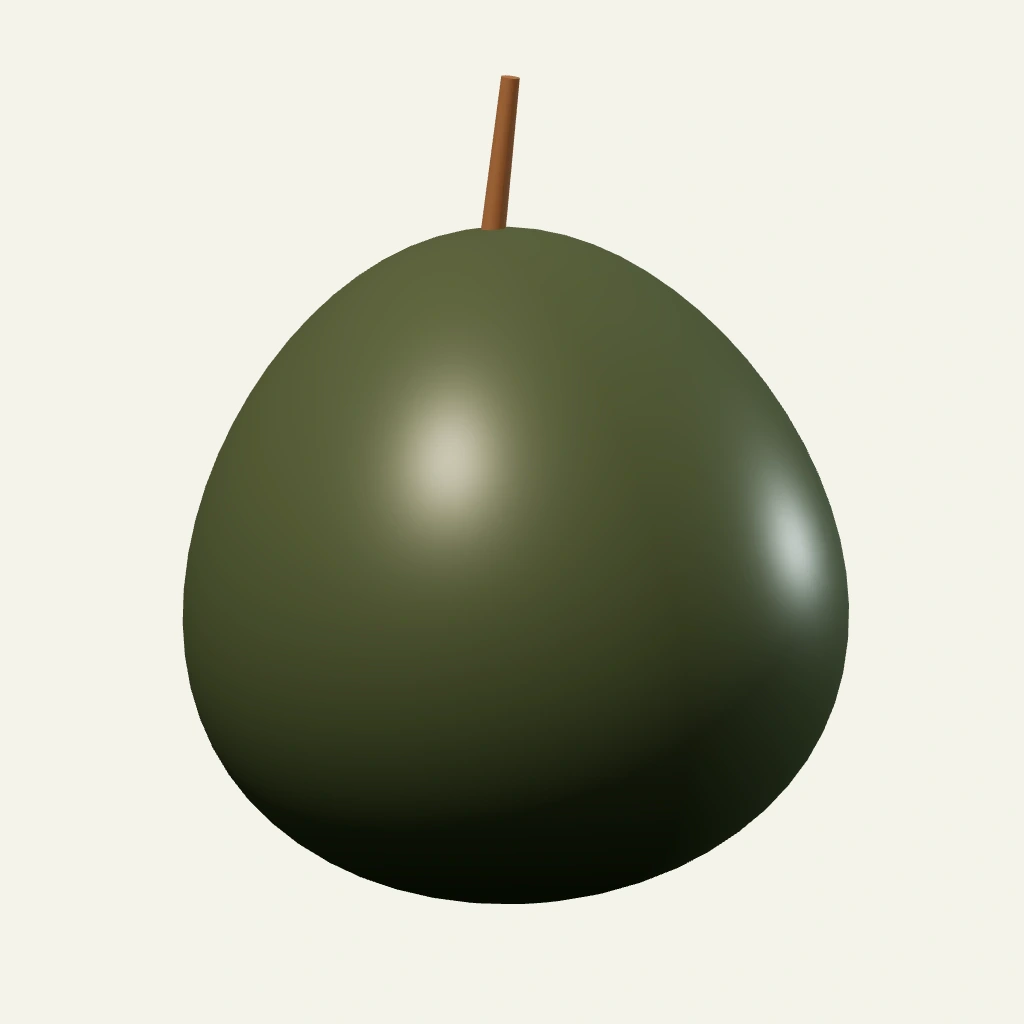
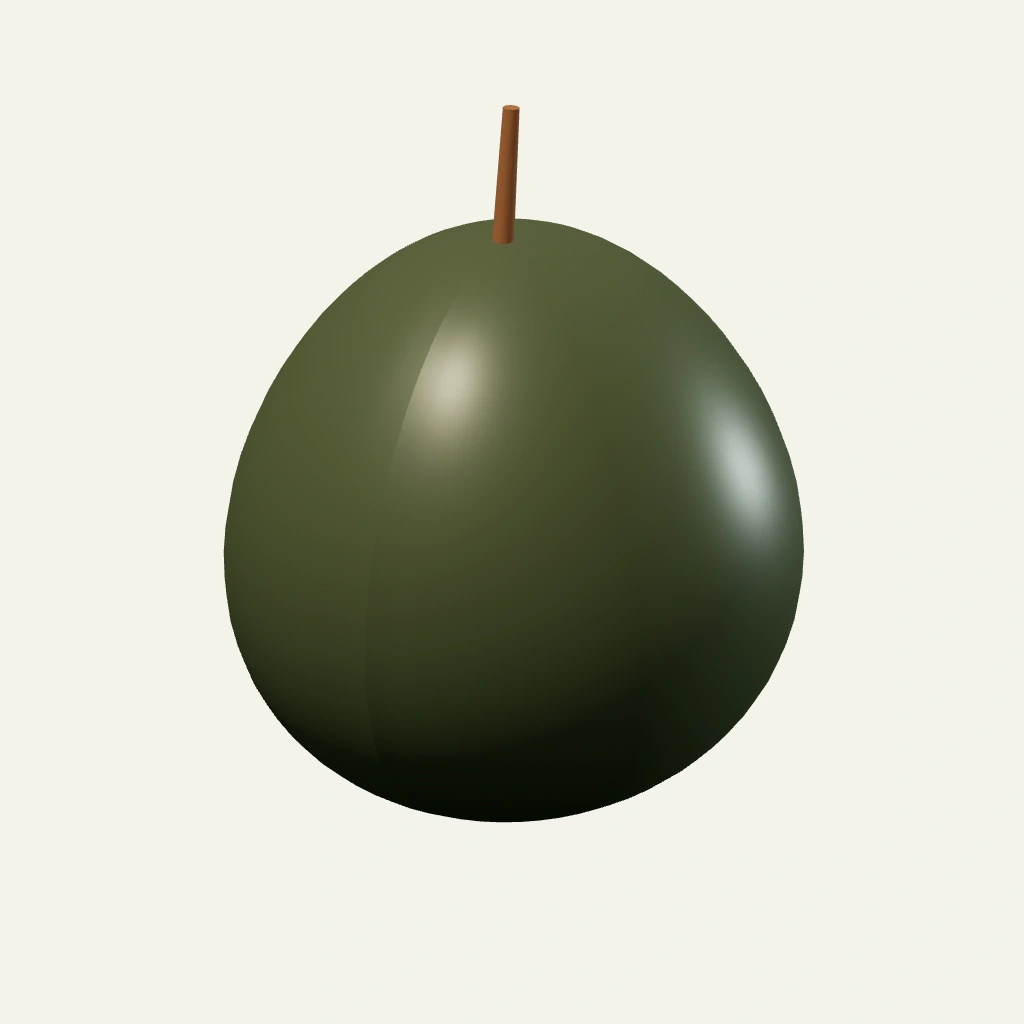
Fruit / dispersal unit
- Whole drupe length
- Not documentedSource notes
Small dark drupes follow large terminal flower panicles. A fruit contains several seed-bearing stones. The drawing shows the reproductive unit; enclosed seed dimensions are separate.
- Fruiting reference
- Summer · Autumn
North Carolina botanical account
Organs are enlarged independently. Refer to the named measurement, not image size.
05 / Habitat
Native range & growing context
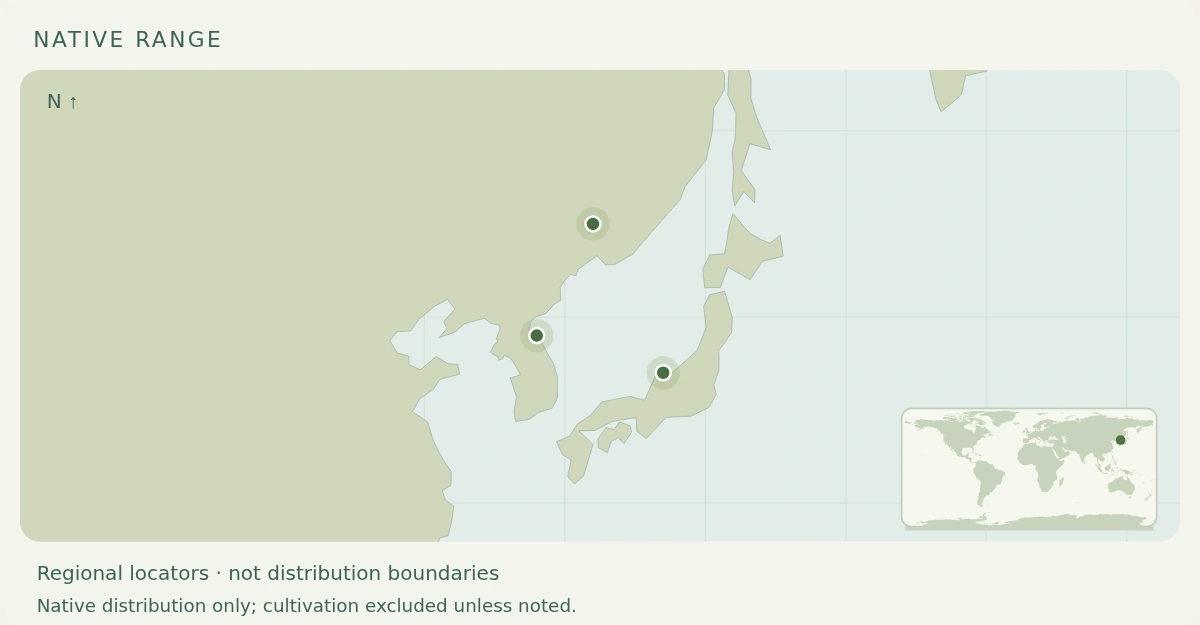
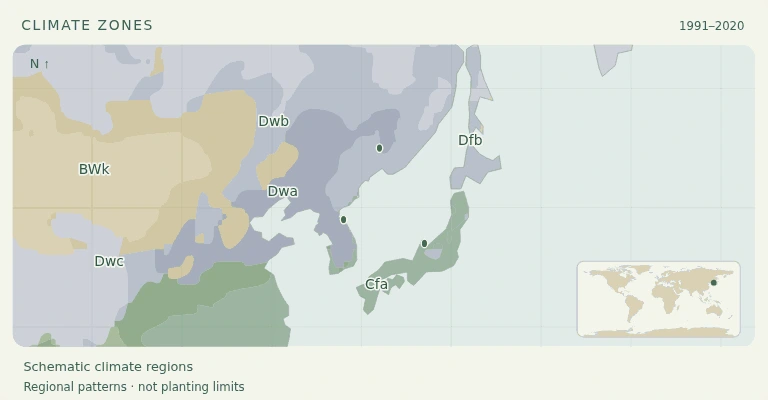
Native range & growing context
Eastern Asia
- Reference spread
- 1.8–3 m
- Moisture
- drained · Moist
- Growth tendency
- Rapid
- Life span
- No numerical lifespan is established by this reference. Model age is an illustration parameter.
Regional context, not a measured occurrence or suitability map.
- Spines/Thorns
- Weedy
06 / Sources & interpretation
Read the evidence behind the illustration
Names & classification
- Family
- Araliaceae
- Genus
- Aralia
- Synonyms
- —
- Very large, twice-divided leaves cluster near stout shoot ends. Toothed leaflets and prickly stems give the crown an open, coarse texture.
- Small dark drupes follow large terminal flower panicles. A fruit contains several seed-bearing stones.
- Propagation methods recorded: Division · Seed.
Source-informed teaching reconstruction. Leaf organisation, crown habit and bark follow botanical references. Branch positions, crown width where unmeasured, root extents, colours and model ages are ArborAI. Foliage is enlarged. This is not a surveyed specimen or a calibrated growth or survival forecast.
Source-informed teaching reconstruction. Leaf organisation, crown habit and bark follow botanical references. Branch positions, crown width where unmeasured, root extents, colours and model ages are ArborAI. Foliage is enlarged. This is not a surveyed specimen or a calibrated growth or survival forecast.
- NC State Extension · Aralia elata ↗plants.ces.ncsu.edu
- GBIF backbone · Aralia elata ↗www.gbif.org
- Oregon State University · Aralia elata ↗landscapeplants.oregonstate.edu
- International Dendrology Society · Aralia elata ↗www.treesandshrubsonline.org
Plant data and references · 15
| Heightm | [2.4384, 6.096]The extension leaf-type facet and descriptive references disagree. Oregon State and IDS describe twice-pinnate leaves; that condition is reconstructed.plants.ces.ncsu.edu |
|---|---|
| Spreadm | [1.8288, 3.048]The extension leaf-type facet and descriptive references disagree. Oregon State and IDS describe twice-pinnate leaves; that condition is reconstructed.plants.ces.ncsu.edu |
| Nativerange | Eastern AsiaThe extension leaf-type facet and descriptive references disagree. Oregon State and IDS describe twice-pinnate leaves; that condition is reconstructed.plants.ces.ncsu.edu |
| Leafhabitcategory | DeciduousThe extension leaf-type facet and descriptive references disagree. Oregon State and IDS describe twice-pinnate leaves; that condition is reconstructed.plants.ces.ncsu.edu |
| Botany organs leaf lengthmm | [400, 800]The extension leaf-type facet and descriptive references disagree. Oregon State and IDS describe twice-pinnate leaves; that condition is reconstructed.landscapeplants.oregonstate.edu |
| Botany organs seed lengthmm | Not documentedThe extension leaf-type facet and descriptive references disagree. Oregon State and IDS describe twice-pinnate leaves; that condition is reconstructed.plants.ces.ncsu.edu |
| Botany shoot arrangementcategory | alternateThe extension leaf-type facet and descriptive references disagree. Oregon State and IDS describe twice-pinnate leaves; that condition is reconstructed.landscapeplants.oregonstate.edu |
| Architecture leaves | Very large, twice-divided leaves cluster near stout shoot ends. Toothed leaflets and prickly stems give the crown an open, coarse texture.The extension leaf-type facet and descriptive references disagree. Oregon State and IDS describe twice-pinnate leaves; that condition is reconstructed.landscapeplants.oregonstate.edu |
| Architecture reproduction | Small dark drupes follow large terminal flower panicles. A fruit contains several seed-bearing stones.The extension leaf-type facet and descriptive references disagree. Oregon State and IDS describe twice-pinnate leaves; that condition is reconstructed.plants.ces.ncsu.edu |
| Lightcategory | ["sun", "partial"]The extension leaf-type facet and descriptive references disagree. Oregon State and IDS describe twice-pinnate leaves; that condition is reconstructed.plants.ces.ncsu.edu |
| Moisturecategory | ["drained", "moist"]The extension leaf-type facet and descriptive references disagree. Oregon State and IDS describe twice-pinnate leaves; that condition is reconstructed.plants.ces.ncsu.edu |
| Hardinesscategory | {"system": "USDA", "zones": [4, 9], "source": "ncsu"}The extension leaf-type facet and descriptive references disagree. Oregon State and IDS describe twice-pinnate leaves; that condition is reconstructed.plants.ces.ncsu.edu |
| Taxonomy familycategory | AraliaceaeThe extension leaf-type facet and descriptive references disagree. Oregon State and IDS describe twice-pinnate leaves; that condition is reconstructed.www.gbif.org |
| Reference phenologycategory | {"flowering": {"seasons": ["summer"]}, "fruiting": {"seasons": ["summer", "autumn"]}, "reference": "North Carolina botanical account", "source": "https://plants.ces.ncsu.edu/plants/aralia-elata/", "reviewed": "2026-10-16"}Regional observations. Fruit display may include persistence and is not automatically ripening. Missing dates remain unspecified. Independent botanical review remains pending.plants.ces.ncsu.edu |
| Autumn colour familiescategory | ["Red/Burgundy", "Gold/Yellow", "Purple/Lavender"]Species-level colour descriptions. Cultivar, provenance, exposure and weather affect expression. RGB values and their dominance in the model are illustrative.plants.ces.ncsu.edu |