Arbor.guide

Botanical field guide

Juniperus communis

Common juniper

1314 / 2,347

Shrub / Cupressaceae

The plant, in detail

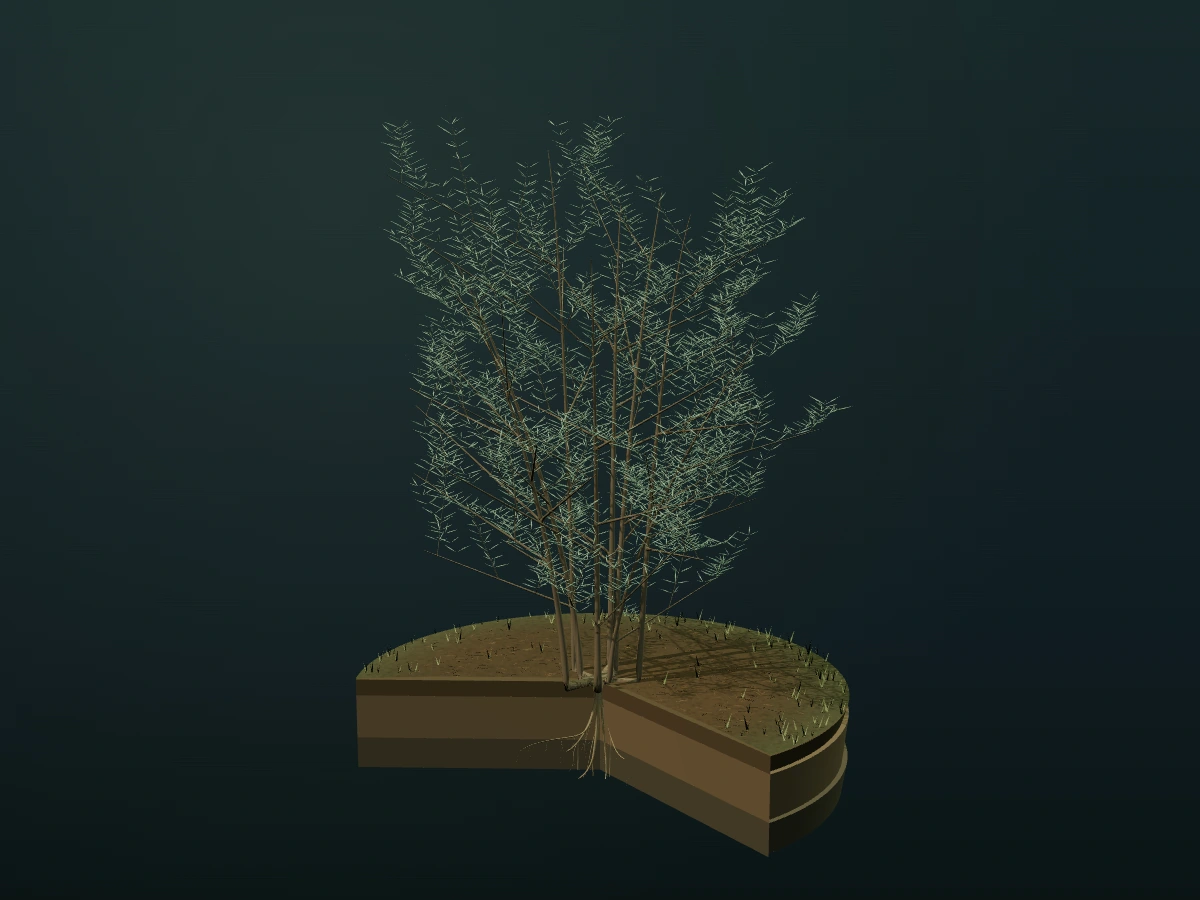
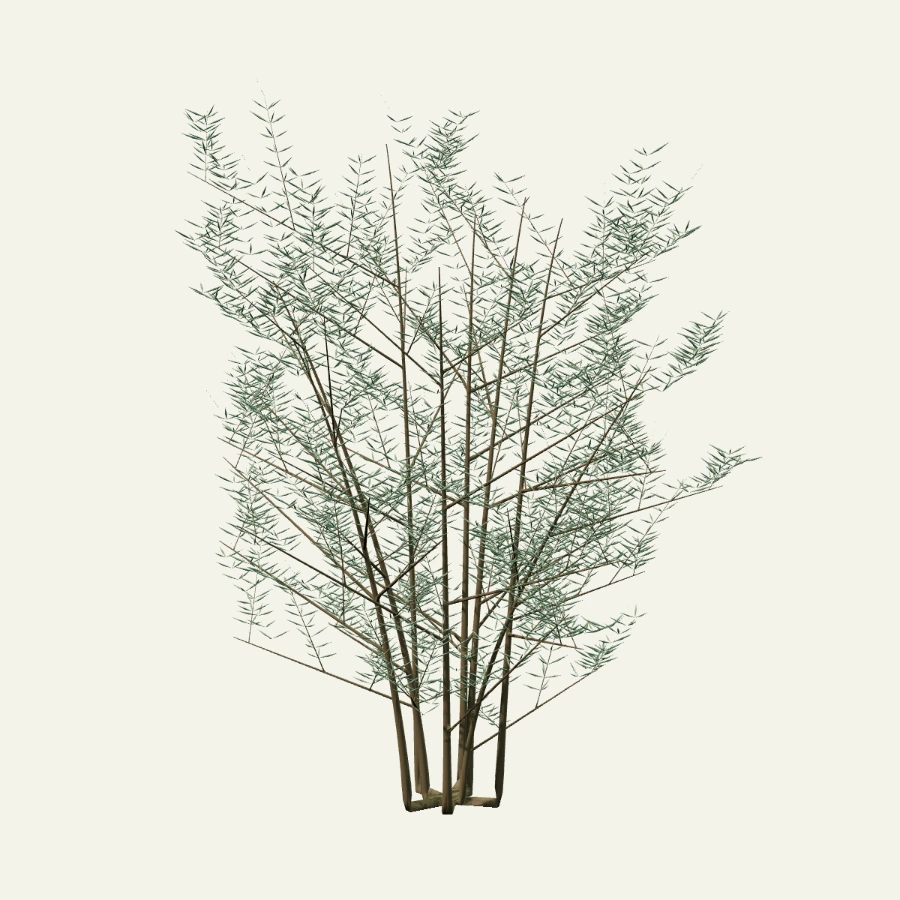
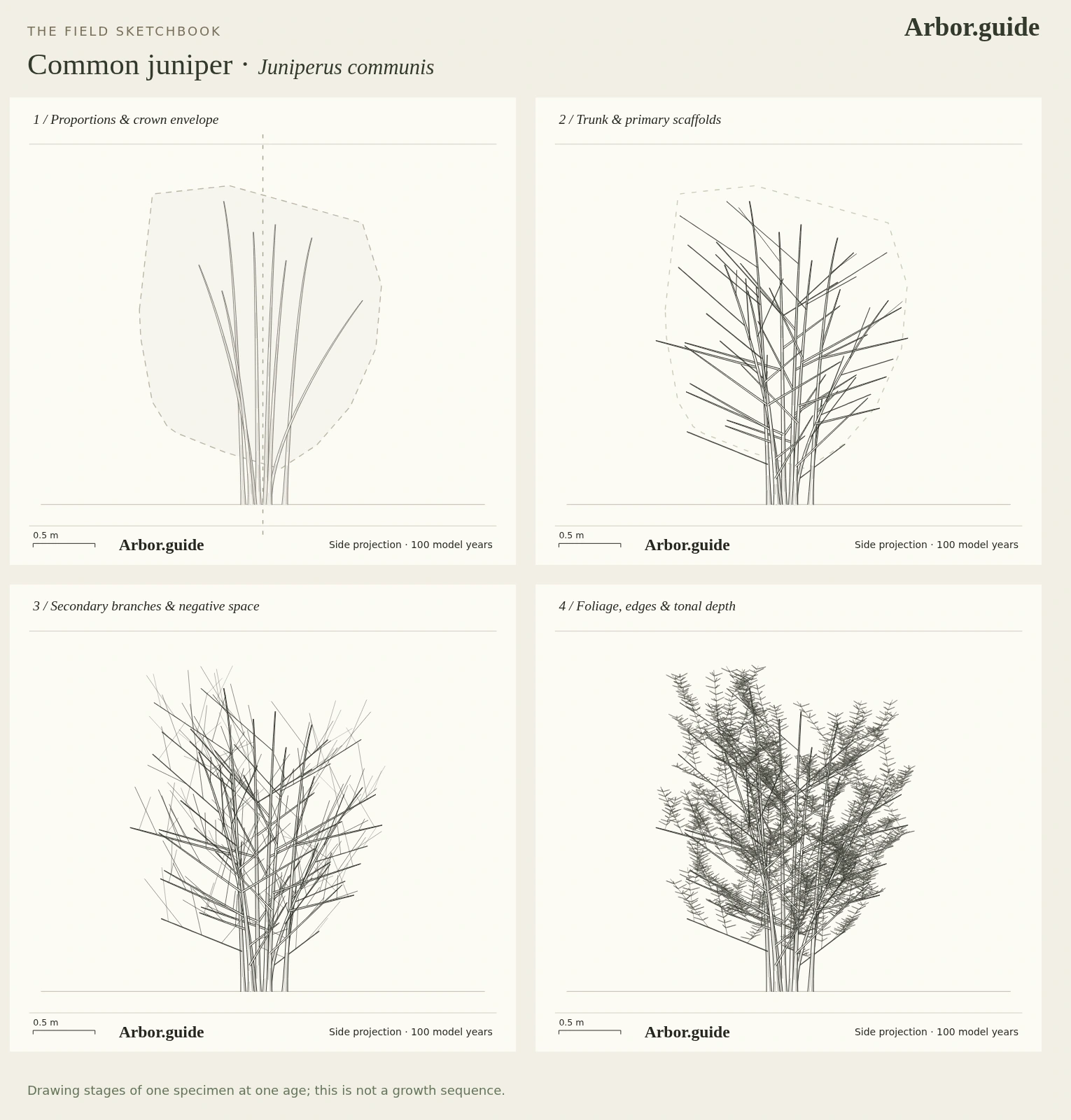
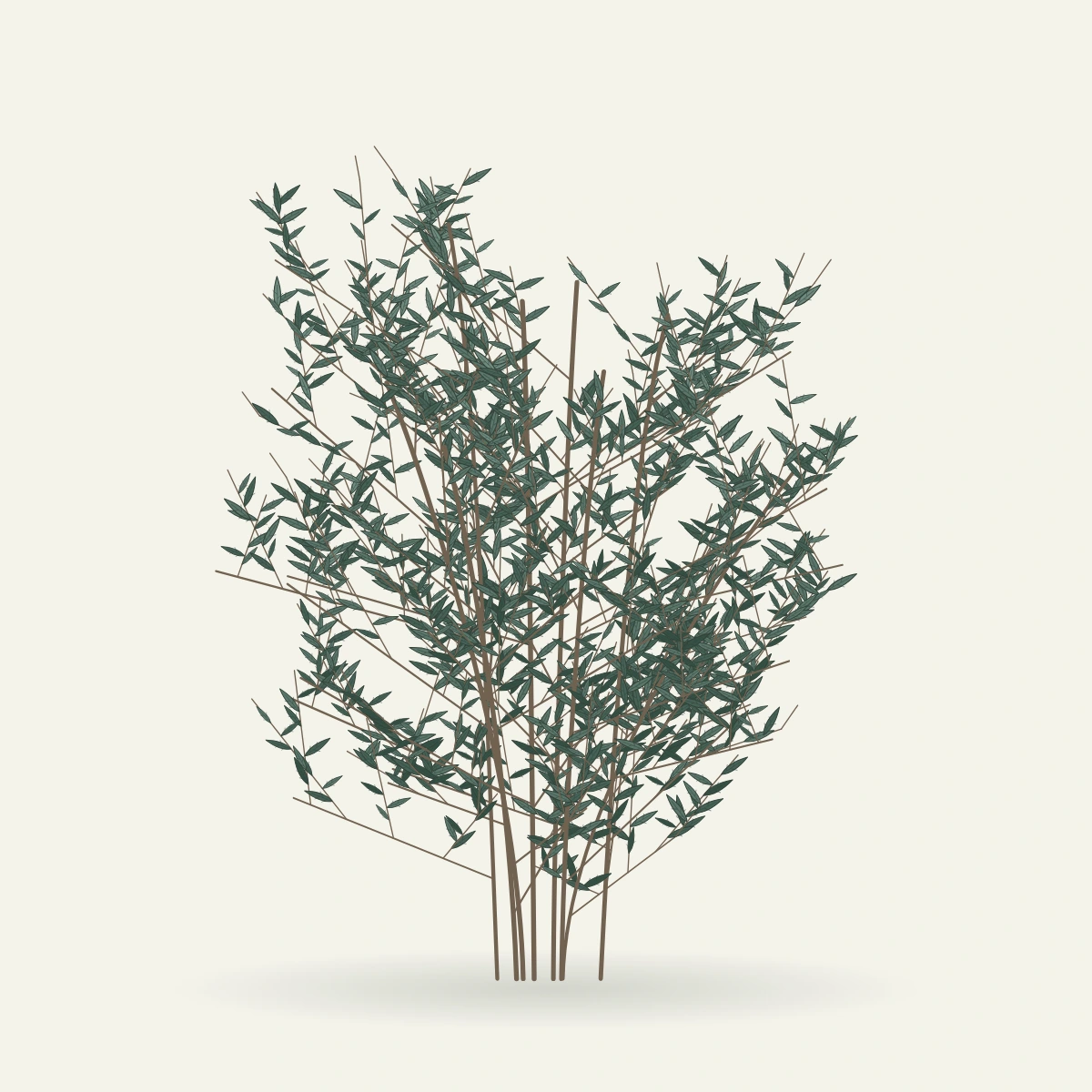
Common juniper can form a low mat, a many-stemmed upright bush or a small tree. Exposed sites often support low-growing plants.

Reference height
1.5–3 m
Foliage habit
Evergreen
USDA zones
2–6
Light
Full sun

The dimensions describe the garden form in the cited account. Individual plants and cultivars vary.

Crown

Common juniper can form a low mat, a many-stemmed upright bush or a small tree. Exposed sites often support low-growing plants.

Branching

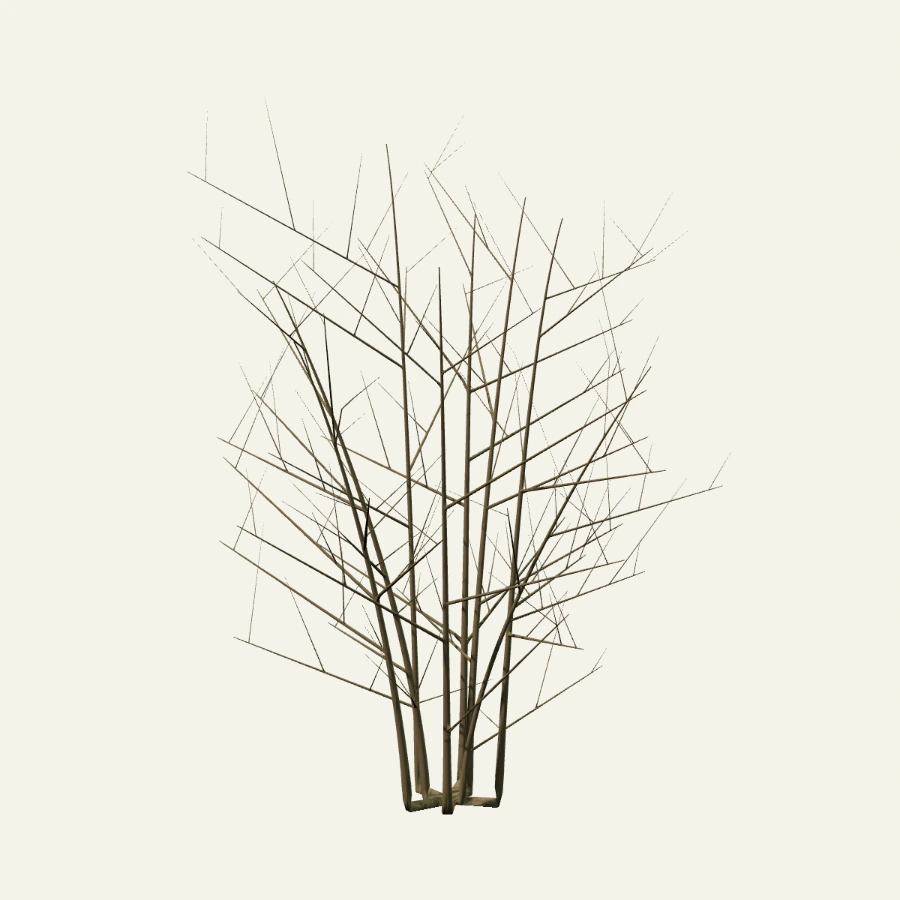
Common juniper can form a low mat, a many-stemmed upright bush or a small tree. Exposed sites often support low-growing plants.

Bark

Brown bark peels in thin strips on older stems.

Roots

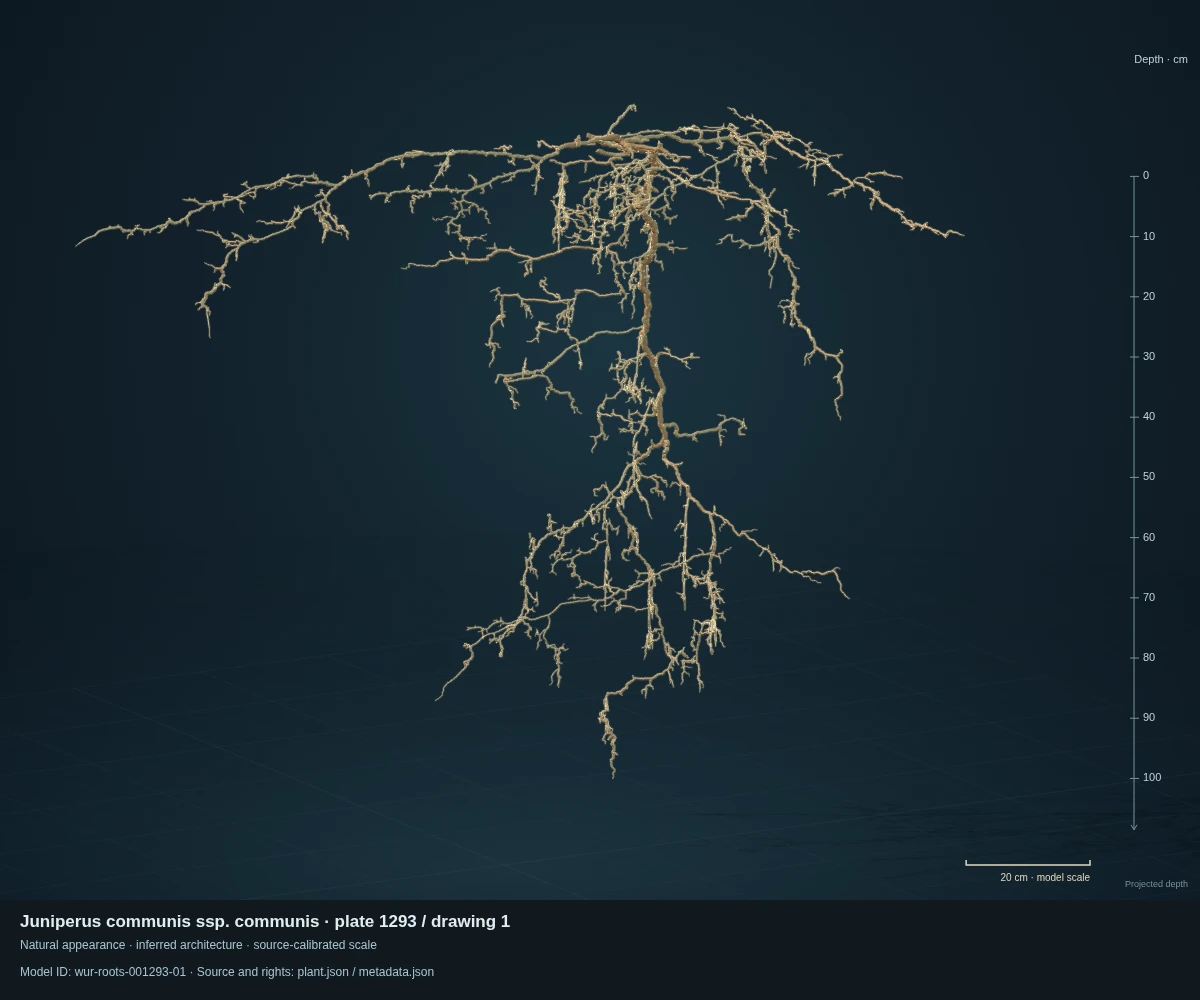
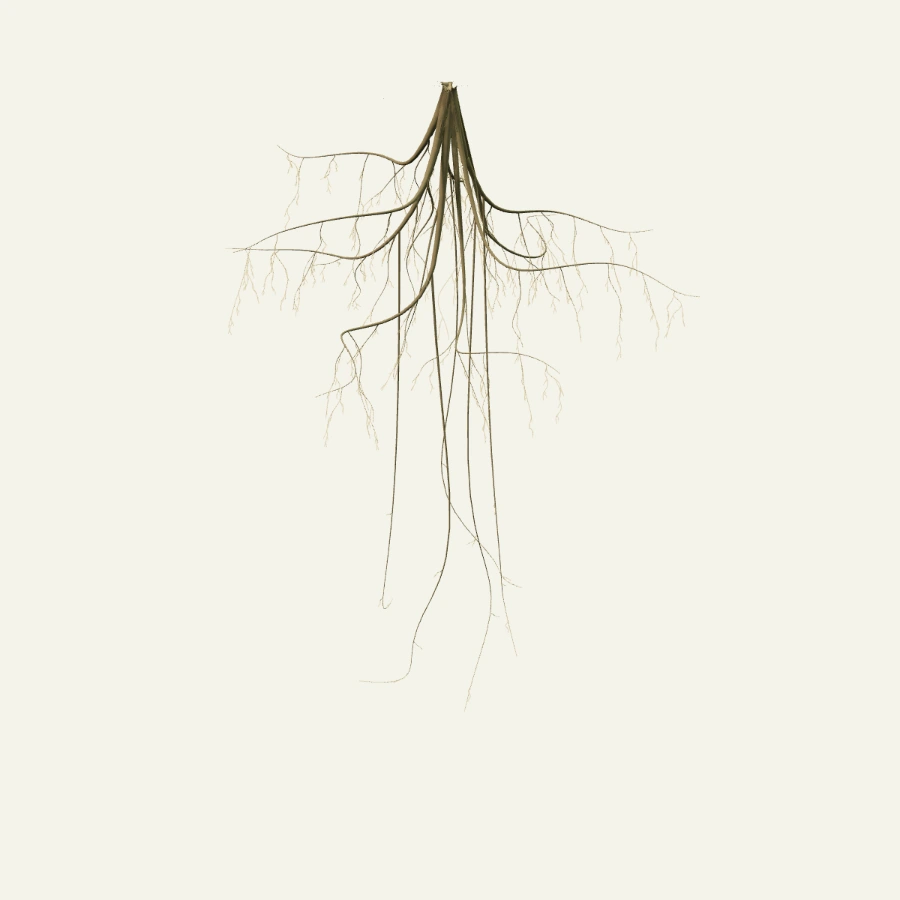
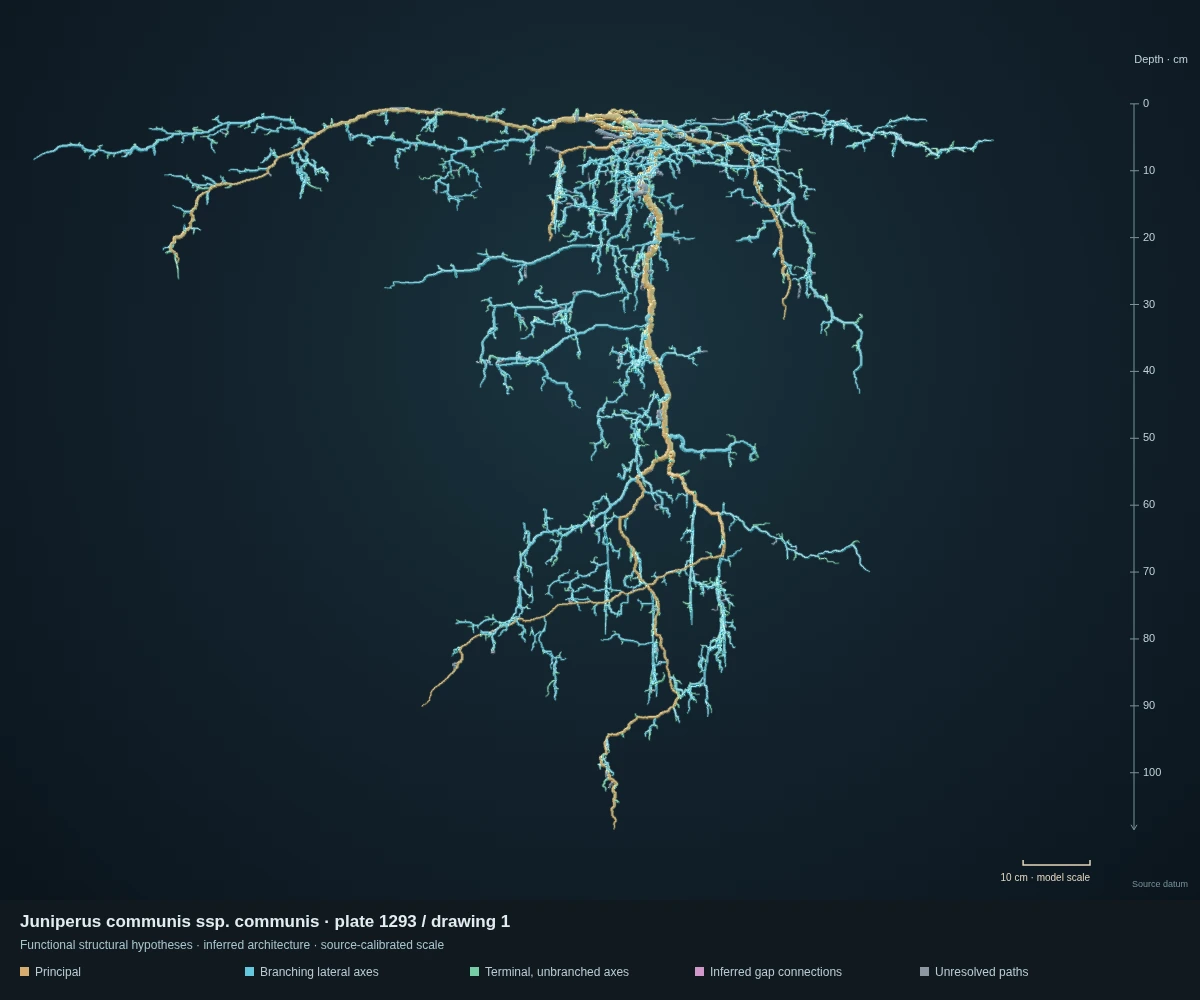
The model traces a schematic root system. Local soil and rock can alter the depth and direction of growing roots.

Root studies

These reconstructions follow archived root drawings. Colour identifies the modelled structural role of each root.

Functional view
Natural view
Source projection
Side view
Calibration
Source-calibrated
Vertical extent
1.08 m
Inferred axes
1657
Model metrics and plate observations

Model metrics

Depth follows the printed scale. Equal horizontal scale and hidden depth are modeling assumptions; root thickness is illustrative.

Vertical extent
1.08 m
Horizontal span (x)
1.05 m
Horizontal span (z)
1.34 m
Centreline length
42.7 m
Inferred axes
1657
Branching sites
1608
Terminal paths
1619
Mean modelled diameter
2.83 mm
Surface area proxy
3,810 cm²
Volume proxy
349 cm³
Inferred connection length
7.36 mm
Projected length
34.3 m
Mean angle from vertical
55.0°

Dimensions reported on the source plate

Plant height
43 cm plate_1293
Root depth
107 cm plate_1293
Root-system diameter
145 cm plate_1293

Drawing observations

  • approximately horizontal
  • wide shallow lateral field on both sides
  • long descending root extends far below shallow laterals
  • oblique branches leave central axis at several levels
  • repeated forks and sinuous fine offshoots
  • some deeper roots arise away from central axis

Biologically constrained spatial reconstruction from source morphology. Root azimuths, hidden placement, growth responses, circular sections, thickness and proposed connections are inferred. The separate source trace retains exact drawing coordinates. No measured 3D anatomy or observed growth sequence is claimed.

Source and attribution

Study 1293 · Model 01

Juniperus communis ssp. communis · Wageningen University & Research archive
02 / Seasons

Through the seasons

Four portraits. One plant.

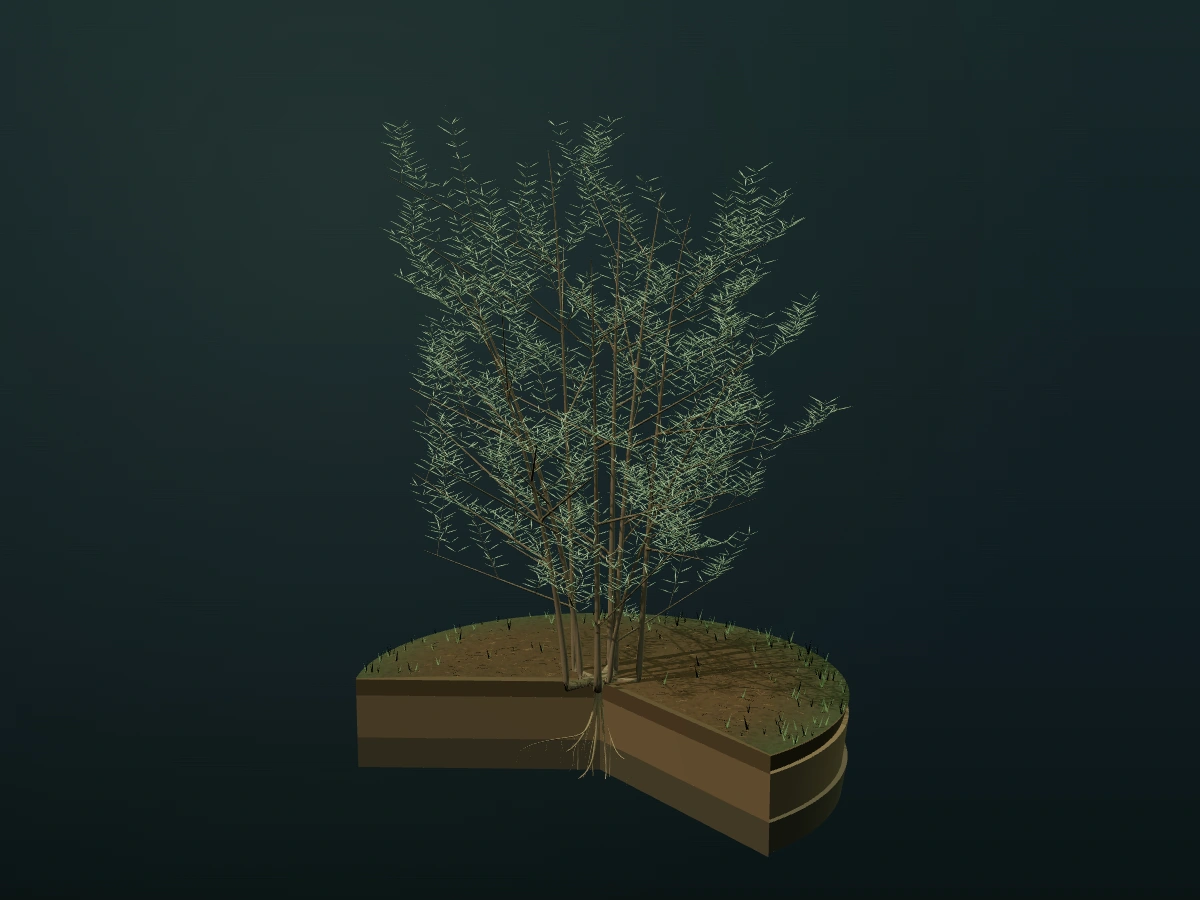
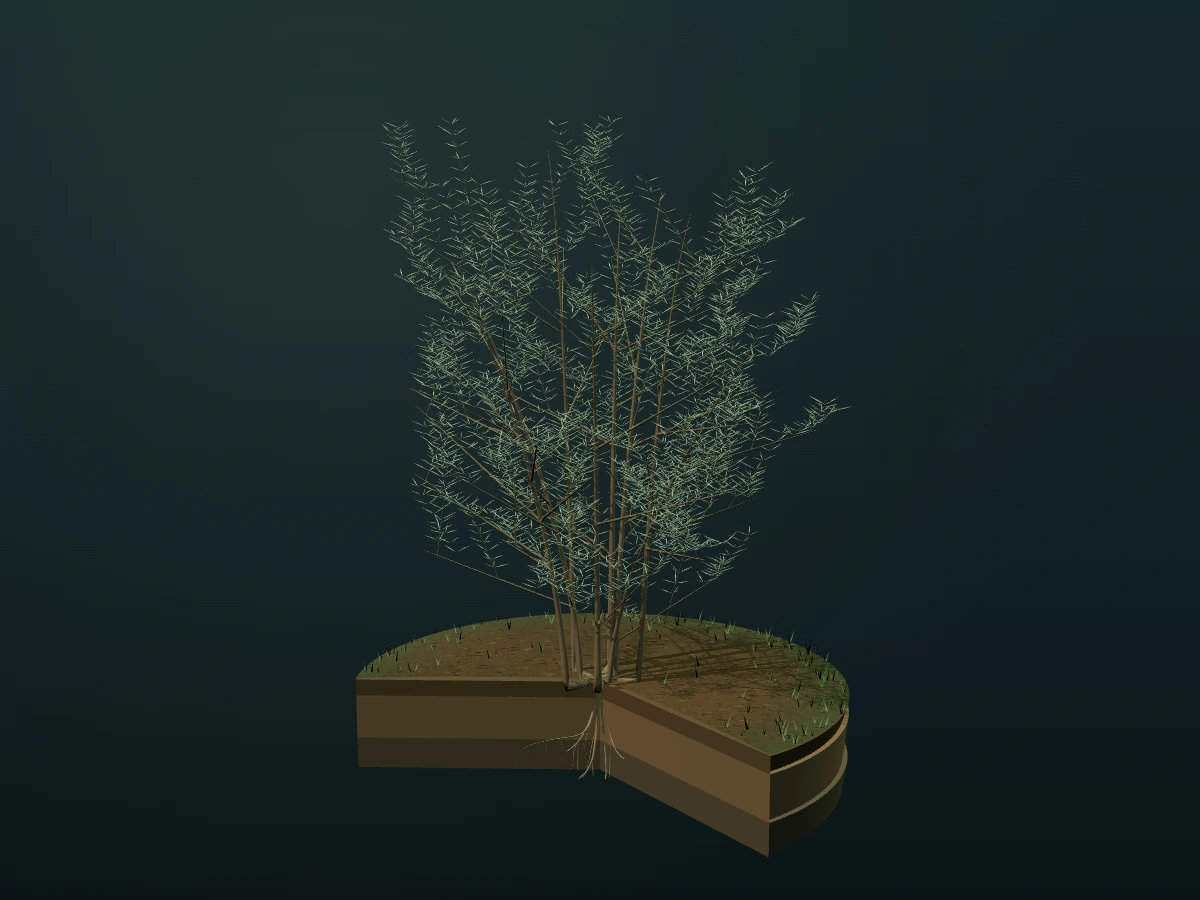
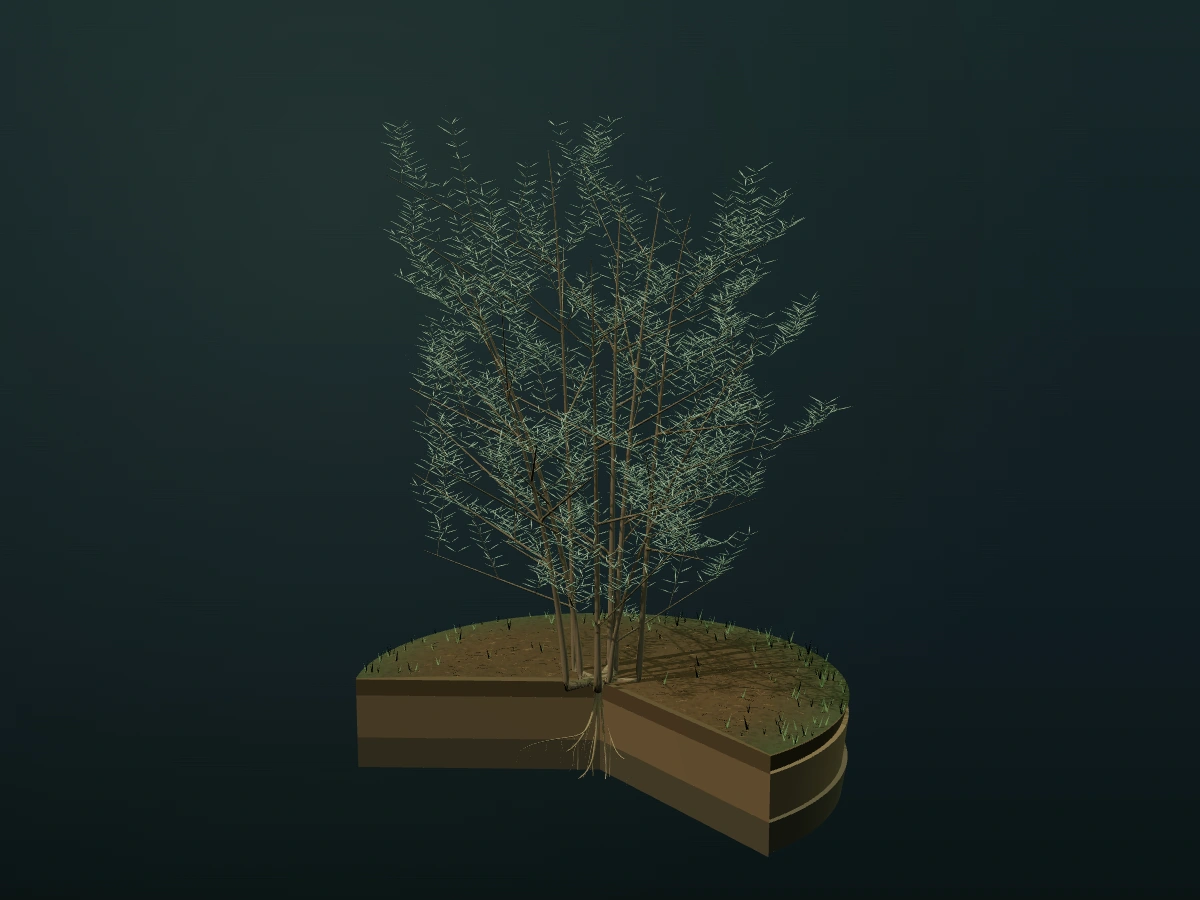
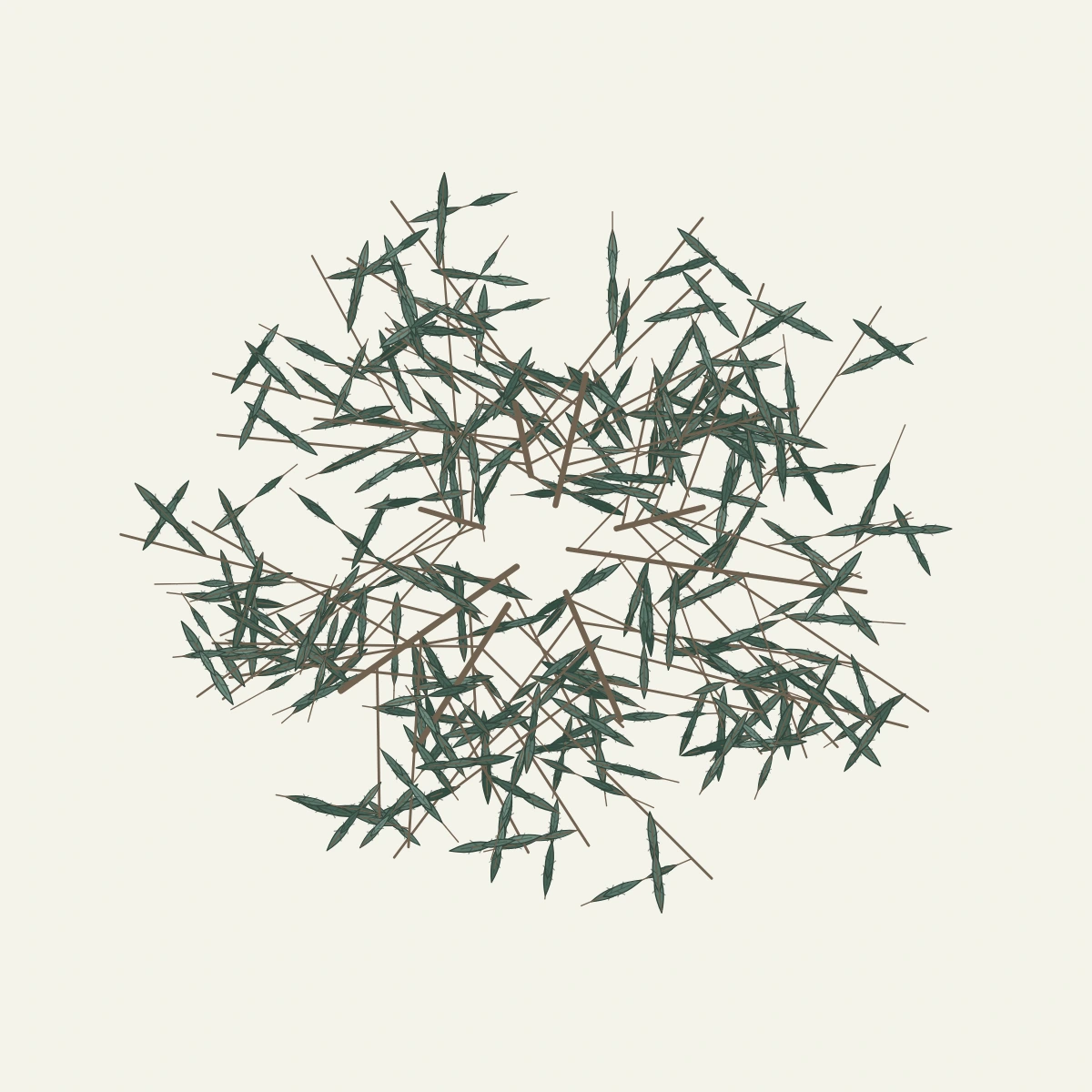
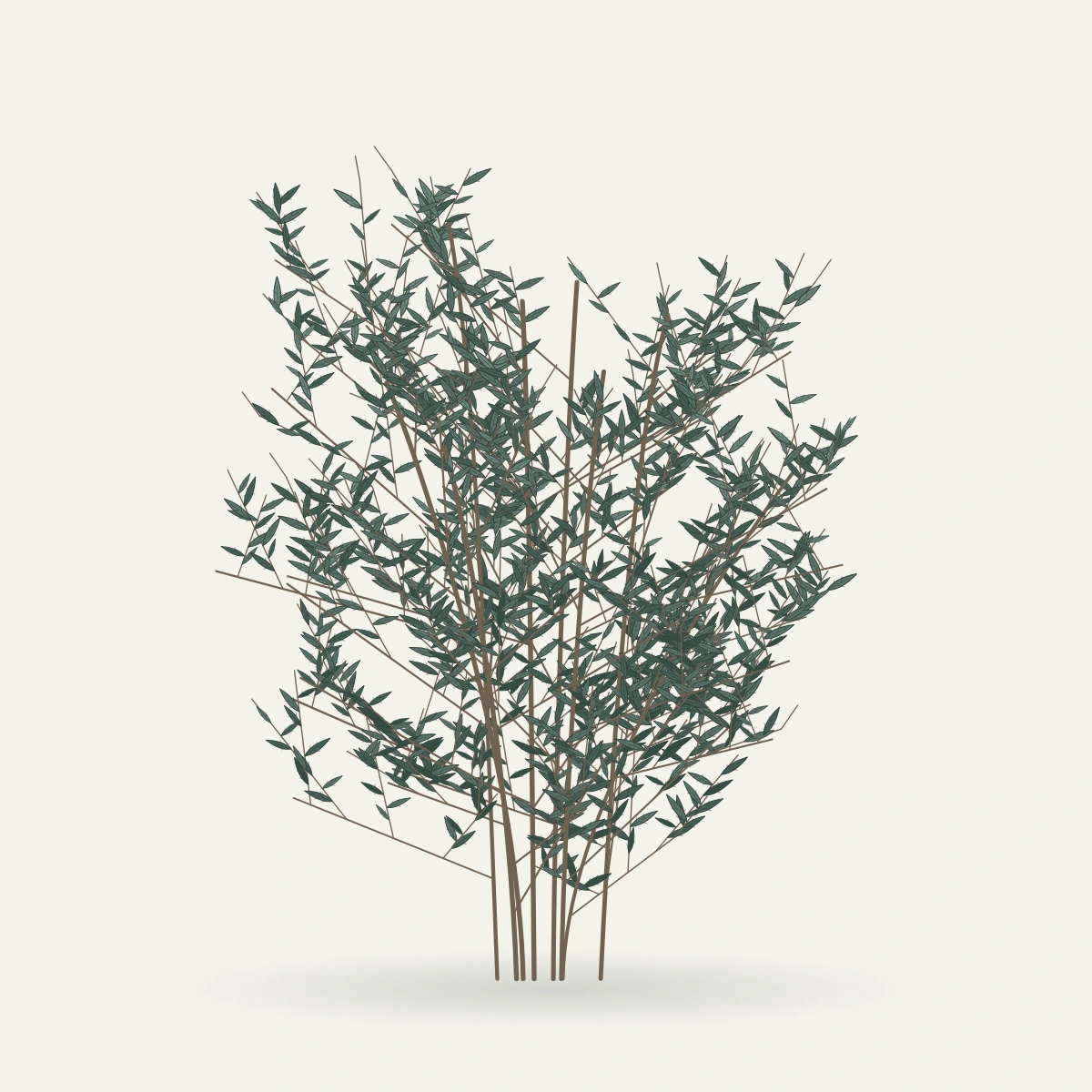
Read the crown, foliage and reproductive structures together. The four views compare seasonal appearances; the reference notes explain what is actually documented.

Seasonal illustration; the same plant, age and camera across four views.

Seasonal record

Reference region not specified in this record.

Flowering
This is a gymnosperm. Seeds and/or cones are its reproductive structures; they are not flowers or botanical fruits.[3]
Seed / cone development
Timing not documented

Leaf renewal

Evergreen[1] [2]

A green canopy can persist while individual leaves age and are replaced. Evergreen does not mean that every leaf lasts indefinitely or that flowering and fruiting are continuous.

Reading these views

Season names organize these four views, not a universal calendar. Hemisphere, local climate, cultivar and management can change timing; months are shown only when explicitly recorded.

The views emphasize crown structure. Buds, small flowers, individual retained leaves and fine reproductive changes may be unresolved; model age and fruit count are not production forecasts.

No separate on-tree fruit display is configured for this record.

Seasonal references

  1. University of Washington, Burke Herbarium · Common juniper ↗www.burkeherbarium.org
  2. University of Illinois Extension · Common juniper ↗web.extension.illinois.edu
  3. Royal Botanic Gardens, Kew · Juniperus communis ↗powo.science.kew.org

03 / Foliage

A closer look at the organs

Leaves

Individual needle length
7–12 mmSource notes

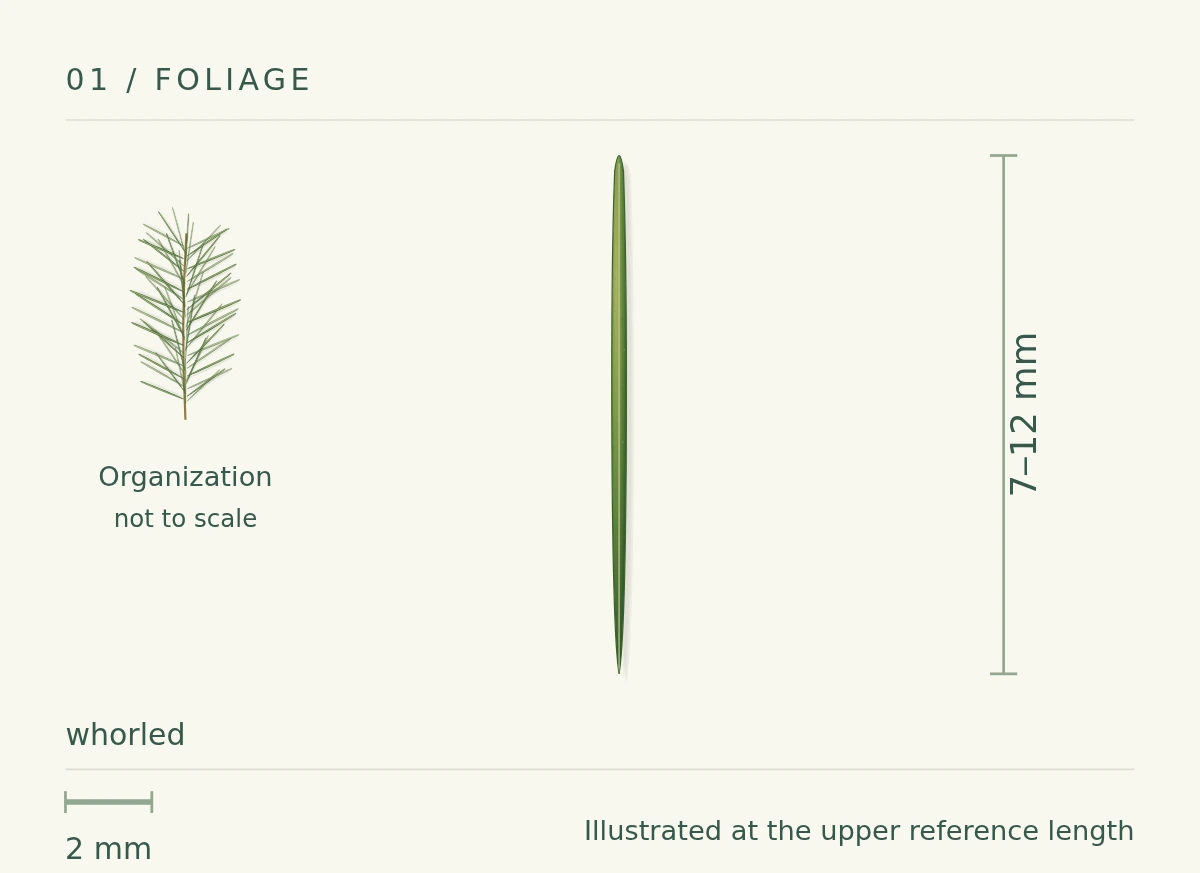
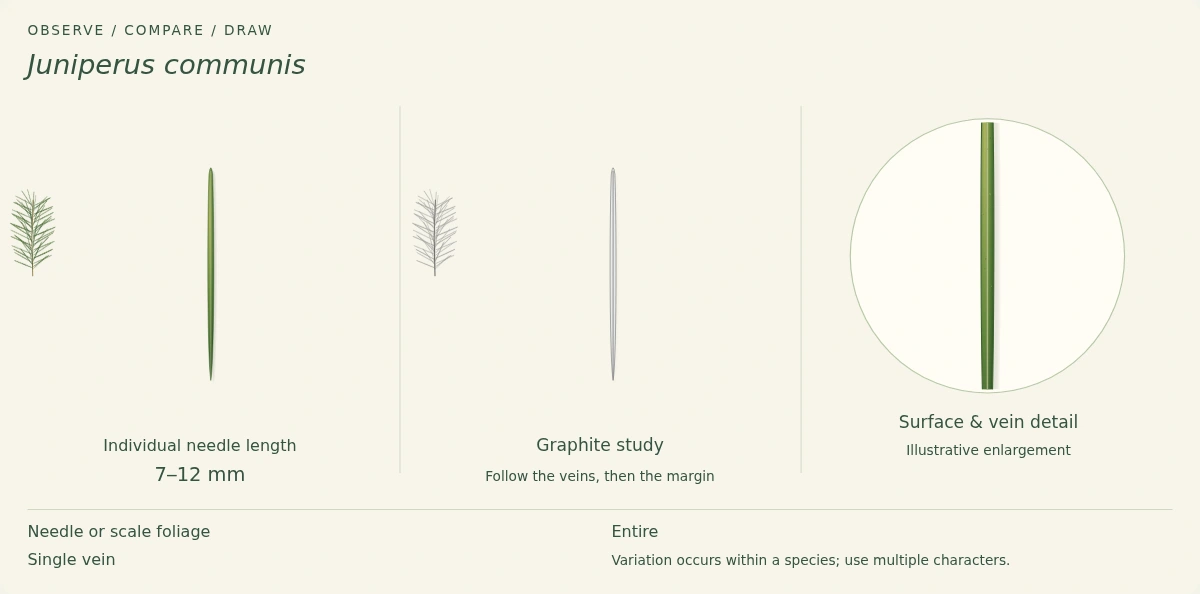
Three stiff, sharp needles usually encircle each node. A pale band on the inner face of each needle contrasts with its green margins.

Needle or scale foliage · Entire · Single vein · whorled

Seasonal notes

Living shoots carry foliage through winter. The colour palette represents one form.

04 / Fruit & seed

Named structures, separate scales

Seed cone

Seed cone length
6–9 mmSource notes

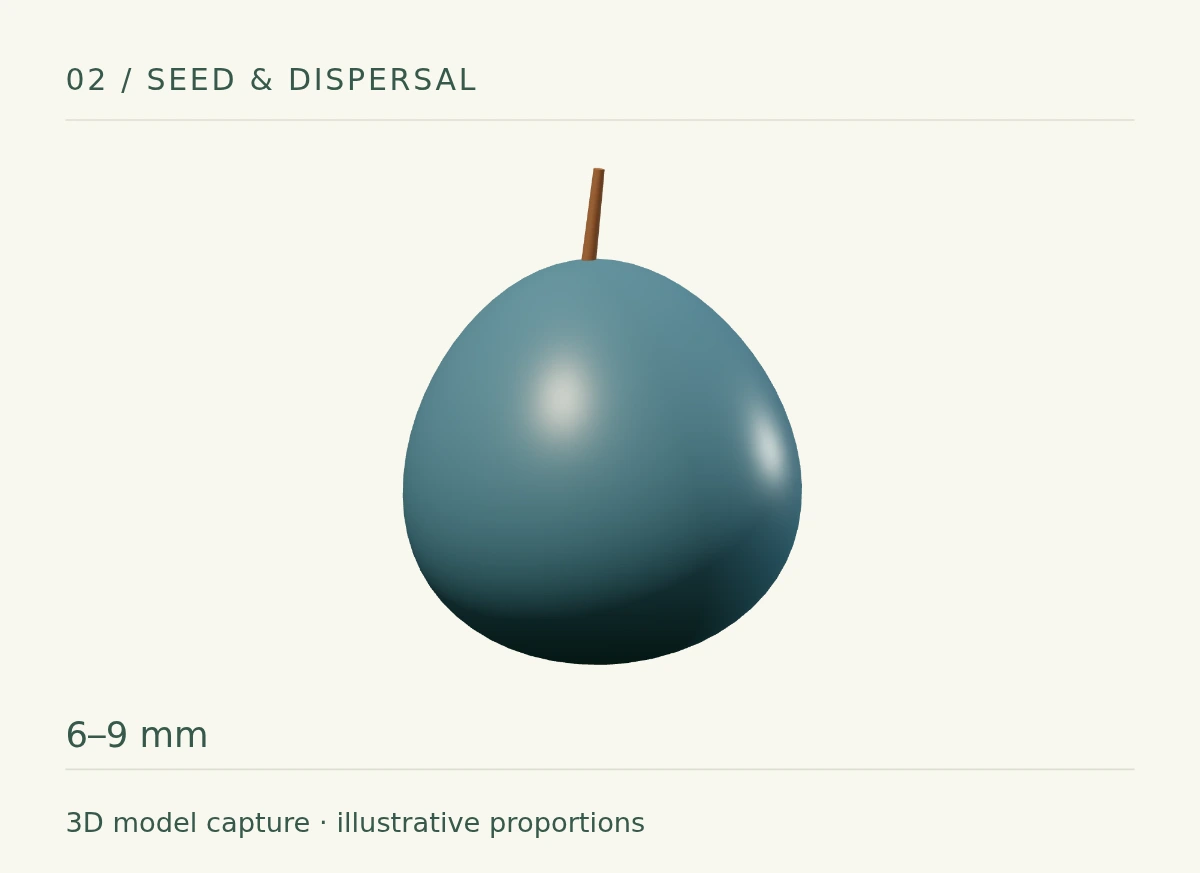
Pollen and seed cones usually grow on separate plants. Female cones turn blue-black during their second season. Washington specimens are described with cones 6–9 mm long.

Fruiting reference
Not documented

Organs are enlarged independently. Refer to the named measurement, not image size.

05 / Habitat

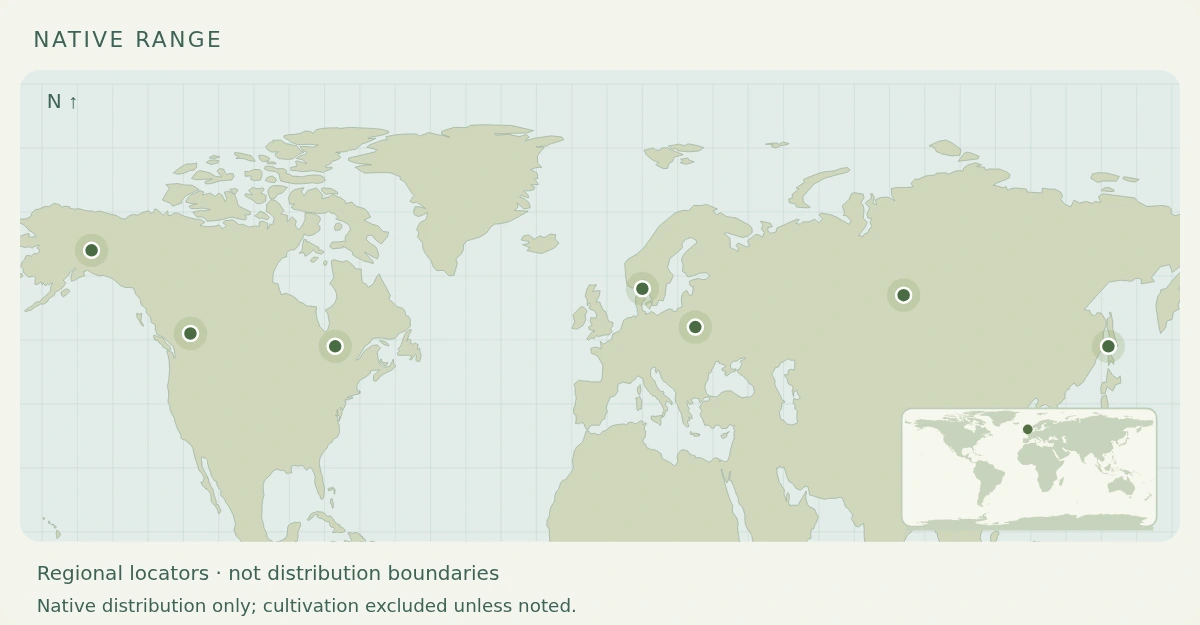
Native range & growing context

Native range & growing context

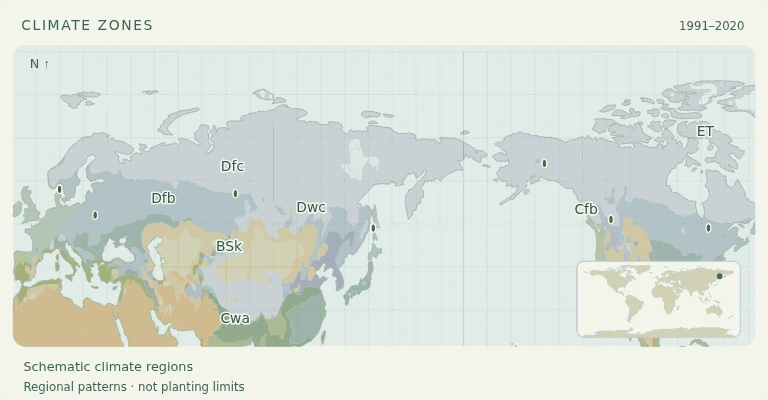
Subarctic and temperate parts of the Northern Hemisphere, including North America, Europe and northern Asia.

Reference spread
2.4–4.6 m
Moisture
drained · Dry · Moist
Growth tendency
The references give no numerical annual growth rate for this form.
Life span
The cited accounts give no age limit for the illustrated shrub.

Regional context, not a measured occurrence or suitability map.

06 / Sources & interpretation

Read the evidence behind the illustration

Names & classification

Family
Cupressaceae
Genus
Juniperus
Synonyms
—
  • Three stiff, sharp needles usually encircle each node. A pale band on the inner face of each needle contrasts with its green margins.
  • Pollen and seed cones usually grow on separate plants. Female cones turn blue-black during their second season. Washington specimens are described with cones 6–9 mm long.

The model illustrates one shrub habit. Its colours, dimensions, branch positions and age scale are illustrative.

The model illustrates one shrub habit. Its colours, dimensions, branch positions and age scale are illustrative.

  1. Royal Botanic Gardens, Kew · Juniperus communis ↗powo.science.kew.org
  2. University of Illinois Extension · Common juniper ↗web.extension.illinois.edu
  3. University of Washington, Burke Herbarium · Common juniper ↗www.burkeherbarium.org
  4. Oregon State University · Common juniper ↗landscapeplants.oregonstate.edu
Plant data and references · 7
NameJuniperus communisAccepted name and distributionpowo.science.kew.org
Heightm[1.524, 3.048]The dimensions describe the garden form in the cited account. Individual plants and cultivars vary.web.extension.illinois.edu
Spreadm[2.4384, 4.572]The dimensions describe the garden form in the cited account. Individual plants and cultivars vary.web.extension.illinois.edu
Hardinesscategory{"system": "USDA", "zones": [2, 6], "source": "illinois", "basis": "reported-range"}Horticultural dimensions in feet, USDA zones 2–6, light and soilweb.extension.illinois.edu
Native rangeSubarctic and temperate parts of the Northern Hemisphere, including North America, Europe and northern Asia.Accepted name and distributionpowo.science.kew.org
Leaf lengthmm[7, 12]Needle length from the Washington flora. The species varies across its circumpolar range.www.burkeherbarium.org
Cone sizemm[6, 9]Pollen and seed cones usually grow on separate plants. Female cones turn blue-black during their second season. Washington specimens are described with cones 6–9 mm long.www.burkeherbarium.org