Botanical field guide
Magnolia × loebneri
Loebner magnolia
Tree / Magnoliaceae
The plant, in detail
Suits a sheltered lawn or woodland edge with moist, well-drained loam. Spring frost can damage the open flowers.
- Reference height
- 2.4–9.1 m
- Foliage habit
- Deciduous
- USDA zones
- 5–9
- Light
- Full sun · Partial shade
Dimensions describe mature trees in the cited horticultural accounts.
Crown
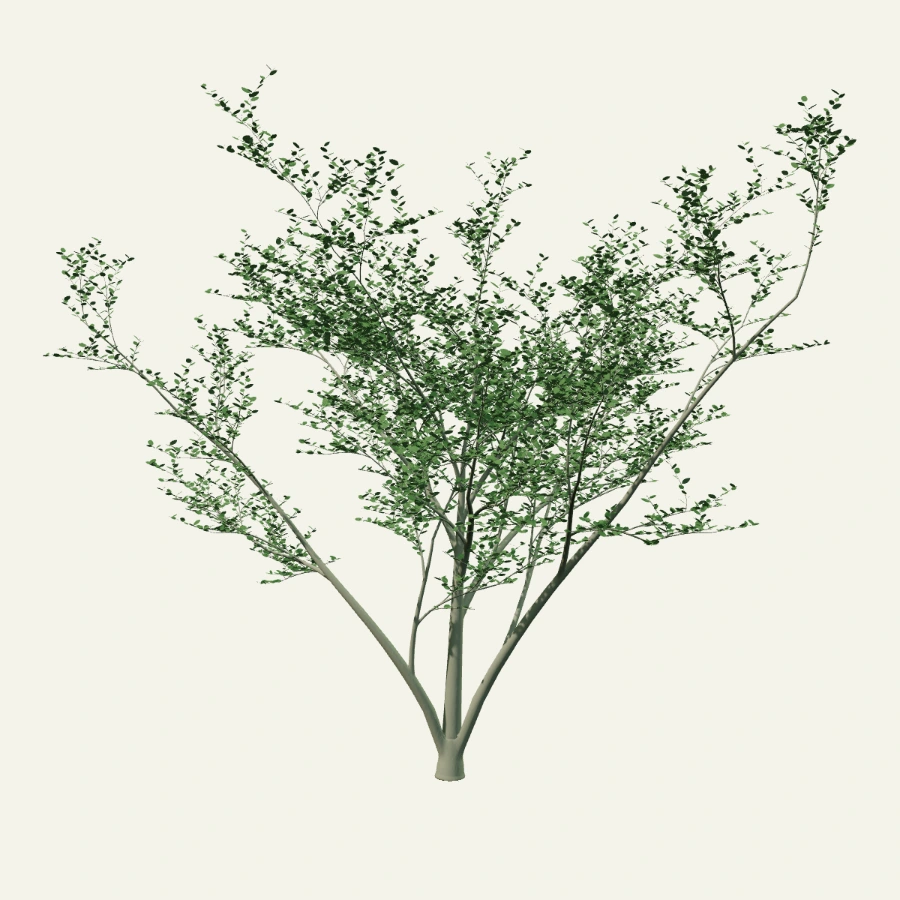
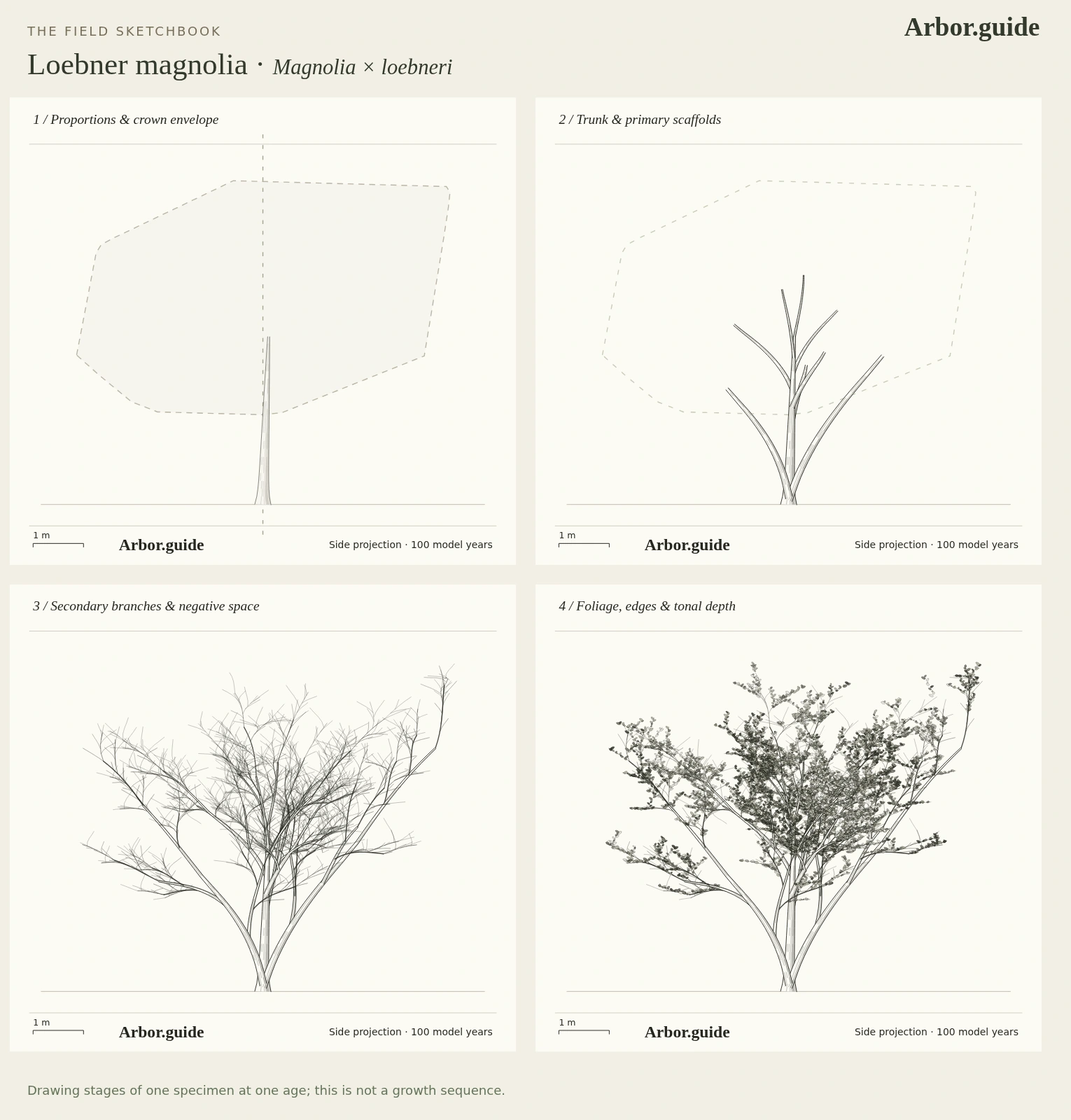
Upright branches form a rounded crown. Cultivars range from large shrubs to small trees.
Branching
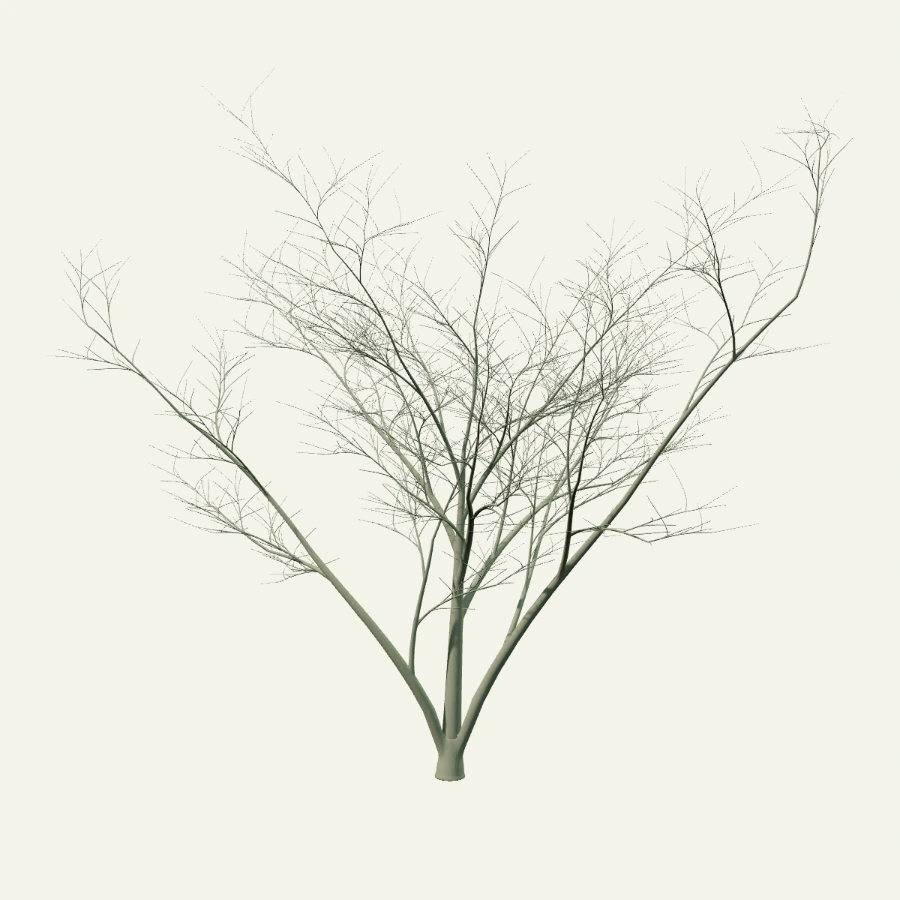
Upright branches form a rounded crown. Cultivars range from large shrubs to small trees.
Bark
The trunk has smooth silvery-grey bark. Small pale lenticels dot the slender brown shoots.
Roots
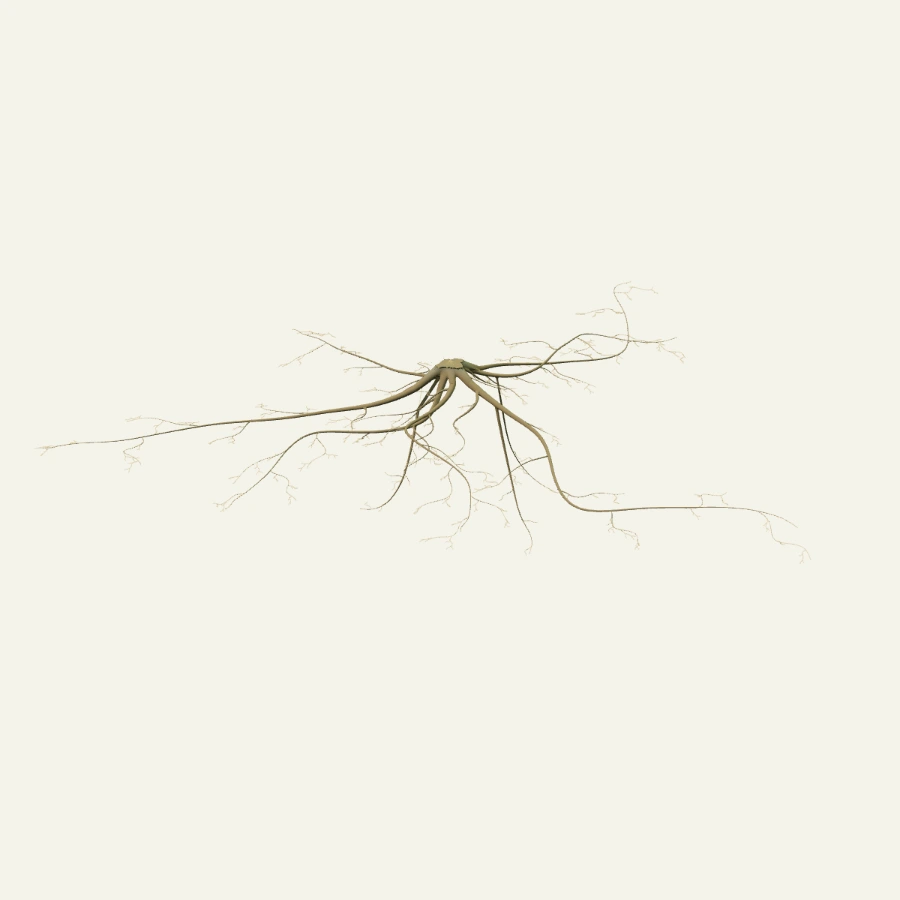
Illustrative lateral roots with descending axes. Soil depth, drainage and competition determine the actual root system.
02 / Seasons
Through the seasons
Four portraits. One plant.
Read the crown, foliage and reproductive structures together. The four views compare seasonal appearances; the reference notes explain what is actually documented.
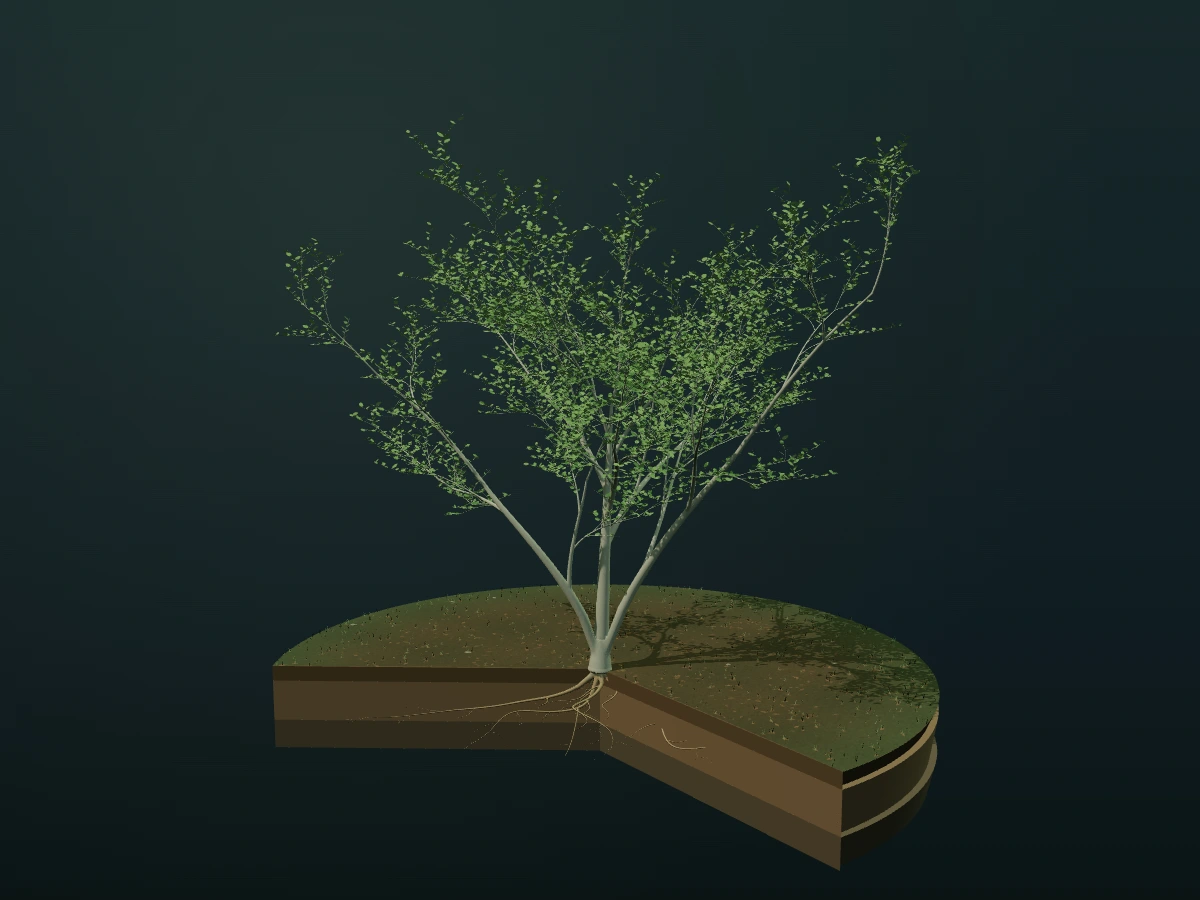
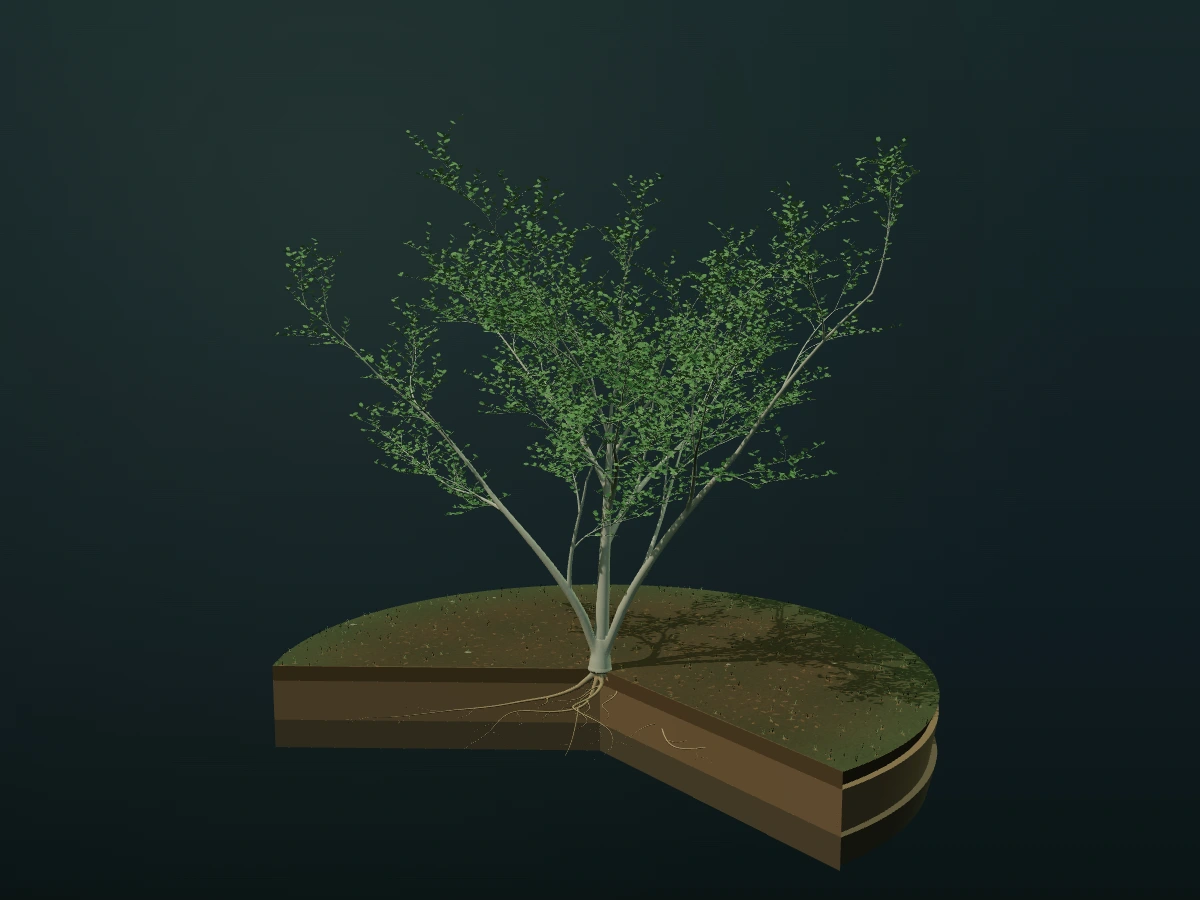
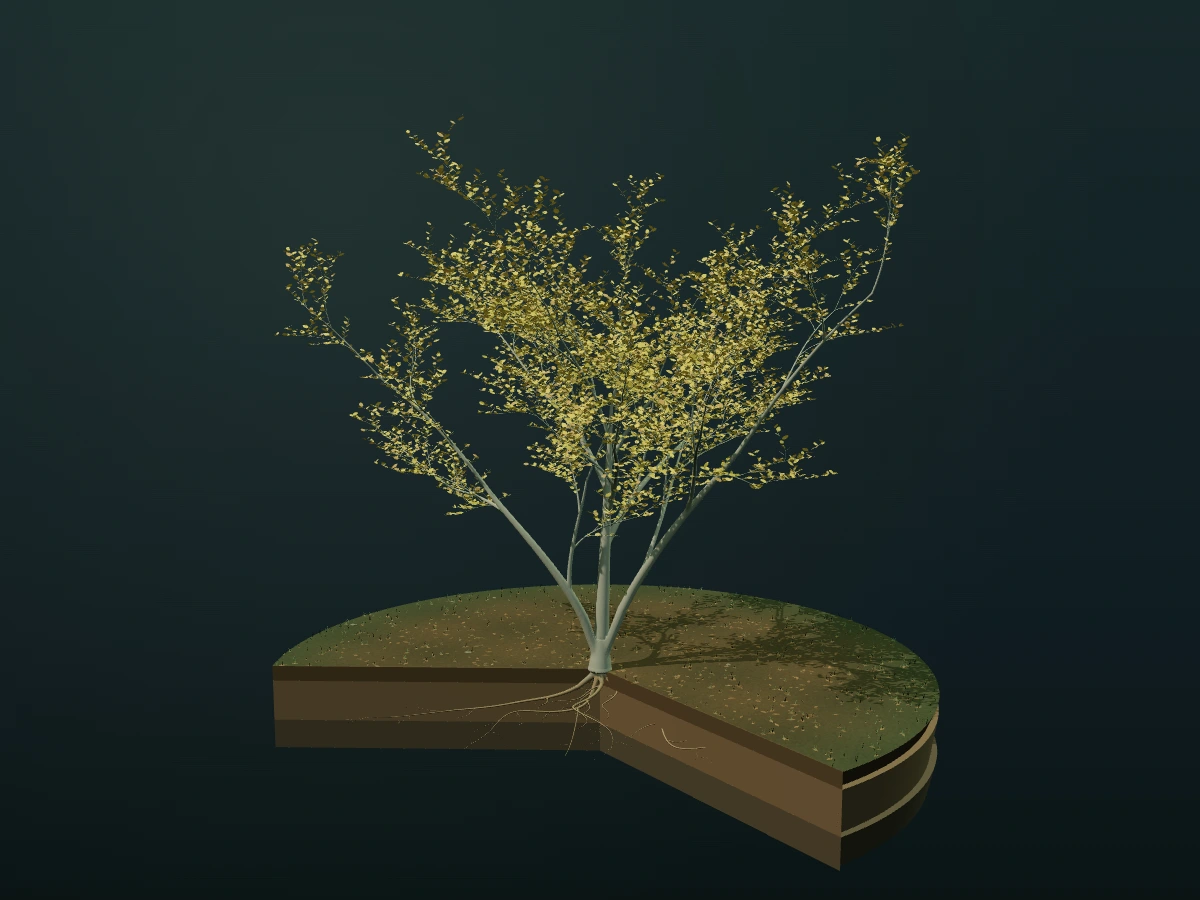
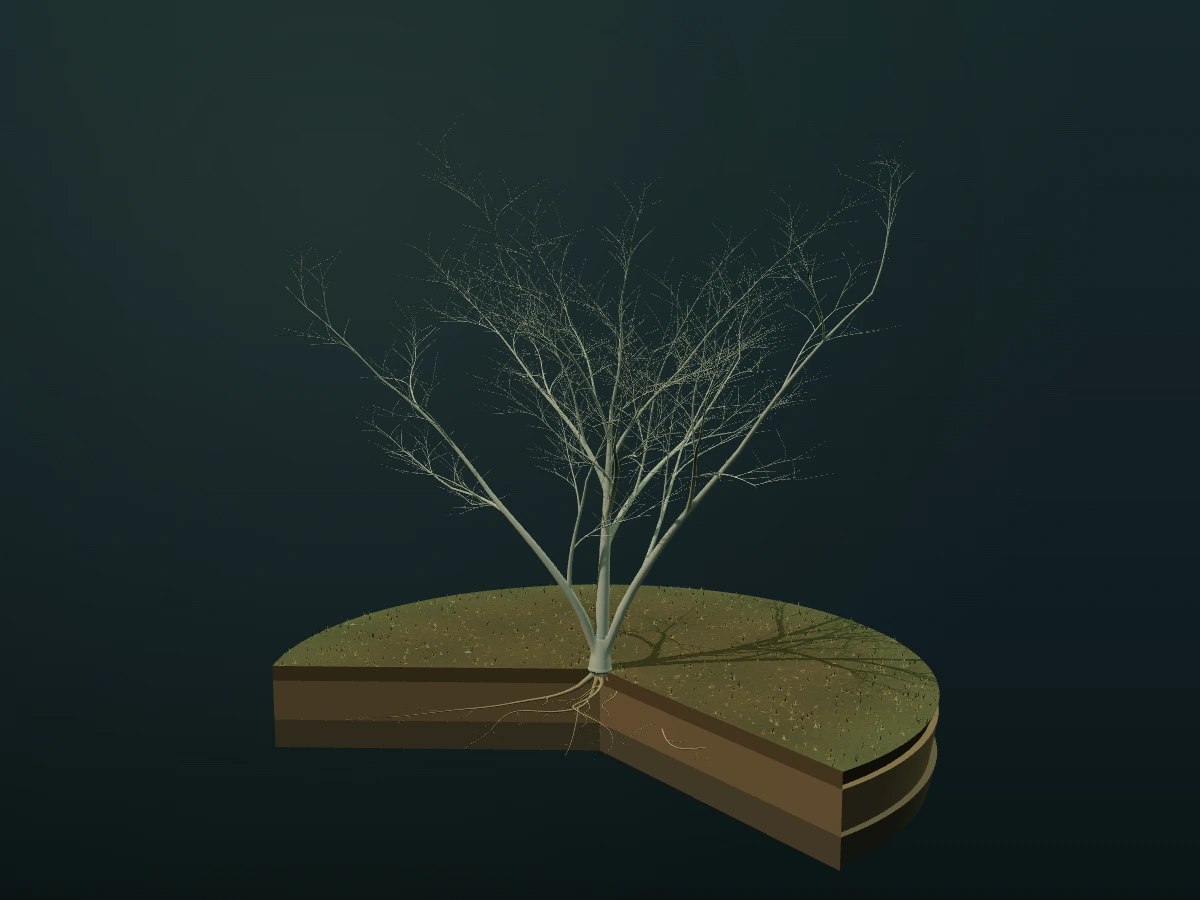
Seasonal illustration; the same plant, age and camera across four views.
Seasonal record
Northern Hemisphere horticultural observations
Leaf renewal
Deciduous[1]
The record describes a deciduous plant: foliage is renewed after a leafless or reduced-leaf phase. The named views illustrate that cycle without fixing its dates at a planting site.
Colour notes
Gold / yellow · Brown / copper[1]
These are recorded colour possibilities. The shades and their distribution are illustrative; a particular autumn can look different.
Reading these views
Season names organize these four views, not a universal calendar. Hemisphere, local climate, cultivar and management can change timing; months are shown only when explicitly recorded.
The views emphasize crown structure. Buds, small flowers, individual retained leaves and fine reproductive changes may be unresolved; model age and fruit count are not production forecasts.
No separate on-tree fruit display is configured for this record.
Seasonal references
- NC State Extension · Magnolia × loebneri ↗plants.ces.ncsu.edu
03 / Leaves & flowers
A closer look at the organs
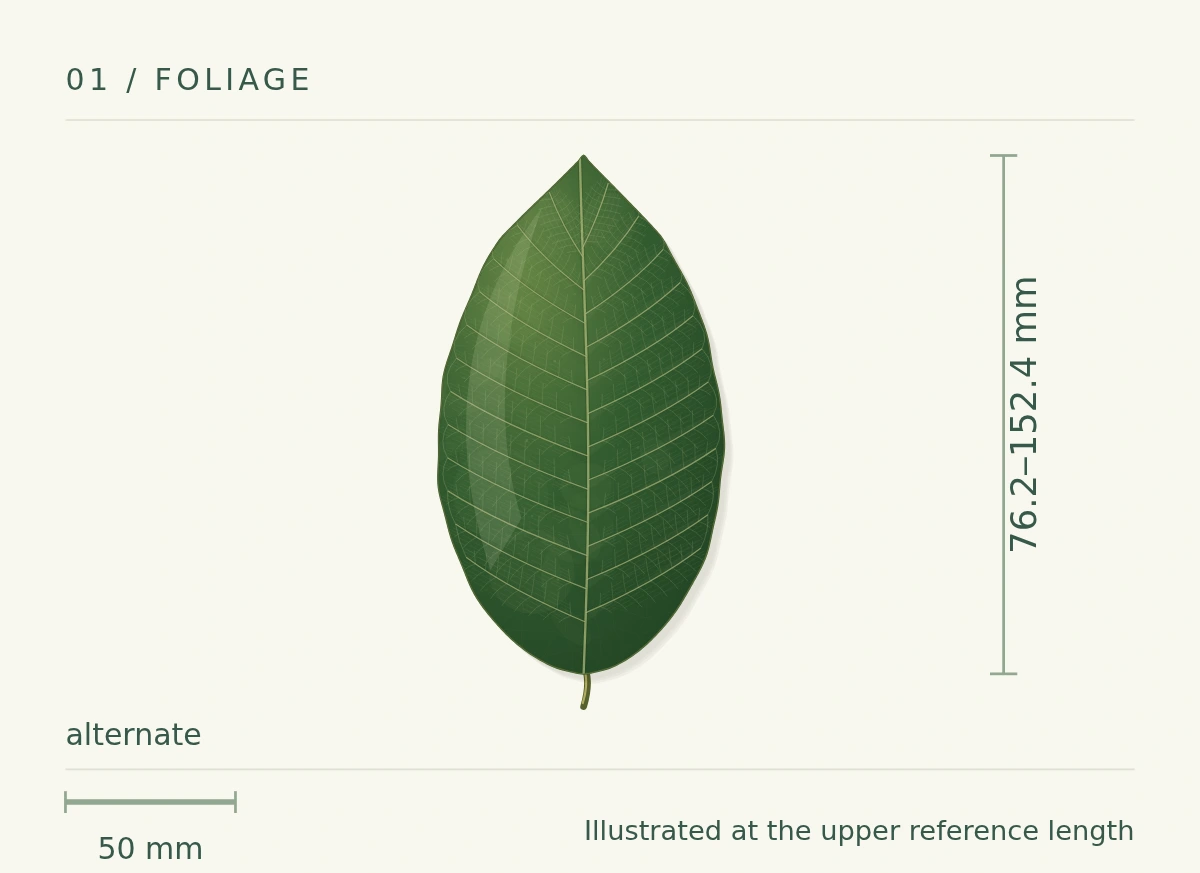
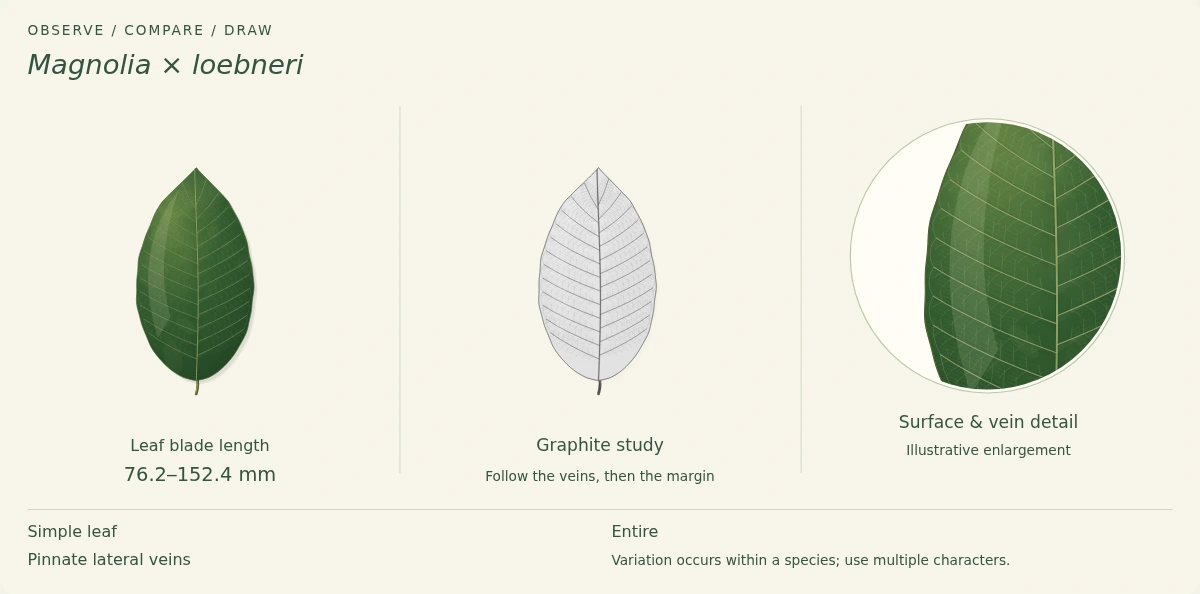
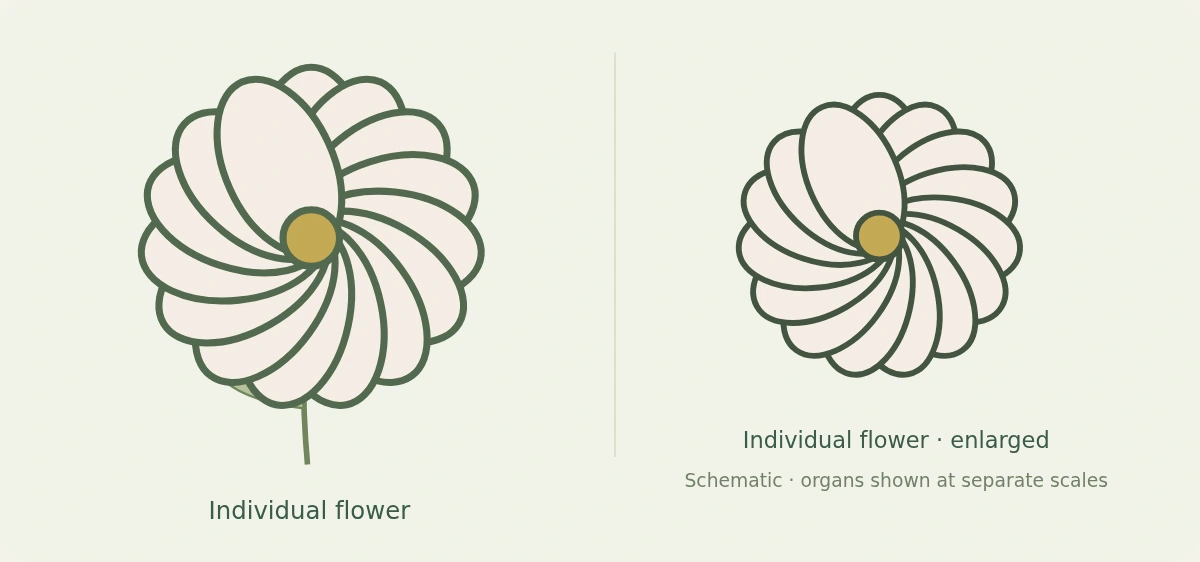
Leaves
- Leaf blade length
- 76.2–152.4 mmSource notes
The oblong to ovate blades taper to a point and have an unbroken margin. They turn yellow-brown before falling.
Simple leaf · Entire · Pinnate lateral veins · alternate
Seasonal notes
Leaves turn yellow to brown before falling.
- Flowering reference
- Spring
04 / Fruit & seed
Named structures, separate scales
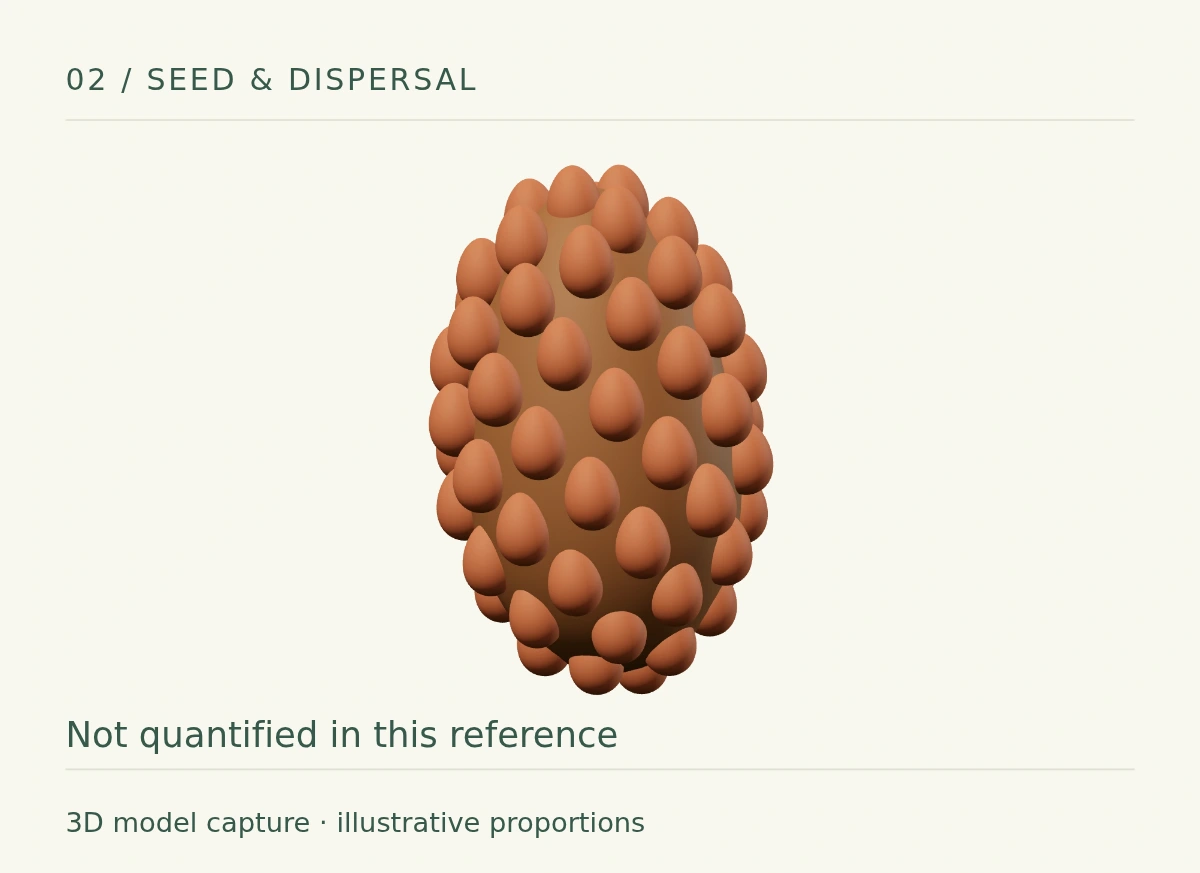
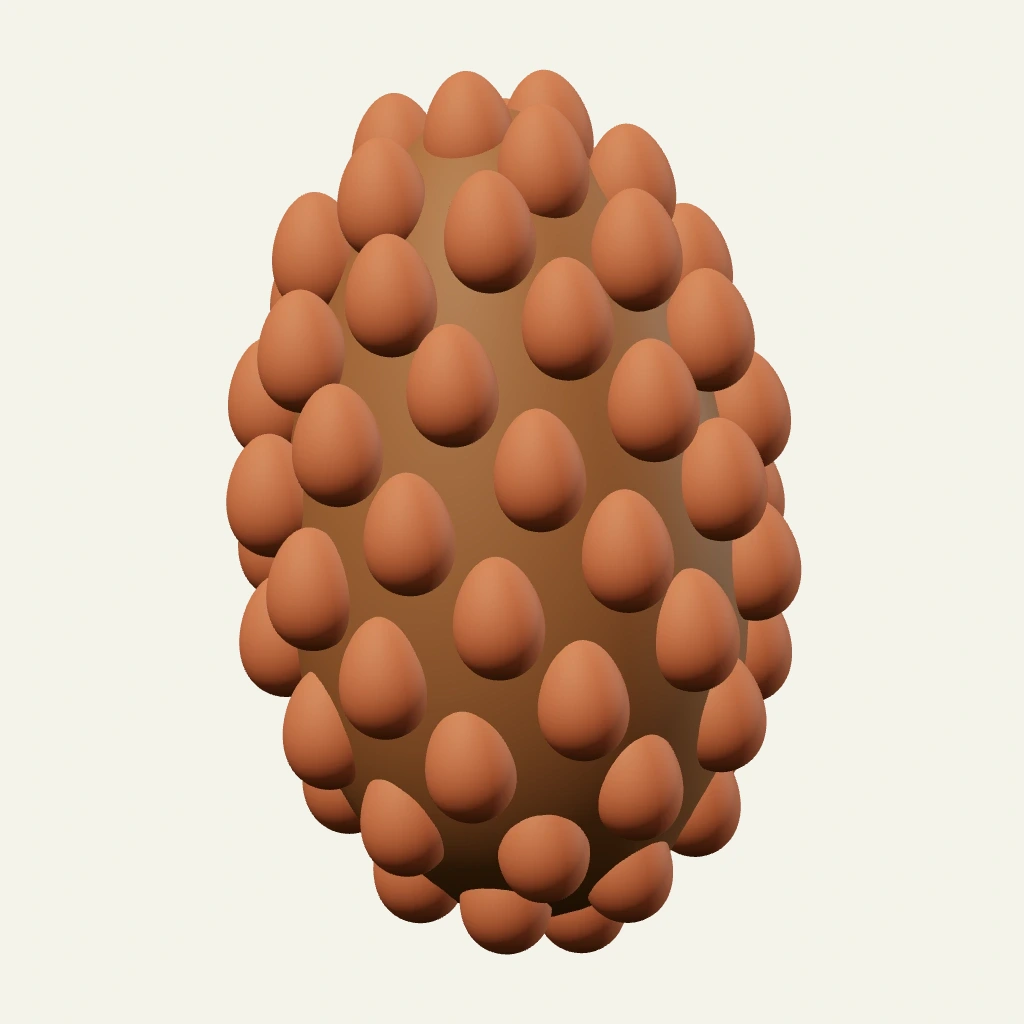
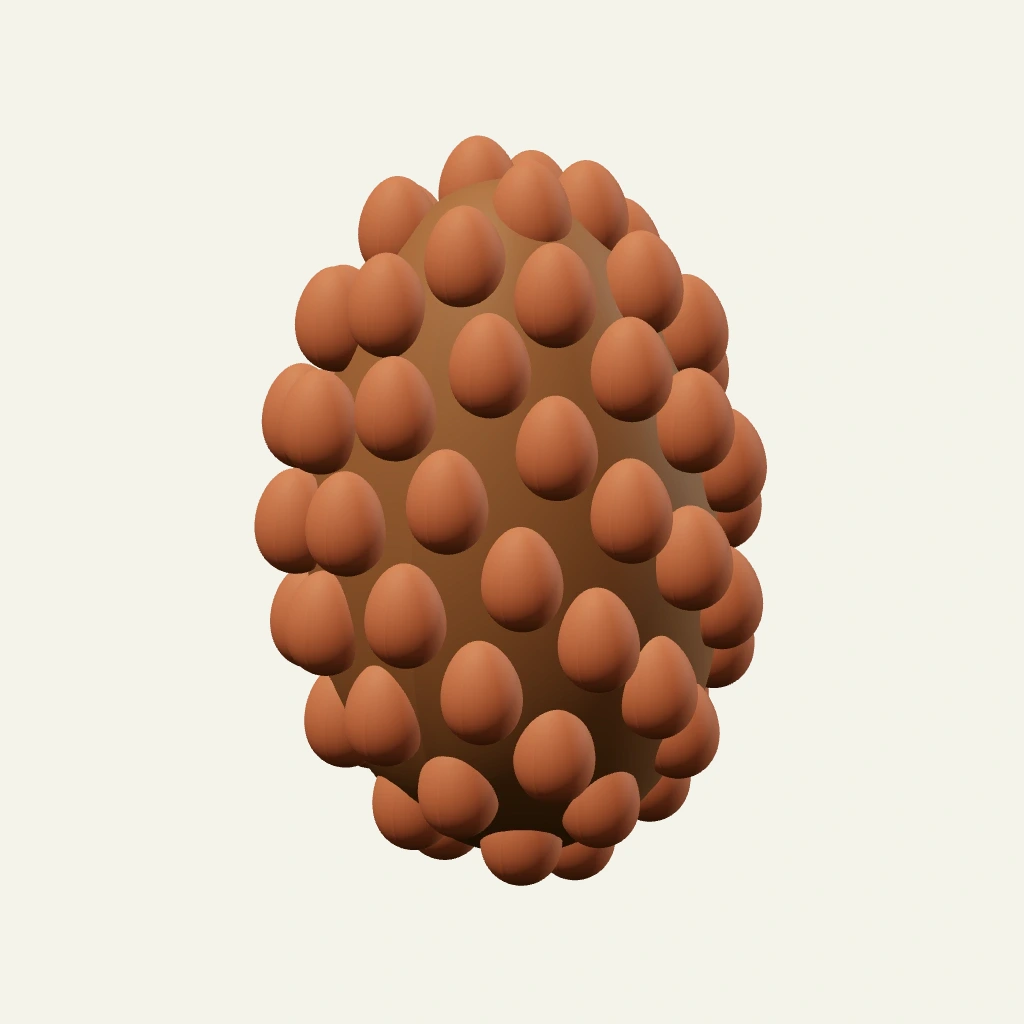
Fruit / dispersal unit
- Fruiting structure length
- Not documentedSource notes
Groups of follicles form cone-shaped fruits that turn red as they ripen in late summer.
- Fruiting reference
- Summer
Northern Hemisphere horticultural observations
Organs are enlarged independently. Refer to the named measurement, not image size.
05 / Habitat
Native range & growing context
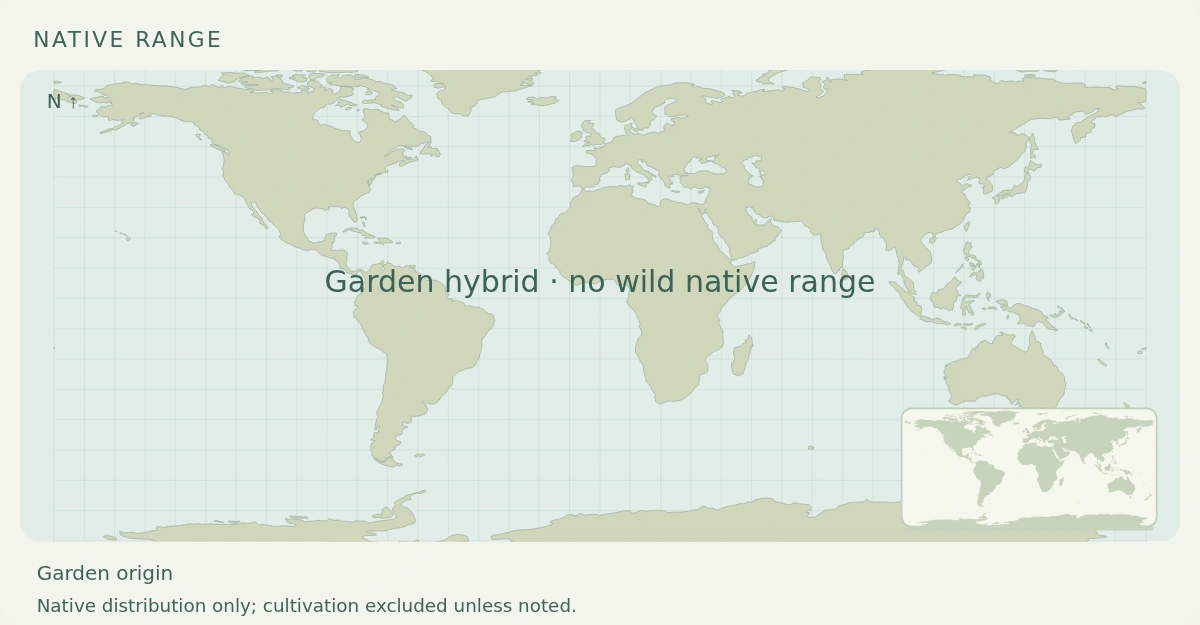
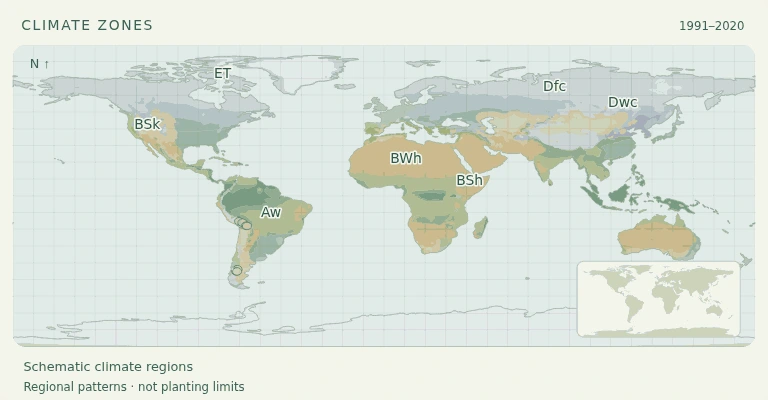
Native range & growing context
Garden hybrid of Magnolia kobus and Magnolia stellata, first raised by Max Loebner in Germany.
- Reference spread
- 2.4–9.1 m
- Moisture
- Moist · drained
- Growth tendency
- Moderate
- Life span
- No numerical lifespan is assigned. Model years control the illustration, not a survival forecast.
Regional context, not a measured occurrence or suitability map.
06 / Sources & interpretation
Read the evidence behind the illustration
Names & classification
- Family
- Magnoliaceae
- Genus
- Magnolia
- Synonyms
- Magnolia kobus var. loebneri
Garden hybrid of Magnolia kobus and Magnolia stellata, first raised by Max Loebner in Germany.
- Garden hybrid of Magnolia kobus and Magnolia stellata, first raised by Max Loebner in Germany.
- The oblong to ovate blades taper to a point and have an unbroken margin. They turn yellow-brown before falling.
- Slender tepals spread into a fragrant star in spring. Many cultivars flower white, and others have pink tepals.
- Groups of follicles form cone-shaped fruits that turn red as they ripen in late summer.
Source-informed illustration. Branches, roots, growth ages and colour proportions are schematic; individual trees vary with site and provenance.
Source-informed illustration. Branches, roots, growth ages and colour proportions are schematic; individual trees vary with site and provenance.
- NC State Extension · Magnolia × loebneri ↗plants.ces.ncsu.edu
- International Dendrology Society · Magnolia × loebneri ↗www.treesandshrubsonline.org
Plant data and references · 7
| Heightm | [2.44, 9.14]Dimensions describe mature trees in the cited horticultural accounts.plants.ces.ncsu.edu |
|---|---|
| Spreadm | [2.44, 9.14]Dimensions describe mature trees in the cited horticultural accounts.plants.ces.ncsu.edu |
| Native range | Garden hybrid of Magnolia kobus and Magnolia stellata, first raised by Max Loebner in Germany.Garden hybrid of Magnolia kobus and Magnolia stellata, first raised by Max Loebner in Germany.www.treesandshrubsonline.org |
| Leaf lengthmm | [76.2, 152.4]Leaf measurements refer to the blade. The reproductive illustration shows the aggregate of follicles.plants.ces.ncsu.edu |
| Fruit lengthmm | Not documentedThe account describes the aggregate but gives no measured length.plants.ces.ncsu.edu |
| Hardinesscategory | {"system": "USDA", "zones": [5, 9], "source": "ncsu", "basis": "reported-range", "subzones": ["5a", "9b"]}Horticultural USDA zone range reported by NC State Extension.plants.ces.ncsu.edu |
| Floweringcategory | starSlender tepals spread into a fragrant star in spring. Many cultivars flower white, and others have pink tepals.plants.ces.ncsu.edu |