Botanical field guide
Magnolia × soulangeana
Saucer magnolia
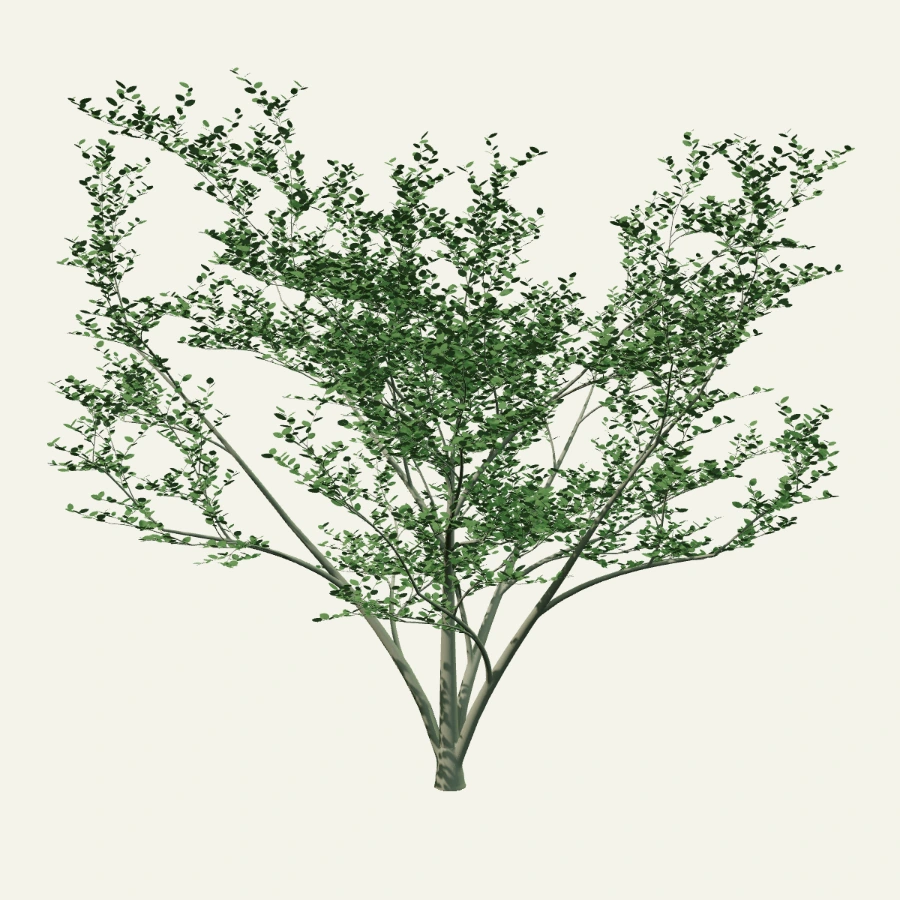
Tree / Magnoliaceae
The plant, in detail
Grows in moist, well-drained acidic loam, in sun or partial shade. A sheltered site helps protect the early flowers from wind.
- Reference height
- 4.6–10.1 m
- Foliage habit
- Deciduous
- USDA zones
- 4–9
- Light
- Full sun · Partial shade
Dimensions describe mature trees in the cited horticultural accounts.
Crown
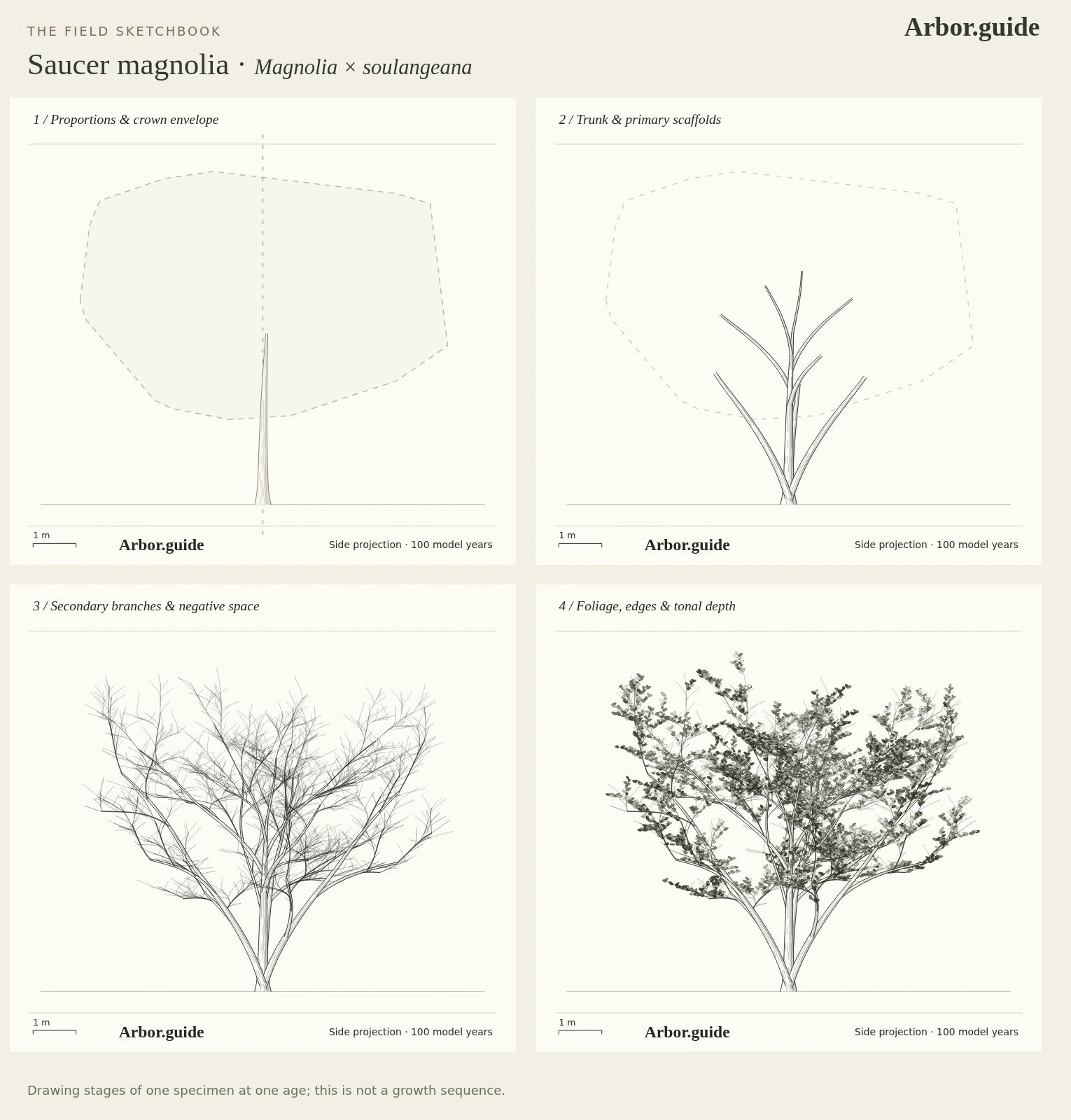
Several low trunks or a single trunk with low forks carry a broad, rounded crown.
Branching
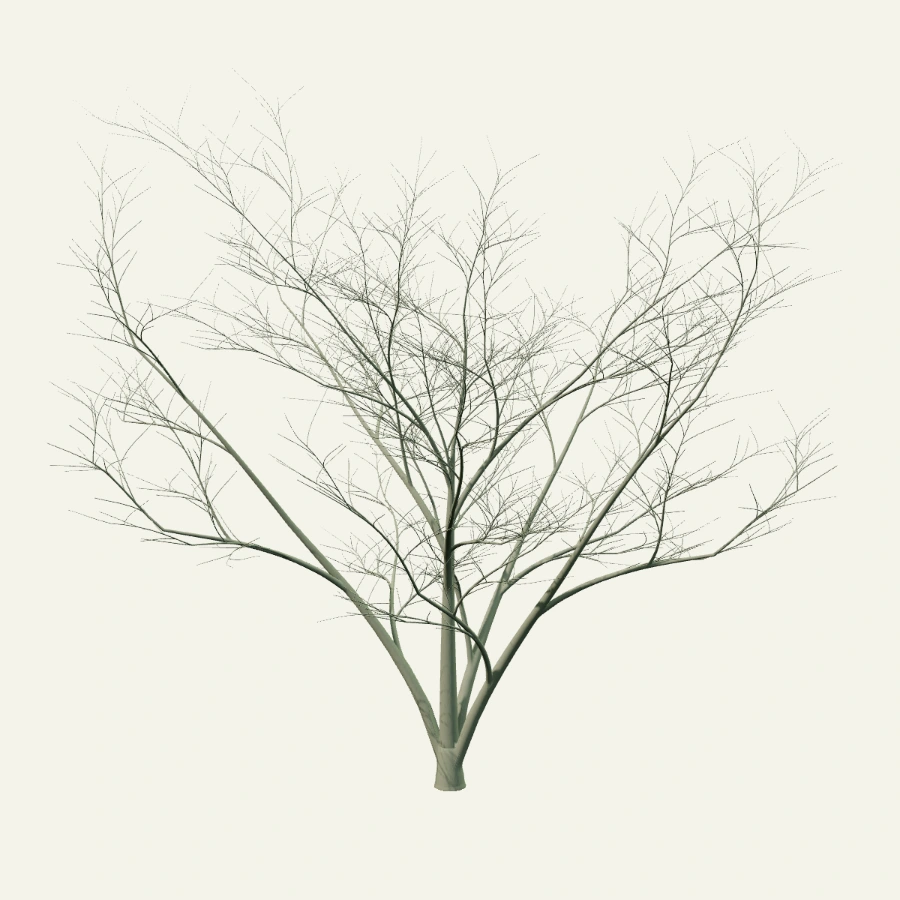
Several low trunks or a single trunk with low forks carry a broad, rounded crown.
Bark
Smooth grey bark contrasts with the large, silky buds at the ends of the twigs.
Roots
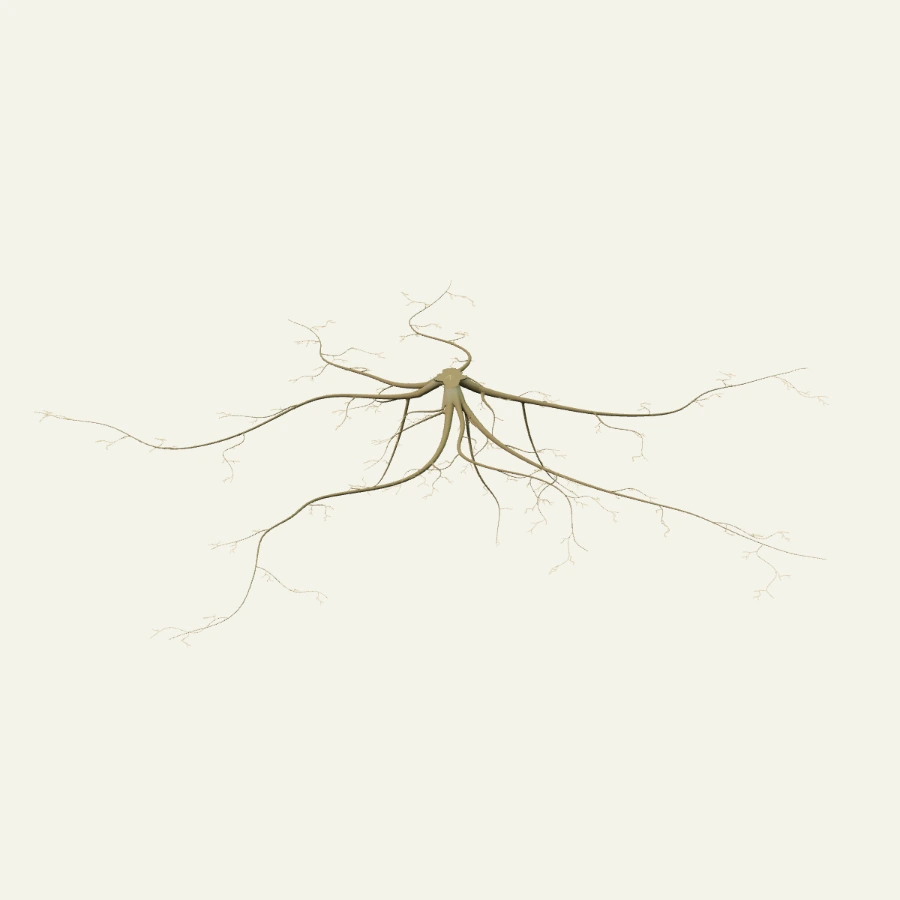
Illustrative lateral roots with descending axes. Soil depth, drainage and competition determine the actual root system.
02 / Seasons
Through the seasons
Four portraits. One plant.
Read the crown, foliage and reproductive structures together. The four views compare seasonal appearances; the reference notes explain what is actually documented.
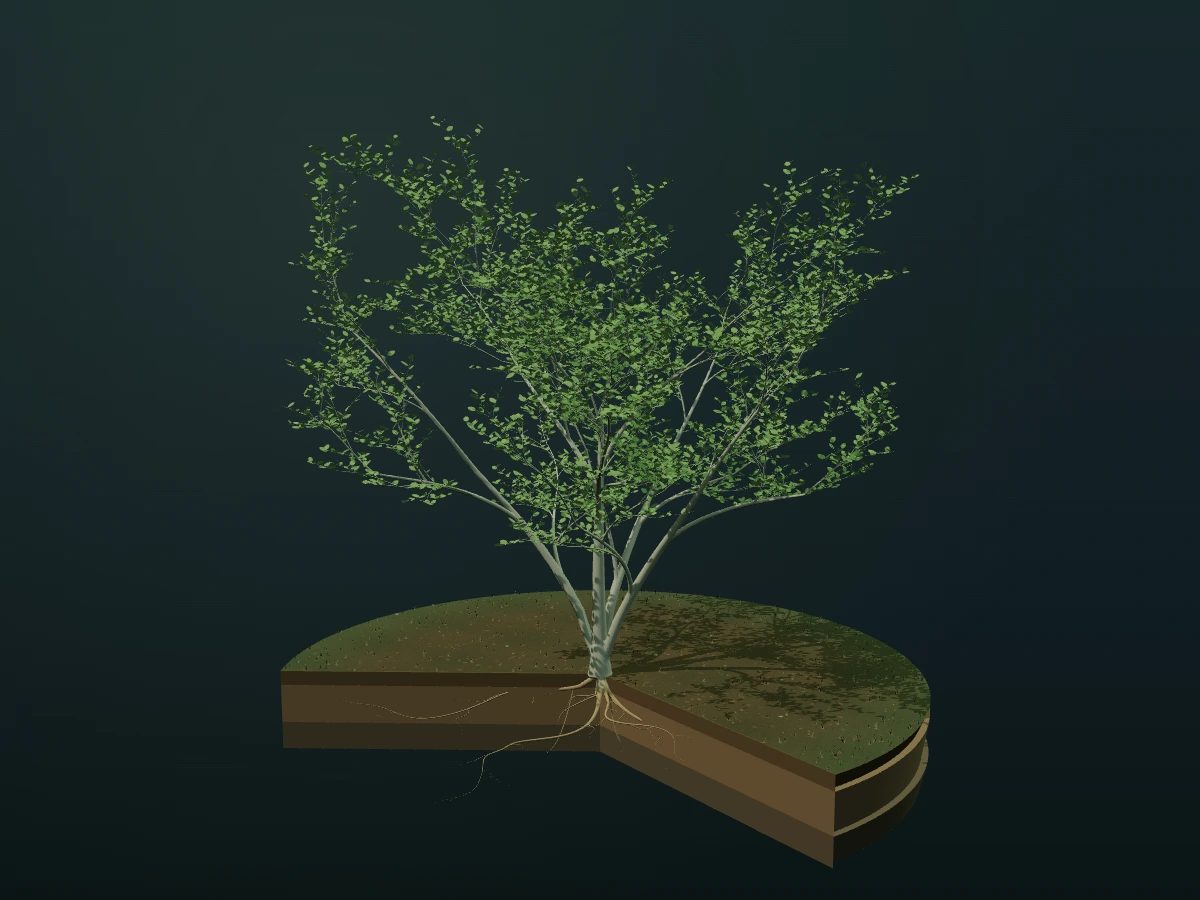
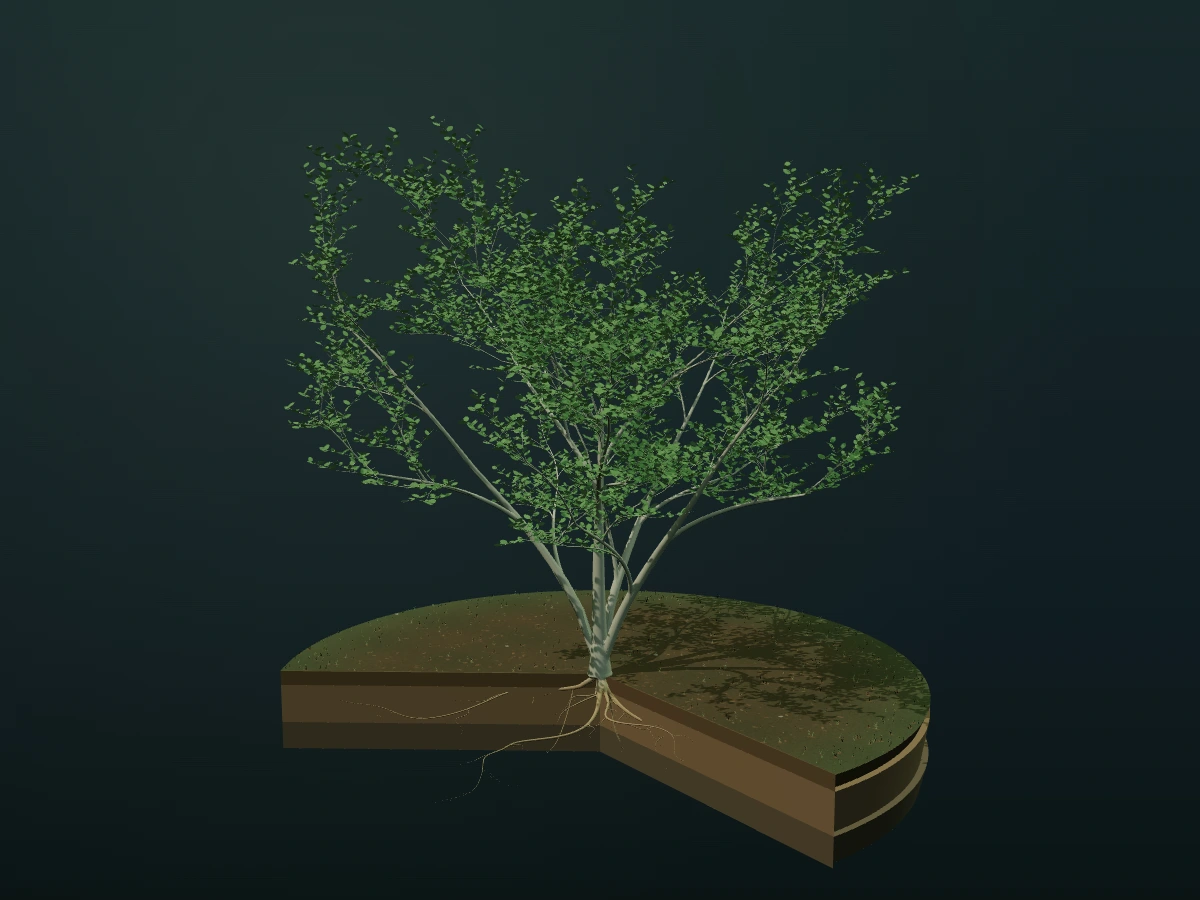
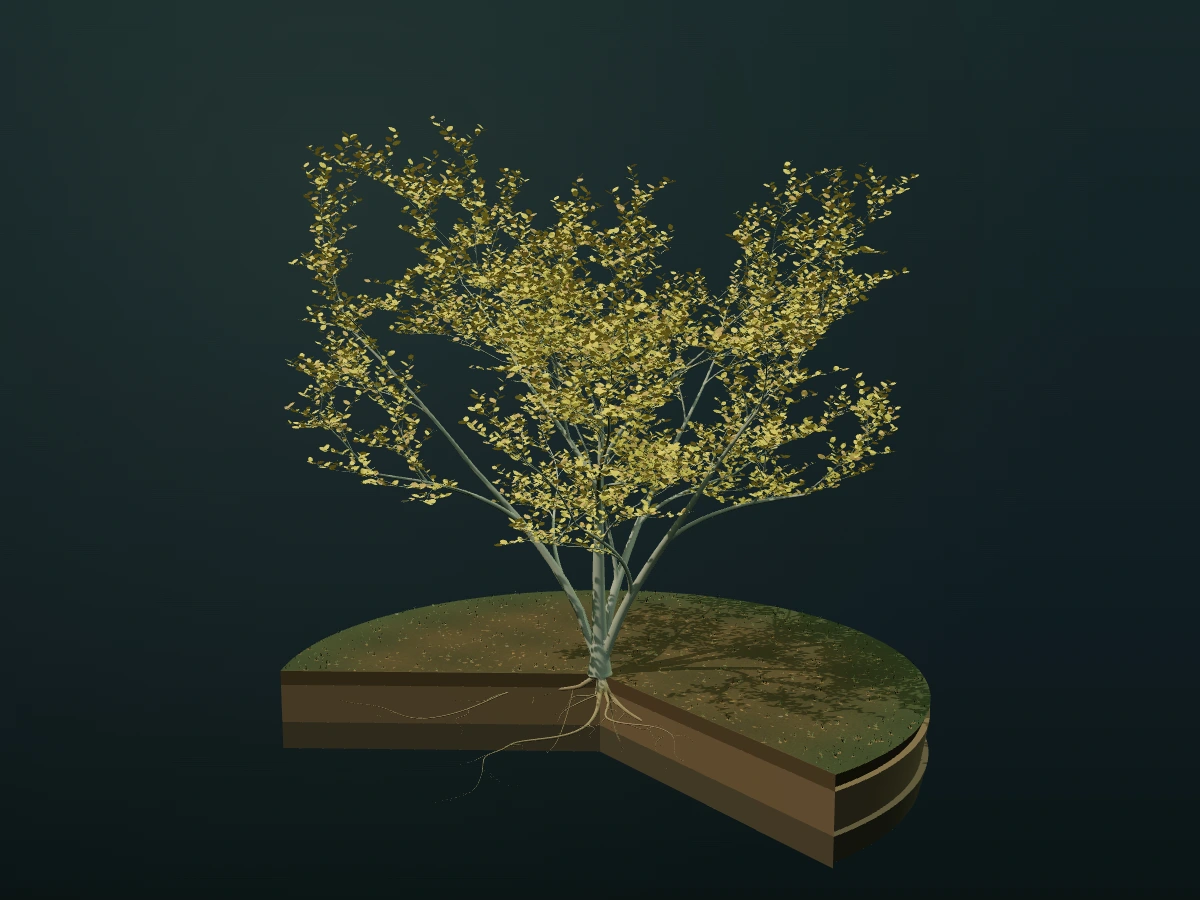
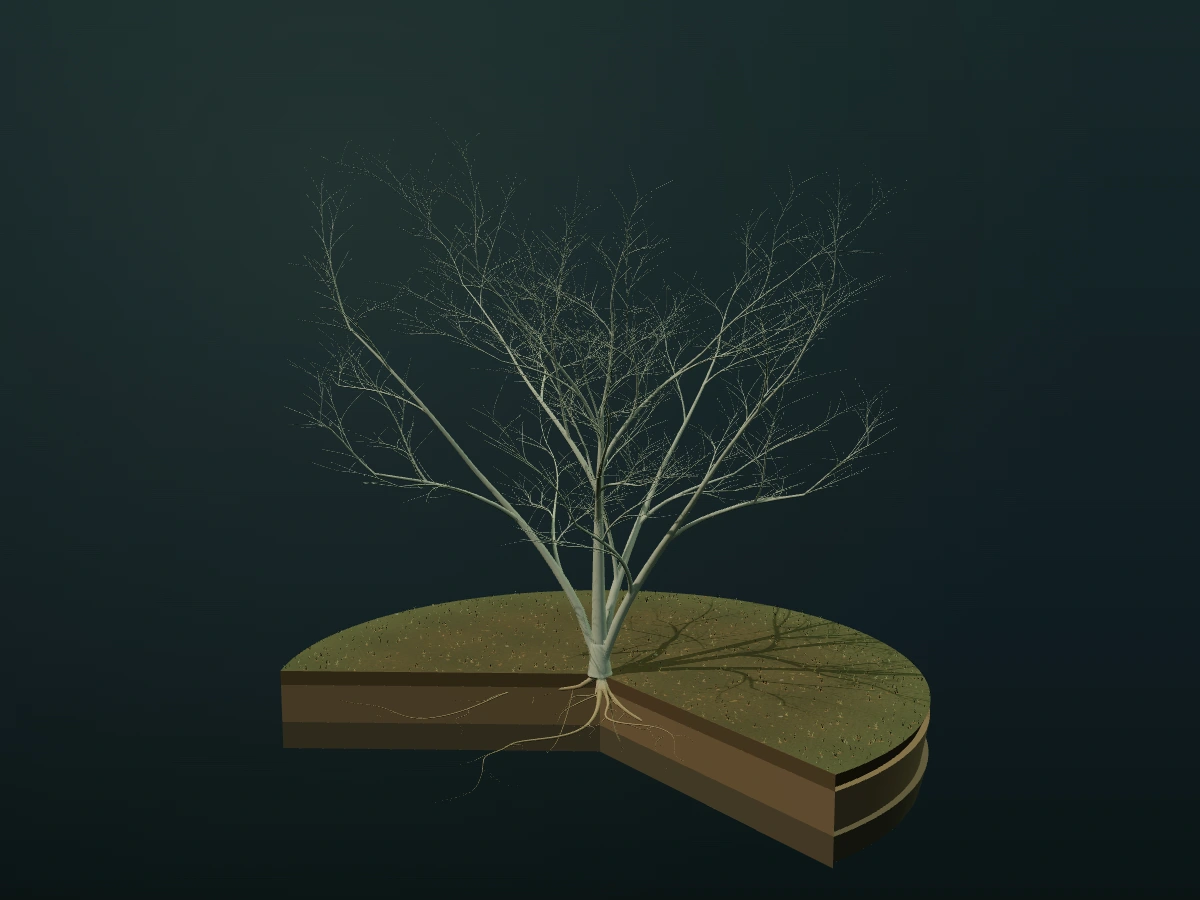
Seasonal illustration; the same plant, age and camera across four views.
Seasonal record
Northern Hemisphere horticultural observations
Leaf renewal
Deciduous[1]
The record describes a deciduous plant: foliage is renewed after a leafless or reduced-leaf phase. The named views illustrate that cycle without fixing its dates at a planting site.
Colour notes
Gold / yellow · Brown / copper[1]
These are recorded colour possibilities. The shades and their distribution are illustrative; a particular autumn can look different.
Reading these views
Season names organize these four views, not a universal calendar. Hemisphere, local climate, cultivar and management can change timing; months are shown only when explicitly recorded.
The views emphasize crown structure. Buds, small flowers, individual retained leaves and fine reproductive changes may be unresolved; model age and fruit count are not production forecasts.
No separate on-tree fruit display is configured for this record.
Seasonal references
- NC State Extension · Magnolia × soulangeana ↗plants.ces.ncsu.edu
03 / Leaves & flowers
A closer look at the organs
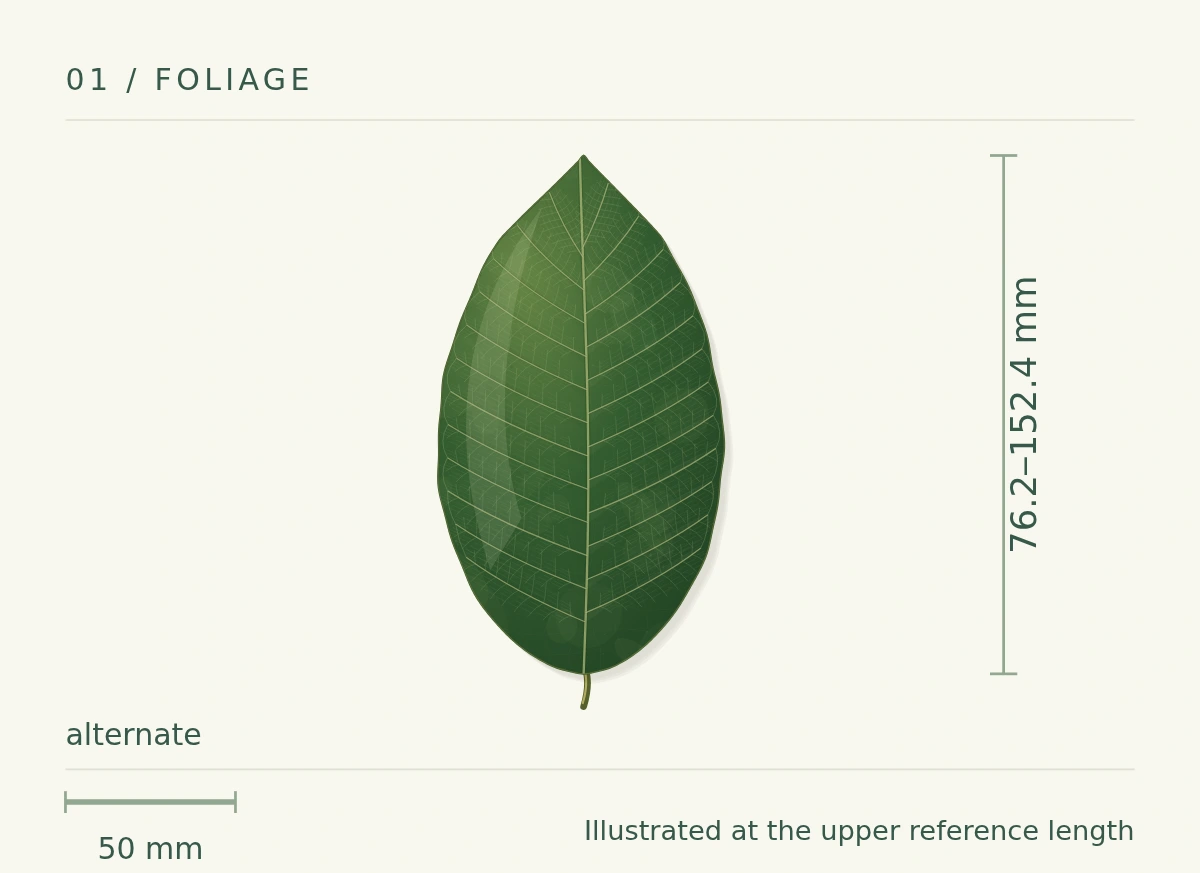
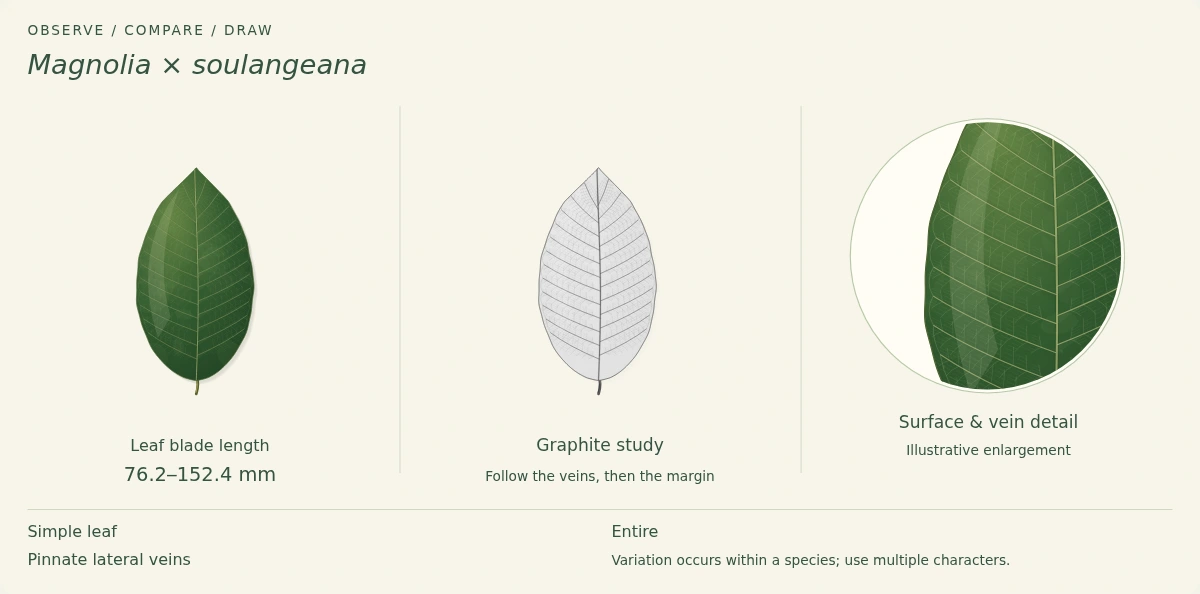
Leaves
- Leaf blade length
- 76.2–152.4 mmSource notes
The broad, pointed blades have smooth edges and soft hairs underneath.
Simple leaf · Entire · Pinnate lateral veins · alternate
Seasonal notes
Leaves turn yellow to brown before falling.
- Flowering reference
- Spring
04 / Fruit & seed
Named structures, separate scales
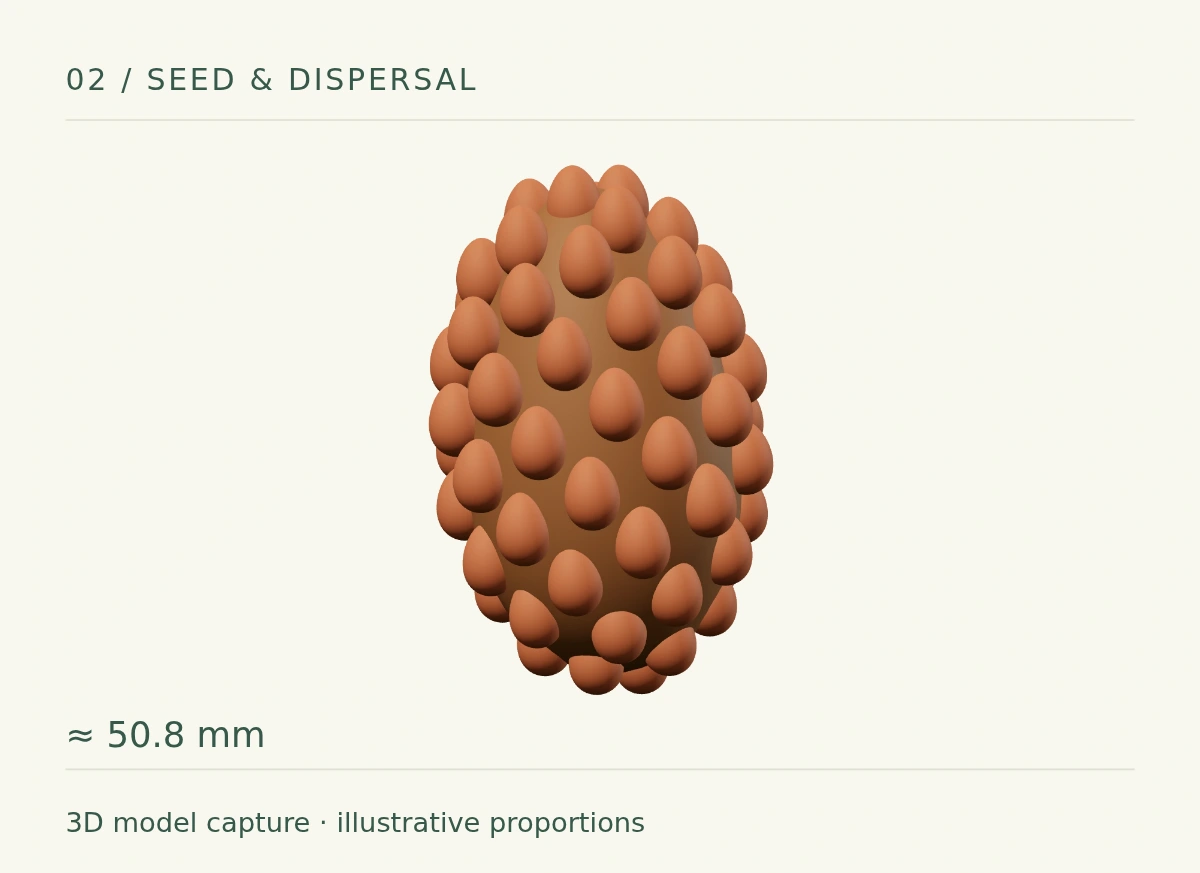
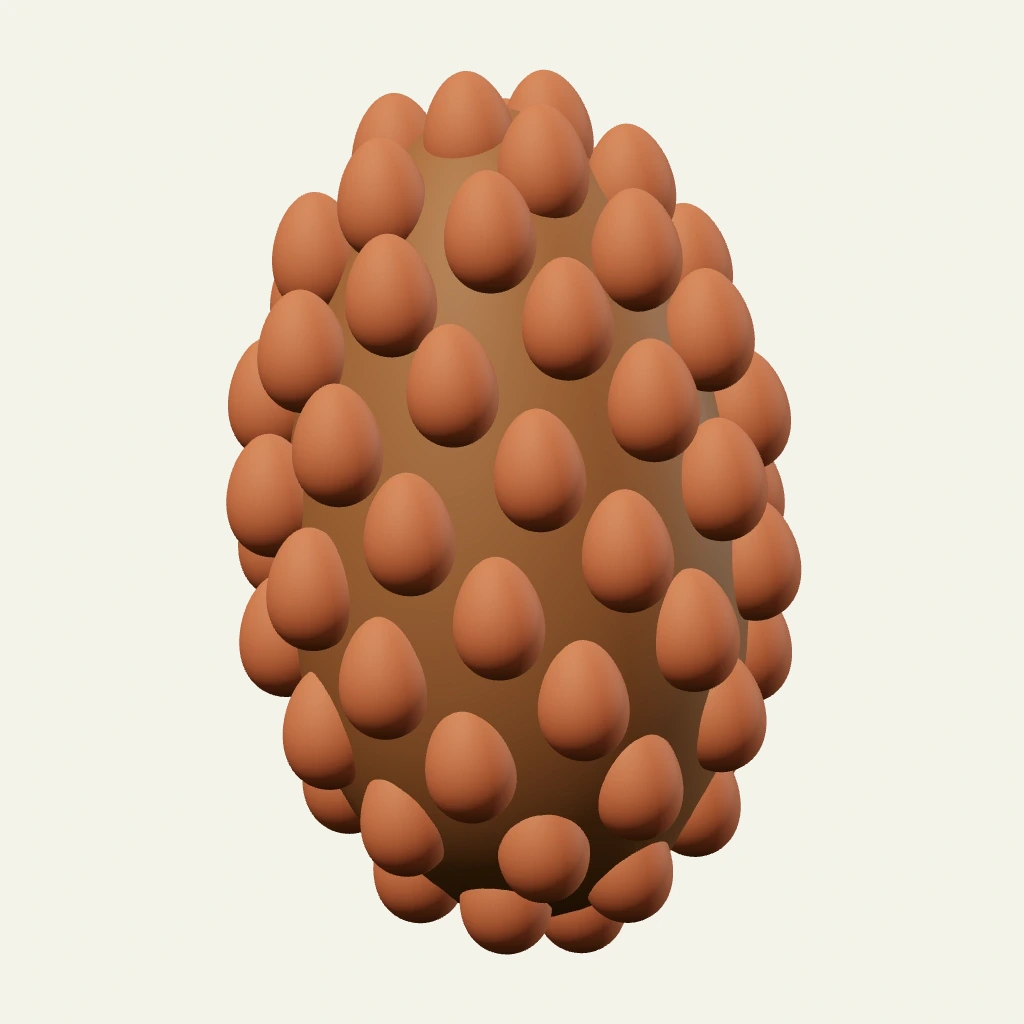
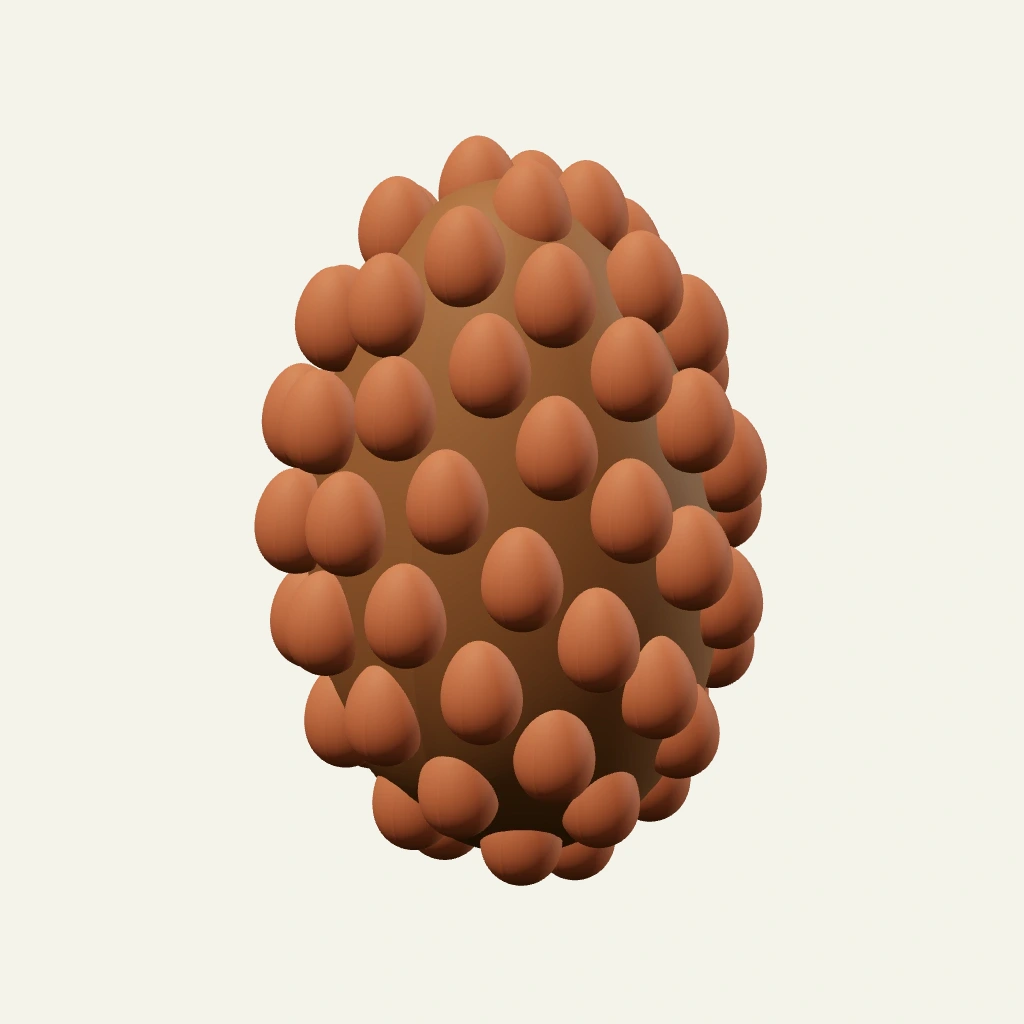
Fruit / dispersal unit
- Fruiting structure length
- ≈ 50.8 mmSource notes
In autumn the follicles split to reveal orange-red seeds. A typical fruit cluster is about 5 cm long.
- Fruiting reference
- Autumn
Northern Hemisphere horticultural observations
Organs are enlarged independently. Refer to the named measurement, not image size.
05 / Habitat
Native range & growing context
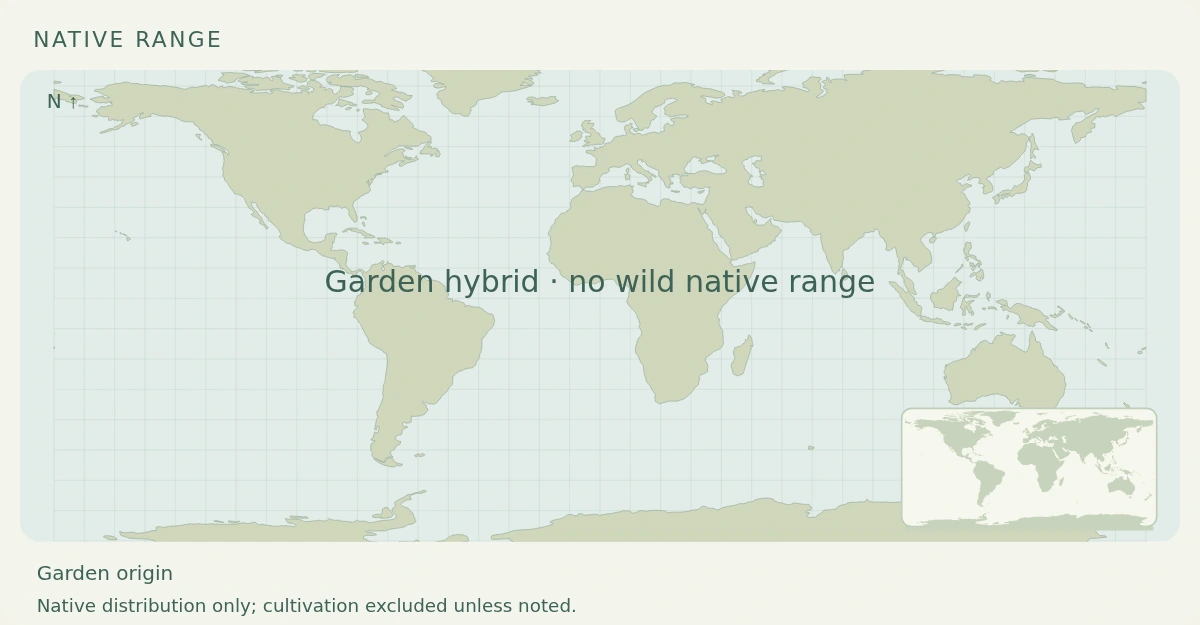
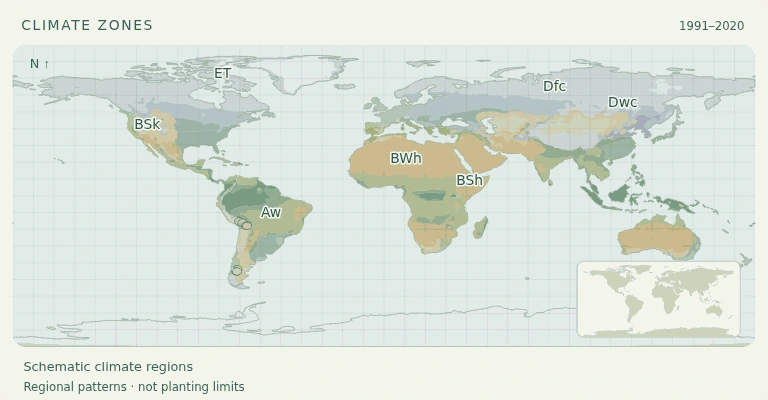
Native range & growing context
Garden hybrid of Magnolia denudata and Magnolia liliiflora. Étienne Soulange-Bodin raised an early cross in France.
- Reference spread
- 4.6–7.6 m
- Moisture
- Moist · drained
- Growth tendency
- Moderate
- Life span
- No numerical lifespan is assigned. Model years control the illustration, not a survival forecast.
Regional context, not a measured occurrence or suitability map.
06 / Sources & interpretation
Read the evidence behind the illustration
Names & classification
- Family
- Magnoliaceae
- Genus
- Magnolia
- Synonyms
- —
Garden hybrid of Magnolia denudata and Magnolia liliiflora. Étienne Soulange-Bodin raised an early cross in France.
- Garden hybrid of Magnolia denudata and Magnolia liliiflora. Étienne Soulange-Bodin raised an early cross in France.
- The broad, pointed blades have smooth edges and soft hairs underneath.
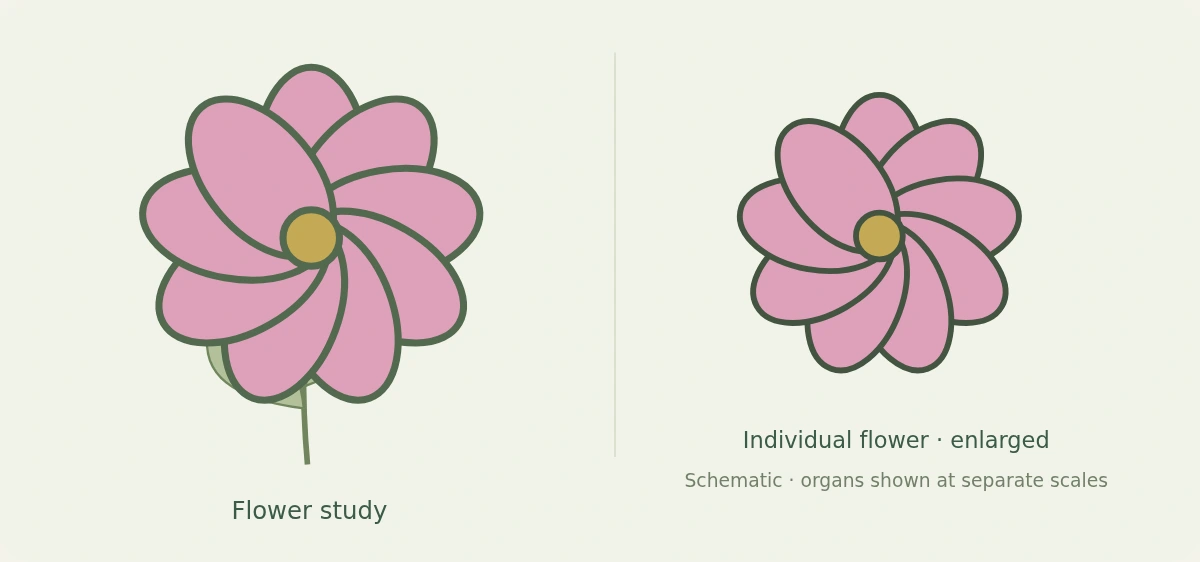
- Upright pink-and-white cups open before the leaves. Their broad tepals overlap, and flower colour varies among cultivars.
- In autumn the follicles split to reveal orange-red seeds. A typical fruit cluster is about 5 cm long.
Source-informed illustration. Branches, roots, growth ages and colour proportions are schematic; individual trees vary with site and provenance.
Source-informed illustration. Branches, roots, growth ages and colour proportions are schematic; individual trees vary with site and provenance.
- NC State Extension · Magnolia × soulangeana ↗plants.ces.ncsu.edu
- International Dendrology Society · Magnolia × soulangeana ↗www.treesandshrubsonline.org
Plant data and references · 7
| Heightm | [4.57, 10.06]Dimensions describe mature trees in the cited horticultural accounts.plants.ces.ncsu.edu |
|---|---|
| Spreadm | [4.57, 7.62]Dimensions describe mature trees in the cited horticultural accounts.plants.ces.ncsu.edu |
| Native range | Garden hybrid of Magnolia denudata and Magnolia liliiflora. Étienne Soulange-Bodin raised an early cross in France.Garden hybrid of Magnolia denudata and Magnolia liliiflora. Étienne Soulange-Bodin raised an early cross in France.www.treesandshrubsonline.org |
| Leaf lengthmm | [76.2, 152.4]Leaf measurements refer to the blade. The reproductive illustration shows the aggregate of follicles.plants.ces.ncsu.edu |
| Fruit lengthmm | [50.8, 50.8]Leaf measurements refer to the blade. The reproductive illustration shows the aggregate of follicles.plants.ces.ncsu.edu |
| Hardinesscategory | {"system": "USDA", "zones": [4, 9], "source": "ncsu", "basis": "reported-range", "subzones": ["4a", "9b"]}Horticultural USDA zone range reported by NC State Extension.plants.ces.ncsu.edu |
| Floweringcategory | cupUpright pink-and-white cups open before the leaves. Their broad tepals overlap, and flower colour varies among cultivars.plants.ces.ncsu.edu |