Botanical field guide
Prunus pensylvanica
Pin cherry
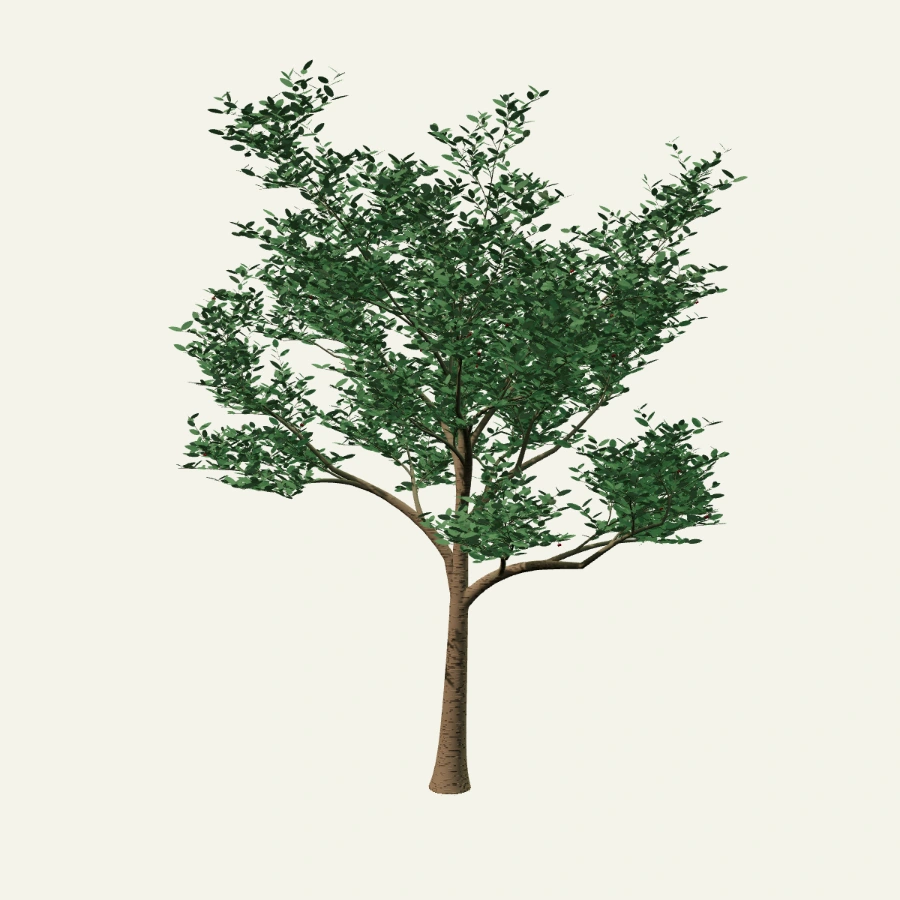
Tree / Rosaceae
The plant, in detail
Recorded conditions: Full sun (6 or more hours of direct sunlight a day); Good Drainage · Moist · Occasionally Dry.
- Reference height
- ≈ 9.1 m
- Foliage habit
- Deciduous
- USDA zones
- 3–7
- Light
- Full sun
Approximate stature; the account notes that larger trees can occur.
Crown
Open reference crown. Width is an ArborAI interpretation of the reported crown habit; no measured spread is available.
Branching
Alternate foliage insertion; scaffold placement is ArborAI.
Bark
Dark Brown · Dark Gray · Red/Burgundy; peeling.
Roots
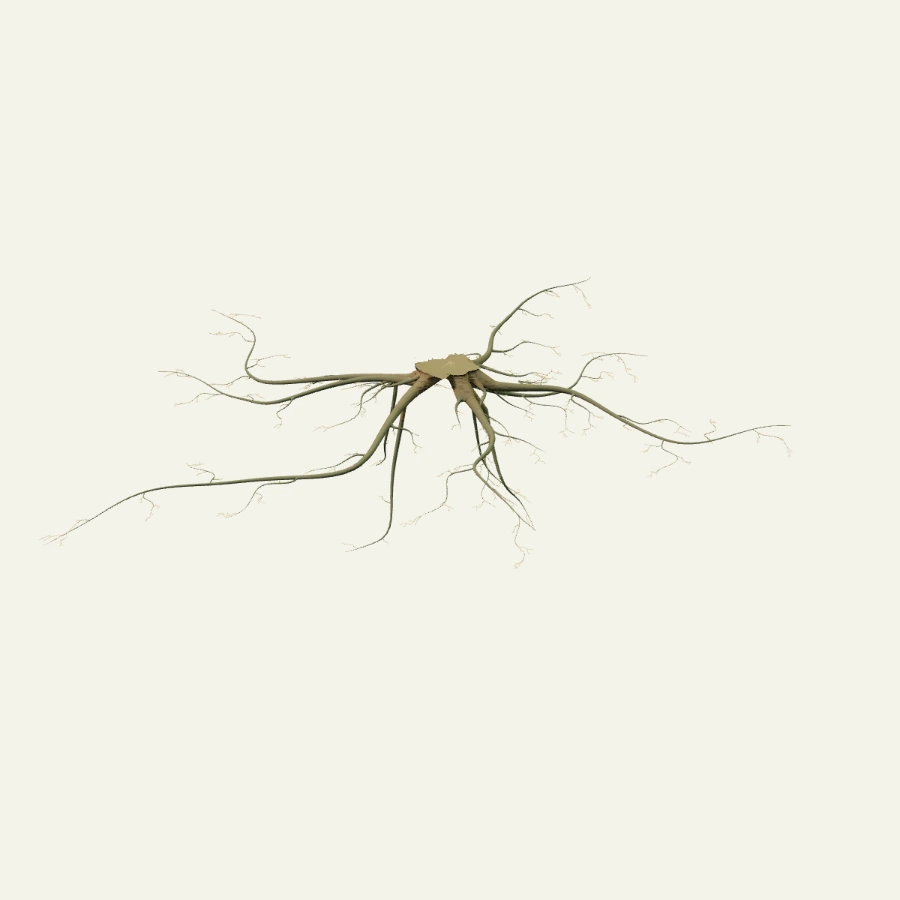
A schematic spreading root framework. The selected source does not quantify root depth or radius.
02 / Seasons
Through the seasons
Four portraits. One plant.
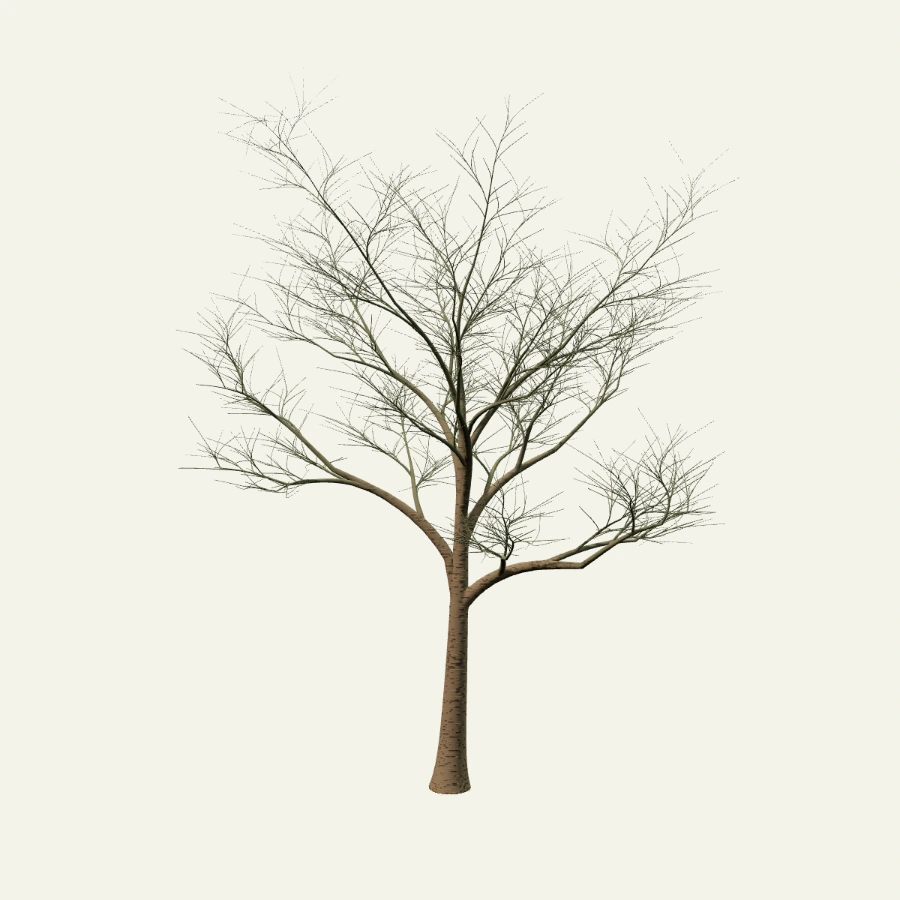
Read the crown, foliage and reproductive structures together. The four views compare seasonal appearances; the reference notes explain what is actually documented.
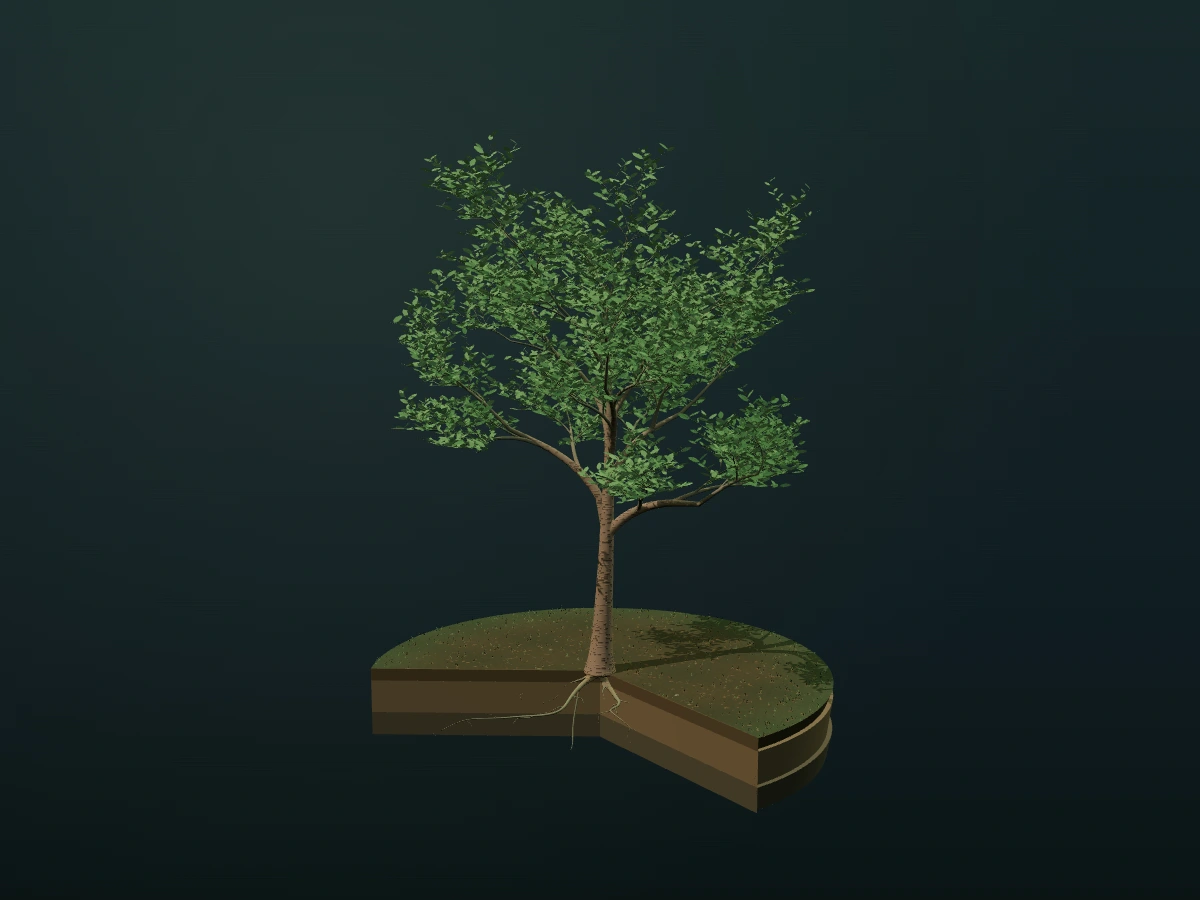
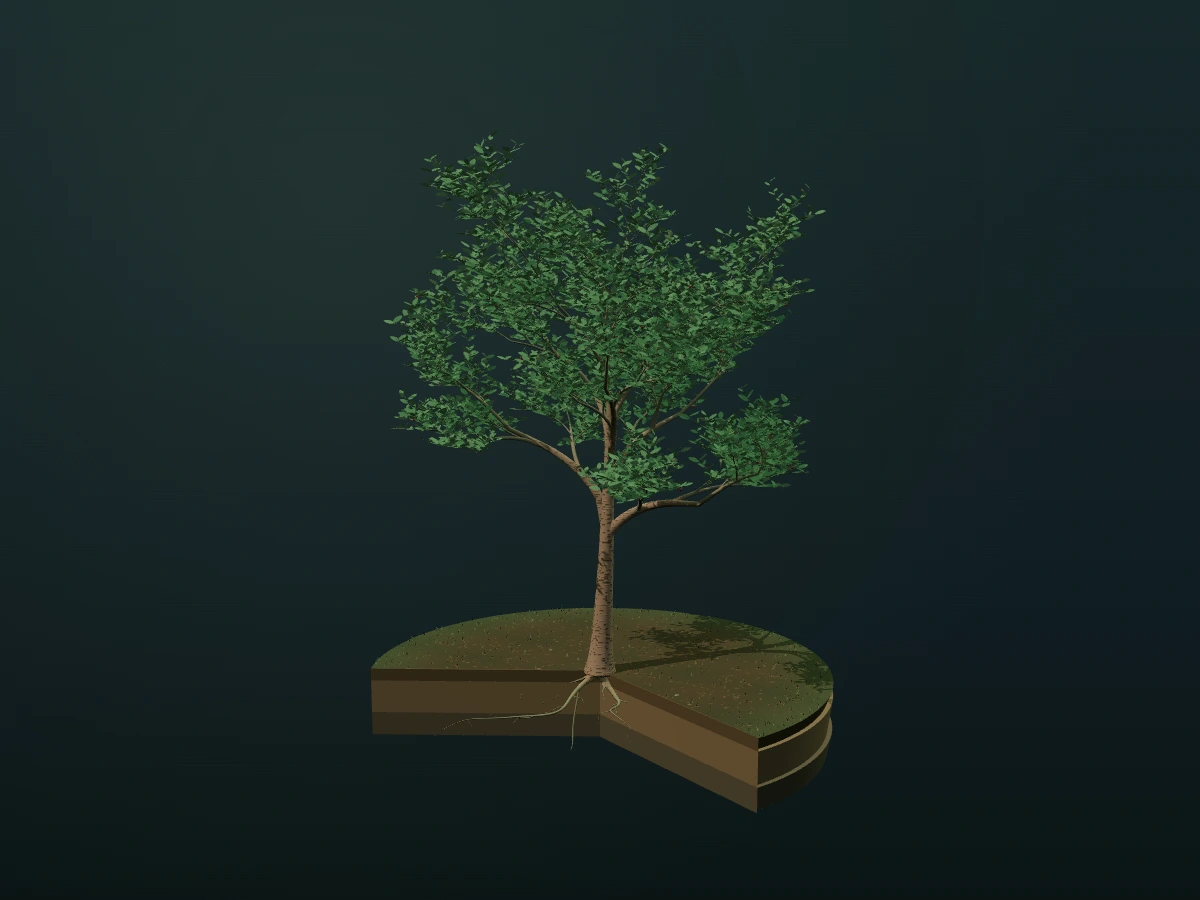
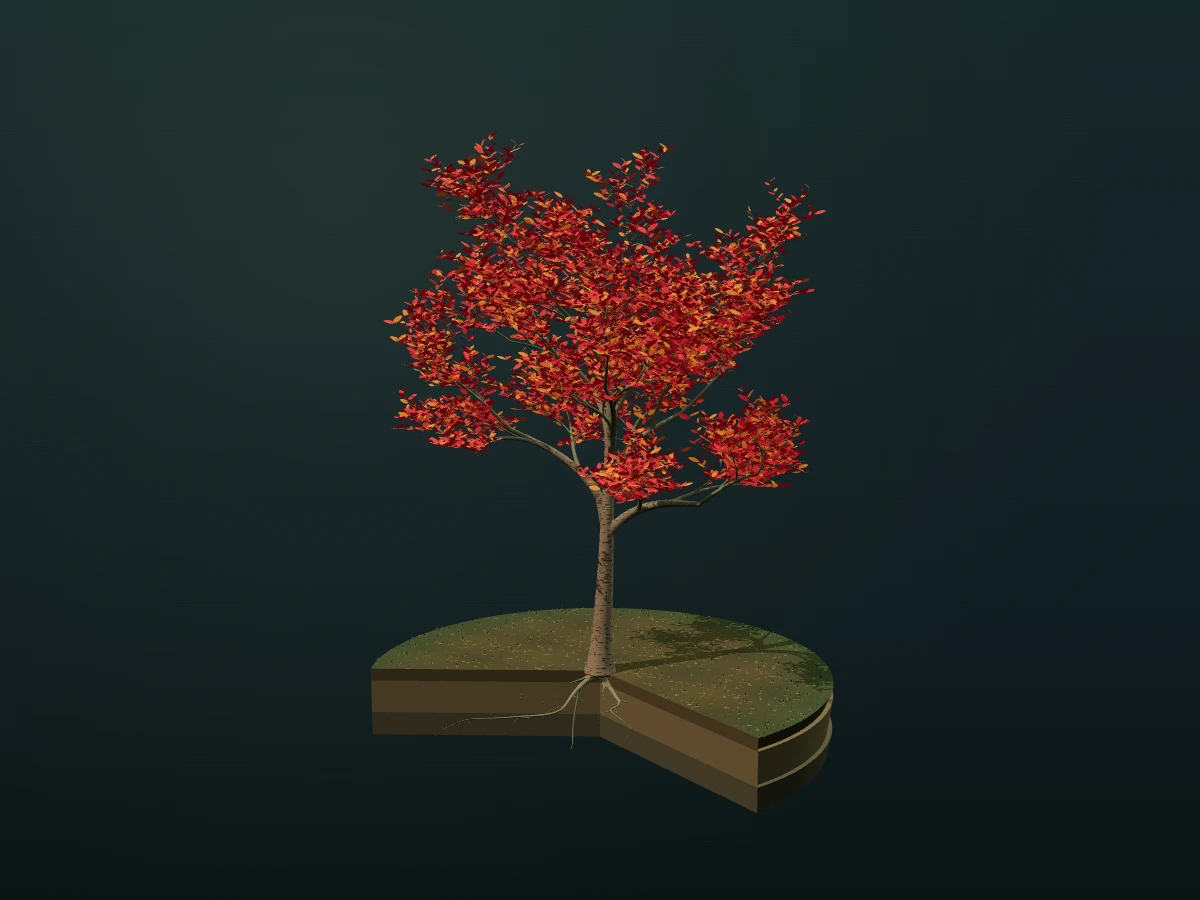
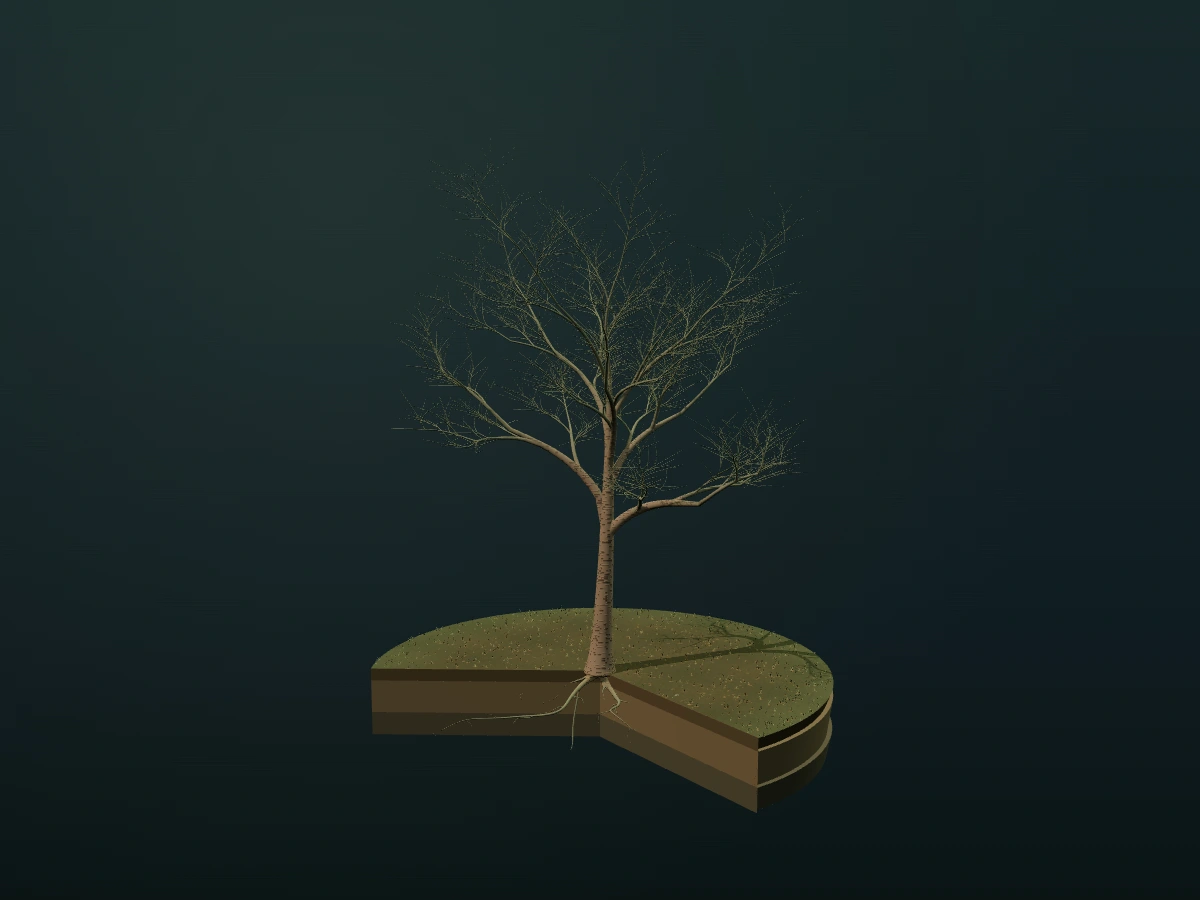
Seasonal illustration; the same plant, age and camera across four views.
Seasonal record
North Carolina botanical account
Leaf renewal
Deciduous[1]
The record describes a deciduous plant: foliage is renewed after a leafless or reduced-leaf phase. The named views illustrate that cycle without fixing its dates at a planting site.
Colour notes
Red / burgundy · Orange[1]
These are recorded colour possibilities. The shades and their distribution are illustrative; a particular autumn can look different.
Reading these views
Season names organize these four views, not a universal calendar. Hemisphere, local climate, cultivar and management can change timing; months are shown only when explicitly recorded.
The views emphasize crown structure. Buds, small flowers, individual retained leaves and fine reproductive changes may be unresolved; model age and fruit count are not production forecasts.
Fruit visibility follows recorded fruiting or persistence seasons; placement, size and abundance remain illustrative.
Seasonal references
- NC State Extension · Prunus pensylvanica ↗plants.ces.ncsu.edu
03 / Leaves & flowers
A closer look at the organs
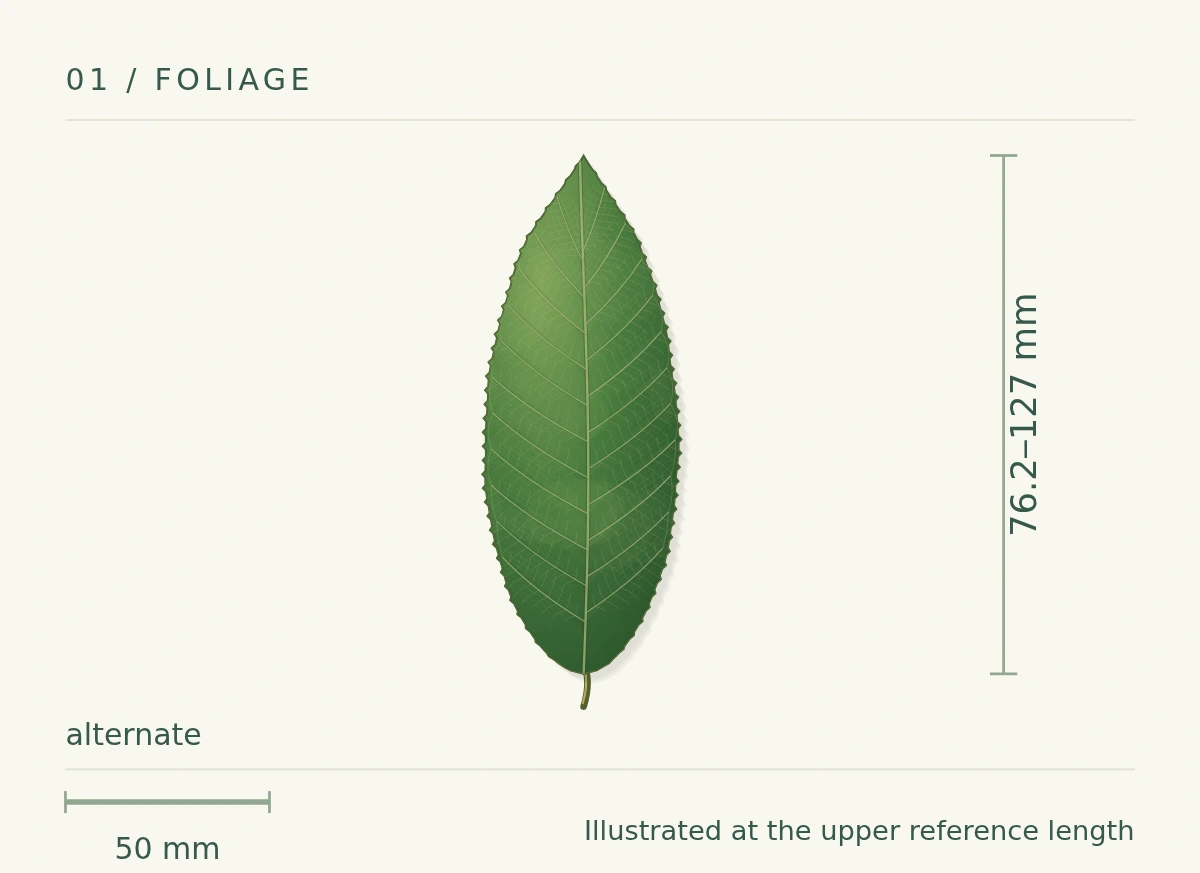
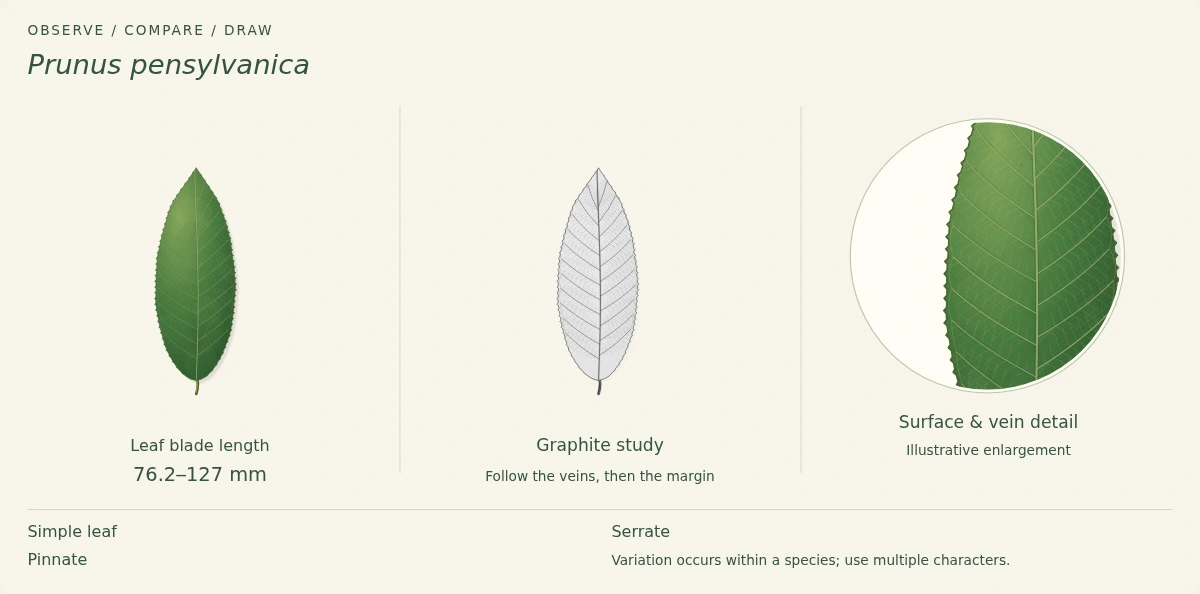
Leaves
- Leaf blade length
- 76.2–127 mmSource notes
Narrow, pointed leaves have fine teeth. Young bark is coppery with conspicuous horizontal lenticels.
Simple leaf · Serrate · Pinnate · alternate
Seasonal notes
Representative autumn colours. Genotype, light and weather change their balance and intensity; phases are illustrative, not calendar dates.
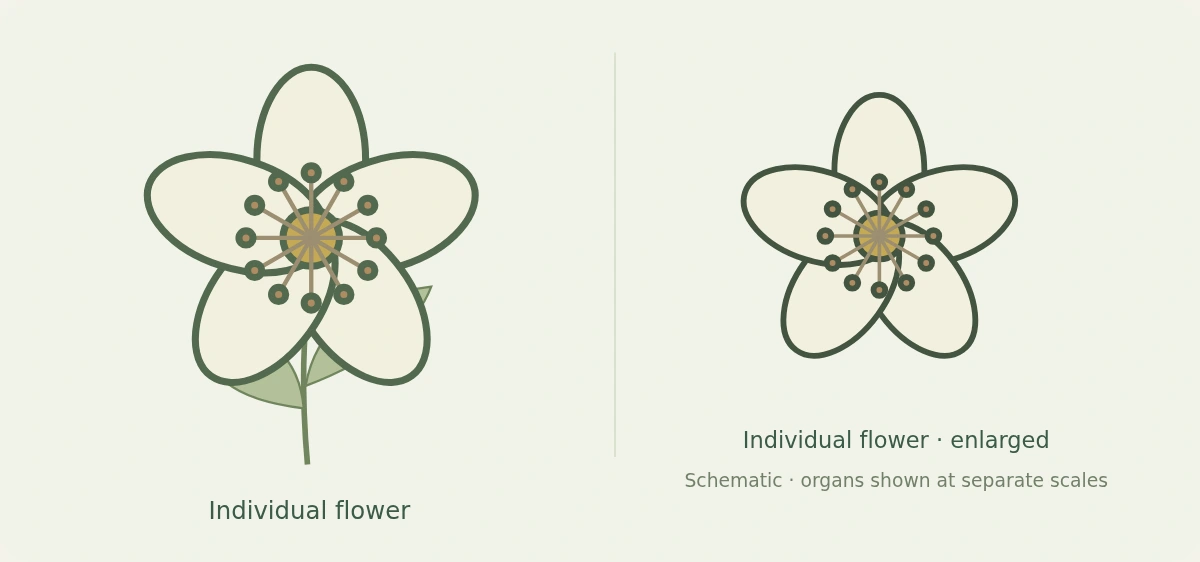
- Flowering reference
- Spring
04 / Fruit & seed
Named structures, separate scales
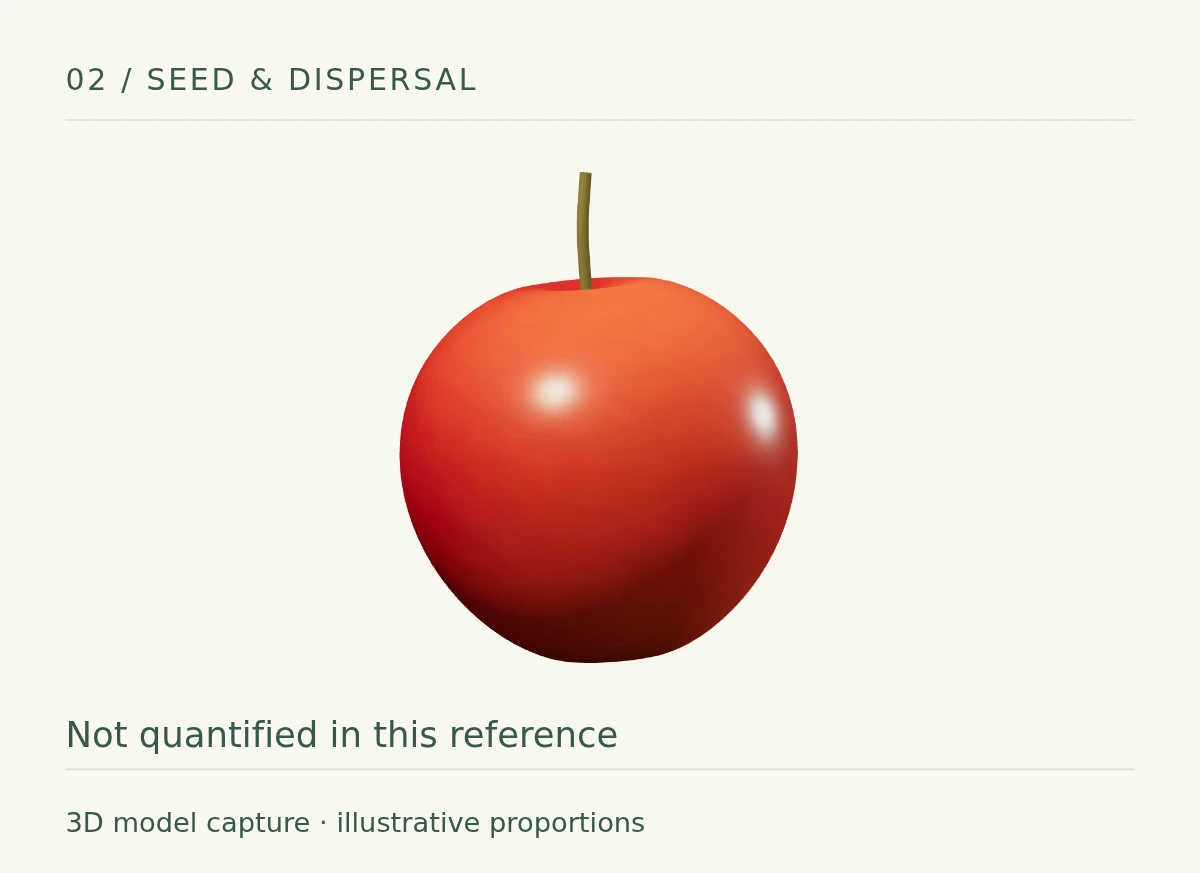
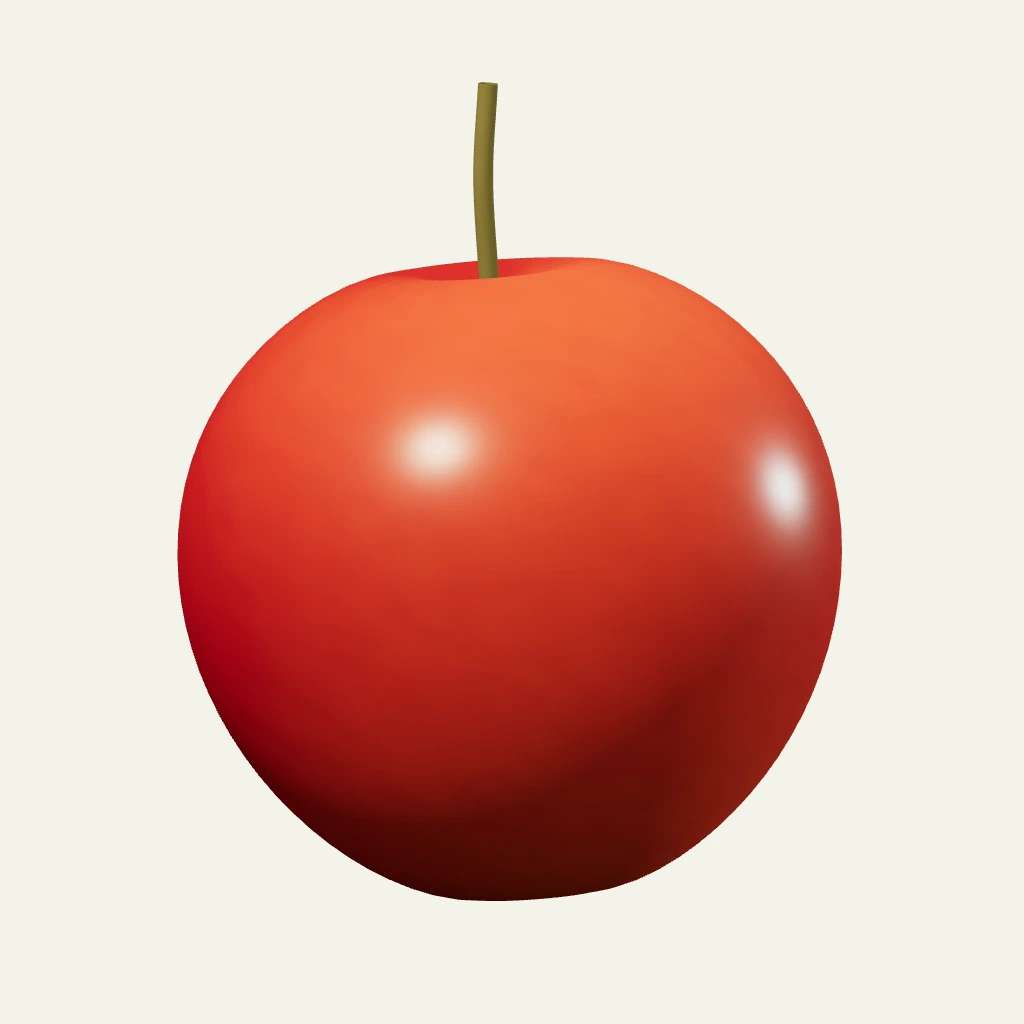
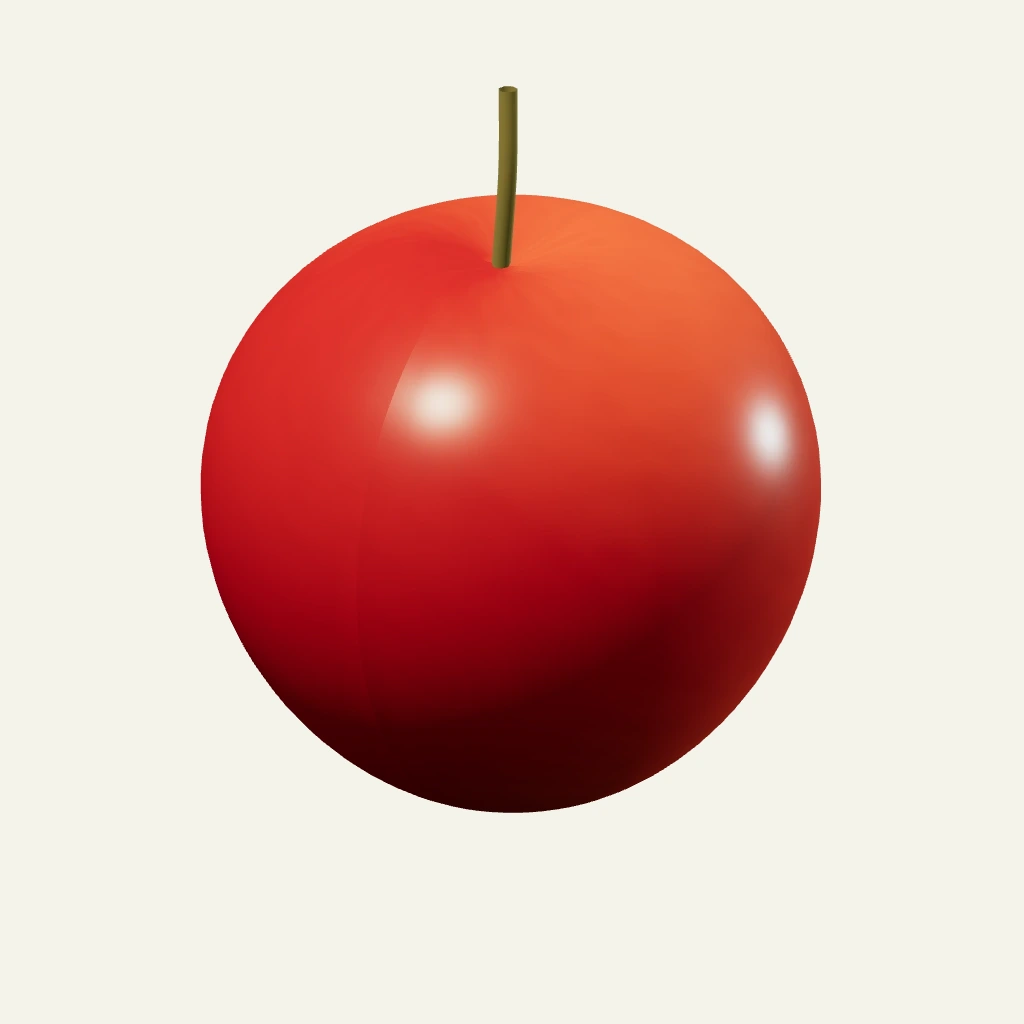
Fruit / dispersal unit
- Whole drupe length
- Not documentedSource notes
Small red drupes develop in clusters; the single hard stone surrounds the seed. The drawing shows the reproductive unit; enclosed seed dimensions are separate.
- Fruiting reference
- Summer · Autumn
North Carolina botanical account
Organs are enlarged independently. Refer to the named measurement, not image size.
05 / Habitat
Native range & growing context
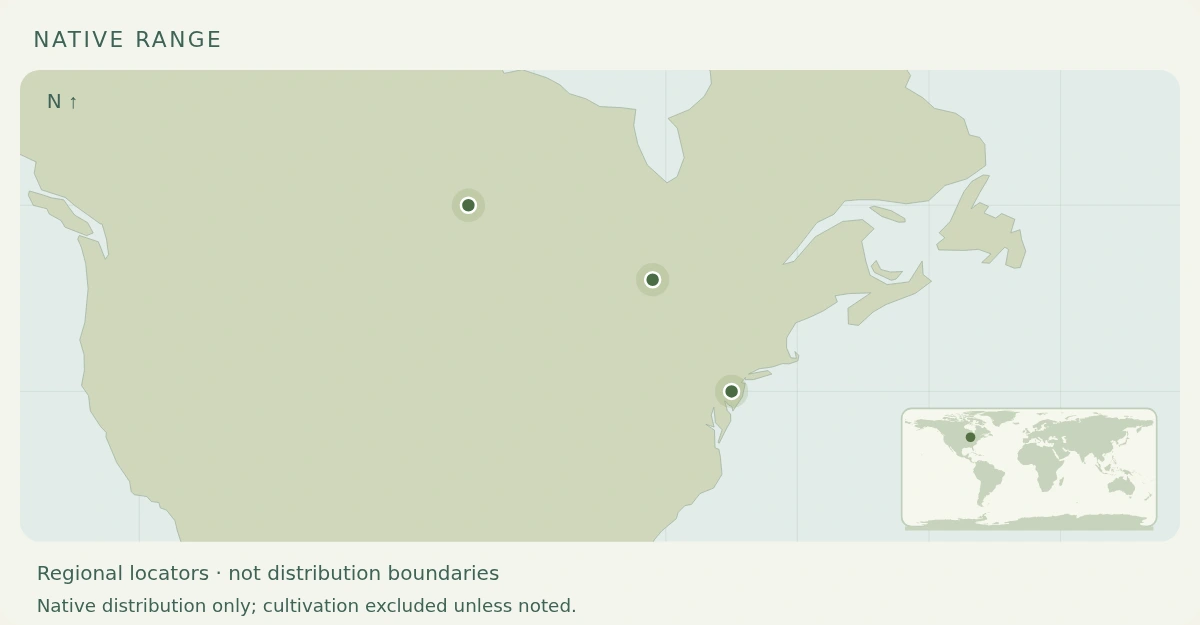
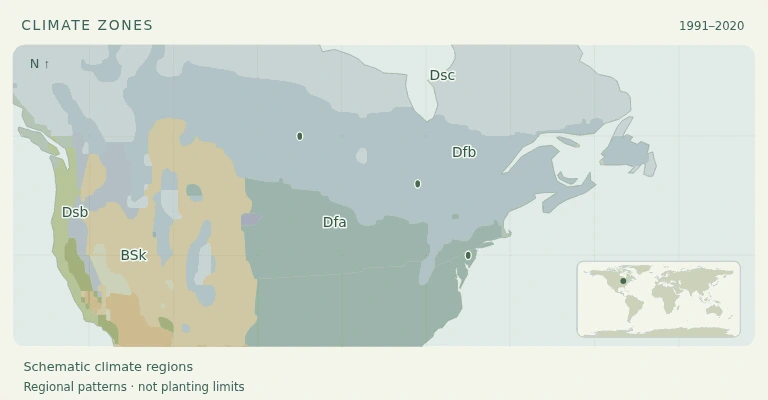
Native range & growing context
United States and Canada
- Reference spread
- Not documented
- Moisture
- drained · Dry · Moist
- Growth tendency
- Rapid
- Life span
- No numerical lifespan is established by this reference. Model age is an illustration parameter.
Regional context, not a measured occurrence or suitability map.
- Frequent Disease Problems
- Frequent Insect Problems
- Messy
- Poisonous to Humans
- Problem for Cats
- Problem for Children
- Problem for Dogs
- Problem for Horses
- Short-lived
06 / Sources & interpretation
Read the evidence behind the illustration
Names & classification
- Family
- Rosaceae
- Genus
- Prunus
- Synonyms
- —
- Narrow, pointed leaves have fine teeth. Young bark is coppery with conspicuous horizontal lenticels.
- Small red drupes develop in clusters; the single hard stone surrounds the seed.
- Propagation methods recorded: Root Cutting · Seed · Stem Cutting.
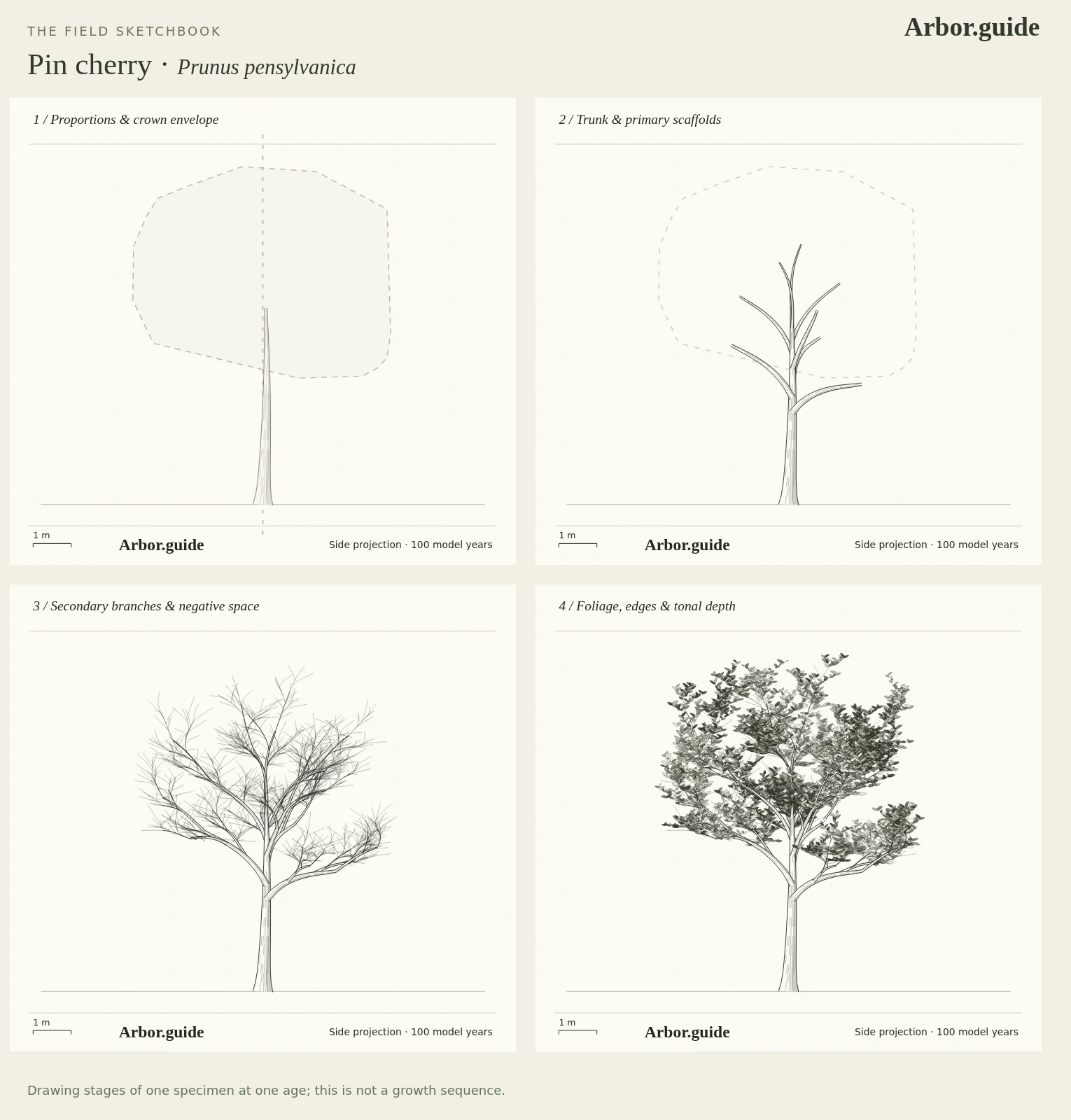
Source-informed teaching reconstruction. Leaf organisation, crown habit and bark follow botanical references. Branch positions, crown width where unmeasured, root extents, colours and model ages are ArborAI. Foliage is enlarged. This is not a surveyed specimen or a calibrated growth or survival forecast.
Source-informed teaching reconstruction. Leaf organisation, crown habit and bark follow botanical references. Branch positions, crown width where unmeasured, root extents, colours and model ages are ArborAI. Foliage is enlarged. This is not a surveyed specimen or a calibrated growth or survival forecast.
- NC State Extension · Prunus pensylvanica ↗plants.ces.ncsu.edu
- GBIF backbone · Prunus pensylvanica ↗www.gbif.org
Plant data and references · 15
| Heightm | [9.144, 9.144]The extension family facet has a spelling error (Roseaceae). Rosaceae follows the exact accepted GBIF taxon and the botanical family spelling.plants.ces.ncsu.edu |
|---|---|
| Spreadm | Not documentedThe extension family facet has a spelling error (Roseaceae). Rosaceae follows the exact accepted GBIF taxon and the botanical family spelling.plants.ces.ncsu.edu |
| Nativerange | United States and CanadaThe extension family facet has a spelling error (Roseaceae). Rosaceae follows the exact accepted GBIF taxon and the botanical family spelling.plants.ces.ncsu.edu |
| Leafhabitcategory | DeciduousThe extension family facet has a spelling error (Roseaceae). Rosaceae follows the exact accepted GBIF taxon and the botanical family spelling.plants.ces.ncsu.edu |
| Botany organs leaf lengthmm | [76.2, 127]The extension family facet has a spelling error (Roseaceae). Rosaceae follows the exact accepted GBIF taxon and the botanical family spelling.plants.ces.ncsu.edu |
| Botany organs seed lengthmm | Not documentedThe extension family facet has a spelling error (Roseaceae). Rosaceae follows the exact accepted GBIF taxon and the botanical family spelling.plants.ces.ncsu.edu |
| Botany shoot arrangementcategory | alternateThe extension family facet has a spelling error (Roseaceae). Rosaceae follows the exact accepted GBIF taxon and the botanical family spelling.plants.ces.ncsu.edu |
| Architecture leaves | Narrow, pointed leaves have fine teeth. Young bark is coppery with conspicuous horizontal lenticels.The extension family facet has a spelling error (Roseaceae). Rosaceae follows the exact accepted GBIF taxon and the botanical family spelling.plants.ces.ncsu.edu |
| Architecture reproduction | Small red drupes develop in clusters; the single hard stone surrounds the seed.The extension family facet has a spelling error (Roseaceae). Rosaceae follows the exact accepted GBIF taxon and the botanical family spelling.plants.ces.ncsu.edu |
| Lightcategory | ["sun"]The extension family facet has a spelling error (Roseaceae). Rosaceae follows the exact accepted GBIF taxon and the botanical family spelling.plants.ces.ncsu.edu |
| Moisturecategory | ["drained", "dry", "moist"]The extension family facet has a spelling error (Roseaceae). Rosaceae follows the exact accepted GBIF taxon and the botanical family spelling.plants.ces.ncsu.edu |
| Hardinesscategory | {"system": "USDA", "zones": [3, 7], "source": "ncsu"}The extension family facet has a spelling error (Roseaceae). Rosaceae follows the exact accepted GBIF taxon and the botanical family spelling.plants.ces.ncsu.edu |
| Taxonomy familycategory | RosaceaeThe extension family facet has a spelling error (Roseaceae). Rosaceae follows the exact accepted GBIF taxon and the botanical family spelling.www.gbif.org |
| Reference phenologycategory | {"flowering": {"seasons": ["spring"]}, "fruiting": {"seasons": ["summer", "autumn"]}, "reference": "North Carolina botanical account", "source": "https://plants.ces.ncsu.edu/plants/prunus-pensylvanica/", "reviewed": "2026-10-16"}Regional observations. Fruit display may include persistence and is not automatically ripening. Missing dates remain unspecified. Independent botanical review remains pending.plants.ces.ncsu.edu |
| Autumn colour familiescategory | ["Red/Burgundy", "Orange"]Species-level colour descriptions. Cultivar, provenance, exposure and weather affect expression. RGB values and their dominance in the model are illustrative.plants.ces.ncsu.edu |