Botanical field guide
Pinus pumila
Pinus pumila
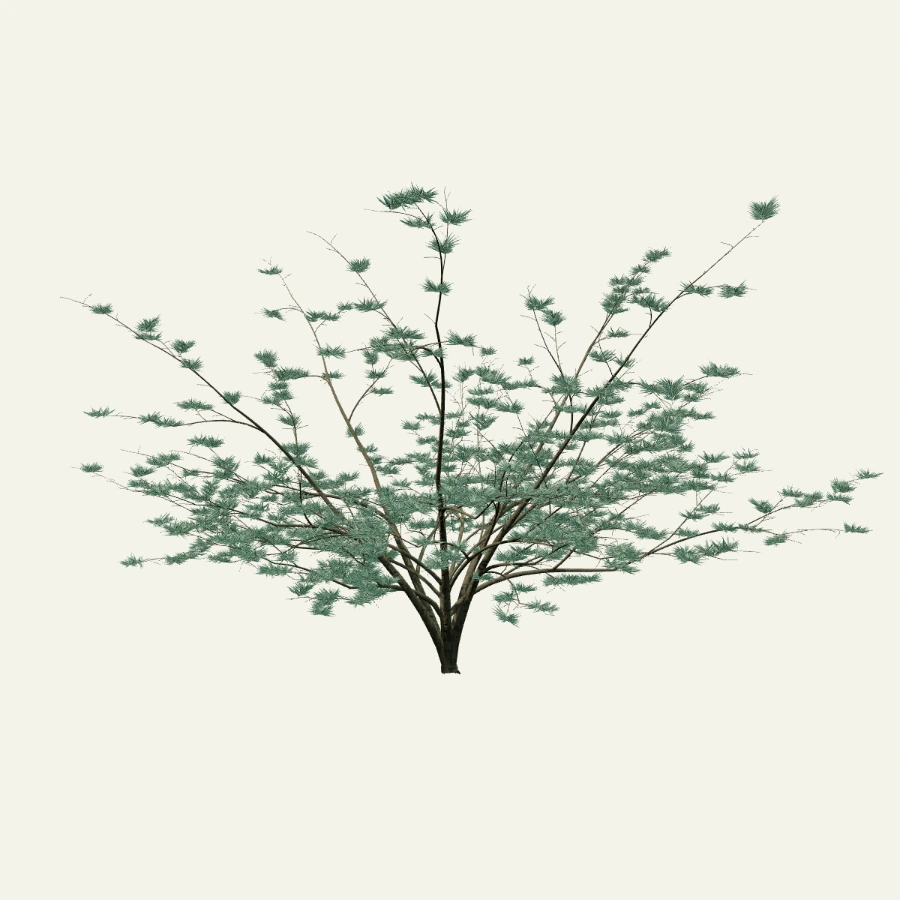
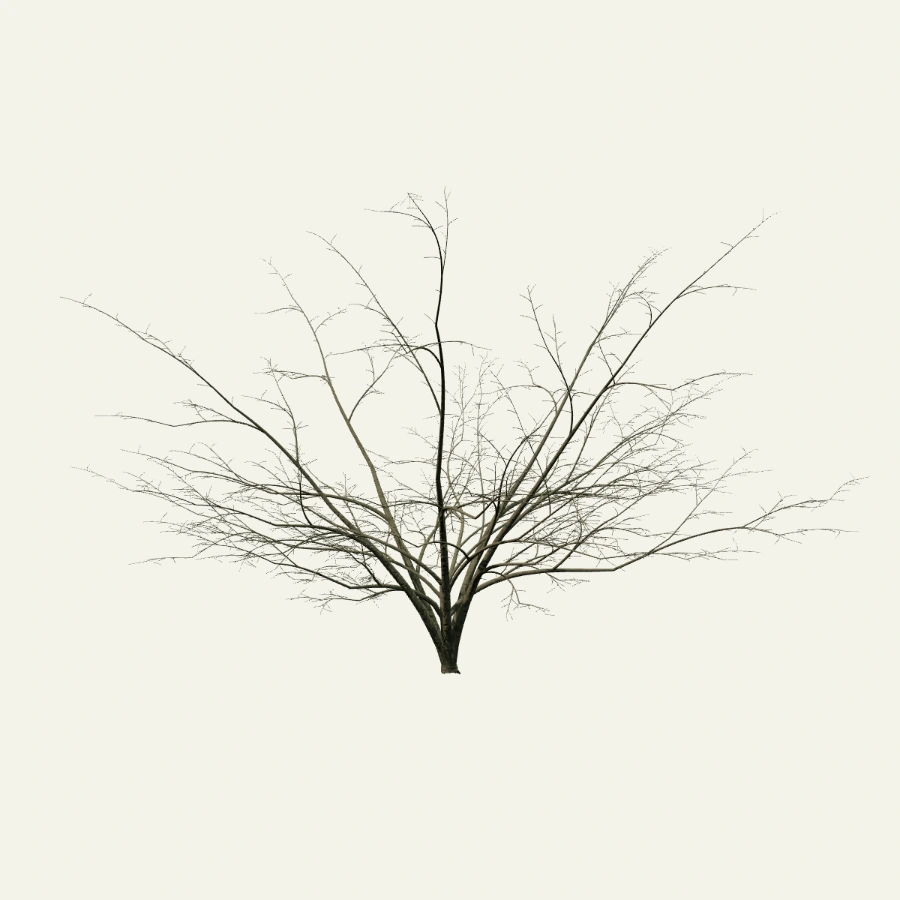
Tree / Pinaceae
The plant, in detail
Forms thickets on mountains in northeastern Asia.
- Reference height
- 0.3–2.7 m
- Foliage habit
- Evergreen
- USDA zones
- 4–7
- Light
- Full sun
Garden dimensions from Missouri Botanical Garden. Wild plants can be taller.
Crown
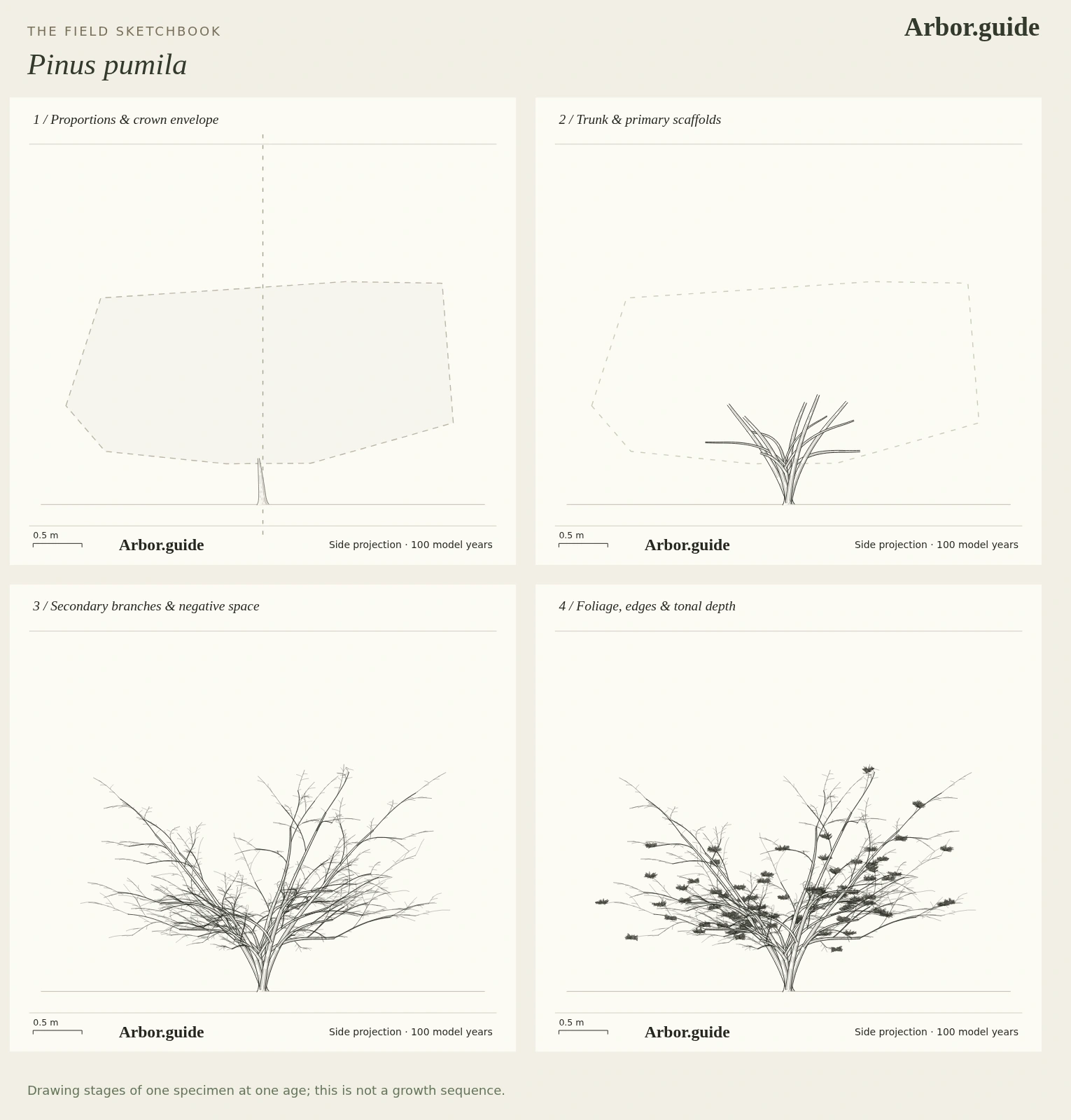
Low, often creeping stems spread into a broad shrubby crown.
Branching
Low, often creeping stems spread into a broad shrubby crown.
Bark
The grey-brown bark flakes from the stems.
Roots
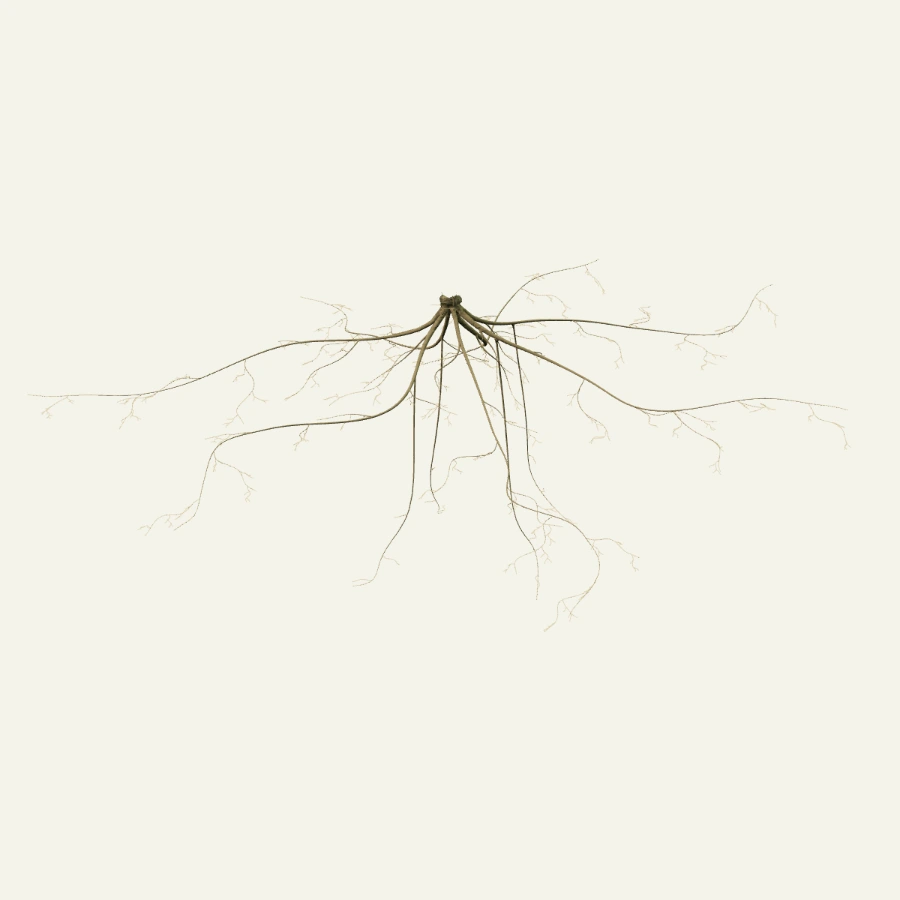
The model shows a spreading root framework. The cited accounts give no measured root depth or radius.
02 / Seasons
Through the seasons
Four portraits. One plant.
Read the crown, foliage and reproductive structures together. The four views compare seasonal appearances; the reference notes explain what is actually documented.
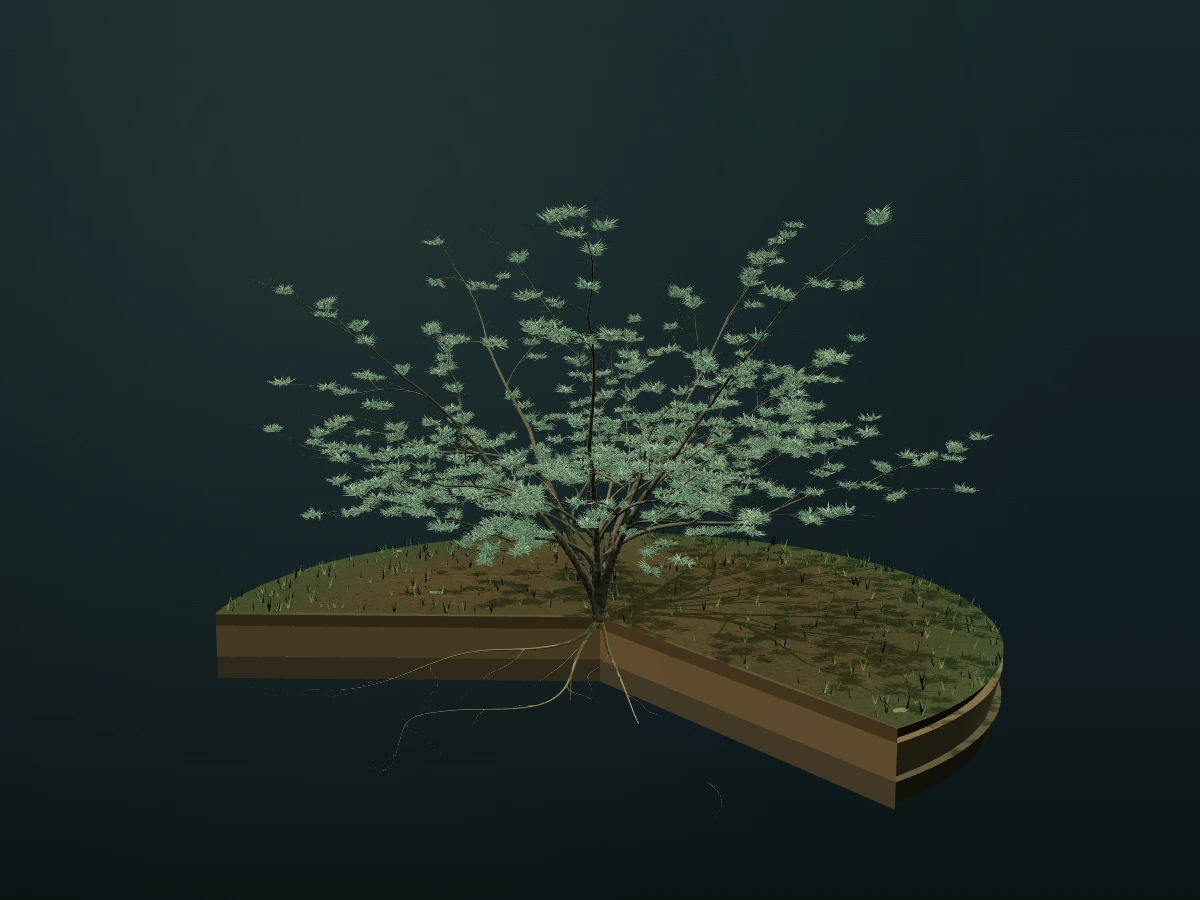
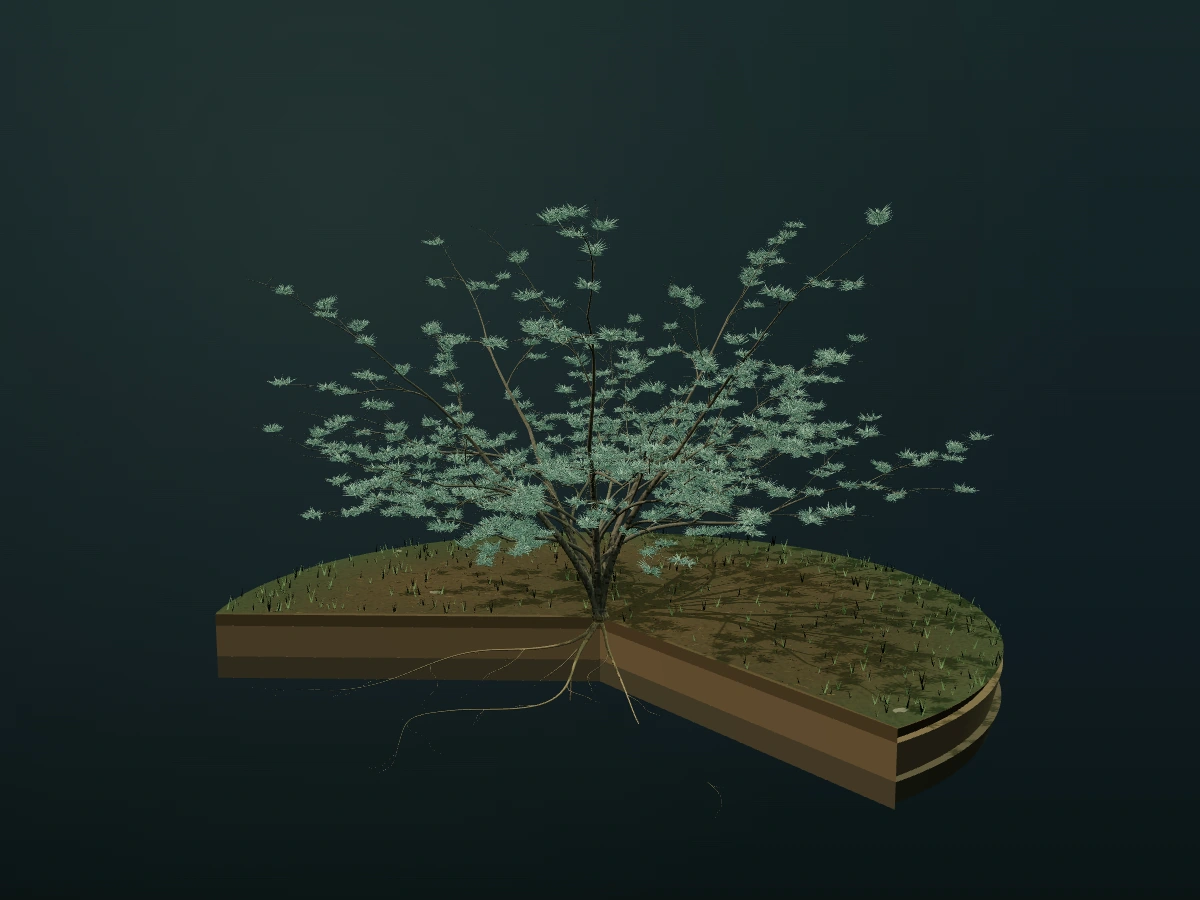
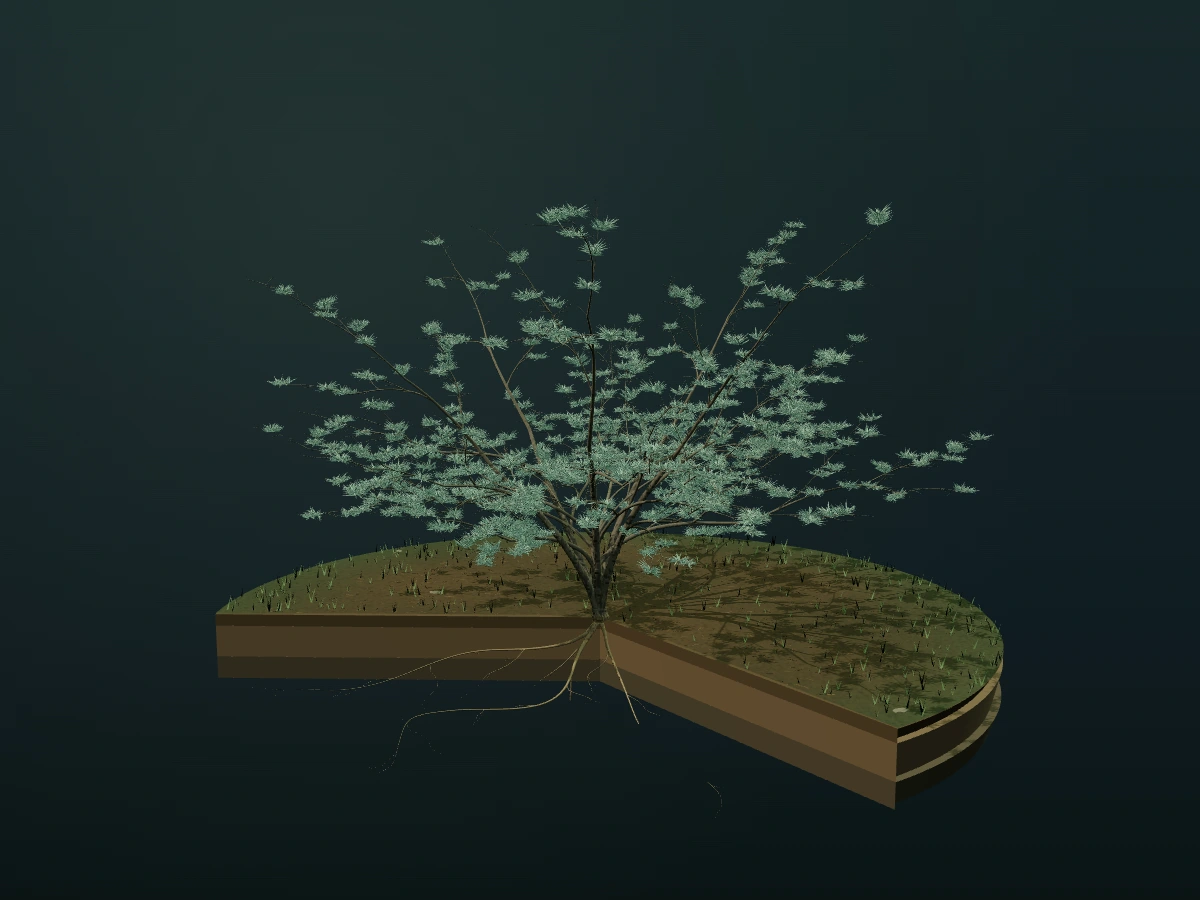
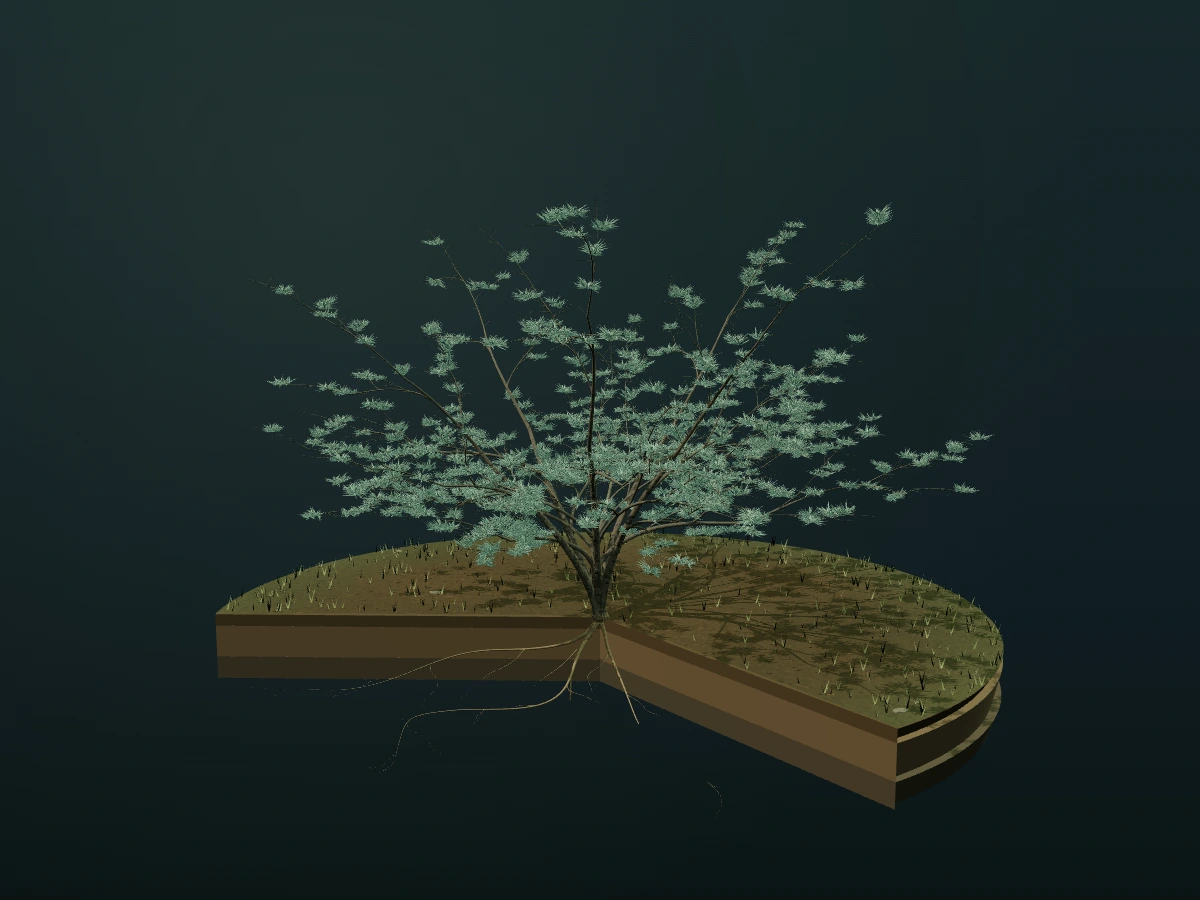
Seasonal illustration; the same plant, age and camera across four views.
Seasonal record
Reference region not specified in this record.
- Flowering
- This is a gymnosperm. Seeds and/or cones are its reproductive structures; they are not flowers or botanical fruits.[2]
- Seed / cone development
- Timing not documented
Leaf renewal
Evergreen[1]
A green canopy can persist while individual leaves age and are replaced. Evergreen does not mean that every leaf lasts indefinitely or that flowering and fruiting are continuous.
Reading these views
Season names organize these four views, not a universal calendar. Hemisphere, local climate, cultivar and management can change timing; months are shown only when explicitly recorded.
The views emphasize crown structure. Buds, small flowers, individual retained leaves and fine reproductive changes may be unresolved; model age and fruit count are not production forecasts.
No separate on-tree fruit display is configured for this record.
Seasonal references
- Oregon State University · Pinus pumila ↗landscapeplants.oregonstate.edu
- Flora of China · Pinus pumila ↗www.efloras.org
03 / Foliage
A closer look at the organs
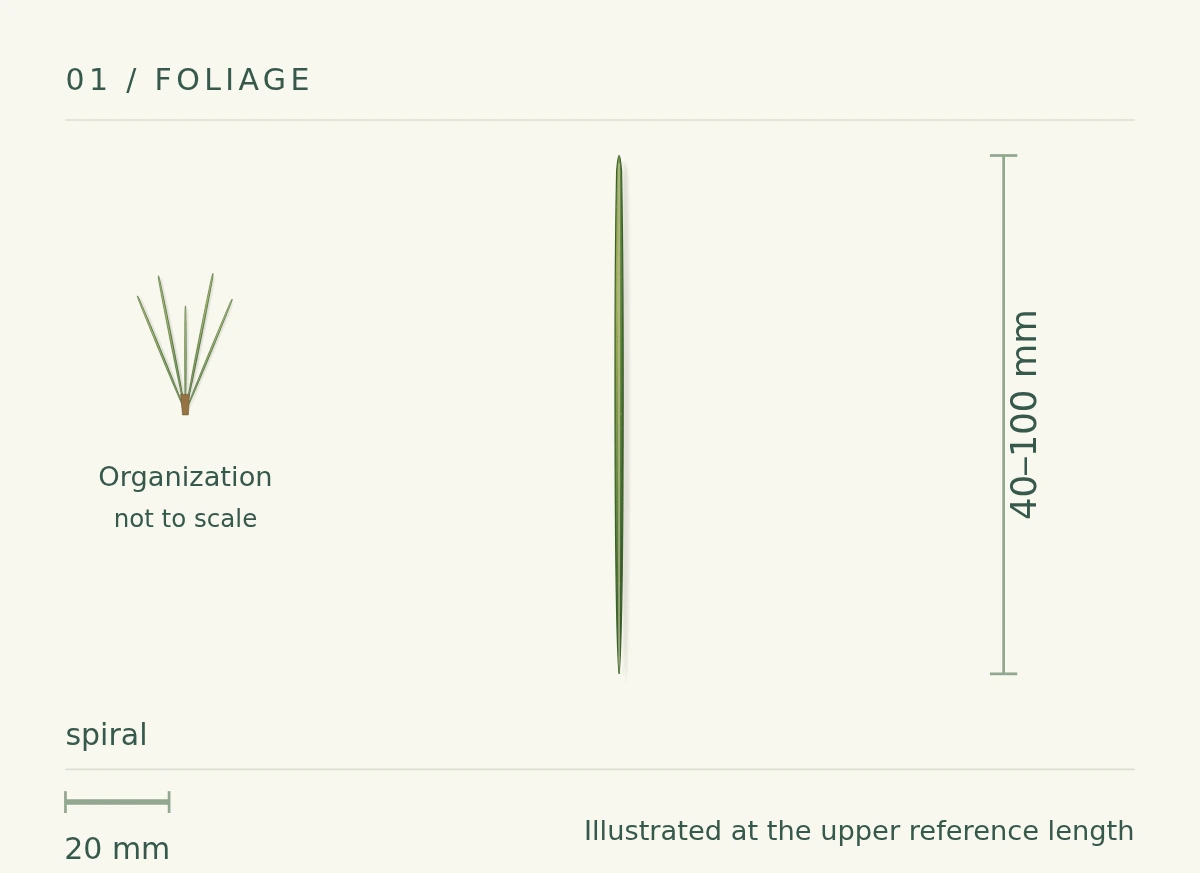
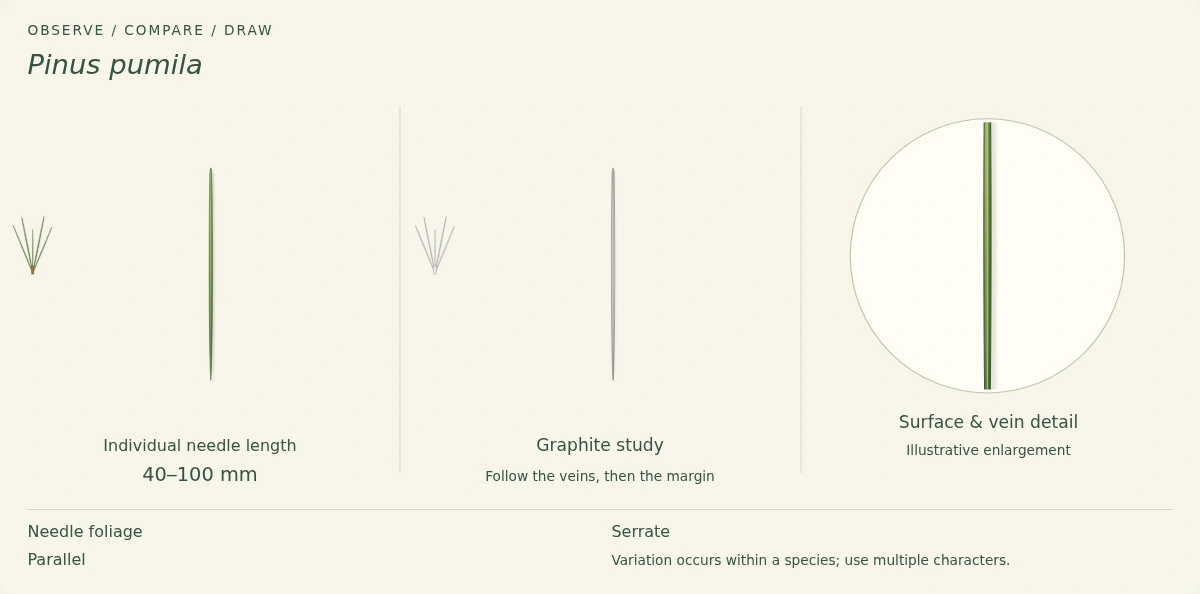
Leaves
- Individual needle length
- 40–100 mmSource notes
Bundles of five blue-green needles crowd the branches. Needles are usually 4–7 cm long and occasionally reach 10 cm.
Needle foliage · Serrate · Parallel · spiral
Seasonal notes
The crown retains several cohorts of needles over winter.
04 / Fruit & seed
Named structures, separate scales
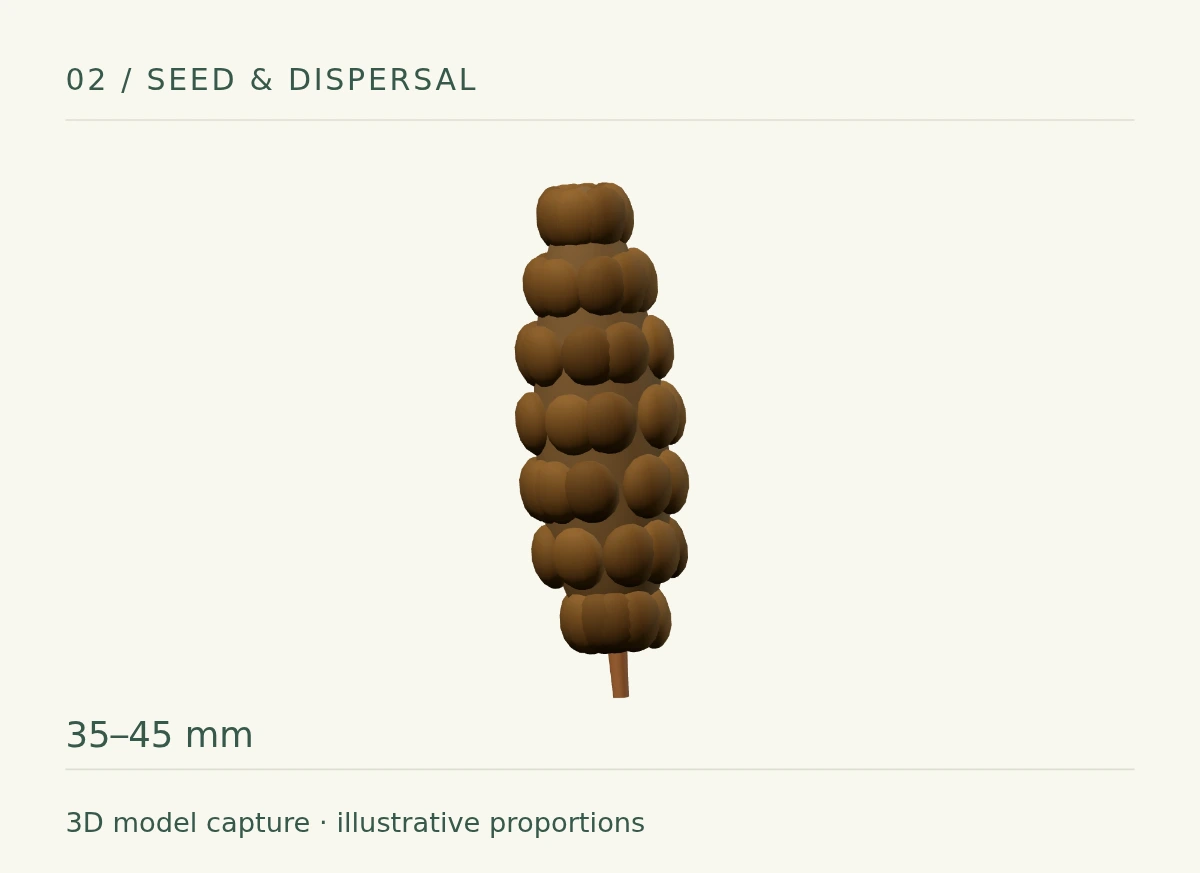
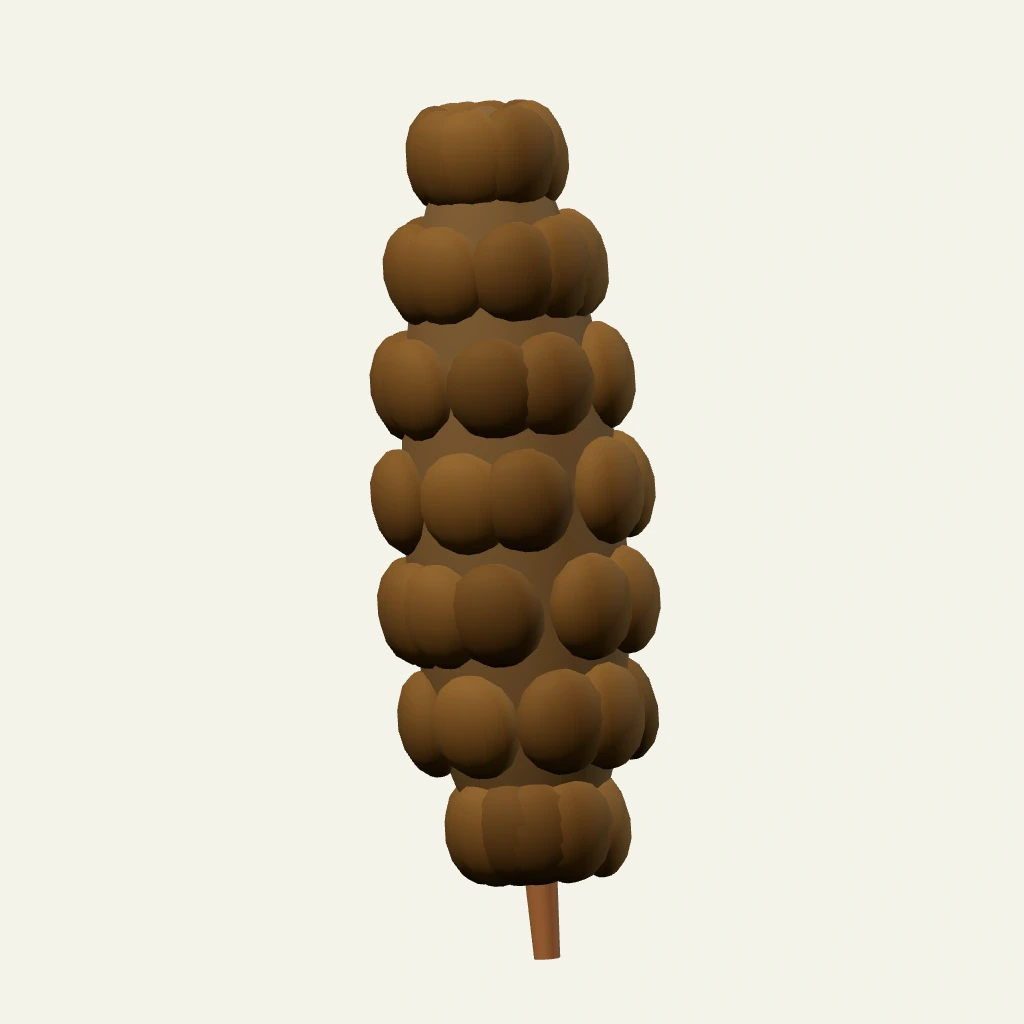
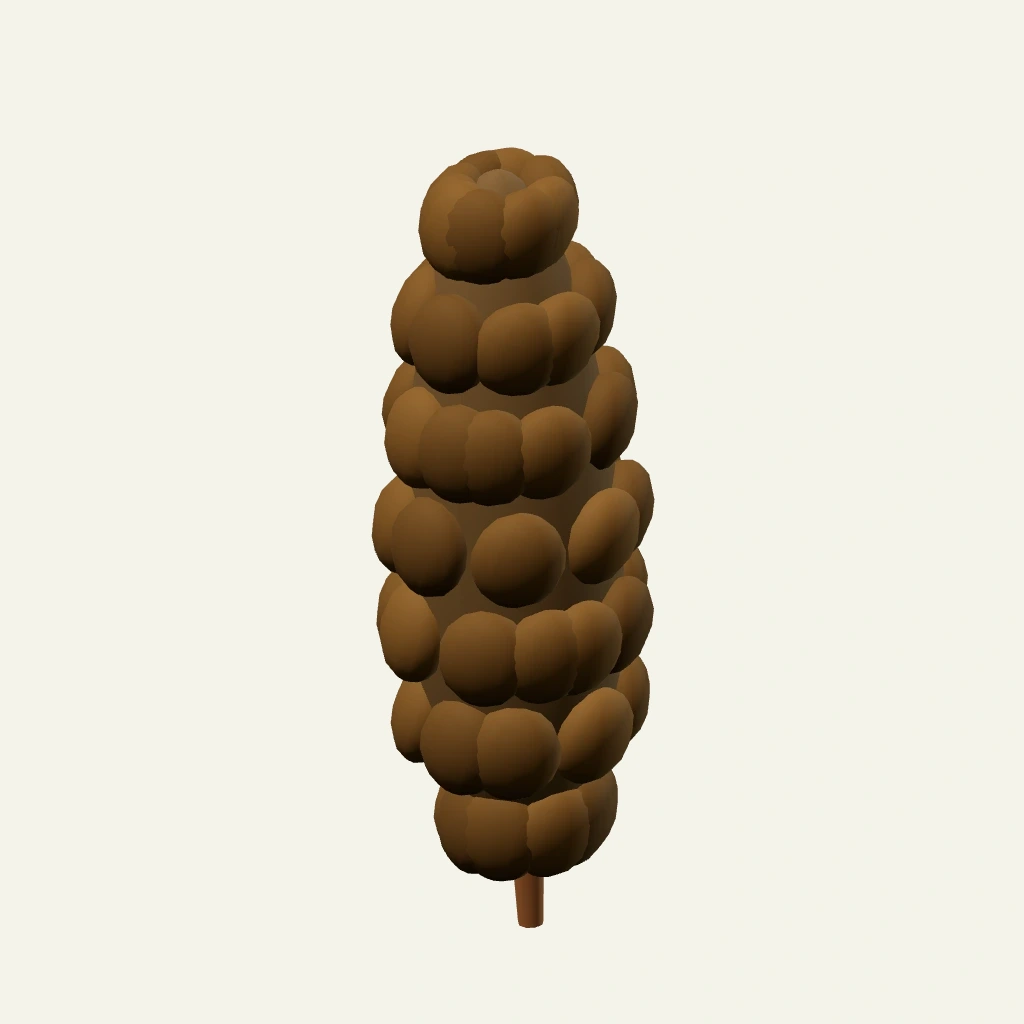
Seed cone
- Seed cone length
- 35–45 mmSource notes
Small seed cones gather near the shoot tips. Their violet colour turns brown as they ripen.
- Fruiting reference
- Not documented
Organs are enlarged independently. Refer to the named measurement, not image size.
05 / Habitat
Native range & growing context
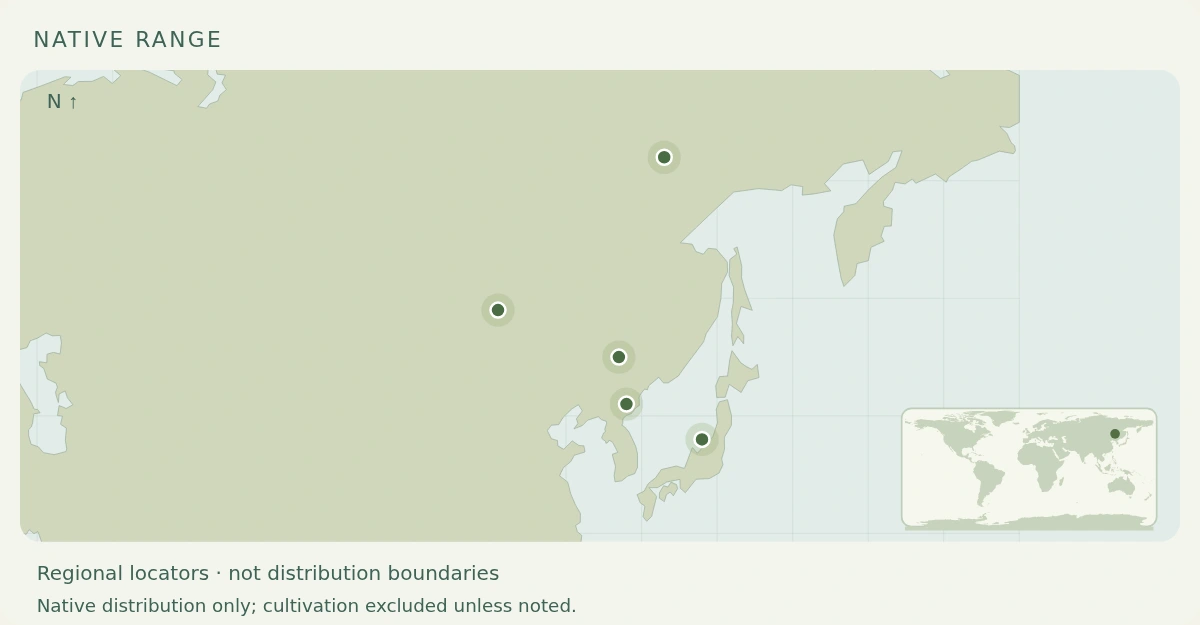
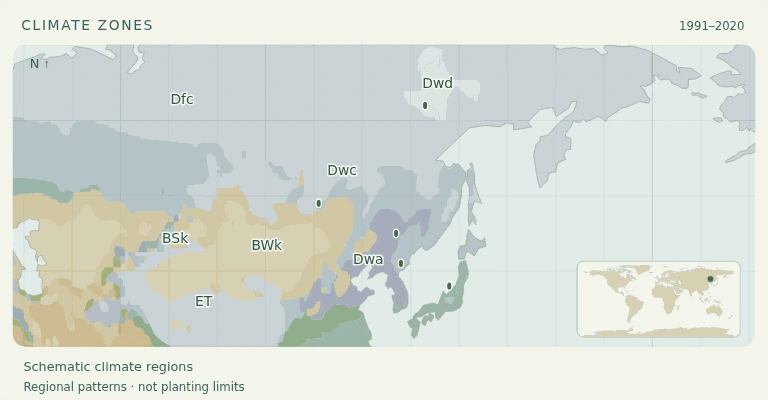
Native range & growing context
Northern and eastern Asia, including northern Mongolia, northeastern China, Korea and Japan.
- Reference spread
- 0.61–3.7 m
- Moisture
- Moist · Well-drained
- Growth tendency
- The sources give no annual growth series.
- Life span
- A lifespan range is undocumented.
Regional context, not a measured occurrence or suitability map.
06 / Sources & interpretation
Read the evidence behind the illustration
Names & classification
- Family
- Pinaceae
- Genus
- Pinus
- Synonyms
- Pinus cembra var. pumila
- Bundles of five blue-green needles crowd the branches. Needles are usually 4–7 cm long and occasionally reach 10 cm.
- Small seed cones gather near the shoot tips. Their violet colour turns brown as they ripen.
Model ages, branch positions, root paths and colours are illustrative.
Model ages, branch positions, root paths and colours are illustrative.
- Flora of China · Pinus pumila ↗www.efloras.org
- Oregon State University · Pinus pumila ↗landscapeplants.oregonstate.edu
- Missouri Botanical Garden · Pinus pumila ↗plantfinder.mobot.org
Plant data and references · 9
| Scientificname | Pinus pumilaTaxonomic identity of the named plant.www.efloras.org |
|---|---|
| Heightm | [0.3048, 2.7432]Garden dimensions from Missouri Botanical Garden. Wild plants can be taller.plantfinder.mobot.org |
| Spreadm | [0.6096, 3.6576]Garden dimensions from Missouri Botanical Garden. Wild plants can be taller.plantfinder.mobot.org |
| Habitat | Forms thickets on mountains in northeastern Asia.Forms thickets on mountains in northeastern Asia.www.efloras.org |
| Nativerange | Northern and eastern Asia, including northern Mongolia, northeastern China, Korea and Japan.Northern and eastern Asia, including northern Mongolia, northeastern China, Korea and Japan.www.efloras.org |
| Hardinesscategory | {"system": "USDA", "zones": [4, 7], "source": "missouri", "basis": "reported-range"}The cited source describes winter cold tolerance.plantfinder.mobot.org |
| Botany organs leaf lengthmm | [40, 100]Length of one needle.landscapeplants.oregonstate.edu |
| Botany organs seed lengthmm | [35, 45]Length of a complete seed cone.landscapeplants.oregonstate.edu |
| Architecture bark | The grey-brown bark flakes from the stems.The grey-brown bark flakes from the stems.www.efloras.org |