Botanical field guide
Pinus ponderosa
Ponderosa pine
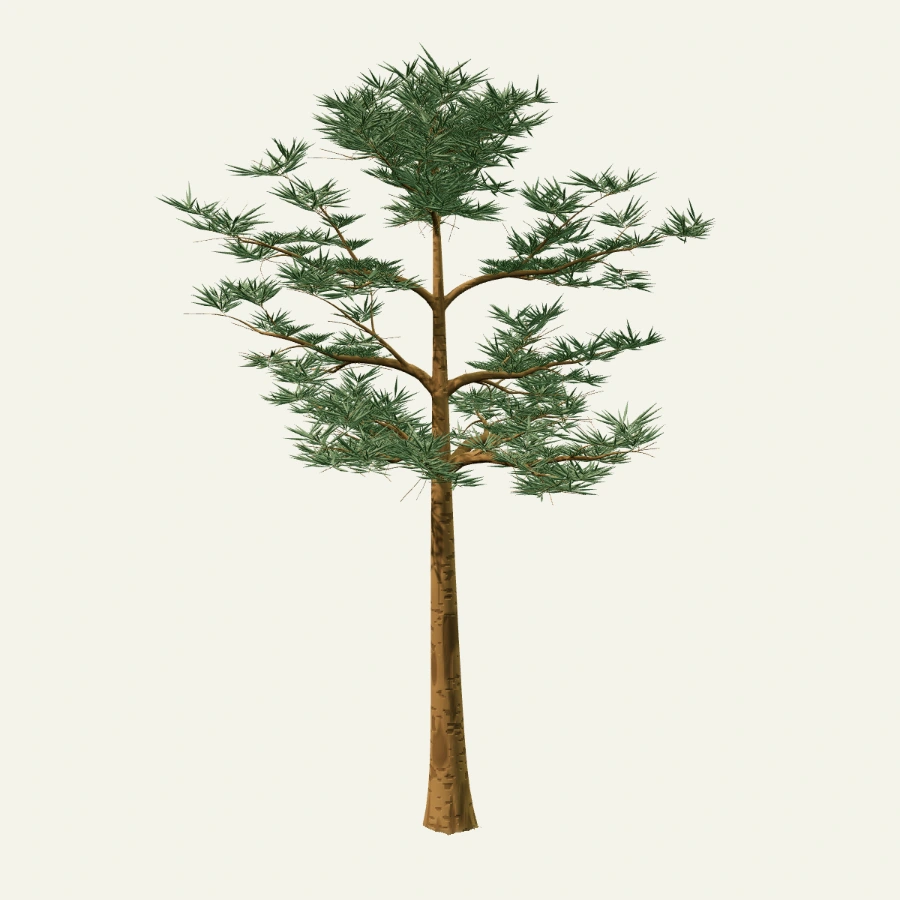
Tree / Pinaceae
The plant, in detail
Sunny, well-drained western forests; established trees tolerate drought.
- Reference height
- 18–38 m
- Foliage habit
- Evergreen
- USDA zones
- 3–7
- Light
- Not documented
Approximate stature from the cited account; equal bounds indicate a reported upper or approximate height, not a measured population interval. Cultivation and forest conditions differ.
Crown
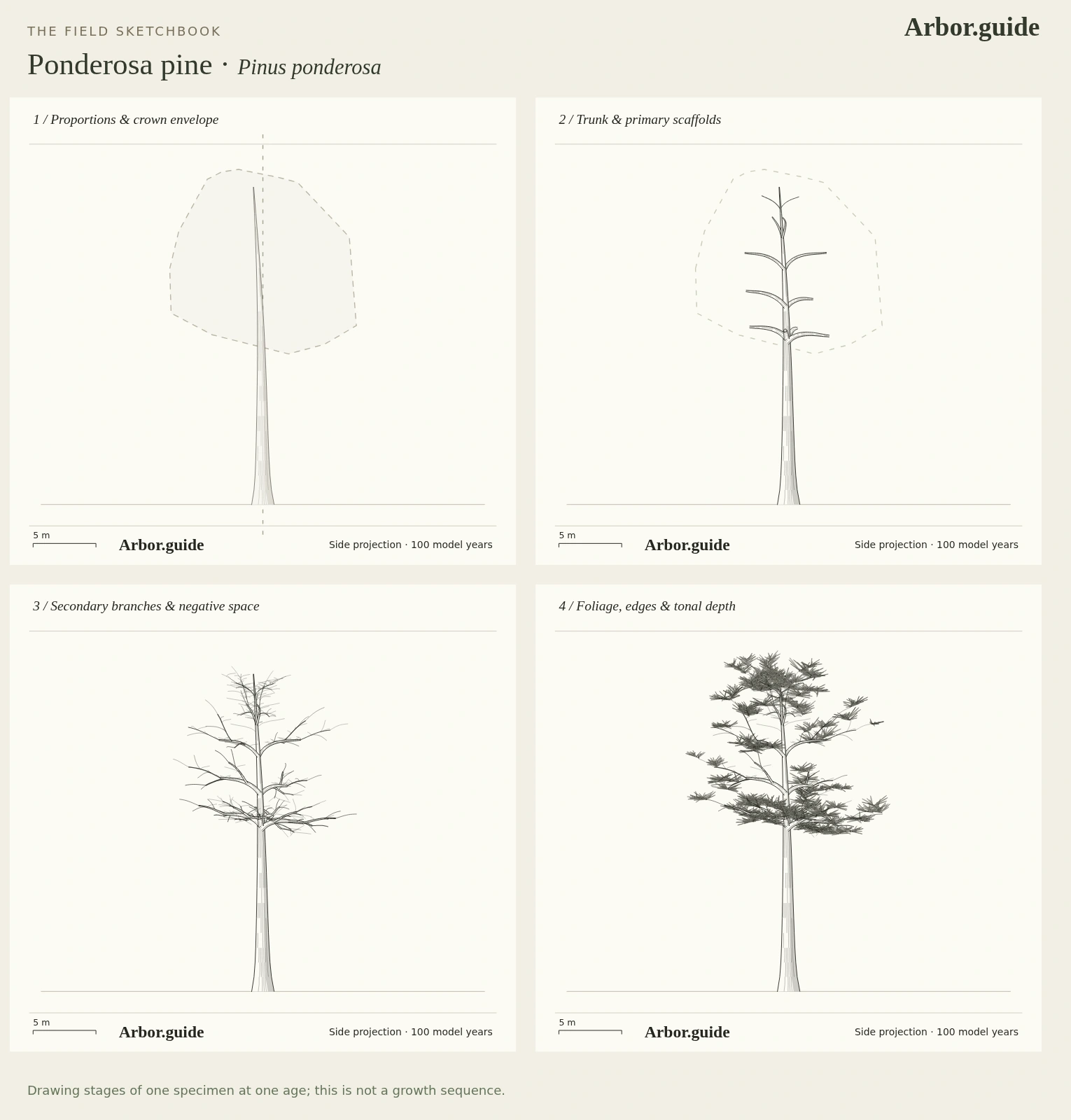
Narrow pyramidal youth develops an irregular, relatively open mature crown.
Branching
Long needles occur in fascicles of three, sometimes two, depending on population and shoot.
Bark
Mature cinnamon-orange bark forms large plates divided by dark fissures.
Roots
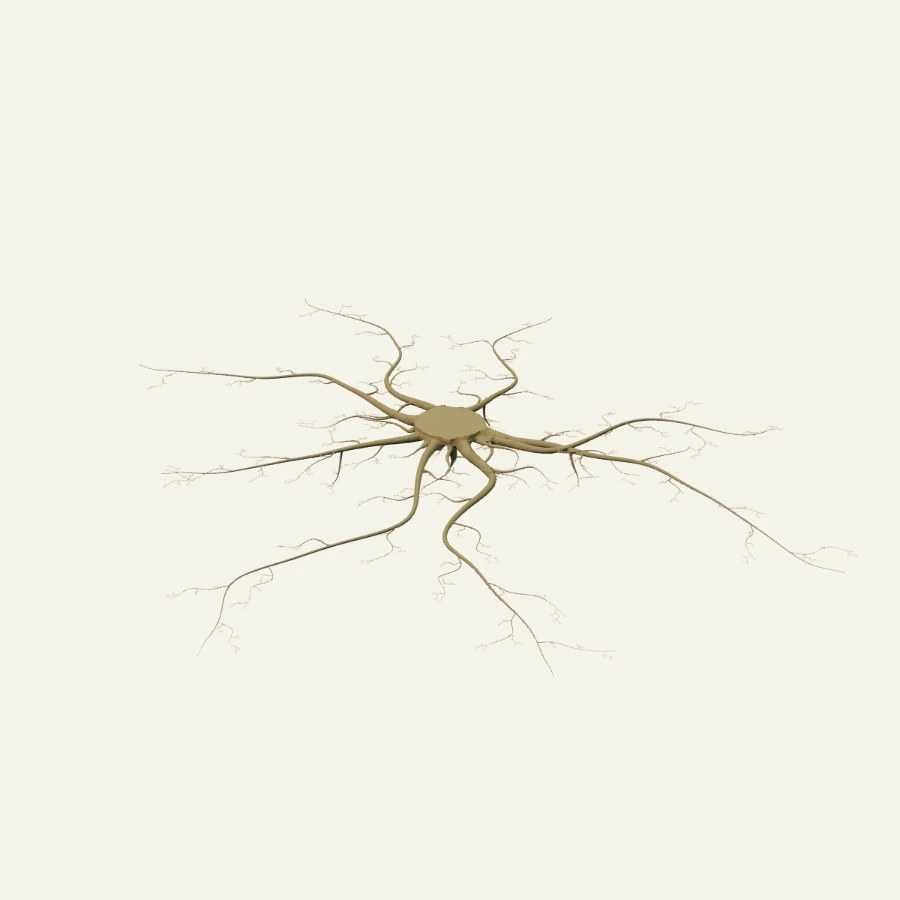
A primary taproot is described, but soil restrictions and water availability alter mature architecture. The root drawing is an ArborAI soil scenario: curved structural laterals and descending axes, not a measured species root map. Depth depends on soil, water table, establishment and damage; fine absorptive roots are unresolved.
The shape of growth
Stylized real-world examples
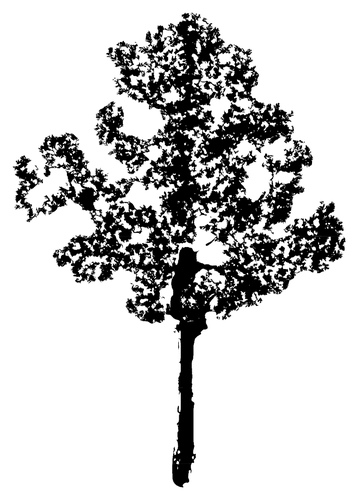
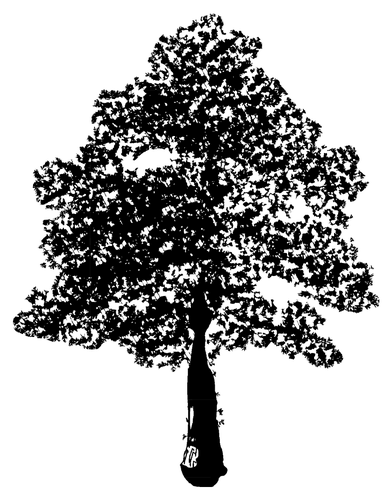
Silhouettes are sized independently.
02 / Seasons
Through the seasons
Four portraits. One plant.
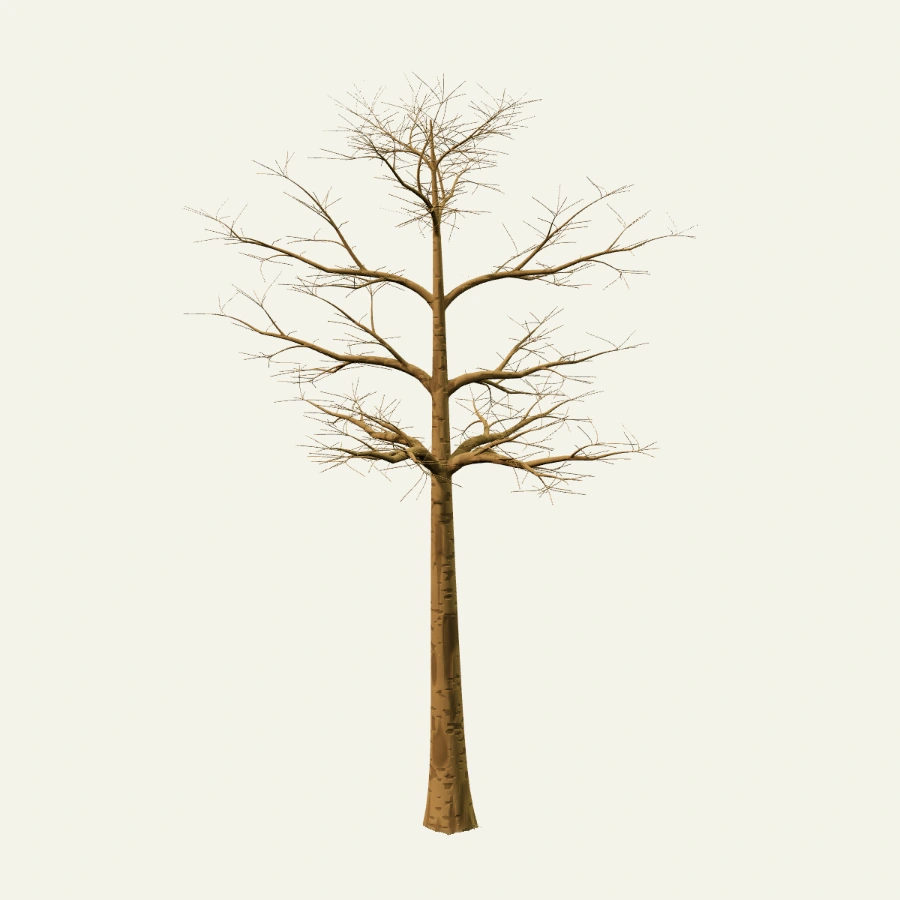
Read the crown, foliage and reproductive structures together. The four views compare seasonal appearances; the reference notes explain what is actually documented.
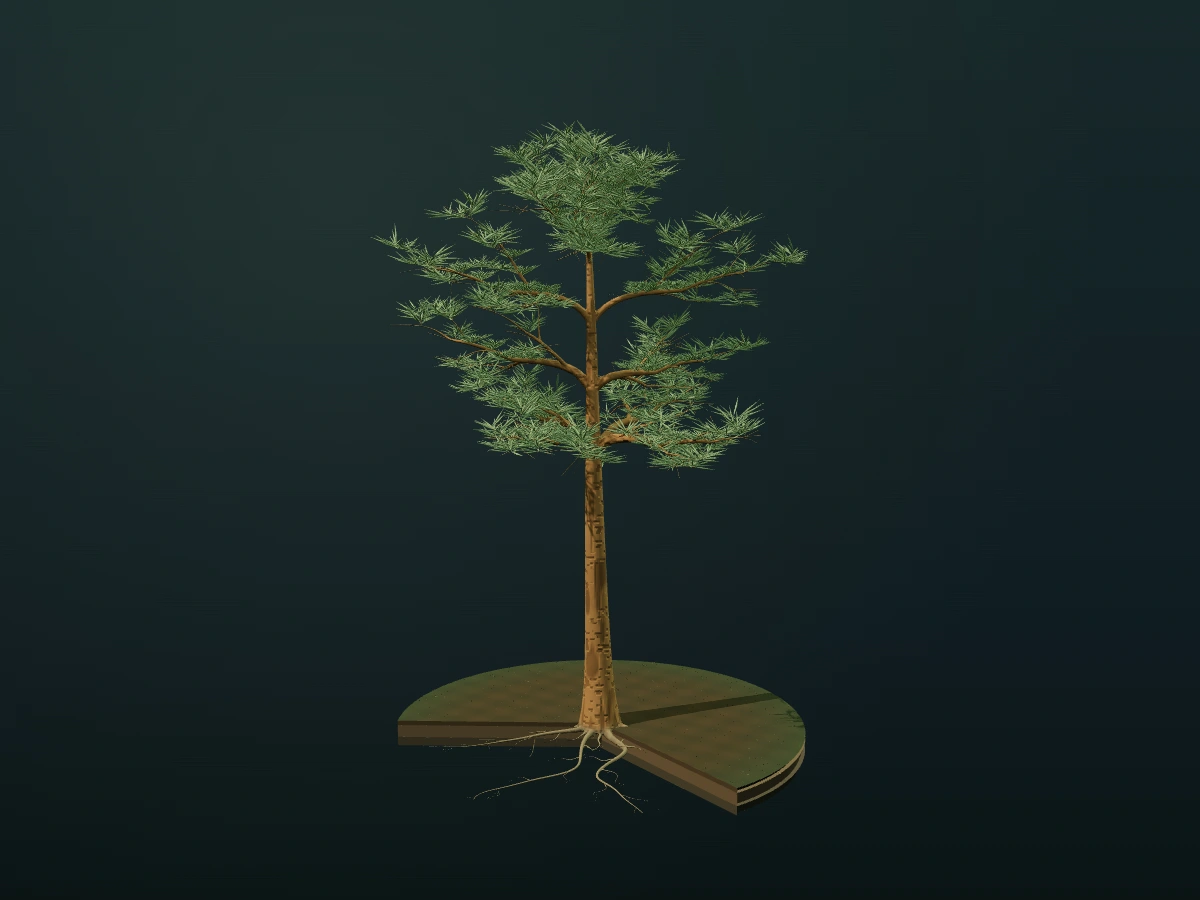
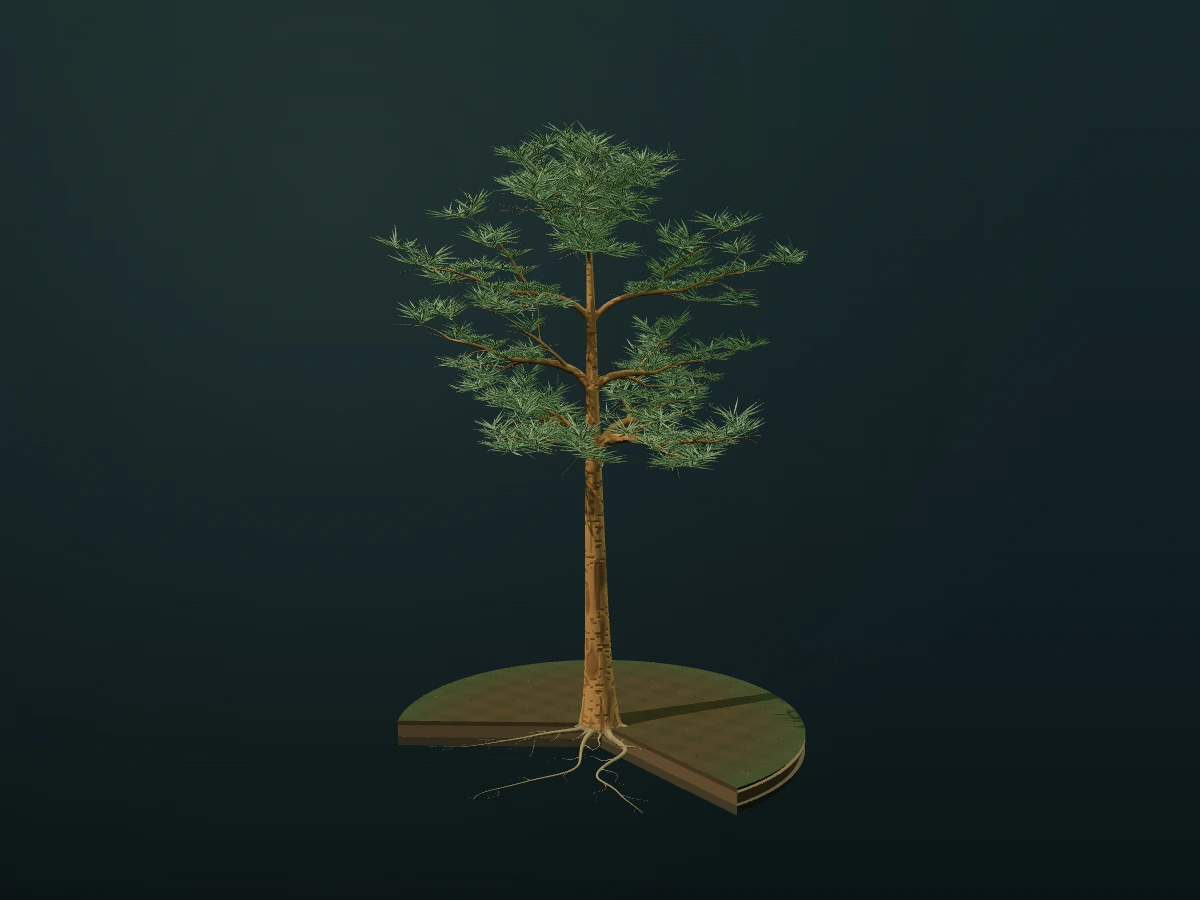
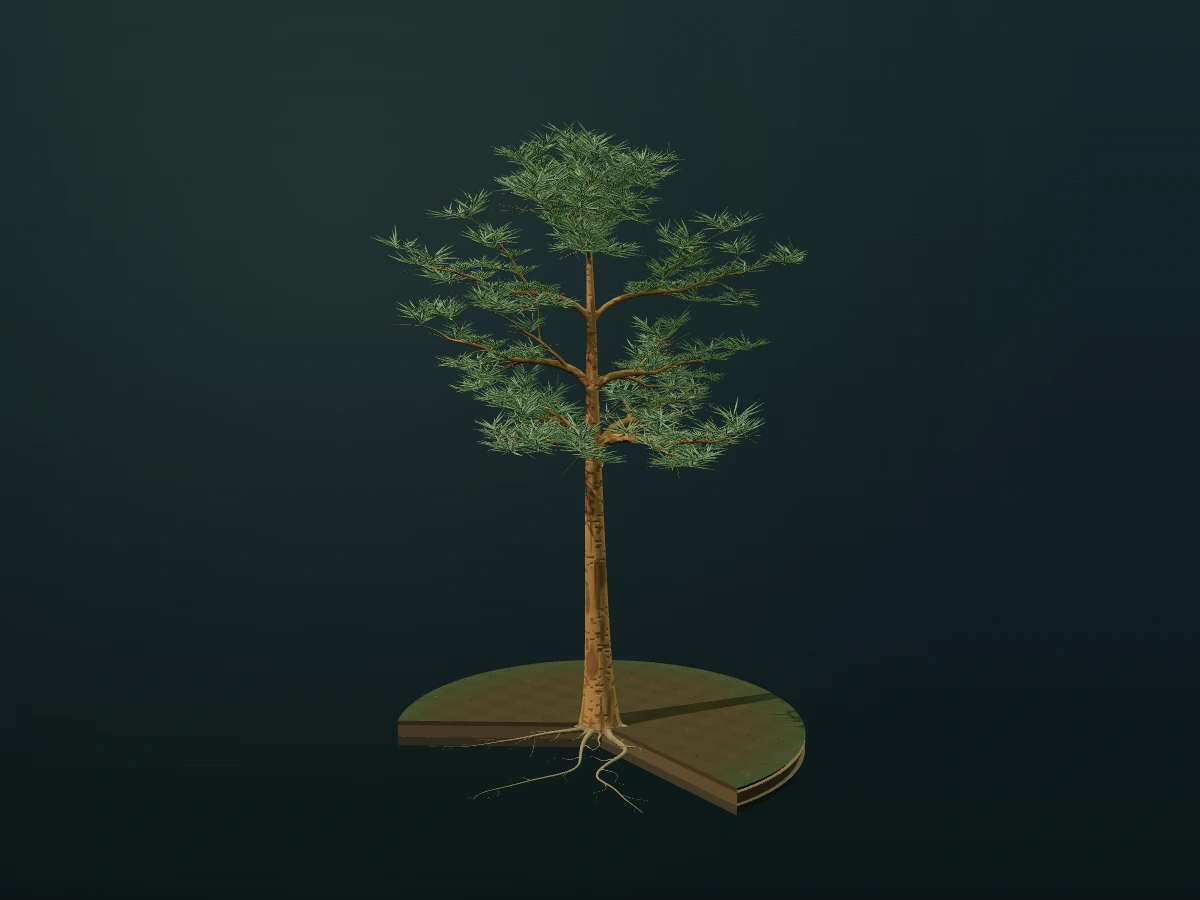
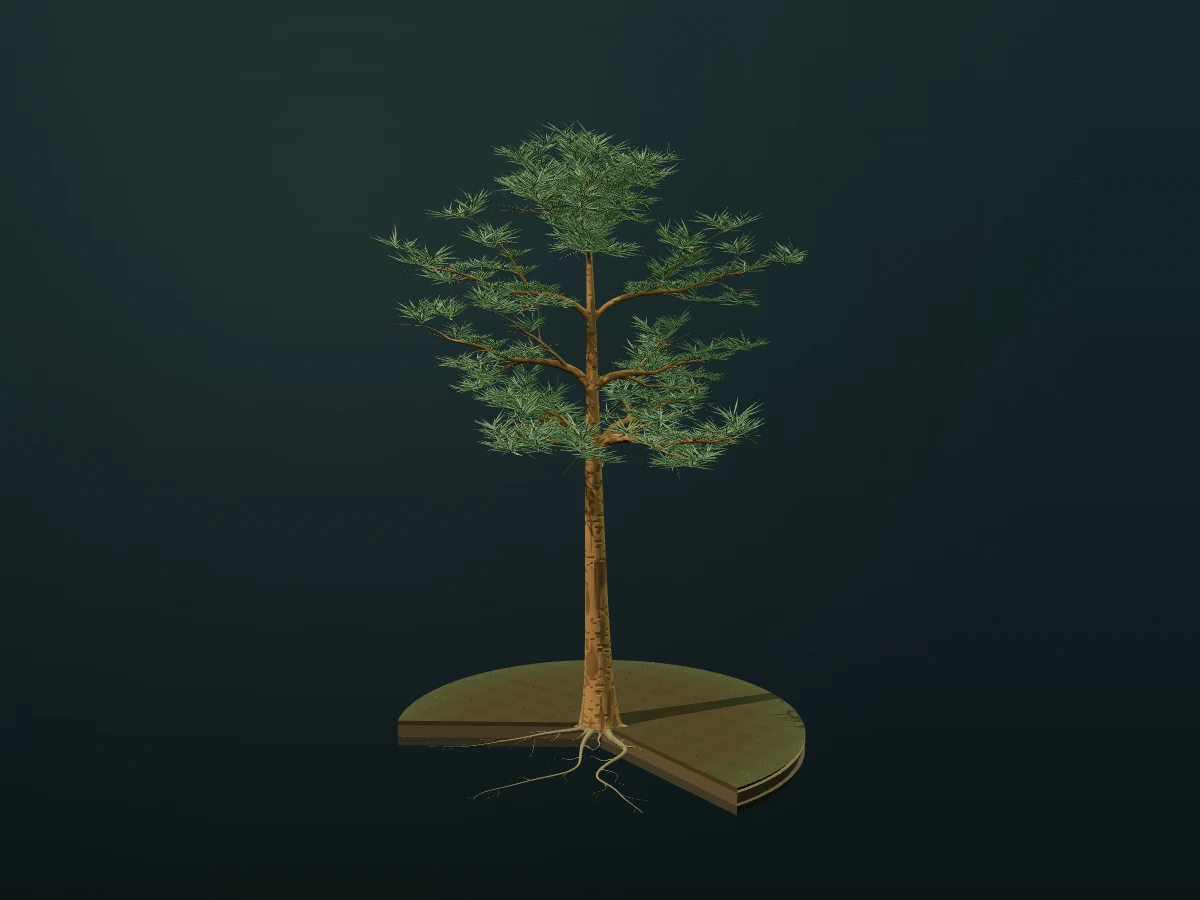
Seasonal illustration; the same plant, age and camera across four views.
Seasonal record
North Carolina botanical account
Leaf renewal
Evergreen[1]
A green canopy can persist while individual leaves age and are replaced. Evergreen does not mean that every leaf lasts indefinitely or that flowering and fruiting are continuous.
Reading these views
Season names organize these four views, not a universal calendar. Hemisphere, local climate, cultivar and management can change timing; months are shown only when explicitly recorded.
The views emphasize crown structure. Buds, small flowers, individual retained leaves and fine reproductive changes may be unresolved; model age and fruit count are not production forecasts.
No separate on-tree fruit display is configured for this record.
Seasonal references
- Oregon State University · Pinus ponderosa ↗landscapeplants.oregonstate.edu
- NC State Extension · Pinus ponderosa ↗plants.ces.ncsu.edu
- Oregon State University Forestry · Ponderosa pine identification ↗treespnw.forestry.oregonstate.edu
03 / Foliage
A closer look at the organs
Leaves
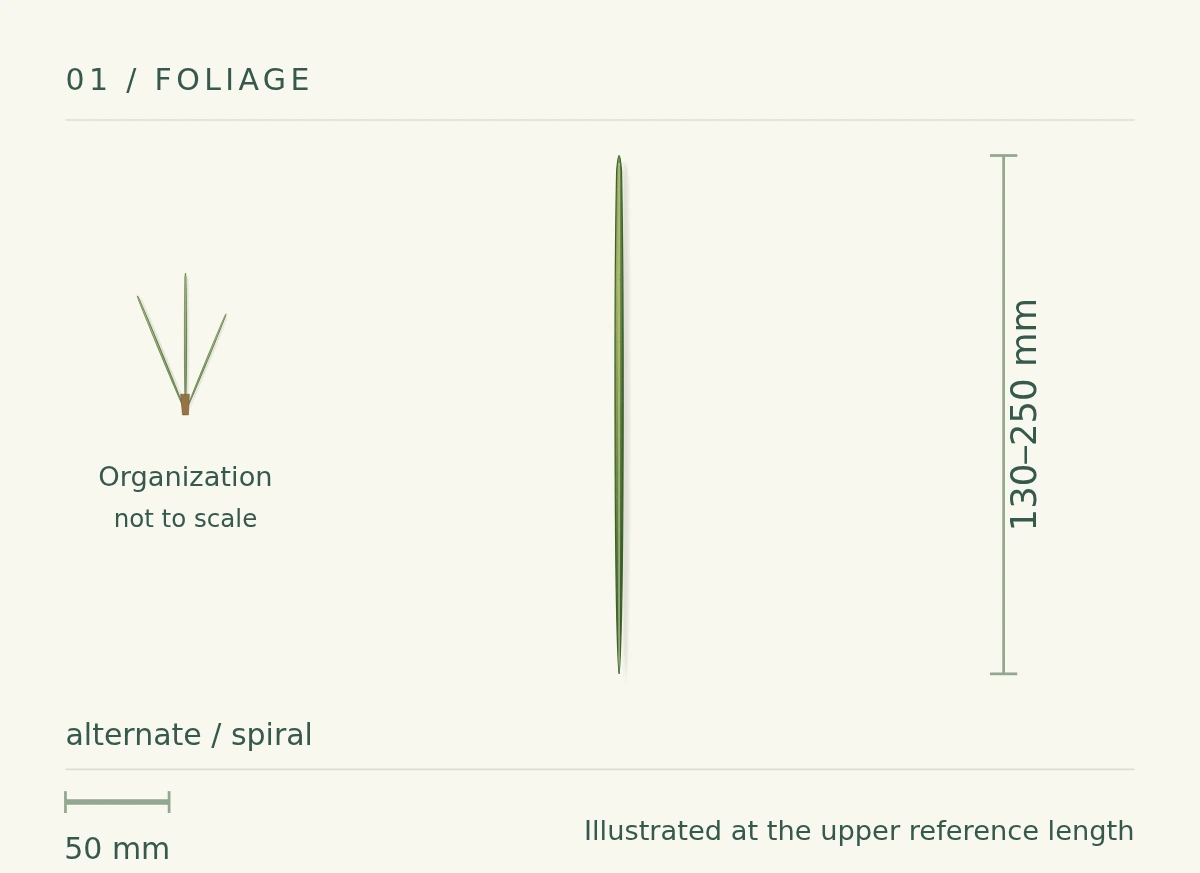
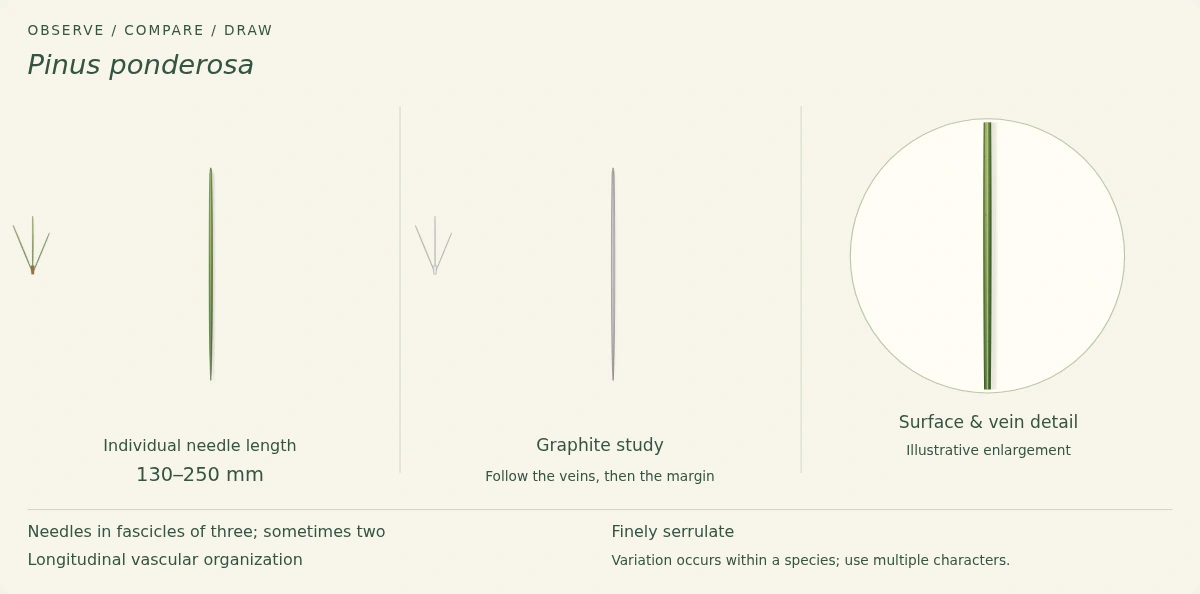
- Individual needle length
- 130–250 mmSource notes
Long needles occur in fascicles of three, sometimes two, depending on population and shoot.
Needles in fascicles of three; sometimes two · Finely serrulate · Longitudinal vascular organization · alternate / spiral
Seasonal notes
A green crown persists while older leaf cohorts are replaced. The small ochre patches illustrate turnover; their size and timing are not measured.
04 / Fruit & seed
Named structures, separate scales
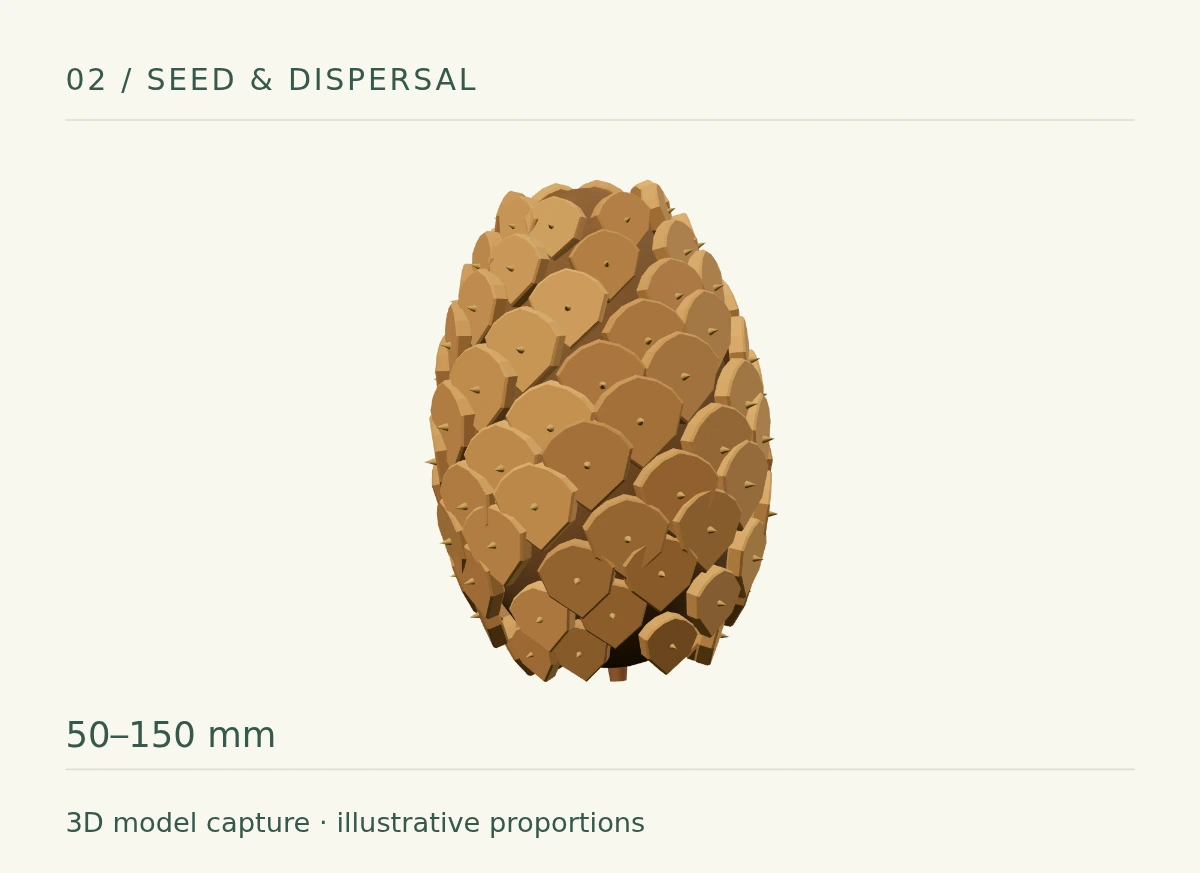
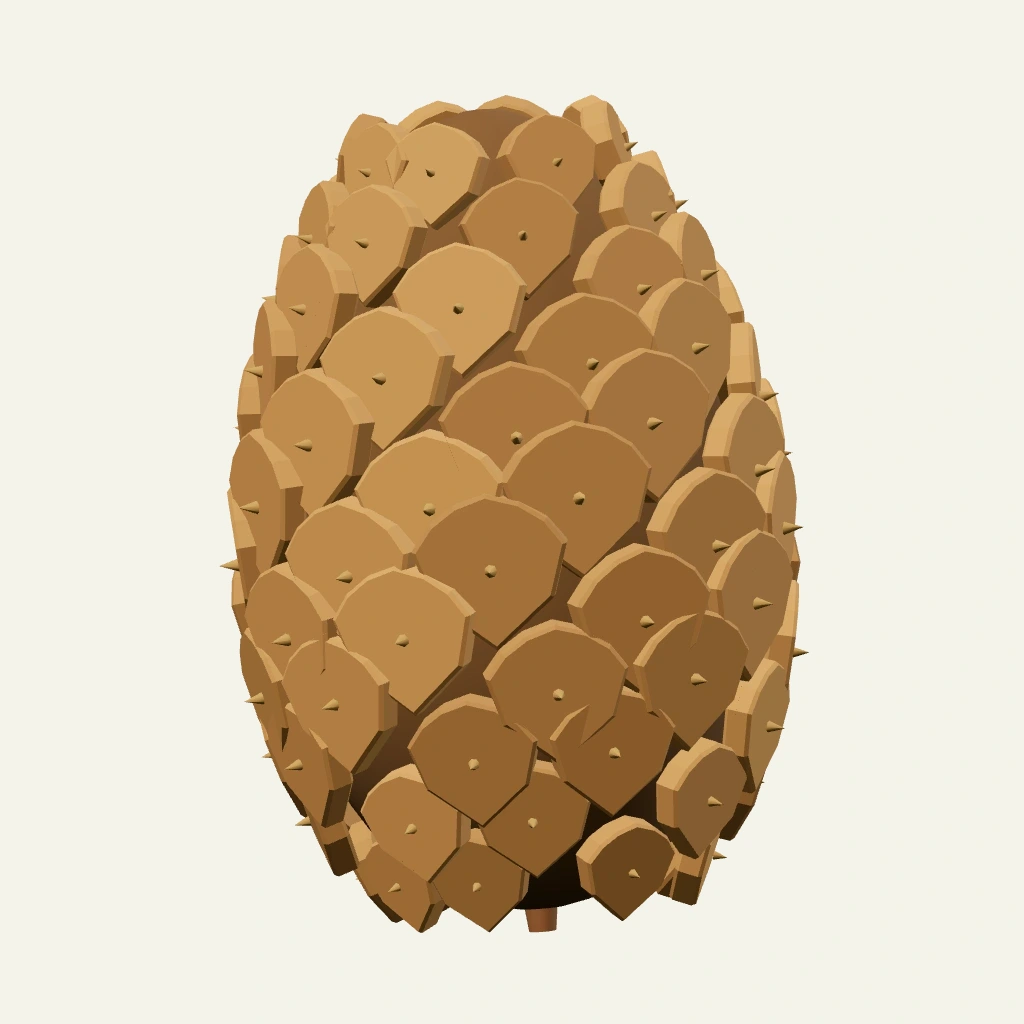
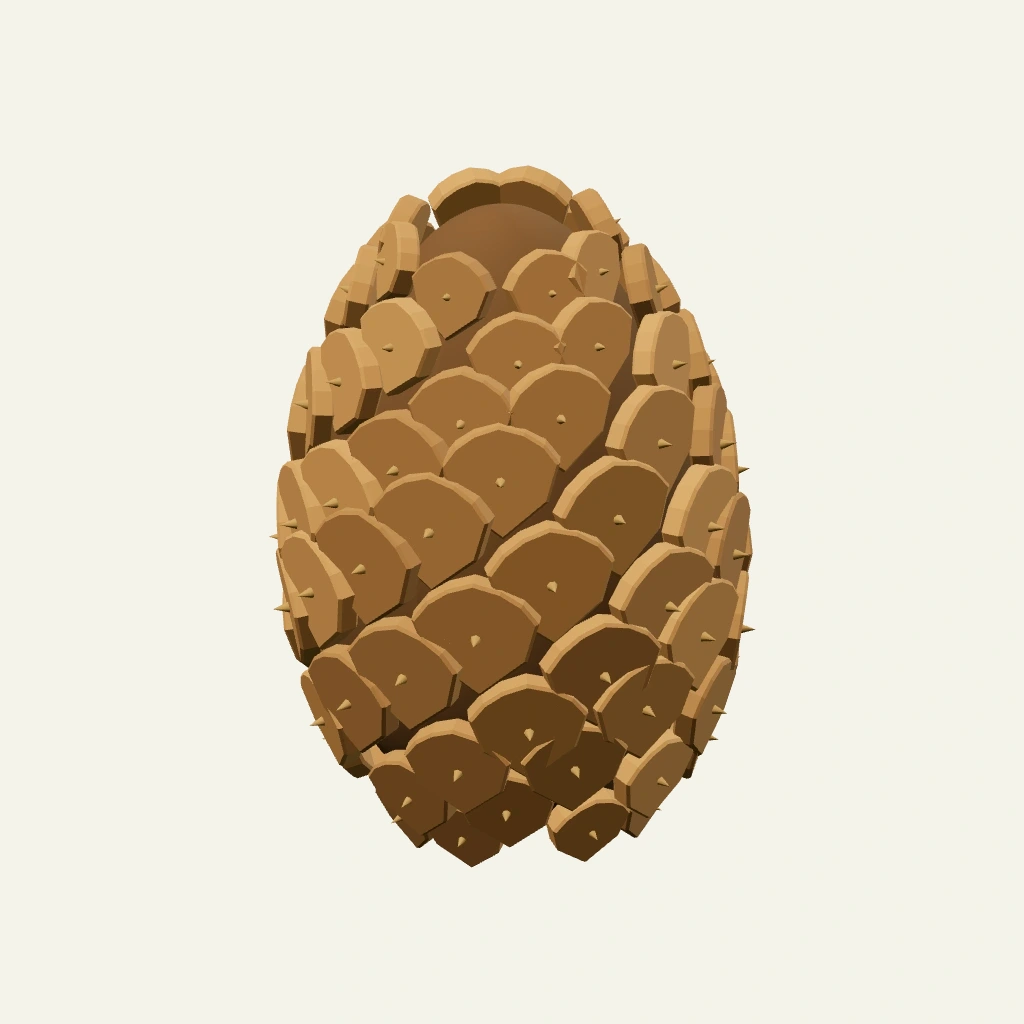
Seed cone
- Seed cone length
- 50–150 mmSource notes
Woody cones have prickles on their scale tips and release winged seeds.
- Fruiting reference
- Summer
North Carolina botanical account
Organs are enlarged independently. Refer to the named measurement, not image size.
05 / Habitat
Native range & growing context
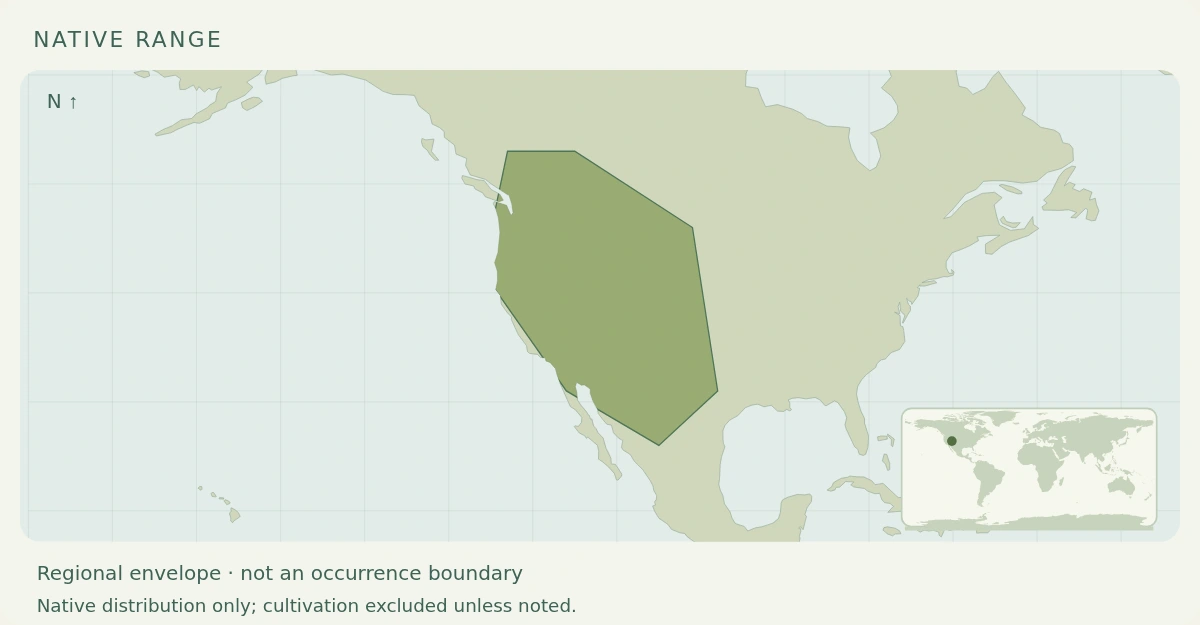
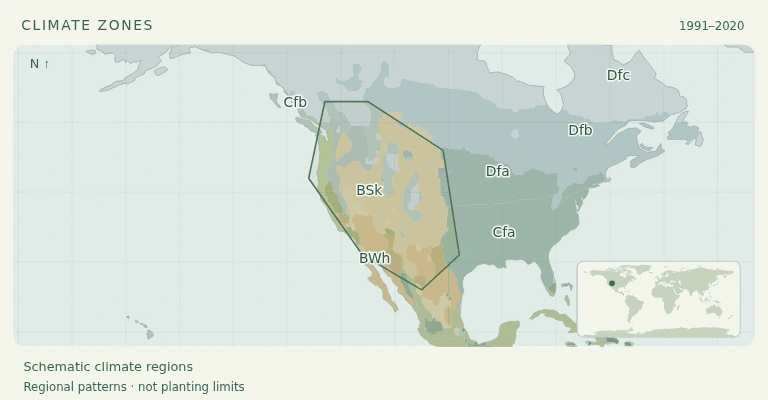
Native range & growing context
Western North America, from southern Canada to Mexico.
- Reference spread
- Not documented
- Moisture
- Not documented
- Growth tendency
- Medium
- Life span
- No numerical lifespan is assigned from these references. Model age is not a survival forecast.
Regional context, not a measured occurrence or suitability map.
06 / Sources & interpretation
Read the evidence behind the illustration
Names & classification
- Family
- Pinaceae
- Genus
- Pinus
- Synonyms
- —
- Long needles occur in fascicles of three, sometimes two, depending on population and shoot.
- Woody cones have prickles on their scale tips and release winged seeds.
Source-informed teaching reconstruction, not a surveyed specimen. Crown dimensions, branch counts, growth ages and root geometry are ArborAI. Individual trees vary with provenance, competition, climate and management.
ArborAI teaching geometry; coefficients and ages are not measured species constants.
- NC State Extension · Pinus ponderosa ↗plants.ces.ncsu.edu
- Oregon State University · Pinus ponderosa ↗landscapeplants.oregonstate.edu
- Oregon State University Forestry · Ponderosa pine identification ↗treespnw.forestry.oregonstate.edu
- Flora of North America · Pinus ponderosa ↗www.efloras.org
Plant data and references · 10
| Native range | Western North America, from southern Canada to Mexico.Transferred from the existing catalogue; independent botanical review remains pending.plants.ces.ncsu.edu |
|---|---|
| Leaf lengthmm | [130, 250]Individual needle length in the university account; not the size of a whole fascicle or a universal bound for every population.landscapeplants.oregonstate.edu |
| Seed lengthmm | [50, 150]Whole seed-cone length; no seed-body dimension is inferred from this range.landscapeplants.oregonstate.edu |
| Reference phenologycategory | {"flowering": {"seasons": ["spring"]}, "fruiting": {"seasons": ["summer"]}, "reference": "North Carolina botanical account", "source": "https://plants.ces.ncsu.edu/plants/pinus-ponderosa/", "reviewed": "2026-10-16"}Regional observations. Fruit display may include persistence and is not automatically ripening. Missing dates remain unspecified. Independent botanical review remains pending.plants.ces.ncsu.edu |
| Usda hardinesscategory | {"system": "USDA", "zones": [3, 7], "source": "usda-hardiness", "subzones": ["3a", "7b"]}Reported horticultural recommendation; winter minimum only, not a heat or overall suitability limitplants.ces.ncsu.edu |
| Needle fasciclescategory | [2, 3]Common forms documented by Oregon State; wider taxonomic treatments include additional variation. The model mixture is illustrative.landscapeplants.oregonstate.edu |
| Crown architecture | Narrow pyramidal youth develops an irregular, relatively open mature crown.Source botanical habit informs the authored reference architecture; individual crown geometry and the grouped scaffolds are not measured.plants.ces.ncsu.edu |
| Bark architecture | Mature cinnamon-orange bark forms large plates divided by dark fissures.The rendered mature bark colour and plate scale are illustrative. Young bark differs.plants.ces.ncsu.edu |
| Cone morphology | Woody cones have prickles on their scale tips and release winged seeds.The depicted prickled cone is a representative mature state; cone opening and umbo/prickle prominence vary.treespnw.forestry.oregonstate.edu |
| Needle margincategory | Finely serrulateFine marginal teeth are a botanical feature; they are not resolved in the whole-tree needle symbols.www.efloras.org |