Arbor.guide

Botanical field guide

Populus alba

White poplar

1069 / 2,347

Tree / Salicaceae

The plant, in detail

River valleys and moist open ground.

Reference height
15–23 m
Foliage habit
Deciduous
USDA zones
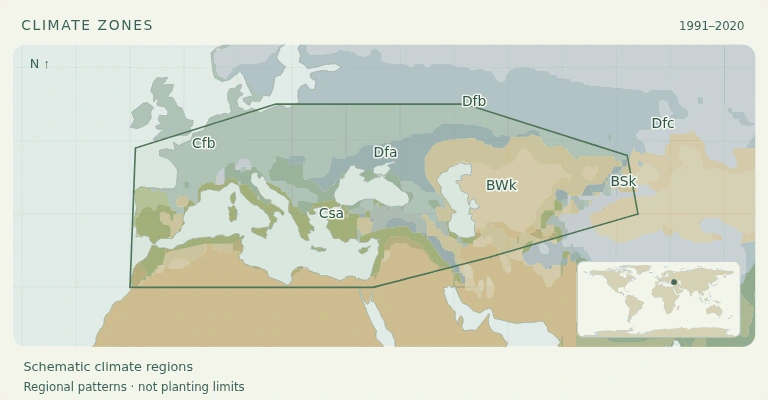
3–9
Light
Not documented

Approximate stature from the cited horticultural profile. Forest-grown trees and exceptional specimens may be taller.

Crown

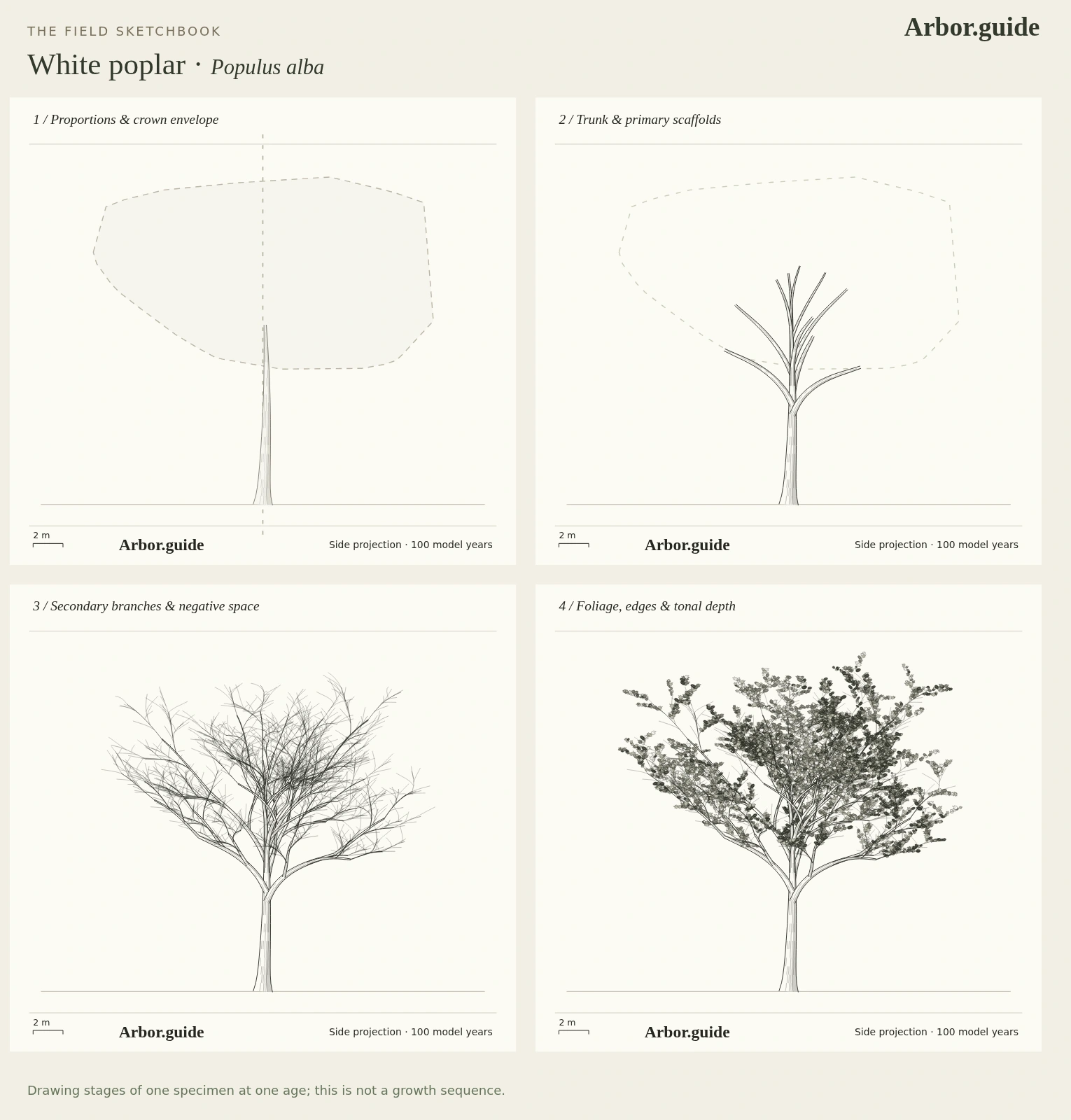
A broad crown develops above spreading limbs.

Branching

Alternate shoots differ between long and short growth.

Bark

Young bark is pale with dark markings; older bases become furrowed.

Roots

Spreading roots can sucker vigorously and produce a clonal colony.

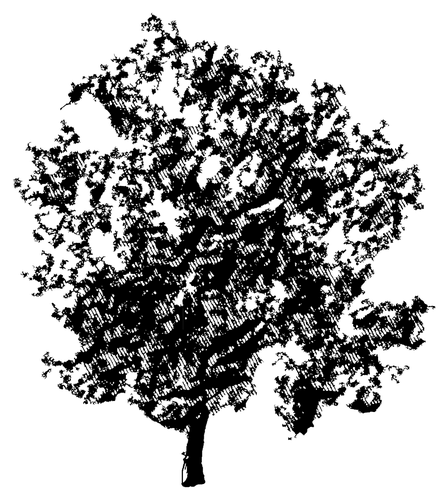
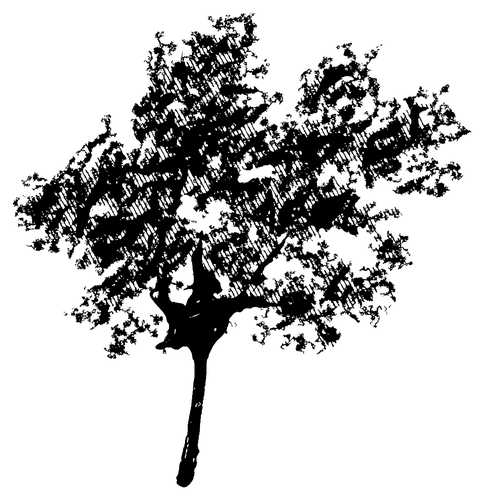
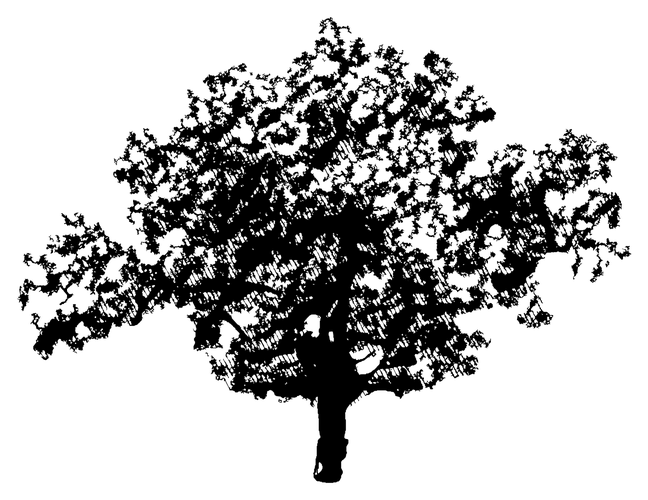
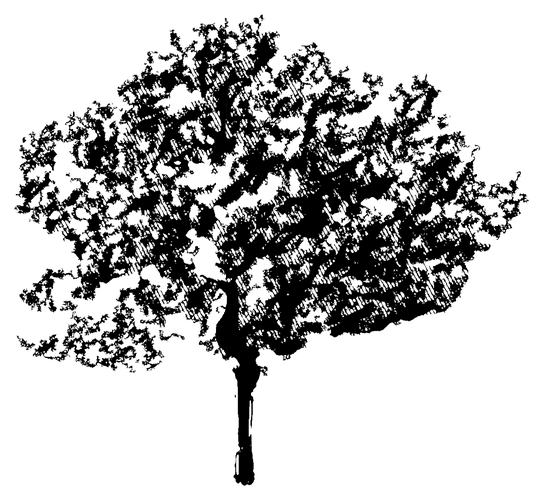
The shape of growth

Stylized real-world examples

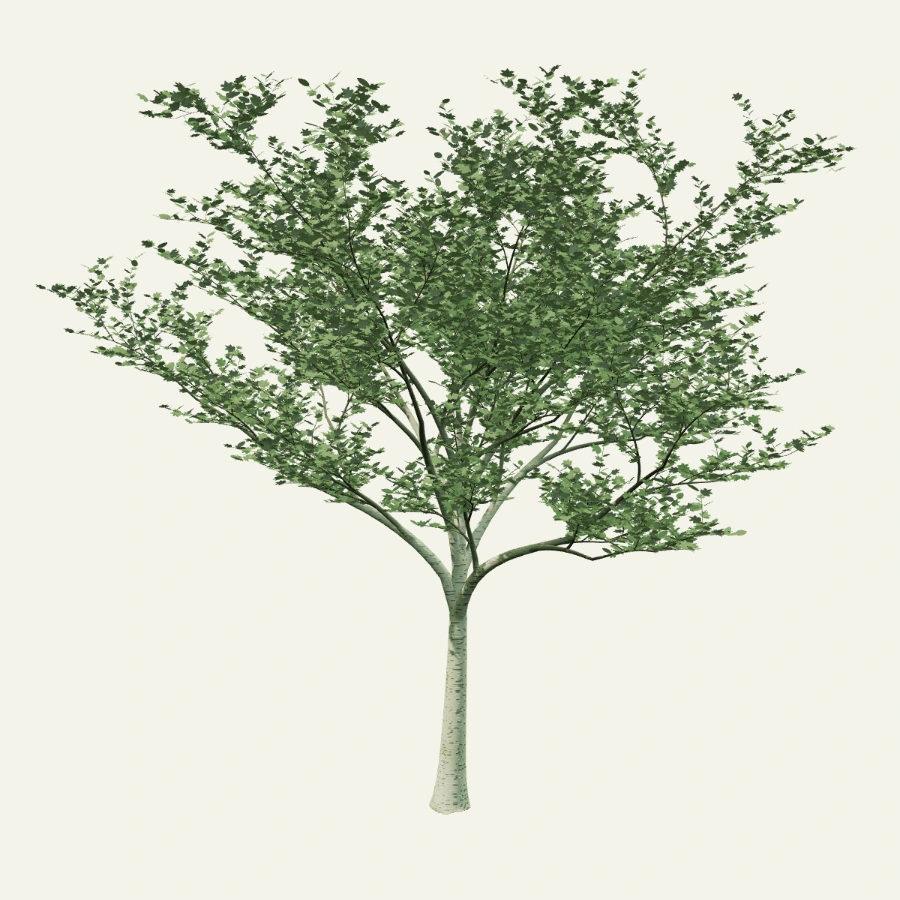
  • Tree silhouette 1
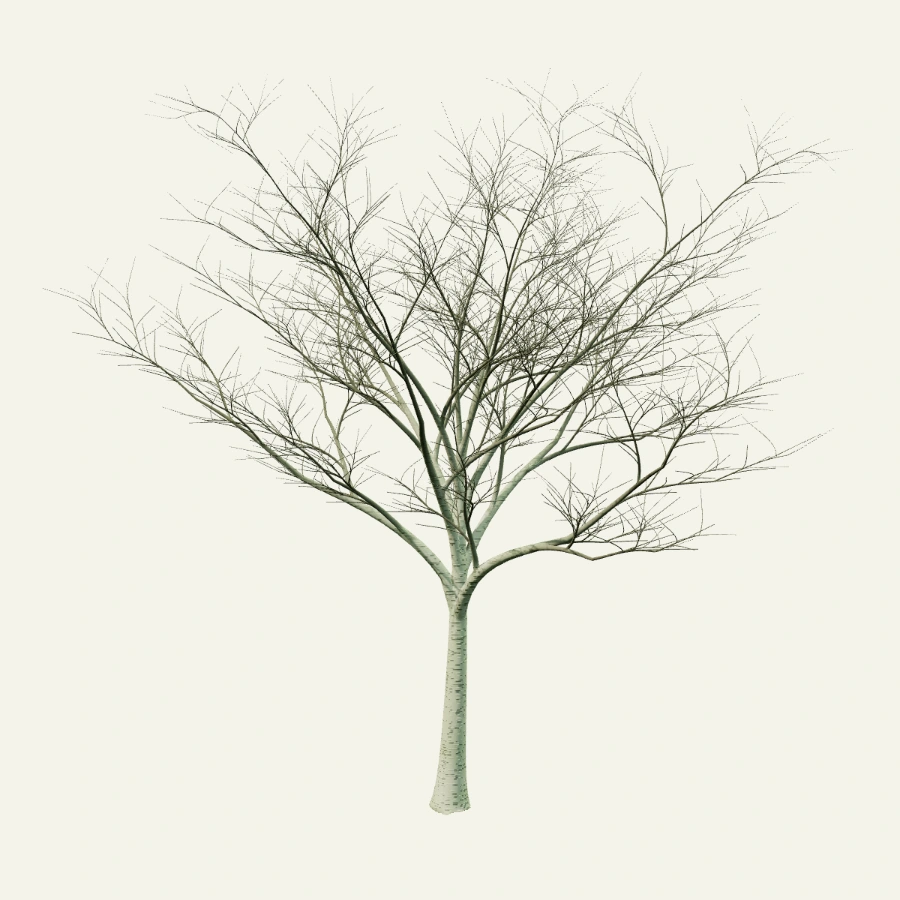
  • Tree silhouette 2
  • Tree silhouette 3
  • Tree silhouette 4

Silhouettes are sized independently.

Root studies

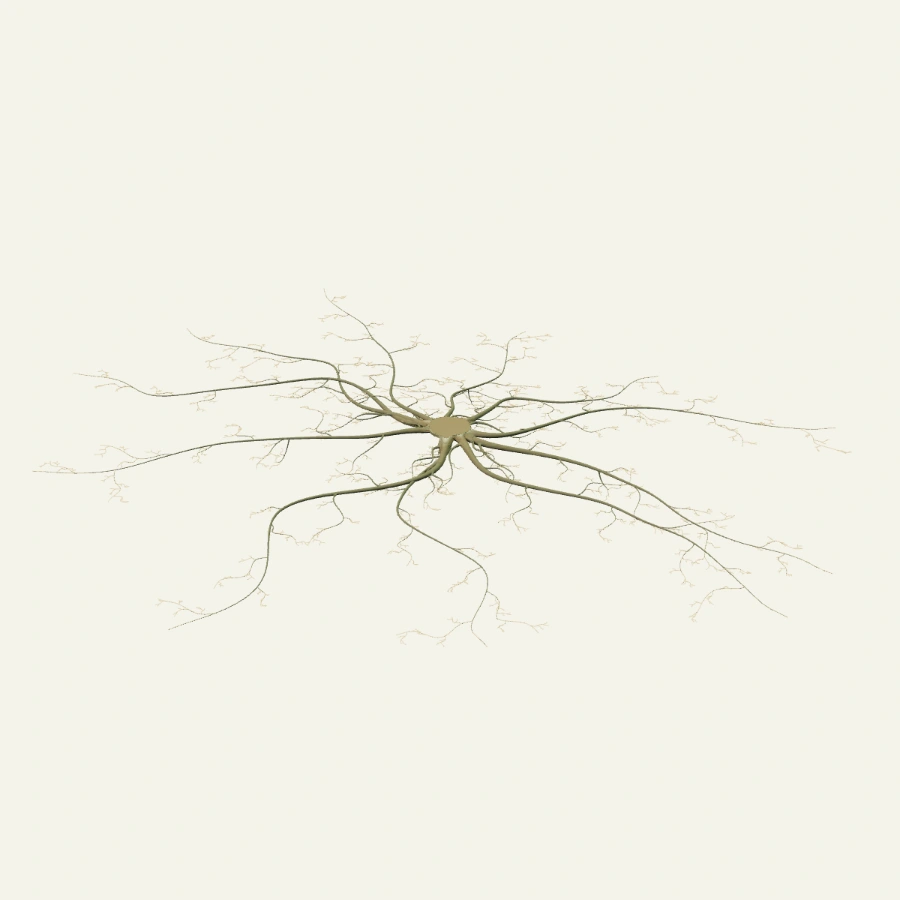
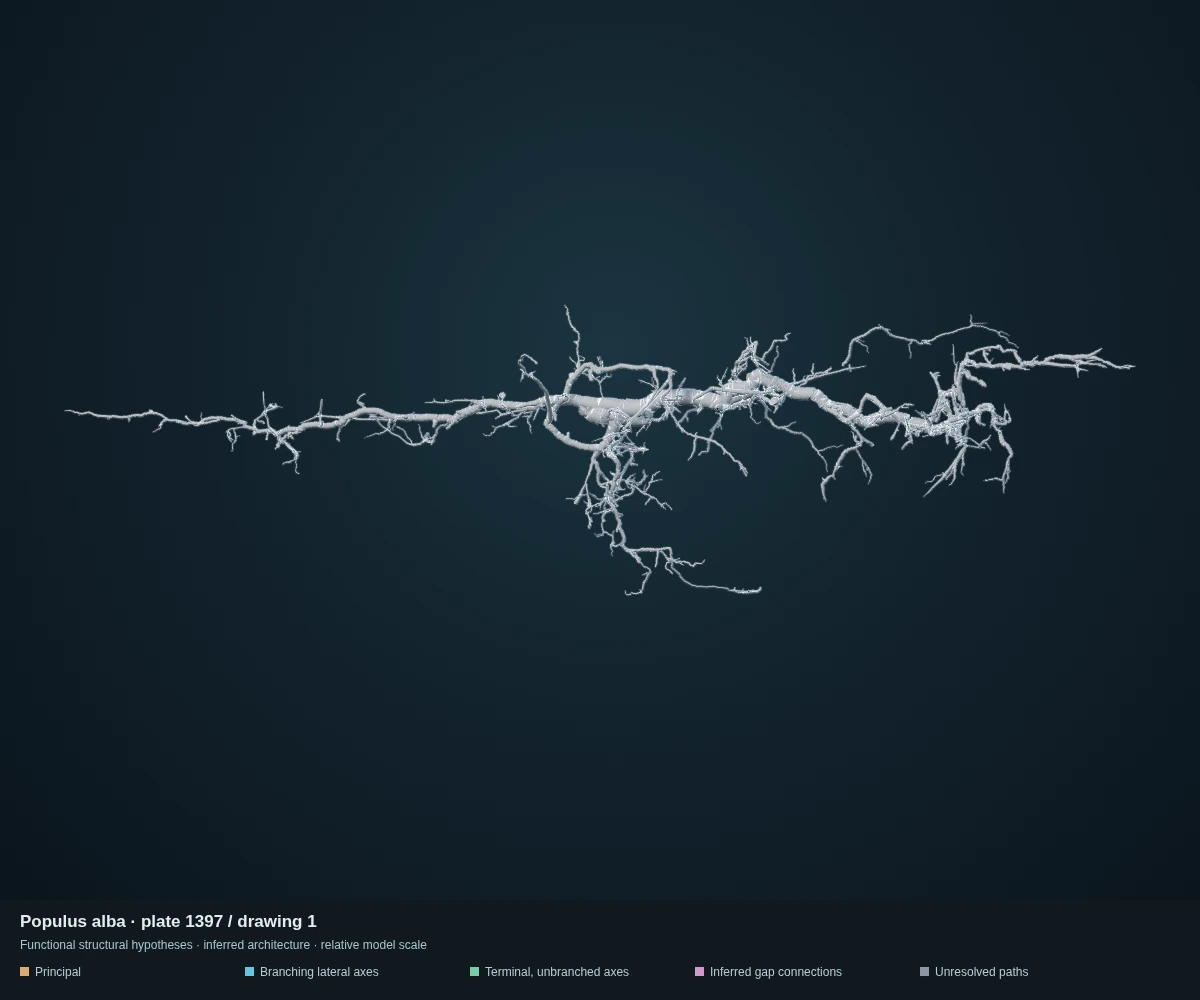
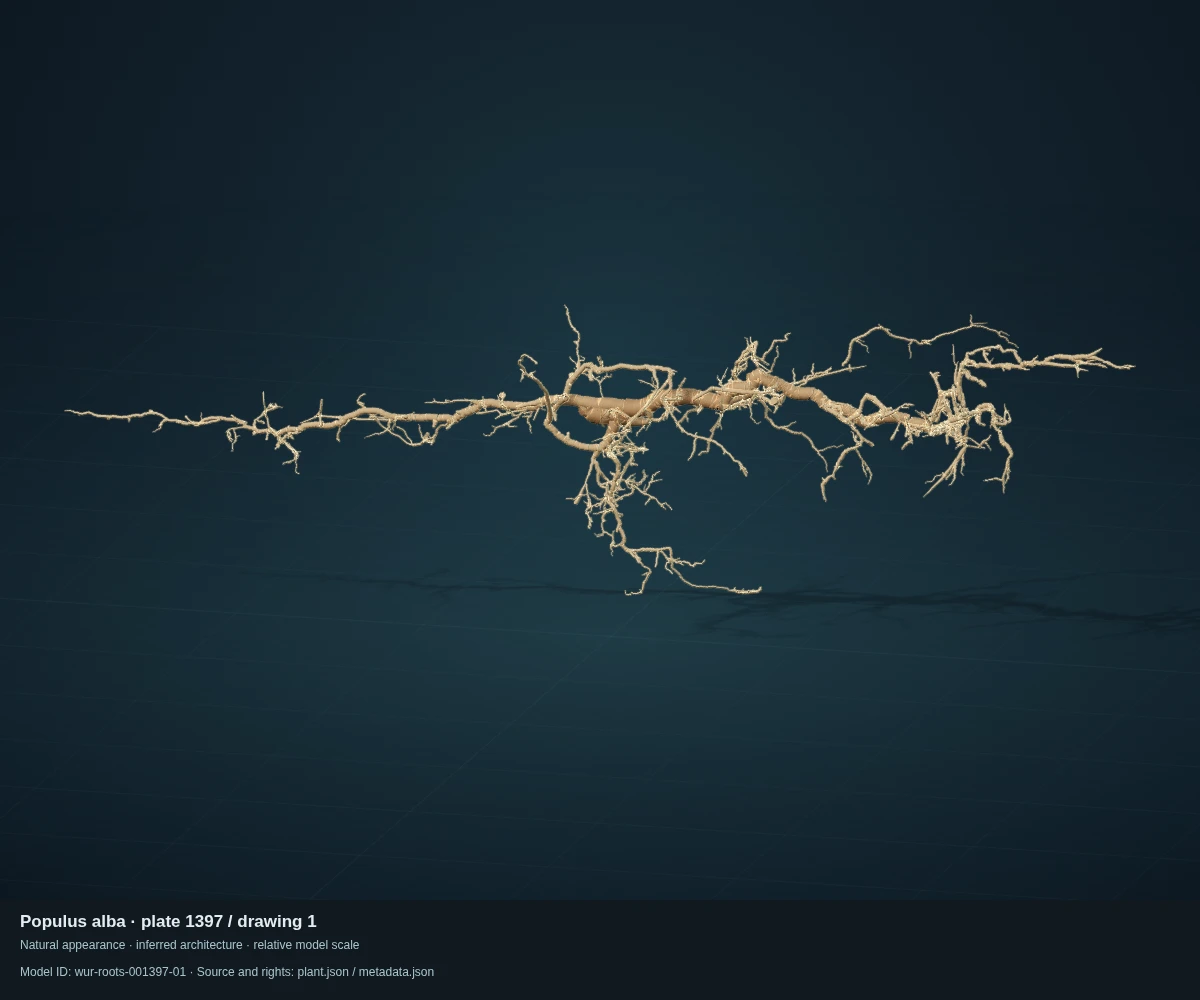
These reconstructions follow archived root drawings. Colour identifies the modelled structural role of each root.

Functional view
Natural view
Source projection
Compound plate
Calibration
Ambiguous scale
Vertical extent
0.27 model units
Inferred axes
1039
Model metrics and plate observations

Model metrics

No metric calibration; values are in normalized model coordinates.

Vertical extent
0.27 model units
Horizontal span (x)
0.999 model units
Horizontal span (z)
0.284 model units
Centreline length
15.6 model units
Inferred axes
1039
Branching sites
924
Terminal paths
936
Mean modelled diameter
0.00237 model units
Surface area proxy
0.118 model units²
Volume proxy
0.000141 model units³
Inferred connection length
0 model units
Projected length
15.6 model units
Mean angle from vertical
59.1°

Dimensions reported on the source plate

Plant height
525 cm plate_1397
Root depth
250 cm plate_1397
Root-system diameter
1475 cm plate_1397

Drawing observations

  • compound leafy tree small shoot and right sectioned stump with overlapping root paths
  • slightly curved ascending axis with spreading branch tiers
  • unequal lateral branches with many terminal leaf groups
  • short shaded stump with flat elliptical top
  • short leafy branched stem left of tree above shallow root path
  • long bilateral laterals and oblique descenders with fine side forks
  • thick central descender with several long side roots and fine lower forks
  • coarse shaded and thinner root paths overlap between tree and stump

Biologically constrained spatial reconstruction from source morphology. Root azimuths, hidden placement, growth responses, circular sections, thickness and proposed connections are inferred. The separate source trace retains exact drawing coordinates. No measured 3D anatomy or observed growth sequence is claimed.
Source and attribution

Study 1397 · Model 01

Populus alba · Wageningen University & Research archive

02 / Seasons

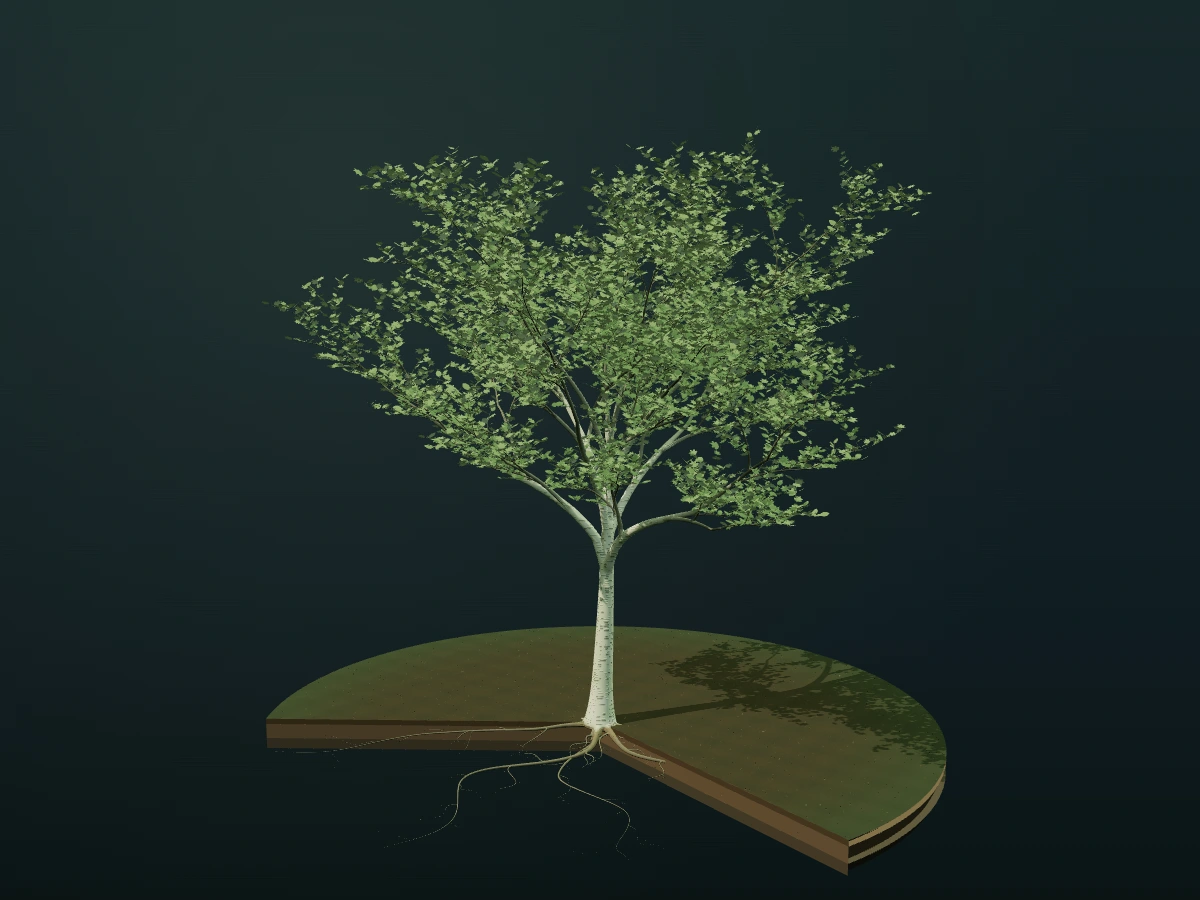
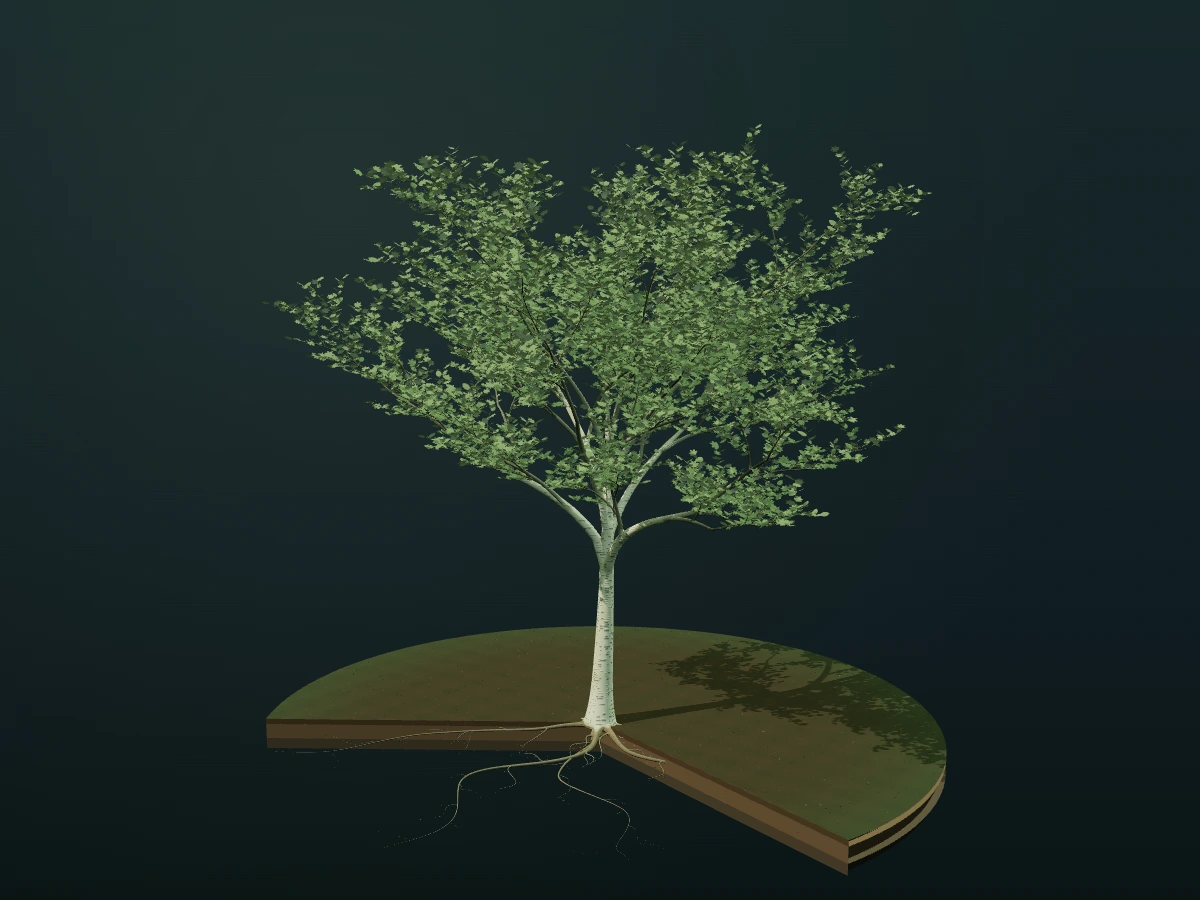
Through the seasons

Four portraits. One plant.

Read the crown, foliage and reproductive structures together. The four views compare seasonal appearances; the reference notes explain what is actually documented.

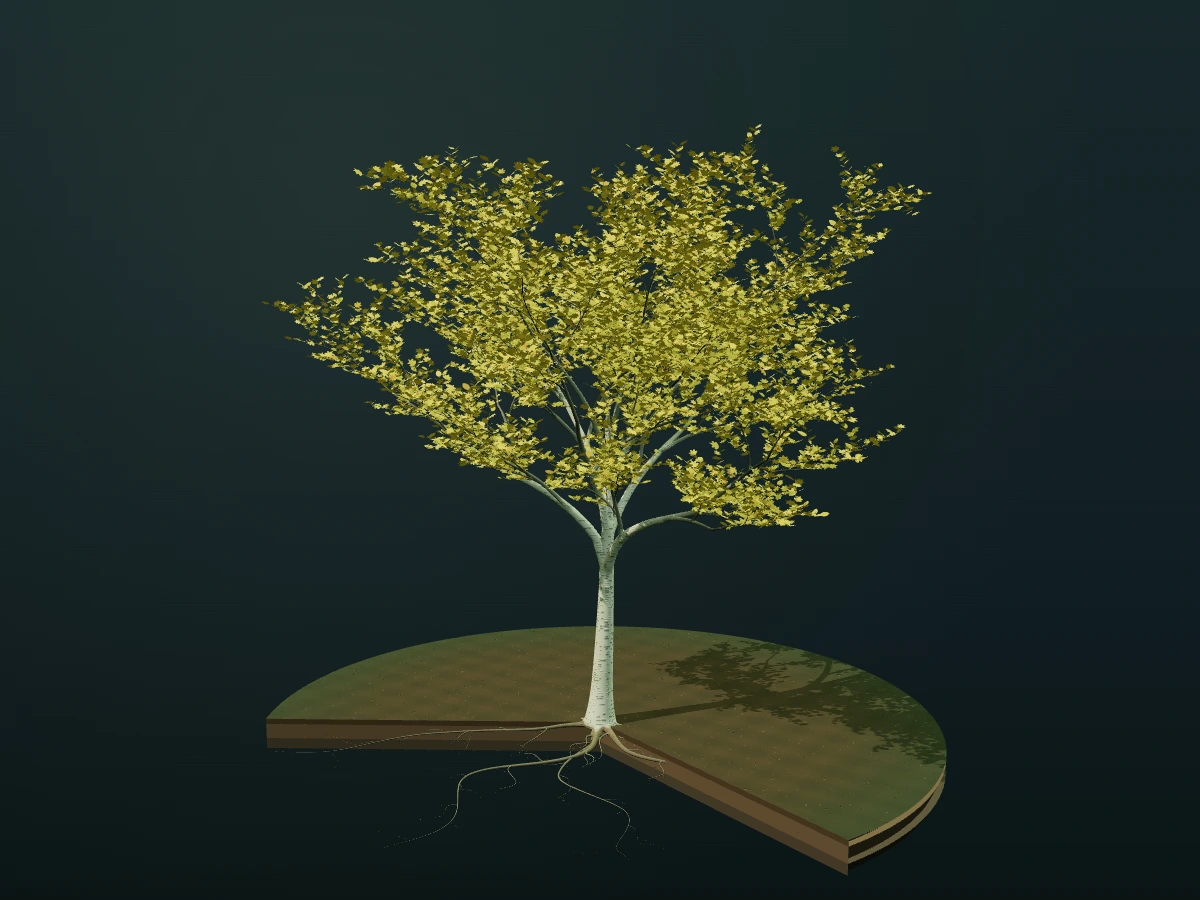
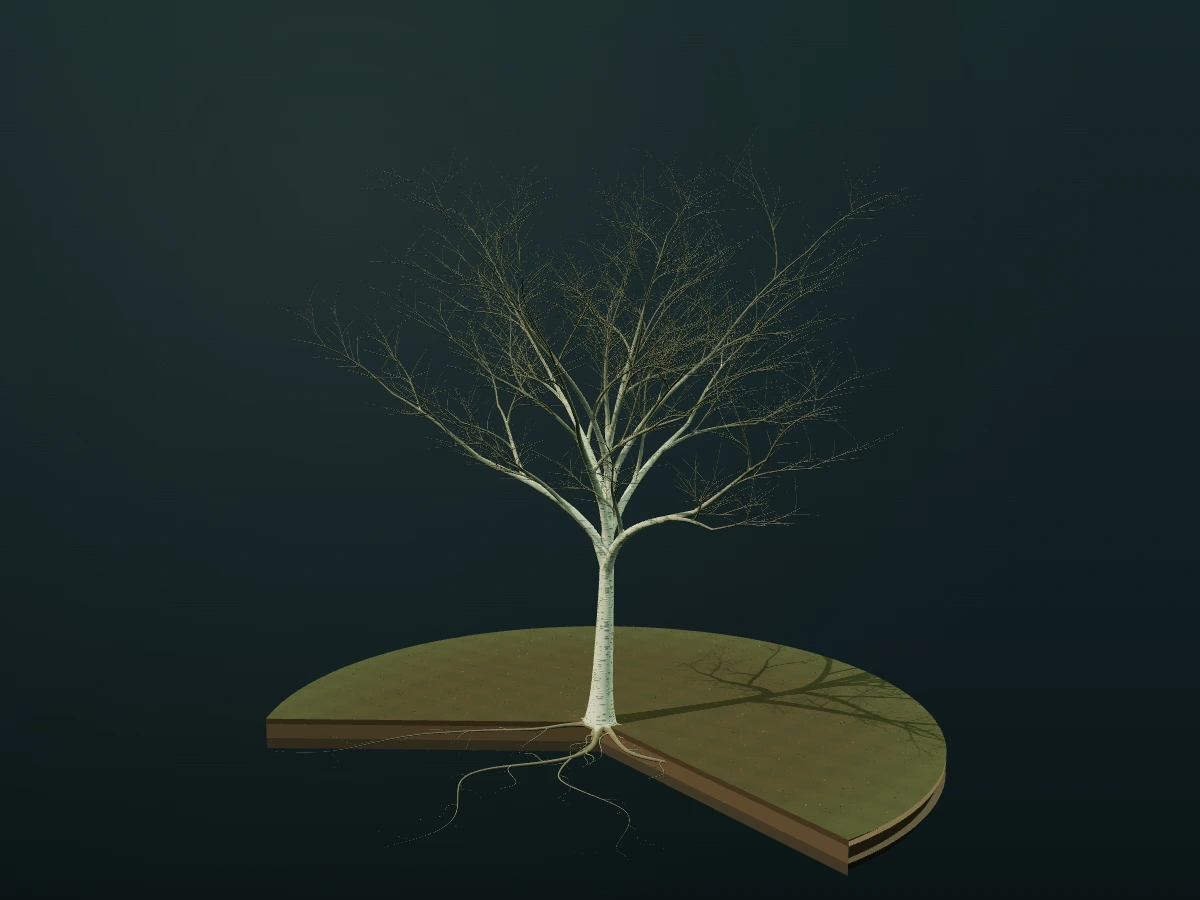
Seasonal illustration; the same plant, age and camera across four views.

Seasonal record

North Carolina botanical account

Flowering
Spring[1]
Fruiting / dispersal
Spring[1]

Leaf renewal

Deciduous[1]

The record describes a deciduous plant: foliage is renewed after a leafless or reduced-leaf phase. The named views illustrate that cycle without fixing its dates at a planting site.

Colour notes

Gold / yellow[1]

These are recorded colour possibilities. The shades and their distribution are illustrative; a particular autumn can look different.

Reading these views

Season names organize these four views, not a universal calendar. Hemisphere, local climate, cultivar and management can change timing; months are shown only when explicitly recorded.

The views emphasize crown structure. Buds, small flowers, individual retained leaves and fine reproductive changes may be unresolved; model age and fruit count are not production forecasts.

No separate on-tree fruit display is configured for this record.

Seasonal references

  1. NC State Extension · species reference ↗plants.ces.ncsu.edu
  2. fieldguide.mt.gov ↗fieldguide.mt.gov

03 / Leaves & flowers

A closer look at the organs

Leaves

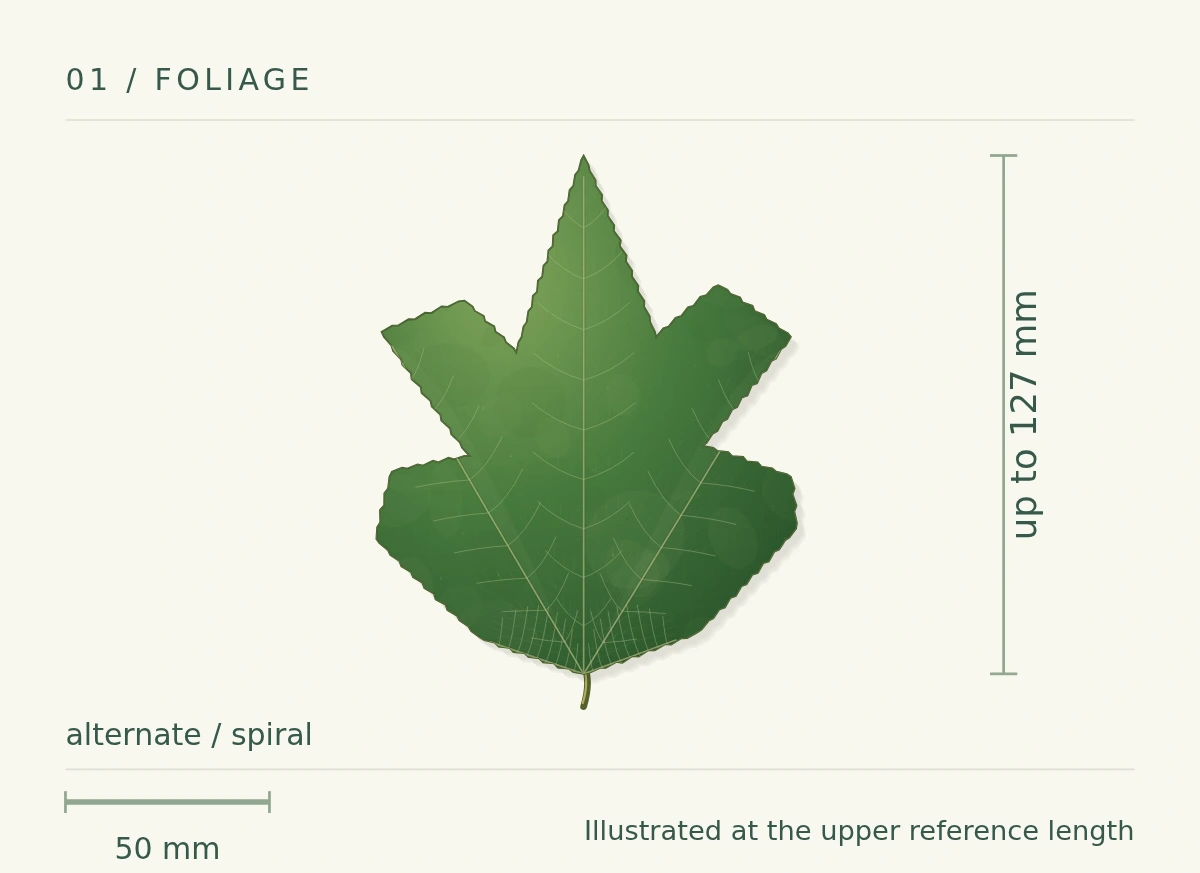
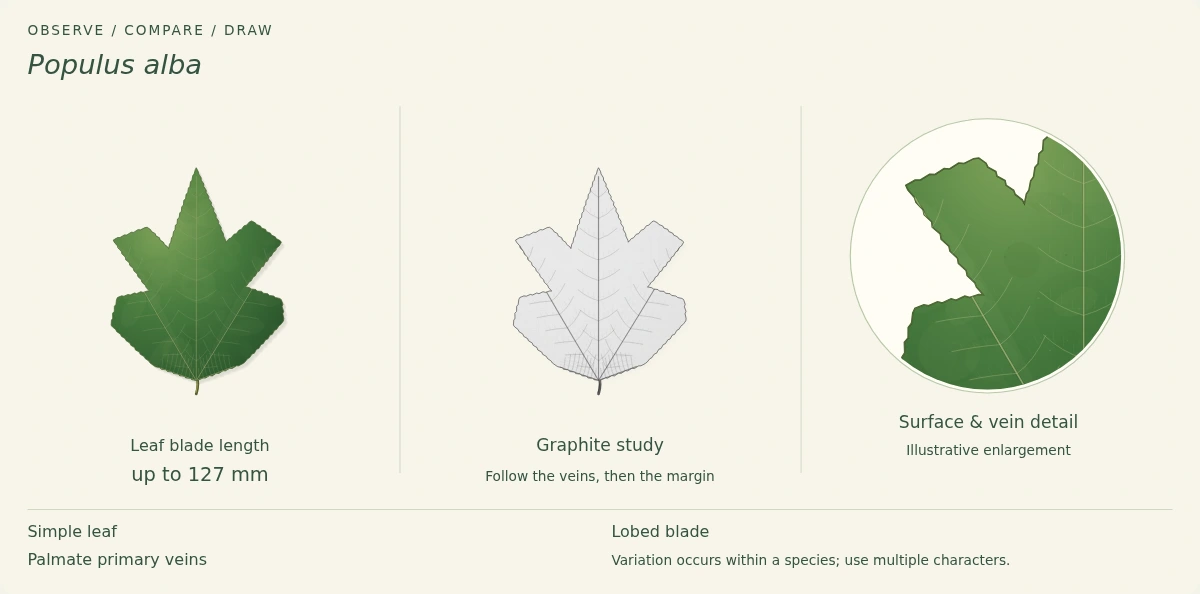
Leaf blade length
≤ 127 mmSource notes

Alternate leaves vary from rounded to lobed, with conspicuously white-hairy undersides.

Simple leaf · Lobed blade · Palmate primary veins · alternate / spiral

Seasonal notes

Colour varies with genotype, site, weather and leaf exposure. Phases show a plausible sequence, without assigning dates or predicting intensity.

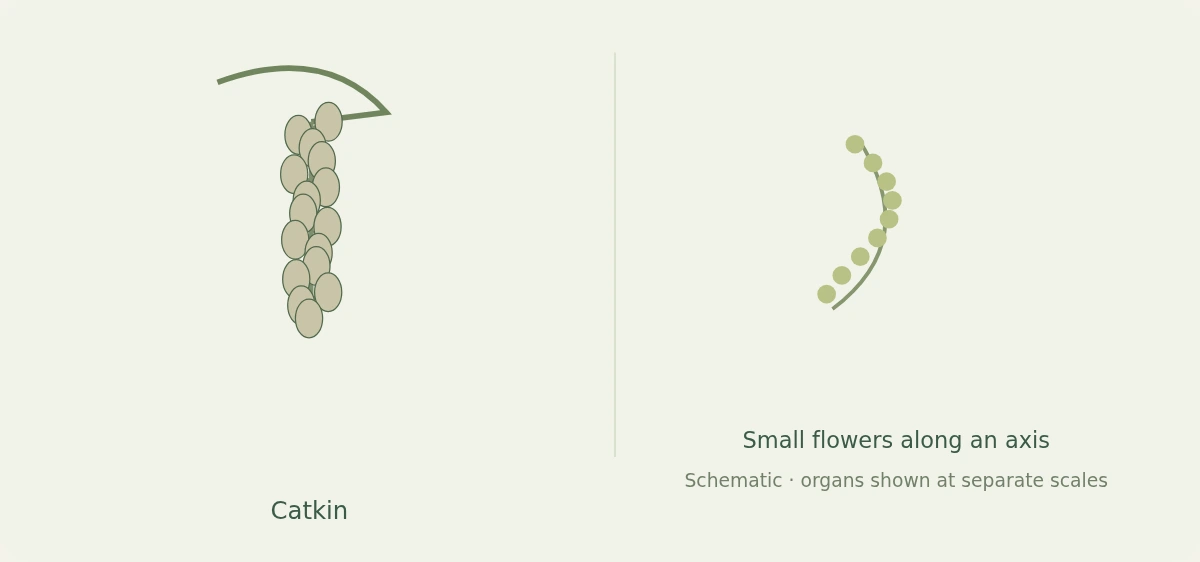
Flowering reference
Spring

04 / Fruit & seed

Named structures, separate scales

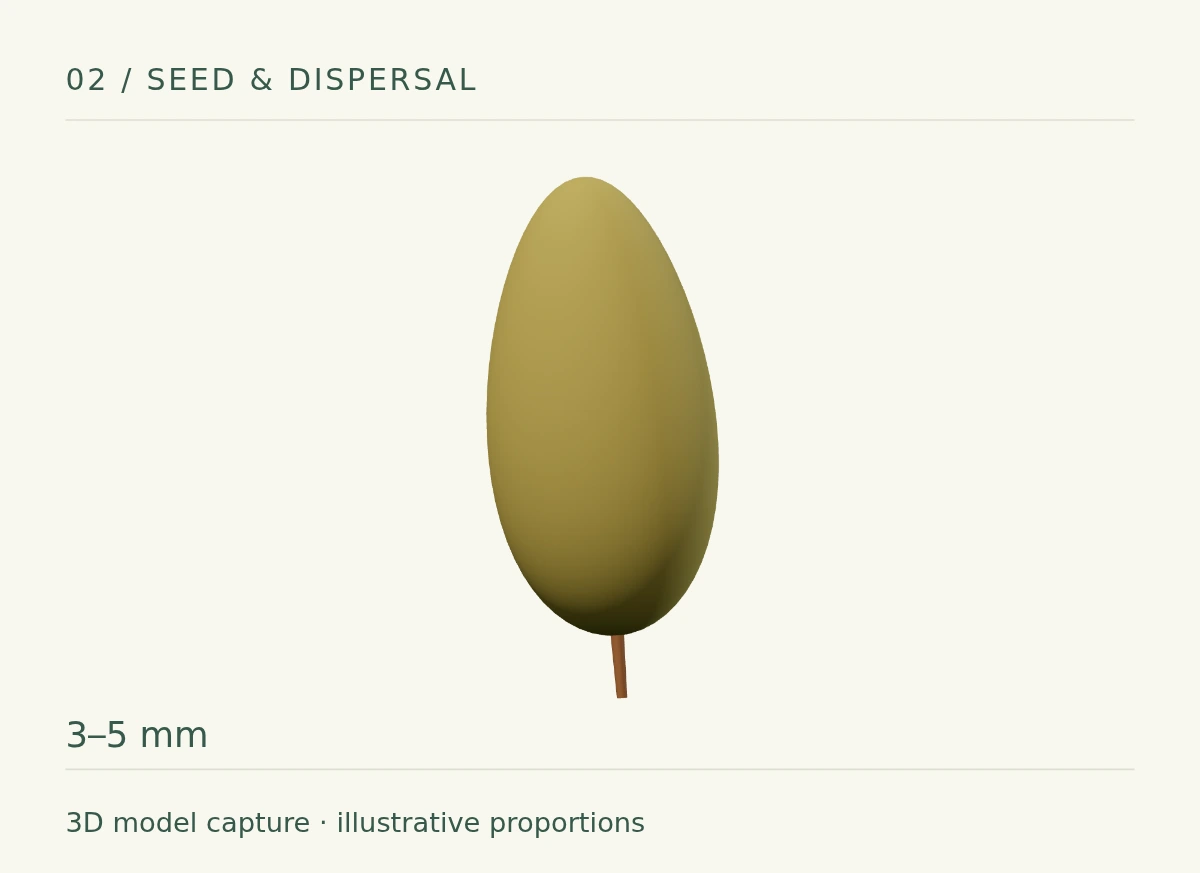
Fruit / dispersal unit

Whole capsule length
3–5 mmSource notes

Tiny seeds carry silky hairs and are released from opening capsules. The capsule is not the seed.

Fruiting reference
Spring

North Carolina botanical account

Organs are enlarged independently. Refer to the named measurement, not image size.

05 / Habitat

Native range & growing context

Native range & growing context

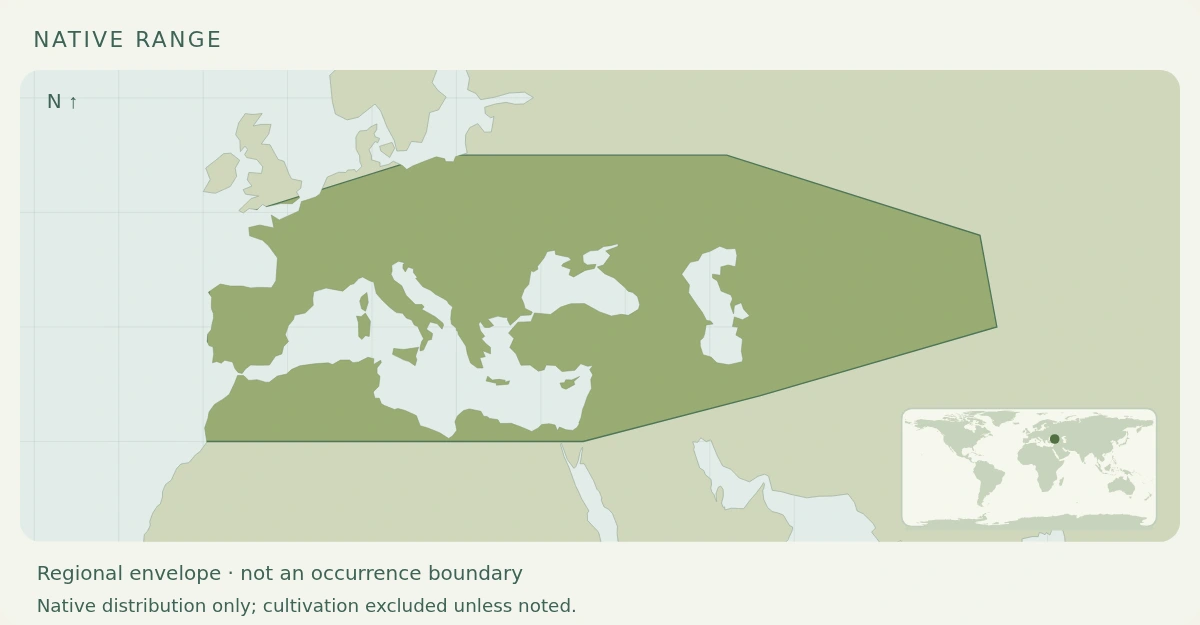
Europe, northern Africa and central Asia.

Reference spread
Not documented
Moisture
Not documented
Growth tendency
Fast
Life span
Potential longevity depends on site, damage and management; model years are not a survival forecast.

Regional context, not a measured occurrence or suitability map.

06 / Sources & interpretation

Read the evidence behind the illustration

Names & classification

Family
Salicaceae
Genus
Populus
Synonyms
—
  • Leaf undersides produce a silver-white effect in wind.

The model emphasizes lobed long-shoot leaves and pale undersides. Short-shoot leaf variation and the root-suckering colony are omitted.

ArborAI teaching geometry; coefficients and ages are not measured species constants.

  1. NC State Extension · species reference ↗plants.ces.ncsu.edu
Plant data and references · 5
Native rangeEurope, northern Africa and central Asia.Transferred from the existing catalogue; independent botanical review remains pending.plants.ces.ncsu.edu
Leaf lengthmm[null, 127]Transferred from the existing catalogue; independent botanical review remains pending.plants.ces.ncsu.edu
Seed lengthmm[3, 5]Transferred from the existing catalogue; independent botanical review remains pending.fieldguide.mt.gov
Reference phenologycategory{"flowering": {"seasons": ["spring"]}, "fruiting": {"seasons": ["spring"]}, "reference": "North Carolina botanical account", "source": "https://plants.ces.ncsu.edu/plants/populus-alba/", "reviewed": "2026-10-16"}Regional observations. Fruit display may include persistence and is not automatically ripening. Missing dates remain unspecified. Independent botanical review remains pending.plants.ces.ncsu.edu
Usda hardinesscategory{"system": "USDA", "zones": [3, 9], "source": "usda-hardiness", "subzones": ["3a", "9b"]}Reported horticultural recommendation; winter minimum only, not a heat or overall suitability limitplants.ces.ncsu.edu