Botanical field guide
Juglans cinerea
Butternut
Tree / Juglandaceae
The plant, in detail
Moist woods and stream terraces; canker disease has severely affected wild populations.
- Reference height
- 12–18 m
- Foliage habit
- Deciduous
- USDA zones
- 3–7
- Light
- Not documented
Approximate stature from the cited account; equal bounds indicate a reported upper or approximate height, not a measured population interval. Cultivation and forest conditions differ.
Crown
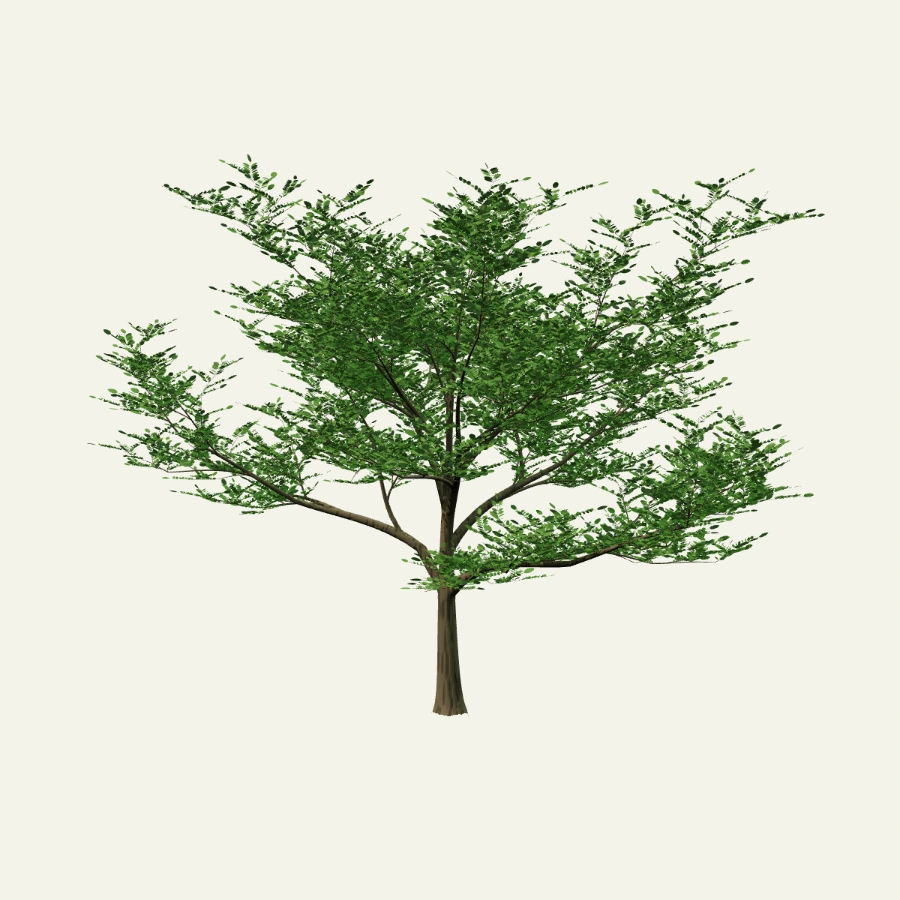
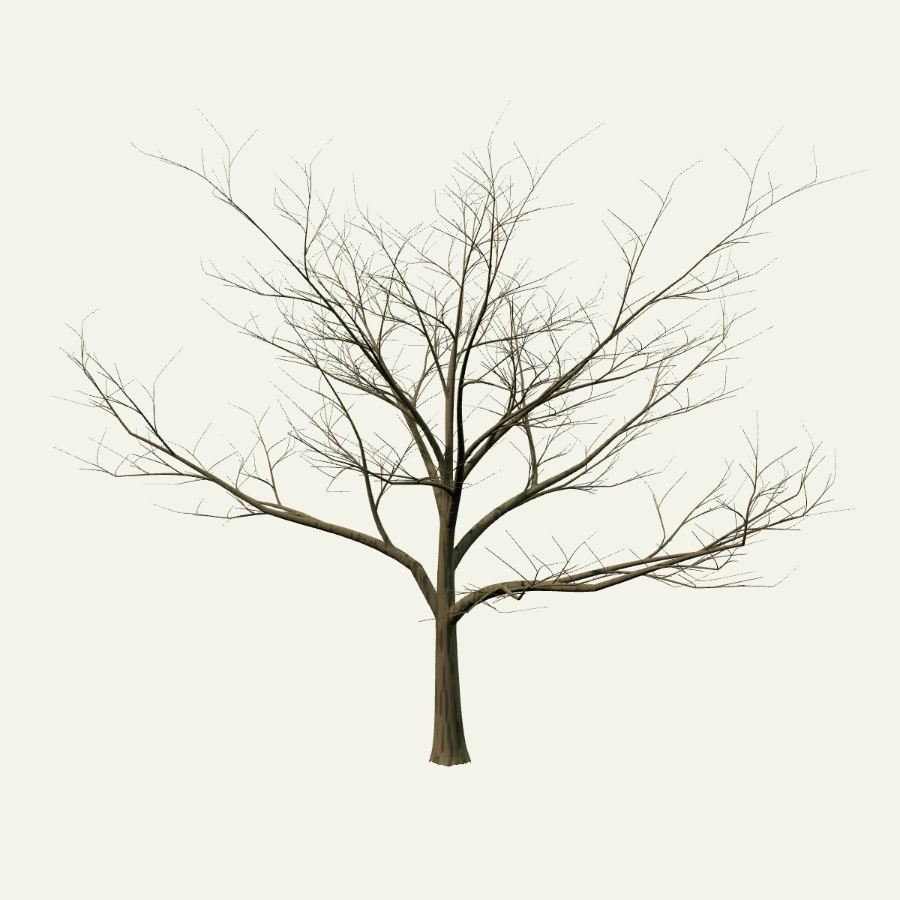
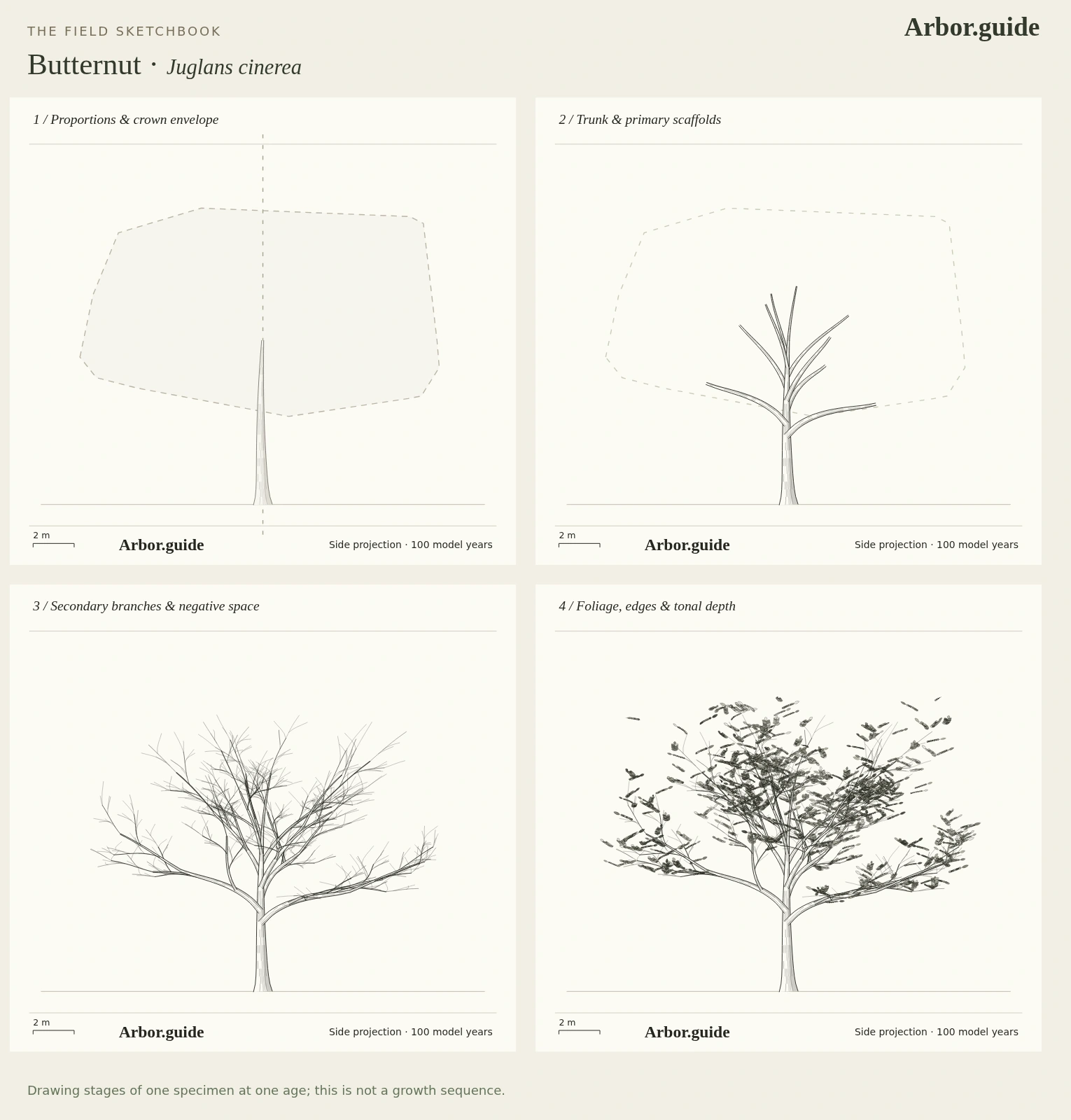
An open rounded crown with stout branches and a short, sometimes forked trunk.
Branching
Alternate odd-pinnate leaves bear eleven to nineteen serrate hairy leaflets, including a terminal one.
Bark
Gray bark develops flat-topped pale ridges and dark furrows.
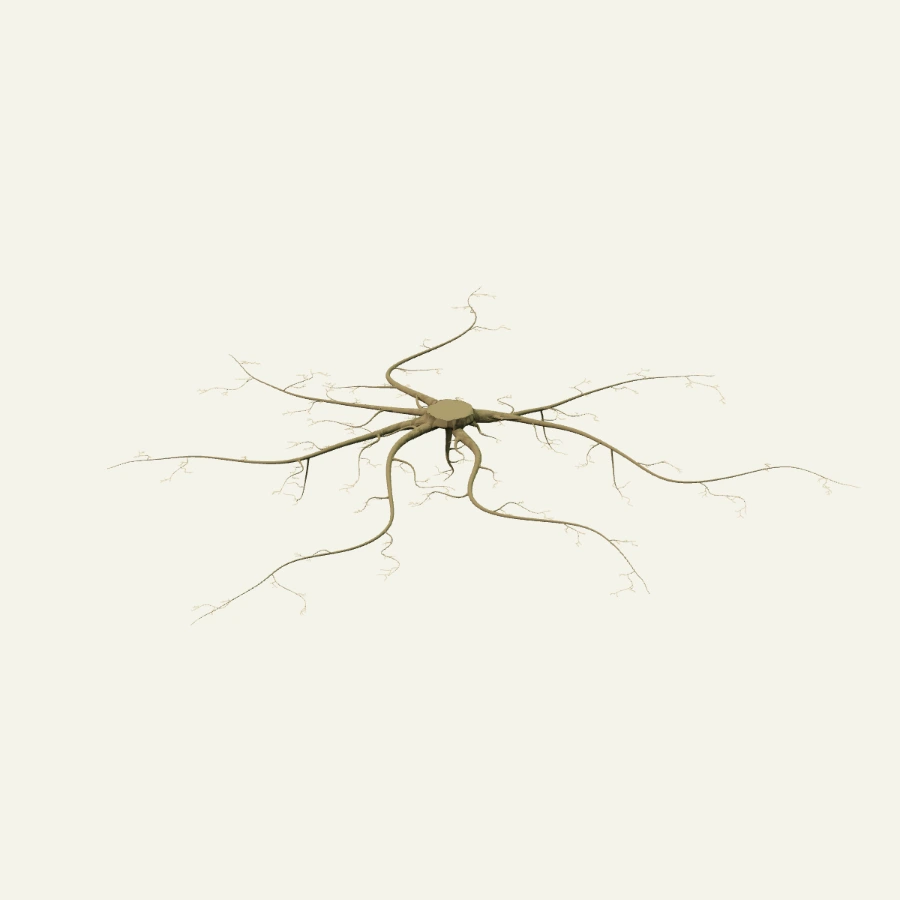
Roots
The root drawing is an ArborAI soil scenario: curved structural laterals and descending axes, not a measured species root map. Depth depends on soil, water table, establishment and damage; fine absorptive roots are unresolved.
02 / Seasons
Through the seasons
Four portraits. One plant.
Read the crown, foliage and reproductive structures together. The four views compare seasonal appearances; the reference notes explain what is actually documented.
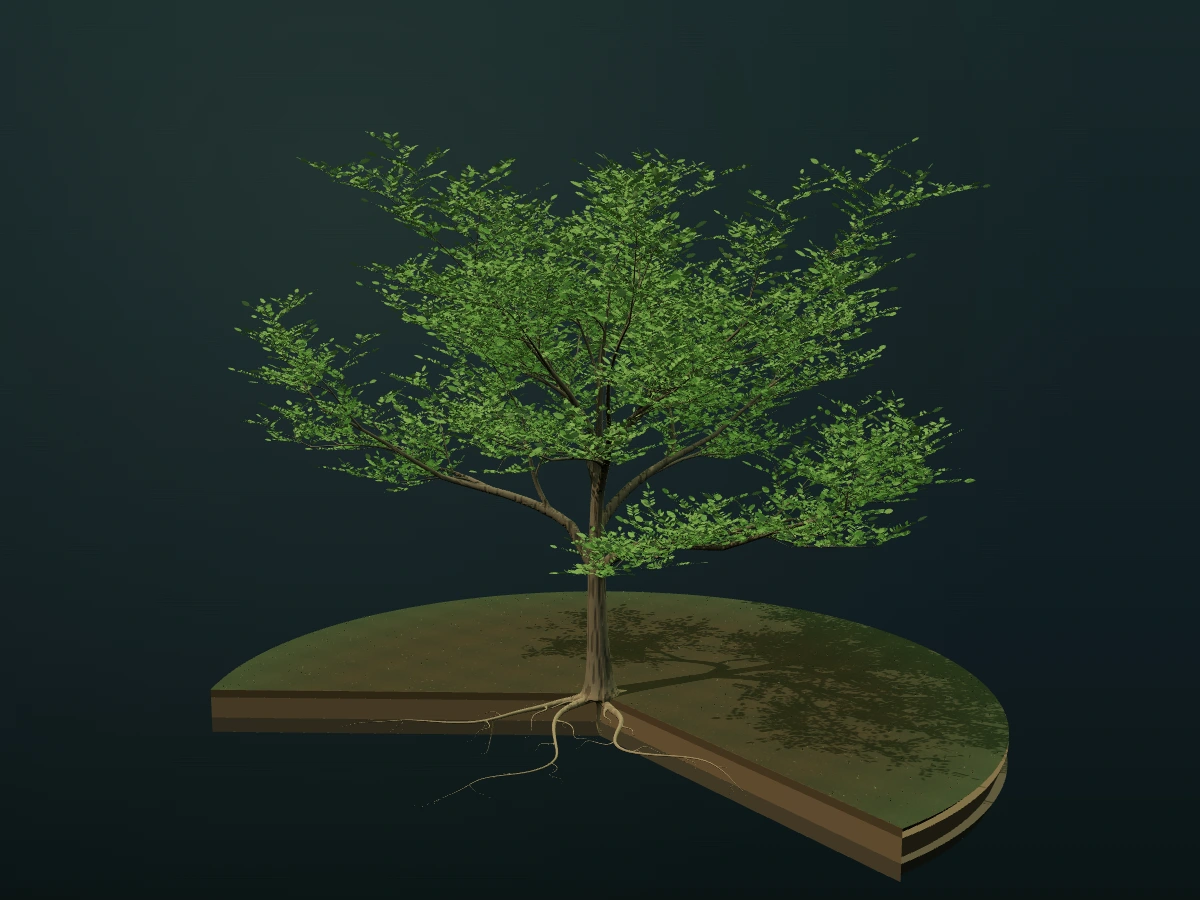
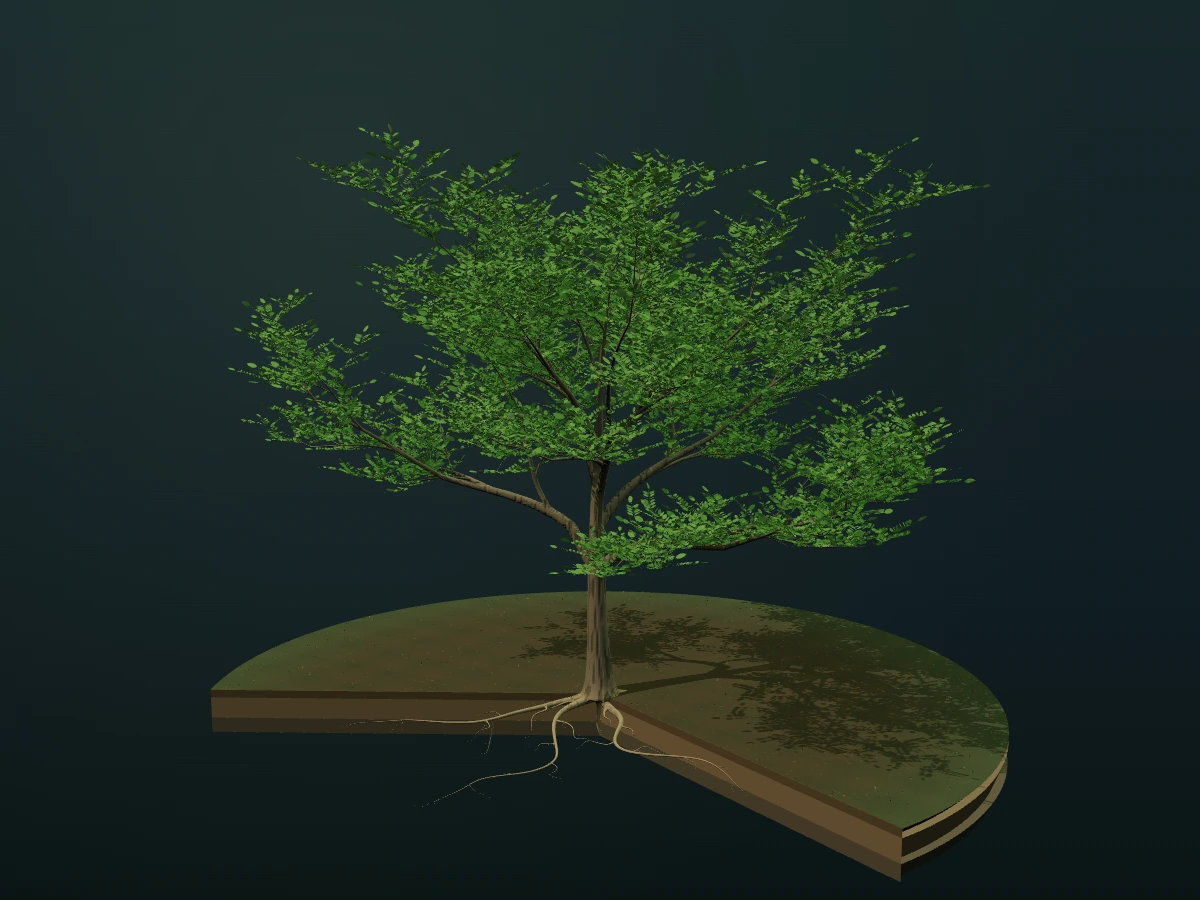
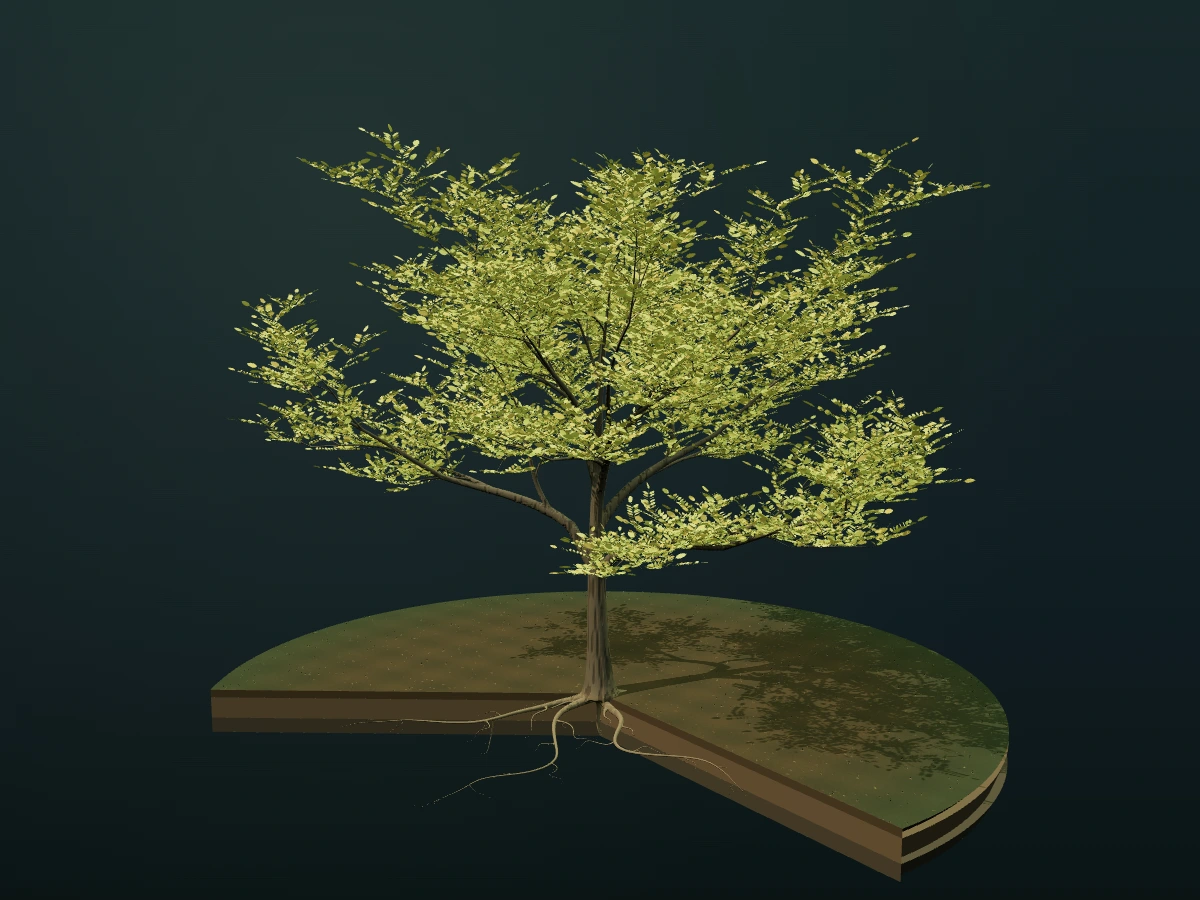
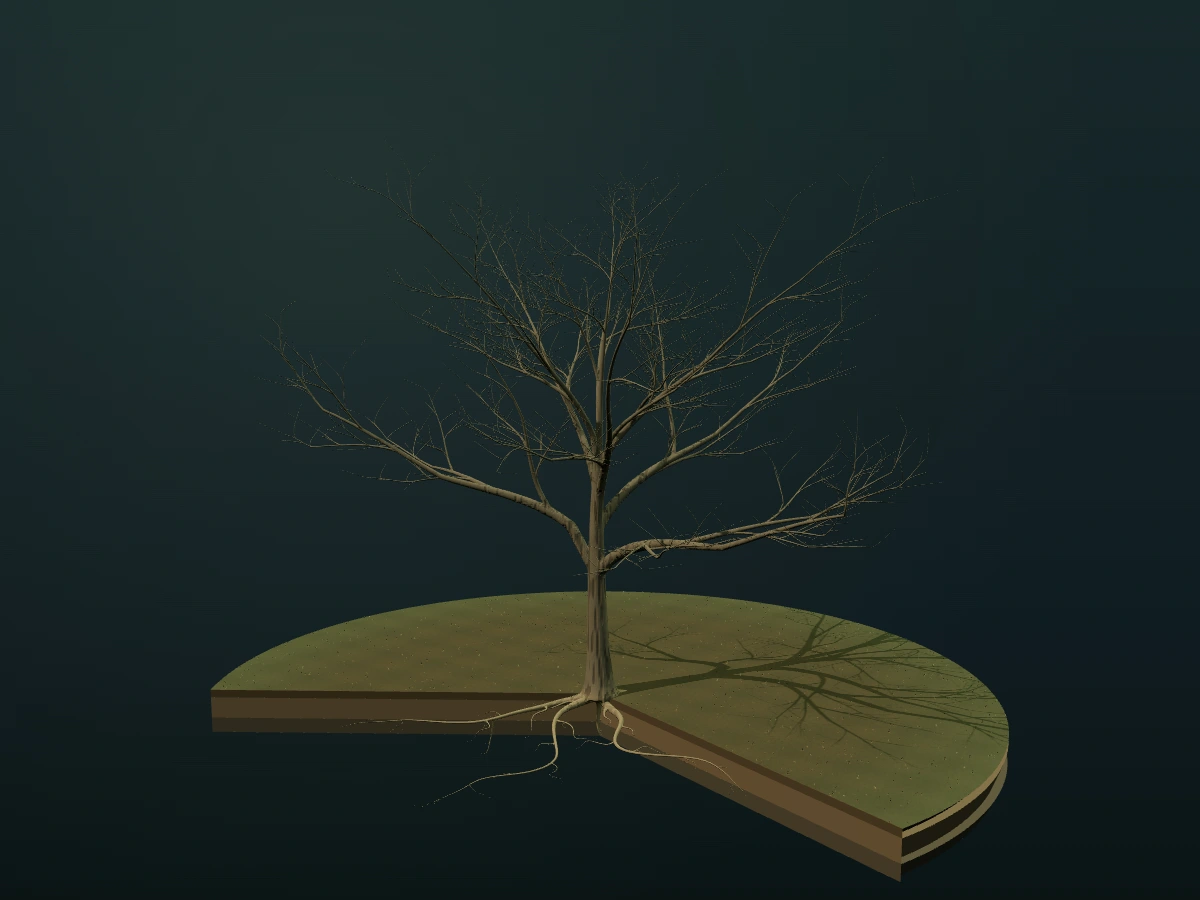
Seasonal illustration; the same plant, age and camera across four views.
Seasonal record
North Carolina botanical account
Leaf renewal
Deciduous[1]
The record describes a deciduous plant: foliage is renewed after a leafless or reduced-leaf phase. The named views illustrate that cycle without fixing its dates at a planting site.
Colour notes
Gold / yellow[1]
These are recorded colour possibilities. The shades and their distribution are illustrative; a particular autumn can look different.
Reading these views
Season names organize these four views, not a universal calendar. Hemisphere, local climate, cultivar and management can change timing; months are shown only when explicitly recorded.
The views emphasize crown structure. Buds, small flowers, individual retained leaves and fine reproductive changes may be unresolved; model age and fruit count are not production forecasts.
No separate on-tree fruit display is configured for this record.
Seasonal references
- NC State Extension · Juglans cinerea ↗plants.ces.ncsu.edu
03 / Leaves & flowers
A closer look at the organs
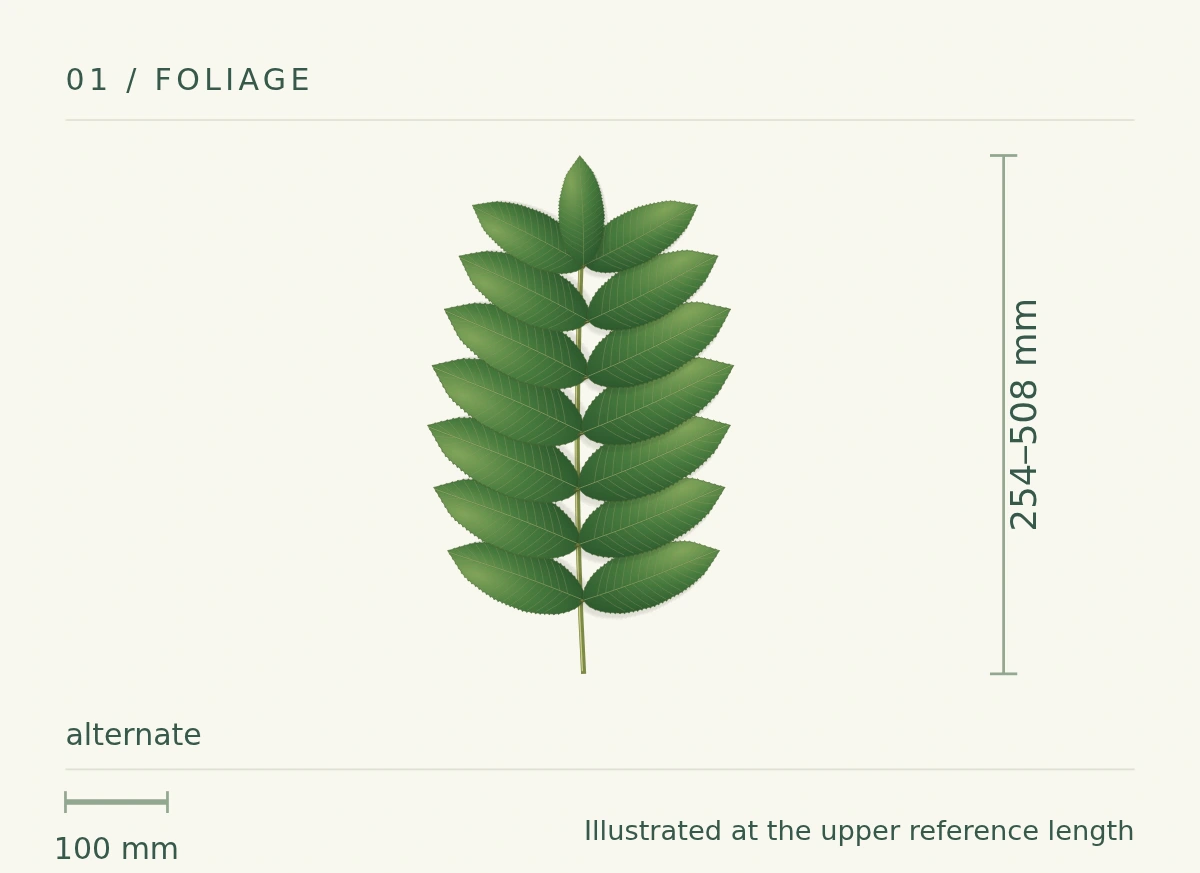
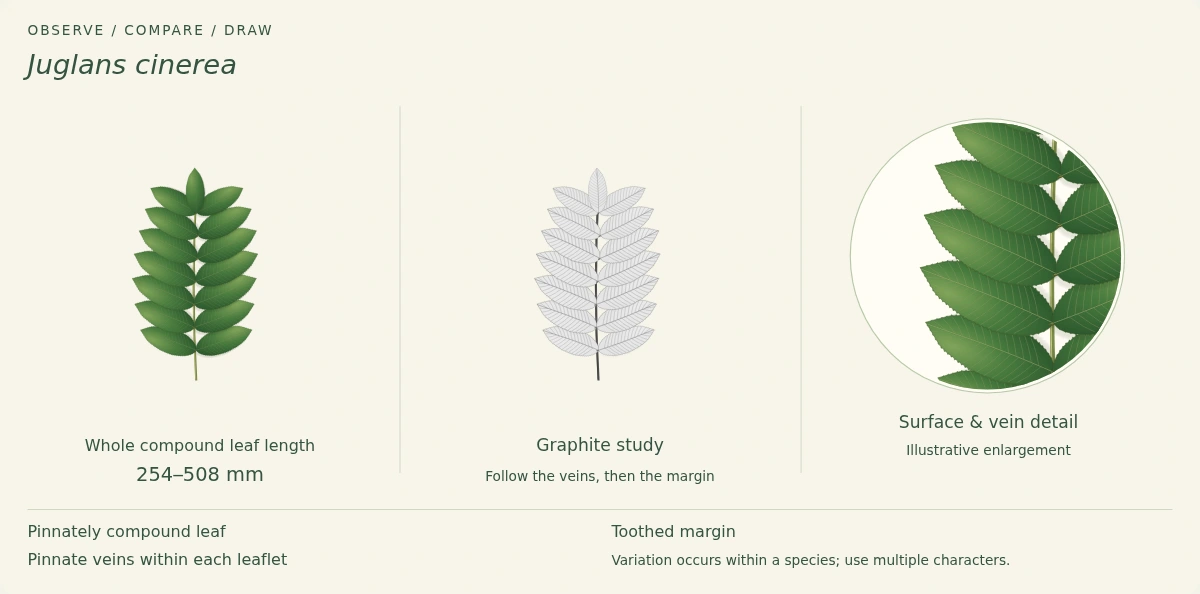
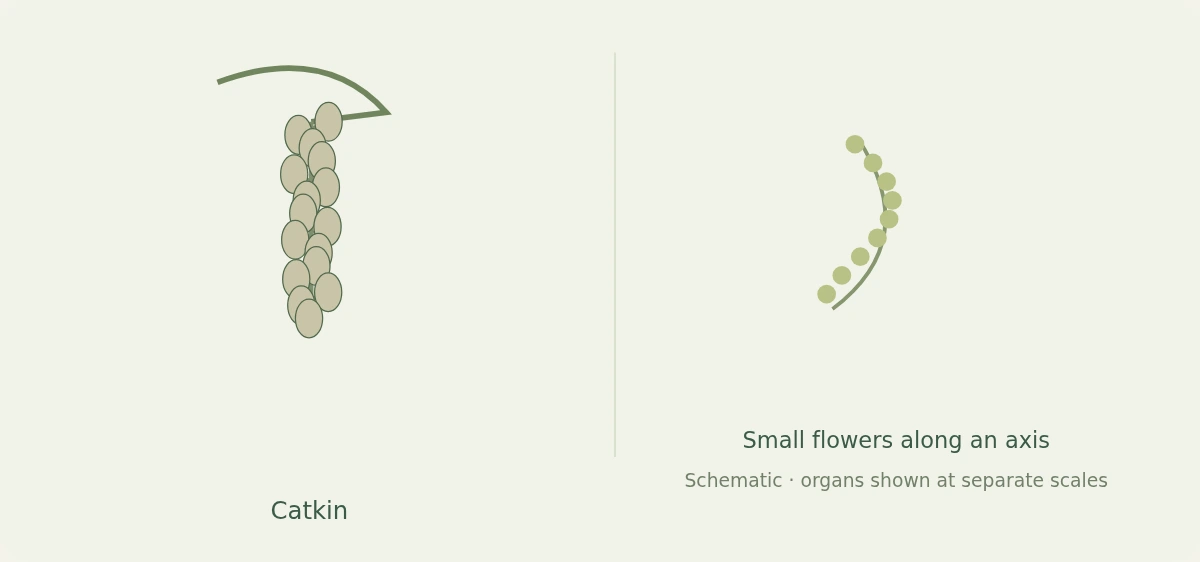
Leaves
- Whole compound leaf length
- 254–508 mmSource notes
Alternate odd-pinnate leaves bear eleven to nineteen serrate hairy leaflets, including a terminal one.
Pinnately compound leaf · Toothed margin · Pinnate veins within each leaflet · alternate
Seasonal notes
Autumn colour varies with genotype, site and weather. These phases are illustrative, without fixed calendar dates.
- Flowering reference
- Spring · Summer
04 / Fruit & seed
Named structures, separate scales
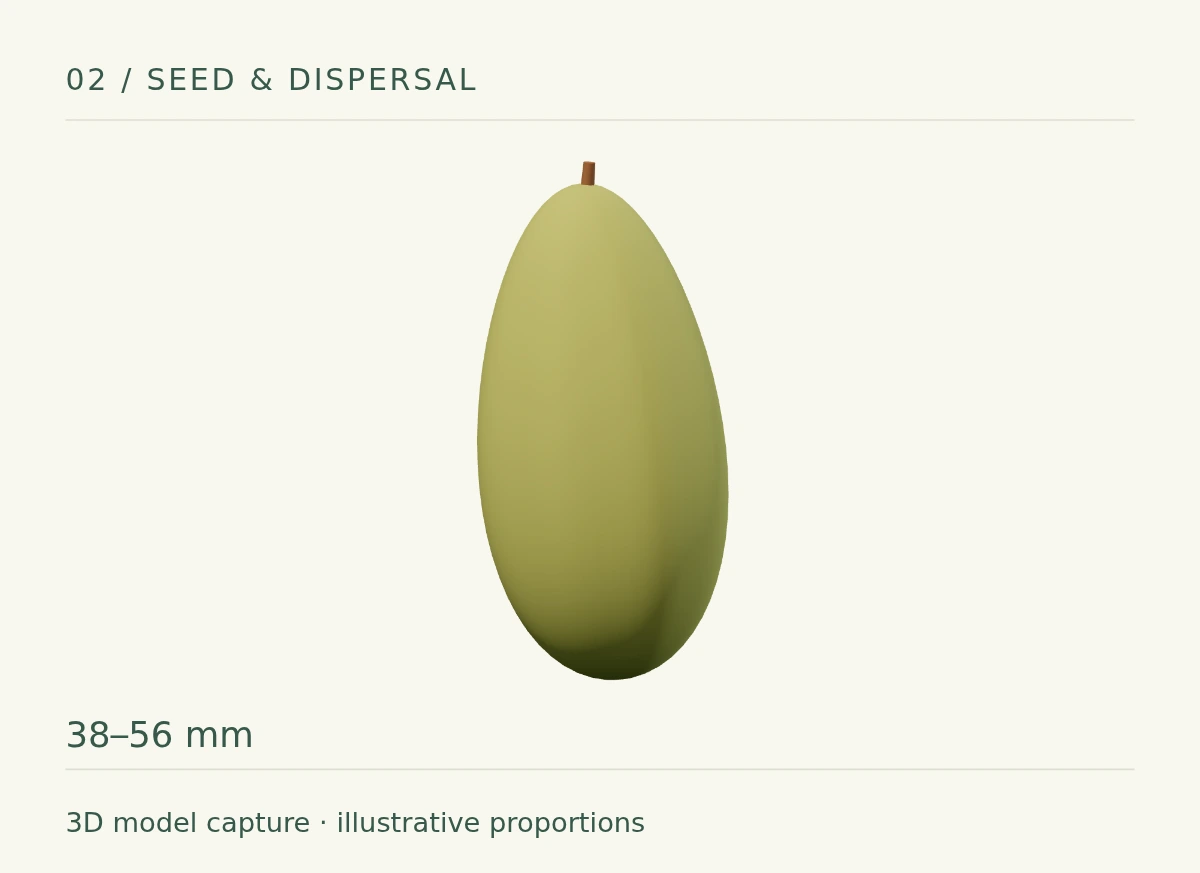
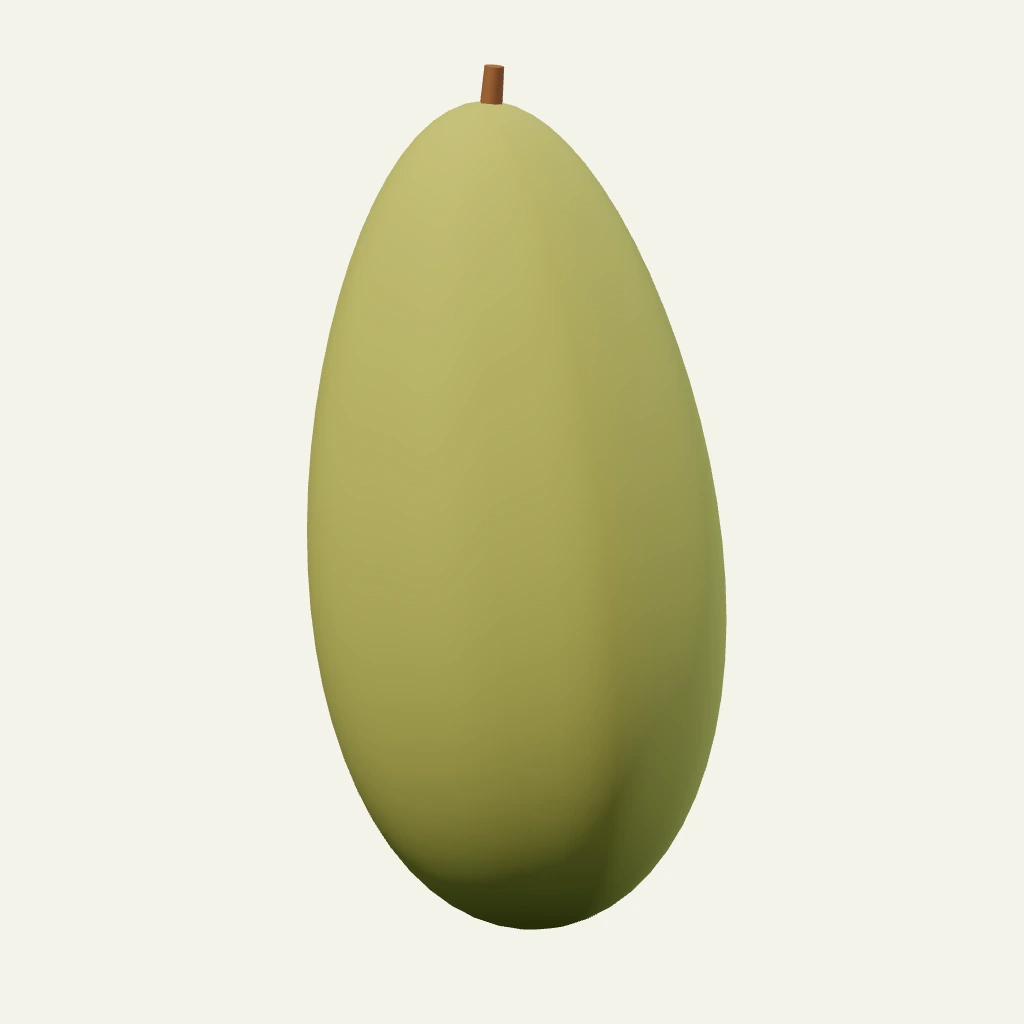
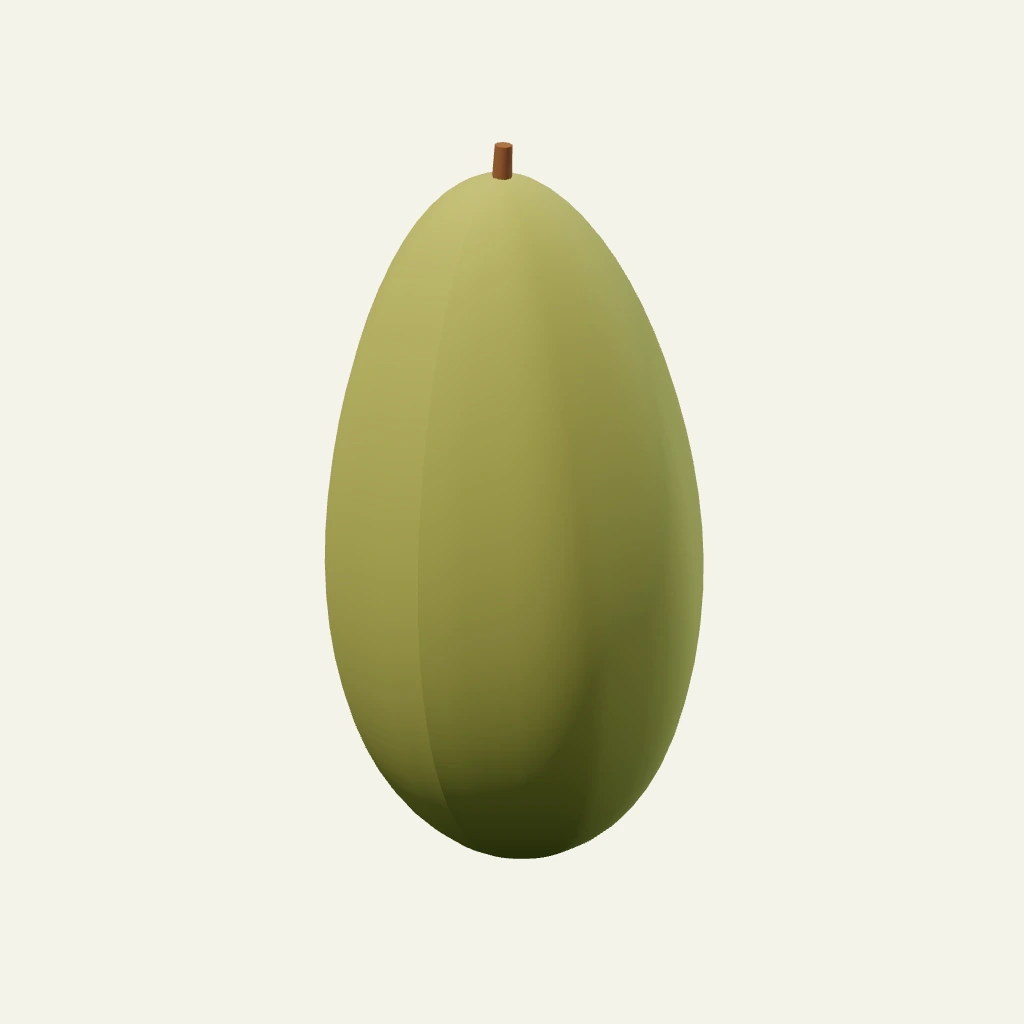
Fruit / dispersal unit
- Whole fruit length · husk included
- 38–56 mmSource notes
An oblong nut with a rough shell is enclosed by a sticky hairy husk; the edible seed is inside the shell.
- Fruiting reference
- Autumn
North Carolina botanical account
Organs are enlarged independently. Refer to the named measurement, not image size.
05 / Habitat
Native range & growing context
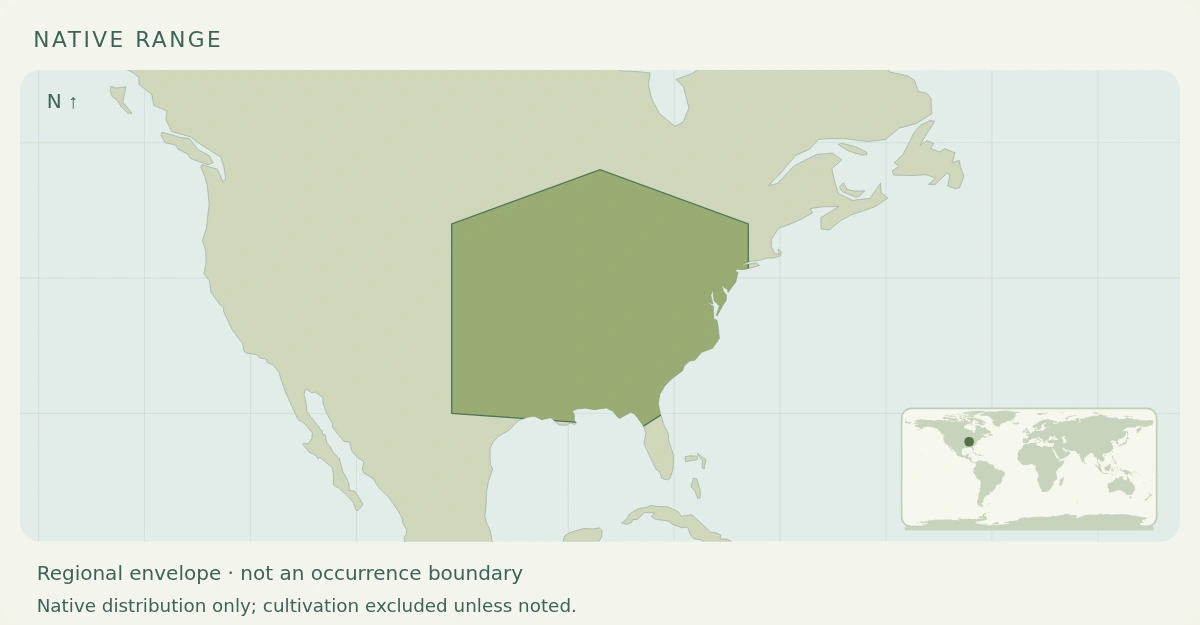
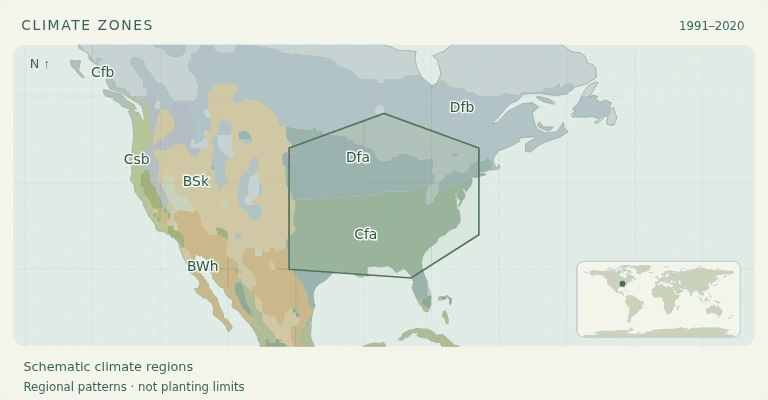
Native range & growing context
Eastern Canada and the north-central and eastern United States.
- Reference spread
- Not documented
- Moisture
- Not documented
- Growth tendency
- Moderate
- Life span
- No numerical lifespan is assigned from these references. Model age is not a survival forecast.
Regional context, not a measured occurrence or suitability map.
06 / Sources & interpretation
Read the evidence behind the illustration
Names & classification
- Family
- Juglandaceae
- Genus
- Juglans
- Synonyms
- —
- Alternate odd-pinnate leaves bear eleven to nineteen serrate hairy leaflets, including a terminal one.
- An oblong nut with a rough shell is enclosed by a sticky hairy husk; the edible seed is inside the shell.
Source-informed teaching reconstruction, not a surveyed specimen. Crown dimensions, branch counts, growth ages and root geometry are ArborAI. Individual trees vary with provenance, competition, climate and management.
ArborAI teaching geometry; coefficients and ages are not measured species constants.
- NC State Extension · Juglans cinerea ↗plants.ces.ncsu.edu
Plant data and references · 5
| Native range | Eastern Canada and the north-central and eastern United States.Transferred from the existing catalogue; independent botanical review remains pending.plants.ces.ncsu.edu |
|---|---|
| Leaf lengthmm | [254, 508]Transferred from the existing catalogue; independent botanical review remains pending.plants.ces.ncsu.edu |
| Seed lengthmm | [38, 56]Transferred from the existing catalogue; independent botanical review remains pending.plants.ces.ncsu.edu |
| Reference phenologycategory | {"flowering": {"seasons": ["spring", "summer"]}, "fruiting": {"seasons": ["autumn"]}, "reference": "North Carolina botanical account", "source": "https://plants.ces.ncsu.edu/plants/juglans-cinerea/", "reviewed": "2026-10-16"}Regional observations. Fruit display may include persistence and is not automatically ripening. Missing dates remain unspecified. Independent botanical review remains pending.plants.ces.ncsu.edu |
| Usda hardinesscategory | {"system": "USDA", "zones": [3, 7], "source": "usda-hardiness", "subzones": ["3a", "7b"]}Reported horticultural recommendation; winter minimum only, not a heat or overall suitability limitplants.ces.ncsu.edu |