Botanical field guide
Cedrus libani
Cedar of Lebanon
Tree / Pinaceae
The plant, in detail
Mountain forests of the eastern Mediterranean, with cold winters and summer drought.
- Reference height
- 20–35 m
- Foliage habit
- Evergreen
- USDA zones
- 5–7
- Light
- Not documented
A reference-informed 3D reconstruction rather than a scanned tree. Geometry, leaf counts, root dimensions and age trajectories are ArborAI. Site effects, damage and physiological processes are not calibrated.
Crown
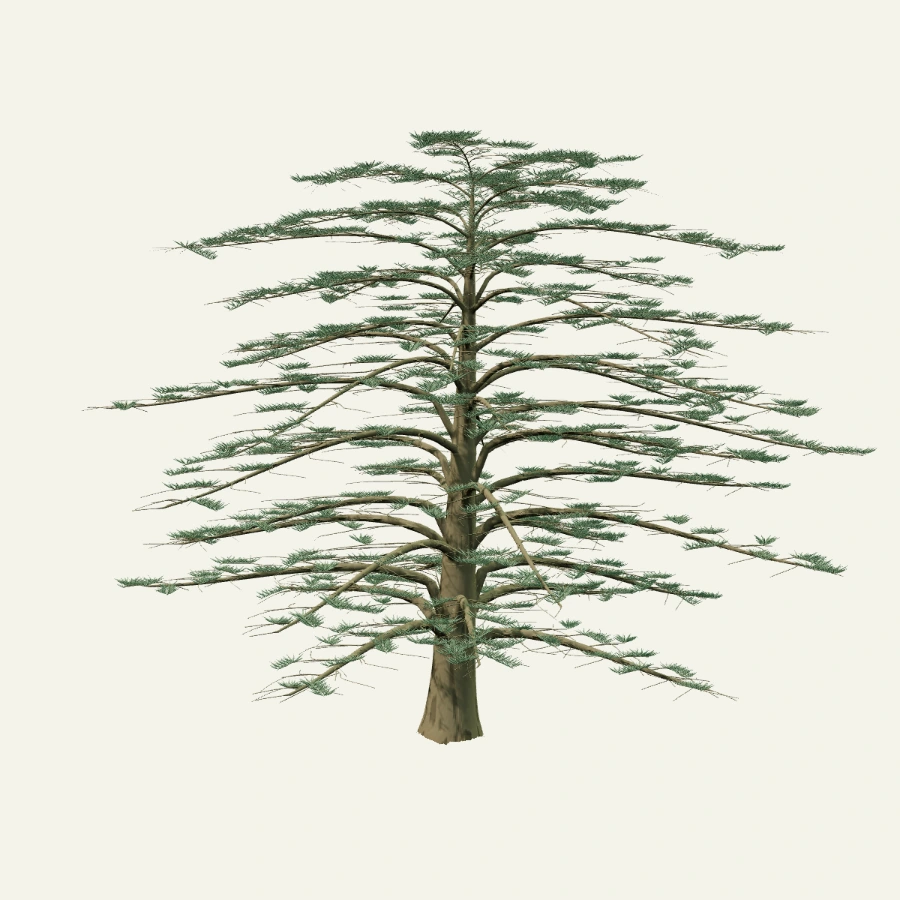
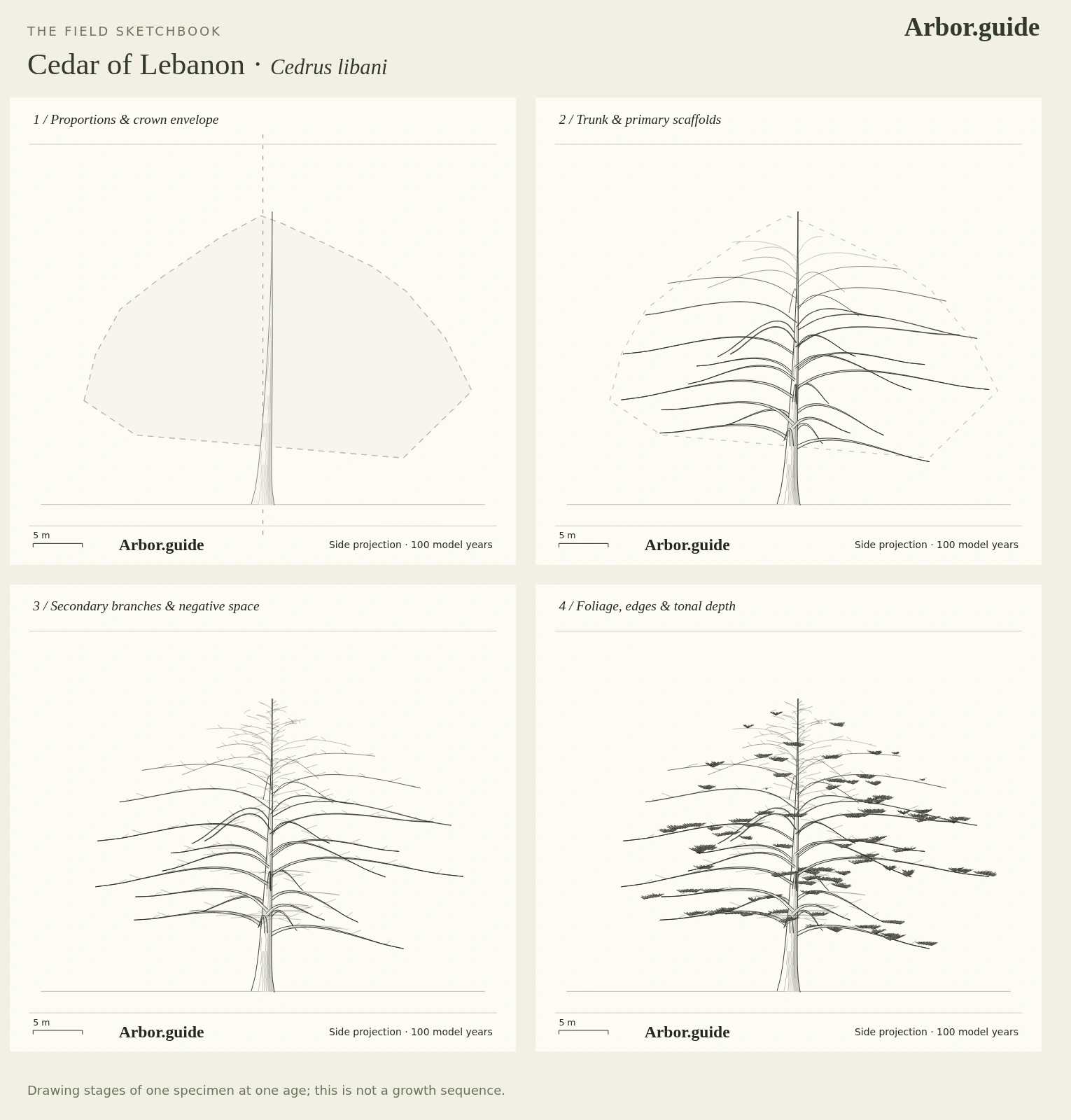
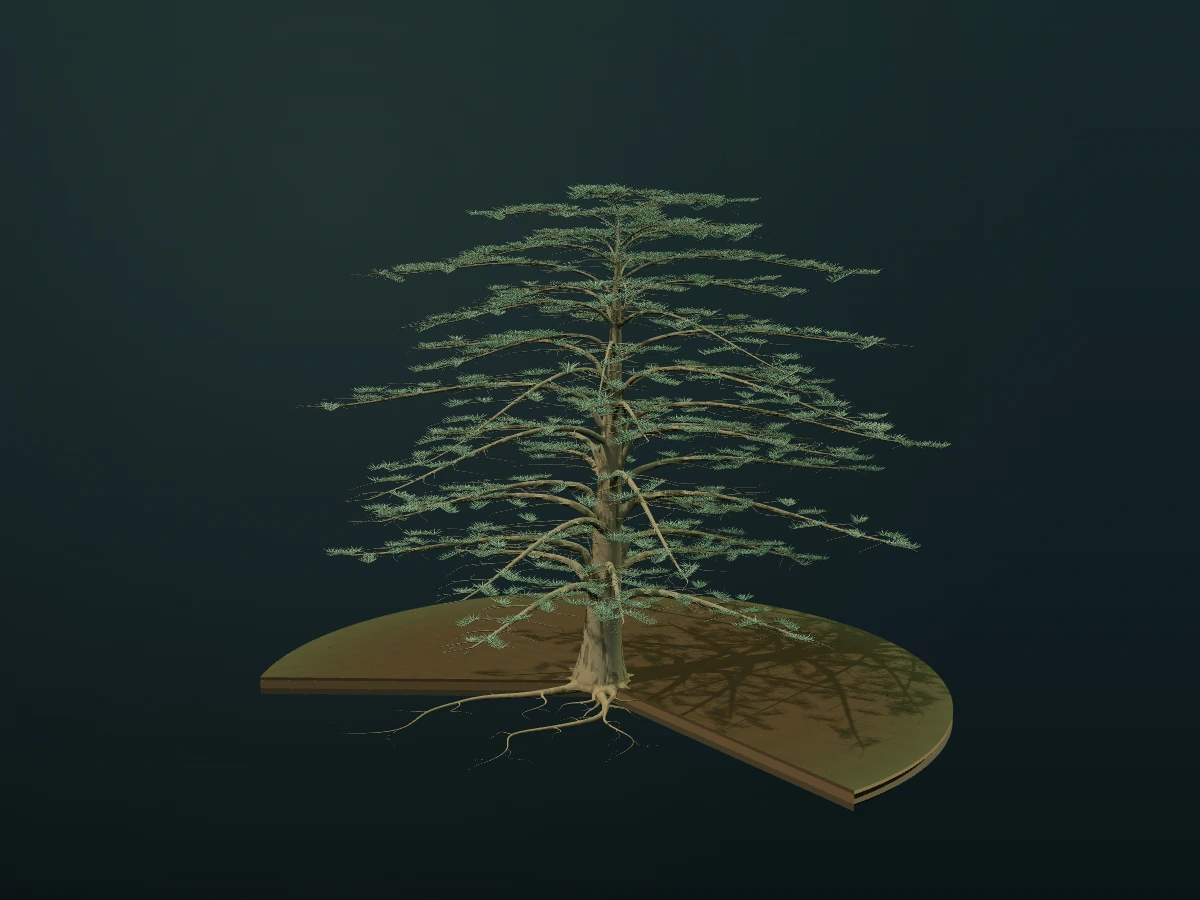
Young crowns are conical; mature trees can develop broad, flattened crowns with prominent horizontal layers.
Branching
Strong scaffold limbs support long and short shoots, creating tiered foliage pads.
Bark
Gray-brown bark becomes furrowed and scaly on older stems.
Roots
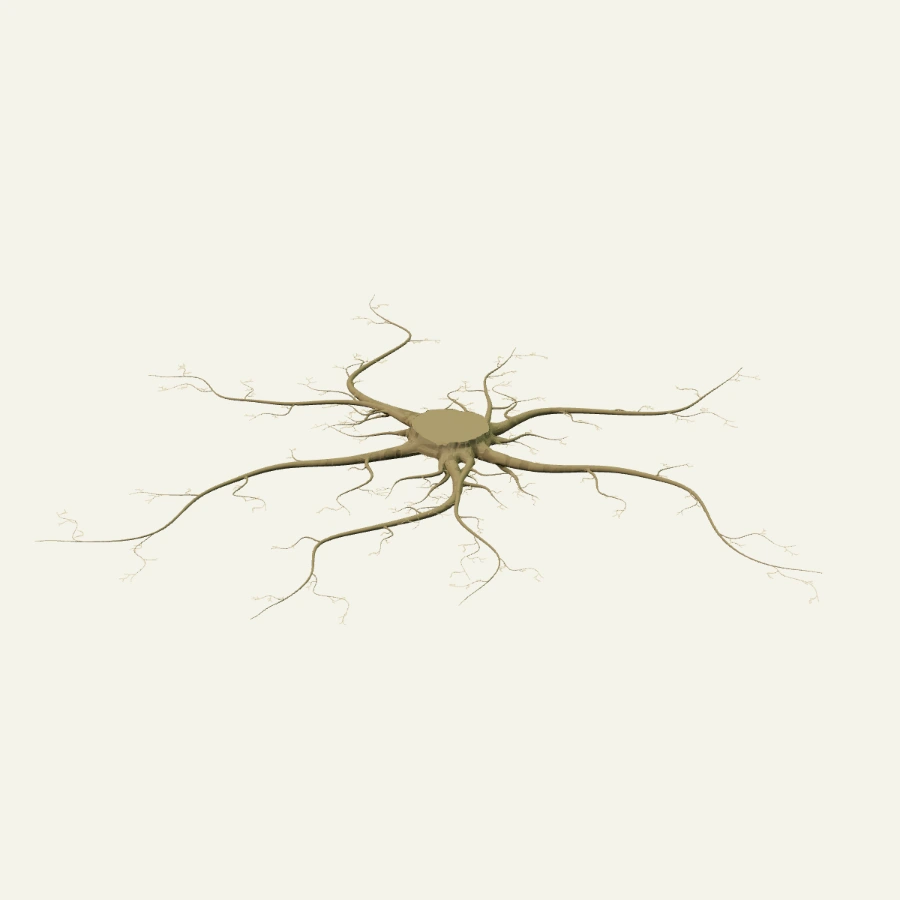
Lateral and descending roots occupy suitable soil and rock fissures; bedrock strongly controls architecture.
The shape of growth
Stylized real-world examples
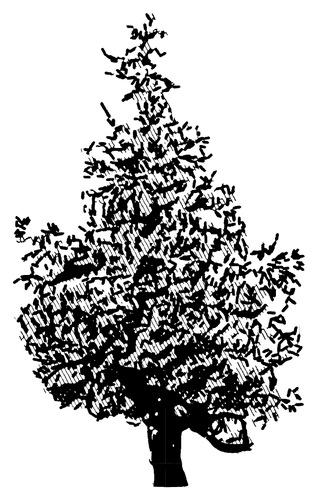
Silhouettes are sized independently.
02 / Seasons
Through the seasons
Four portraits. One plant.
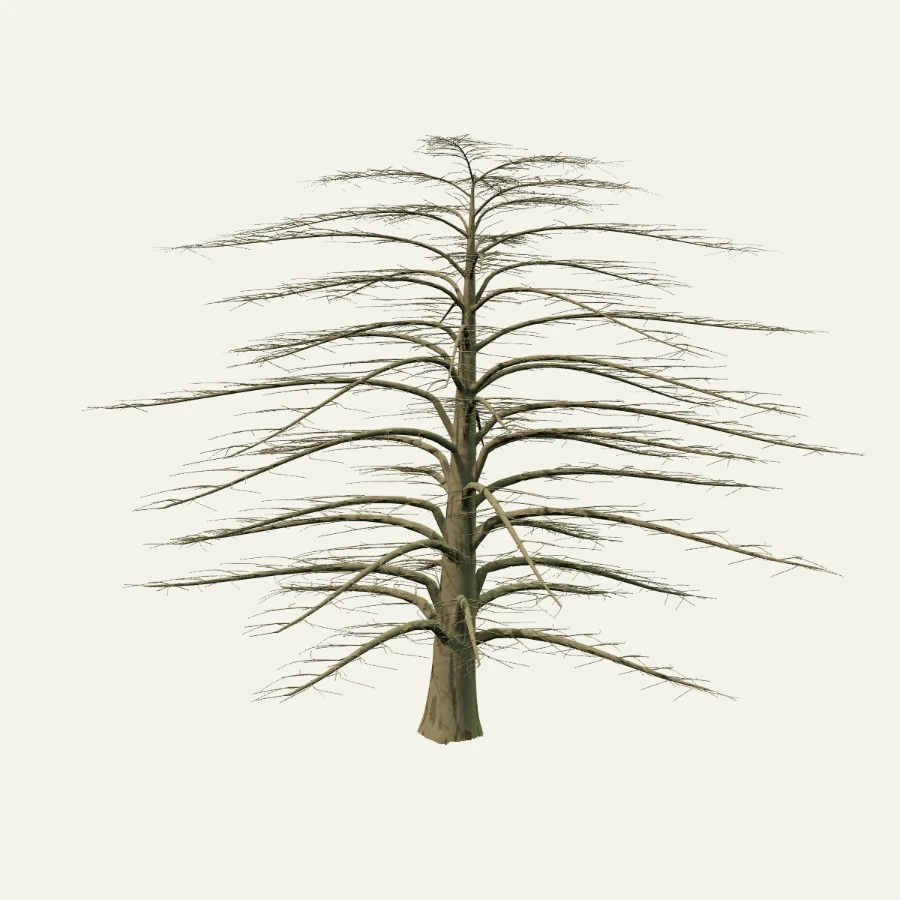
Read the crown, foliage and reproductive structures together. The four views compare seasonal appearances; the reference notes explain what is actually documented.
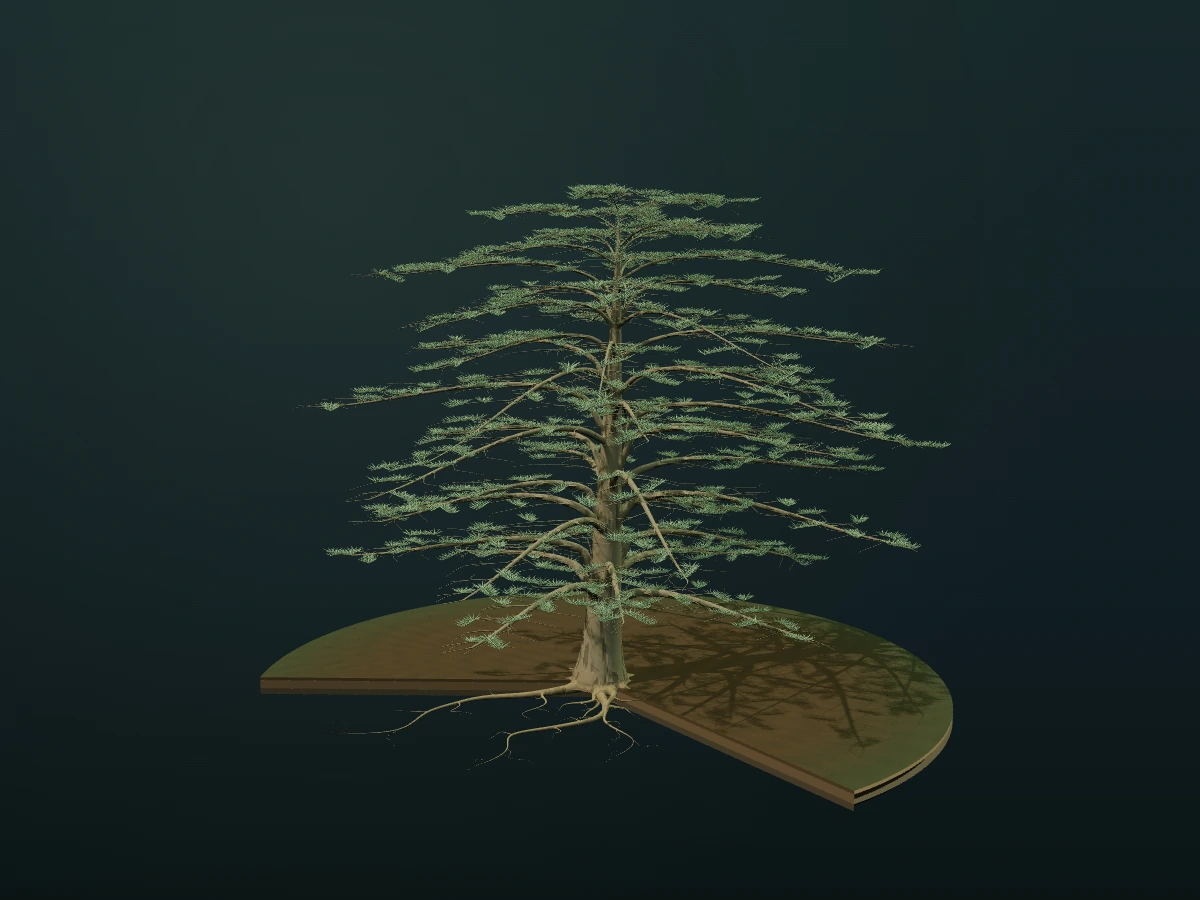
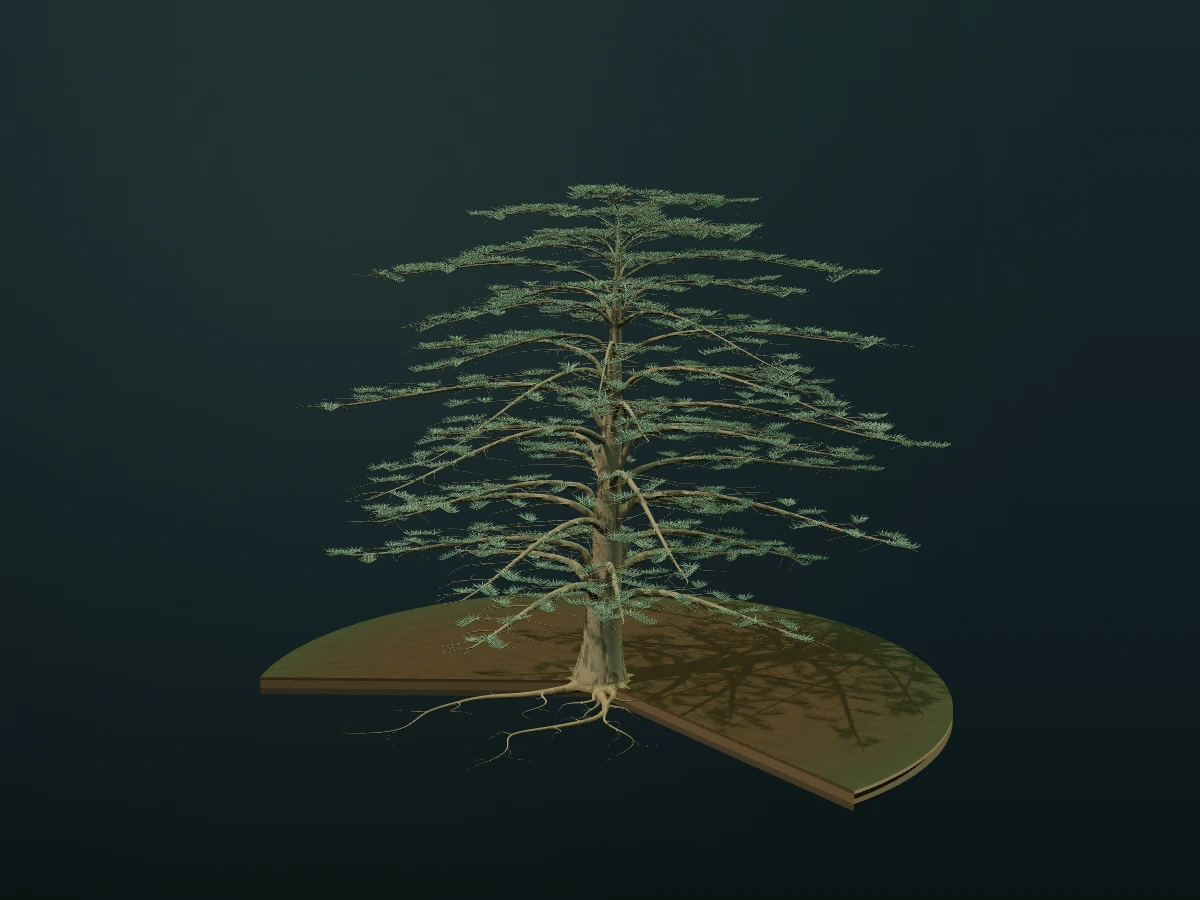
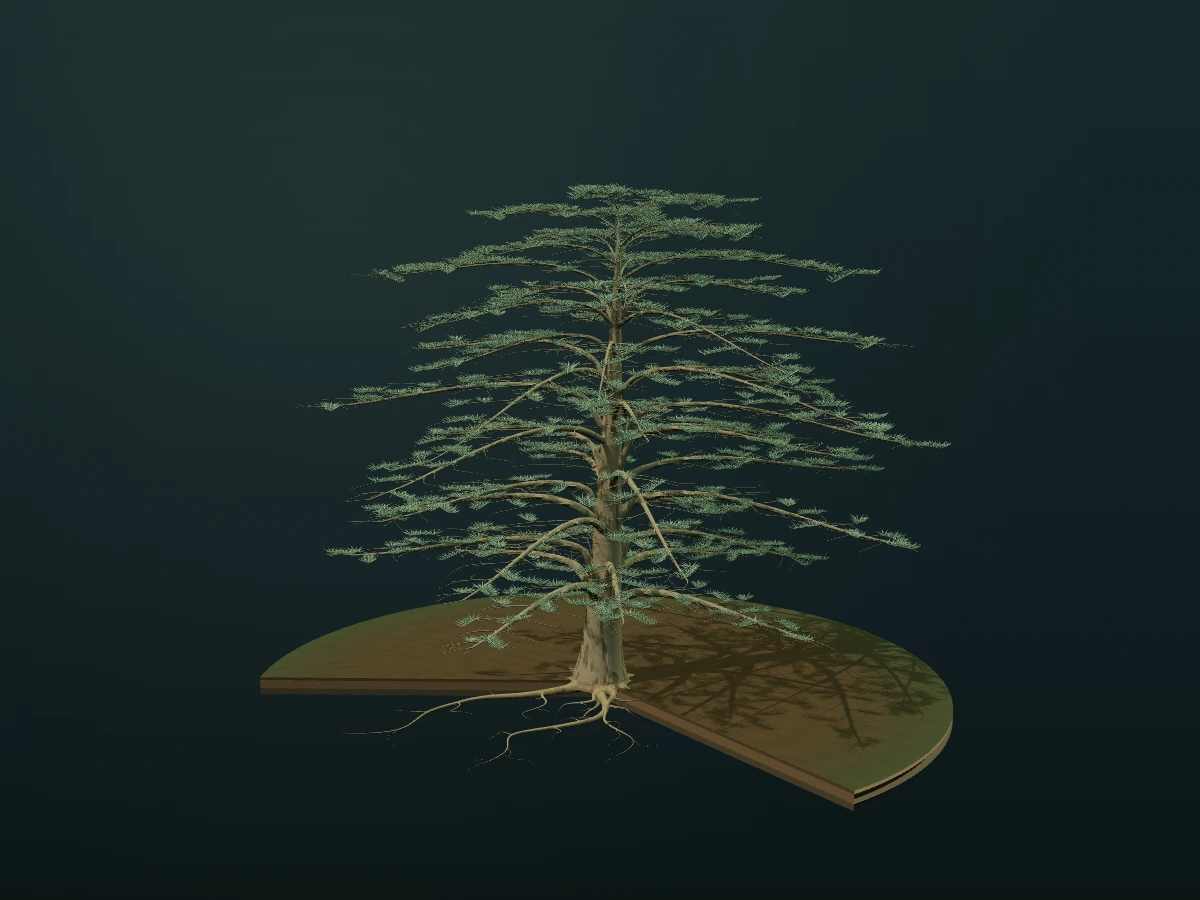
Seasonal illustration; the same plant, age and camera across four views.
Seasonal record
North Carolina botanical account
Leaf renewal
Evergreen[1]
A green canopy can persist while individual leaves age and are replaced. Evergreen does not mean that every leaf lasts indefinitely or that flowering and fruiting are continuous.
Reading these views
Season names organize these four views, not a universal calendar. Hemisphere, local climate, cultivar and management can change timing; months are shown only when explicitly recorded.
The views emphasize crown structure. Buds, small flowers, individual retained leaves and fine reproductive changes may be unresolved; model age and fruit count are not production forecasts.
No separate on-tree fruit display is configured for this record.
Seasonal references
- NC State Extension · Cedar of Lebanon ↗plants.ces.ncsu.edu
- www.conifers.org ↗www.conifers.org
03 / Foliage
A closer look at the organs
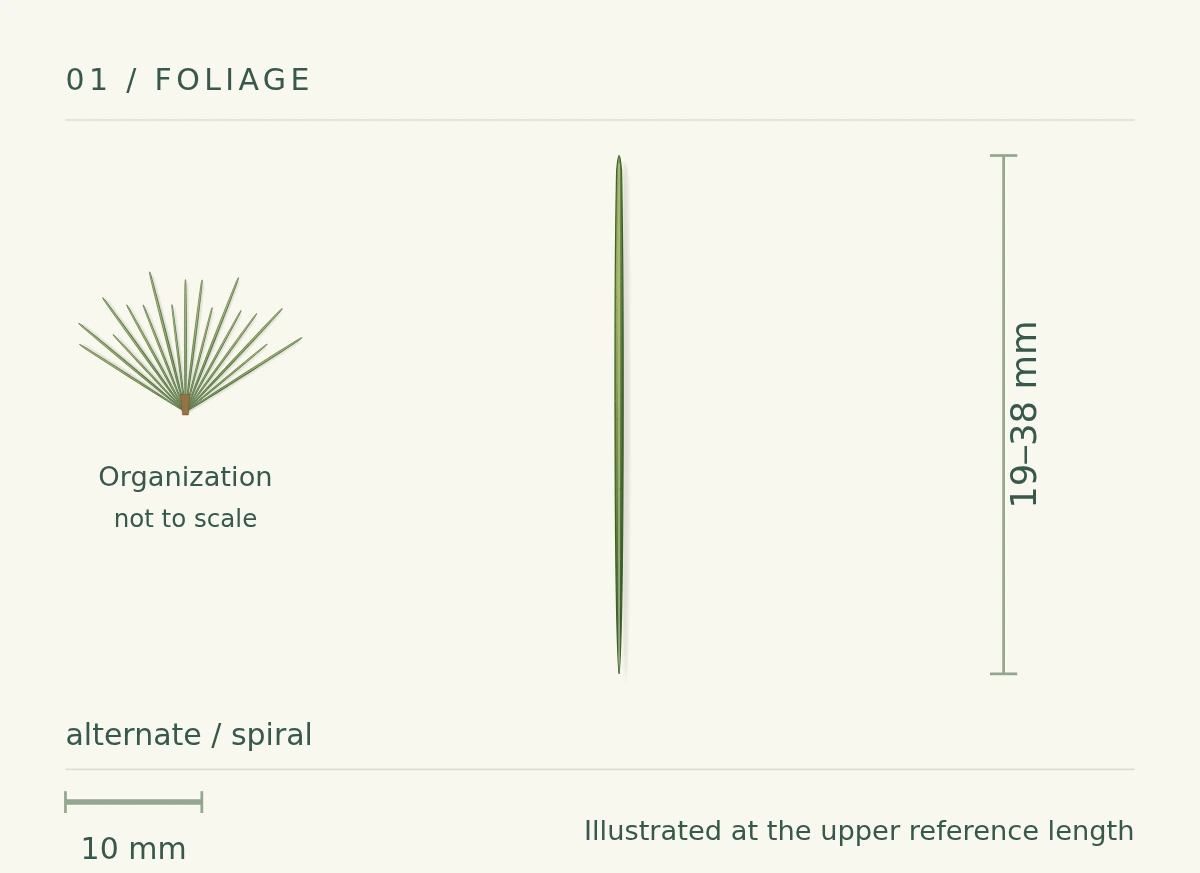
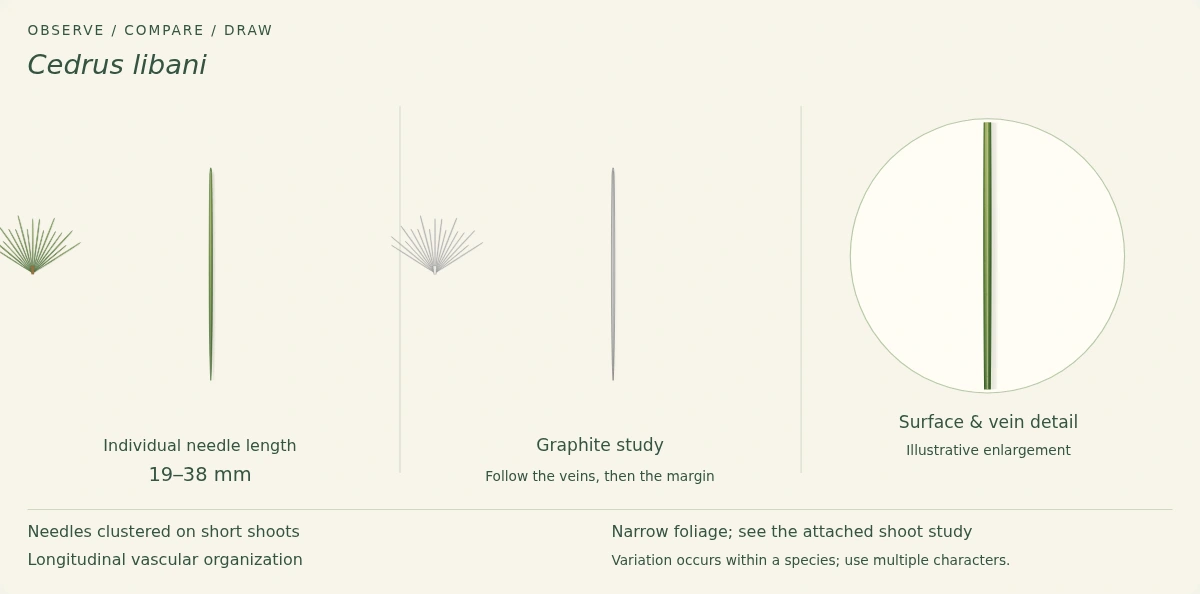
Leaves
- Individual needle length
- 19–38 mmSource notes
Evergreen needles occur singly on extension shoots and in clusters on short shoots.
Needles clustered on short shoots · Narrow foliage; see the attached shoot study · Longitudinal vascular organization · alternate / spiral
Seasonal notes
A green crown persists while older leaf cohorts are replaced. The small ochre patches illustrate turnover; their size and timing are not measured.
04 / Fruit & seed
Named structures, separate scales
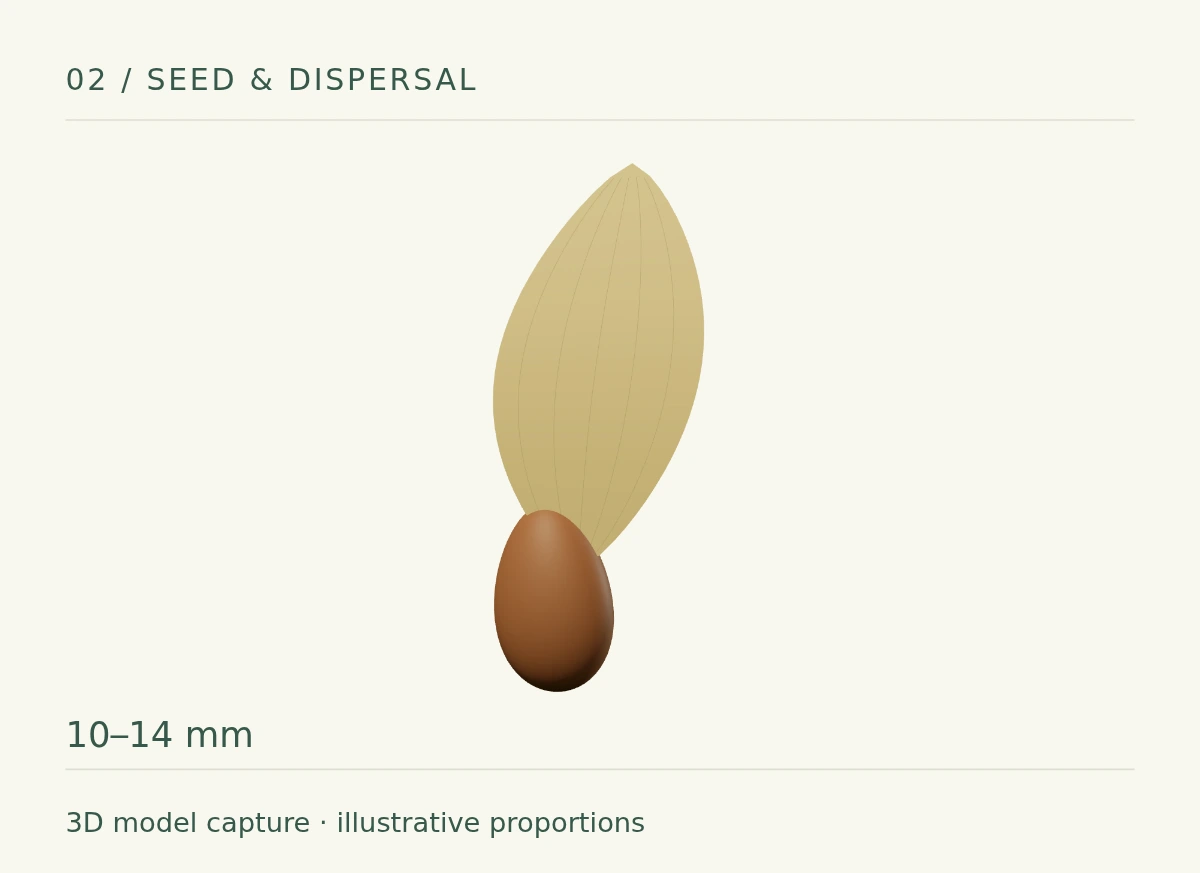
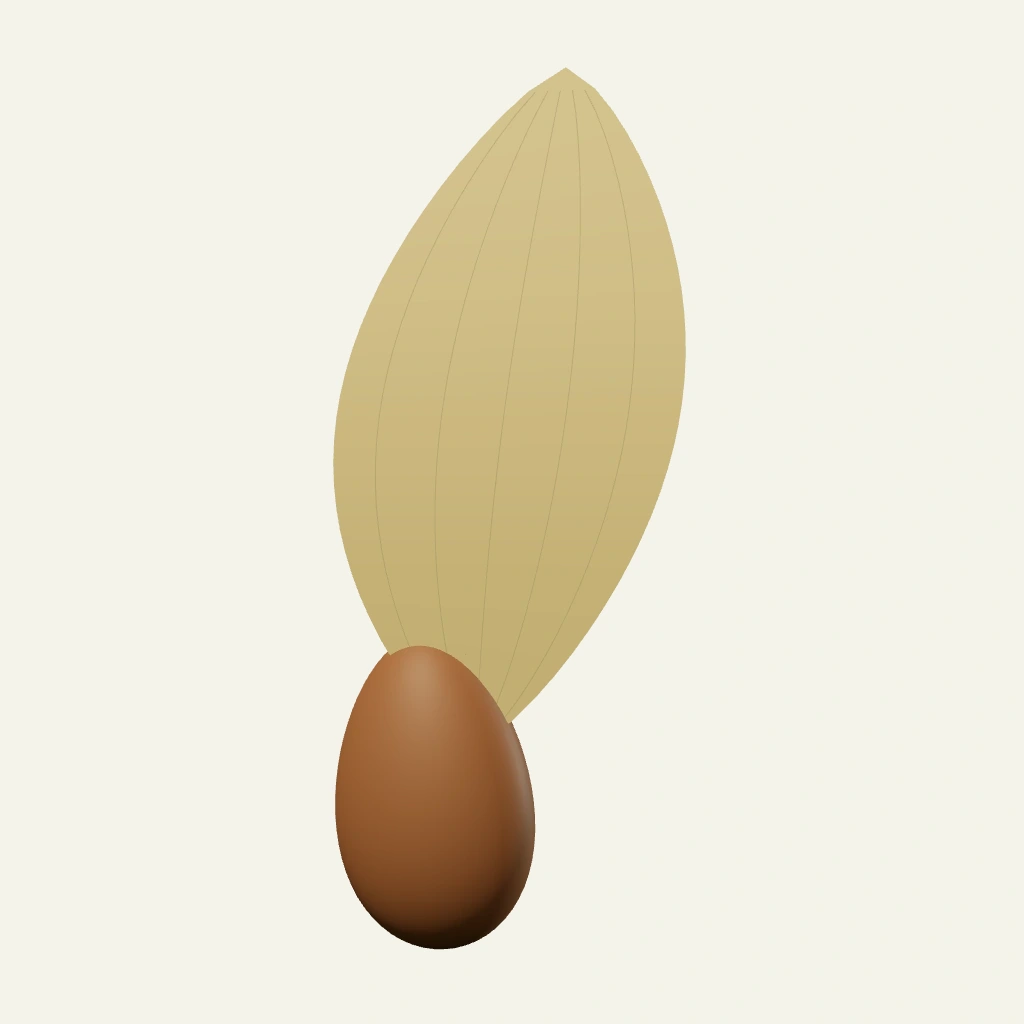
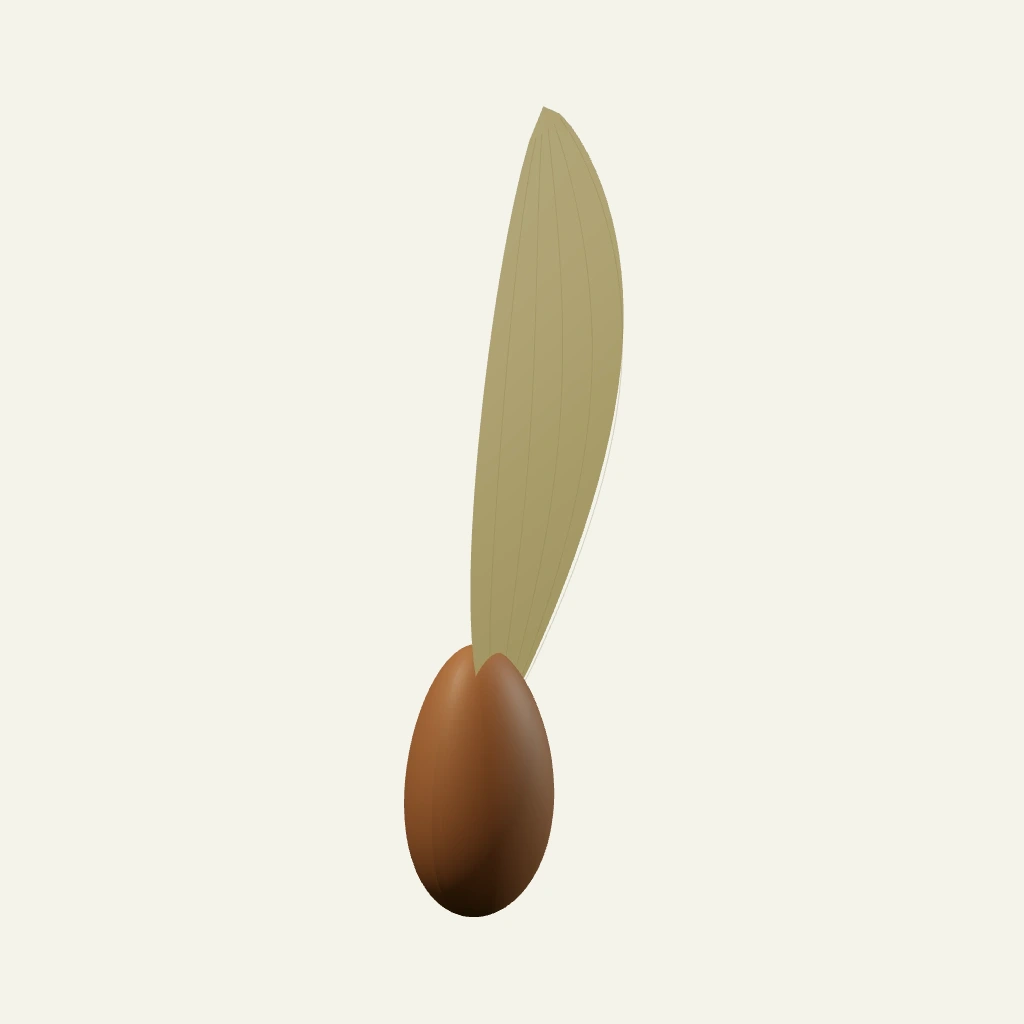
Seed
- Seed body length
- 10–14 mmSource notes
The papery wing aids dispersal. The seed body is the compact darker part.
- Fruiting reference
- Summer · Autumn
North Carolina botanical account
Organs are enlarged independently. Refer to the named measurement, not image size.
05 / Habitat
Native range & growing context
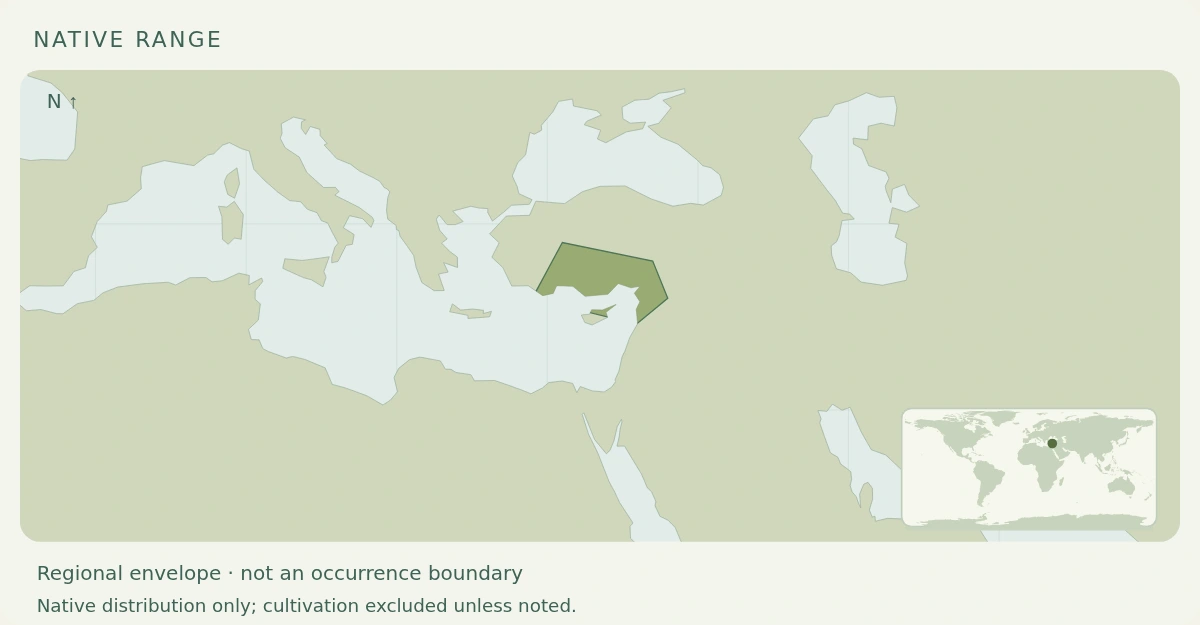
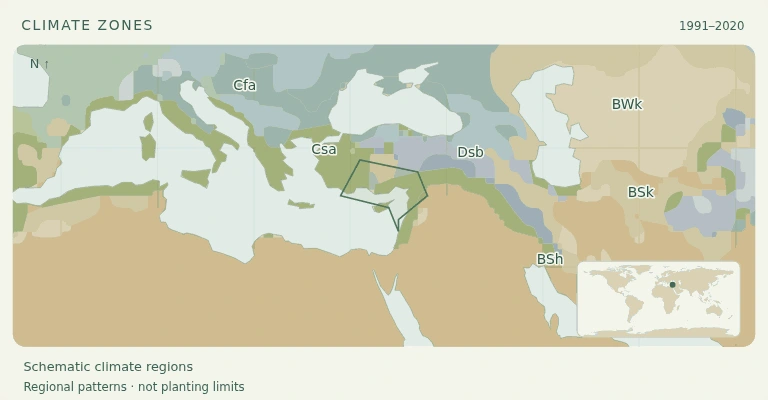
Native range & growing context
Eastern Mediterranean mountains, including Türkiye and Lebanon.
- Reference spread
- Not documented
- Moisture
- Not documented
- Growth tendency
- Slow
- Life span
- Potential longevity depends on site, damage and management; model years are not a survival forecast.
Regional context, not a measured occurrence or suitability map.
06 / Sources & interpretation
Read the evidence behind the illustration
Names & classification
- Family
- Pinaceae
- Genus
- Cedrus
- Synonyms
- —
- True cedars belong to Cedrus; many other trees called “cedar” are unrelated genera.
A reference-informed 3D reconstruction rather than a scanned tree. Geometry, leaf counts, root dimensions and age trajectories are ArborAI. Site effects, damage and physiological processes are not calibrated.
ArborAI teaching geometry; coefficients and ages are not measured species constants.
- NC State Extension · Cedar of Lebanon ↗plants.ces.ncsu.edu
Plant data and references · 5
| Native range | Eastern Mediterranean mountains, including Türkiye and Lebanon.Transferred from the existing catalogue; independent botanical review remains pending.plants.ces.ncsu.edu |
|---|---|
| Leaf lengthmm | [19, 38]Transferred from the existing catalogue; independent botanical review remains pending.plants.ces.ncsu.edu |
| Seed lengthmm | [10, 14]Transferred from the existing catalogue; independent botanical review remains pending.www.conifers.org |
| Reference phenologycategory | {"flowering": {"seasons": ["summer", "autumn"]}, "fruiting": {"seasons": ["summer", "autumn"]}, "reference": "North Carolina botanical account", "source": "https://plants.ces.ncsu.edu/plants/cedrus-libani/", "reviewed": "2026-10-16"}Regional observations. Fruit display may include persistence and is not automatically ripening. Missing dates remain unspecified. Independent botanical review remains pending.plants.ces.ncsu.edu |
| Usda hardinesscategory | {"system": "USDA", "zones": [5, 7], "source": "usda-hardiness", "subzones": ["5a", "7b"]}Reported horticultural recommendation; winter minimum only, not a heat or overall suitability limitplants.ces.ncsu.edu |