Botanical field guide
Annona cherimola
Cherimoya
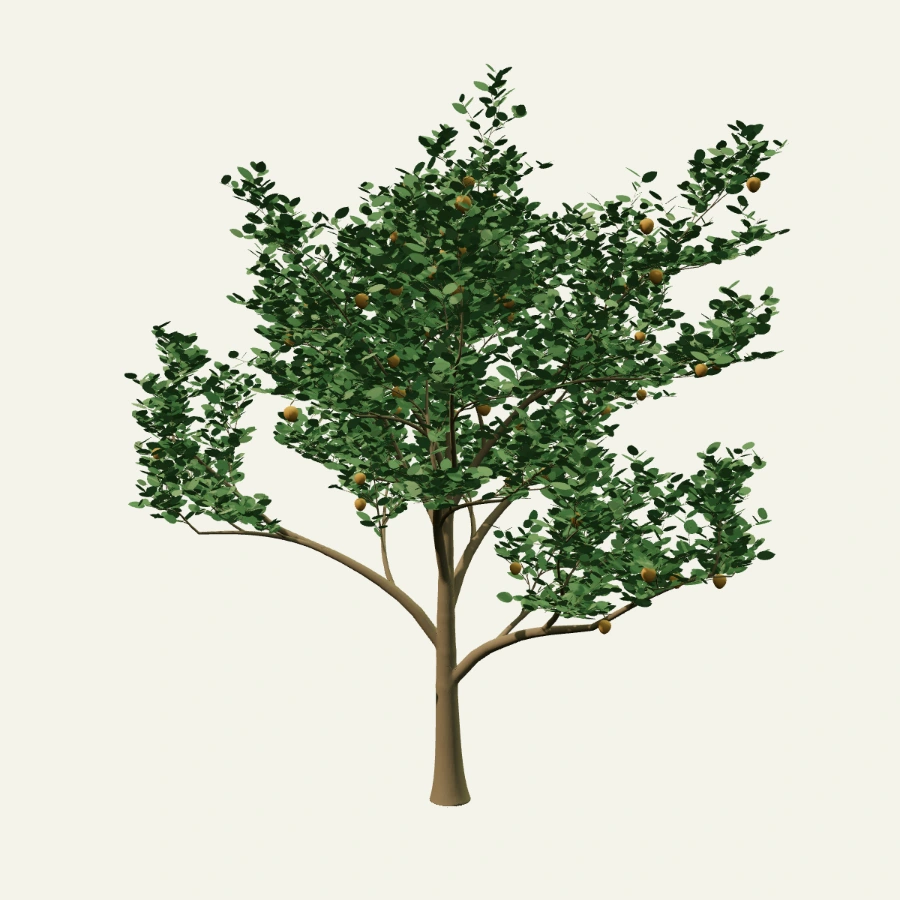
Tree / Annonaceae
The plant, in detail
Western South America.
- Reference height
- 5–9 m
- Foliage habit
- Semi-evergreen
- USDA zones
- Not documented
- Light
- Not documented
Reported reference stature in the cited account. Cultivar, rootstock, growing conditions and management can change size; this is not a universal species maximum.
Crown
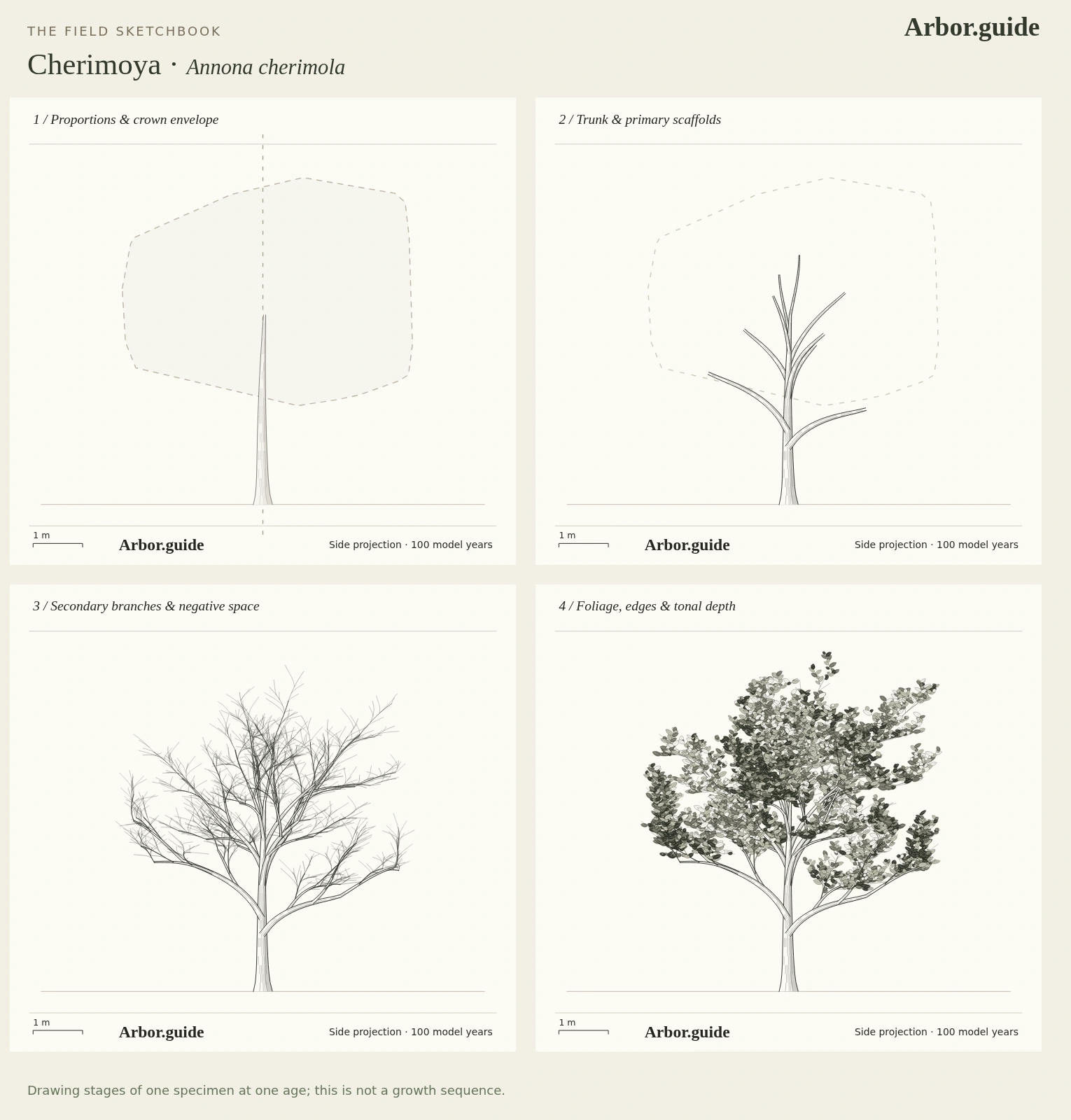
An ArborAI round crown guided by the cited growth form; orchard training and site can alter it.
Branching
Alternate leaves are broad, softly hairy beneath and arranged in two ranks.
Bark
Bark appearance in the model is illustrative and varies with stem age.
Roots
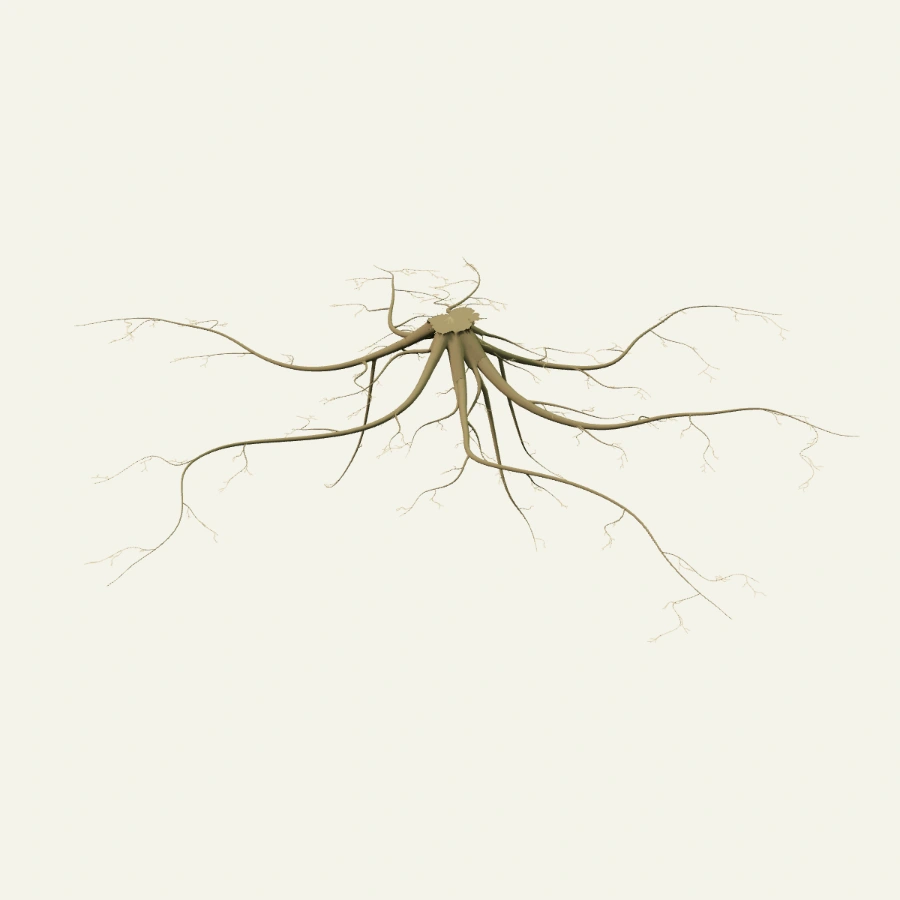
Root positions, depth and spread are schematic; no species-specific measured root map is assigned.
02 / Seasons
Through the seasons
Four portraits. One plant.
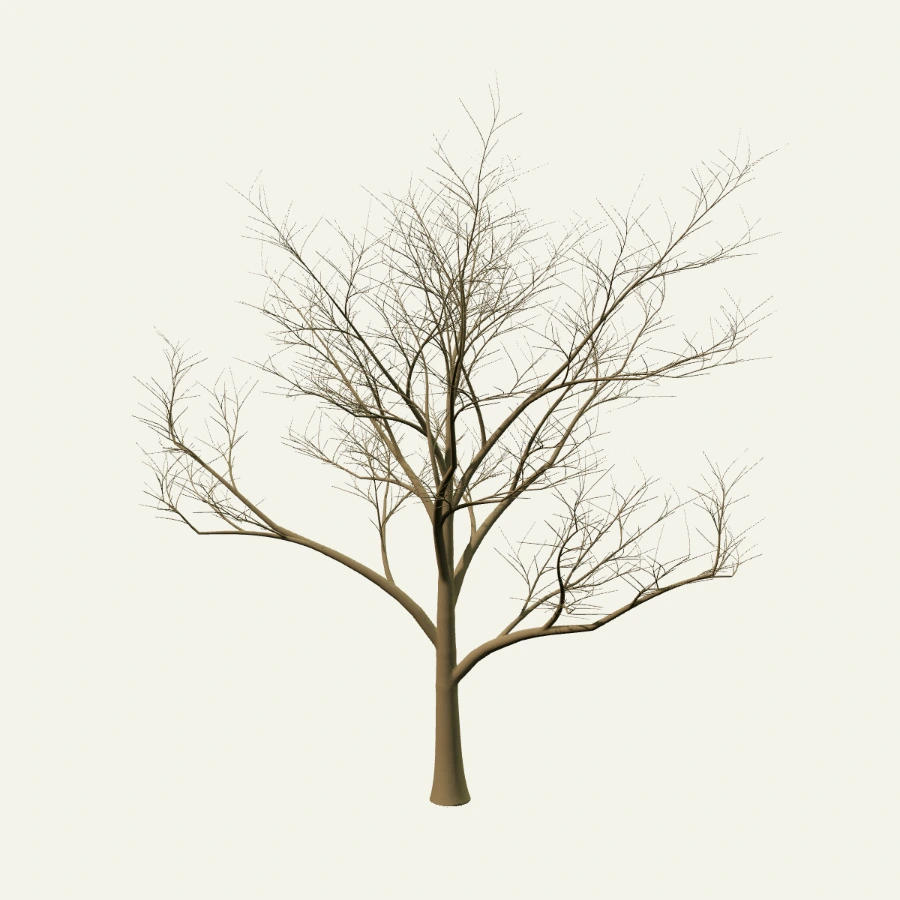
Read the crown, foliage and reproductive structures together. The four views compare seasonal appearances; the reference notes explain what is actually documented.
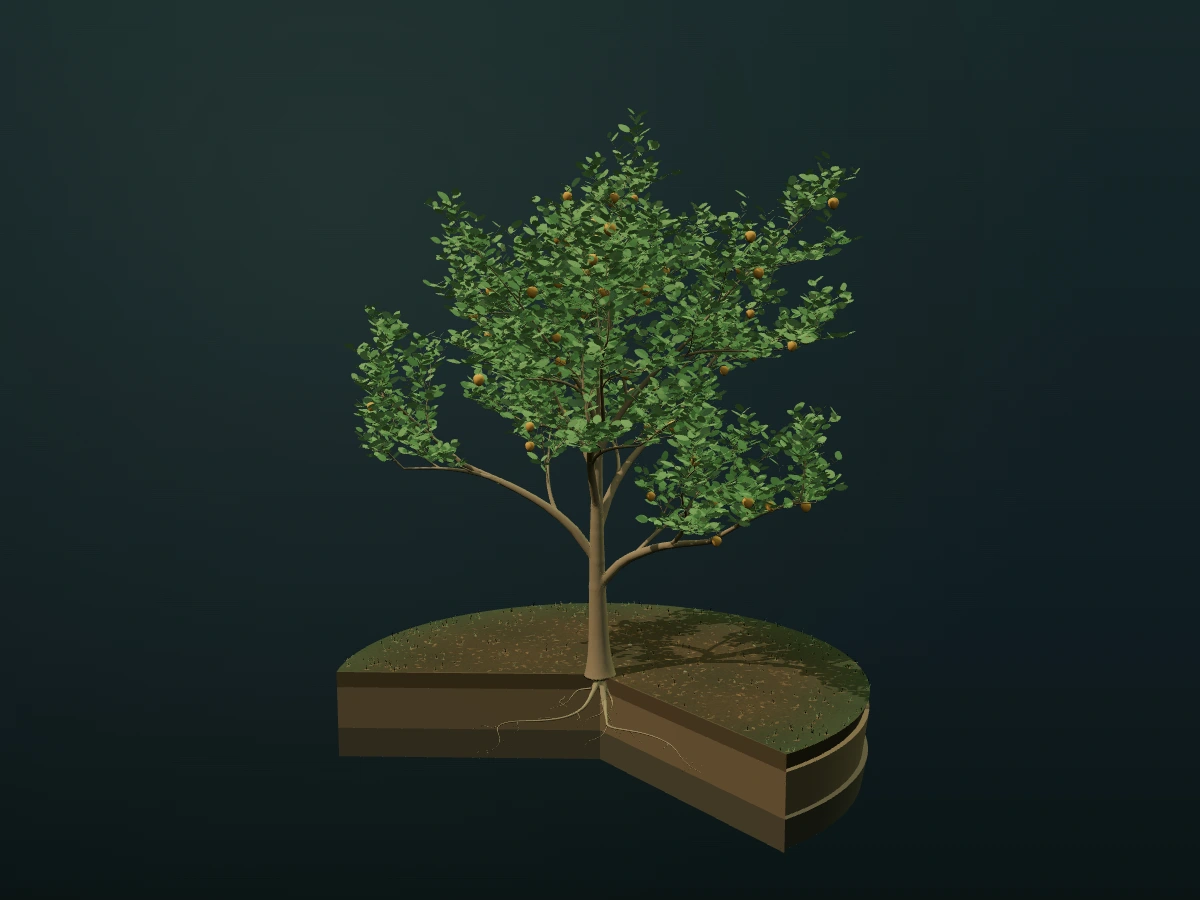
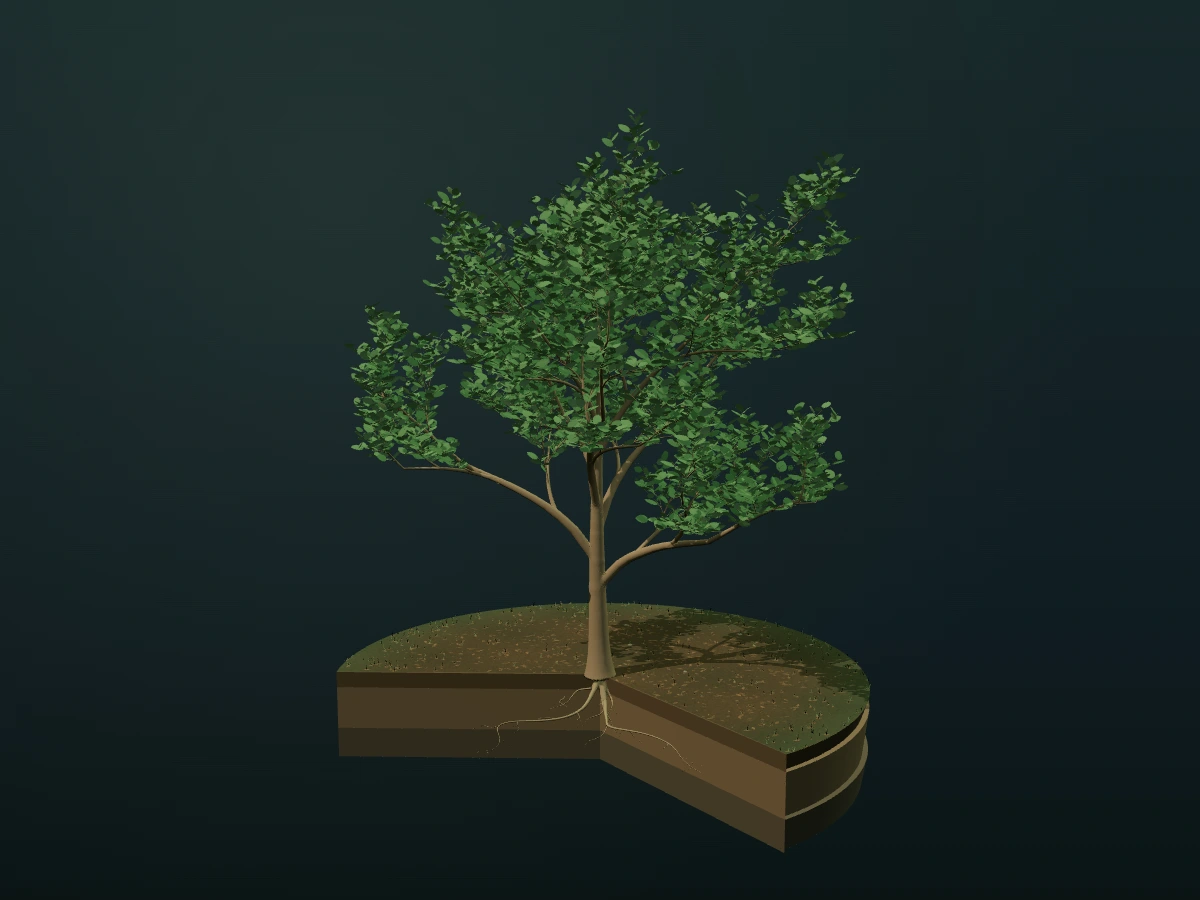
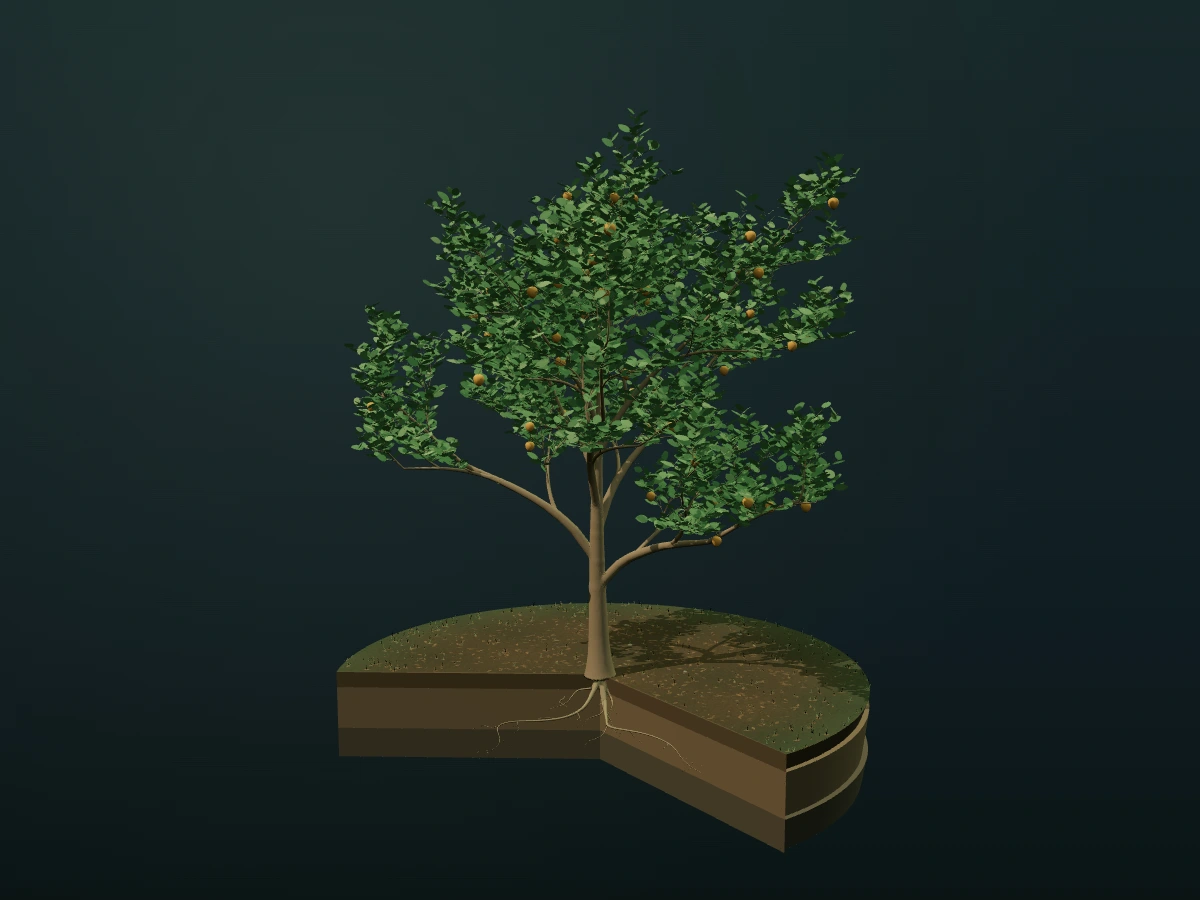
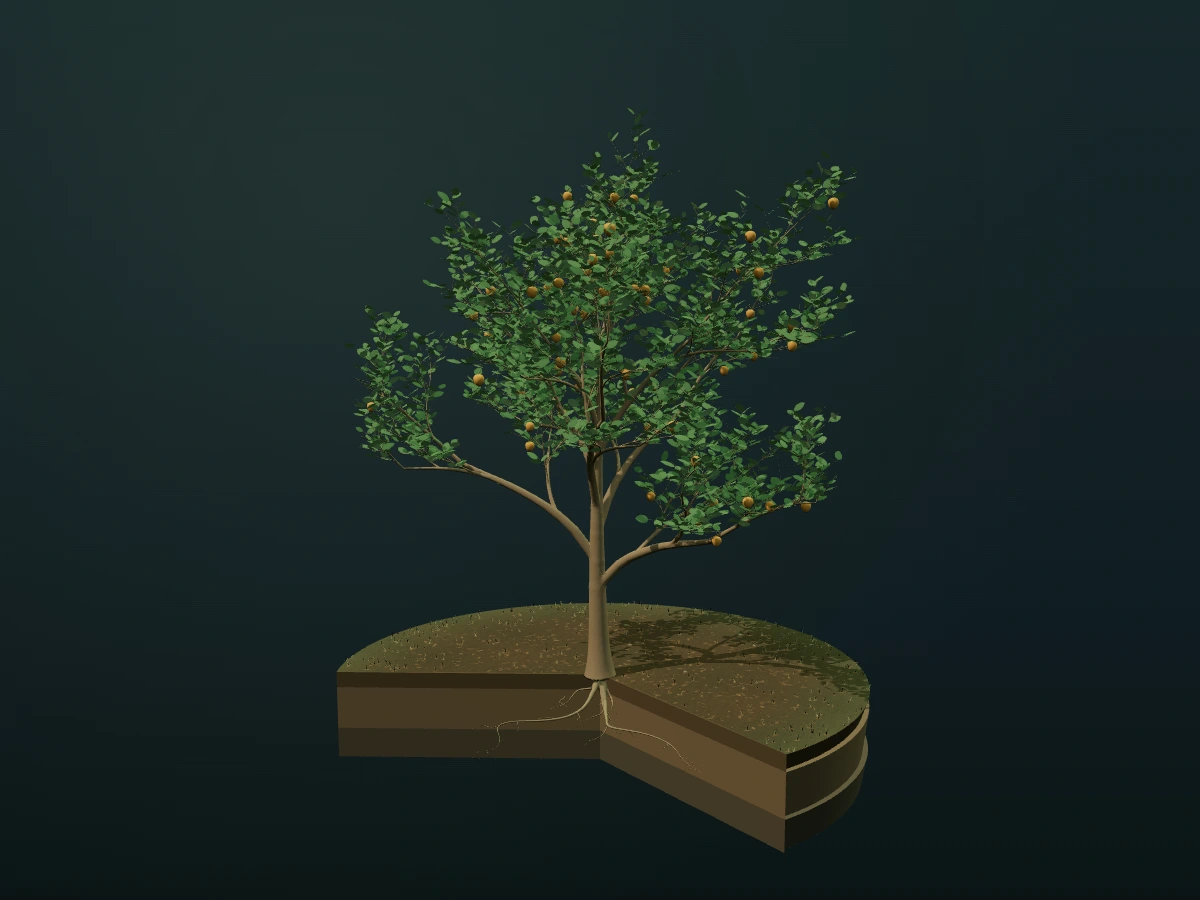
Seasonal illustration; the same plant, age and camera across four views.
Seasonal record
California, October–May
- Flowering
- Timing not documented
- Fruiting / dispersal
- Spring · Autumn · Winter[1]
Leaf renewal
Variable leaf retention[1]
Leaf retention varies with climate, moisture or provenance. A partially leafy or bare view is one possible condition, not a promise that every plant follows the same winter pattern.
Reading these views
Season names organize these four views, not a universal calendar. Hemisphere, local climate, cultivar and management can change timing; months are shown only when explicitly recorded.
The views emphasize crown structure. Buds, small flowers, individual retained leaves and fine reproductive changes may be unresolved; model age and fruit count are not production forecasts. The model uses one authored partial-retention scenario. No measured percentage of winter leaf retention is assigned.
Fruit visibility follows recorded fruiting or persistence seasons; placement, size and abundance remain illustrative.
Seasonal references
- World Agroforestry · botanical account ↗apps.worldagroforestry.org
03 / Foliage
A closer look at the organs
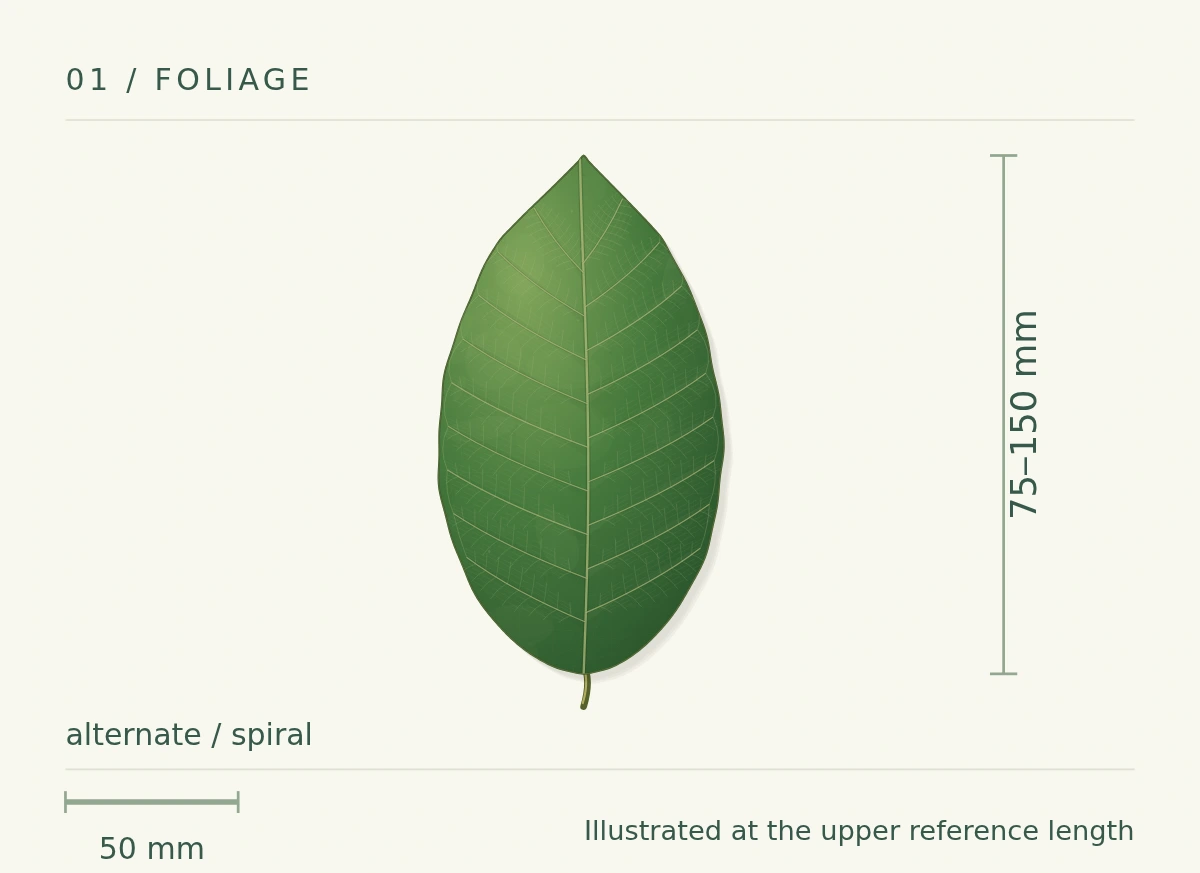
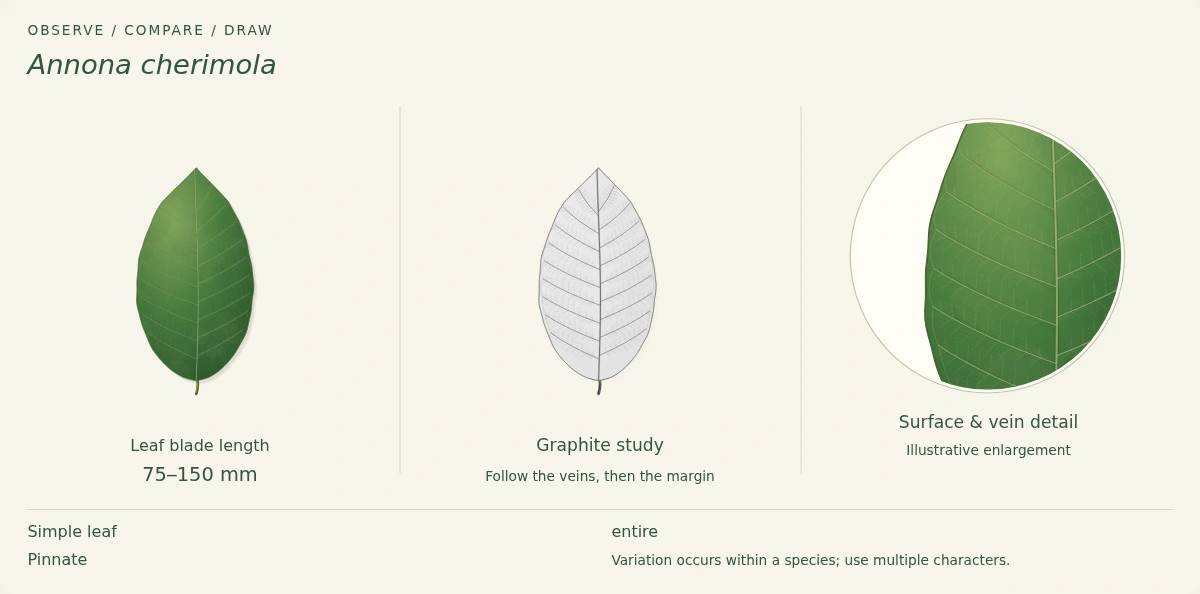
Leaves
- Leaf blade length
- 75–150 mmSource notes
Alternate leaves are broad, softly hairy beneath and arranged in two ranks.
Simple leaf · entire · Pinnate · alternate
Seasonal notes
Leaf turnover and colour depend on climate, cultivar and individual history.
- Flowering reference
- Not documented
04 / Fruit & seed
Named structures, separate scales
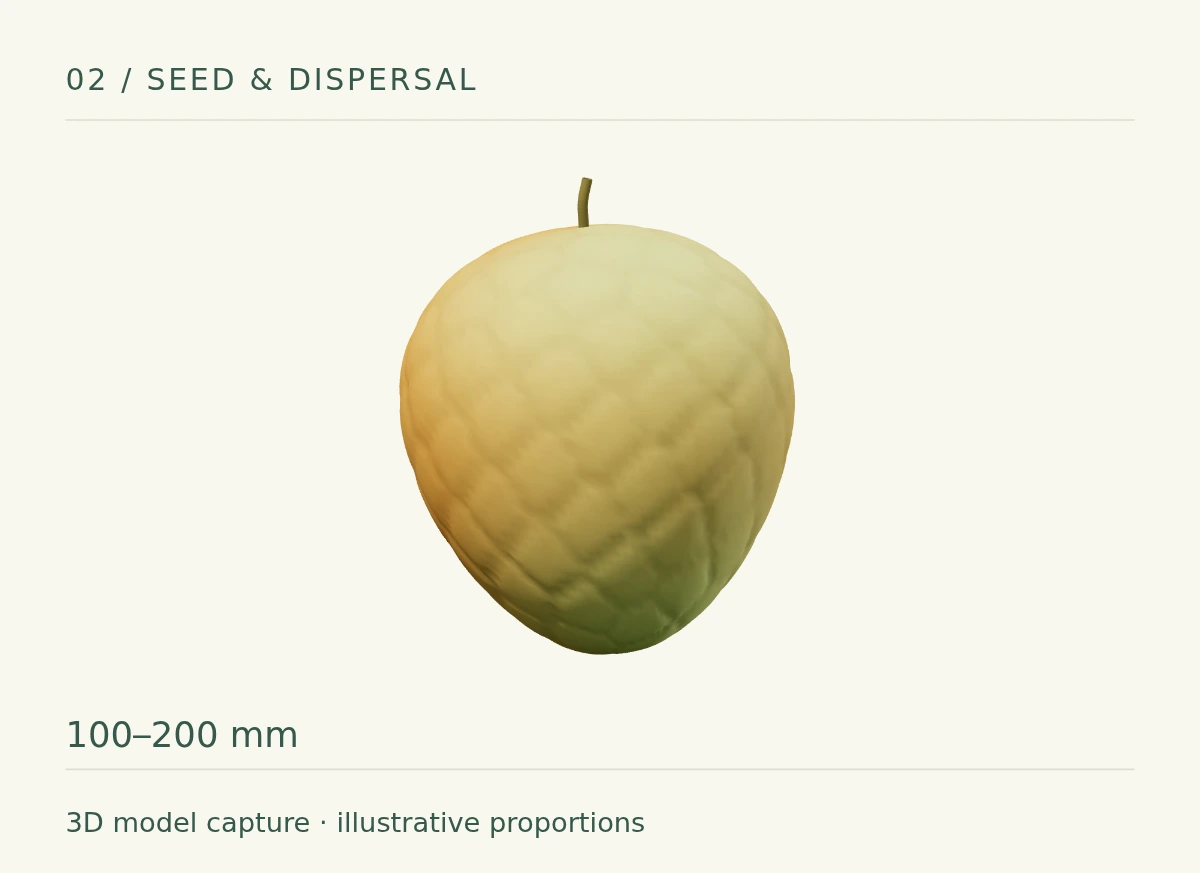
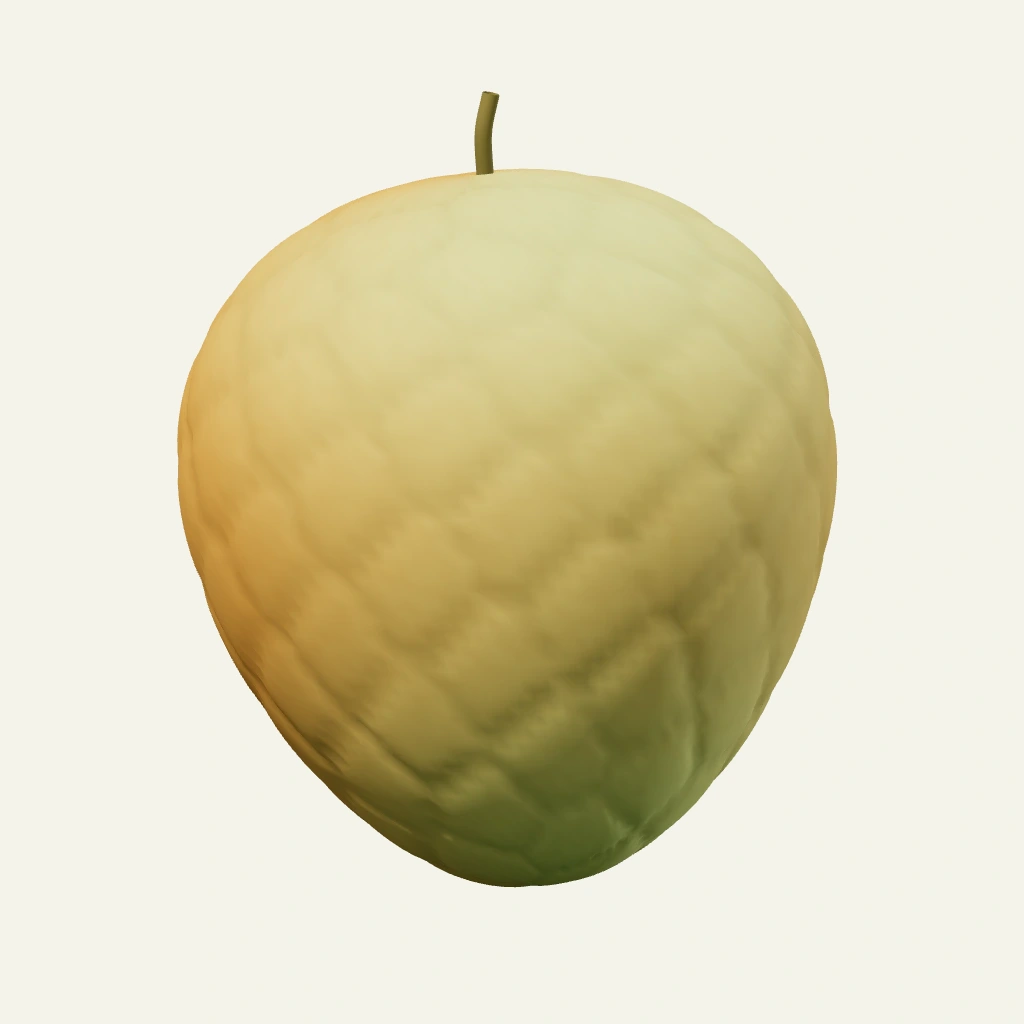
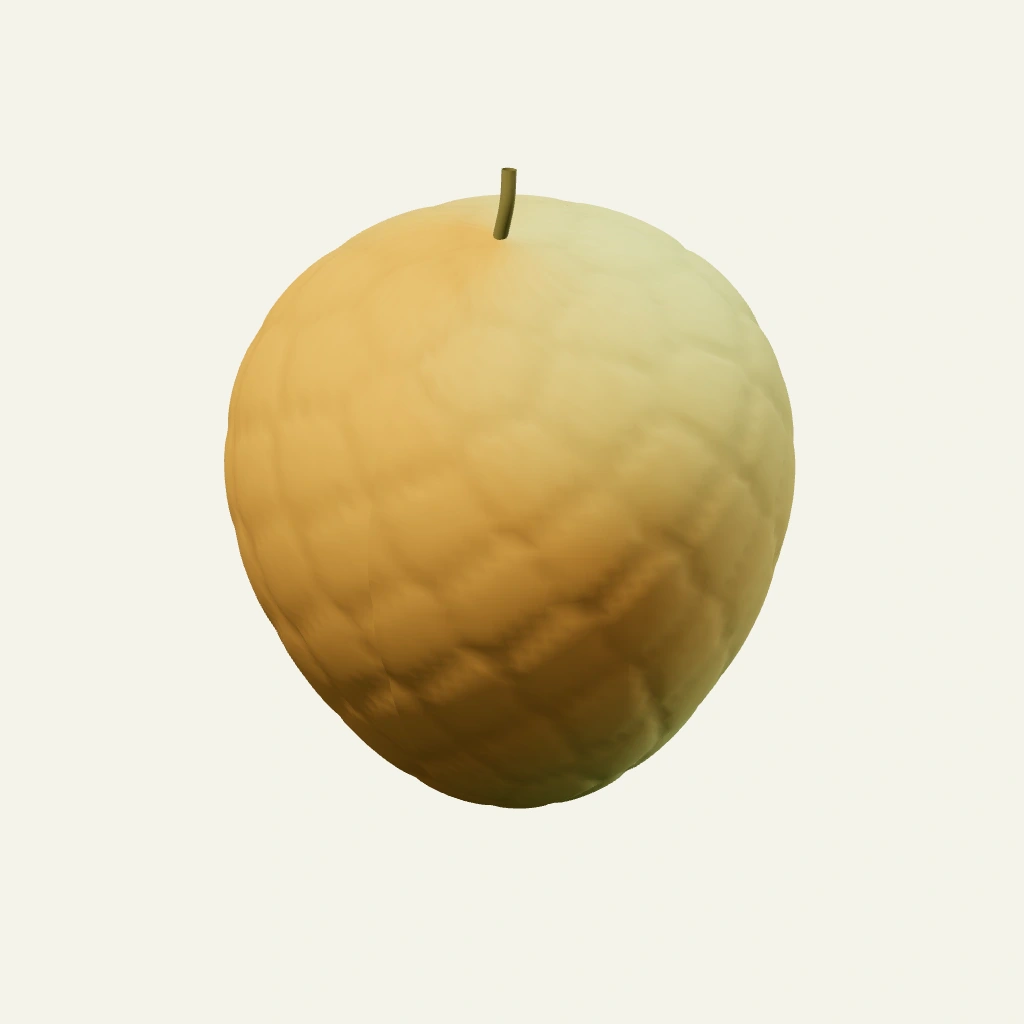
Fruit / dispersal unit
- Whole fruit length
- 100–200 mmSource notes
The heart-shaped aggregate fruit has a patterned or knobbly surface and encloses many separate seeds.
- Fruiting reference
- Autumn · Winter · Spring
California, October–May
Organs are enlarged independently. Refer to the named measurement, not image size.
05 / Habitat
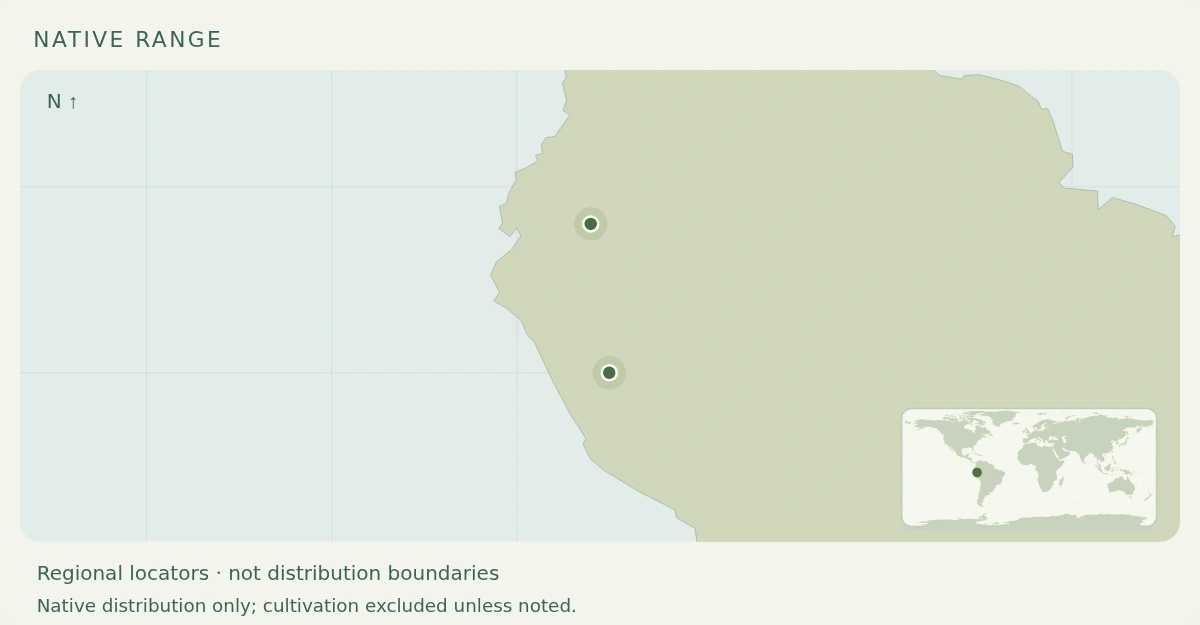
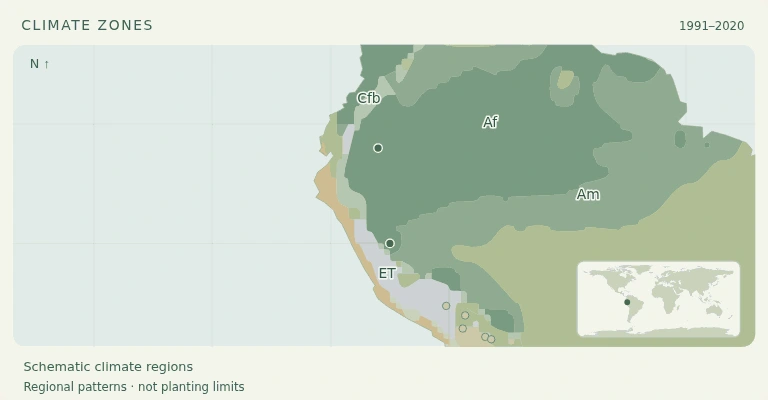
Native range & growing context
Native range & growing context
Western South America.
- Reference spread
- Not documented
- Moisture
- Not documented
- Growth tendency
- Not documented
- Life span
- No numerical lifespan is assigned by this record. Model age is an ArborAI illustration parameter.
Regional context, not a measured occurrence or suitability map.
06 / Sources & interpretation
Read the evidence behind the illustration
Names & classification
- Family
- Annonaceae
- Genus
- Annona
- Synonyms
- —
- Alternate leaves are broad, softly hairy beneath and arranged in two ranks.
- The heart-shaped aggregate fruit has a patterned or knobbly surface and encloses many separate seeds.
ArborAI botanical teaching models. Crown proportions, branch positions, root extents, fruit display sizes and model ages are illustrative, not measured specimens or calibrated growth forecasts.
ArborAI botanical teaching models. Crown proportions, branch positions, root extents, fruit display sizes and model ages are illustrative, not measured specimens or calibrated growth forecasts.
- World Agroforestry · botanical account ↗apps.worldagroforestry.org
- Royal Botanic Gardens Kew · Plants of the World Online ↗powo.science.kew.org
Plant data and references · 7
| Reference heightm | [5, 9]Reported reference stature in the cited account. Cultivar, rootstock, growing conditions and management can change size; this is not a universal species maximum.apps.worldagroforestry.org |
|---|---|
| Native range | Western South America.Current Kew account; cultivated origins are not mapped as wild occurrence data.powo.science.kew.org |
| Leaf lengthmm | [75, 150]Named unit: blade Named leaf and reproductive units are kept distinct. Unknown dimensions remain null. apps.worldagroforestry.org |
| Seed lengthmm | [100, 200]Length of the named reproductive structure; enclosed seeds are distinct and are not measured by this value. Named leaf and reproductive units are kept distinct. Unknown dimensions remain null. apps.worldagroforestry.org |
| Leaf morphology | Alternate leaves are broad, softly hairy beneath and arranged in two ranks.Diagnostic foliage description; numerical reconstruction parameters are authored separately.apps.worldagroforestry.org |
| Reproductive morphology | The heart-shaped aggregate fruit has a patterned or knobbly surface and encloses many separate seeds.Named reproductive structure; fruit, stone and seed are not interchangeable.apps.worldagroforestry.org |
| Regional fruitingcategory | {"seasons": ["autumn", "winter", "spring"], "status": "source-reported", "reference": "California, October–May", "source": "https://apps.worldagroforestry.org/treedb/AFTPDFS/Annona_cherimola.PDF"}California, October–Mayapps.worldagroforestry.org |