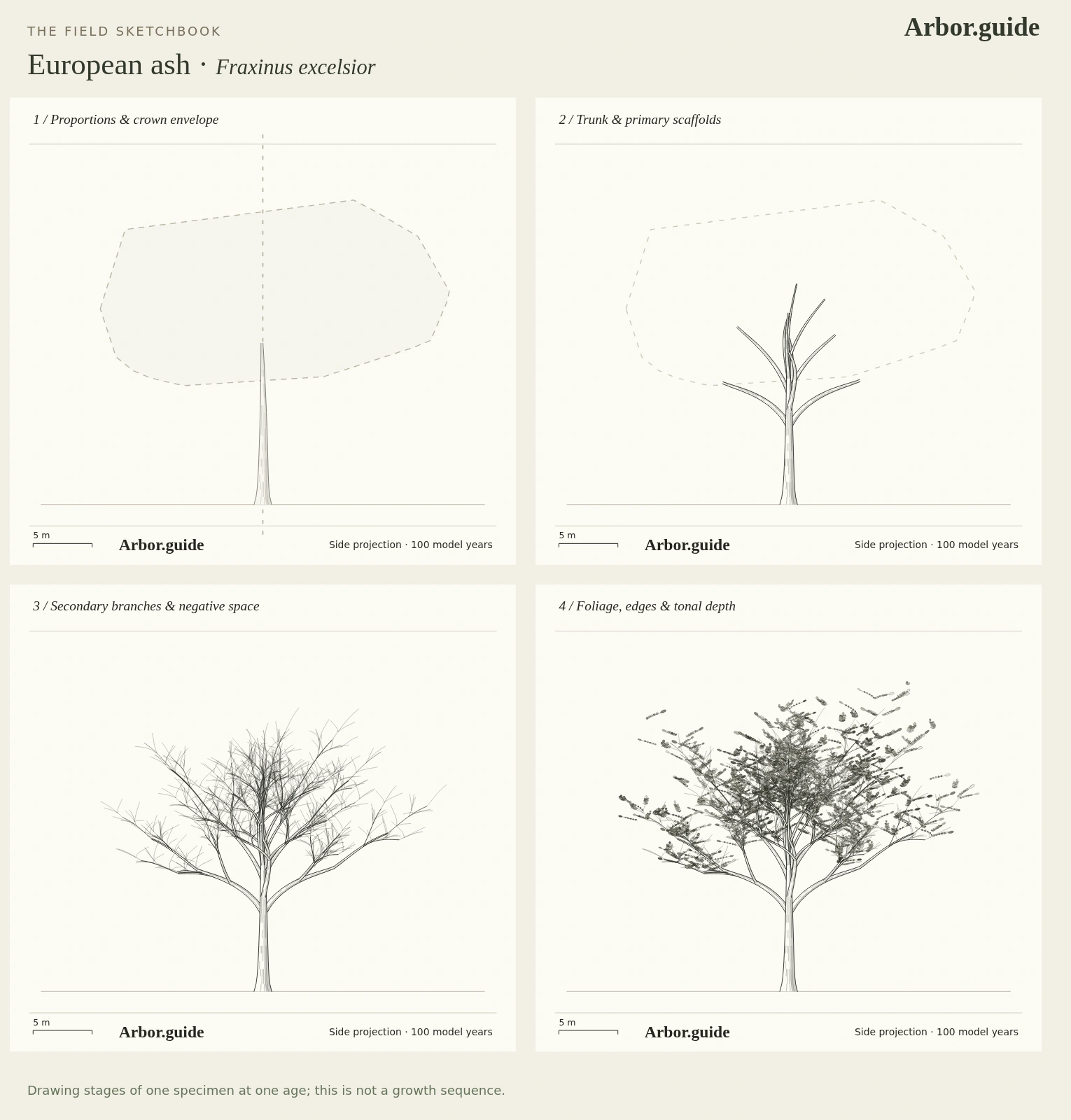
Arbor.guide

Botanical field guide

Fraxinus excelsior

European ash

0713 / 2,347

Tree / Oleaceae

The plant, in detail

Fertile, moist, well-drained temperate woodland soils.

Reference height
25–30 m
Foliage habit
Deciduous
USDA zones
5–8
Light
Not documented

Approximate stature from the cited account; equal bounds indicate a reported upper or approximate height, not a measured population interval. Cultivation and forest conditions differ.

Crown

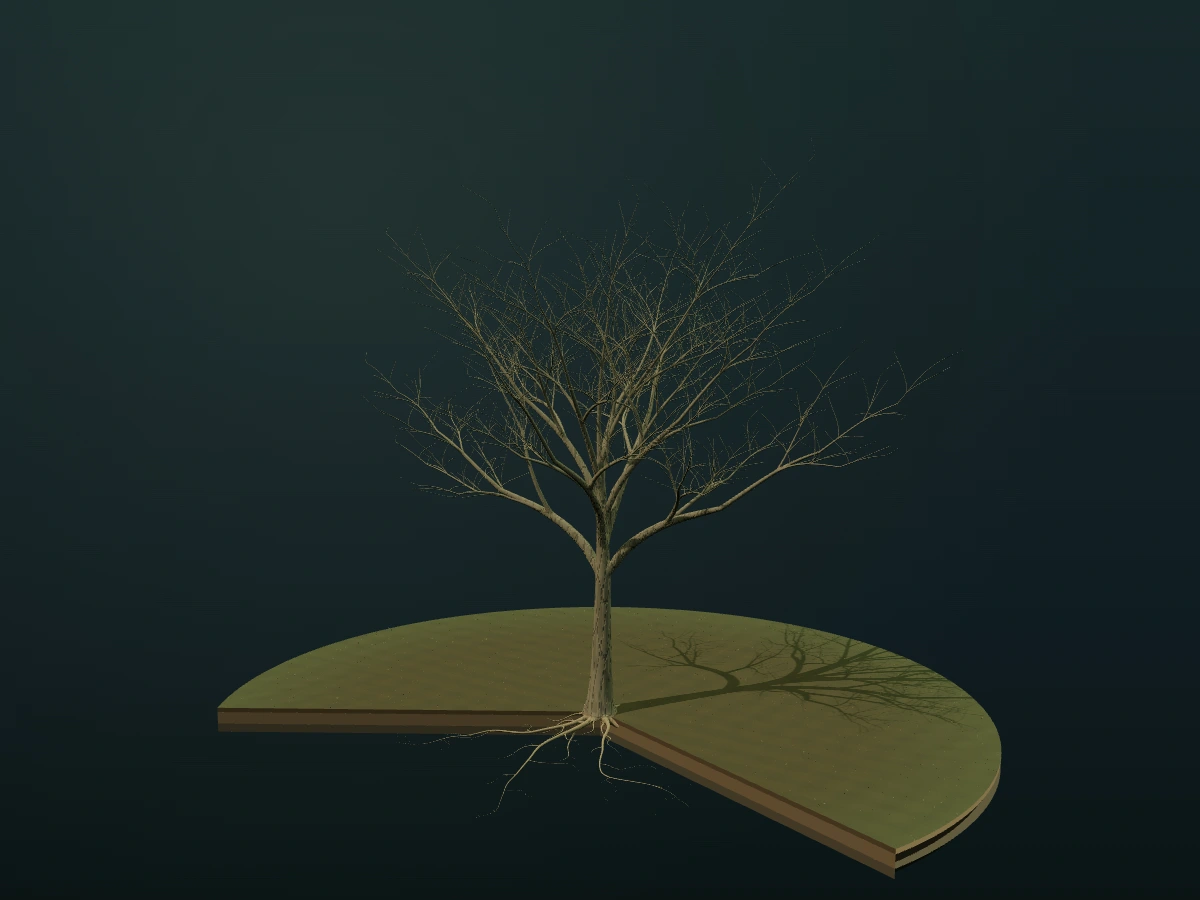
Tall, open, broadly spreading crown with ascending main branches.

Branching

Opposite pinnate leaves have seven to eleven serrate leaflets; dormant buds are black.

Bark

Gray bark becomes fissured with age.

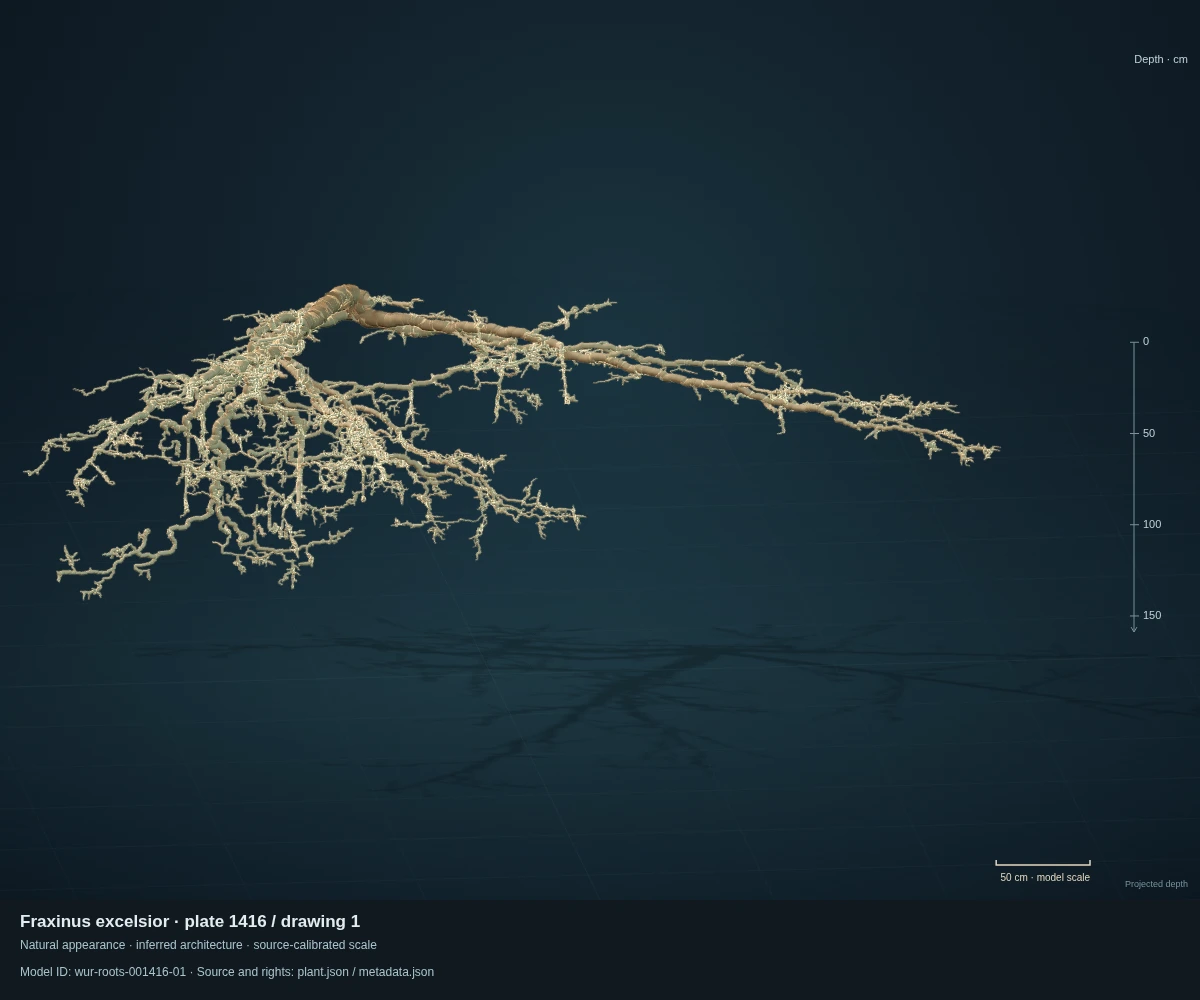
Roots

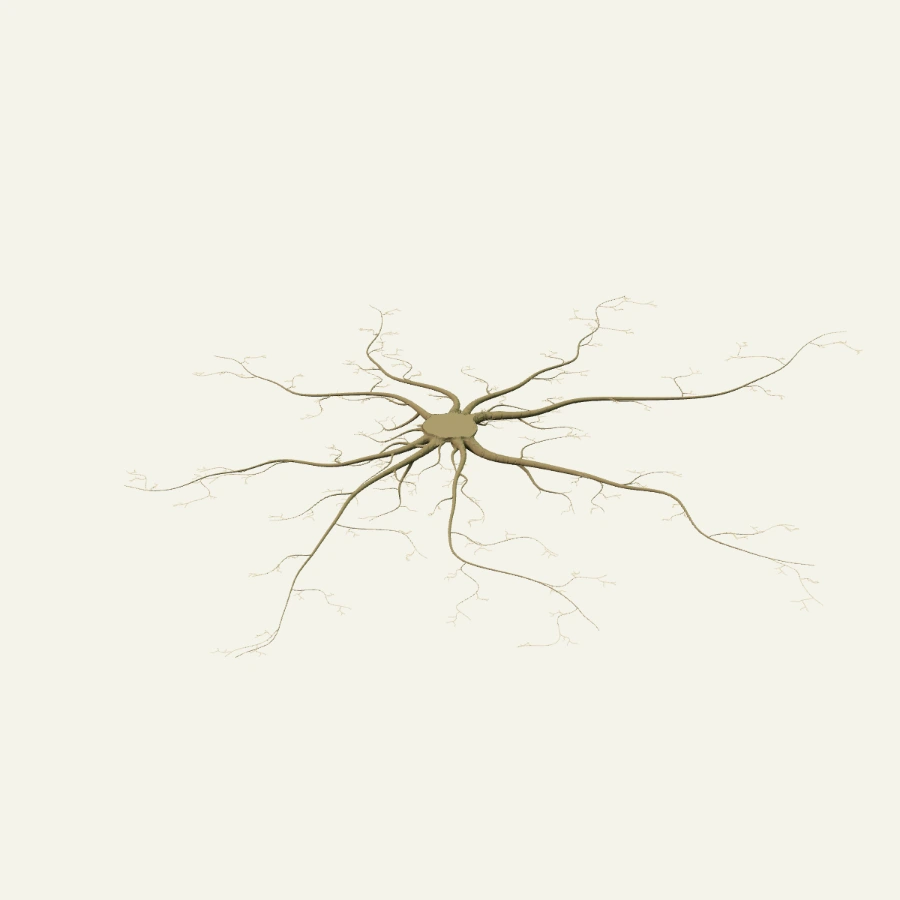
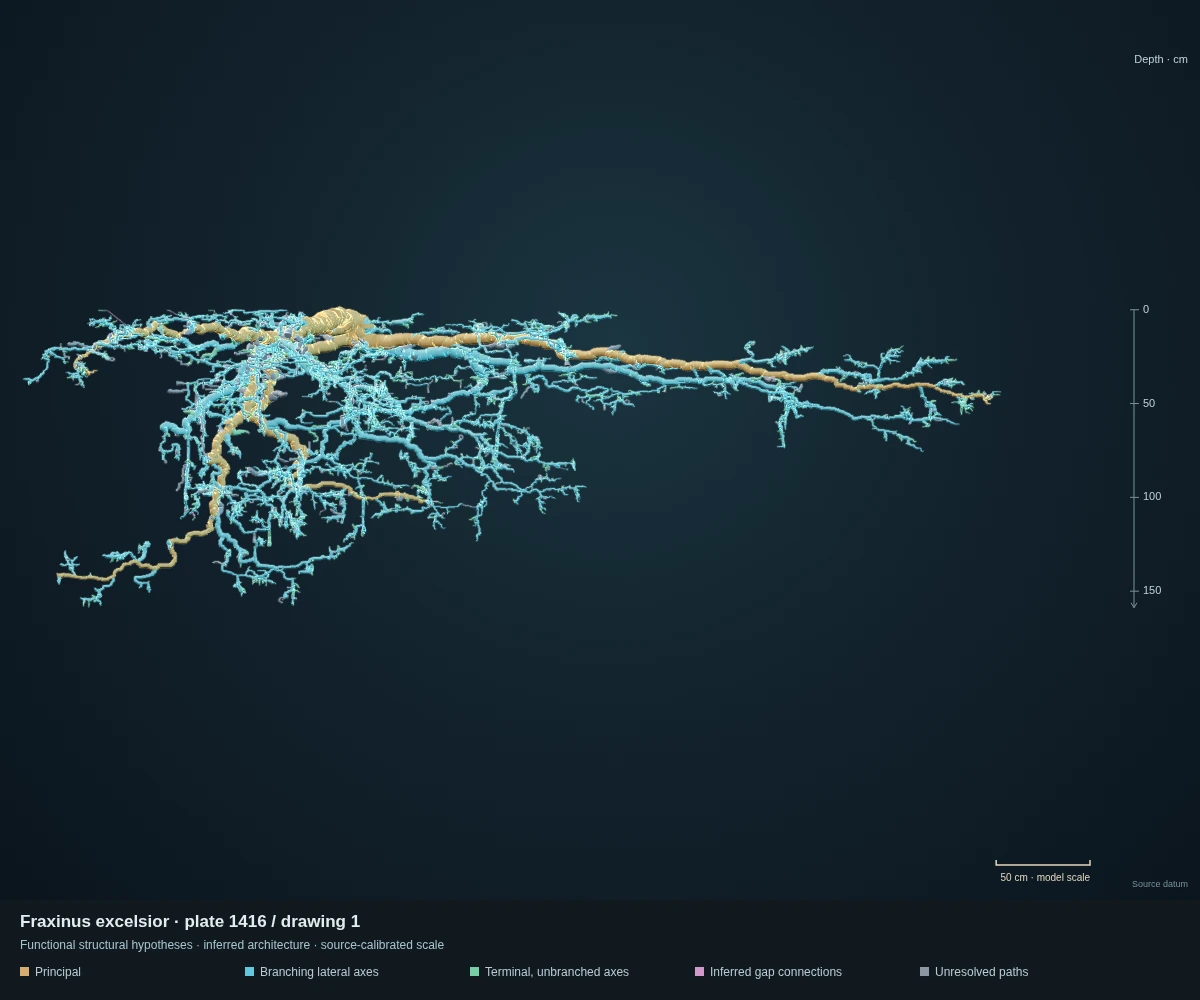
The root drawing is an ArborAI soil scenario: curved structural laterals and descending axes, not a measured species root map. Depth depends on soil, water table, establishment and damage; fine absorptive roots are unresolved.

The shape of growth

Stylized real-world examples

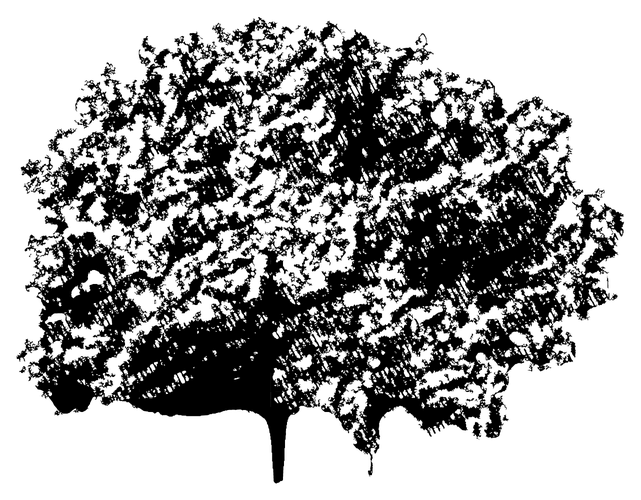
  • Tree silhouette 1
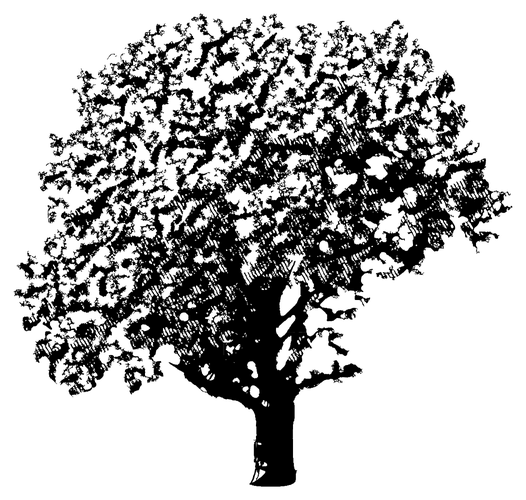
  • Tree silhouette 2
  • Tree silhouette 3
  • Tree silhouette 4
  • Tree silhouette 5

Silhouettes are sized independently.

Root studies

These reconstructions follow archived root drawings. Colour identifies the modelled structural role of each root.

Functional view
Natural view
Source projection
Side view
Calibration
Source-calibrated
Vertical extent
1.58 m
Inferred axes
3052
Model metrics and plate observations

Model metrics

Depth follows the printed scale. Equal horizontal scale and hidden depth are modeling assumptions; root thickness is illustrative.

Vertical extent
1.58 m
Horizontal span (x)
3.77 m
Horizontal span (z)
5.27 m
Centreline length
209 m
Inferred axes
3052
Branching sites
2821
Terminal paths
2862
Mean modelled diameter
1.41 cm
Surface area proxy
9.51 m²
Volume proxy
62,800 cm³
Inferred connection length
45.4 cm
Projected length
165 m
Mean angle from vertical
59.3°

Dimensions reported on the source plate

Plant height
102 cm plate_1416
Root depth
156 cm plate_1416
Root-system diameter
556 cm plate_1416

Drawing observations

  • very long bilateral sinuous laterals at several levels
  • multiple unequal descenders form deepest group below stem
  • long nearly horizontal connections between descending axes
  • numerous dense brushlike terminal groups along coarse paths

Biologically constrained spatial reconstruction from source morphology. Root azimuths, hidden placement, growth responses, circular sections, thickness and proposed connections are inferred. The separate source trace retains exact drawing coordinates. No measured 3D anatomy or observed growth sequence is claimed.

Source and attribution

Study 1416 · Model 01

Fraxinus excelsior · Wageningen University & Research archive
02 / Seasons

Through the seasons

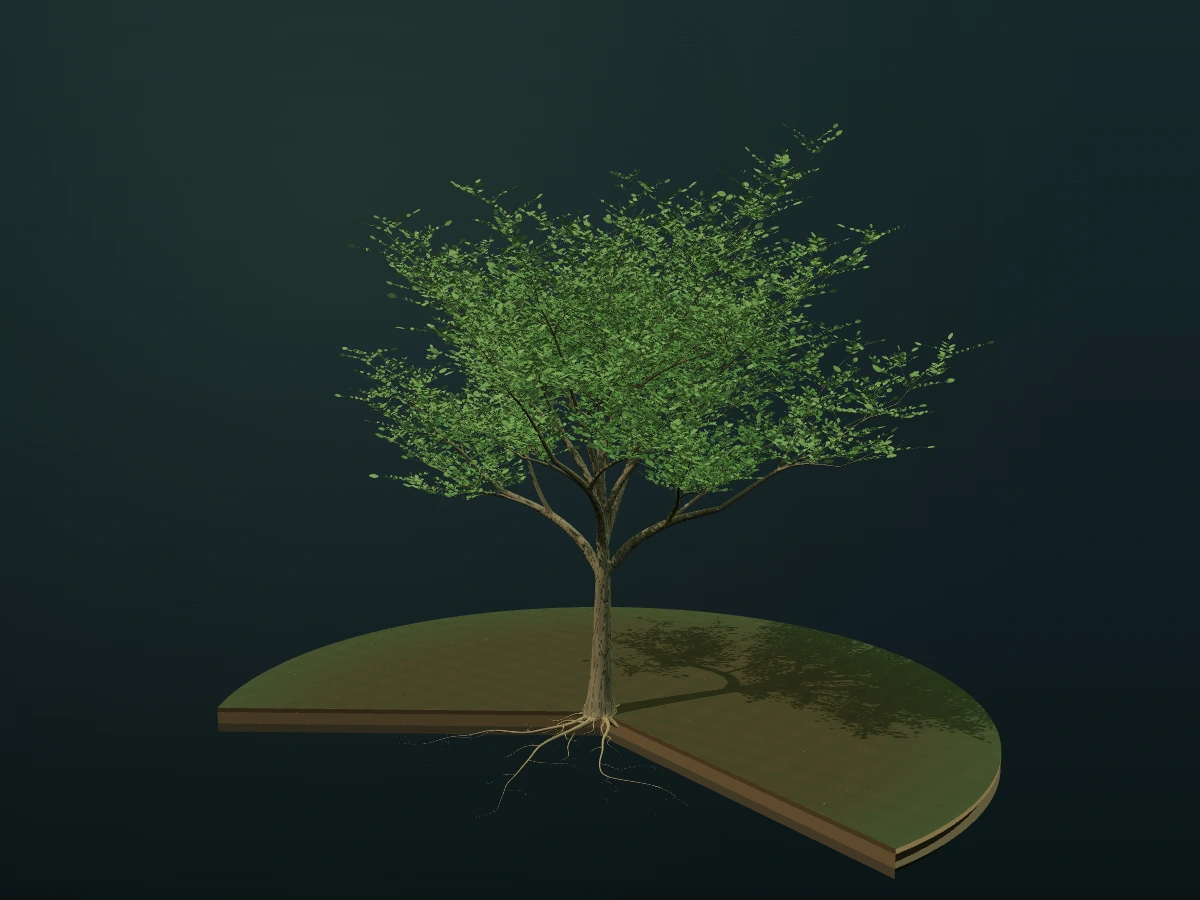
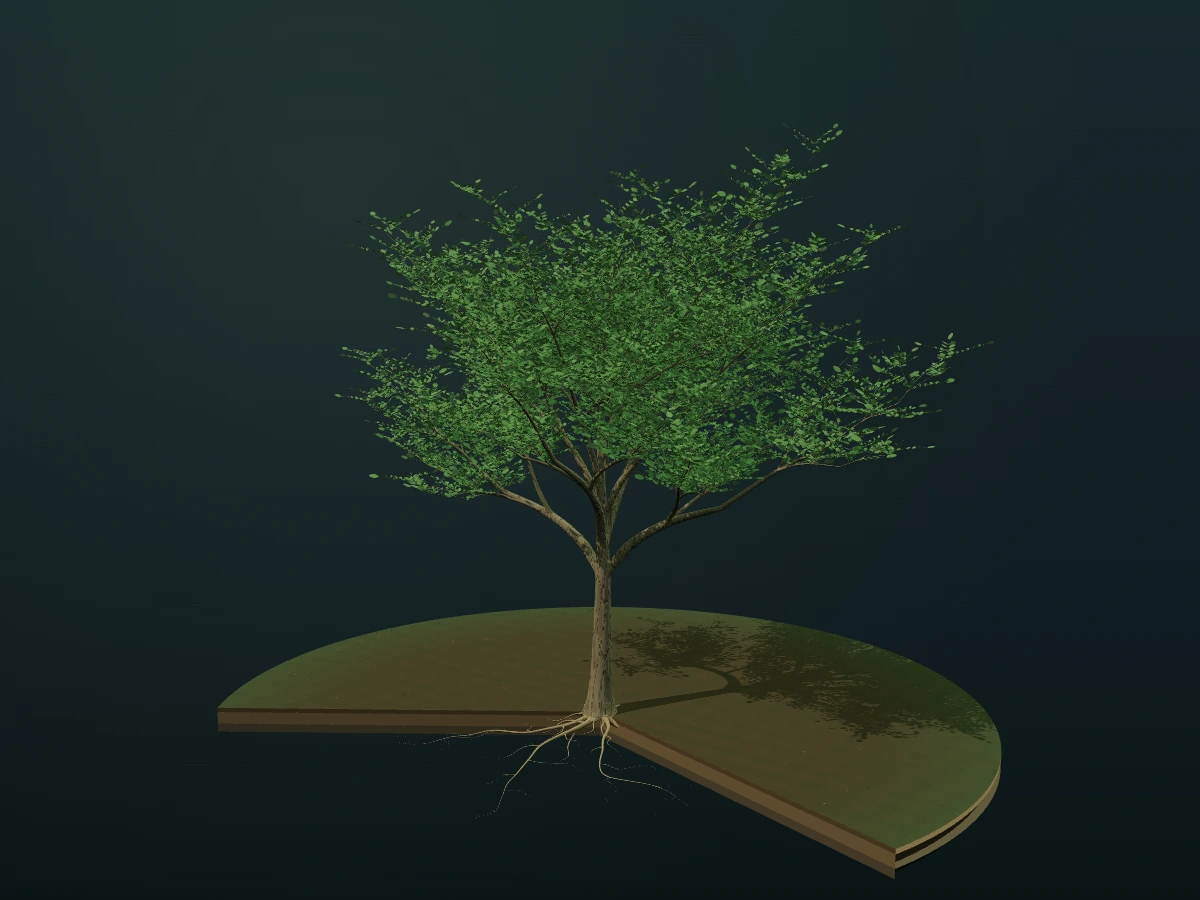
Four portraits. One plant.

Read the crown, foliage and reproductive structures together. The four views compare seasonal appearances; the reference notes explain what is actually documented.

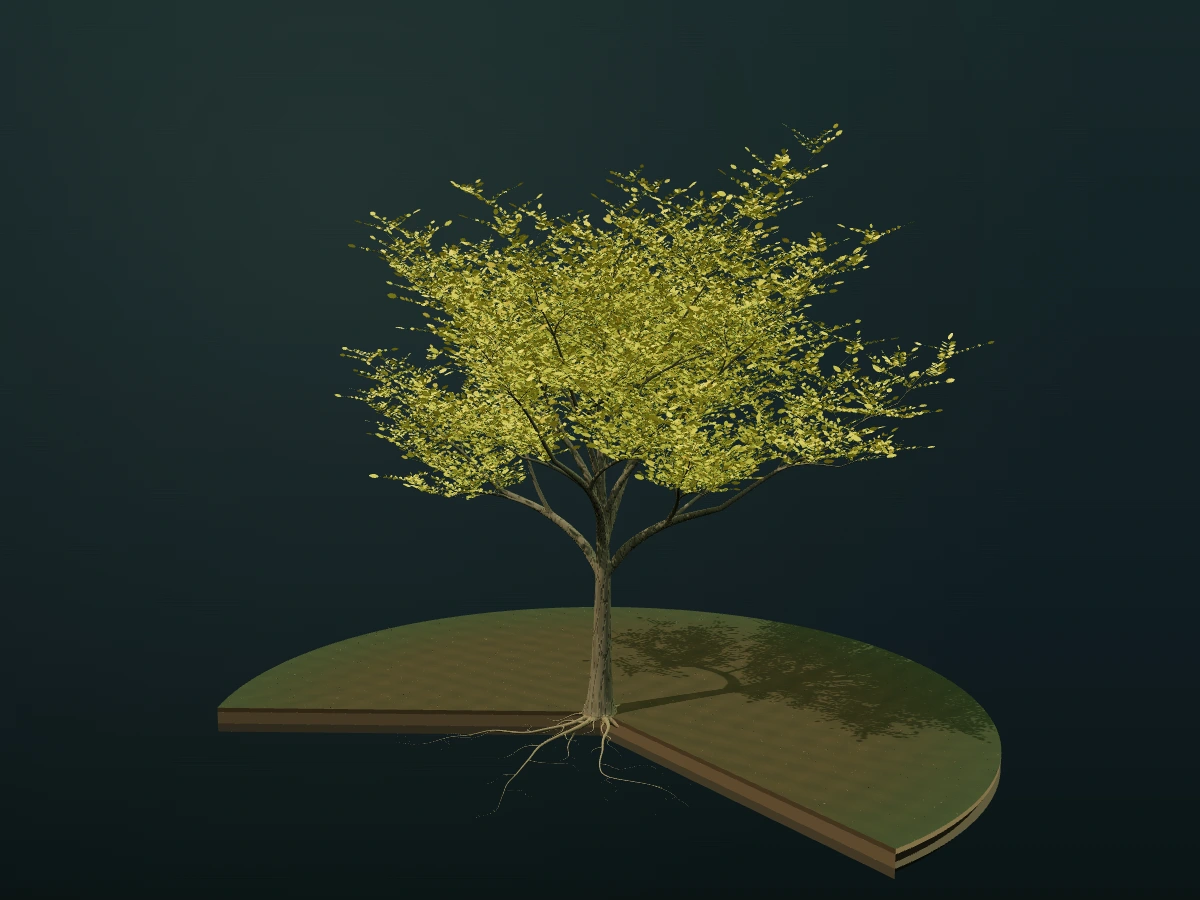
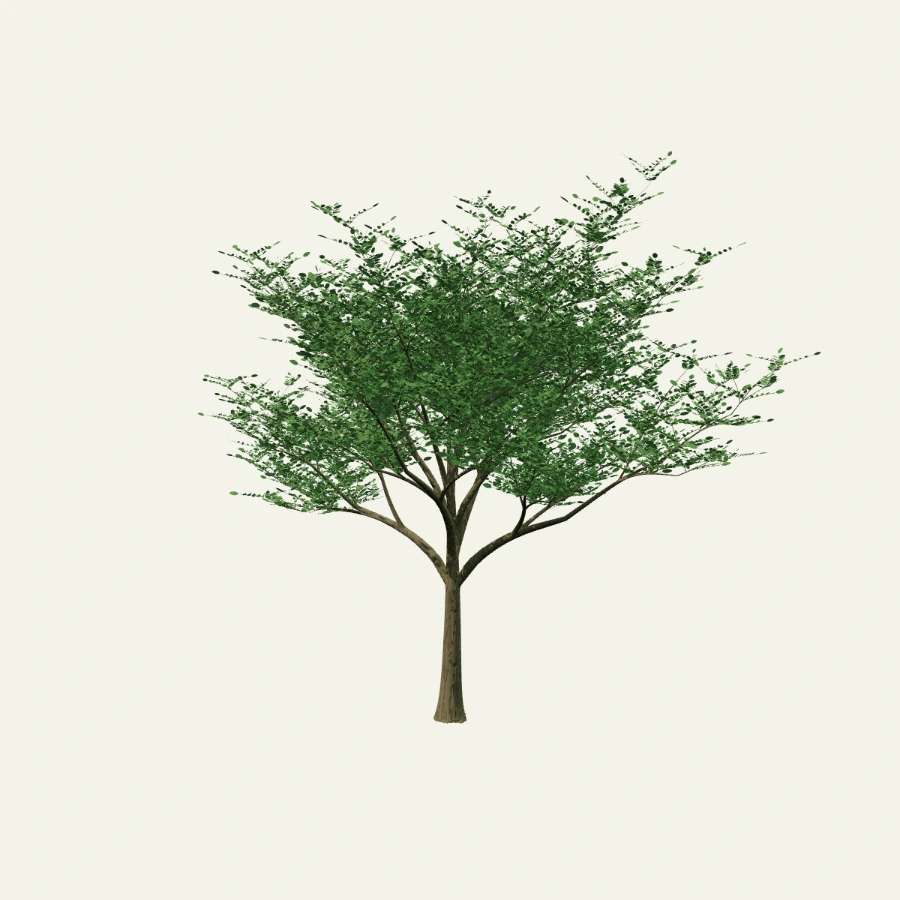
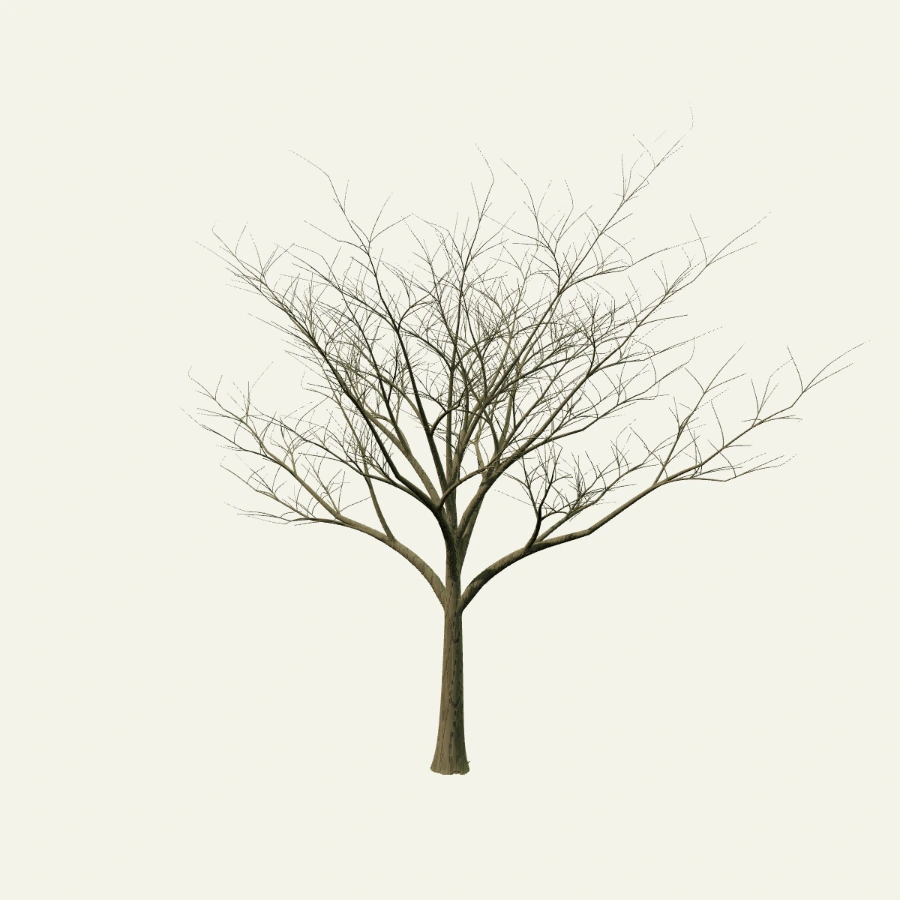
Seasonal illustration; the same plant, age and camera across four views.

Seasonal record

Reference region not specified in this record.

Flowering
Timing not documented
Fruiting / dispersal
Timing not documented

Leaf renewal

Deciduous[1]

The record describes a deciduous plant: foliage is renewed after a leafless or reduced-leaf phase. The named views illustrate that cycle without fixing its dates at a planting site.

Colour notes

Gold / yellow[1]

These are recorded colour possibilities. The shades and their distribution are illustrative; a particular autumn can look different.

Reading these views

Season names organize these four views, not a universal calendar. Hemisphere, local climate, cultivar and management can change timing; months are shown only when explicitly recorded.

The views emphasize crown structure. Buds, small flowers, individual retained leaves and fine reproductive changes may be unresolved; model age and fruit count are not production forecasts.

No separate on-tree fruit display is configured for this record.

Seasonal references

  1. Oregon State University · Fraxinus excelsior ↗landscapeplants.oregonstate.edu

03 / Leaves & flowers

A closer look at the organs

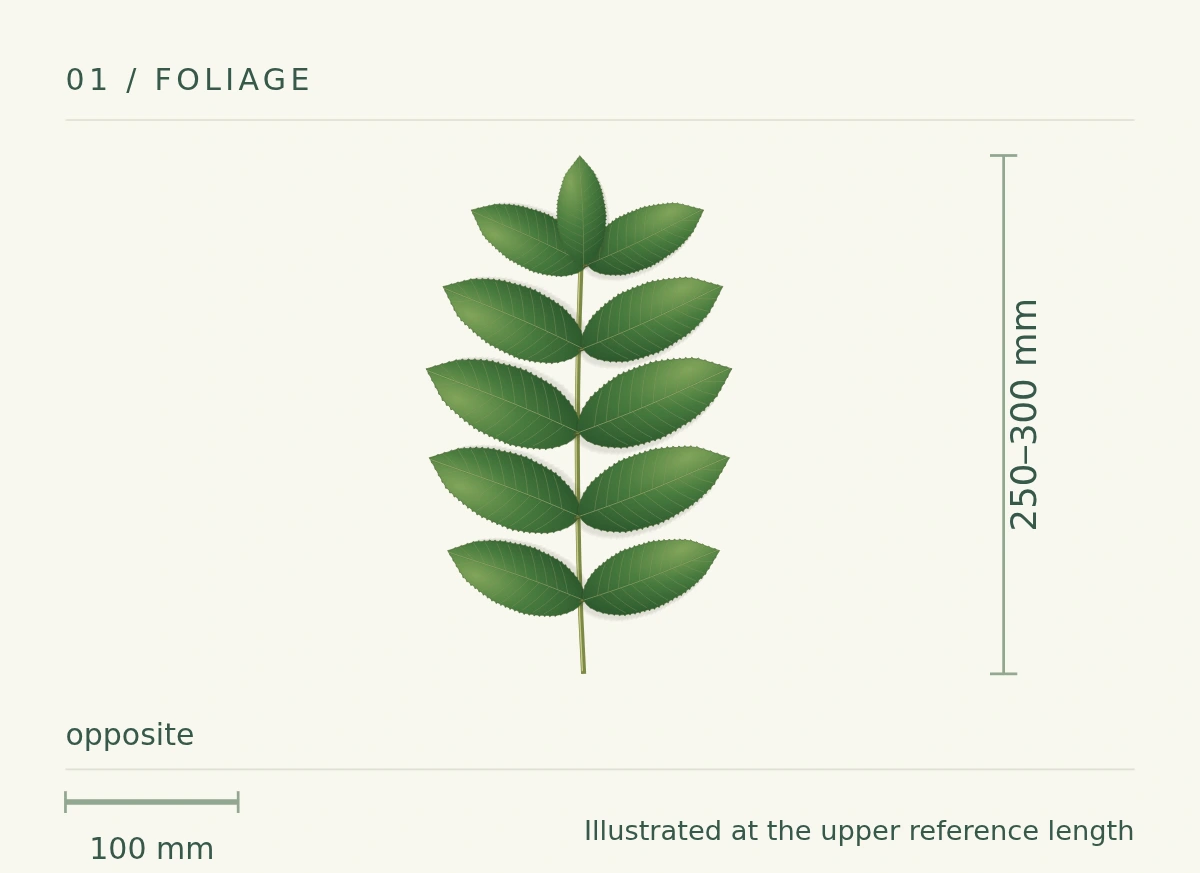
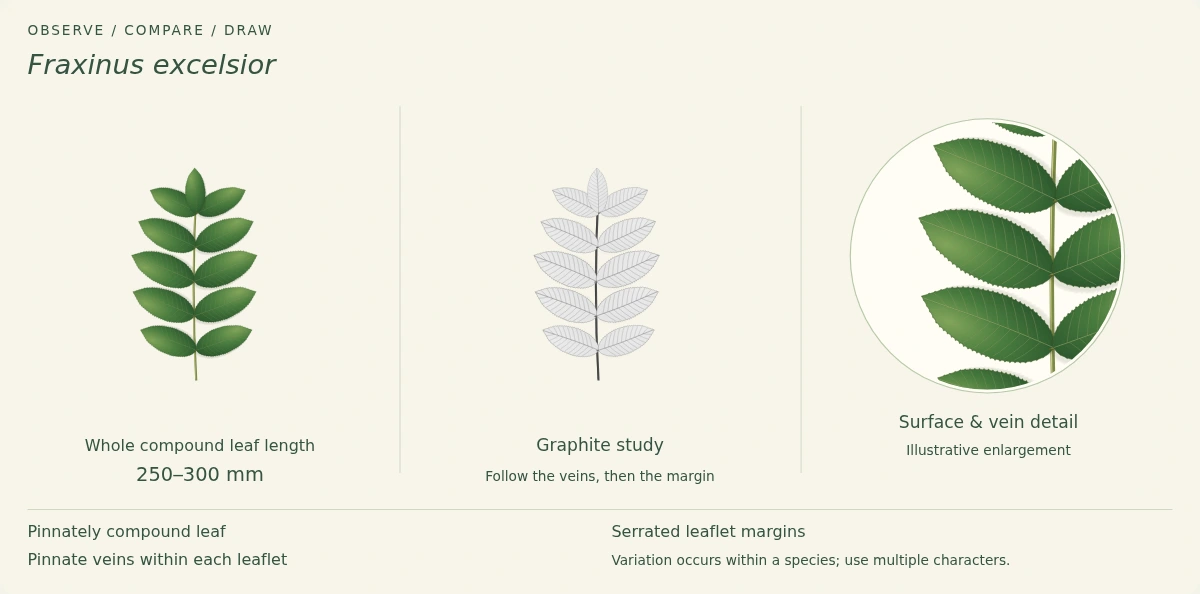
Leaves

Whole compound leaf length
250–300 mmSource notes

Opposite pinnate leaves have seven to eleven serrate leaflets; dormant buds are black.

Pinnately compound leaf · Serrated leaflet margins · Pinnate veins within each leaflet · opposite

Seasonal notes

Autumn colour varies with genotype, site and weather. These phases are illustrative, without fixed calendar dates.

Flowering reference
Not documented

04 / Fruit & seed

Named structures, separate scales

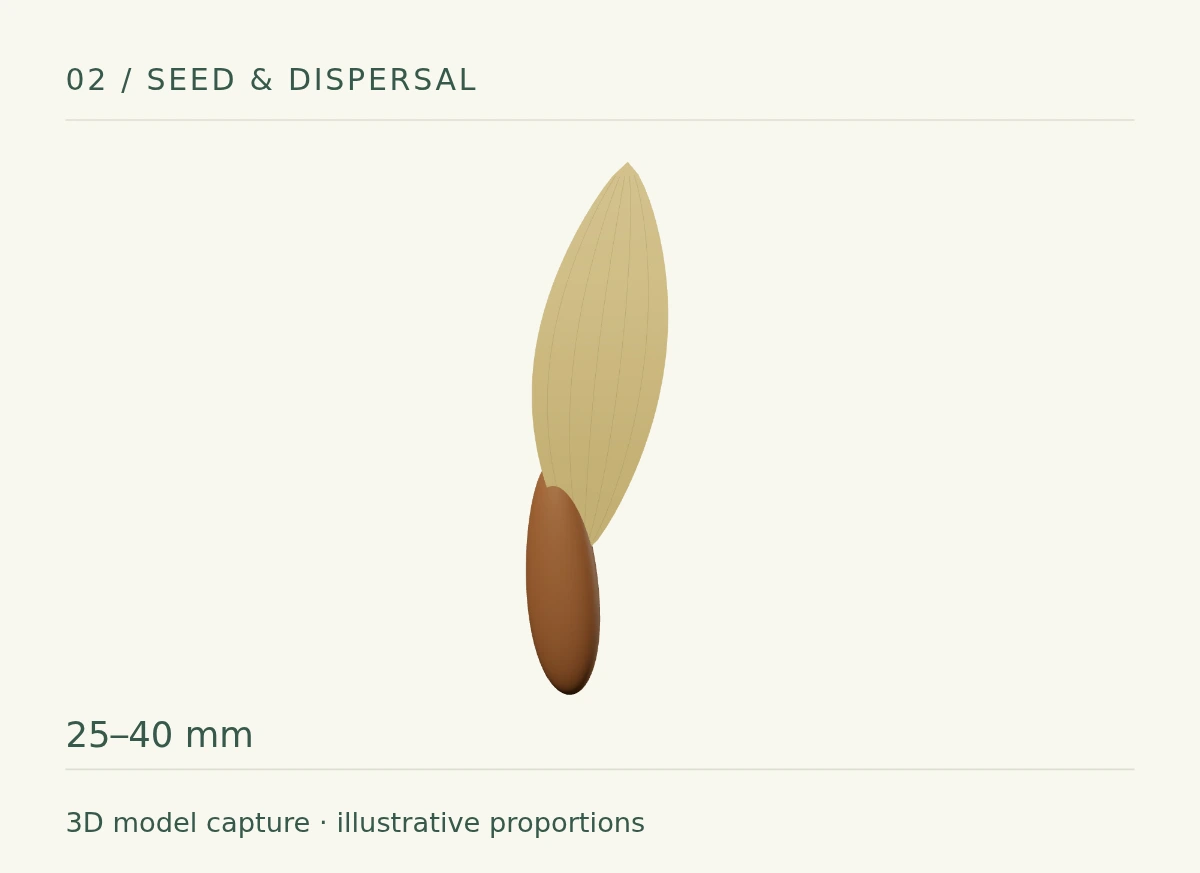
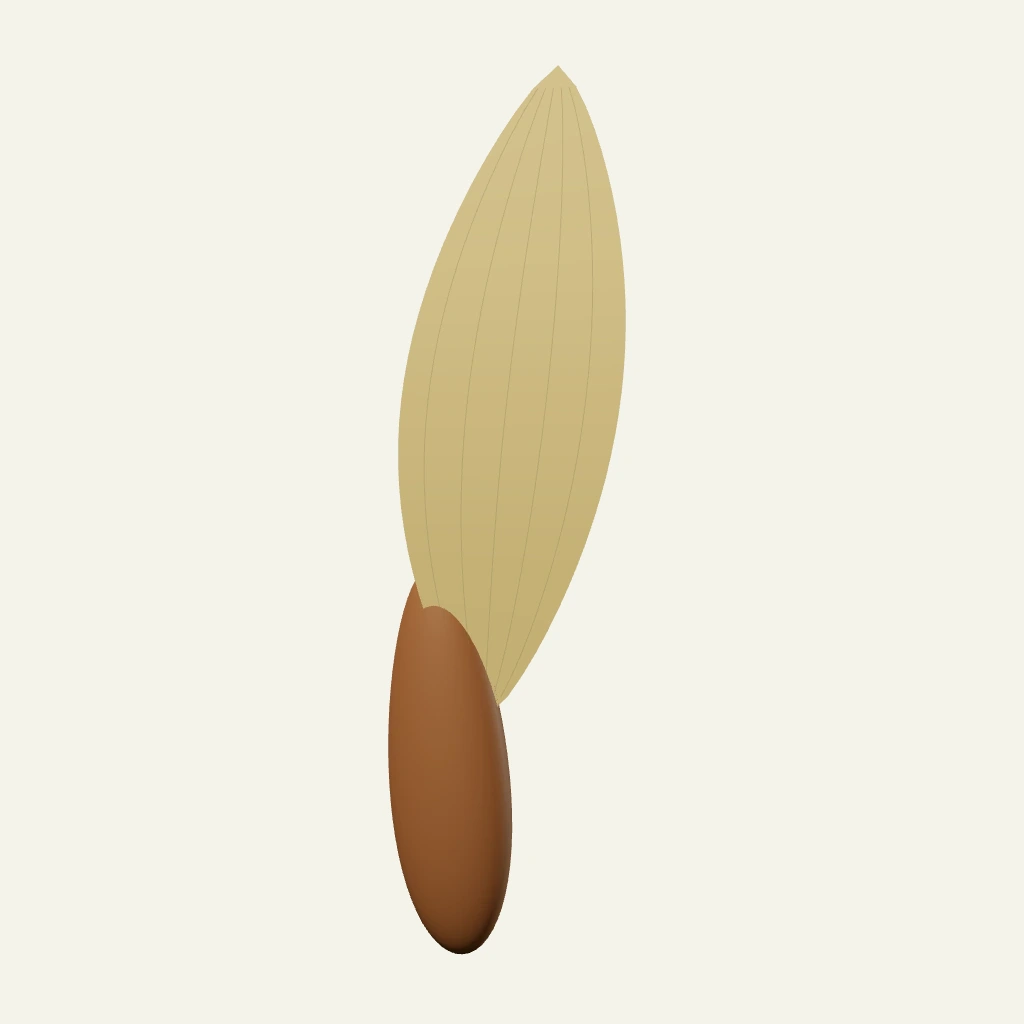
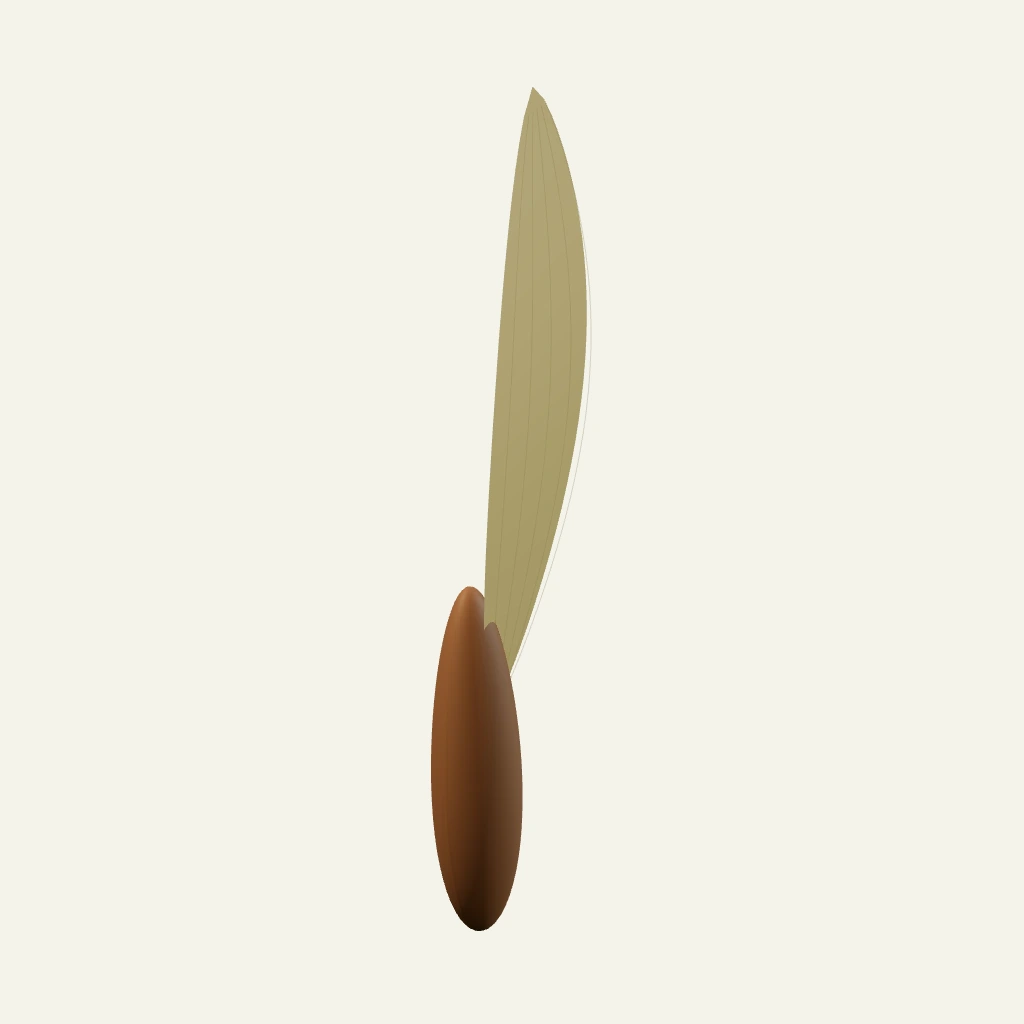
Samara · fruit

Individual samara length
25–40 mmSource notes

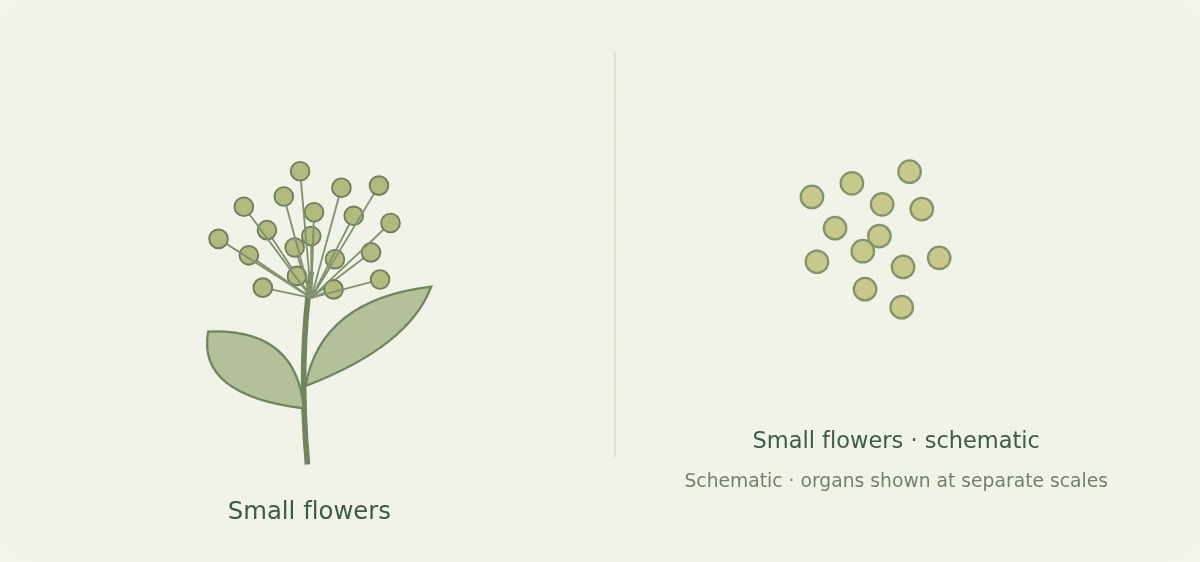
Sex expression varies: male, female and bisexual flowers can occur in different combinations. Single samaras disperse by wind.

Fruiting reference
Not documented

Organs are enlarged independently. Refer to the named measurement, not image size.

05 / Habitat

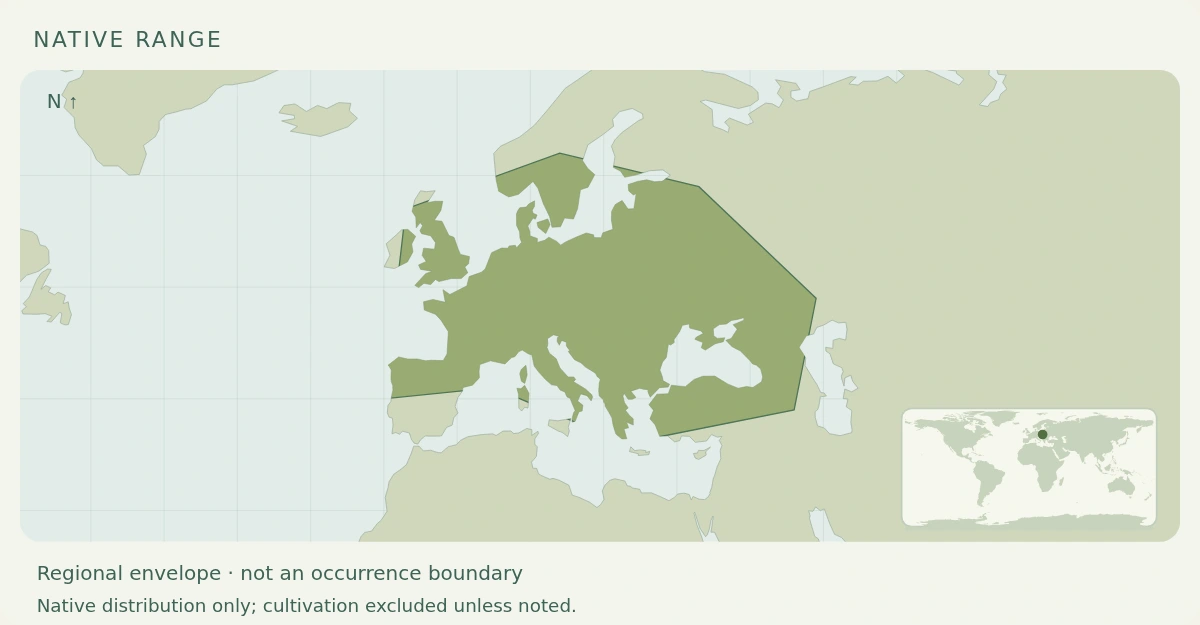
Native range & growing context

Native range & growing context

Regional coverage not shown

Reference spread
Not documented
Moisture
Not documented
Growth tendency
Site-dependent
Life span
No numerical lifespan is assigned from these references. Model age is not a survival forecast.

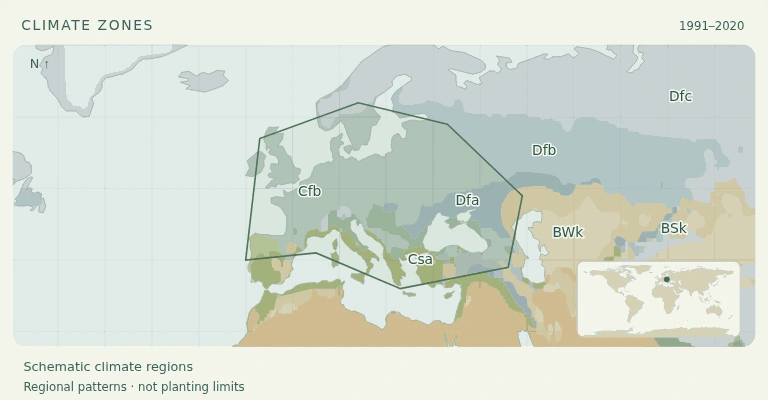
Regional context, not a measured occurrence or suitability map.

06 / Sources & interpretation

Read the evidence behind the illustration

Names & classification

Family
Oleaceae
Genus
Fraxinus
Synonyms
—
  • Opposite pinnate leaves have seven to eleven serrate leaflets; dormant buds are black.
  • Sex expression varies: male, female and bisexual flowers can occur in different combinations. Single samaras disperse by wind.

Source-informed teaching reconstruction, not a surveyed specimen. Crown dimensions, branch counts, growth ages and root geometry are ArborAI. Individual trees vary with provenance, competition, climate and management.

ArborAI teaching geometry; coefficients and ages are not measured species constants.

  1. Oregon State University · Fraxinus excelsior ↗landscapeplants.oregonstate.edu
  2. Plants For A Future · Fraxinus excelsior ↗pfaf.org
Plant data and references · 4
Native rangeNot shown in this editionTransferred from the existing catalogue; independent botanical review remains pending.landscapeplants.oregonstate.edu
Leaf lengthmm[250, 300]Transferred from the existing catalogue; independent botanical review remains pending.landscapeplants.oregonstate.edu
Seed lengthmm[25, 40]Transferred from the existing catalogue; independent botanical review remains pending.landscapeplants.oregonstate.edu
Usda hardinesscategory{"system": "USDA", "zones": [5, 8], "source": "usda-hardiness"}Reported horticultural recommendation; winter minimum only, not a heat or overall suitability limitpfaf.org