Botanical field guide
Picea smithiana
Himalayan spruce
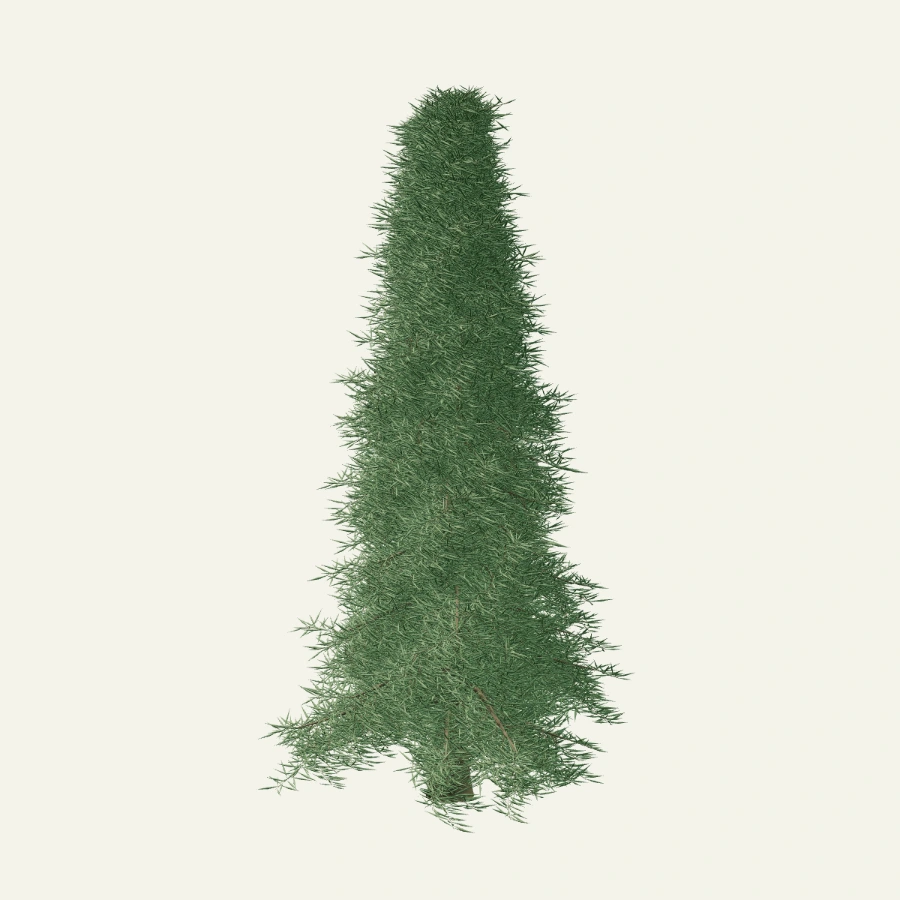
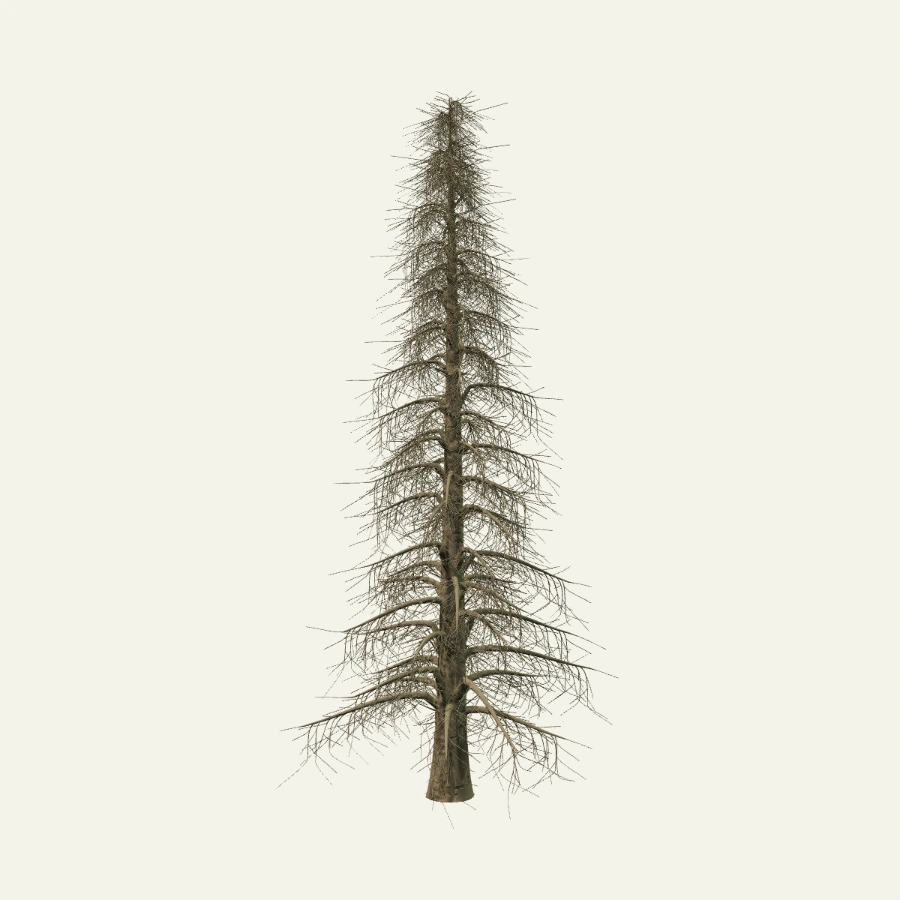
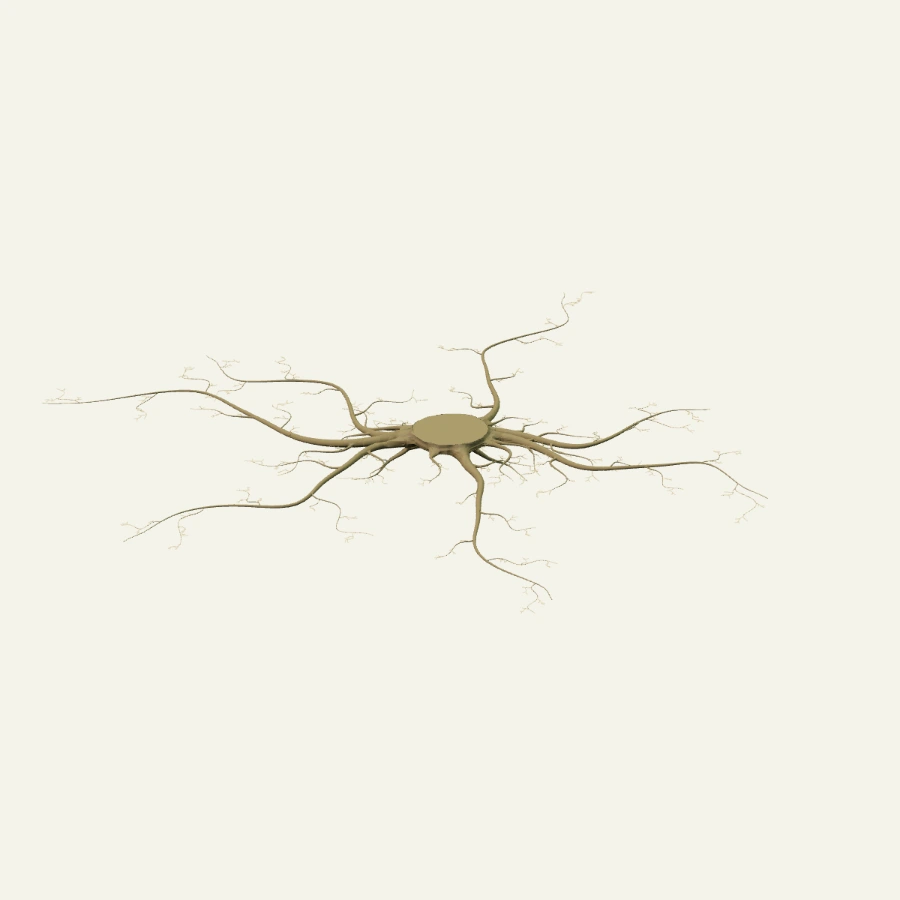
Tree / Pinaceae
The plant, in detail
Recorded conditions: Full sun (6 or more hours of direct sunlight a day); Good Drainage.
- Reference height
- ≤ 60 m
- Foliage habit
- Evergreen
- USDA zones
- 6–7
- Light
- Full sun
Upper height in Flora of China, species account; the model is not a record-sized specimen.
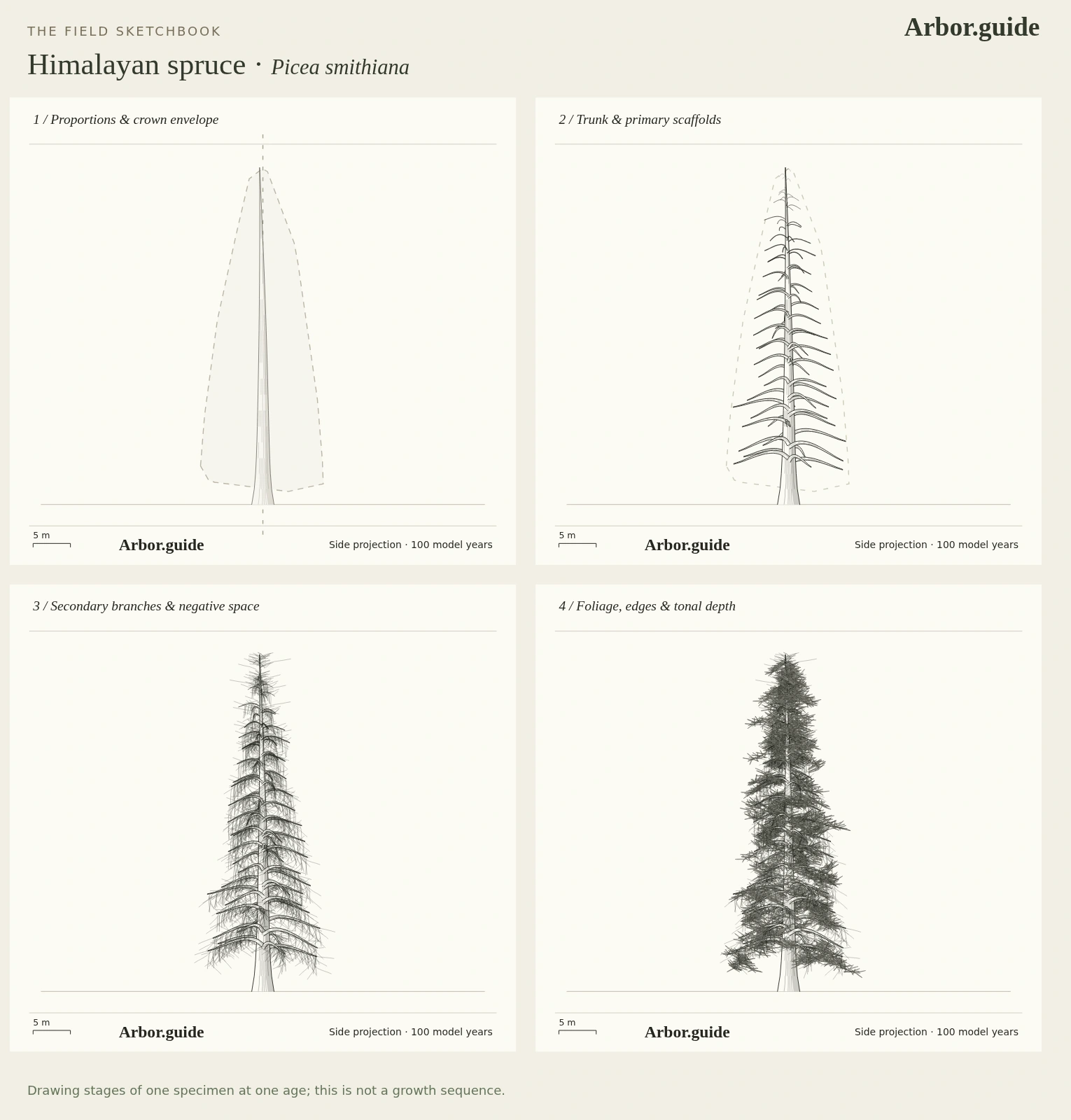
Crown
Spire reference crown. Width is an ArborAI interpretation of the reported crown habit; no measured spread is available.
Branching
Spiral foliage insertion; scaffold placement is ArborAI.
Bark
Light Brown; papery.
Roots
A schematic spreading root framework. The selected source does not quantify root depth or radius.
02 / Seasons
Through the seasons
Four portraits. One plant.
Read the crown, foliage and reproductive structures together. The four views compare seasonal appearances; the reference notes explain what is actually documented.
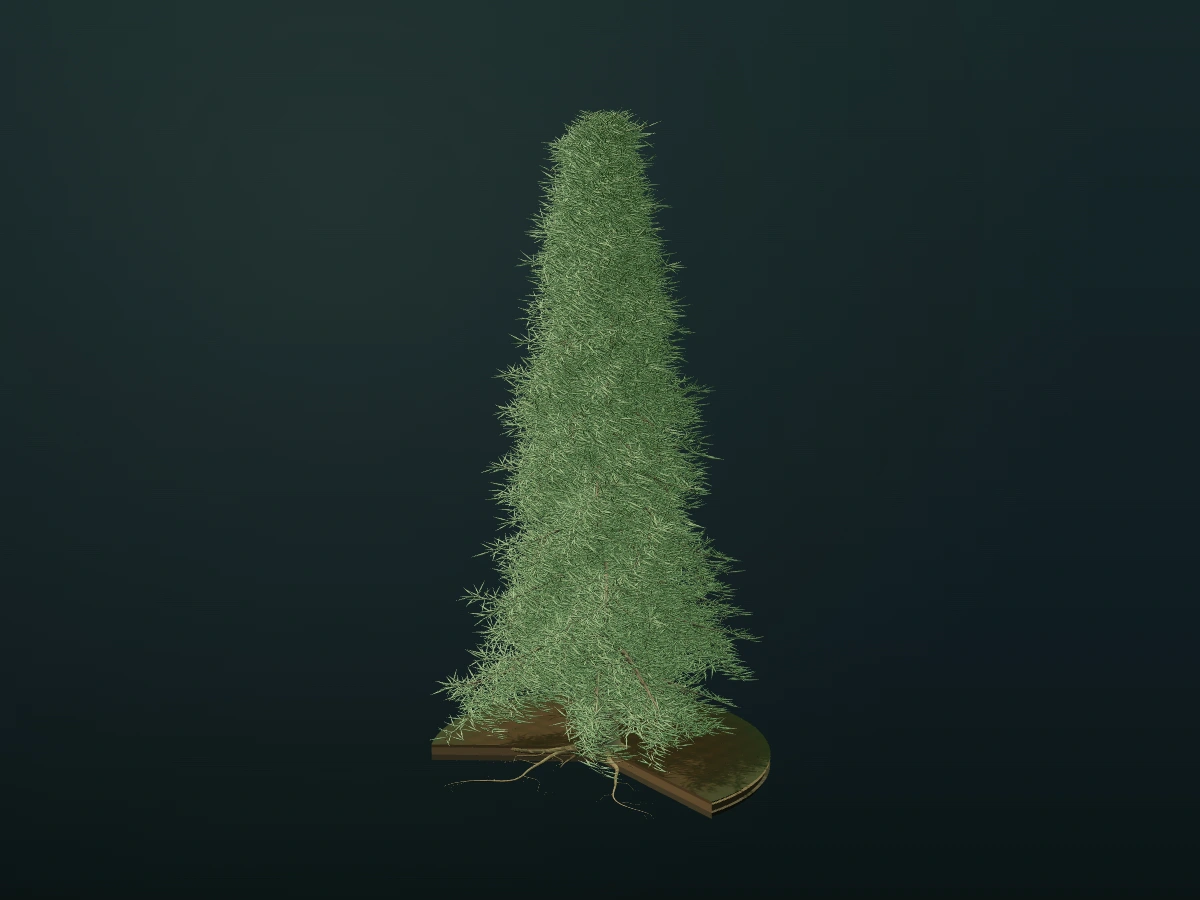
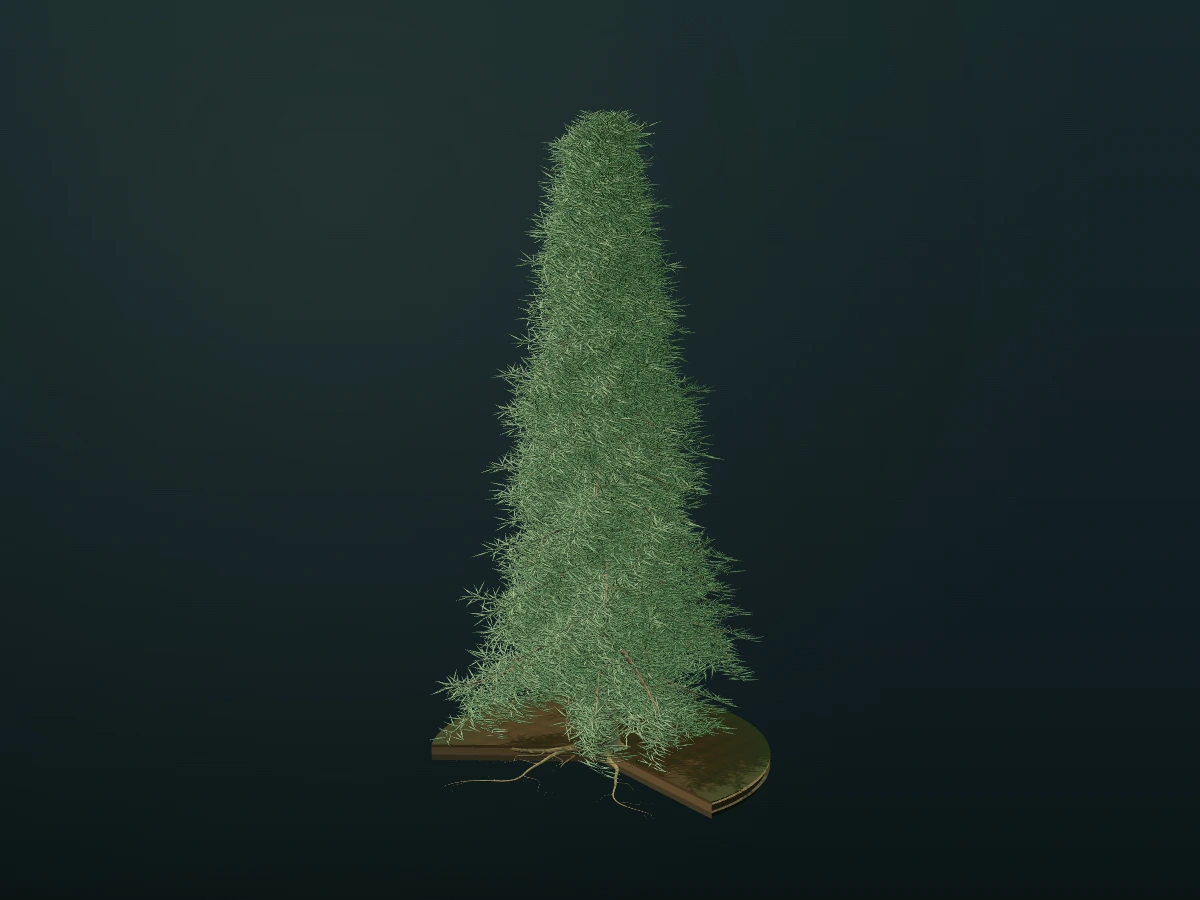
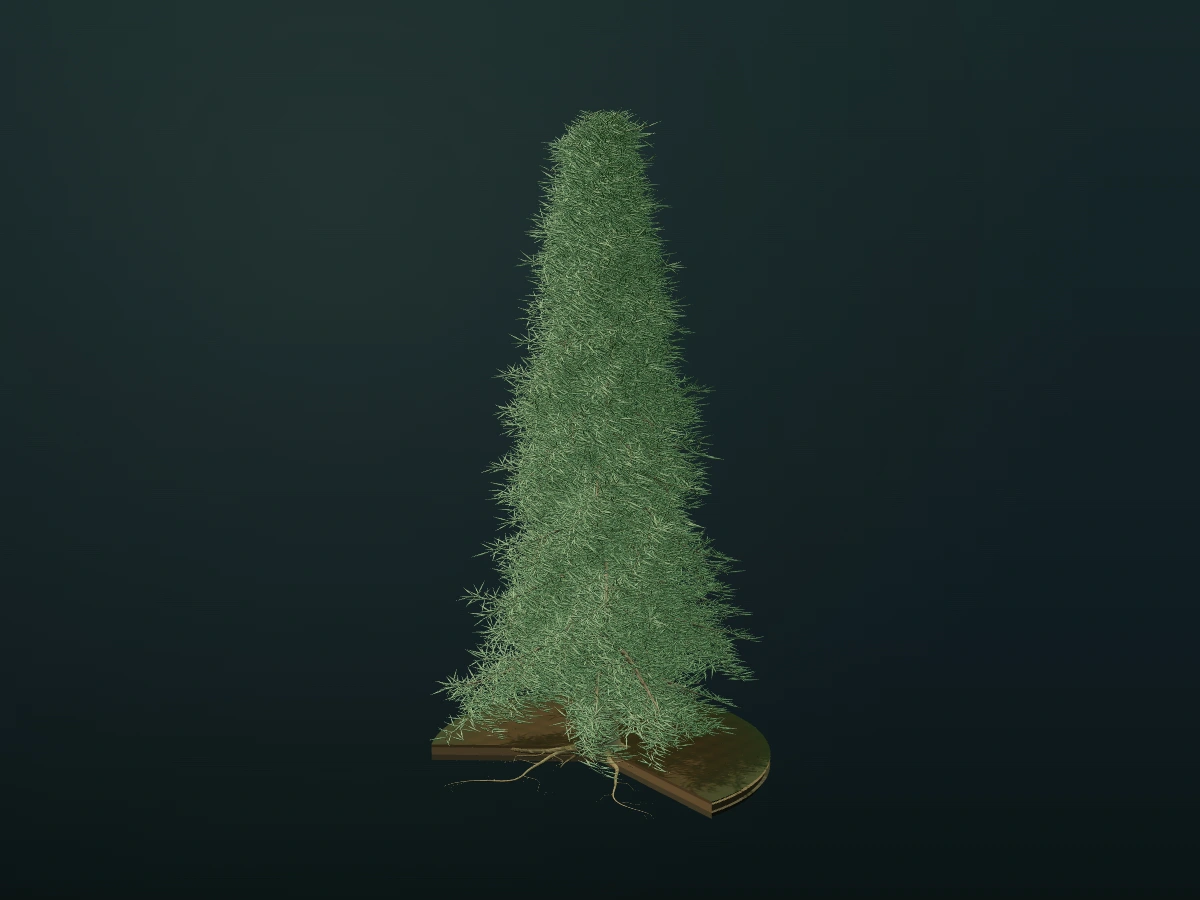
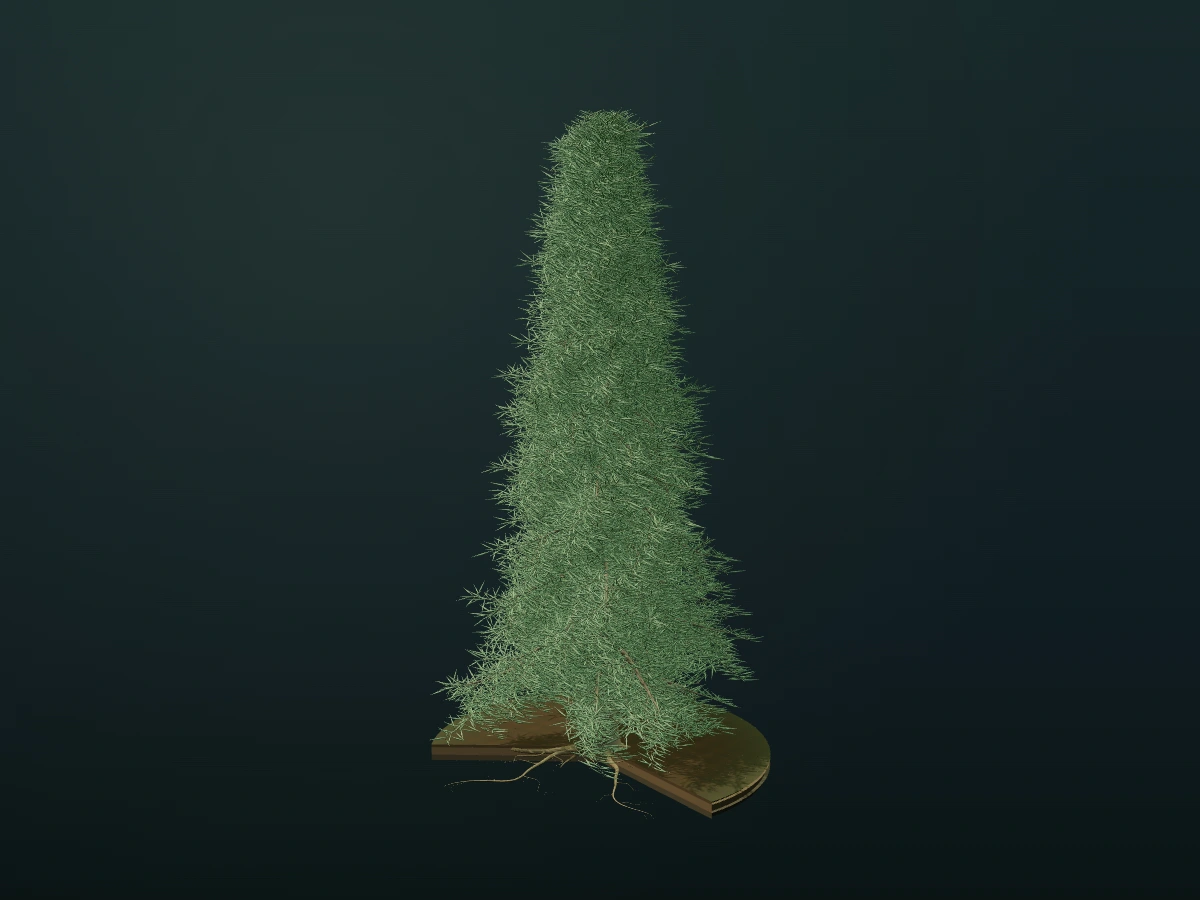
Seasonal illustration; the same plant, age and camera across four views.
Seasonal record
Reference region not specified in this record.
- Flowering
- This is a gymnosperm. Seeds and/or cones are its reproductive structures; they are not flowers or botanical fruits.[1]
- Seed / cone development
- Timing not documented
Leaf renewal
Evergreen[1]
A green canopy can persist while individual leaves age and are replaced. Evergreen does not mean that every leaf lasts indefinitely or that flowering and fruiting are continuous.
Reading these views
Season names organize these four views, not a universal calendar. Hemisphere, local climate, cultivar and management can change timing; months are shown only when explicitly recorded.
The views emphasize crown structure. Buds, small flowers, individual retained leaves and fine reproductive changes may be unresolved; model age and fruit count are not production forecasts.
No separate on-tree fruit display is configured for this record.
Seasonal references
- NC State Extension · Picea smithiana ↗plants.ces.ncsu.edu
03 / Foliage
A closer look at the organs
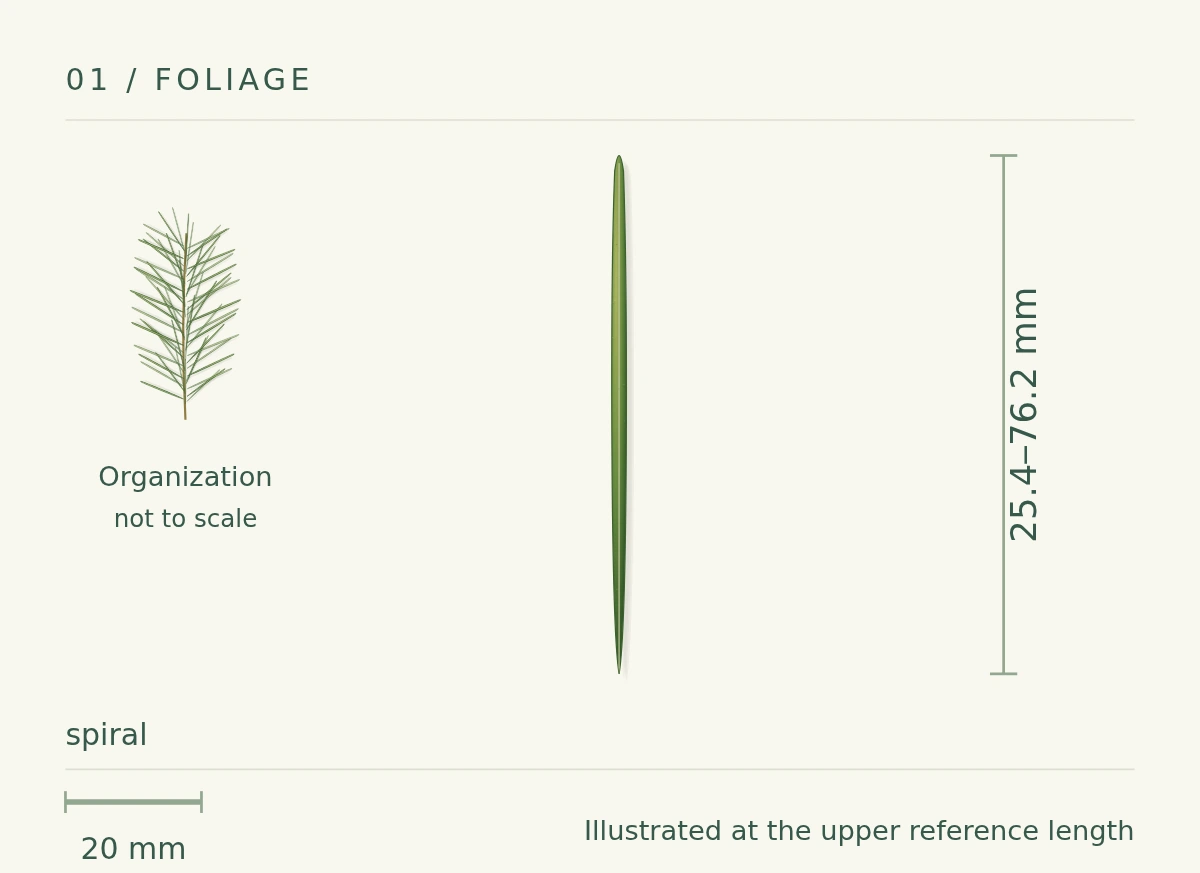
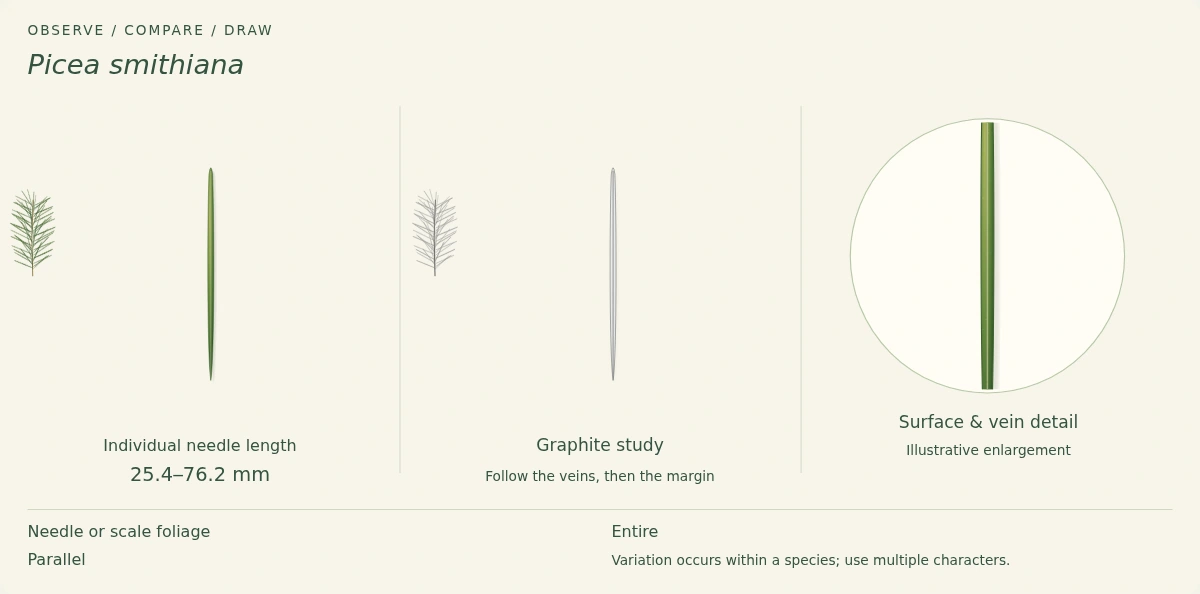
Leaves
- Individual needle length
- 25.4–76.2 mmSource notes
Long, slender needles occur singly around notably hanging branchlets, creating a soft outline within the conical crown.
Needle or scale foliage · Entire · Parallel · spiral
Seasonal notes
This is a representative palette of reported colours, without a fixed seasonal calendar.
04 / Fruit & seed
Named structures, separate scales
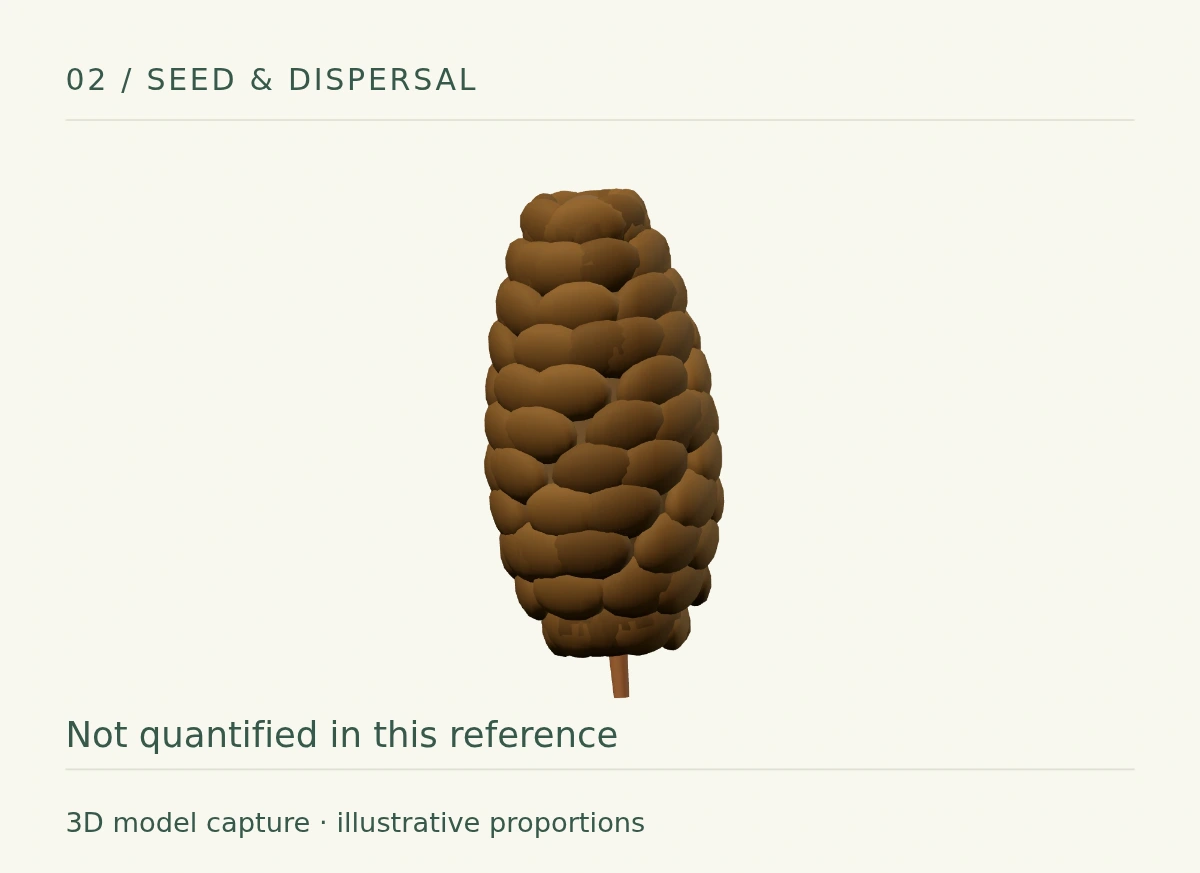
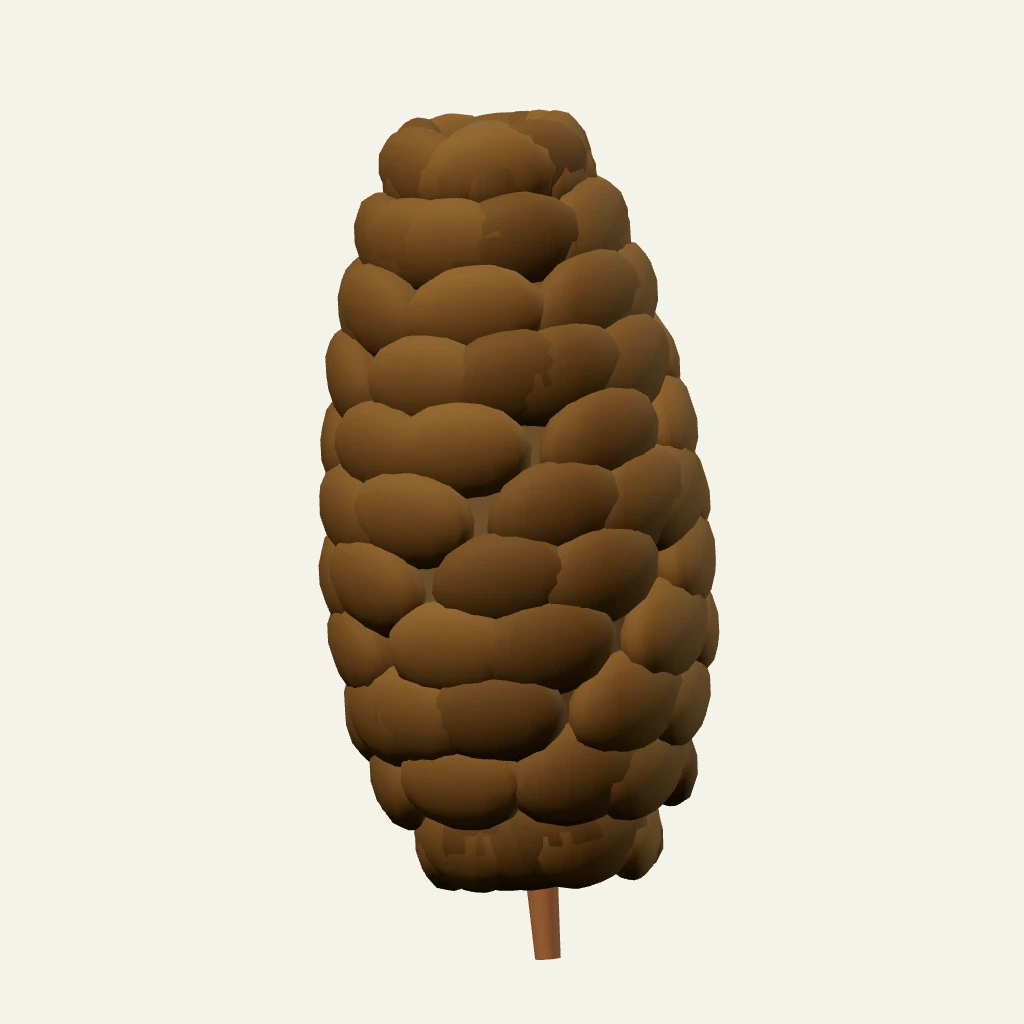
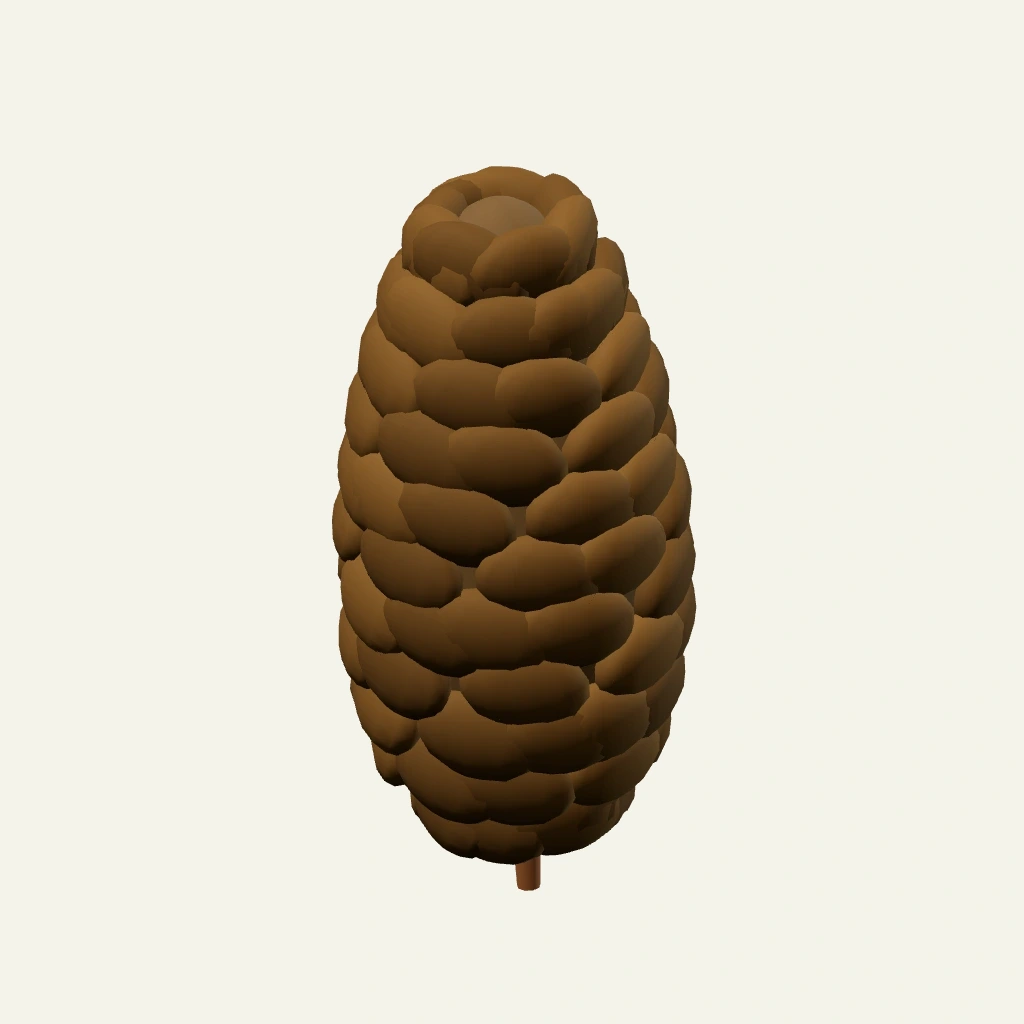
Seed cone
- Seed cone length
- Not documentedSource notes
Large pendant cones mature brown and open their scales to release winged seeds. The drawing shows the reproductive unit; enclosed seed dimensions are separate.
- Fruiting reference
- Not documented
Organs are enlarged independently. Refer to the named measurement, not image size.
05 / Habitat
Native range & growing context
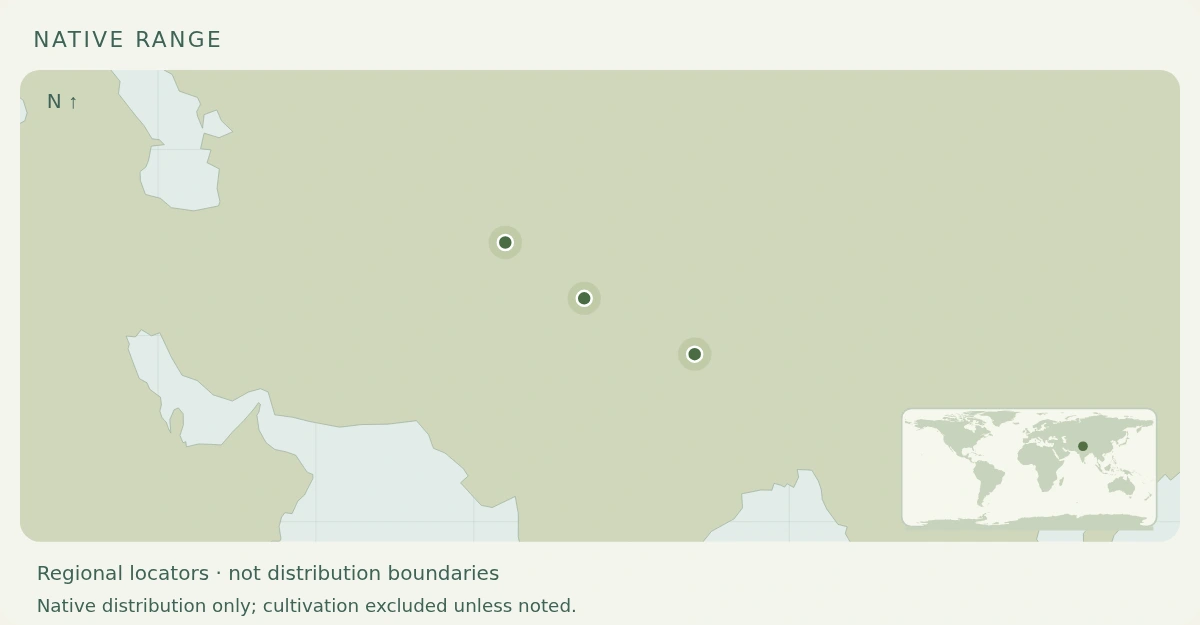
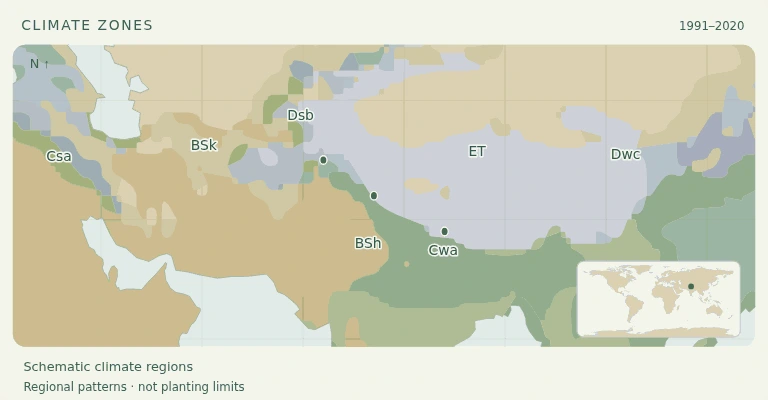
Native range & growing context
Western Himalayas from Afghanistan to Nepal and Tibet.
- Reference spread
- Not documented
- Moisture
- drained
- Growth tendency
- Site-dependent
- Life span
- No numerical lifespan is established by this reference. Model age is an illustration parameter.
Regional context, not a measured occurrence or suitability map.
06 / Sources & interpretation
Read the evidence behind the illustration
Names & classification
- Family
- Pinaceae
- Genus
- Picea
- Synonyms
- —
- Long, slender needles occur singly around notably hanging branchlets, creating a soft outline within the conical crown.
- Large pendant cones mature brown and open their scales to release winged seeds.
- Propagation methods recorded: not recorded.
Source-informed teaching reconstruction. Leaf organisation, crown habit and bark follow botanical references. Branch positions, crown width where unmeasured, root extents, colours and model ages are ArborAI. Foliage is enlarged. This is not a surveyed specimen or a calibrated growth or survival forecast.
Source-informed teaching reconstruction. Leaf organisation, crown habit and bark follow botanical references. Branch positions, crown width where unmeasured, root extents, colours and model ages are ArborAI. Foliage is enlarged. This is not a surveyed specimen or a calibrated growth or survival forecast.
- NC State Extension · Picea smithiana ↗plants.ces.ncsu.edu
- GBIF backbone · Picea smithiana ↗www.gbif.org
- Flora of China · Pinaceae ↗www.iplant.cn
Plant data and references · 13
| Heightm | [null, 60]Species-level reference; cultivation and individual variation apply.www.iplant.cn |
|---|---|
| Spreadm | Not documentedSpecies-level reference; cultivation and individual variation apply.www.iplant.cn |
| Nativerange | Western Himalayas from Afghanistan to Nepal and Tibet.Species-level reference; cultivation and individual variation apply.plants.ces.ncsu.edu |
| Leafhabitcategory | EvergreenSpecies-level reference; cultivation and individual variation apply.plants.ces.ncsu.edu |
| Botany organs leaf lengthmm | [25.4, 76.2]Species-level reference; cultivation and individual variation apply.plants.ces.ncsu.edu |
| Botany organs seed lengthmm | Not documentedSpecies-level reference; cultivation and individual variation apply.plants.ces.ncsu.edu |
| Botany shoot arrangementcategory | spiralSpecies-level reference; cultivation and individual variation apply.plants.ces.ncsu.edu |
| Architecture leaves | Long, slender needles occur singly around notably hanging branchlets, creating a soft outline within the conical crown.Species-level reference; cultivation and individual variation apply.plants.ces.ncsu.edu |
| Architecture reproduction | Large pendant cones mature brown and open their scales to release winged seeds.Species-level reference; cultivation and individual variation apply.plants.ces.ncsu.edu |
| Lightcategory | ["sun"]Species-level reference; cultivation and individual variation apply.plants.ces.ncsu.edu |
| Moisturecategory | ["drained"]Species-level reference; cultivation and individual variation apply.plants.ces.ncsu.edu |
| Hardinesscategory | {"system": "USDA", "zones": [6, 7], "source": "ncsu"}Species-level reference; cultivation and individual variation apply.plants.ces.ncsu.edu |
| Taxonomy familycategory | PinaceaeSpecies-level reference; cultivation and individual variation apply.www.gbif.org |