Botanical field guide
Pinus thunbergii
Japanese black pine
Tree / Pinaceae
The plant, in detail
Sunny coastal and other well-drained sites; adult form is influenced by exposure.
- Reference height
- 6–18 m
- Foliage habit
- Evergreen
- USDA zones
- 5–8
- Light
- Not documented
Approximate stature from the cited account; equal bounds indicate a reported upper or approximate height, not a measured population interval. Cultivation and forest conditions differ.
Crown
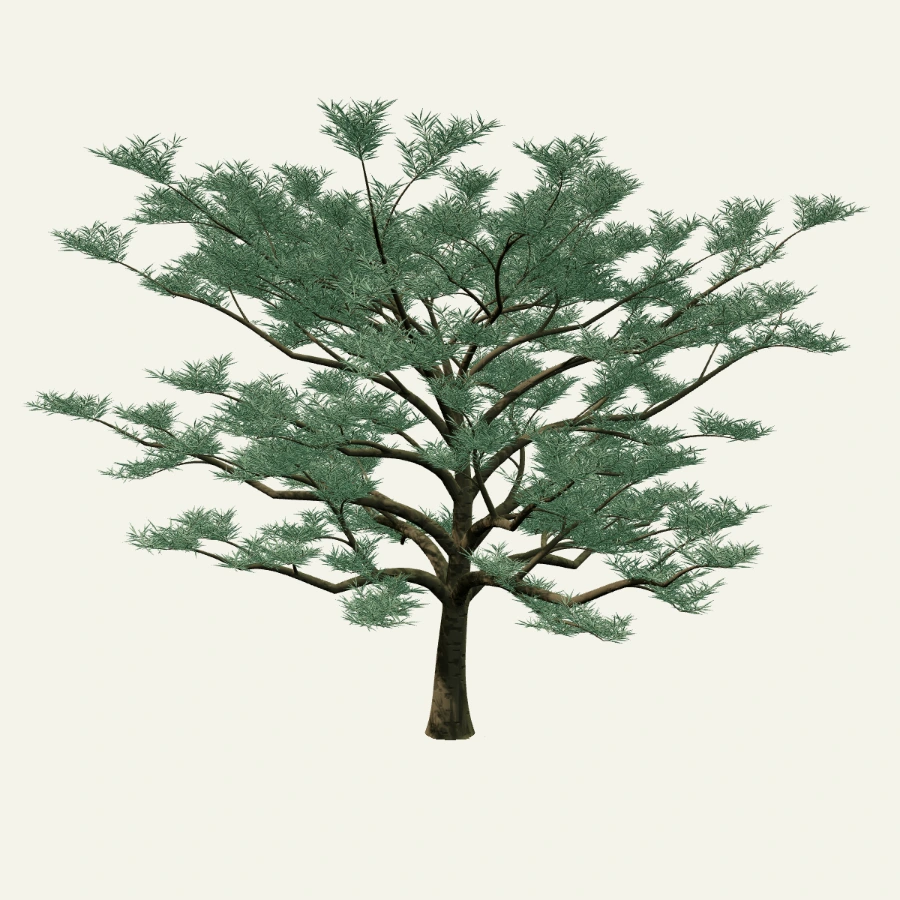
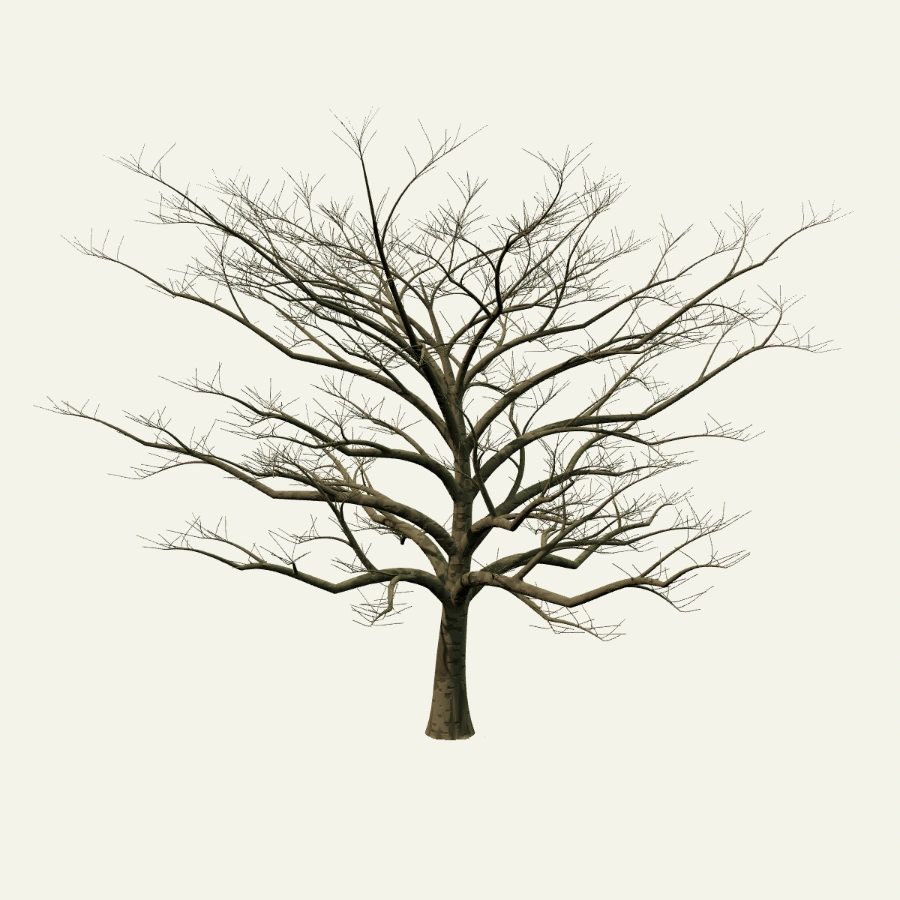
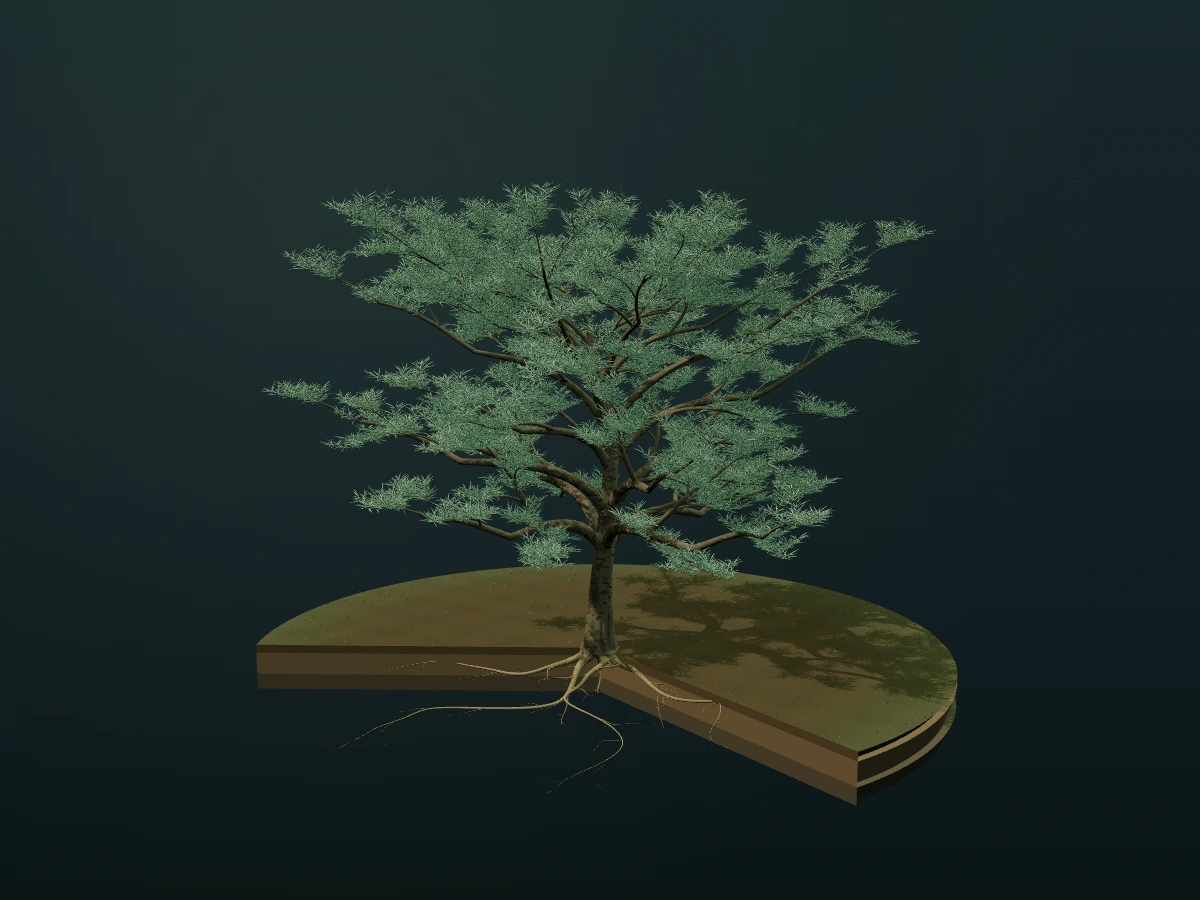
A spreading asymmetrical crown develops above a frequently curved trunk.
Branching
Spreading and sometimes pendulous limbs form an asymmetric crown without a conspicuous central leader in the mature reference form. The trunk can curve, while new needle-bearing candles are upright.
Bark
Dark gray to black bark becomes strongly fissured and scaly.
Roots
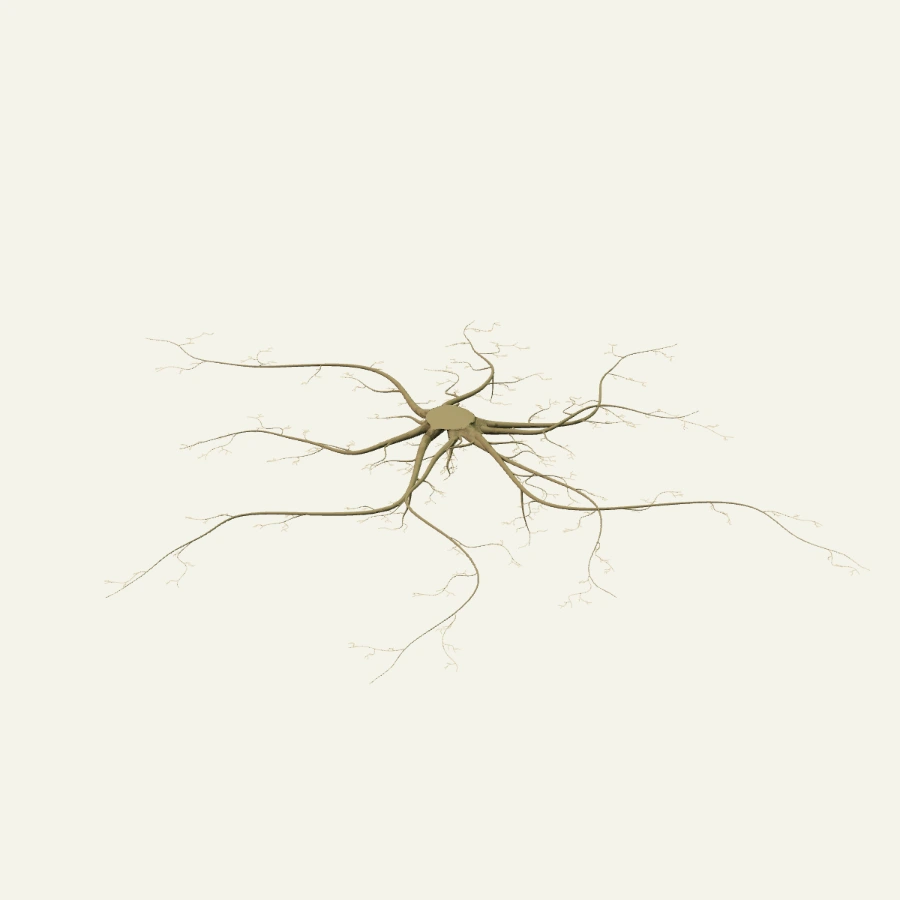
The root drawing is an ArborAI soil scenario: curved structural laterals and descending axes, not a measured species root map. Depth depends on soil, water table, establishment and damage; fine absorptive roots are unresolved.
The shape of growth
Stylized real-world examples
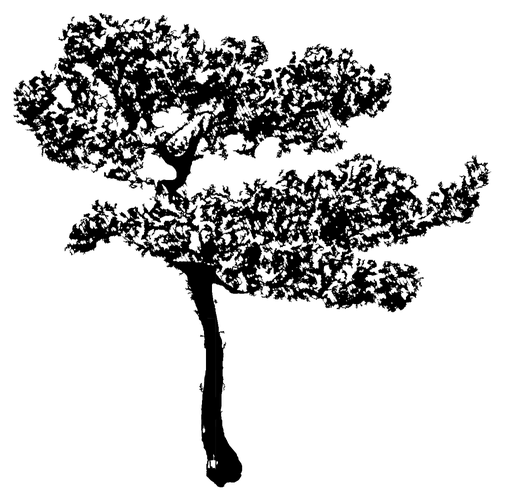
Silhouettes are sized independently.
02 / Seasons
Through the seasons
Four portraits. One plant.
Read the crown, foliage and reproductive structures together. The four views compare seasonal appearances; the reference notes explain what is actually documented.
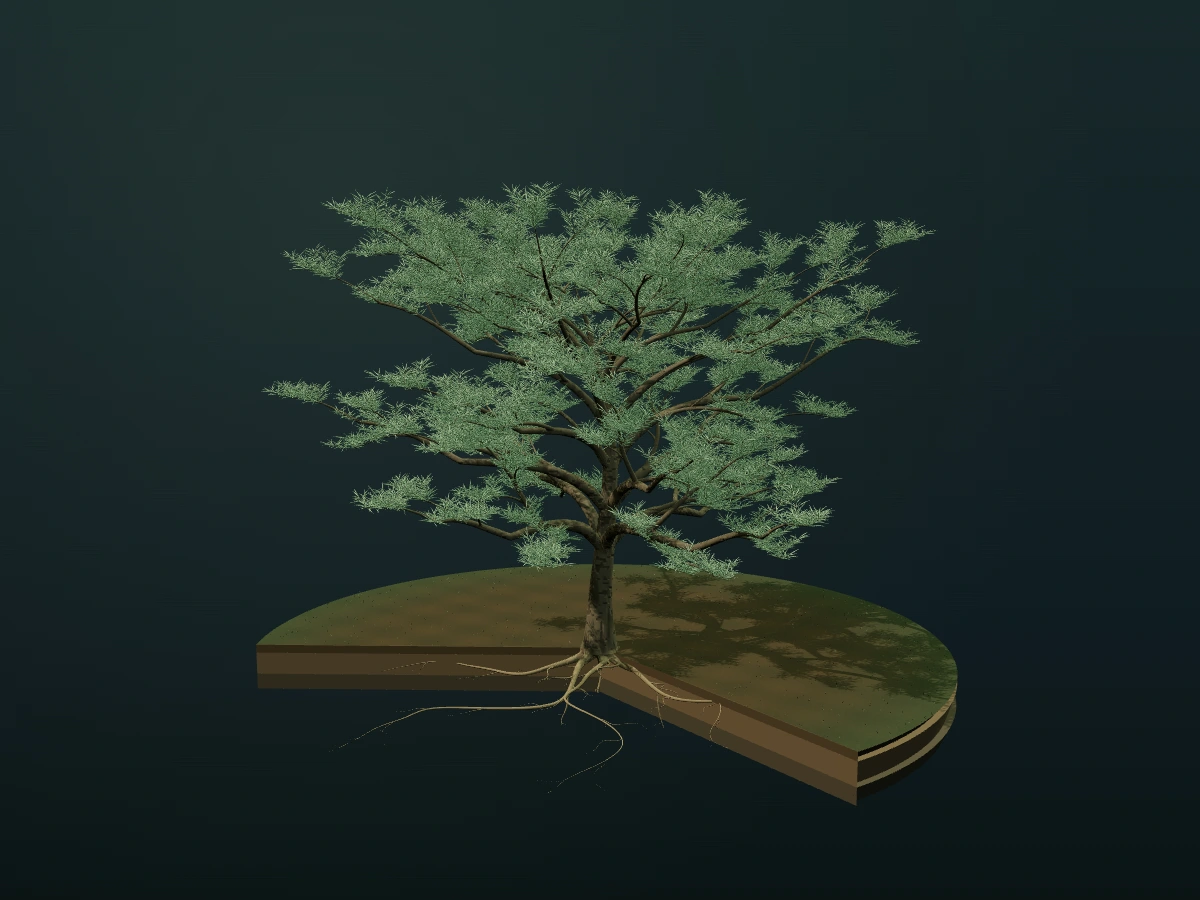
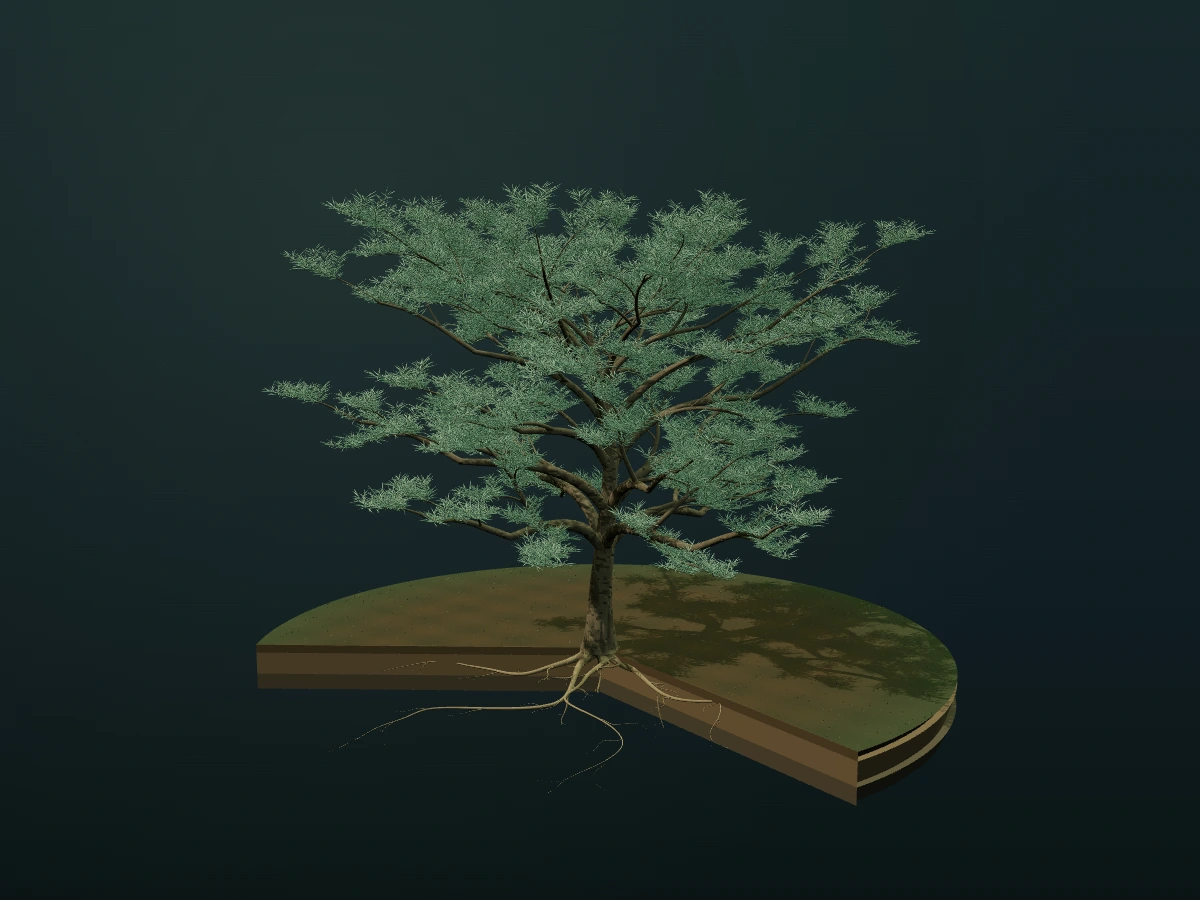
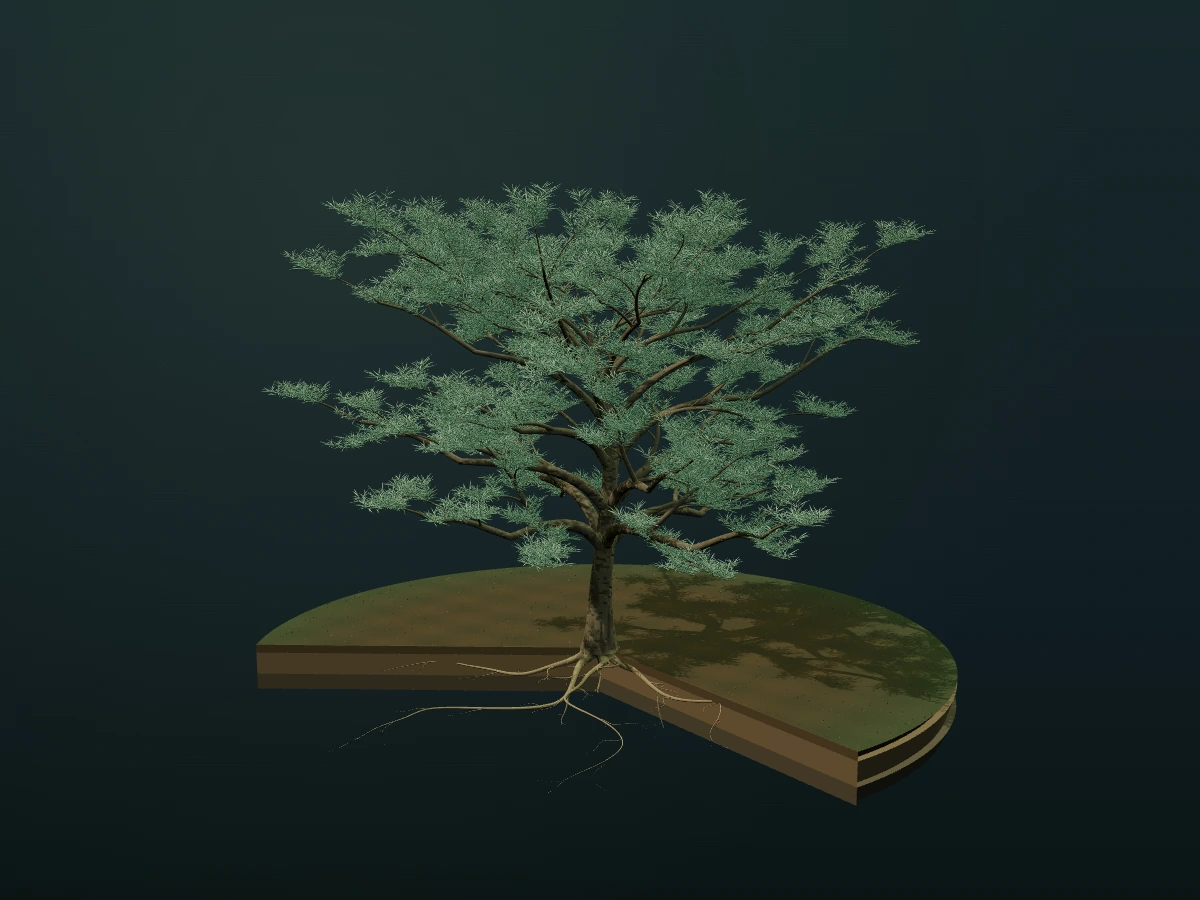
Seasonal illustration; the same plant, age and camera across four views.
Seasonal record
North Carolina botanical account
Leaf renewal
Evergreen[1]
A green canopy can persist while individual leaves age and are replaced. Evergreen does not mean that every leaf lasts indefinitely or that flowering and fruiting are continuous.
Reading these views
Season names organize these four views, not a universal calendar. Hemisphere, local climate, cultivar and management can change timing; months are shown only when explicitly recorded.
The views emphasize crown structure. Buds, small flowers, individual retained leaves and fine reproductive changes may be unresolved; model age and fruit count are not production forecasts.
No separate on-tree fruit display is configured for this record.
Seasonal references
- NC State Extension · Pinus thunbergii ↗plants.ces.ncsu.edu
03 / Foliage
A closer look at the organs
Leaves
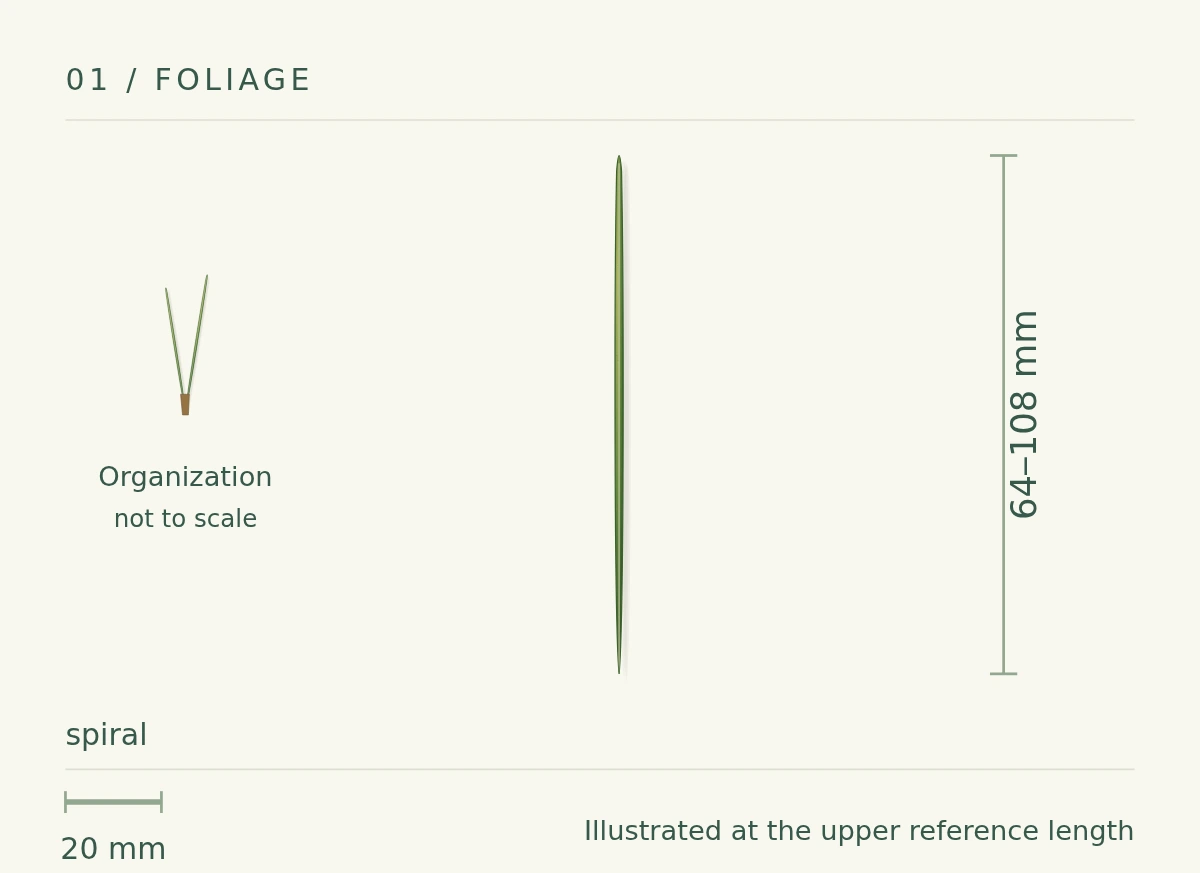
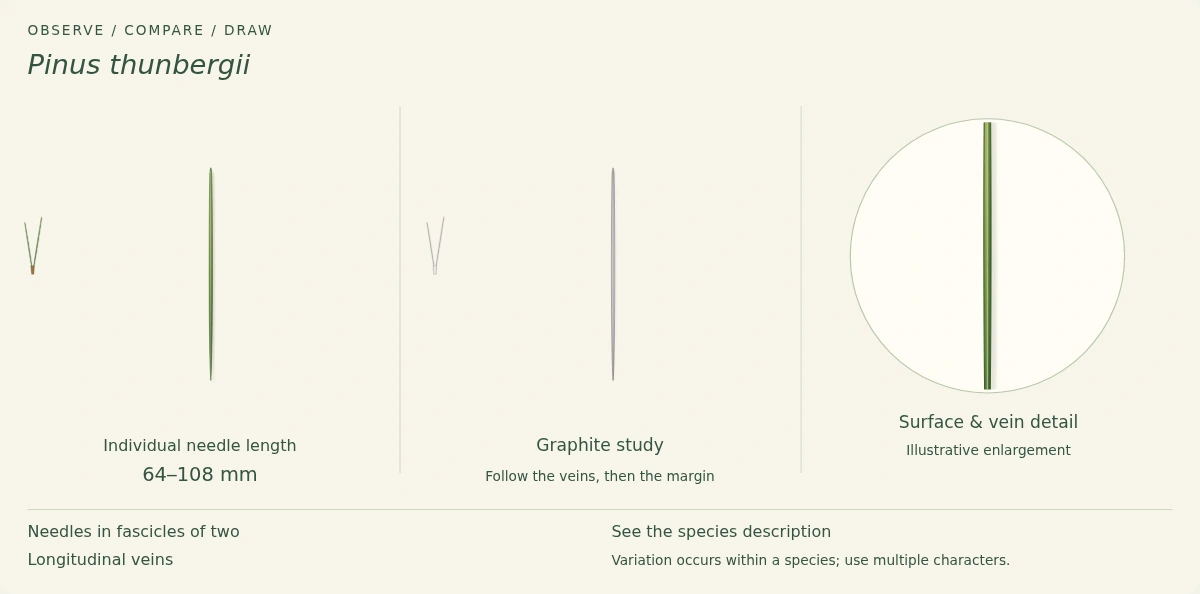
- Individual needle length
- 64–108 mmSource notes
Stiff dark green pointed needles occur in pairs.
Needles in fascicles of two · See the species description · Longitudinal veins · spiral
Seasonal notes
Evergreen foliage is retained across seasons; older leaves or needles are still shed. Colour and retention vary with site and weather.
04 / Fruit & seed
Named structures, separate scales
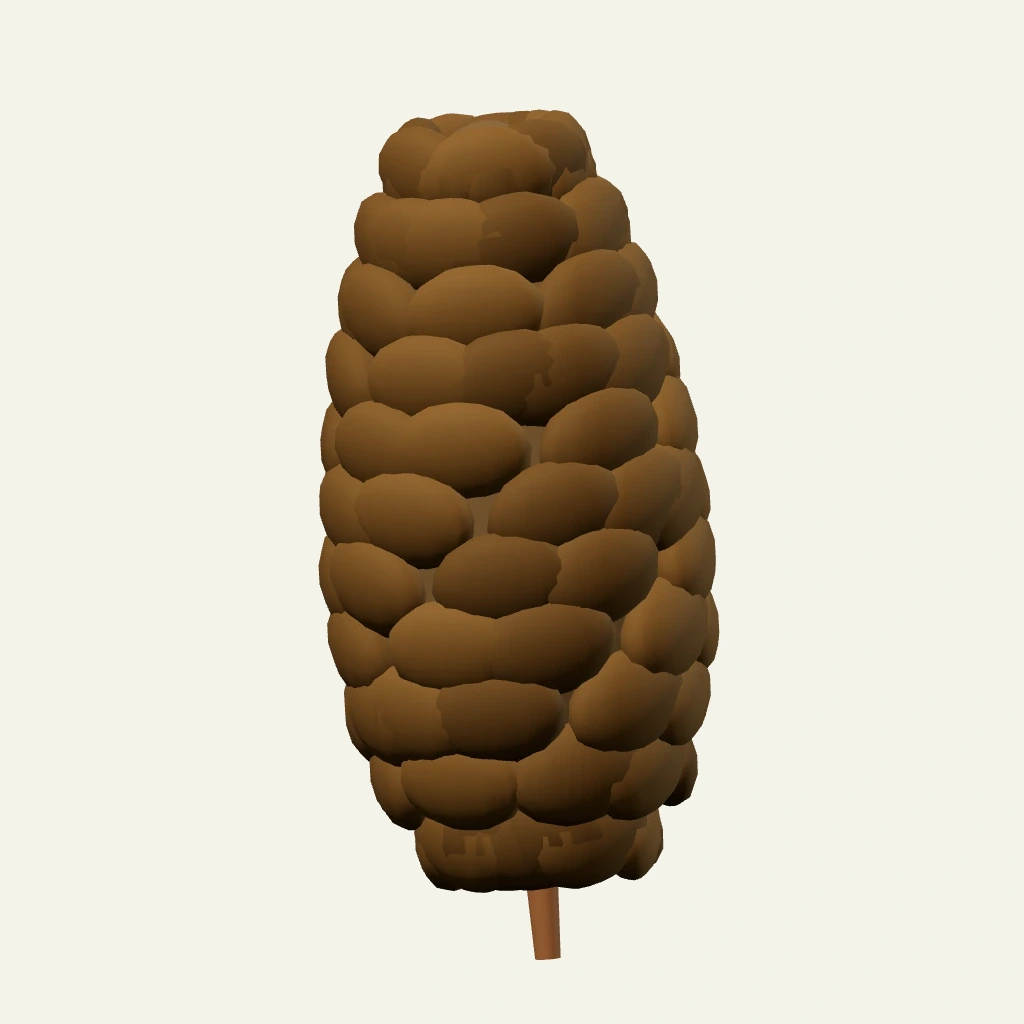
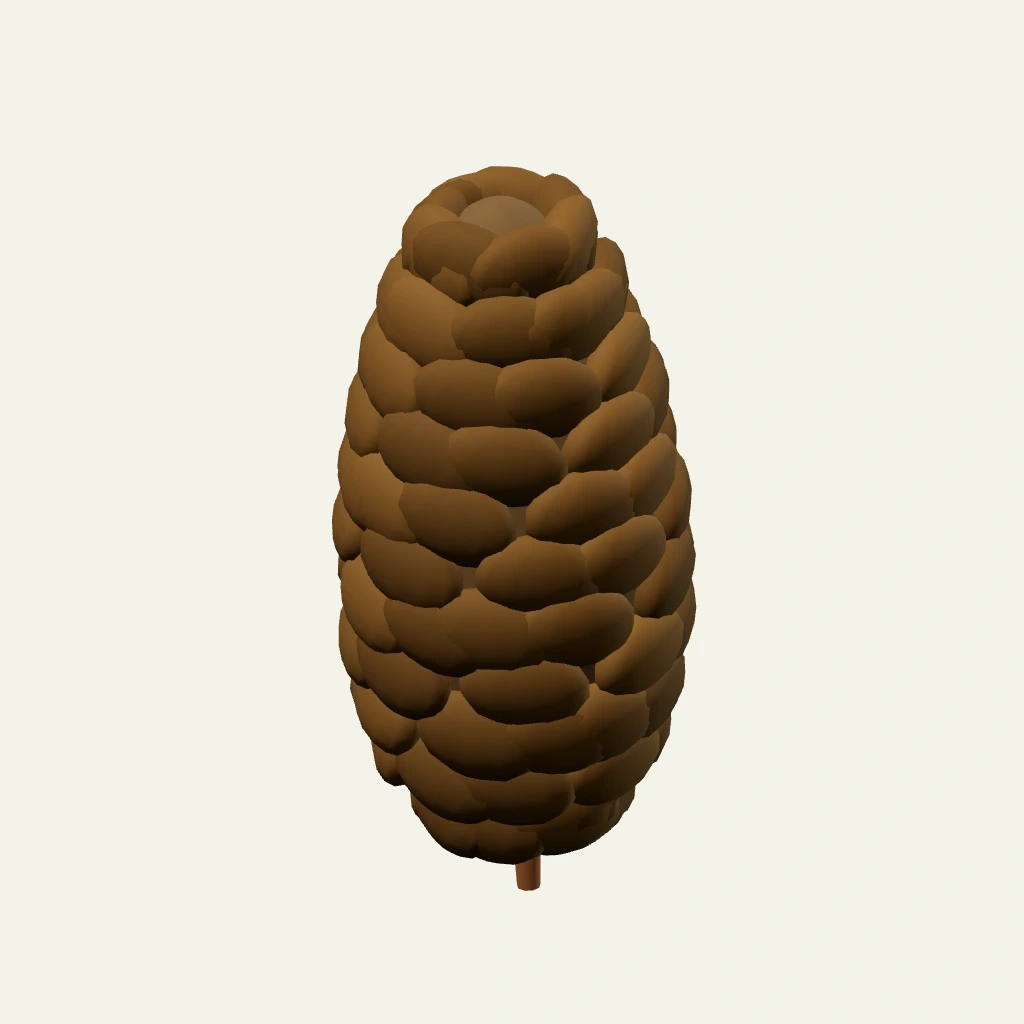
Seed cone
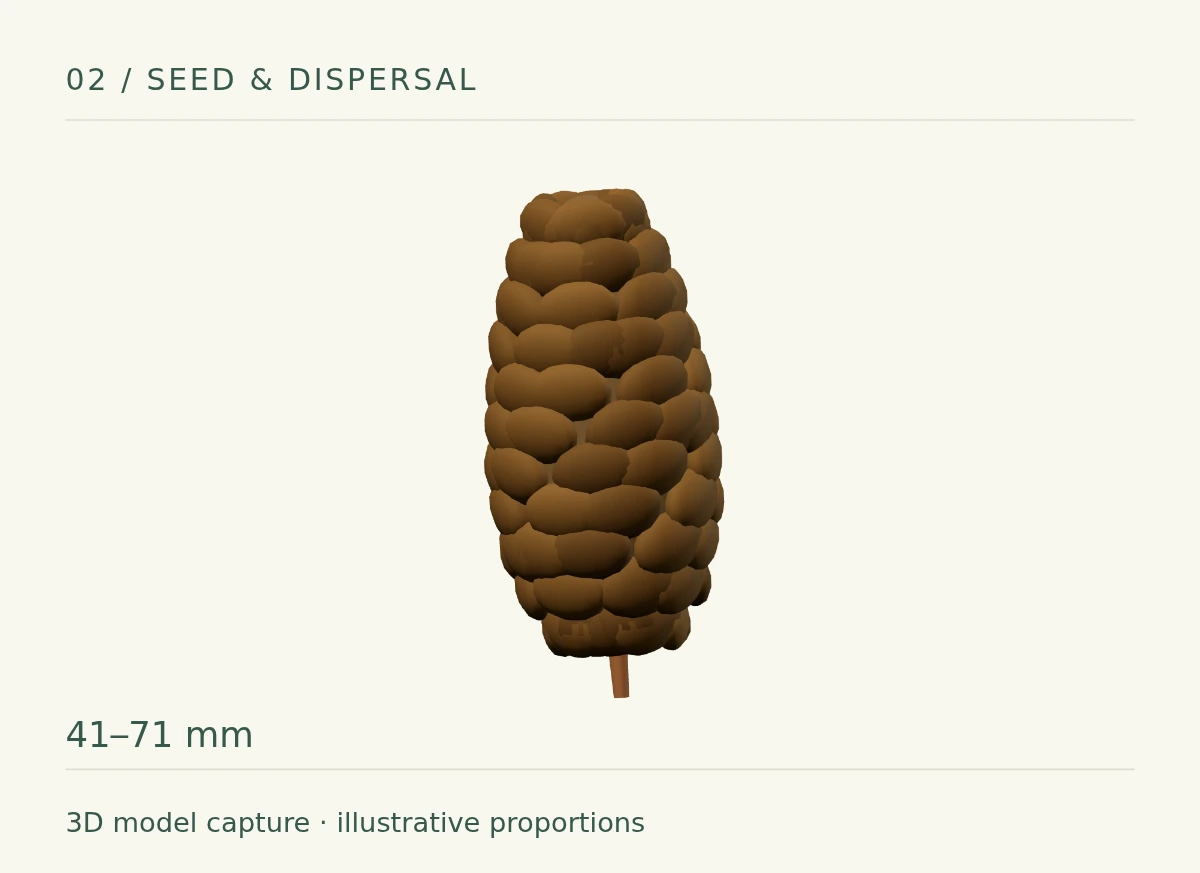
- Seed cone length
- 41–71 mmSource notes
Ovoid woody cones usually occur singly or in pairs and release winged seeds.
- Fruiting reference
- Autumn · Winter
North Carolina botanical account
Organs are enlarged independently. Refer to the named measurement, not image size.
05 / Habitat
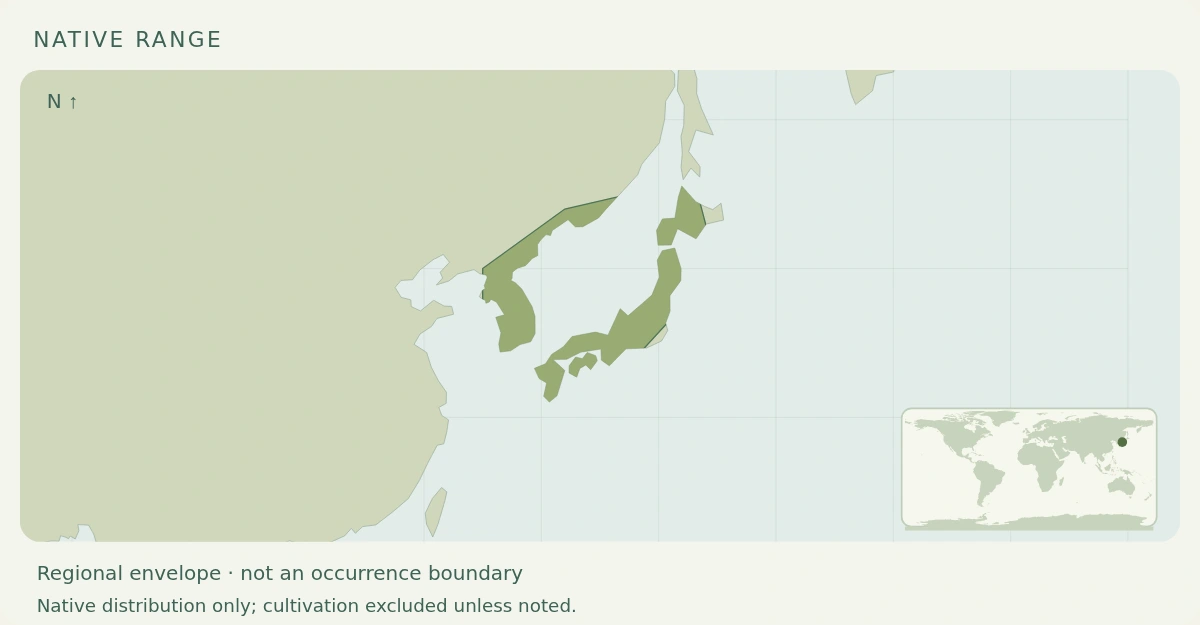
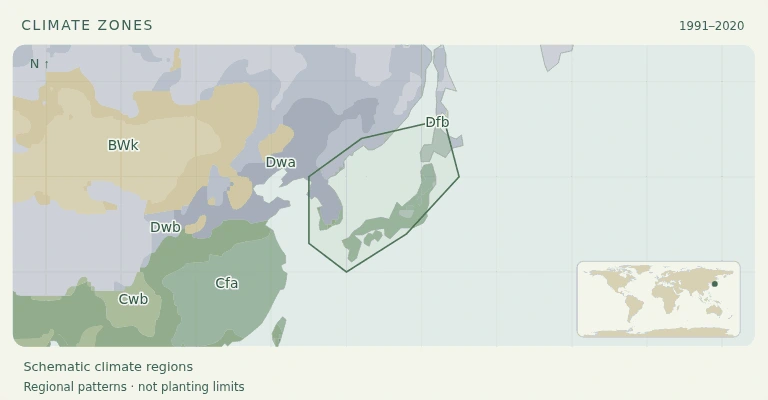
Native range & growing context
Native range & growing context
Central and southern Japan and southern Korea.
- Reference spread
- Not documented
- Moisture
- Not documented
- Growth tendency
- Moderate
- Life span
- No numerical lifespan is assigned from these references. Model age is not a survival forecast.
Regional context, not a measured occurrence or suitability map.
06 / Sources & interpretation
Read the evidence behind the illustration
Names & classification
- Family
- Pinaceae
- Genus
- Pinus
- Synonyms
- —
- Stiff dark green pointed needles occur in pairs.
- Ovoid woody cones usually occur singly or in pairs and release winged seeds.
Source-informed teaching reconstruction, not a surveyed specimen. Crown dimensions, branch counts, growth ages and root geometry are ArborAI. Individual trees vary with provenance, competition, climate and management.
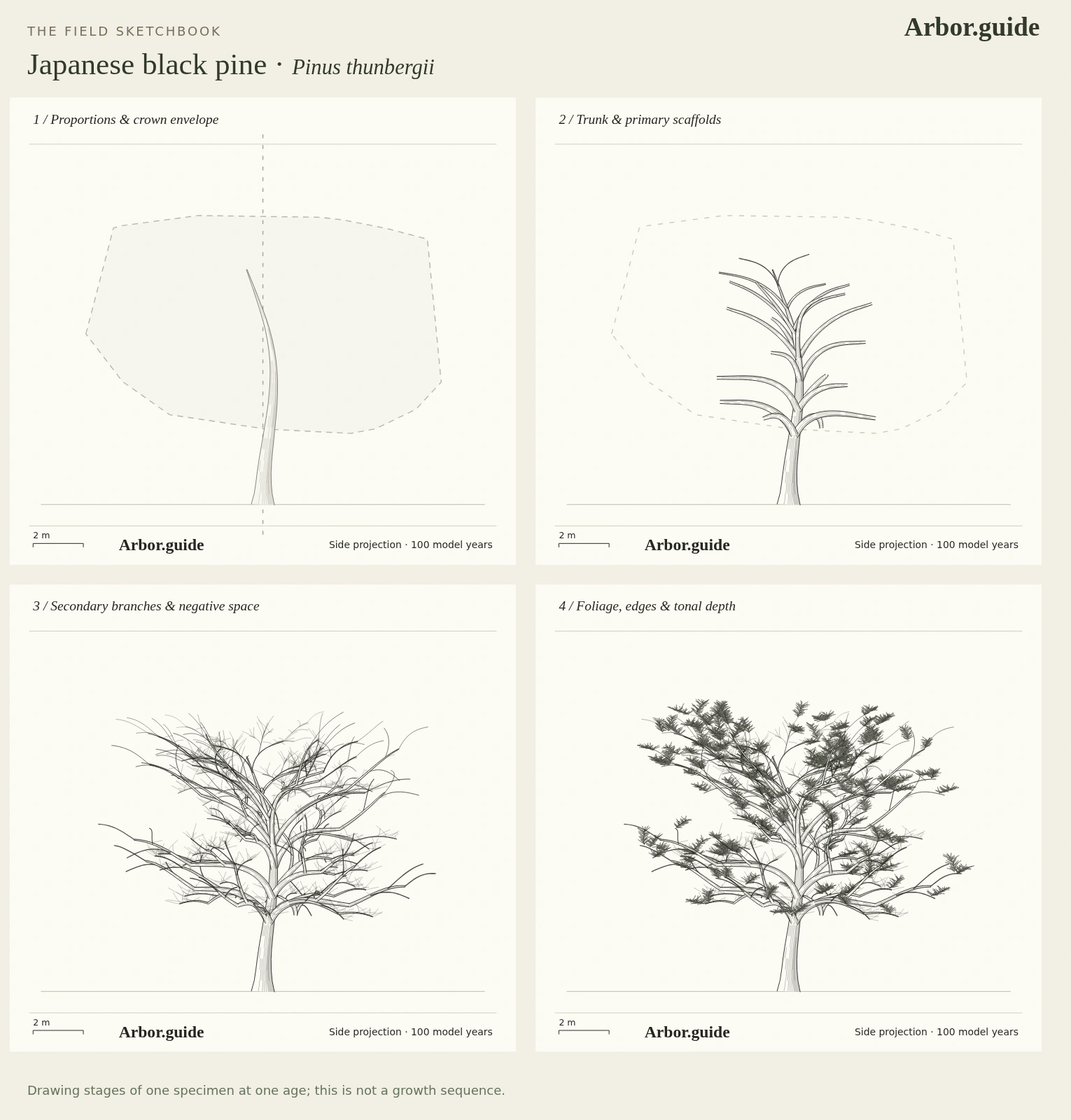
Source-informed teaching reconstruction. Scaffold groups, branch numbers, insertion positions, crown proportions and emergence schedules are ArborAI. Group counts are not annual whorls. Leaf fascicles follow the species description; foliage symbols are enlarged and sampled. Branch death, pruning and dormant-bud activation are not simulated.
- NC State Extension · Pinus thunbergii ↗plants.ces.ncsu.edu
Plant data and references · 7
| Native range | Central and southern Japan and southern Korea.Transferred from the existing catalogue; independent botanical review remains pending.plants.ces.ncsu.edu |
|---|---|
| Leaf lengthmm | [64, 108]Transferred from the existing catalogue; independent botanical review remains pending.plants.ces.ncsu.edu |
| Seed lengthmm | [41, 71]Transferred from the existing catalogue; independent botanical review remains pending.plants.ces.ncsu.edu |
| Branching architecture | Spreading and sometimes pendulous limbs form an asymmetric crown without a conspicuous central leader in the mature reference form. The trunk can curve, while new needle-bearing candles are upright.Species-level habit; individuals, growing space, age and cultivars vary. This supports descriptive morphology, not the procedural coordinates or timing.plants.ces.ncsu.edu |
| Crown architecture | A spreading asymmetrical crown develops above a frequently curved trunk.Species-level habit; individuals, growing space, age and cultivars vary. This supports descriptive morphology, not the procedural coordinates or timing.plants.ces.ncsu.edu |
| Reference phenologycategory | {"flowering": {"seasons": ["spring"]}, "fruiting": {"seasons": ["autumn", "winter"]}, "reference": "North Carolina botanical account", "source": "https://plants.ces.ncsu.edu/plants/pinus-thunbergii/", "reviewed": "2026-10-16"}Regional observations. Fruit display may include persistence and is not automatically ripening. Missing dates remain unspecified. Independent botanical review remains pending.plants.ces.ncsu.edu |
| Usda hardinesscategory | {"system": "USDA", "zones": [5, 8], "source": "usda-hardiness", "subzones": ["5a", "8b"]}Reported horticultural recommendation; winter minimum only, not a heat or overall suitability limitplants.ces.ncsu.edu |