Botanical field guide
Juglans ailantifolia
Japanese walnut
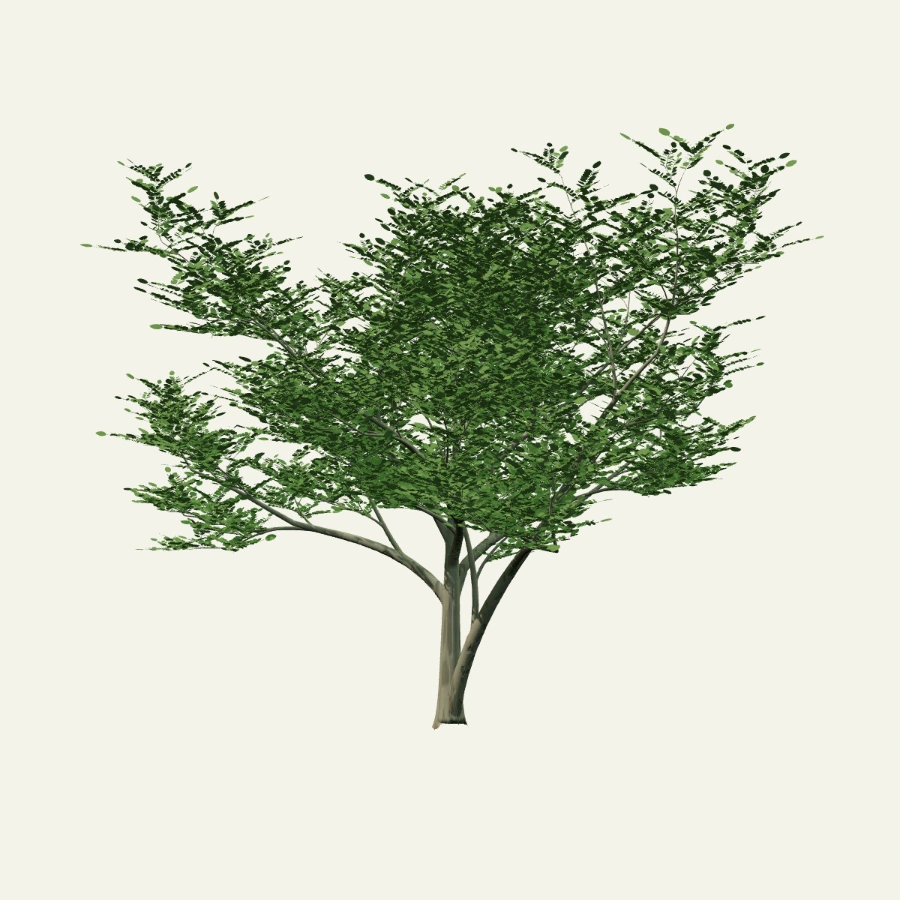
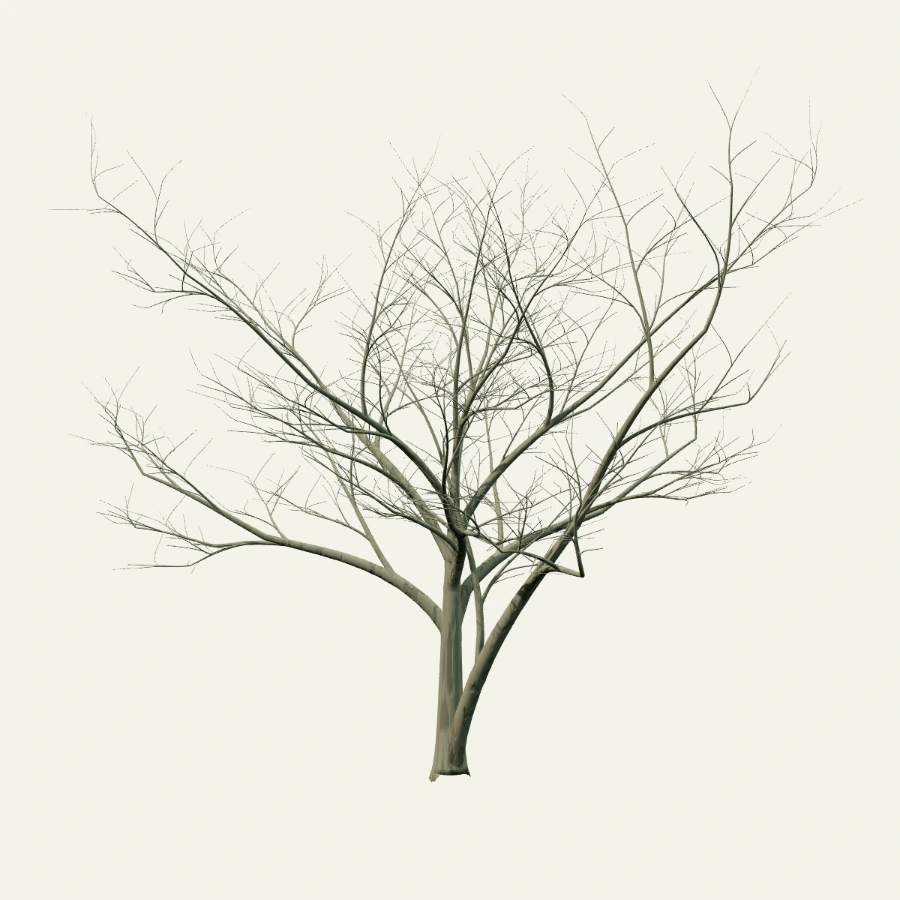
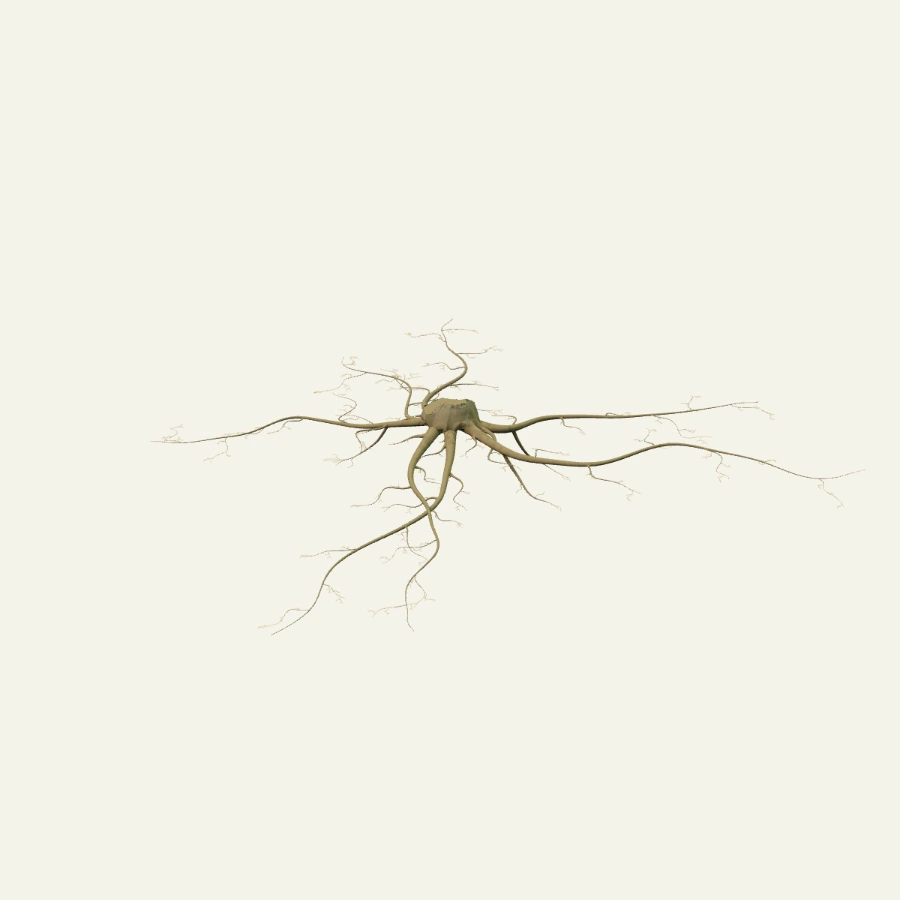
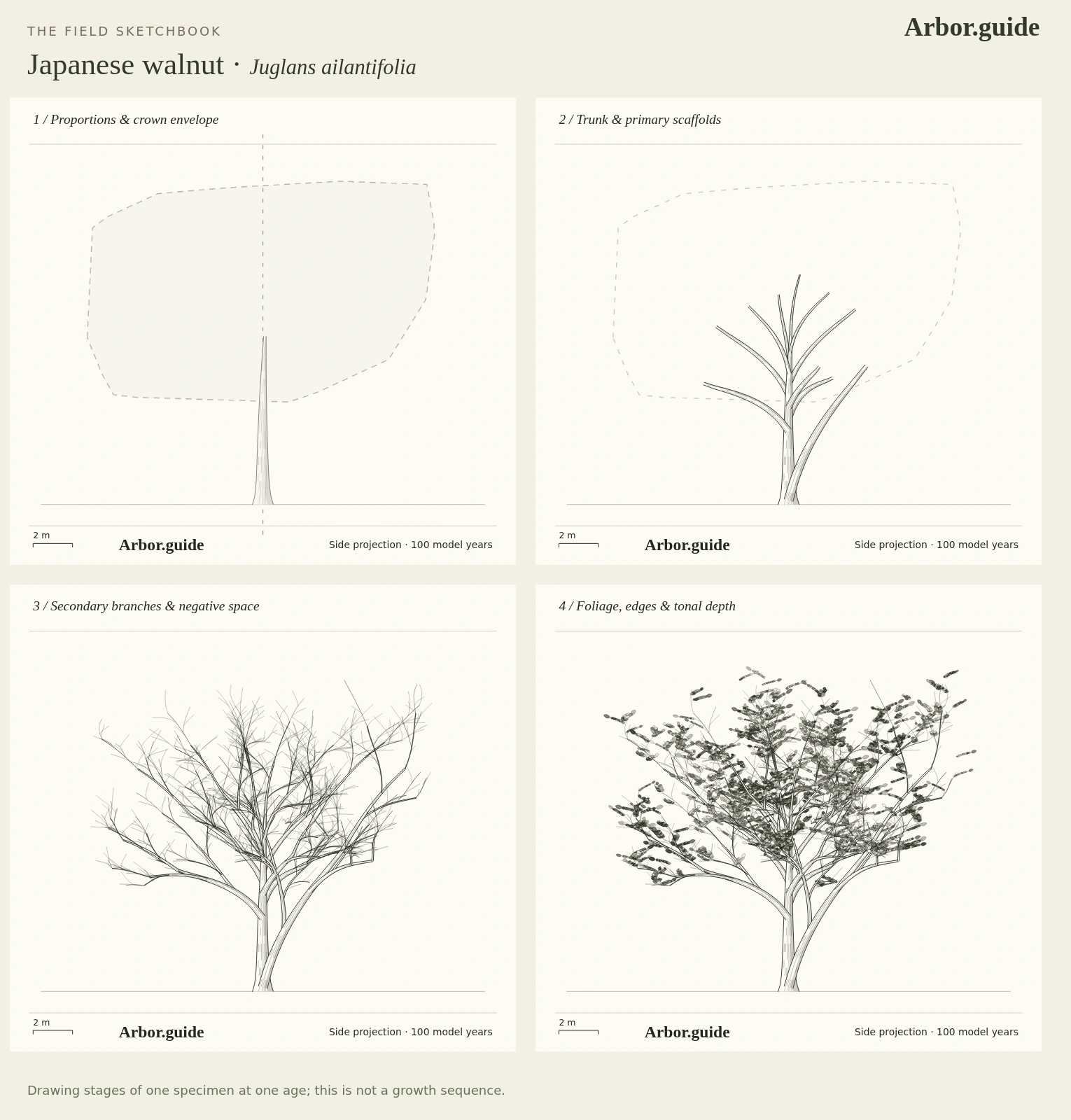
Tree / Juglandaceae
The plant, in detail
A temperate deciduous walnut grown in full sun. Its spreading crown needs room to develop.
- Reference height
- 15–20 m
- Foliage habit
- Deciduous
- USDA zones
- Min 5 · maximum not documented
- Light
- Full sun
Dimensions describe mature trees in the cited horticultural accounts.
Crown
Stout shoots carry long pinnate leaves around a broad, rounded crown.
Branching
Stout shoots carry long pinnate leaves around a broad, rounded crown.
Bark
Pale grey bark splits into ridges with age. The young twigs are hairy and have a chambered pith.
Roots
Illustrative lateral roots with descending axes. Soil depth, drainage and competition determine the actual root system.
02 / Seasons
Through the seasons
Four portraits. One plant.
Read the crown, foliage and reproductive structures together. The four views compare seasonal appearances; the reference notes explain what is actually documented.
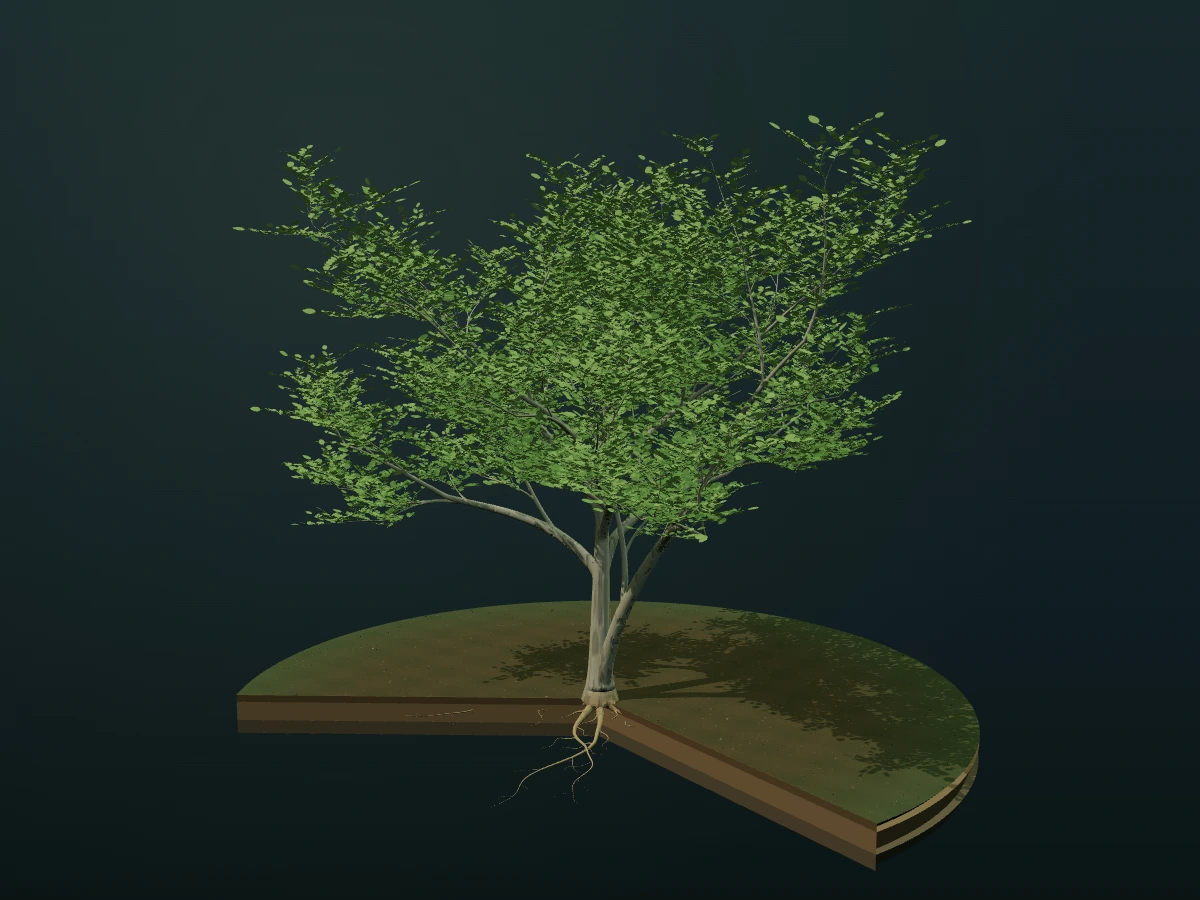
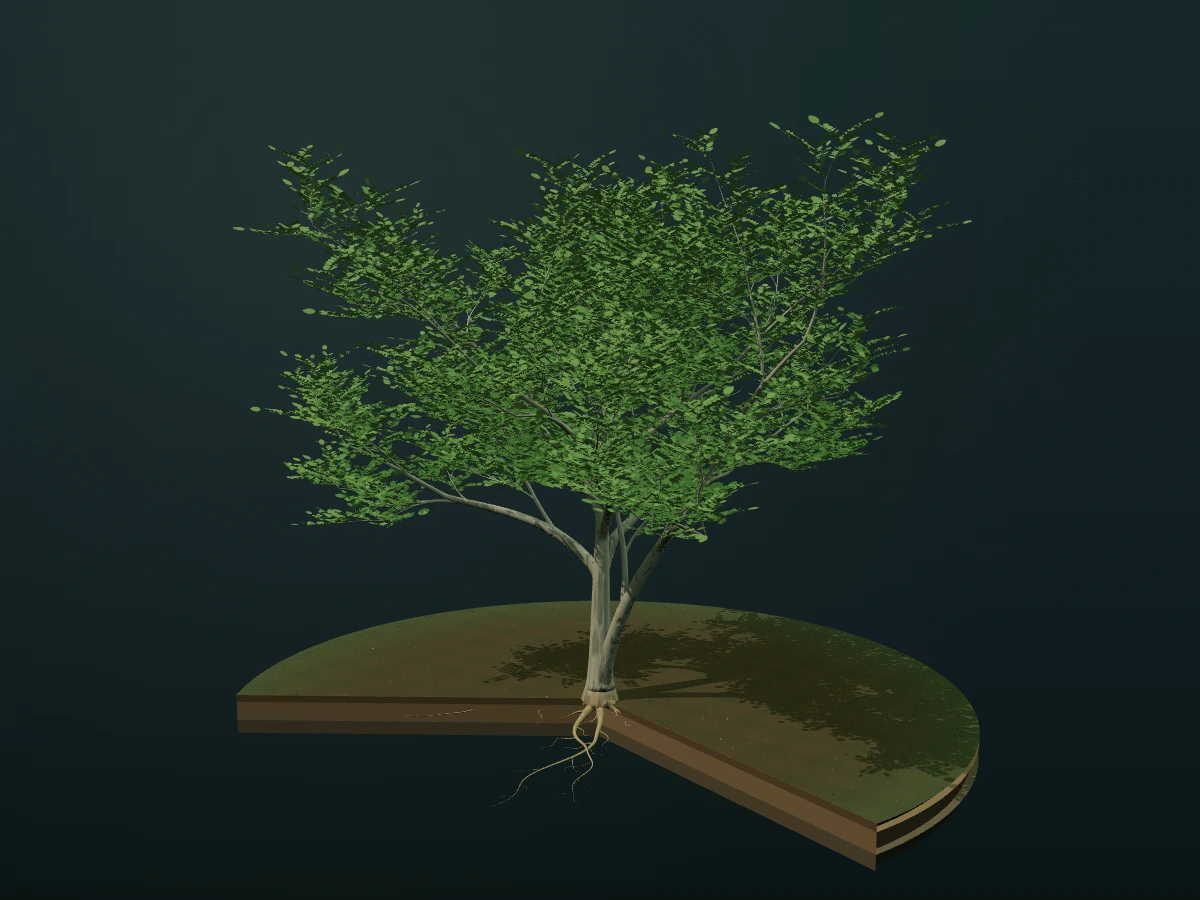
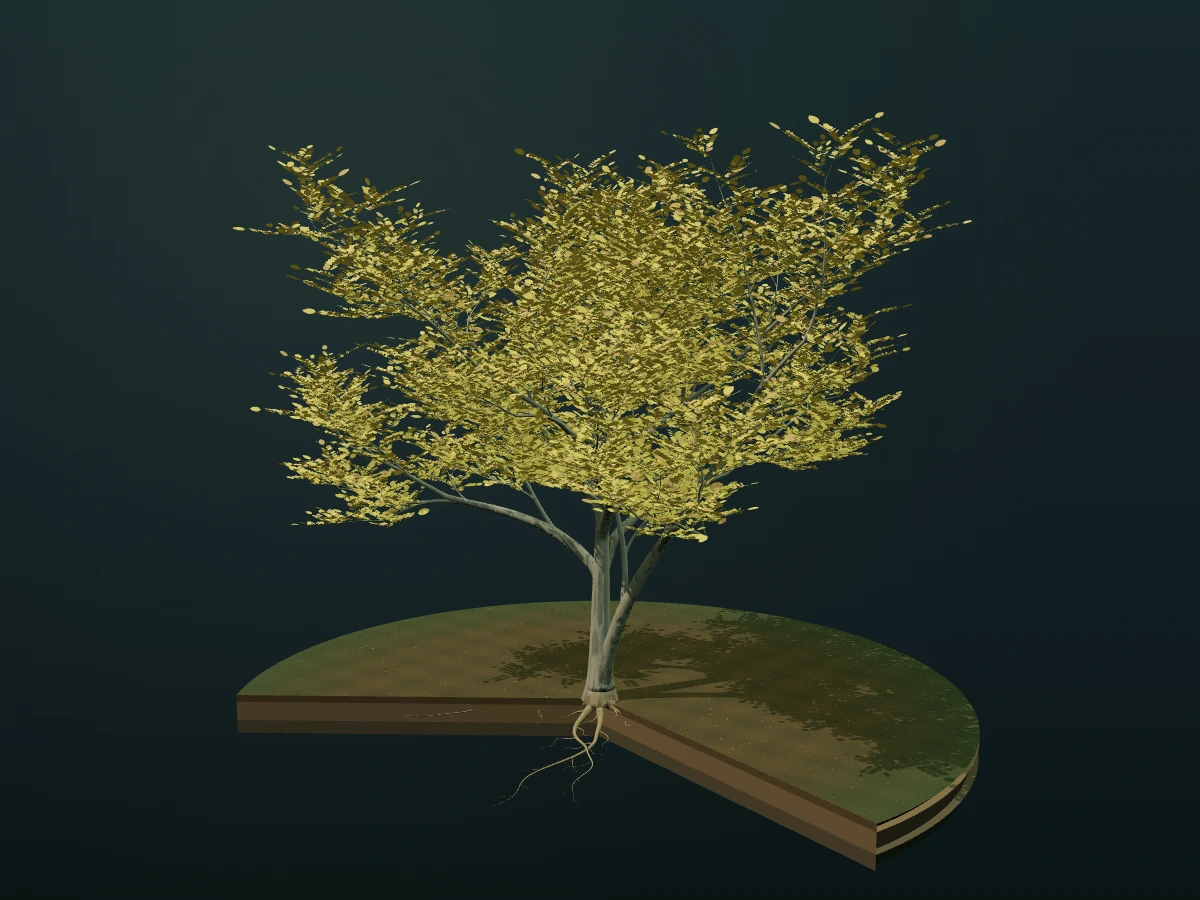
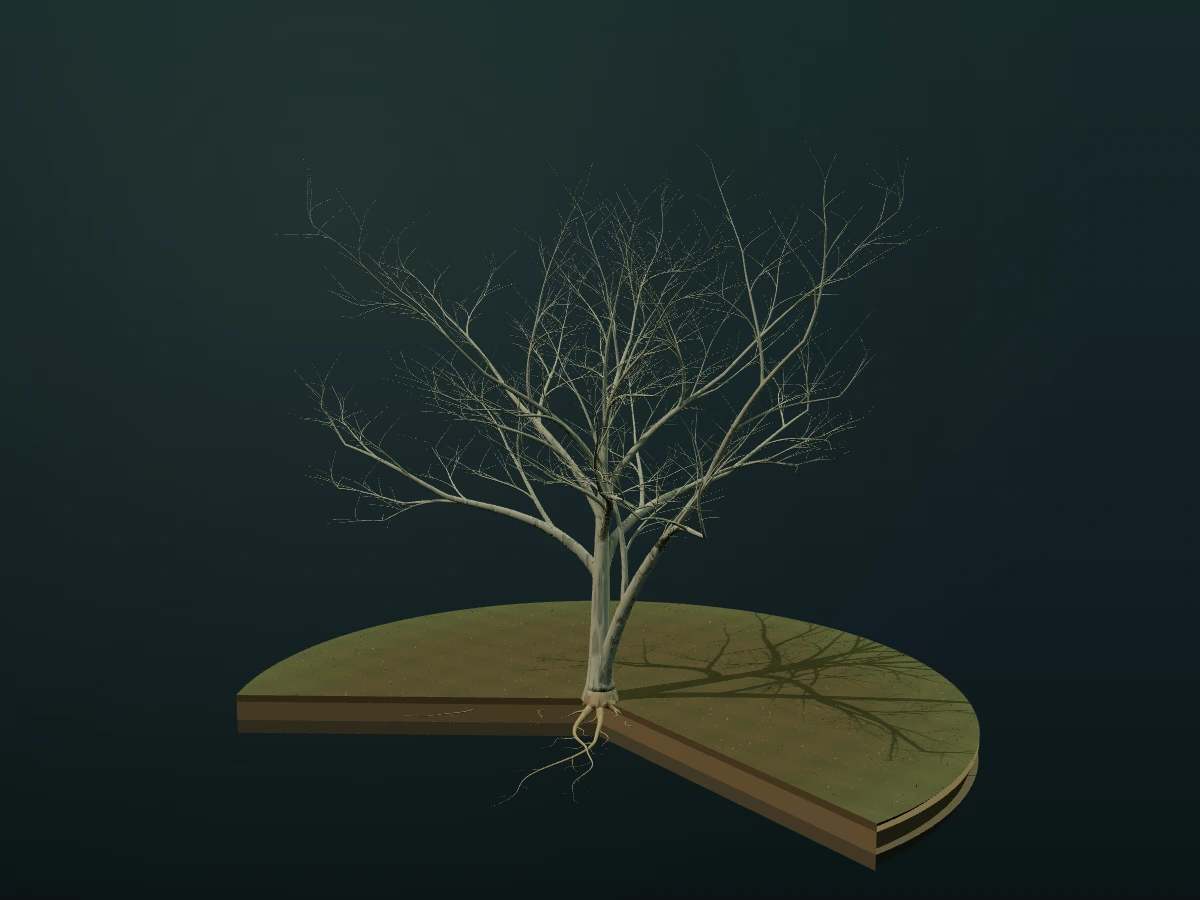
Seasonal illustration; the same plant, age and camera across four views.
Seasonal record
Northern Hemisphere horticultural observations
Leaf renewal
The record describes a deciduous plant: foliage is renewed after a leafless or reduced-leaf phase. The named views illustrate that cycle without fixing its dates at a planting site.
Reading these views
Season names organize these four views, not a universal calendar. Hemisphere, local climate, cultivar and management can change timing; months are shown only when explicitly recorded.
The views emphasize crown structure. Buds, small flowers, individual retained leaves and fine reproductive changes may be unresolved; model age and fruit count are not production forecasts.
No separate on-tree fruit display is configured for this record.
Seasonal references
- Royal Botanic Gardens and Domain Trust · Flora of New South Wales ↗plantnet.rbgsyd.nsw.gov.au
- Oregon State University · Japanese walnut ↗landscapeplants.oregonstate.edu
- Virginia Tech Dendrology · Japanese walnut ↗dendro.cnre.vt.edu
03 / Leaves & flowers
A closer look at the organs
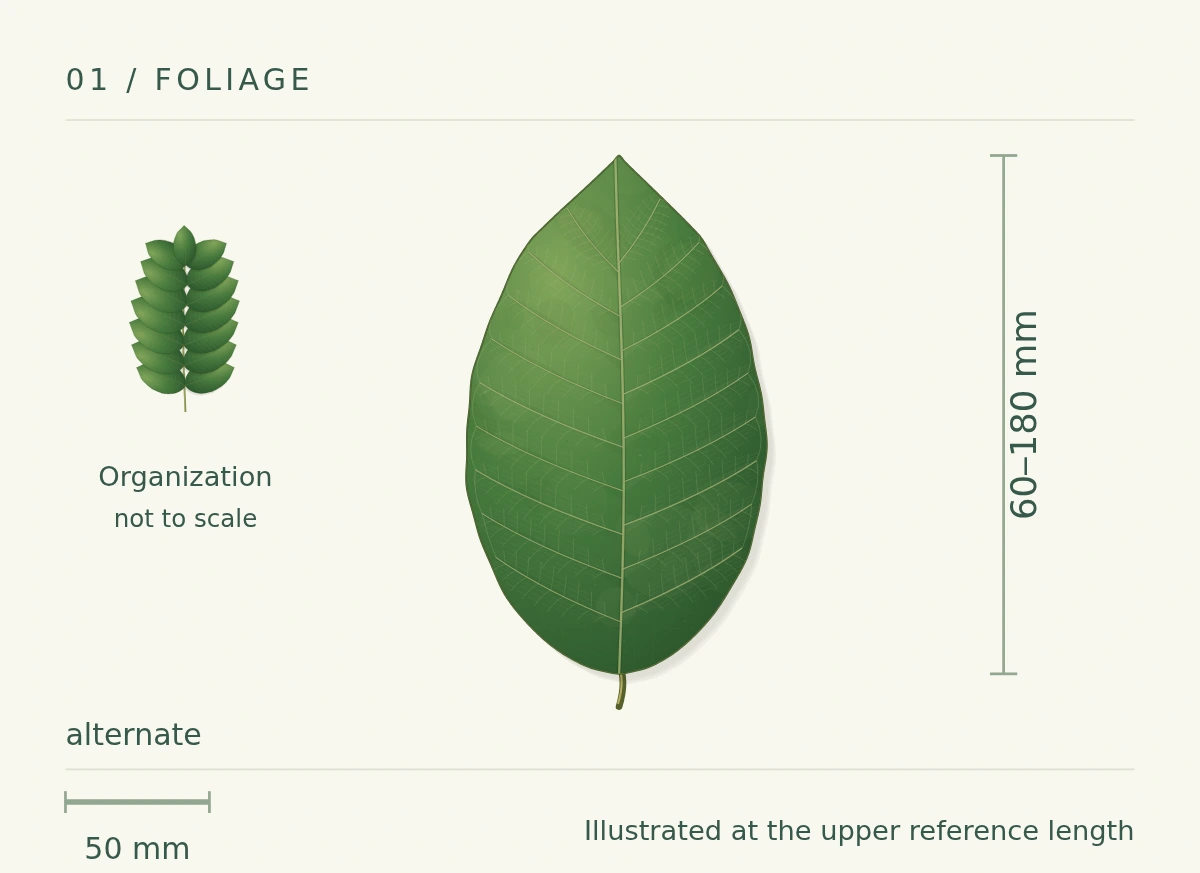
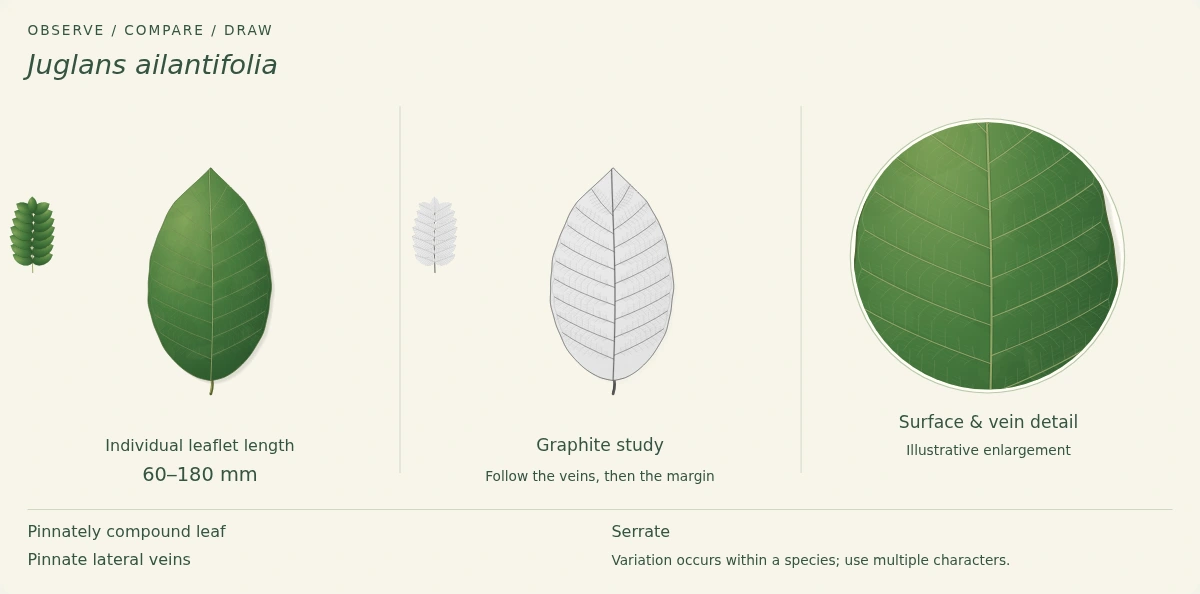
Leaves
- Individual leaflet length
- 60–180 mmSource notes
Each compound leaf usually bears 11–17 finely toothed leaflets. Hairs persist along the veins underneath.
Pinnately compound leaf · Serrate · Pinnate lateral veins · alternate
Seasonal notes
The compound leaves fall in autumn. Their colours in the model are illustrative.
- Flowering reference
- Spring
04 / Fruit & seed
Named structures, separate scales
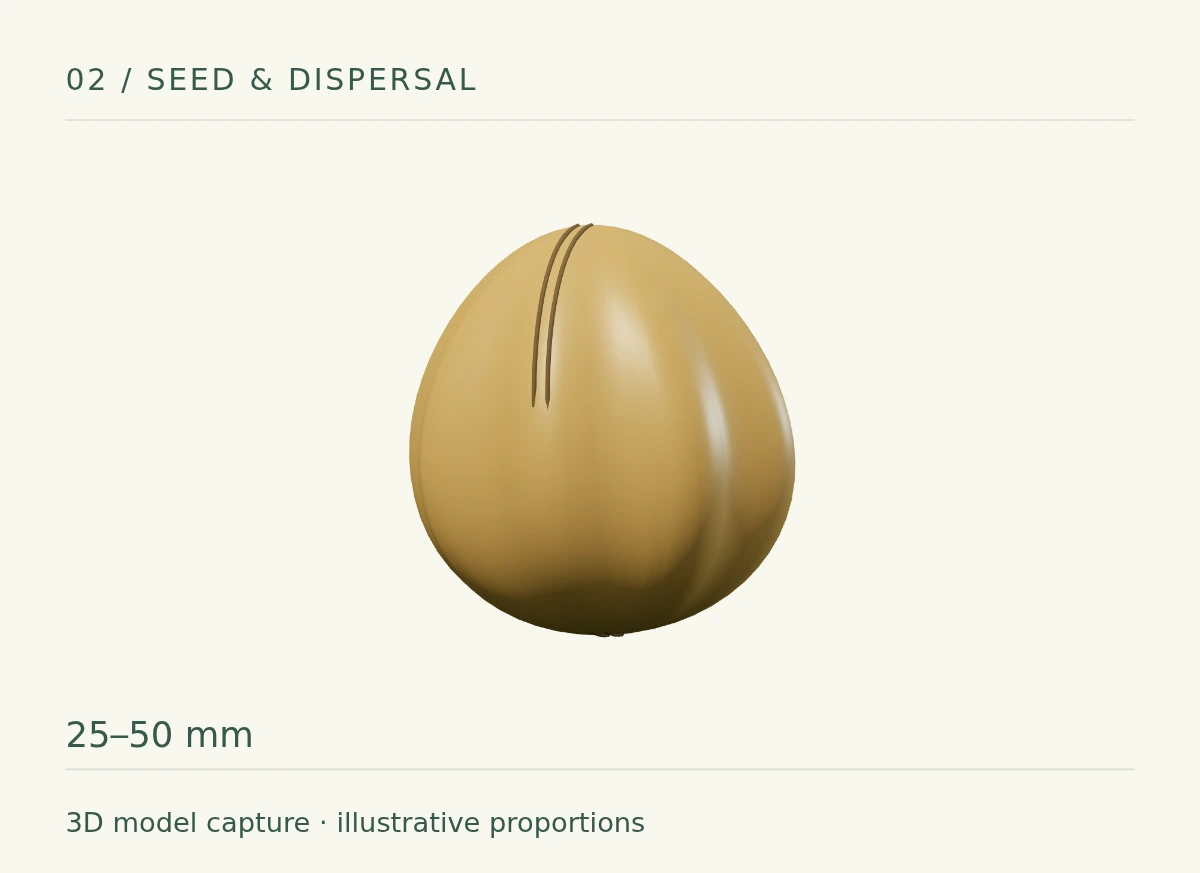
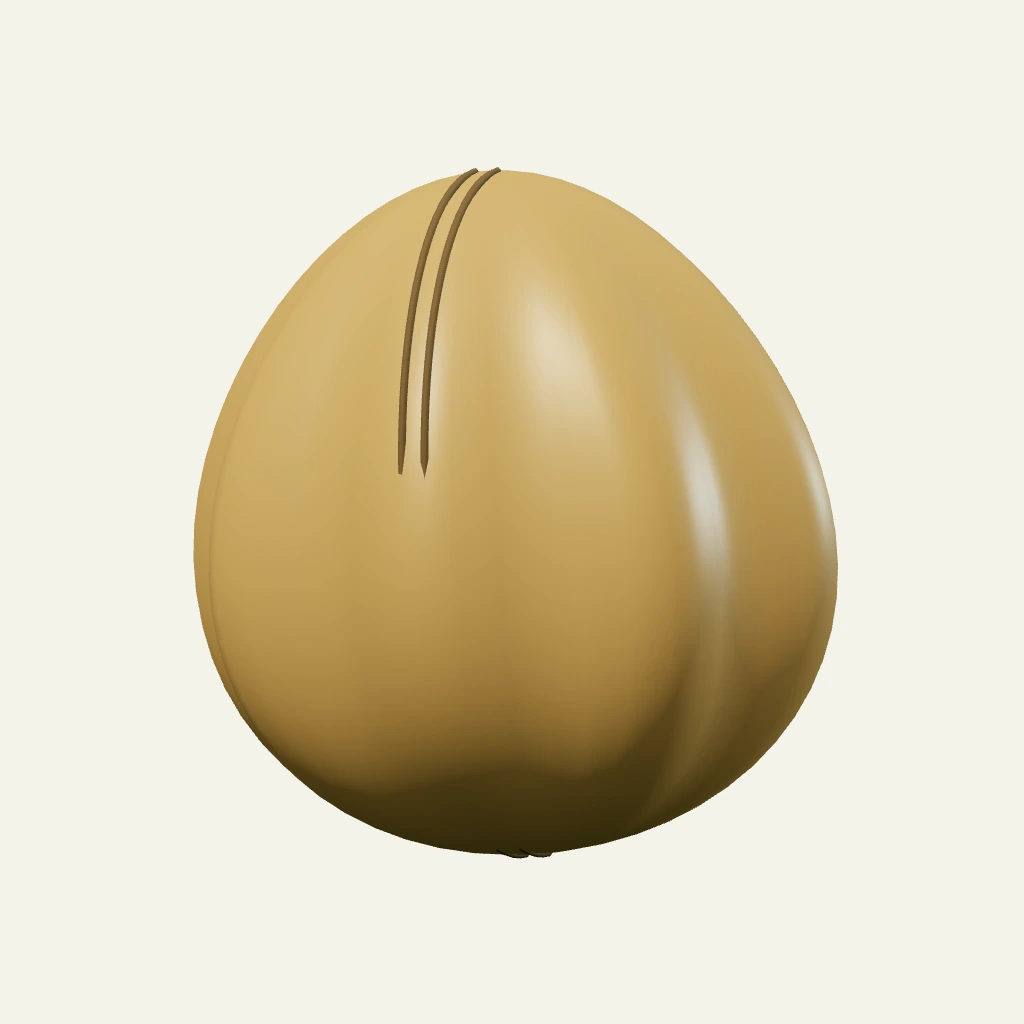
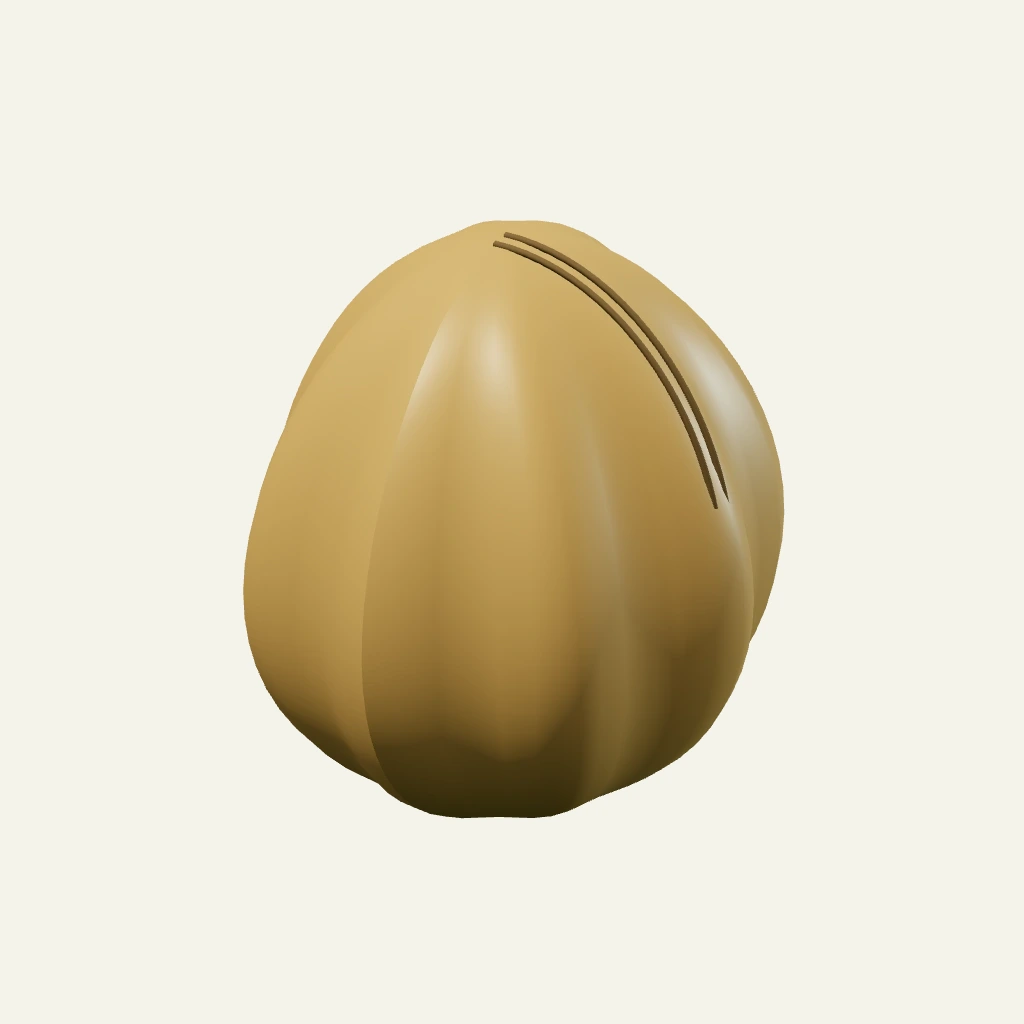
Fruit / dispersal unit
- Nut length · shell included
- 25–50 mmSource notes
The nuts have a pointed shell inside a sticky, hairy husk. Selected heartnuts have a distinct heart-shaped shell.
- Fruiting reference
- Autumn
Northern Hemisphere horticultural observations
Organs are enlarged independently. Refer to the named measurement, not image size.
05 / Habitat
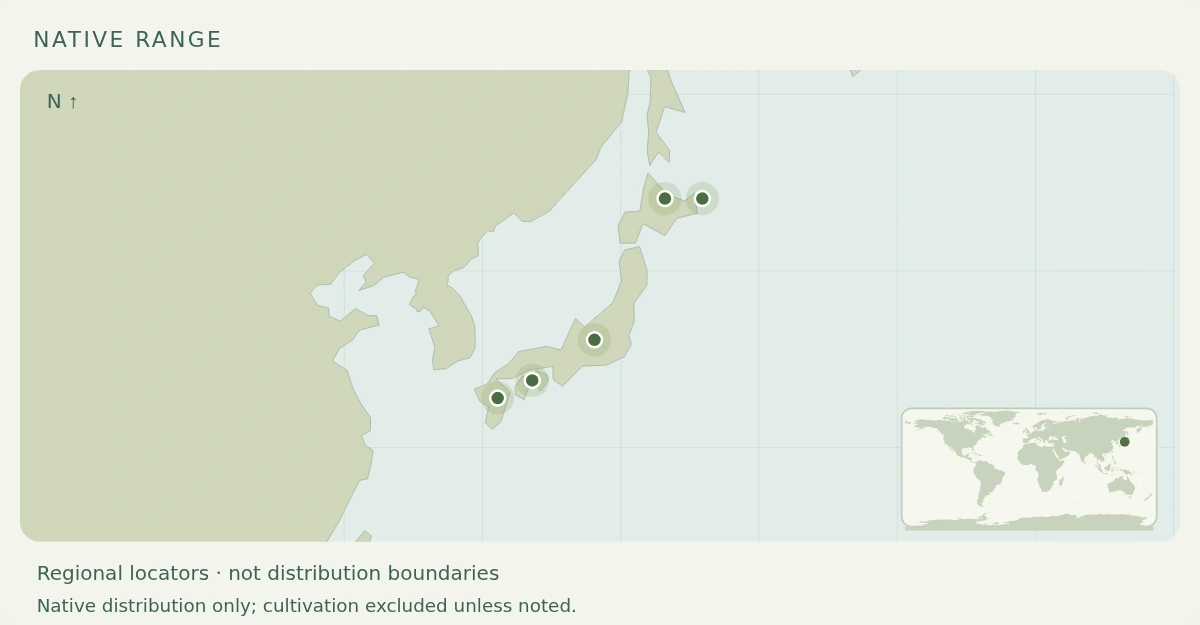
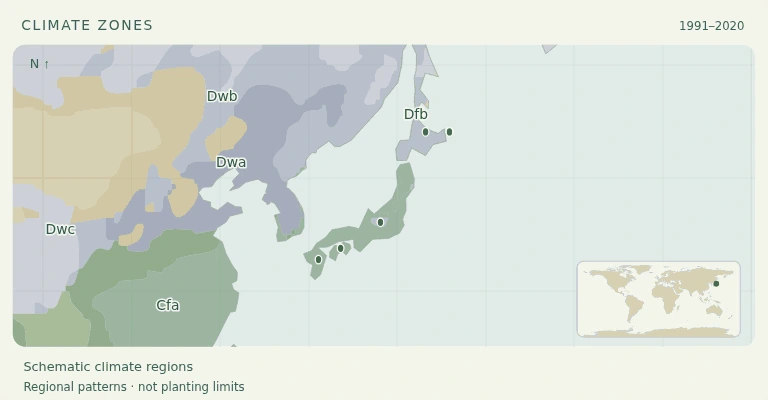
Native range & growing context
Native range & growing context
The Japanese archipelago and nearby islands to the northeast.
- Reference spread
- ≤ 18.3 m
- Moisture
- Not documented
- Growth tendency
- Growth rate is not quantified in the selected references.
- Life span
- No numerical lifespan is assigned. Model years control the illustration, not a survival forecast.
Regional context, not a measured occurrence or suitability map.
06 / Sources & interpretation
Read the evidence behind the illustration
Names & classification
- Family
- Juglandaceae
- Genus
- Juglans
- Synonyms
- Juglans sieboldiana; Juglans mandshurica var. sachalinensis
Kew treats Japanese walnut as a variety of Juglans mandshurica. The Flora of New South Wales describes it as a species.
- The Japanese archipelago and nearby islands to the northeast.
- Each compound leaf usually bears 11–17 finely toothed leaflets. Hairs persist along the veins underneath.
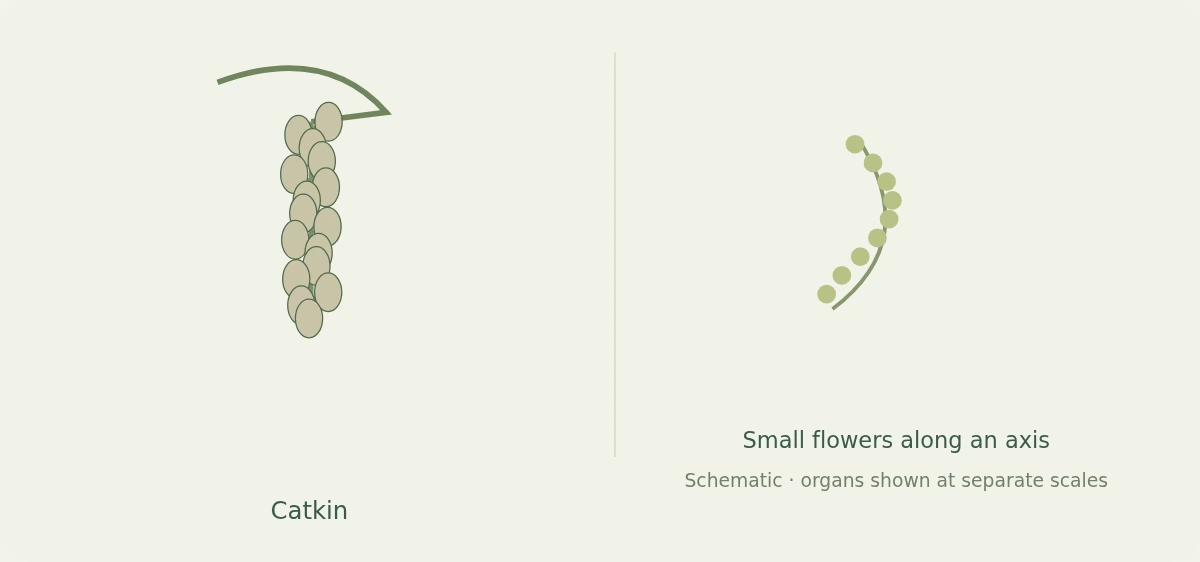
- Drooping male catkins and separate female flower clusters develop on the same tree as the leaves emerge.
- The nuts have a pointed shell inside a sticky, hairy husk. Selected heartnuts have a distinct heart-shaped shell.
Source-informed illustration. Branches, roots, growth ages and colour proportions are schematic; individual trees vary with site and provenance.
Source-informed illustration. Branches, roots, growth ages and colour proportions are schematic; individual trees vary with site and provenance.
- Oregon State University · Japanese walnut ↗landscapeplants.oregonstate.edu
- Royal Botanic Gardens and Domain Trust · Flora of New South Wales ↗plantnet.rbgsyd.nsw.gov.au
- Royal Botanic Gardens, Kew · Japanese walnut ↗powo.science.kew.org
- Virginia Tech Dendrology · Japanese walnut ↗dendro.cnre.vt.edu
Plant data and references · 8
| Heightm | [15, 20]Dimensions describe mature trees in the cited horticultural accounts.landscapeplants.oregonstate.edu |
|---|---|
| Spreadm | [null, 18.3]Published garden spread; a null minimum means only an approximate upper value was reported.dendro.cnre.vt.edu |
| Native range | The Japanese archipelago and nearby islands to the northeast.The Japanese archipelago and nearby islands to the northeast.powo.science.kew.org |
| Leaf lengthmm | [60, 180]The leaflet measurement applies to one leaflet of a compound leaf. The nut measurement includes the shell.plantnet.rbgsyd.nsw.gov.au |
| Fruit lengthmm | [25, 50]The leaflet measurement applies to one leaflet of a compound leaf. The nut measurement includes the shell.plantnet.rbgsyd.nsw.gov.au |
| Hardinesscategory | {"system": "USDA", "zones": [5, null], "source": "osu", "basis": "reported-minimum"}The cited source reports only a minimum USDA zone.landscapeplants.oregonstate.edu |
| Floweringcategory | catkinDrooping male catkins and separate female flower clusters develop on the same tree as the leaves emerge.dendro.cnre.vt.edu |
| Taxonomic treatmentcategory | Kew treats Japanese walnut as a variety of Juglans mandshurica. The Flora of New South Wales describes it as a species.The rank depends on the taxonomic treatment.powo.science.kew.org · plantnet.rbgsyd.nsw.gov.au |