Botanical field guide
Eucalyptus regnans
Mountain ash
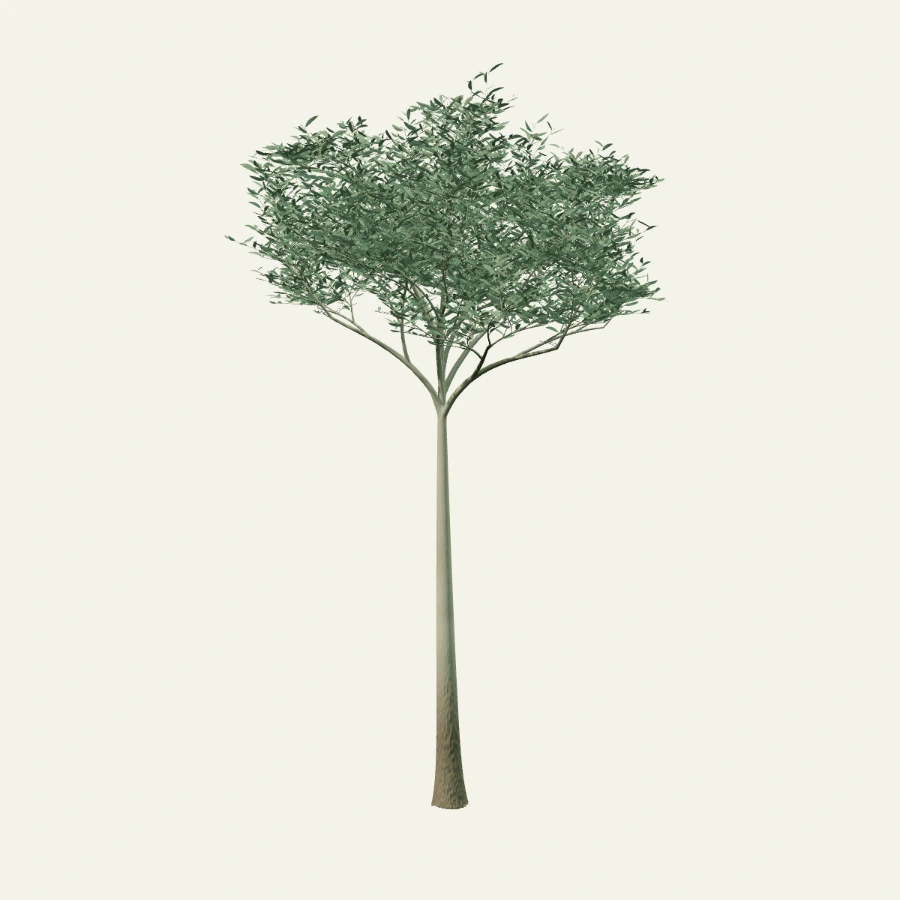
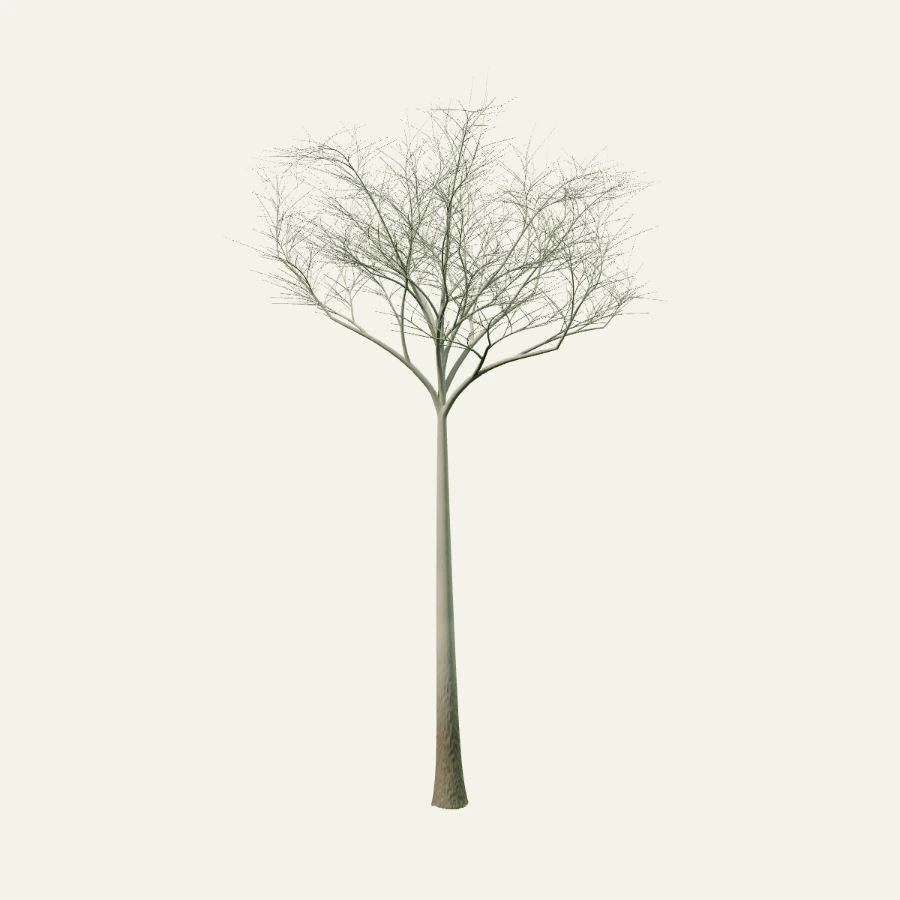
Tree / Myrtaceae
The plant, in detail
Cool, wet tall forests on deep, well-drained soils.
- Reference height
- 50–75 m
- Foliage habit
- Evergreen
- USDA zones
- 8–11
- Light
- Not documented
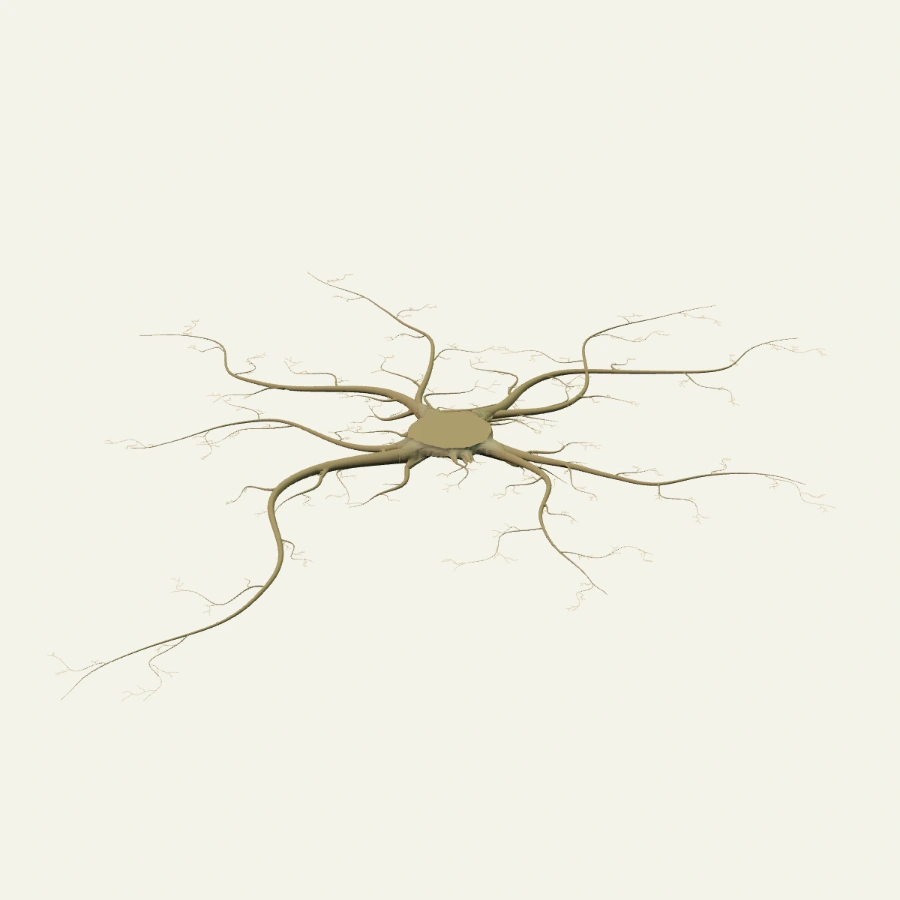
The drawing represents a forest-grown adult. Fire regeneration is described but not modeled. Root geometry is generic, and neither exceptional heights nor forest carbon stocks are estimated.
Crown
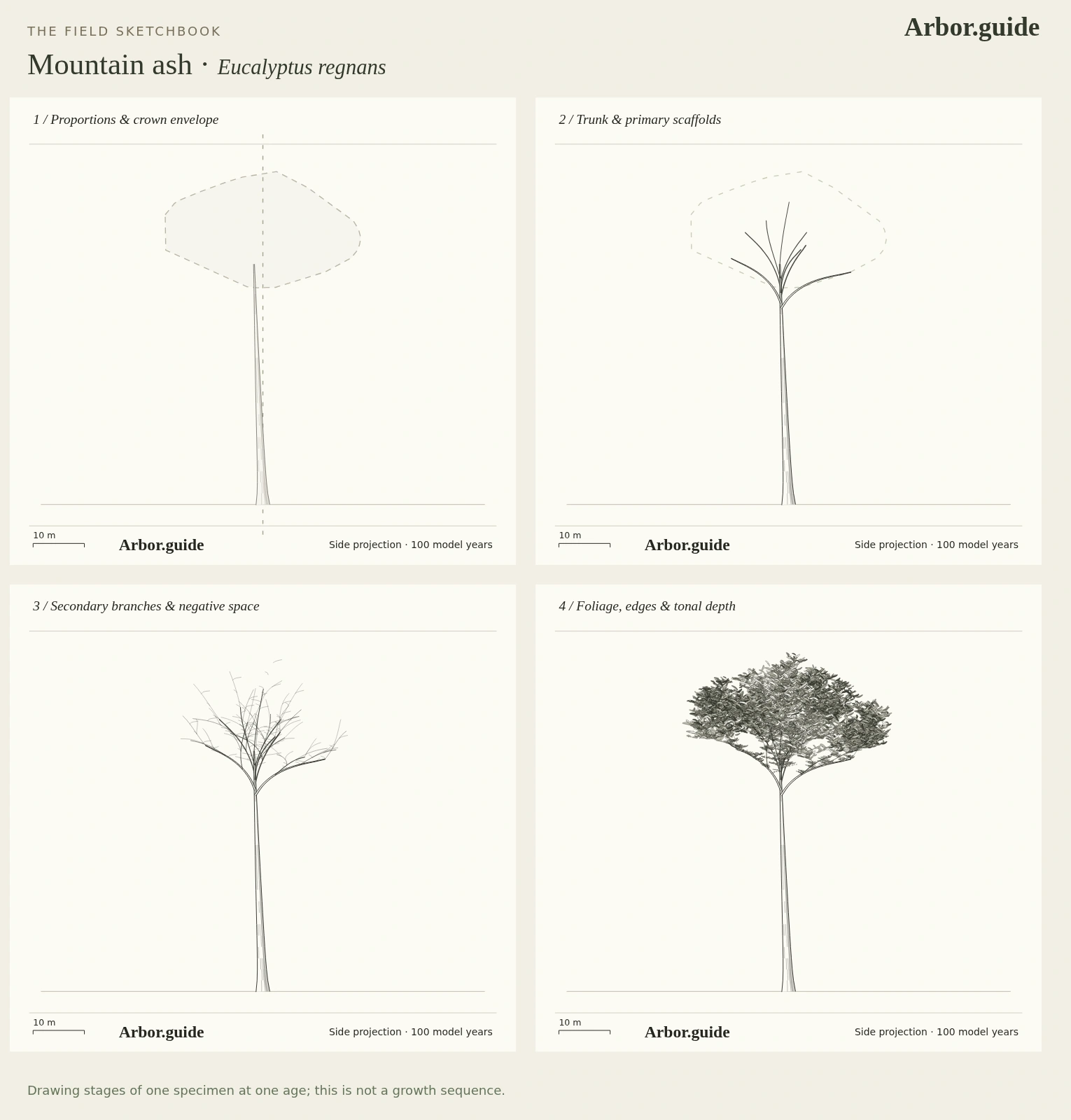
An exceptionally tall, straight bole supports a relatively small upper crown in forest stands. Crown height and breadth reflect competition and damage. This tall flowering tree should not be rendered as a dense conifer cone.
Branching
Main branches are concentrated toward the upper stem in a forest-grown adult. Juvenile crowns begin much lower; branch loss and canopy competition contribute to the later clear bole. The model simplifies these processes.
Bark
A rough fibrous stocking covers the lower trunk. Much of the upper stem is smooth and pale, shedding bark in long ribbons. That strong vertical contrast is a distinctive architectural feature.
Roots
Woody anchoring roots and finer absorbing roots exploit the soil profile. This species lacks a lignotuber, the basal bud-bearing swelling found in many other eucalypts. Exact root depth and spread are not specified by this model.
The shape of growth
Stylized real-world examples
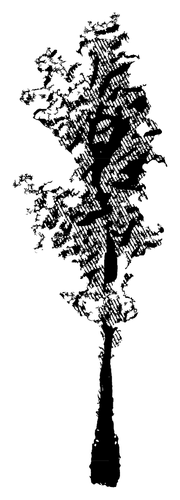
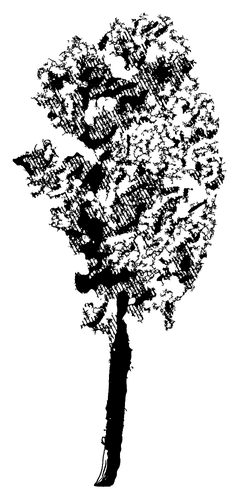
Silhouettes are sized independently.
02 / Seasons
Through the seasons
Four portraits. One plant.
Read the crown, foliage and reproductive structures together. The four views compare seasonal appearances; the reference notes explain what is actually documented.
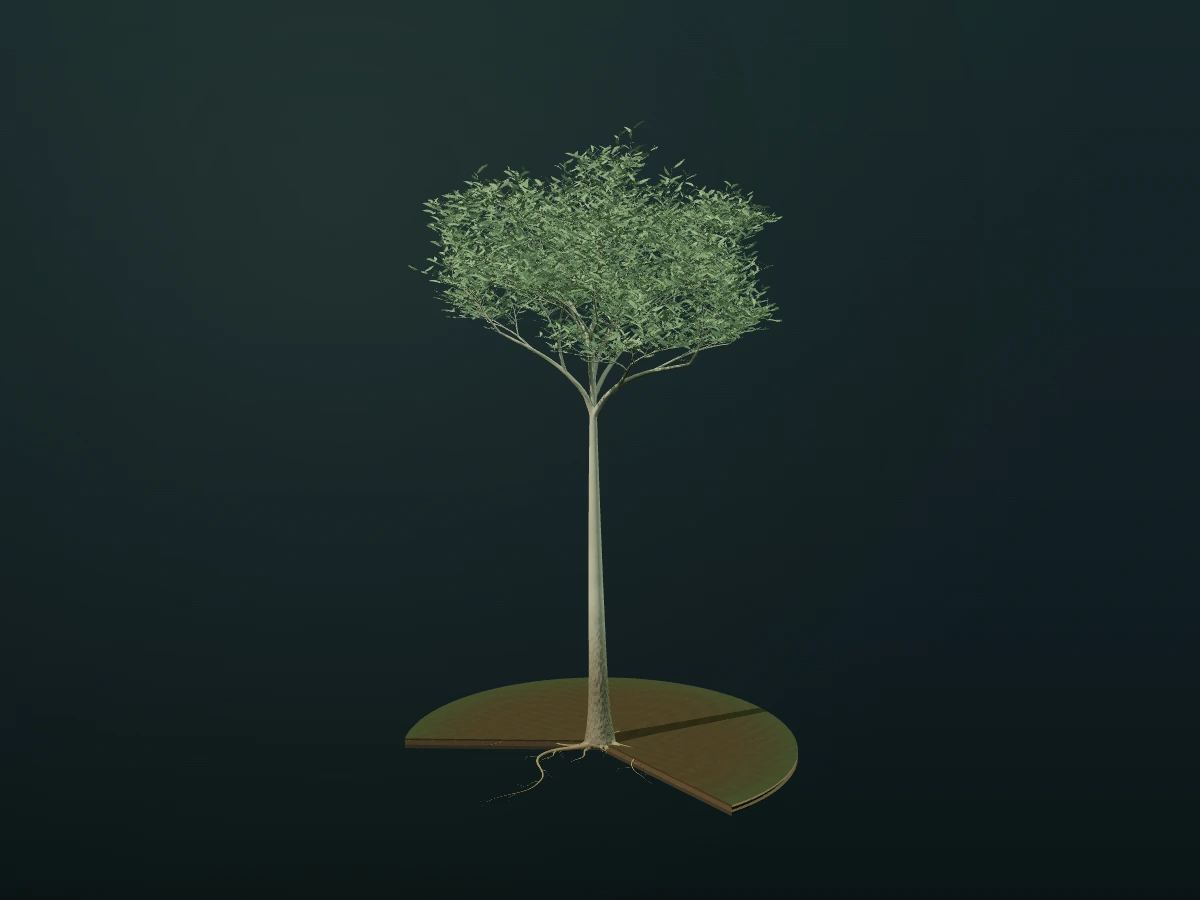
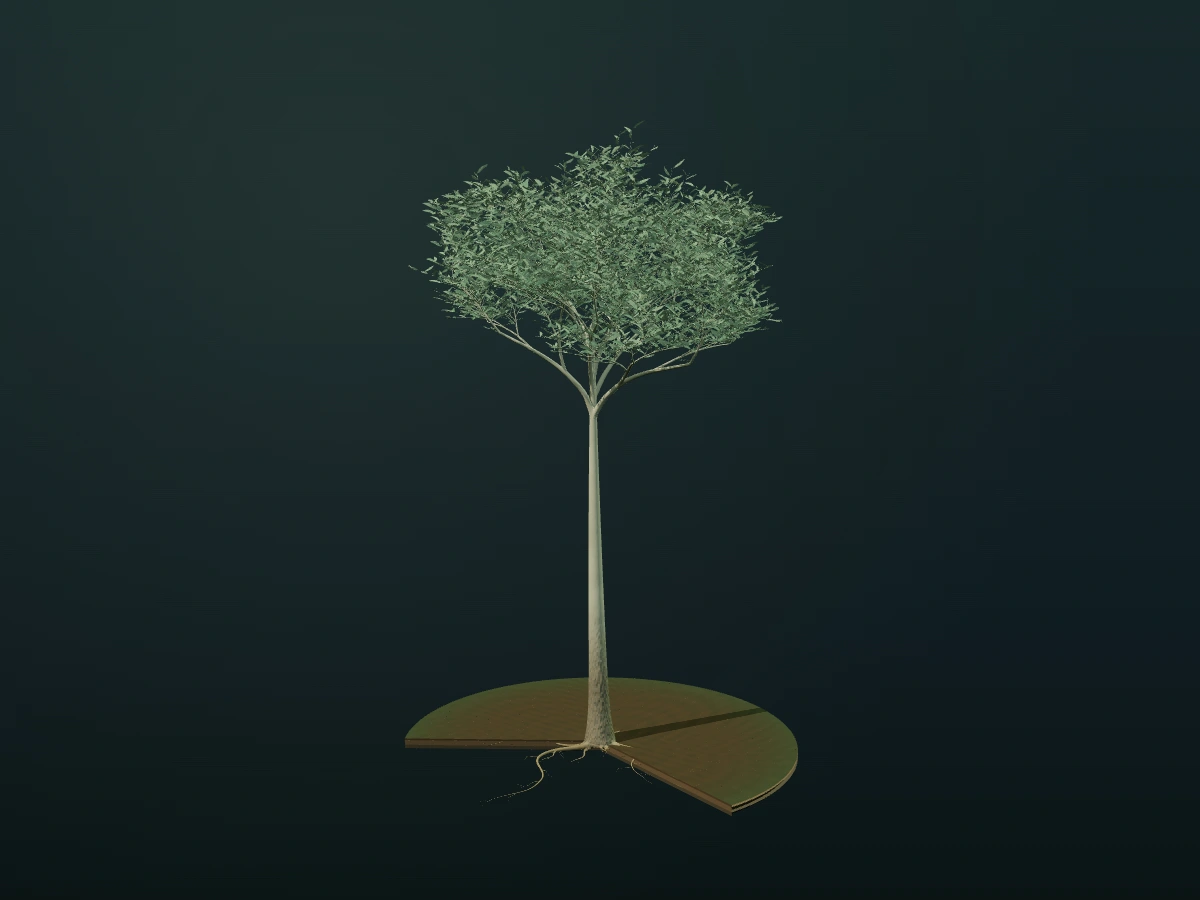
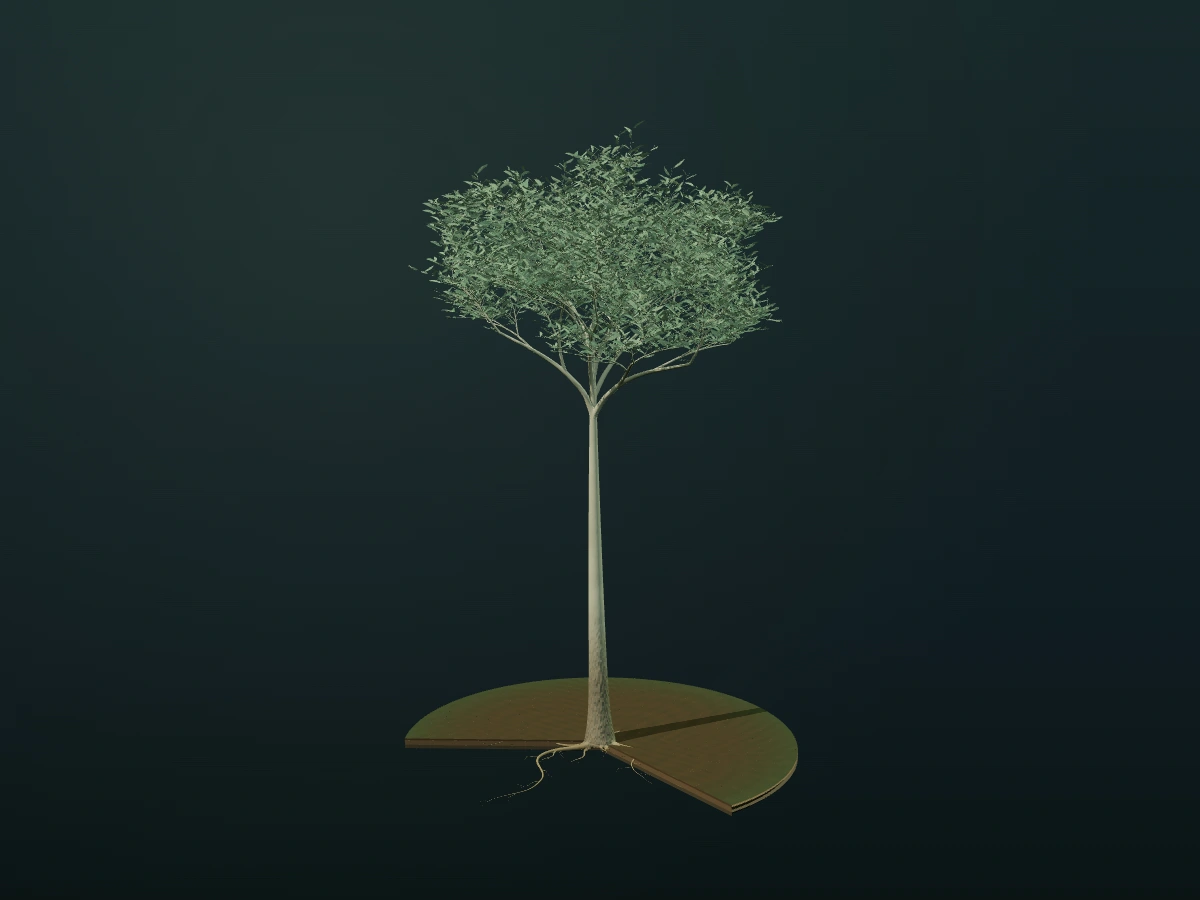
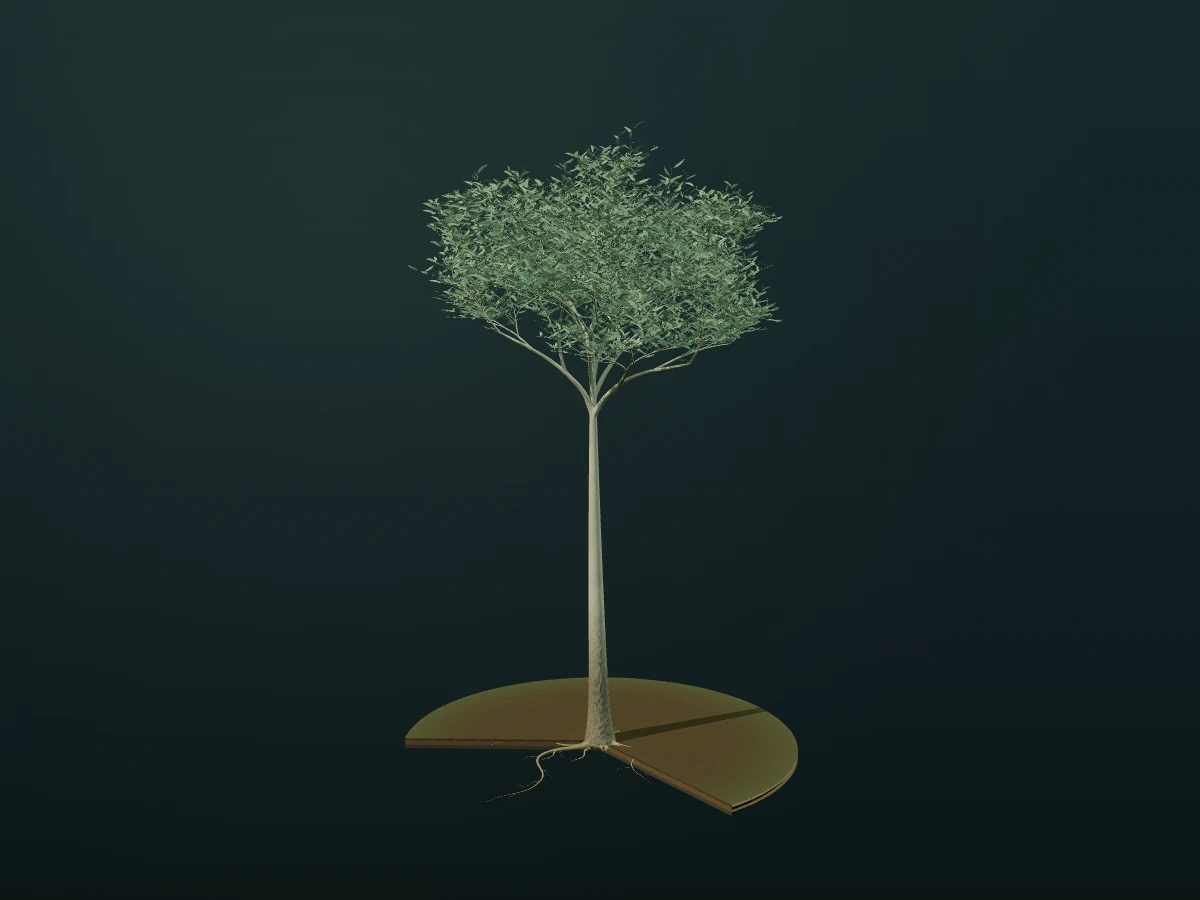
Seasonal illustration; the same plant, age and camera across four views.
Seasonal record
Reference region not specified in this record.
- Flowering
- Timing not documented
- Fruiting / dispersal
- Timing not documented
Leaf renewal
Evergreen[1]
A green canopy can persist while individual leaves age and are replaced. Evergreen does not mean that every leaf lasts indefinitely or that flowering and fruiting are continuous.
Reading these views
Season names organize these four views, not a universal calendar. Hemisphere, local climate, cultivar and management can change timing; months are shown only when explicitly recorded.
The views emphasize crown structure. Buds, small flowers, individual retained leaves and fine reproductive changes may be unresolved; model age and fruit count are not production forecasts.
No separate on-tree fruit display is configured for this record.
Seasonal references
- apps.lucidcentral.org ↗apps.lucidcentral.org
03 / Leaves & flowers
A closer look at the organs
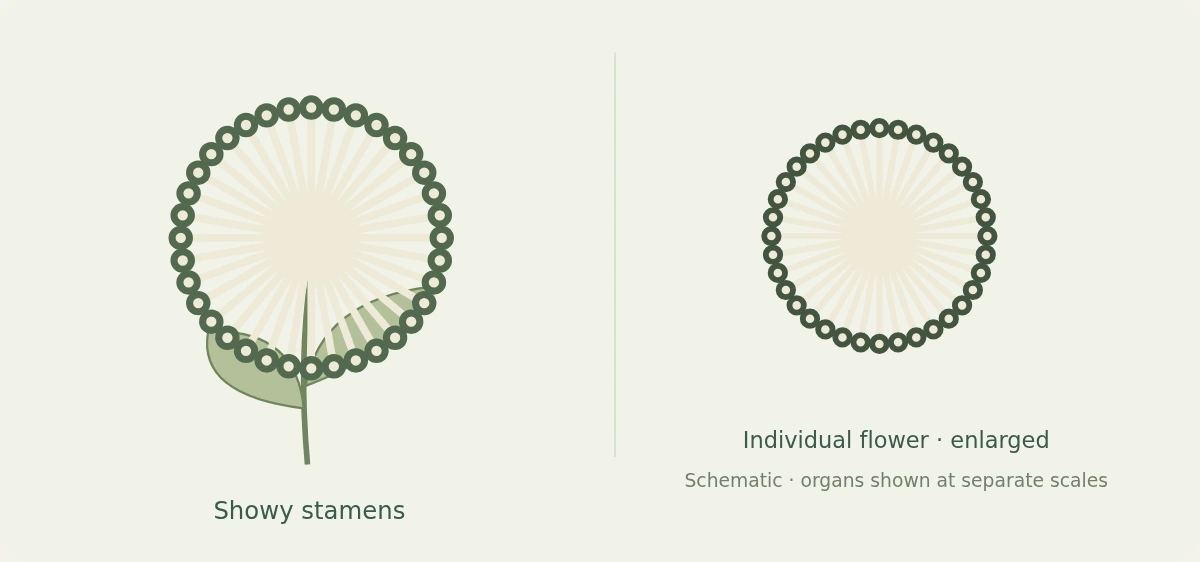
Leaves
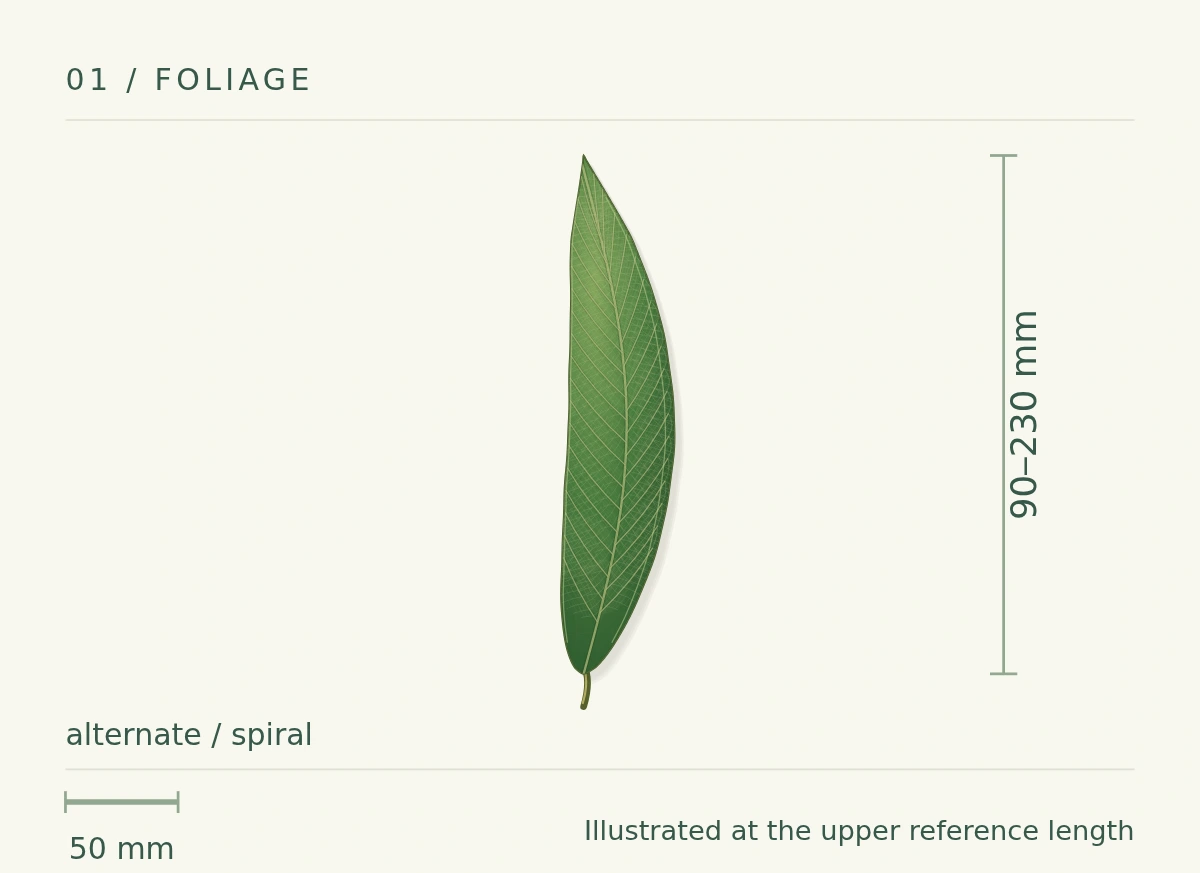
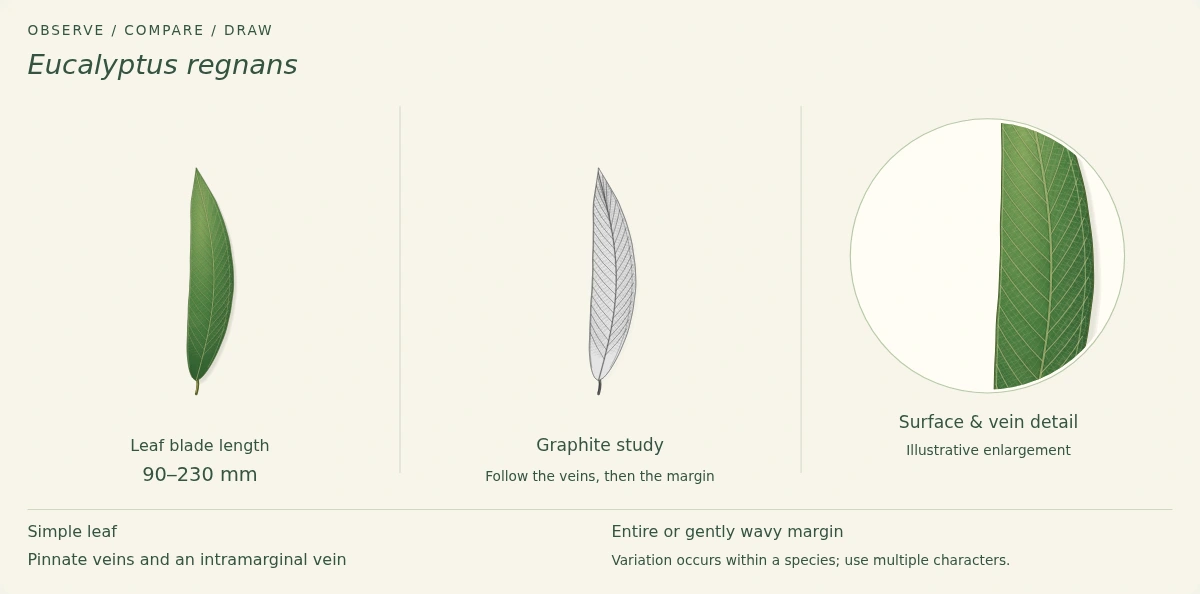
- Leaf blade length
- 90–230 mmSource notes
Evergreen, simple adult leaves are alternate and lance-shaped. Juvenile foliage differs in form, but this species should not automatically be given the opposite round juvenile leaves familiar from some other eucalypts.
Simple leaf · Entire or gently wavy margin · Pinnate veins and an intramarginal vein · alternate / spiral
Seasonal notes
A green crown persists while older leaf cohorts are replaced. The small ochre patches illustrate turnover; their size and timing are not measured.
- Flowering reference
- Not documented
04 / Fruit & seed
Named structures, separate scales
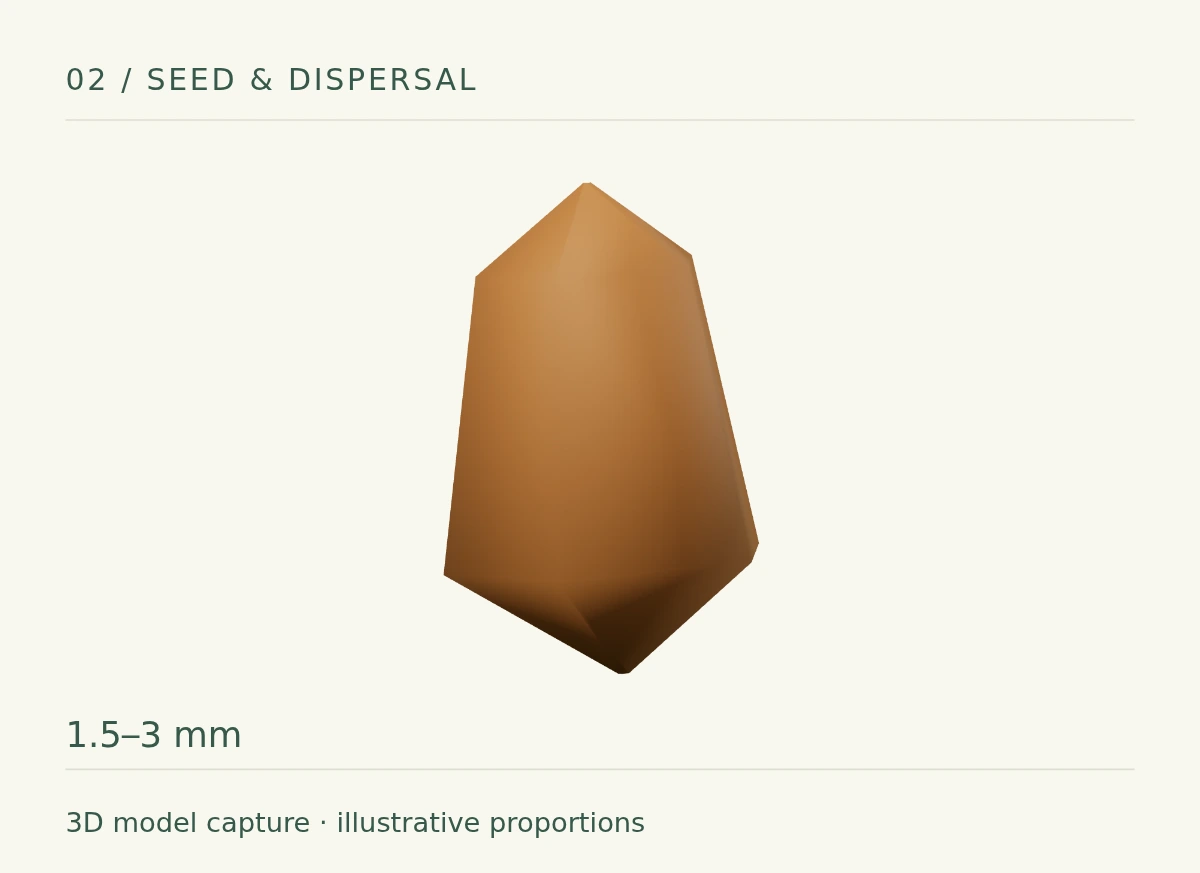
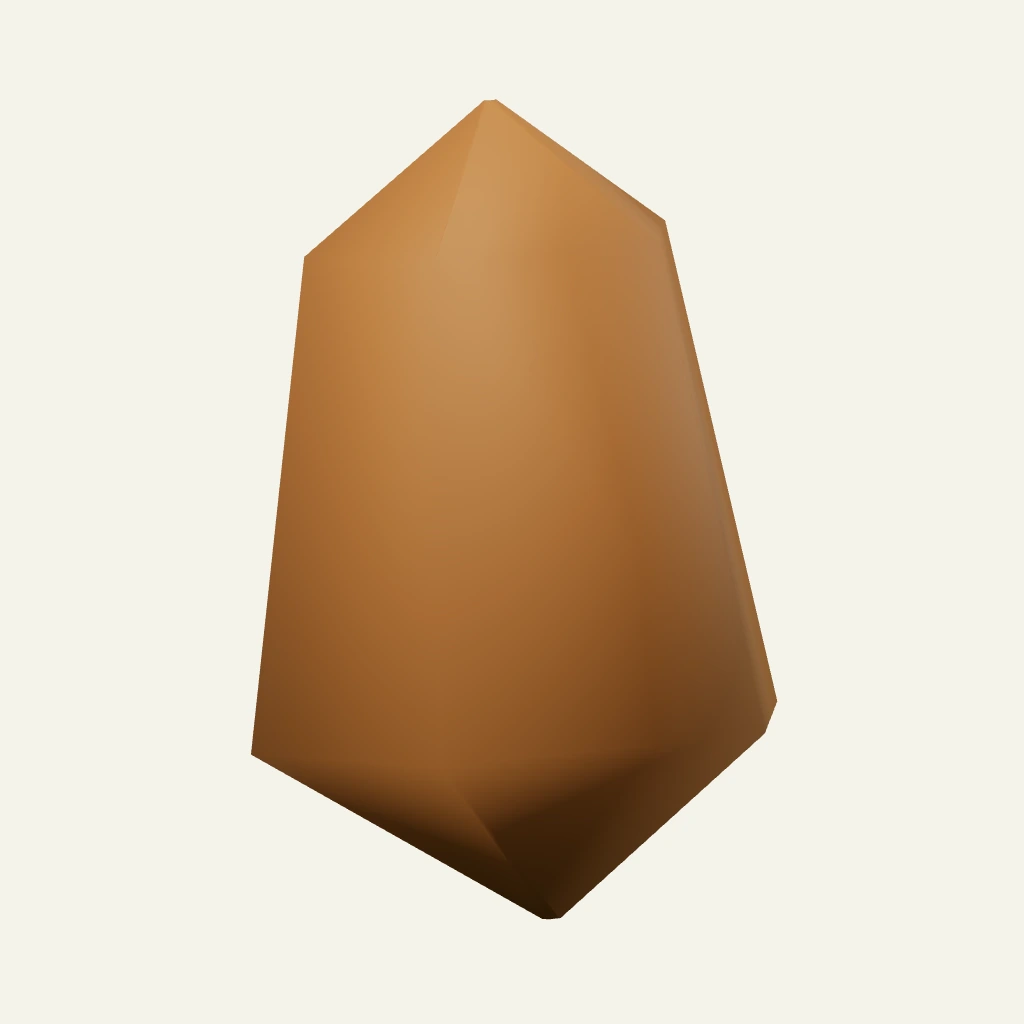
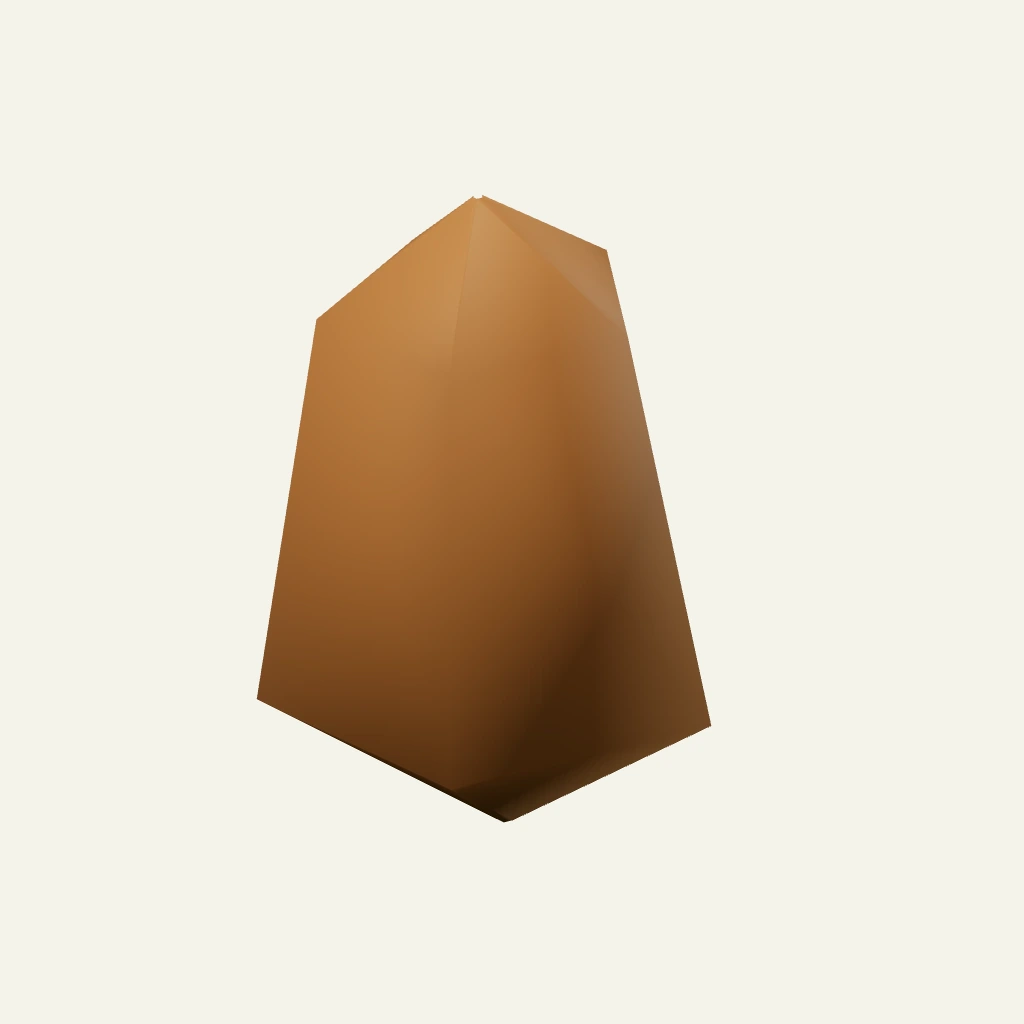
Seed
- Seed body length
- 1.5–3 mmSource notes
Angular seeds released from a cone or capsule; outline varies with position and development.
- Fruiting reference
- Not documented
Organs are enlarged independently. Refer to the named measurement, not image size.
05 / Habitat
Native range & growing context
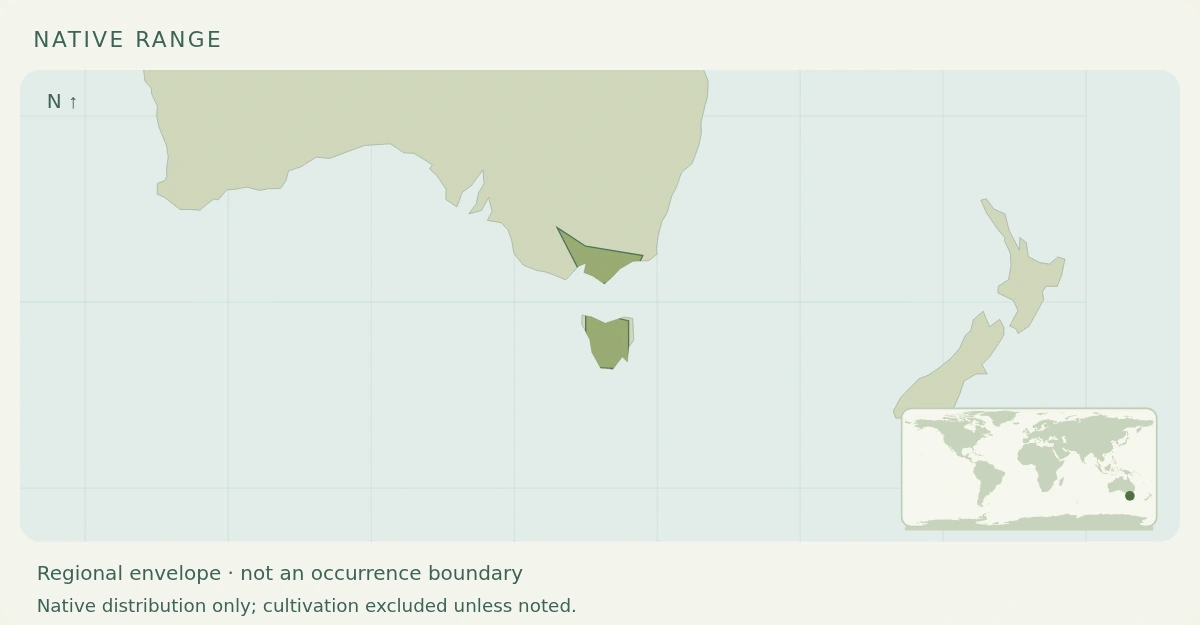
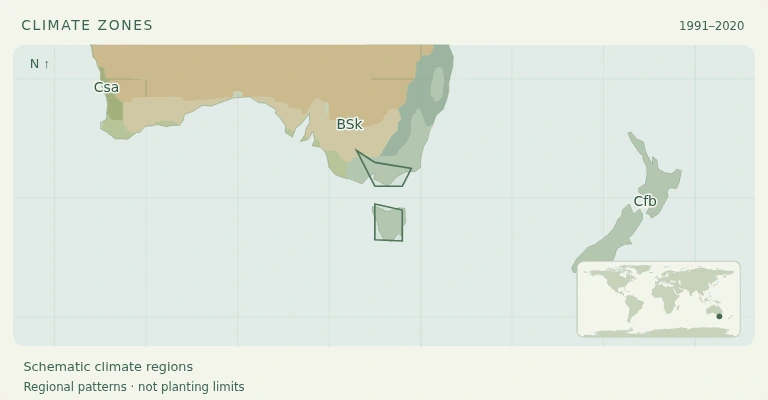
Native range & growing context
Southeastern Australia: Victoria and Tasmania.
- Reference spread
- Not documented
- Moisture
- Not documented
- Growth tendency
- Fast
- Life span
- Often described as capable of 300–400 years; disturbance strongly shapes stand age.
Regional context, not a measured occurrence or suitability map.
06 / Sources & interpretation
Read the evidence behind the illustration
Names & classification
- Family
- Myrtaceae
- Genus
- Eucalyptus
- Synonyms
- —
- Despite its common name, this species is not a true ash in the genus Fraxinus.
- It is among the tallest flowering tree species.
- Its lack of a lignotuber makes generic eucalypt resprouting animations misleading.
The drawing represents a forest-grown adult. Fire regeneration is described but not modeled. Root geometry is generic, and neither exceptional heights nor forest carbon stocks are estimated.
ArborAI teaching geometry; coefficients and ages are not measured species constants.
- Royal Botanic Gardens Victoria · Mountain ash ↗hortflora.rbg.vic.gov.au
- Agriculture Victoria · Mountain ash ↗agriculture.vic.gov.au
- VicFlora · Fire and forest regeneration ↗vicflora.rbg.vic.gov.au
- CANBR EUCLID · Eucalyptus regnans ↗apps.lucidcentral.org
- Plants For A Future · Eucalyptus regnans ↗pfaf.org
Plant data and references · 4
| Native range | Southeastern Australia: Victoria and Tasmania.Transferred from the existing catalogue; independent botanical review remains pending.hortflora.rbg.vic.gov.au |
|---|---|
| Leaf lengthmm | [90, 230]Transferred from the existing catalogue; independent botanical review remains pending.apps.lucidcentral.org |
| Seed lengthmm | [1.5, 3]Transferred from the existing catalogue; independent botanical review remains pending.apps.lucidcentral.org |
| Usda hardinesscategory | {"system": "USDA", "zones": [8, 11], "source": "usda-hardiness"}Reported horticultural recommendation; winter minimum only, not a heat or overall suitability limitpfaf.org |