Botanical field guide
Annona squamosa
Sugar apple
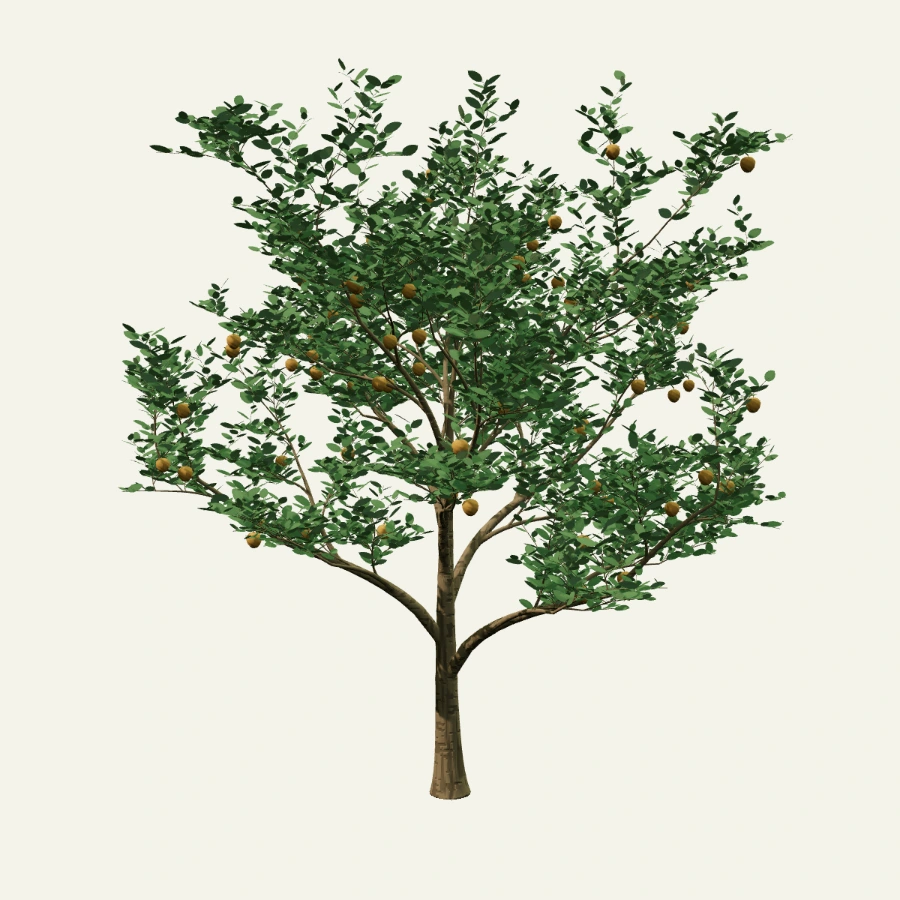
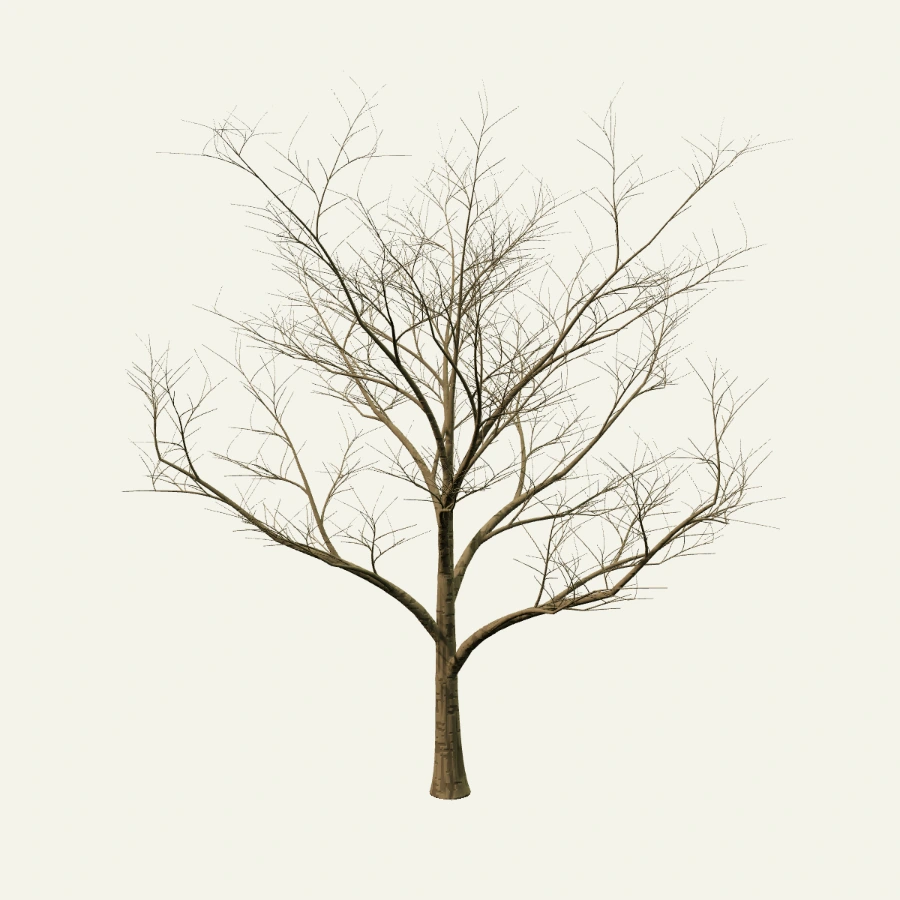
Tree / Annonaceae
The plant, in detail
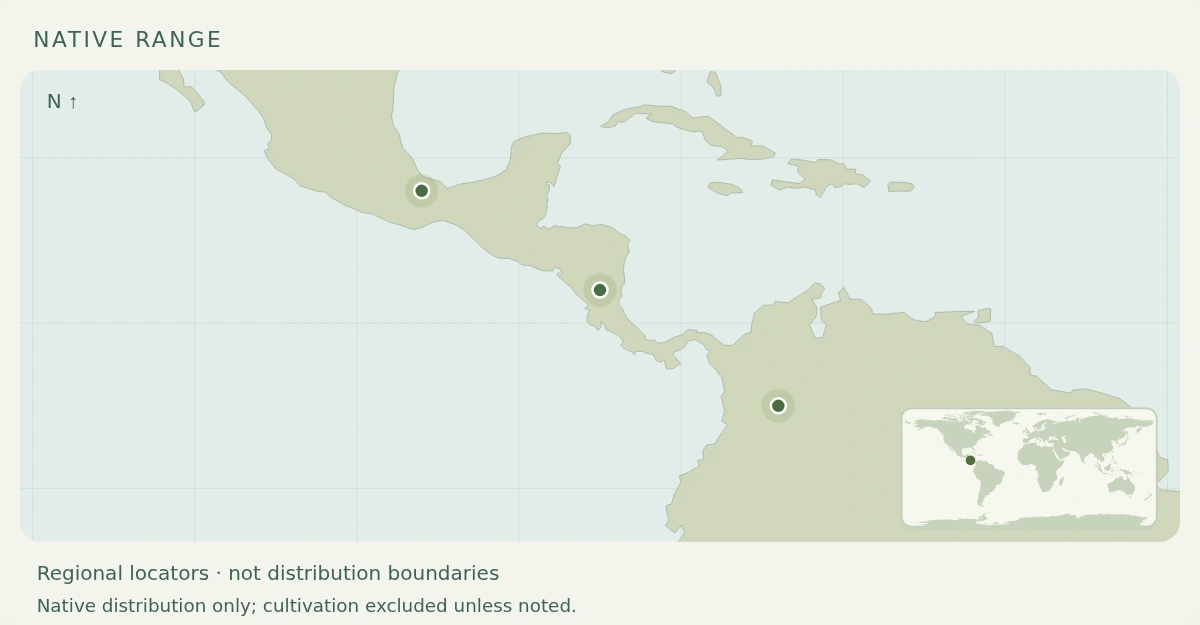
Mexico to Colombia.
- Reference height
- 3–7 m
- Foliage habit
- Semi-evergreen
- USDA zones
- Not documented
- Light
- Not documented
Reported reference stature in the cited account. Cultivar, rootstock, growing conditions and management can change size; this is not a universal species maximum.
Crown
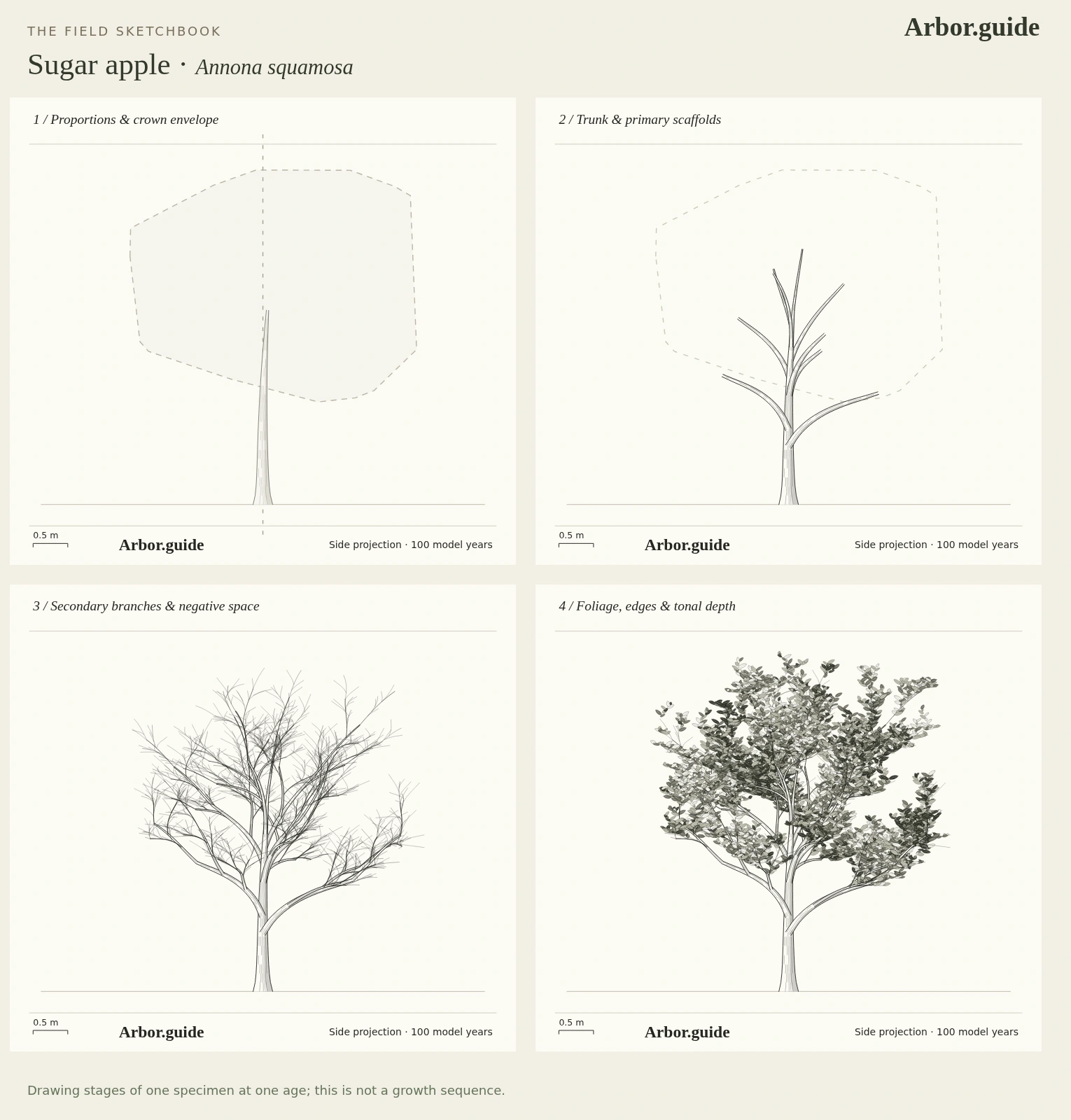
An ArborAI round crown guided by the cited growth form; orchard training and site can alter it.
Branching
Narrow alternate leaves have entire edges; foliage may be lost during a dry rest period.
Bark
Bark appearance in the model is illustrative and varies with stem age.
Roots
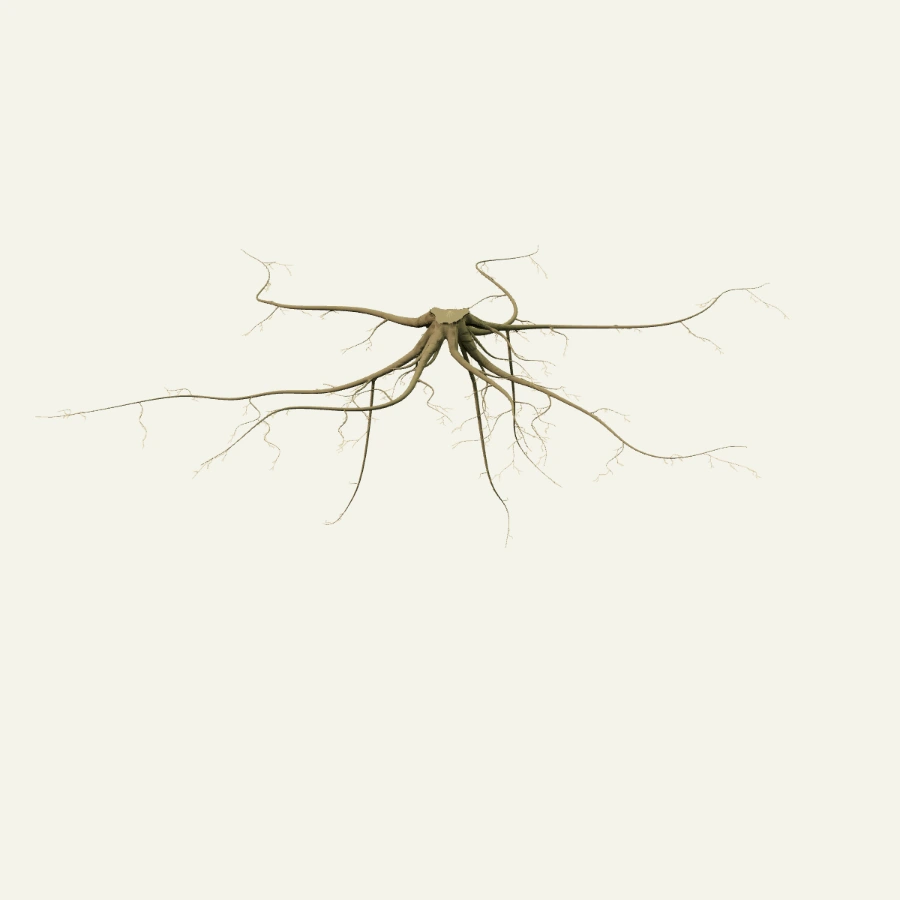
Root positions, depth and spread are schematic; no species-specific measured root map is assigned.
02 / Seasons
Through the seasons
Four portraits. One plant.
Read the crown, foliage and reproductive structures together. The four views compare seasonal appearances; the reference notes explain what is actually documented.
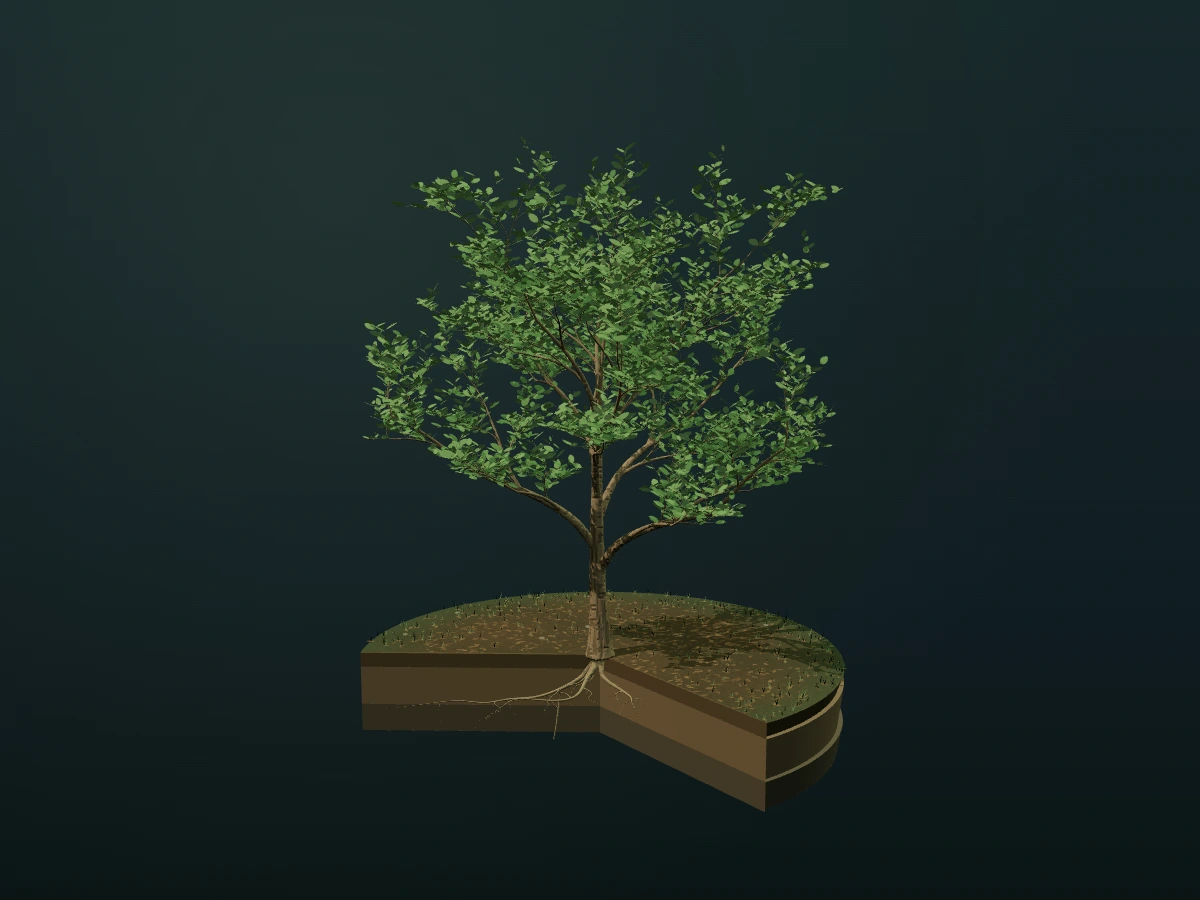
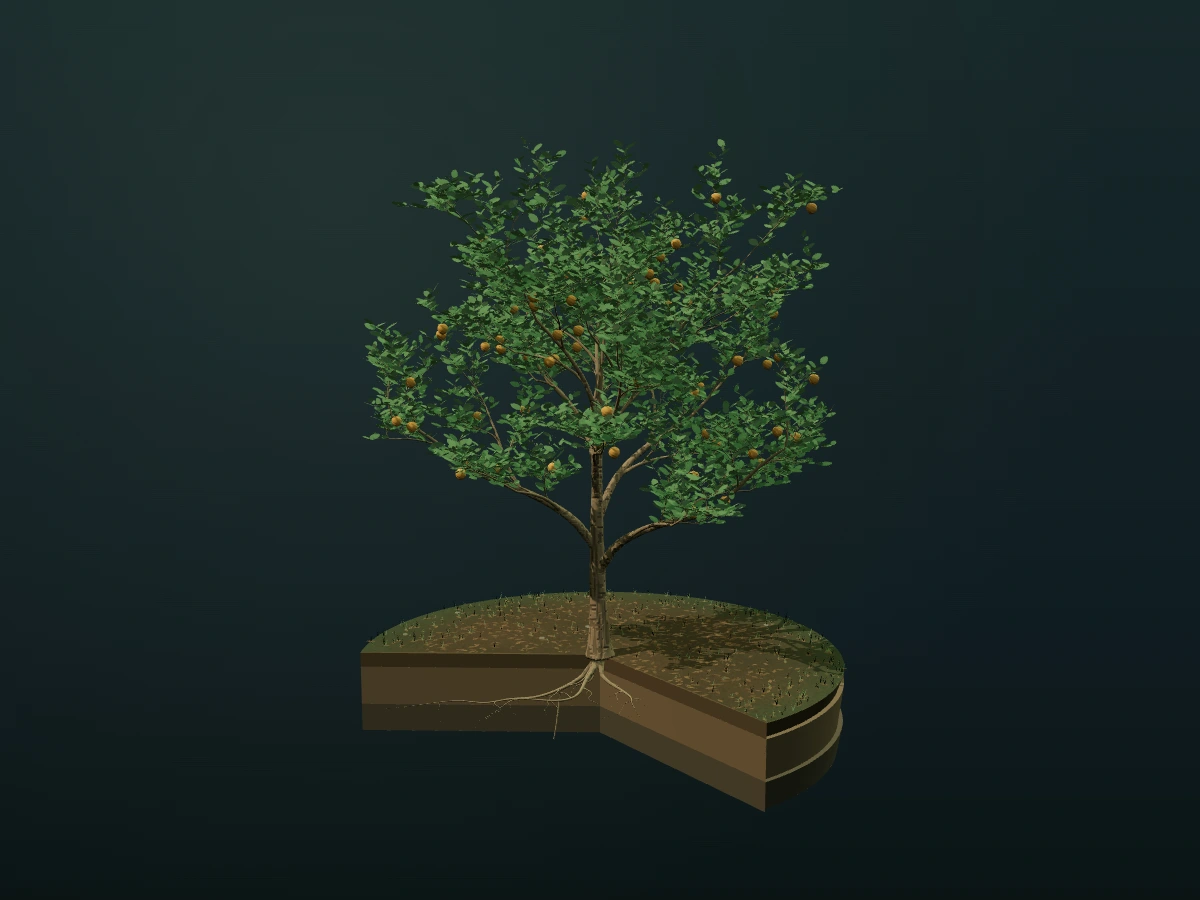
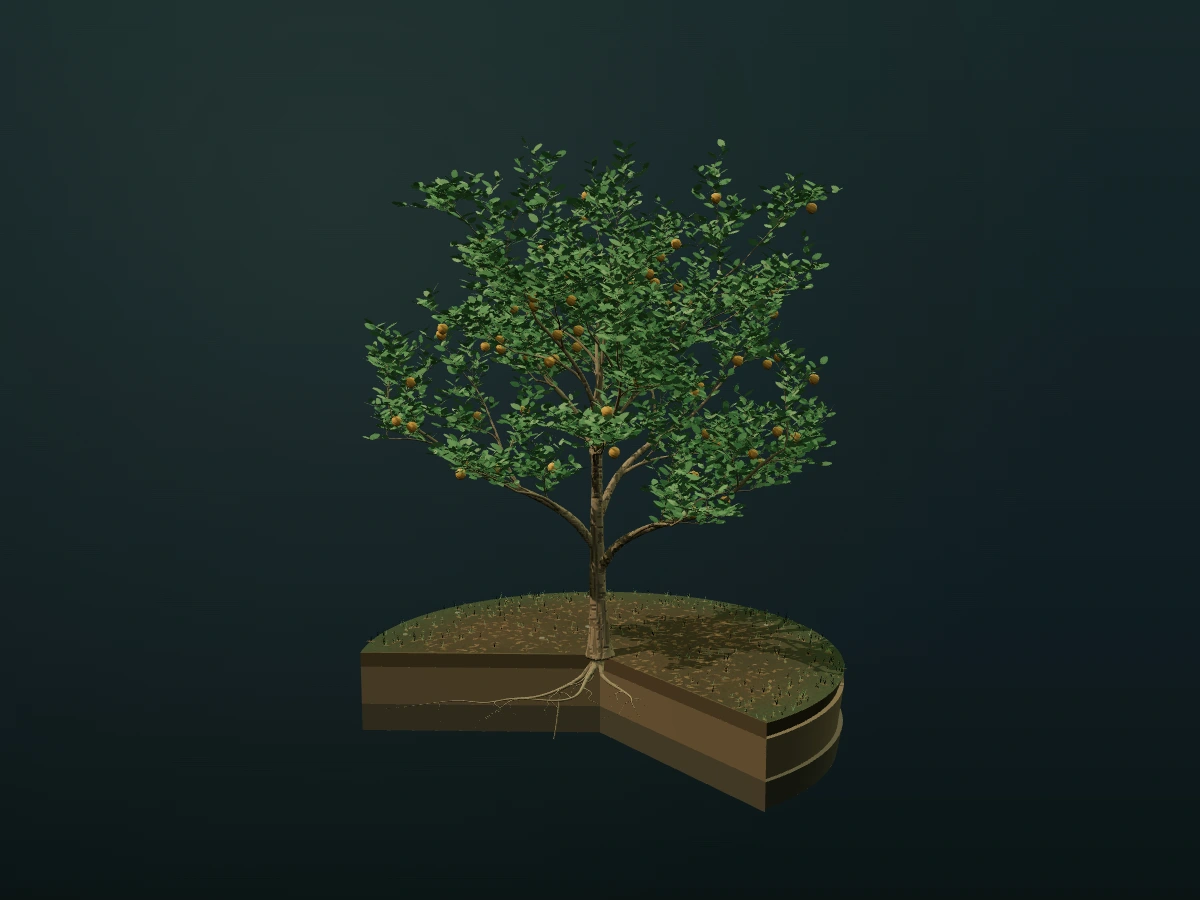
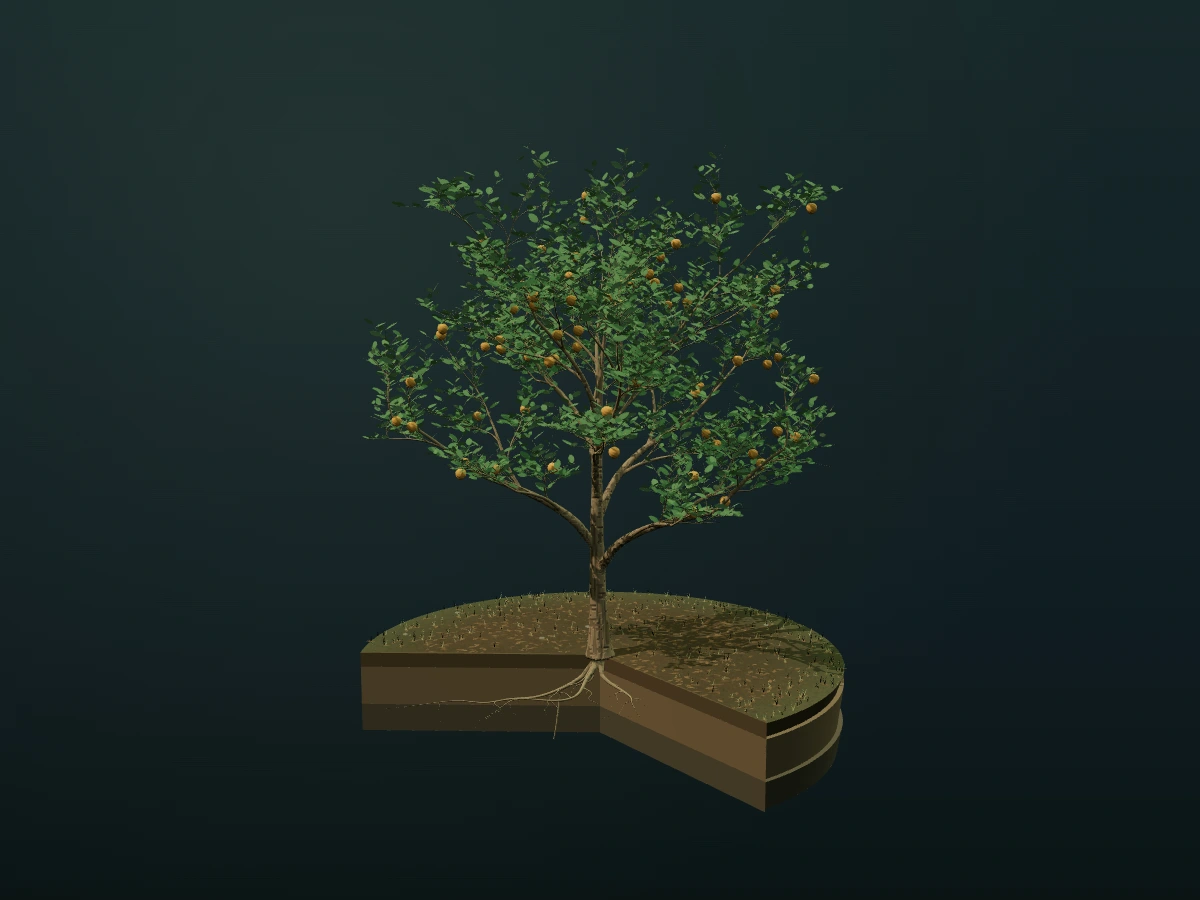
Seasonal illustration; the same plant, age and camera across four views.
Seasonal record
South Florida, July–September and November–January
- Flowering
- Timing not documented
- Fruiting / dispersal
- Summer · Autumn · Winter[2]
Leaf renewal
Variable leaf retention[1]
Leaf retention varies with climate, moisture or provenance. A partially leafy or bare view is one possible condition, not a promise that every plant follows the same winter pattern.
Reading these views
Season names organize these four views, not a universal calendar. Hemisphere, local climate, cultivar and management can change timing; months are shown only when explicitly recorded. The record links leaf loss or rest to dry conditions. Wet and dry phases cannot be assigned to these four calendar labels without a local observation record.
The views emphasize crown structure. Buds, small flowers, individual retained leaves and fine reproductive changes may be unresolved; model age and fruit count are not production forecasts. The model uses one authored partial-retention scenario. No measured percentage of winter leaf retention is assigned.
Fruit visibility follows recorded fruiting or persistence seasons; placement, size and abundance remain illustrative.
Seasonal references
- World Agroforestry · botanical account ↗apps.worldagroforestry.org
- University of Florida IFAS · crop account ↗edis.ifas.ufl.edu
03 / Foliage
A closer look at the organs
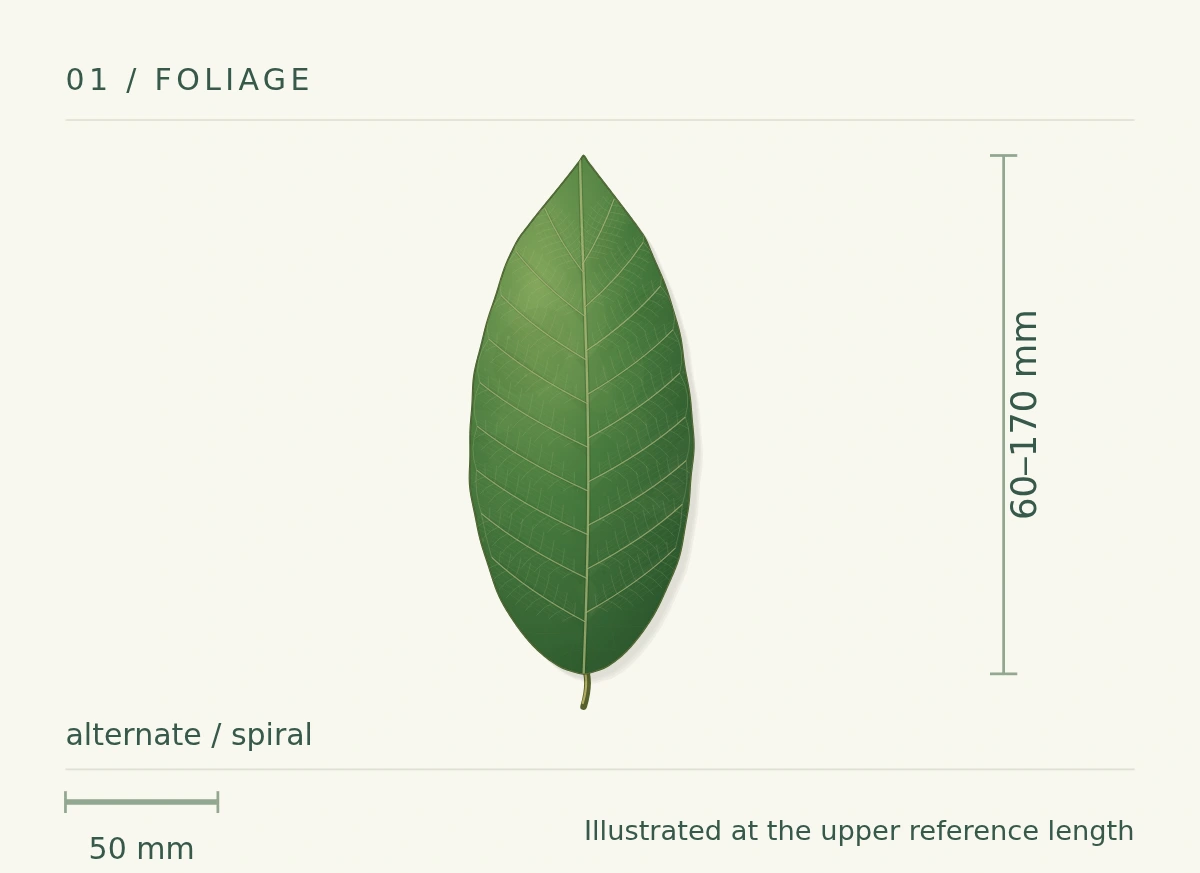
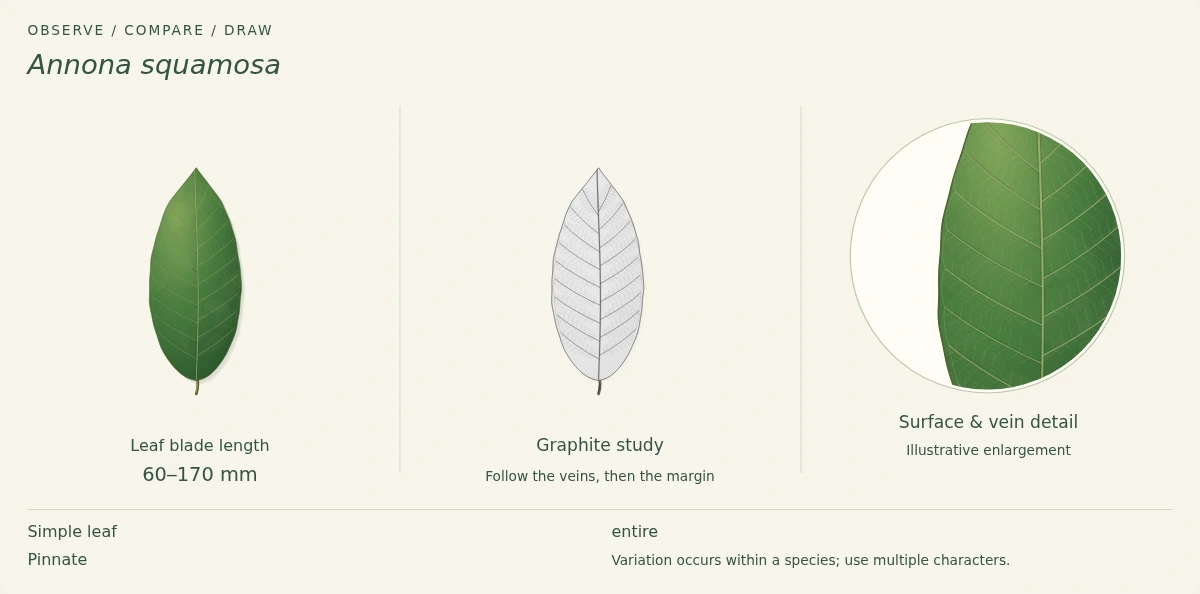
Leaves
- Leaf blade length
- 60–170 mmSource notes
Narrow alternate leaves have entire edges; foliage may be lost during a dry rest period.
Simple leaf · entire · Pinnate · alternate
Seasonal notes
Leaf turnover and colour depend on climate, cultivar and individual history.
- Flowering reference
- Not documented
04 / Fruit & seed
Named structures, separate scales
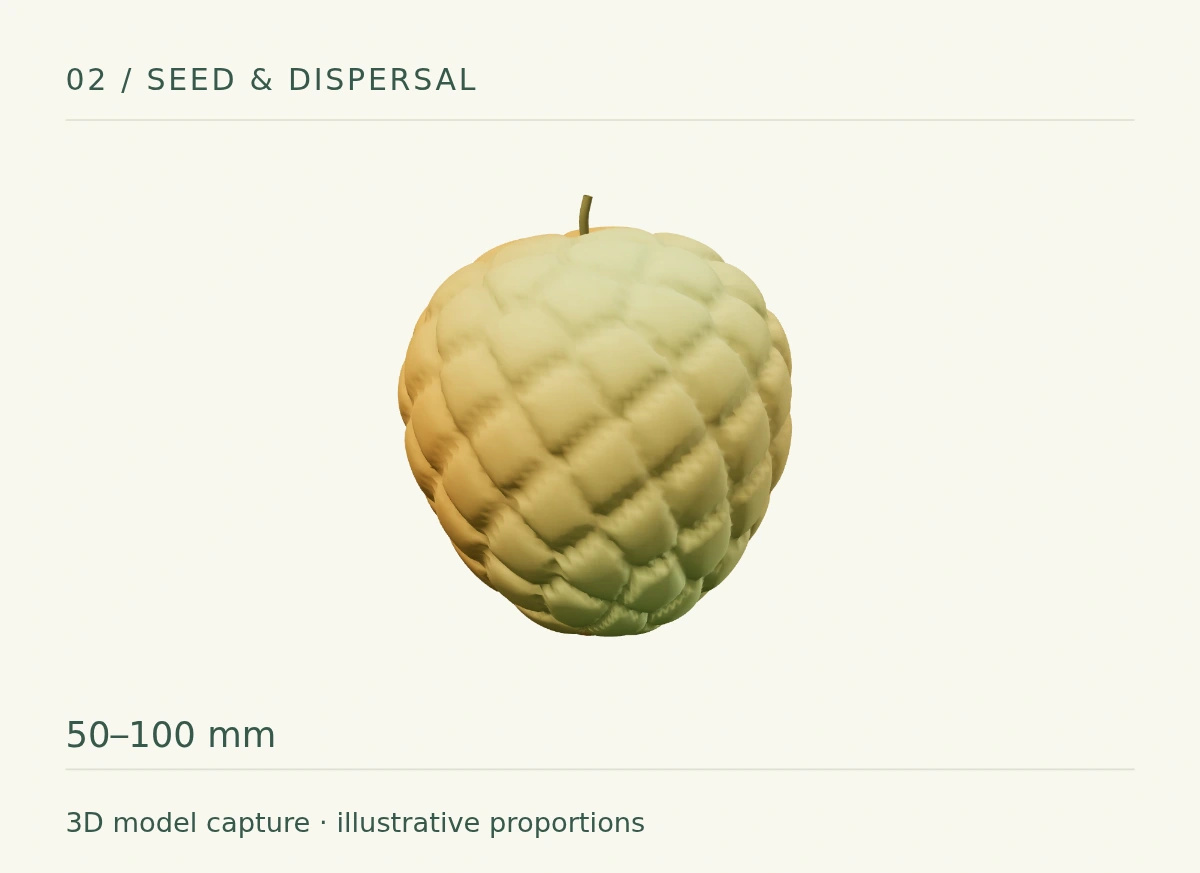
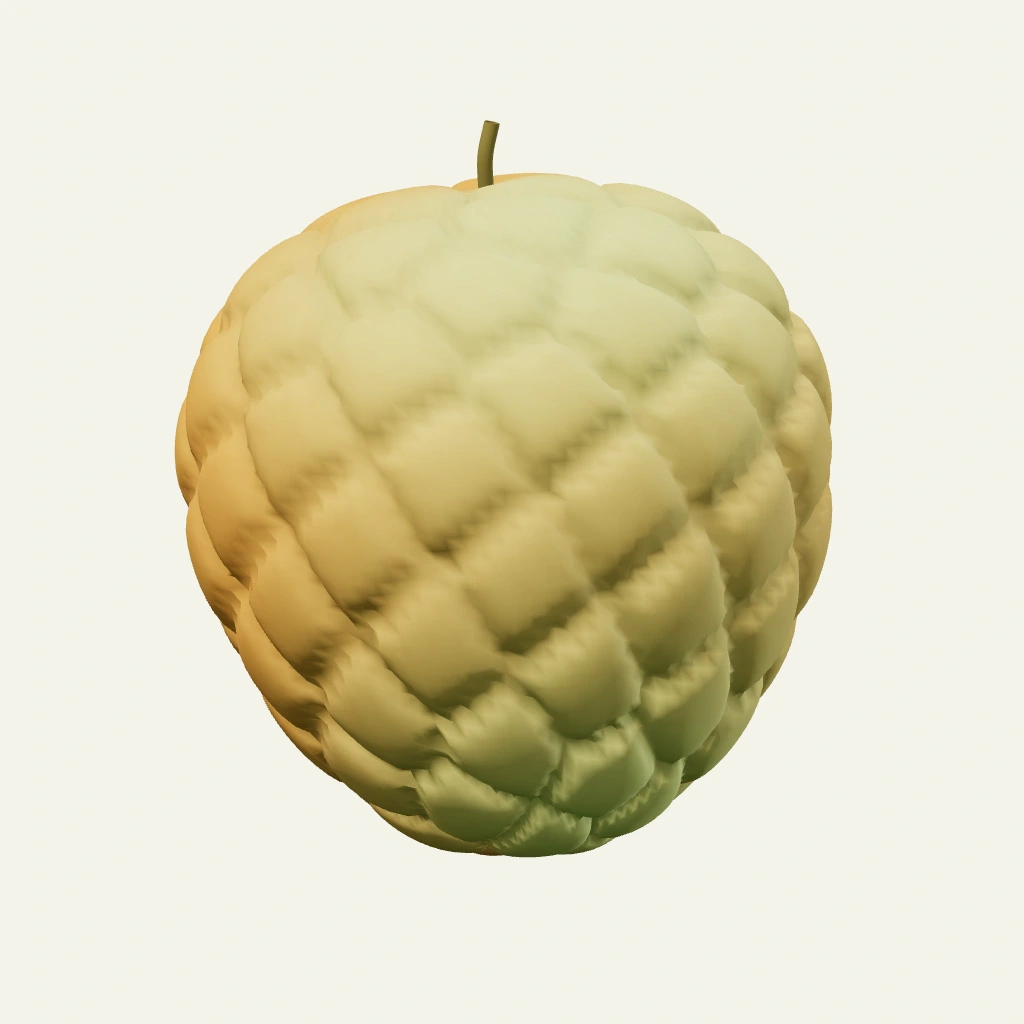
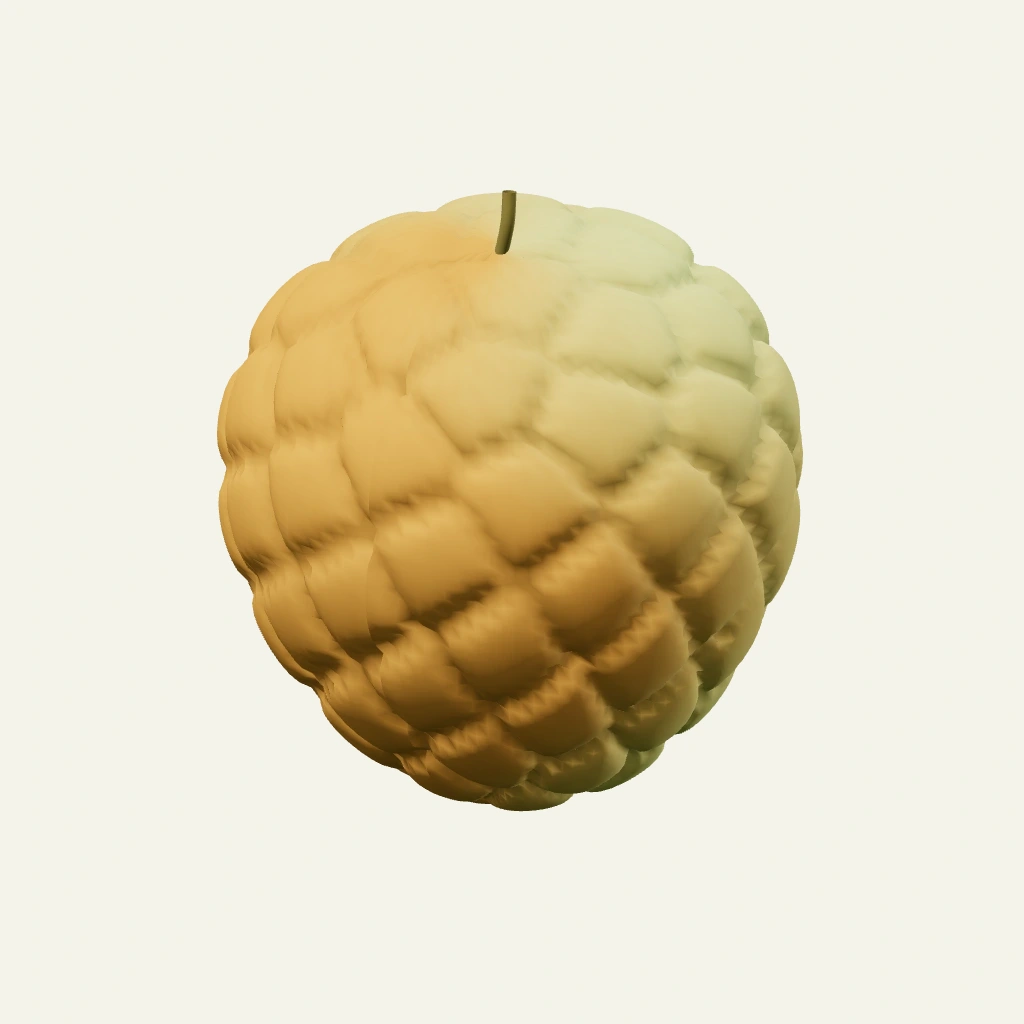
Fruit / dispersal unit
- Whole fruit diameter
- 50–100 mmSource notes
The aggregate fruit has conspicuous rounded segments, each derived from a carpel.
- Fruiting reference
- Summer · Autumn · Winter
South Florida, July–September and November–January
Organs are enlarged independently. Refer to the named measurement, not image size.
05 / Habitat
Native range & growing context
Native range & growing context
Mexico to Colombia.
- Reference spread
- Not documented
- Moisture
- Not documented
- Growth tendency
- Not documented
- Life span
- No numerical lifespan is assigned by this record. Model age is an ArborAI illustration parameter.
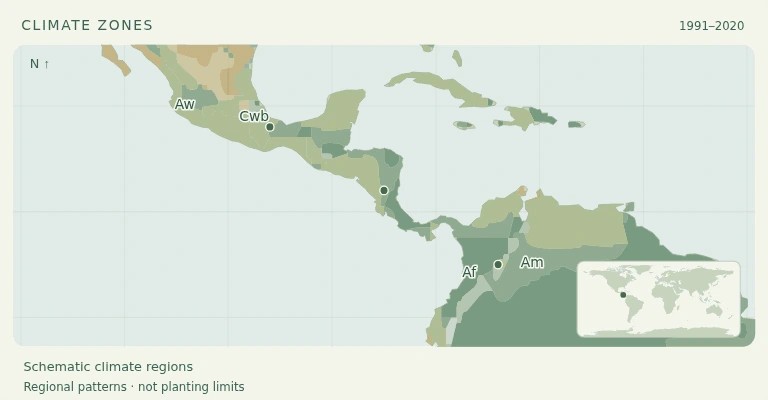
Regional context, not a measured occurrence or suitability map.
06 / Sources & interpretation
Read the evidence behind the illustration
Names & classification
- Family
- Annonaceae
- Genus
- Annona
- Synonyms
- —
- Narrow alternate leaves have entire edges; foliage may be lost during a dry rest period.
- The aggregate fruit has conspicuous rounded segments, each derived from a carpel.
ArborAI botanical teaching models. Crown proportions, branch positions, root extents, fruit display sizes and model ages are illustrative, not measured specimens or calibrated growth forecasts.
ArborAI botanical teaching models. Crown proportions, branch positions, root extents, fruit display sizes and model ages are illustrative, not measured specimens or calibrated growth forecasts.
- World Agroforestry · botanical account ↗apps.worldagroforestry.org
- Royal Botanic Gardens Kew · Plants of the World Online ↗powo.science.kew.org
- University of Florida IFAS · crop account ↗edis.ifas.ufl.edu
Plant data and references · 7
| Reference heightm | [3, 7]Reported reference stature in the cited account. Cultivar, rootstock, growing conditions and management can change size; this is not a universal species maximum.apps.worldagroforestry.org |
|---|---|
| Native range | Mexico to Colombia.Current Kew account; cultivated origins are not mapped as wild occurrence data.powo.science.kew.org |
| Leaf lengthmm | [60, 170]Named unit: blade Named leaf and reproductive units are kept distinct. Unknown dimensions remain null. apps.worldagroforestry.org |
| Seed lengthmm | [50, 100]Diameter of the named reproductive structure; enclosed seeds are distinct and are not measured by this value. Named leaf and reproductive units are kept distinct. Unknown dimensions remain null. apps.worldagroforestry.org |
| Leaf morphology | Narrow alternate leaves have entire edges; foliage may be lost during a dry rest period.Diagnostic foliage description; numerical reconstruction parameters are authored separately.apps.worldagroforestry.org |
| Reproductive morphology | The aggregate fruit has conspicuous rounded segments, each derived from a carpel.Named reproductive structure; fruit, stone and seed are not interchangeable.apps.worldagroforestry.org |
| Regional fruitingcategory | {"seasons": ["summer", "autumn", "winter"], "status": "source-reported", "reference": "South Florida, July–September and November–January", "source": "https://edis.ifas.ufl.edu/publication/MG373/pdf"}South Florida, July–September and November–Januaryedis.ifas.ufl.edu |