Botanical field guide
Magnolia virginiana
Sweetbay magnolia
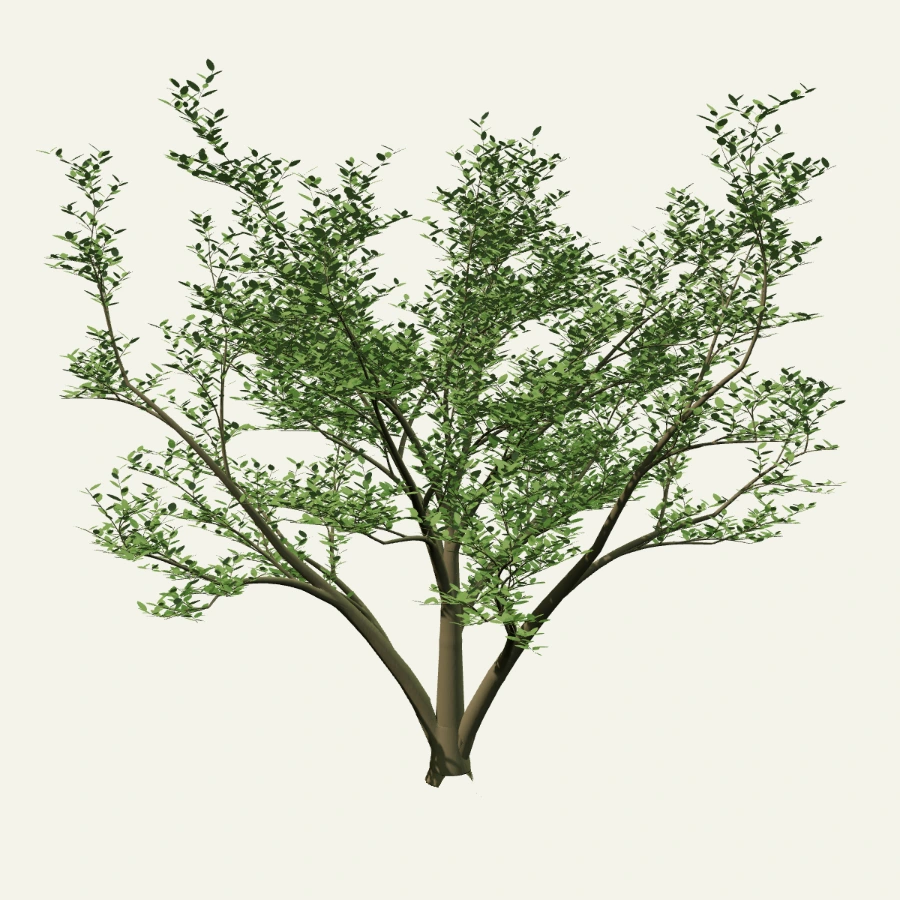
Tree / Magnoliaceae
The plant, in detail
Acidic wet woods, swamp margins and moist coastal-plain soils.
- Reference height
- 3–11 m
- Foliage habit
- Deciduous to evergreen
- USDA zones
- 5–10
- Light
- Not documented
Approximate stature from the cited account; equal bounds indicate a reported upper or approximate height, not a measured population interval. Cultivation and forest conditions differ.
Crown
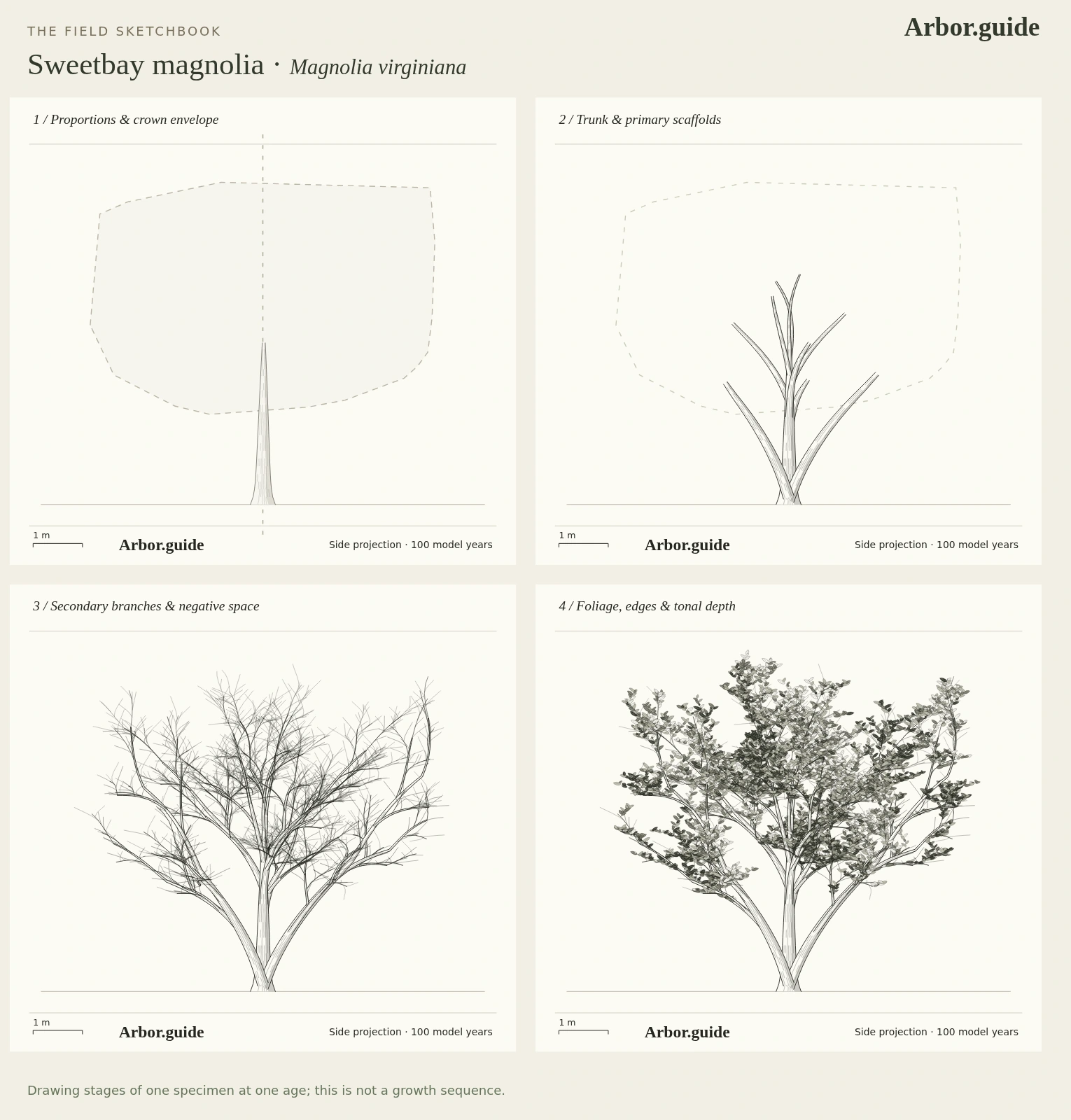
Small open crown, often with multiple stems; southern populations can become larger trees.
Branching
Alternate entire, narrow oval blades are shiny above and silvery underneath; persistence varies with climate.
Bark
Young reddish-brown to gray bark remains comparatively smooth.
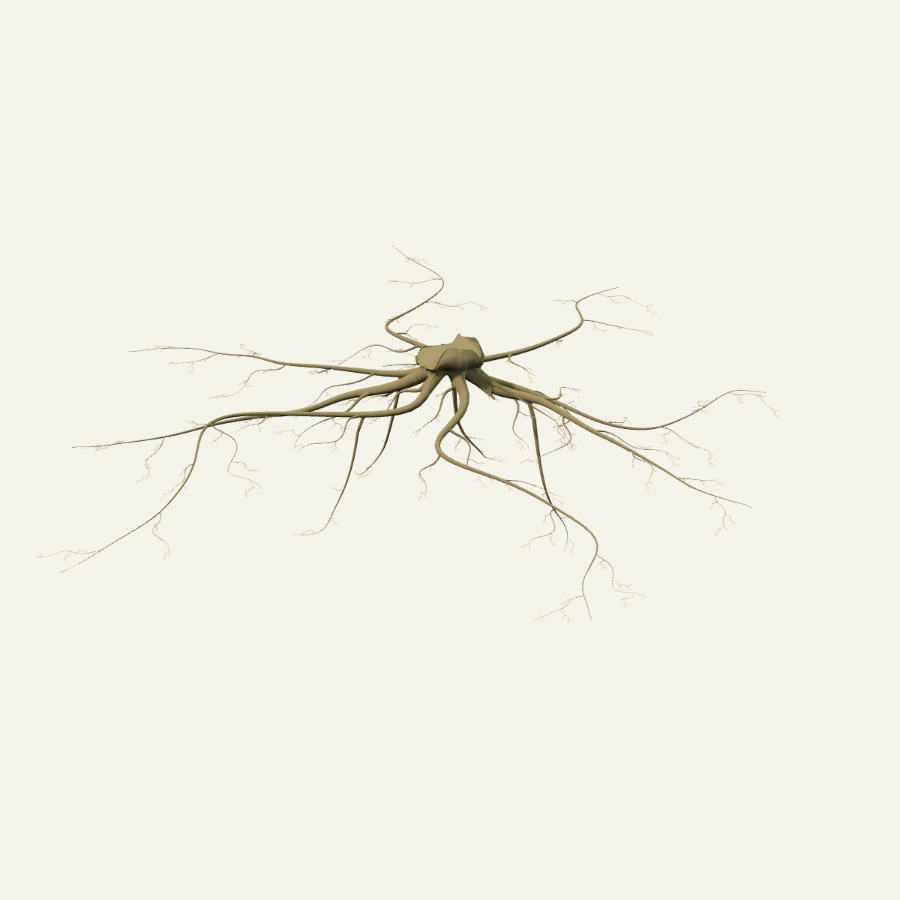
Roots
The root drawing is an ArborAI soil scenario: curved structural laterals and descending axes, not a measured species root map. Depth depends on soil, water table, establishment and damage; fine absorptive roots are unresolved.
02 / Seasons
Through the seasons
Four portraits. One plant.
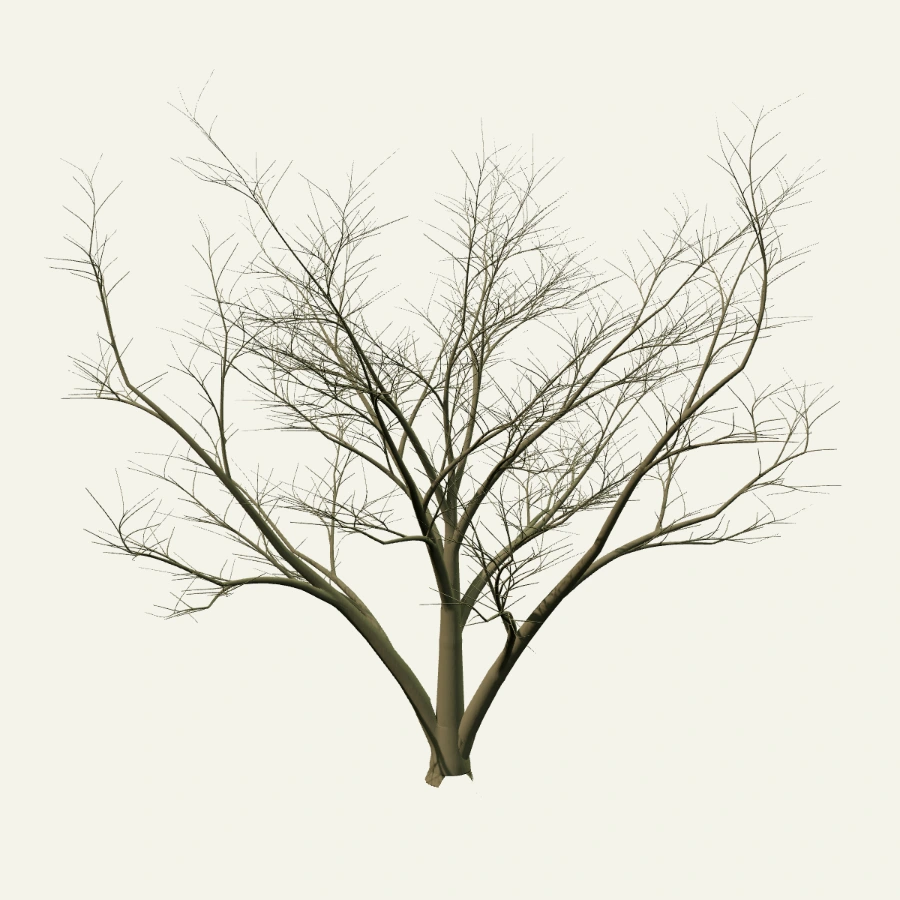
Read the crown, foliage and reproductive structures together. The four views compare seasonal appearances; the reference notes explain what is actually documented.
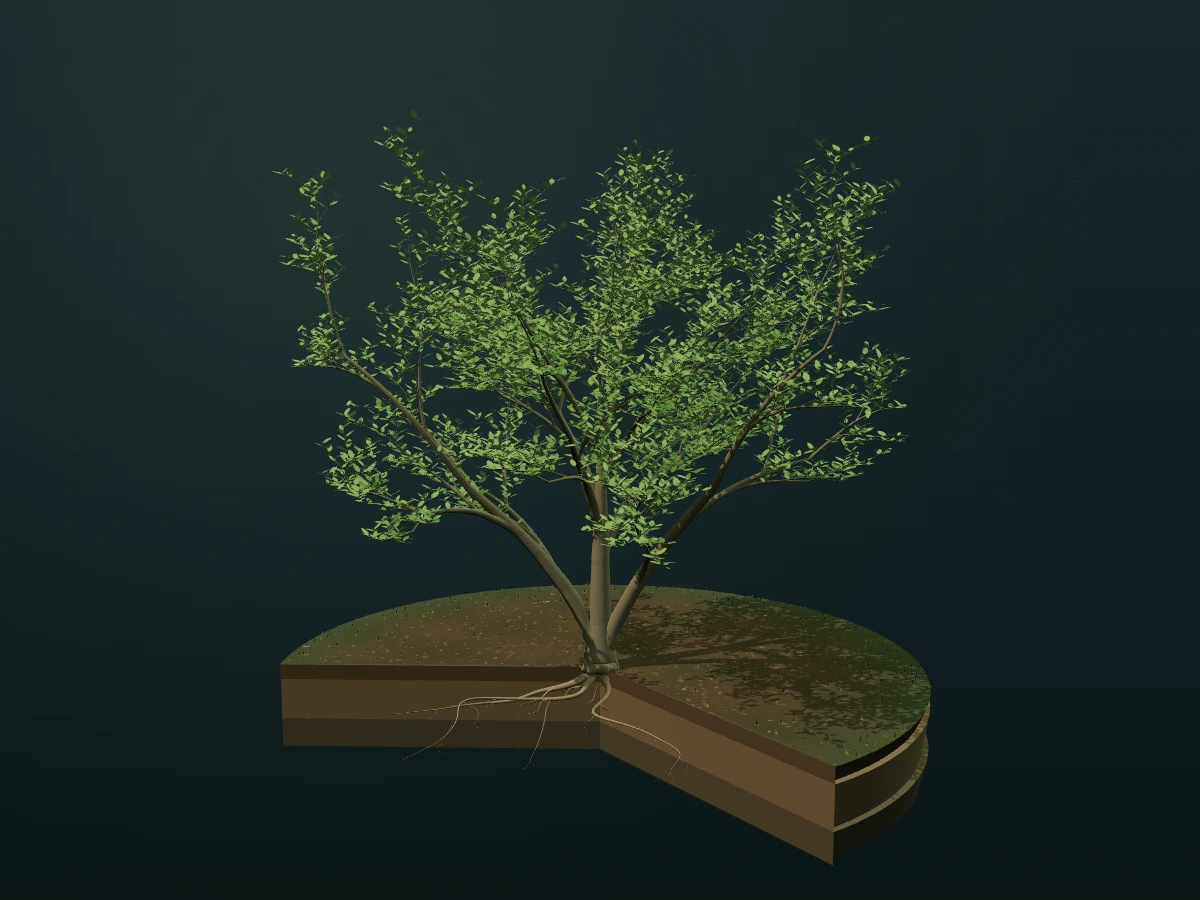
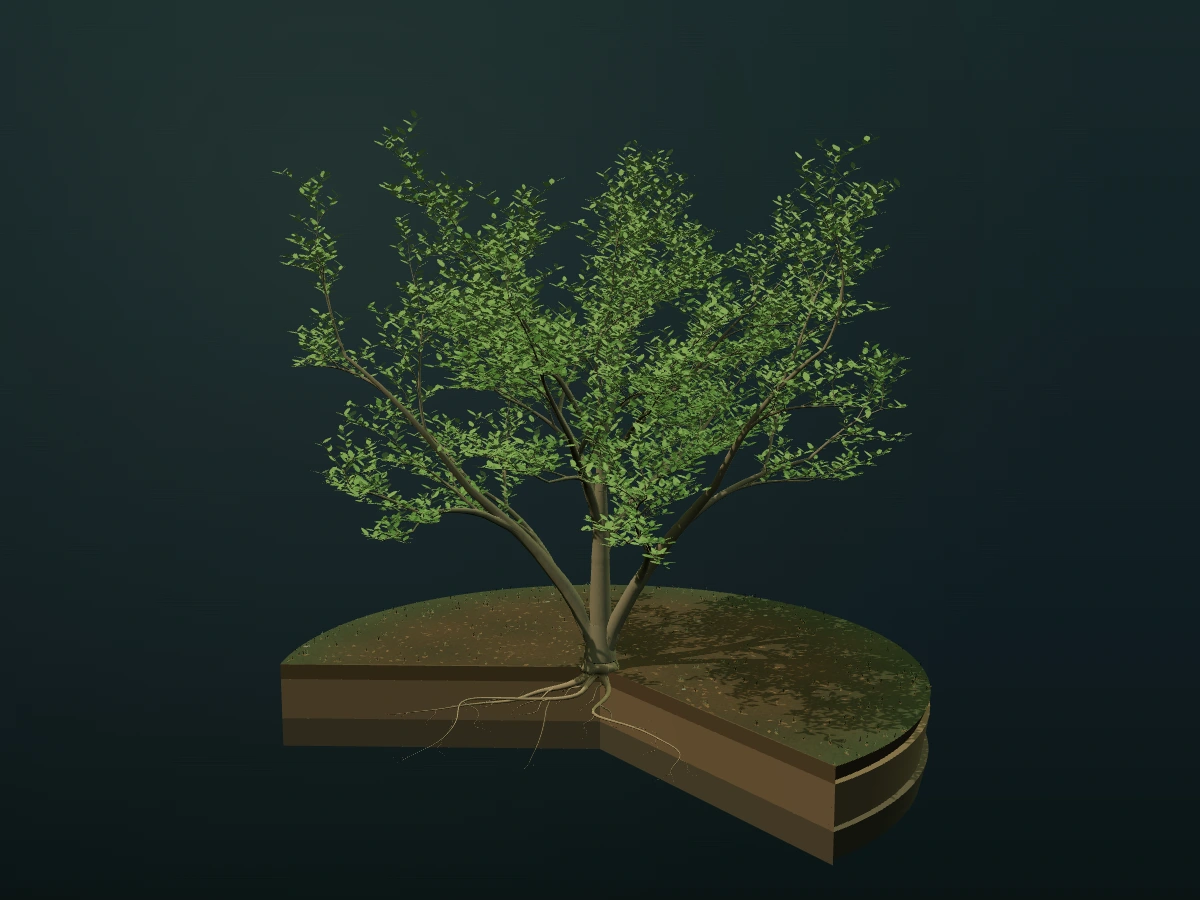
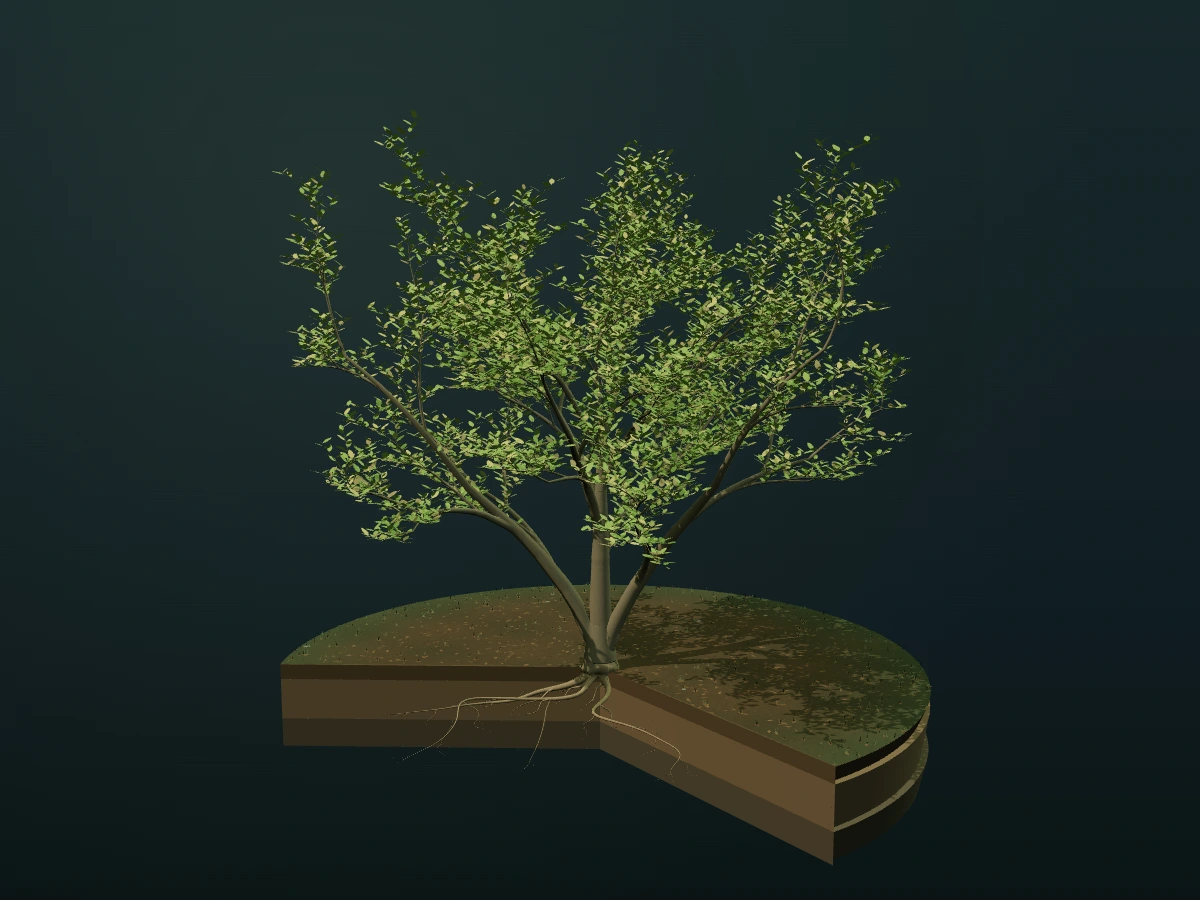
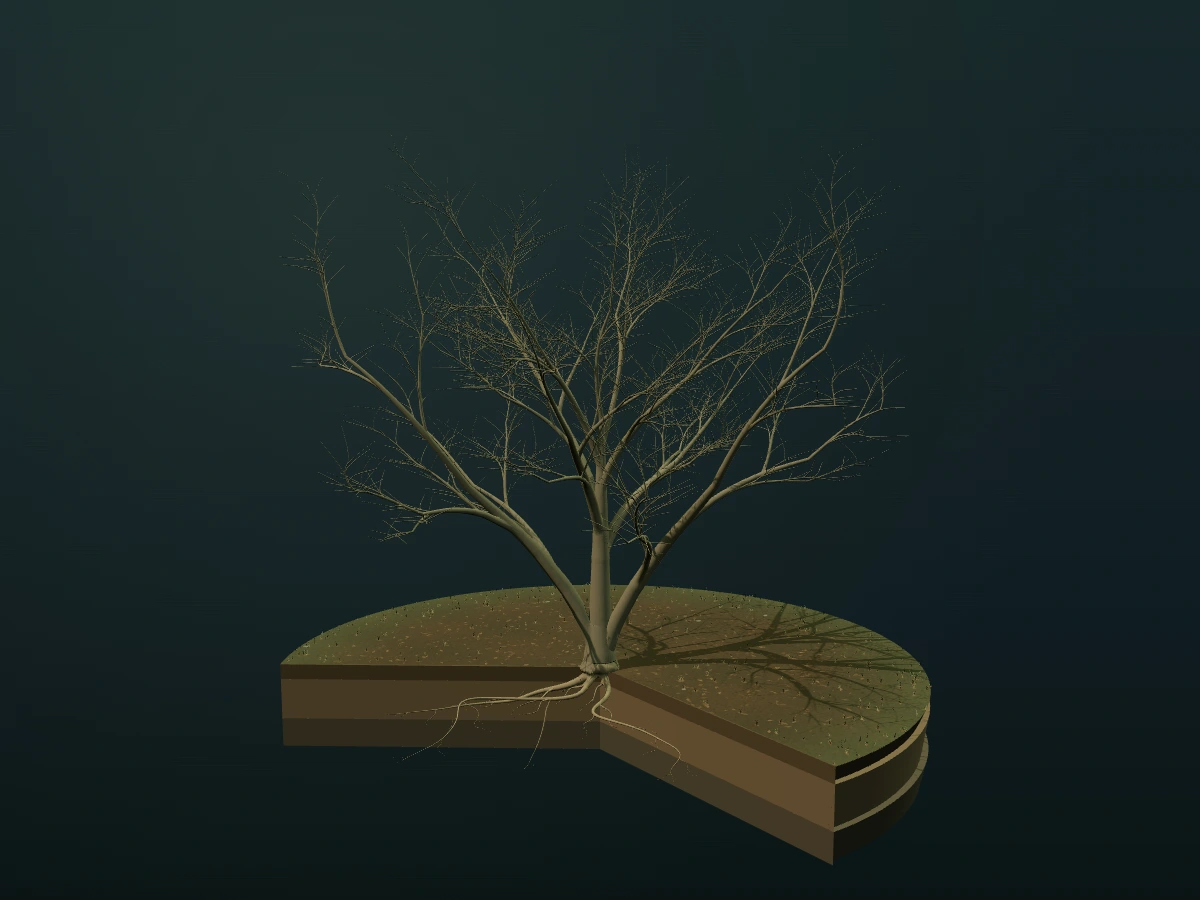
Seasonal illustration; the same plant, age and camera across four views.
Seasonal record
North Carolina botanical account
Leaf renewal
Variable leaf retention[1]
Leaf retention varies with climate, moisture or provenance. A partially leafy or bare view is one possible condition, not a promise that every plant follows the same winter pattern.
Reading these views
Season names organize these four views, not a universal calendar. Hemisphere, local climate, cultivar and management can change timing; months are shown only when explicitly recorded.
The views emphasize crown structure. Buds, small flowers, individual retained leaves and fine reproductive changes may be unresolved; model age and fruit count are not production forecasts. This render uses a deciduous example for a plant whose leaf retention can vary. A leafy winter plant in a milder climate is not contradicted by this bare view.
No separate on-tree fruit display is configured for this record.
Seasonal references
- NC State Extension · Magnolia virginiana ↗plants.ces.ncsu.edu
03 / Leaves & flowers
A closer look at the organs
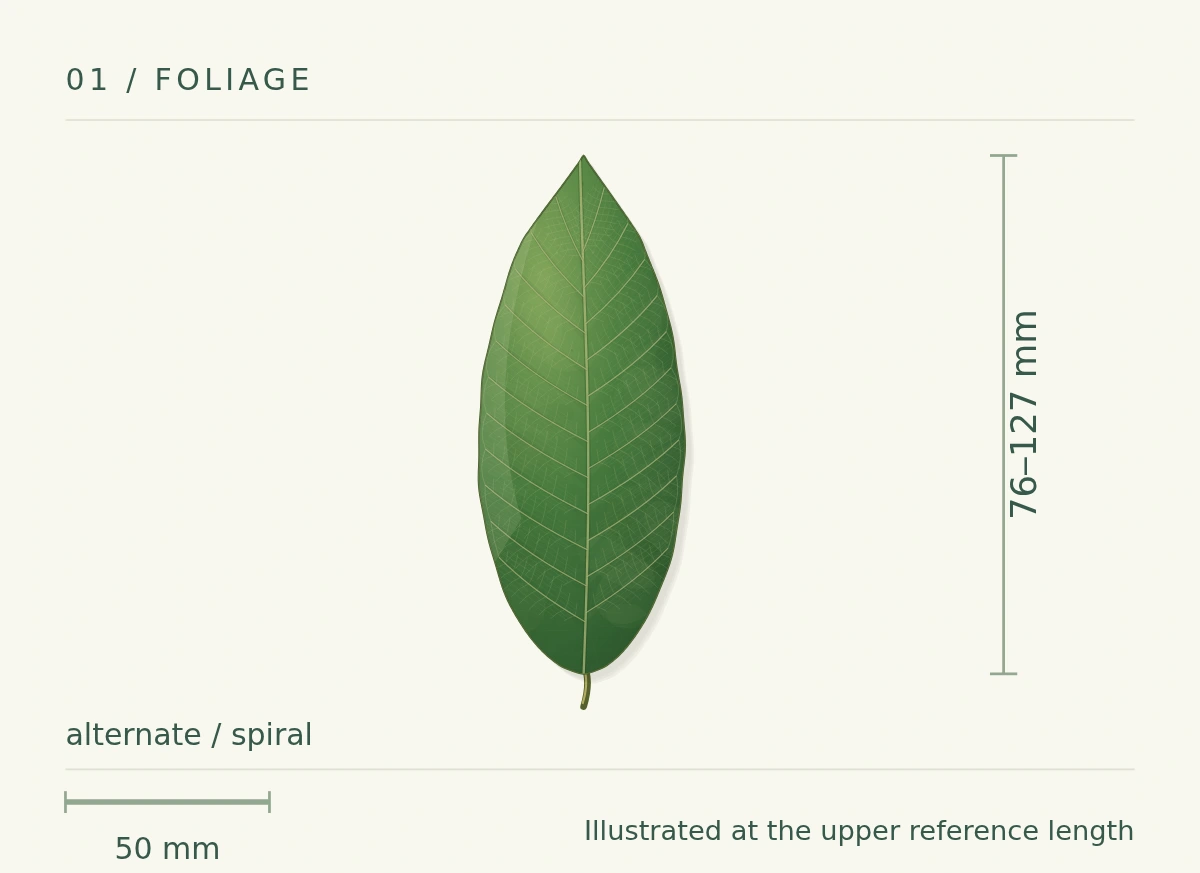
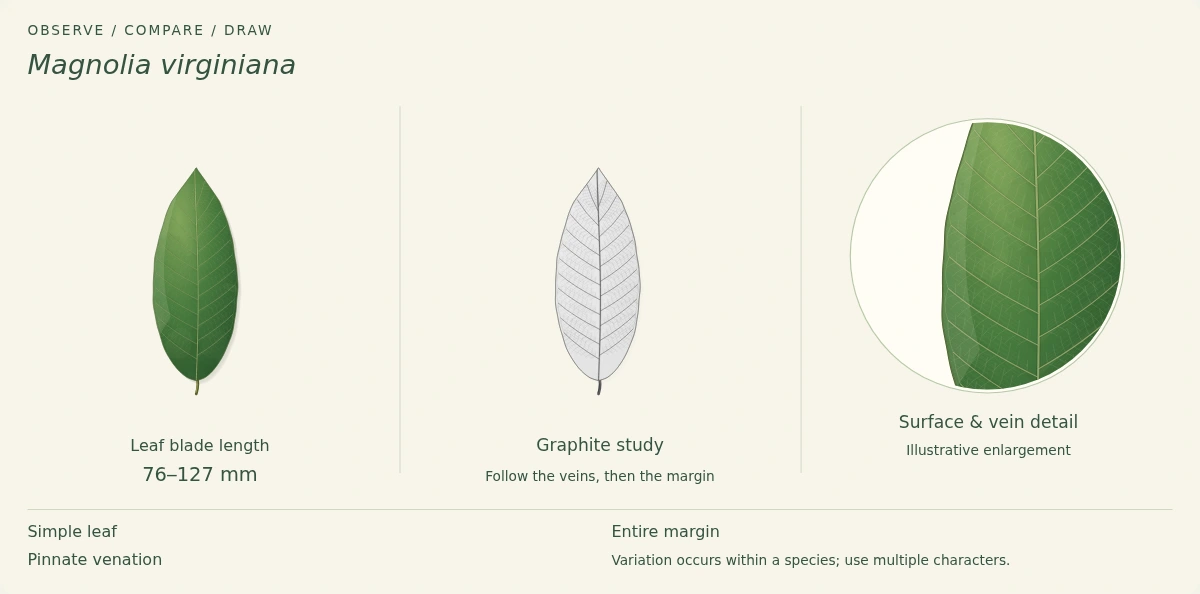
Leaves
- Leaf blade length
- 76–127 mmSource notes
Alternate entire, narrow oval blades are shiny above and silvery underneath; persistence varies with climate.
Simple leaf · Entire margin · Pinnate venation · alternate / spiral
Seasonal notes
Persistence varies from deciduous to evergreen with climate and provenance. This plate and seasonal animation show a colder-climate, deciduous example.
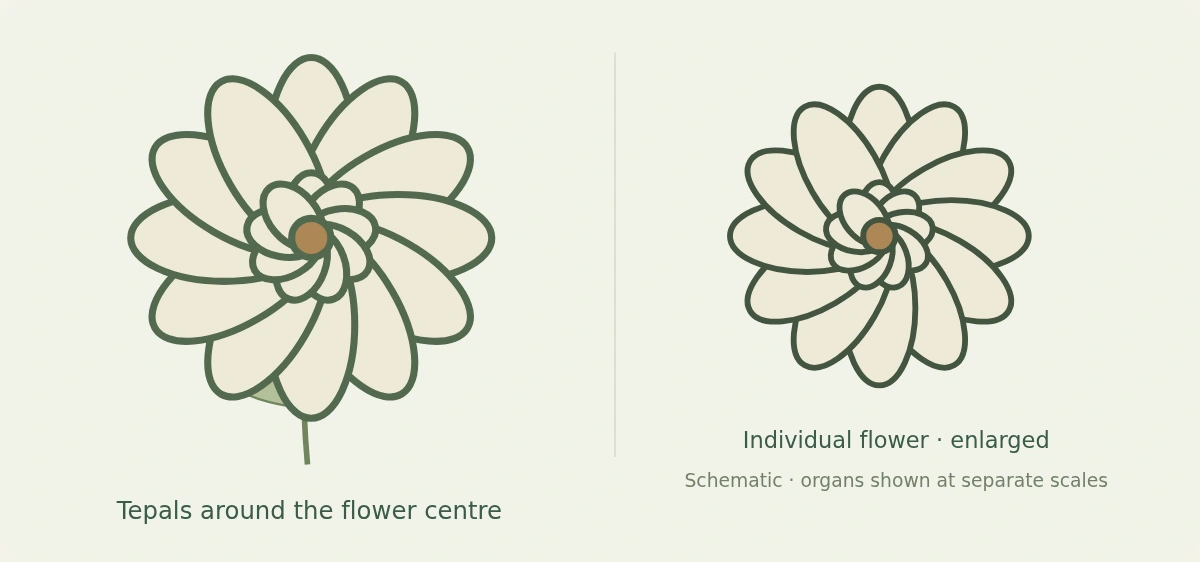
- Flowering reference
- Spring · Summer
04 / Fruit & seed
Named structures, separate scales
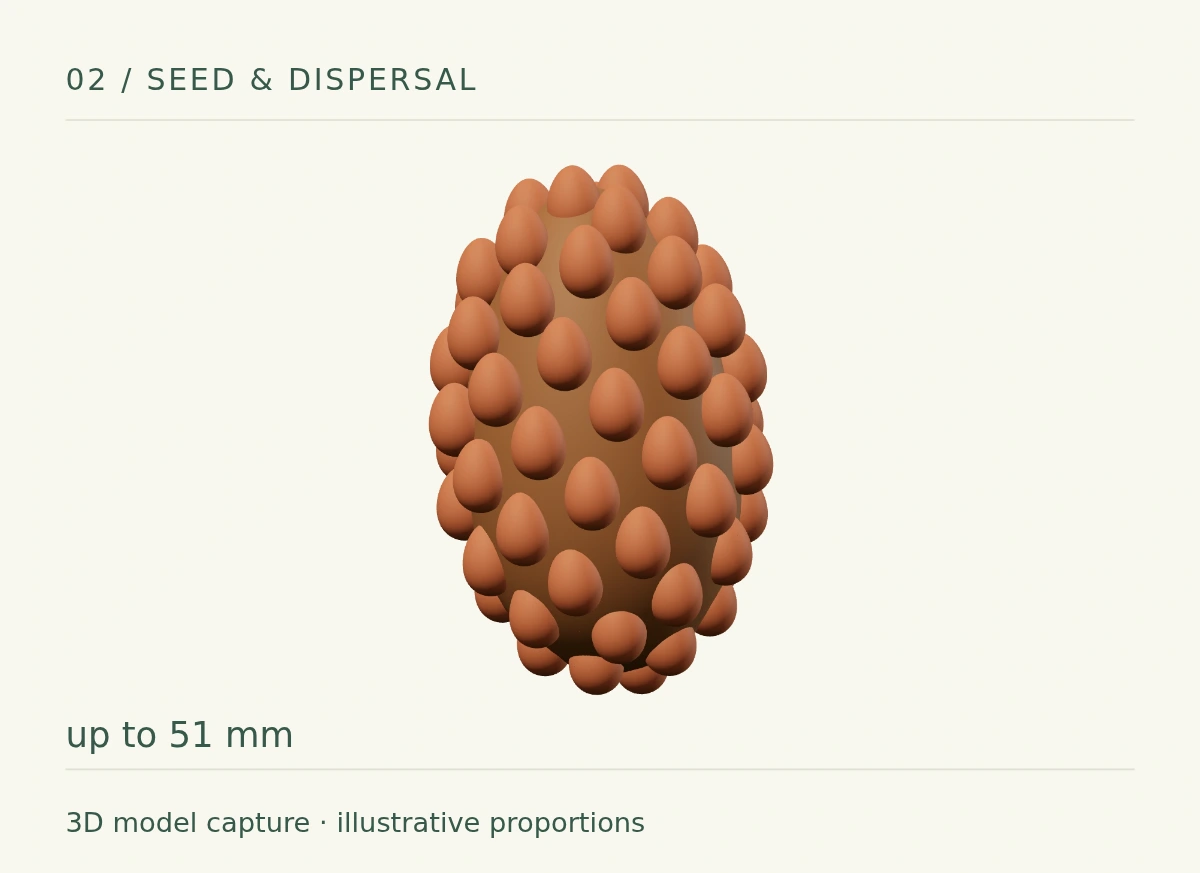
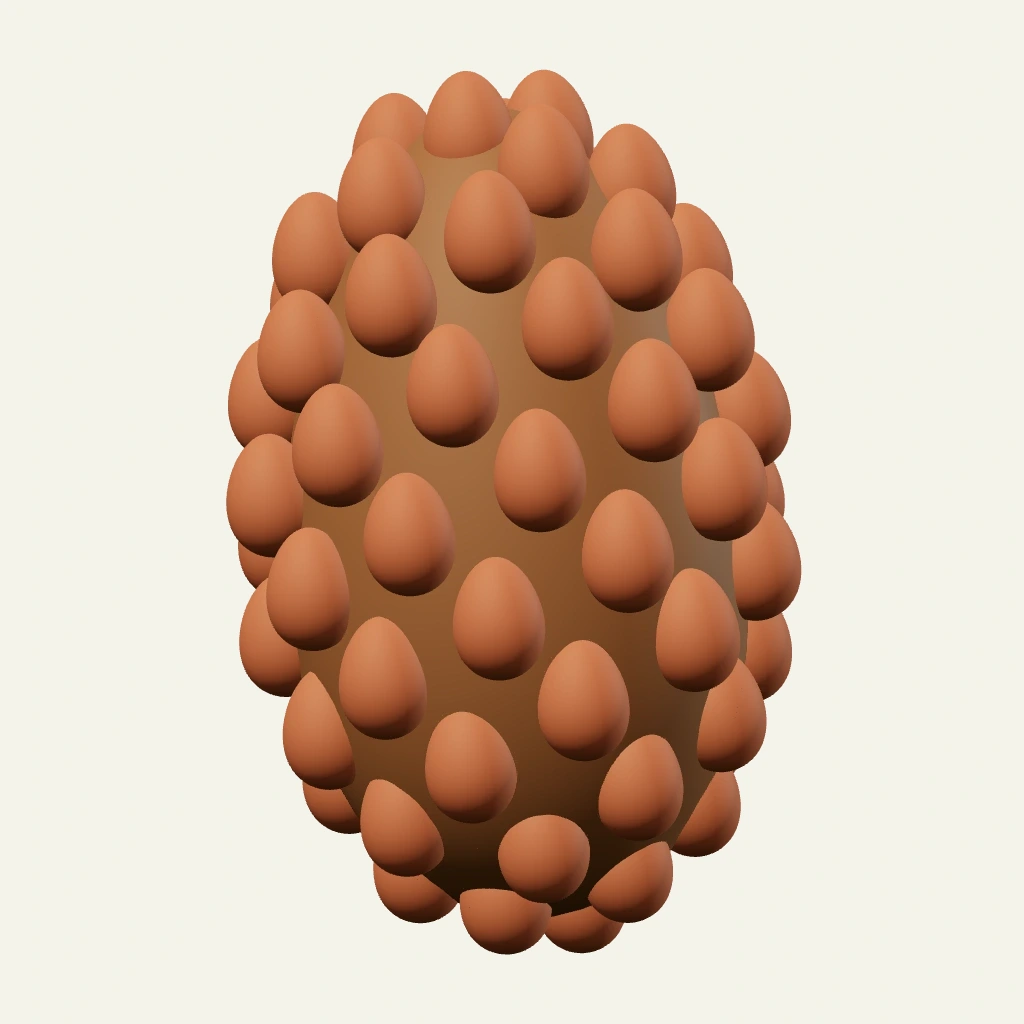
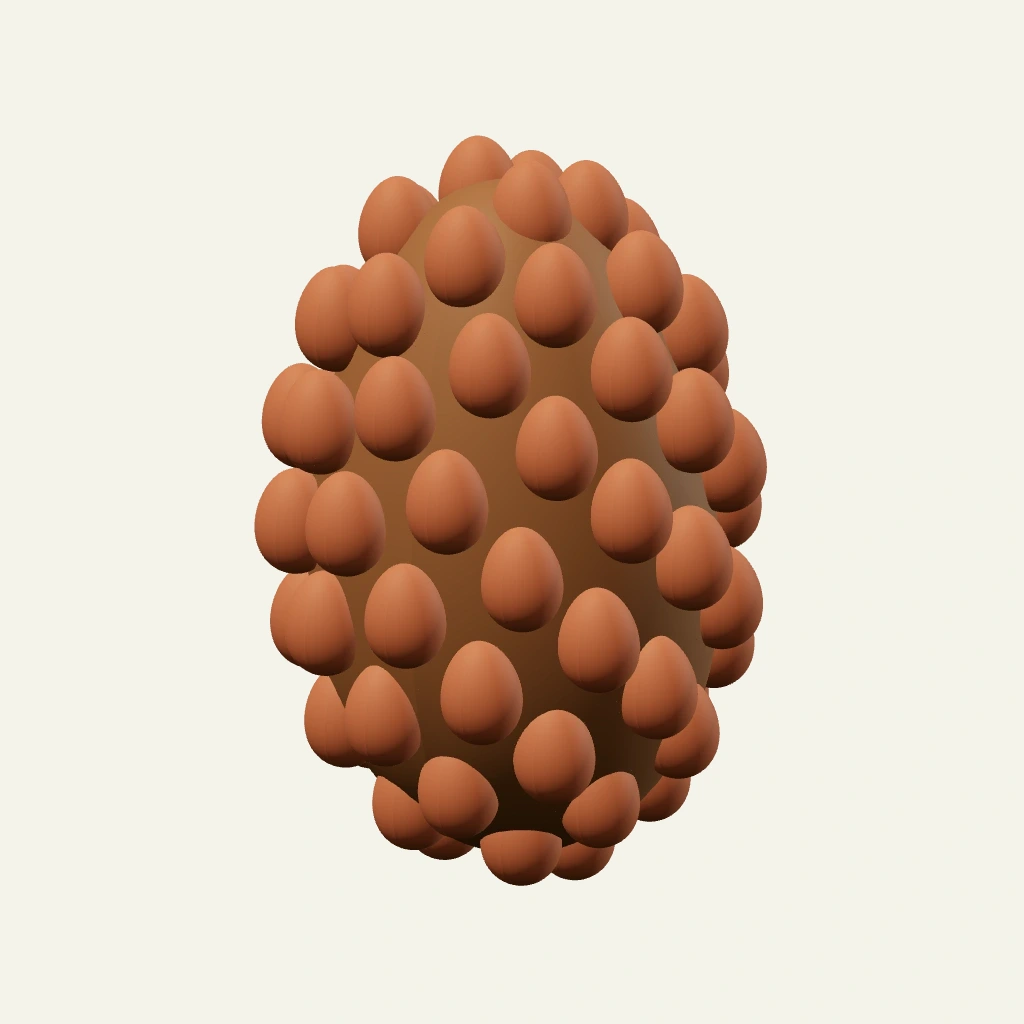
Fruit / dispersal unit
- Fruiting structure length
- ≤ 51 mmSource notes
Small aggregates of follicles expose red-coated seeds suspended on slender threads.
- Fruiting reference
- Autumn
North Carolina botanical account
Organs are enlarged independently. Refer to the named measurement, not image size.
05 / Habitat
Native range & growing context
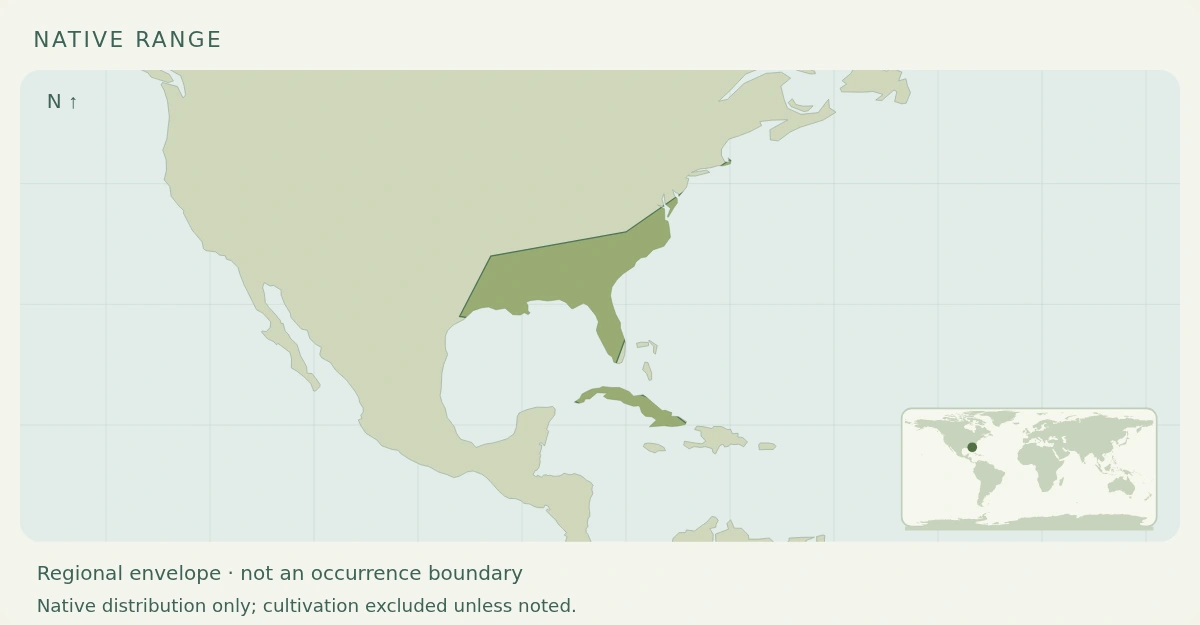
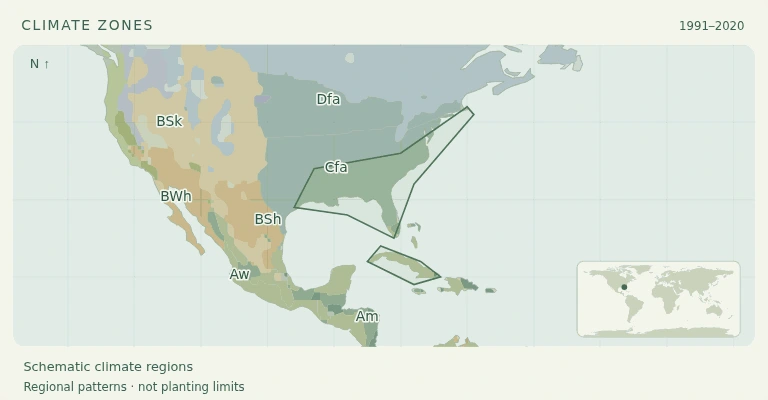
Native range & growing context
Eastern and southeastern United States to Texas and Cuba.
- Reference spread
- Not documented
- Moisture
- Not documented
- Growth tendency
- Rapid
- Life span
- No numerical lifespan is assigned from these references. Model age is not a survival forecast.
Regional context, not a measured occurrence or suitability map.
06 / Sources & interpretation
Read the evidence behind the illustration
Names & classification
- Family
- Magnoliaceae
- Genus
- Magnolia
- Synonyms
- —
- Alternate entire, narrow oval blades are shiny above and silvery underneath; persistence varies with climate.
- Small aggregates of follicles expose red-coated seeds suspended on slender threads.
Source-informed teaching reconstruction, not a surveyed specimen. Crown dimensions, branch counts, growth ages and root geometry are ArborAI. Individual trees vary with provenance, competition, climate and management.
ArborAI teaching geometry; coefficients and ages are not measured species constants.
- NC State Extension · Magnolia virginiana ↗plants.ces.ncsu.edu
- Oregon State University · Magnolia virginiana ↗landscapeplants.oregonstate.edu
Plant data and references · 5
| Native range | Eastern and southeastern United States to Texas and Cuba.Transferred from the existing catalogue; independent botanical review remains pending.plants.ces.ncsu.edu |
|---|---|
| Leaf lengthmm | [76, 127]Transferred from the existing catalogue; independent botanical review remains pending.plants.ces.ncsu.edu |
| Seed lengthmm | [null, 51]Transferred from the existing catalogue; independent botanical review remains pending.plants.ces.ncsu.edu |
| Reference phenologycategory | {"flowering": {"seasons": ["spring", "summer"]}, "fruiting": {"seasons": ["autumn"]}, "reference": "North Carolina botanical account", "source": "https://plants.ces.ncsu.edu/plants/magnolia-virginiana/", "reviewed": "2026-10-16"}Regional observations. Fruit display may include persistence and is not automatically ripening. Missing dates remain unspecified. Independent botanical review remains pending.plants.ces.ncsu.edu |
| Usda hardinesscategory | {"system": "USDA", "zones": [5, 10], "source": "usda-hardiness", "subzones": ["5a", "10b"]}Reported horticultural recommendation; winter minimum only, not a heat or overall suitability limitplants.ces.ncsu.edu |