Botanical field guide
Syzygium jambos
Rose apple
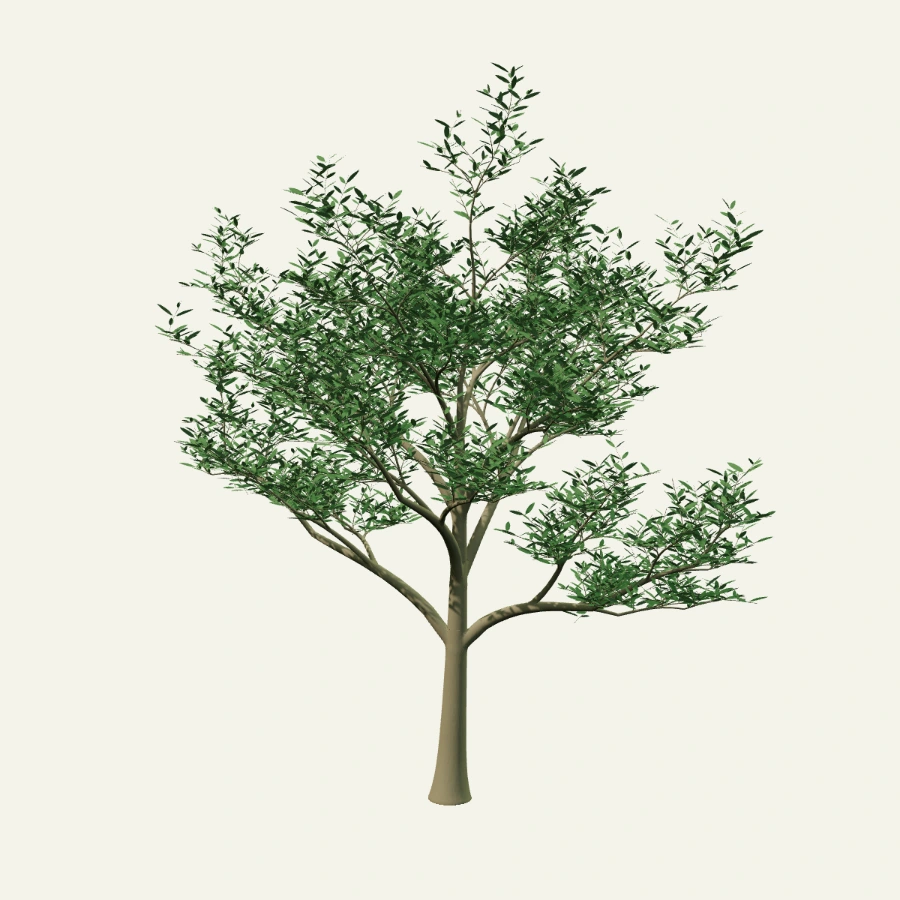
Tree / Myrtaceae
The plant, in detail
Native biome in the Kew account: wet tropical.
- Reference height
- 7.5–12 m
- Foliage habit
- Evergreen
- USDA zones
- Not documented
- Light
- Not documented
Reference adult stature from the cited account; geography, growing conditions and management affect size. This is not a universal maximum or a planting prescription.
Crown
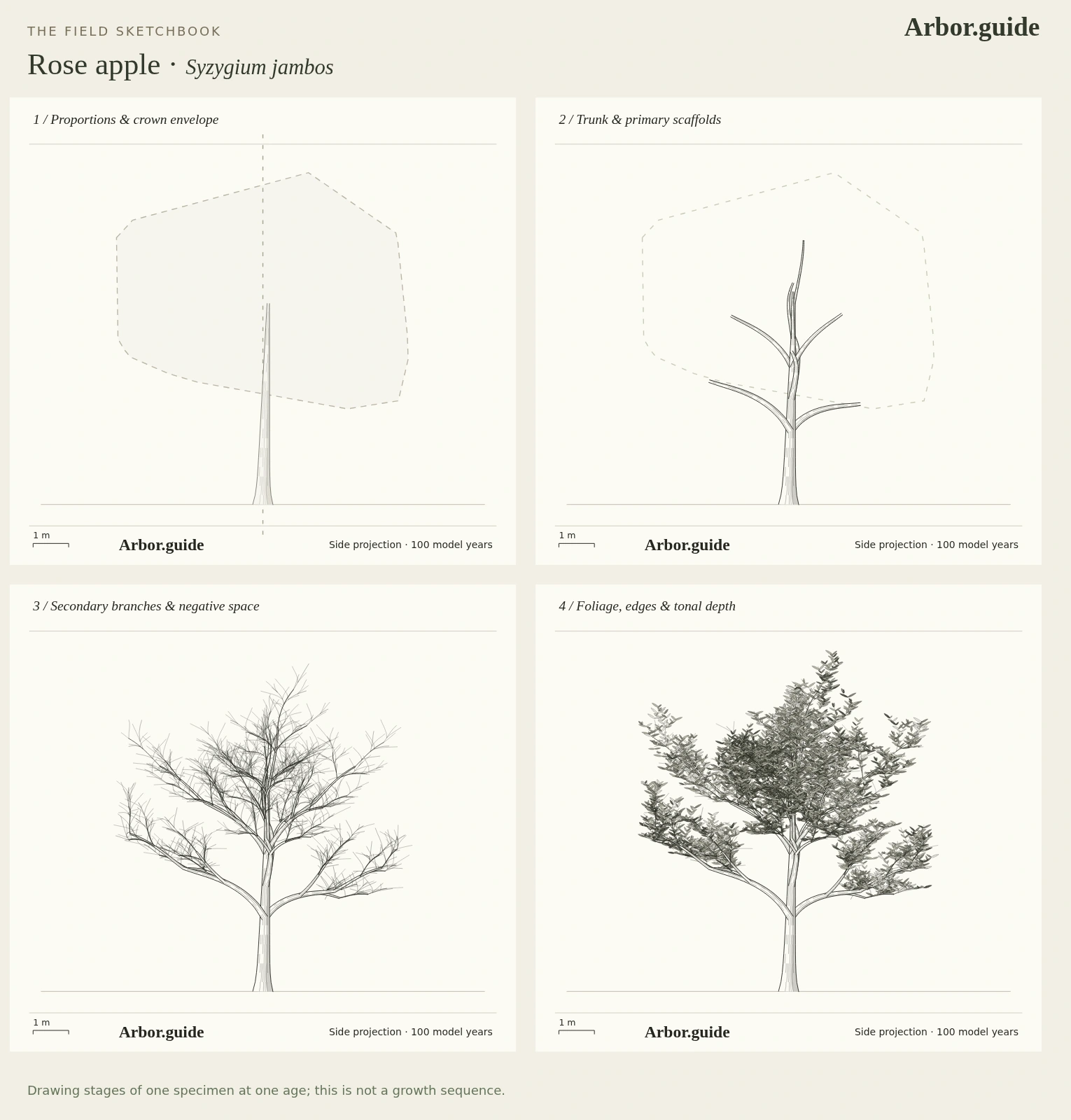
A wide evergreen crown can be as broad as the tree is tall.
Branching
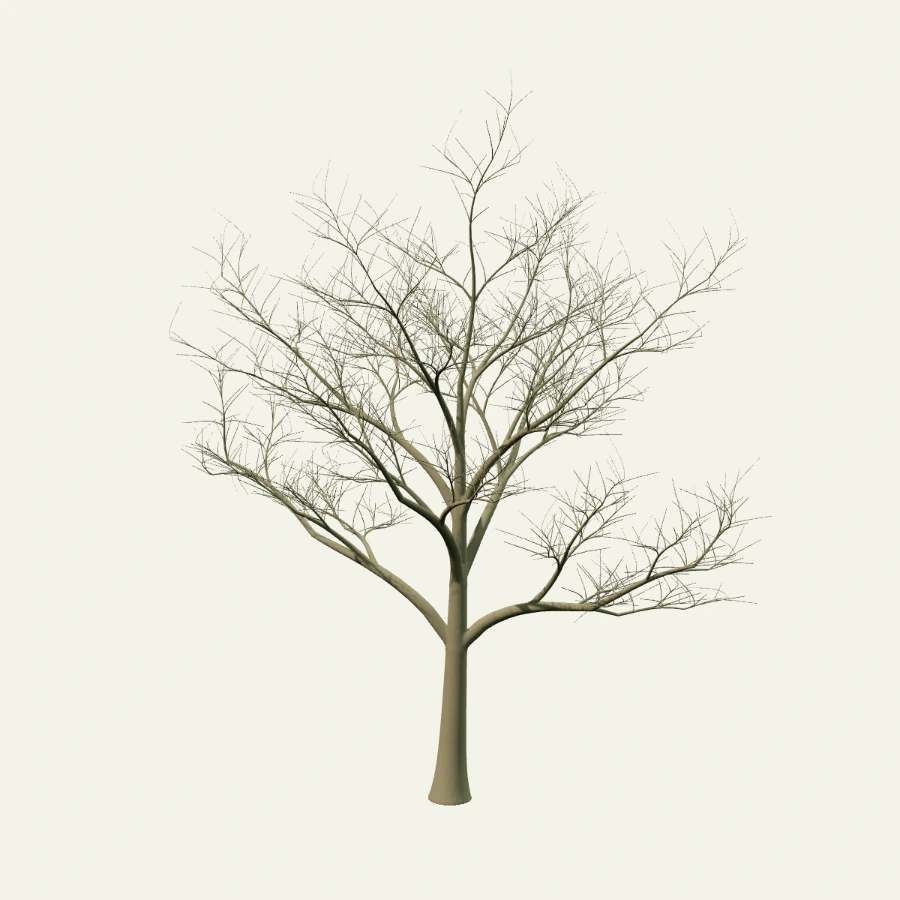
A wide evergreen crown can be as broad as the tree is tall.
Bark
A wide evergreen crown can be as broad as the tree is tall.
Roots
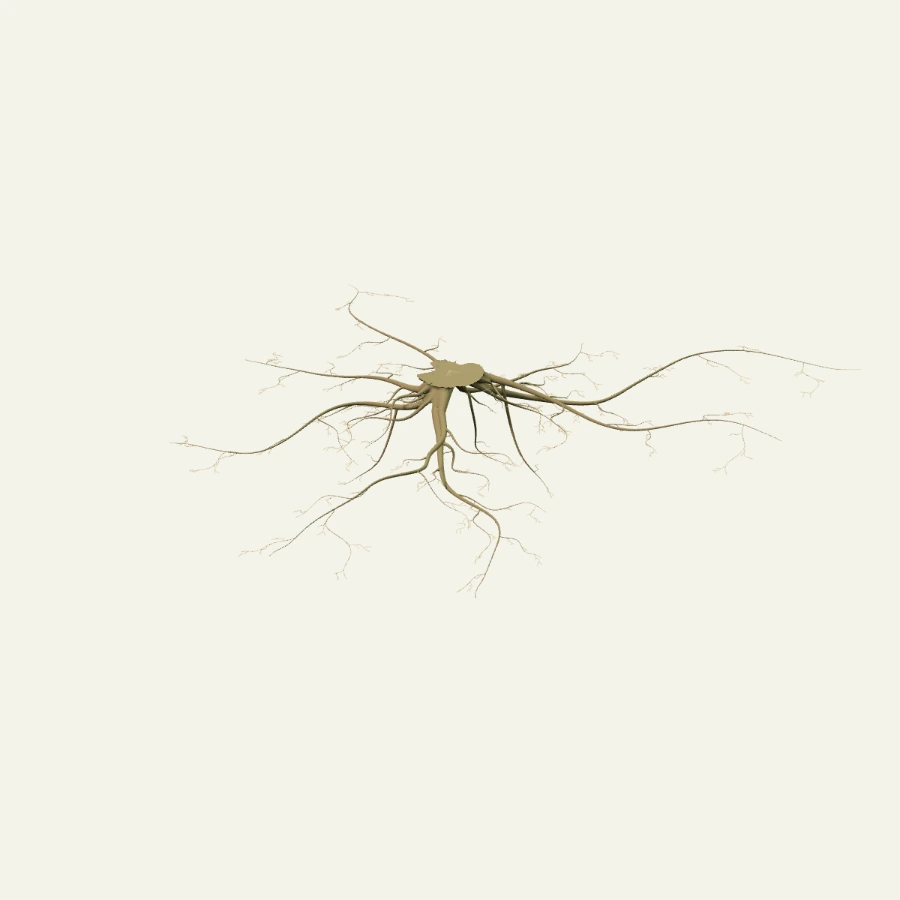
Root paths, depth and spread are schematic; no measured root survey is assigned.
The shape of growth
Stylized real-world examples
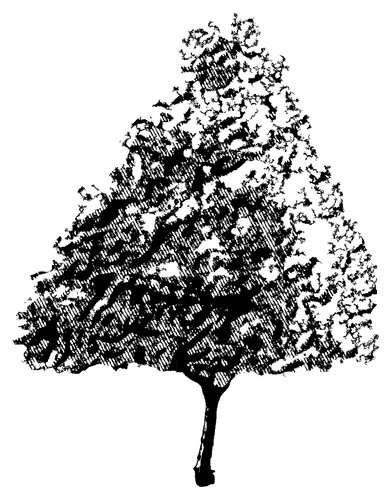
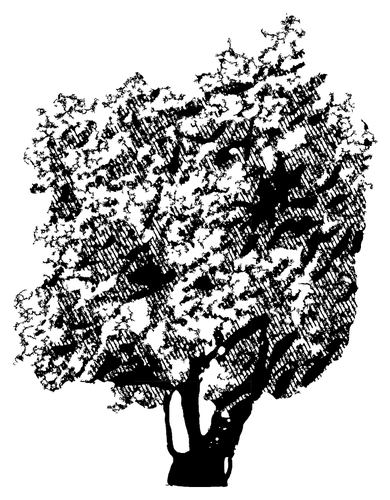
Silhouettes are sized independently.
02 / Seasons
Through the seasons
Four portraits. One plant.
Read the crown, foliage and reproductive structures together. The four views compare seasonal appearances; the reference notes explain what is actually documented.
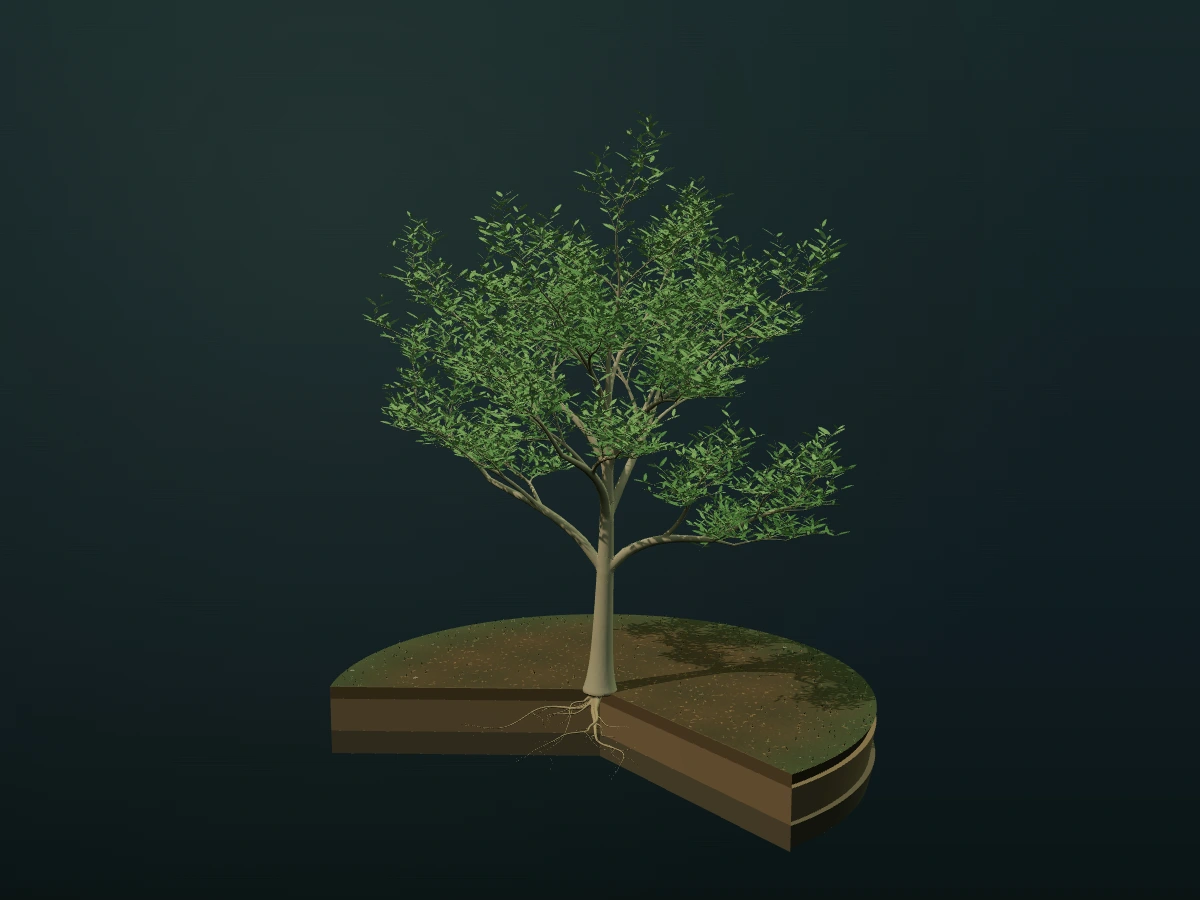
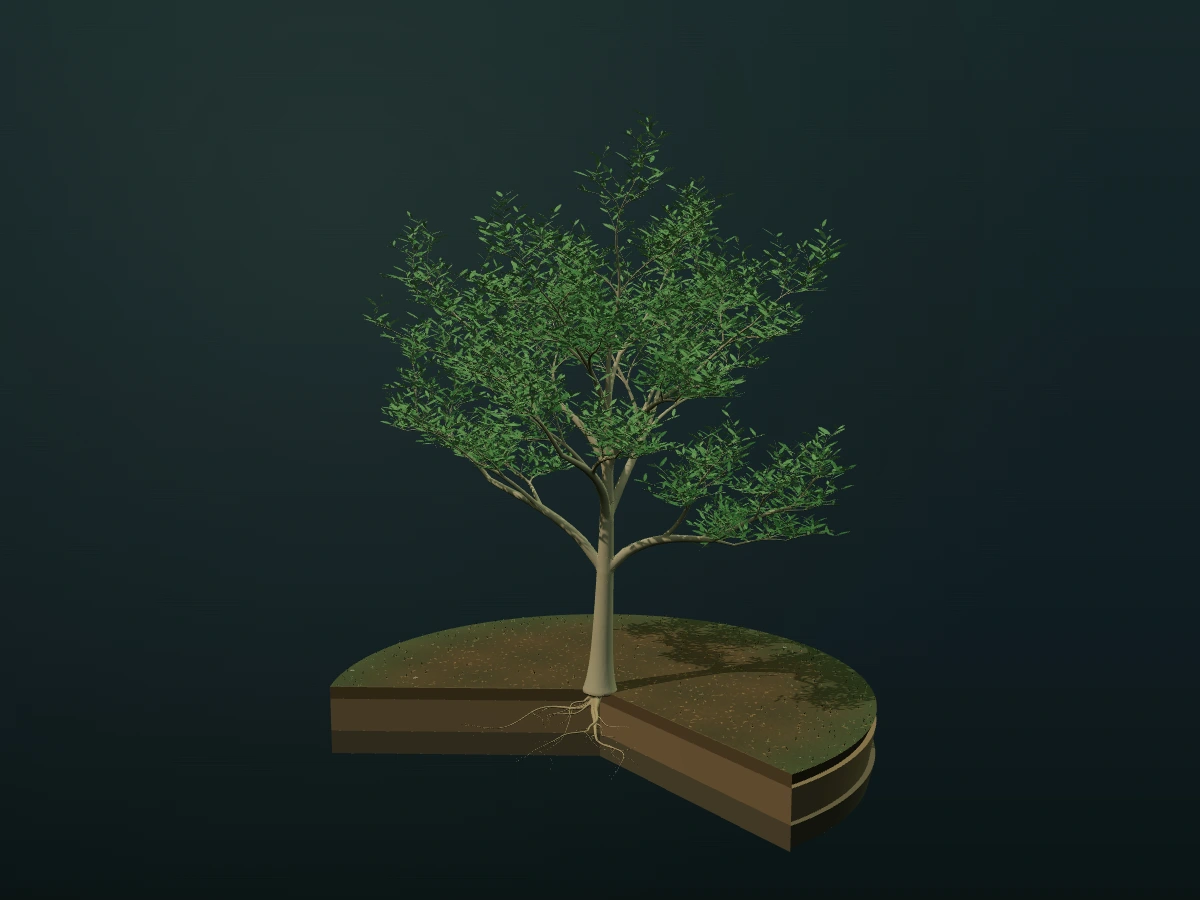
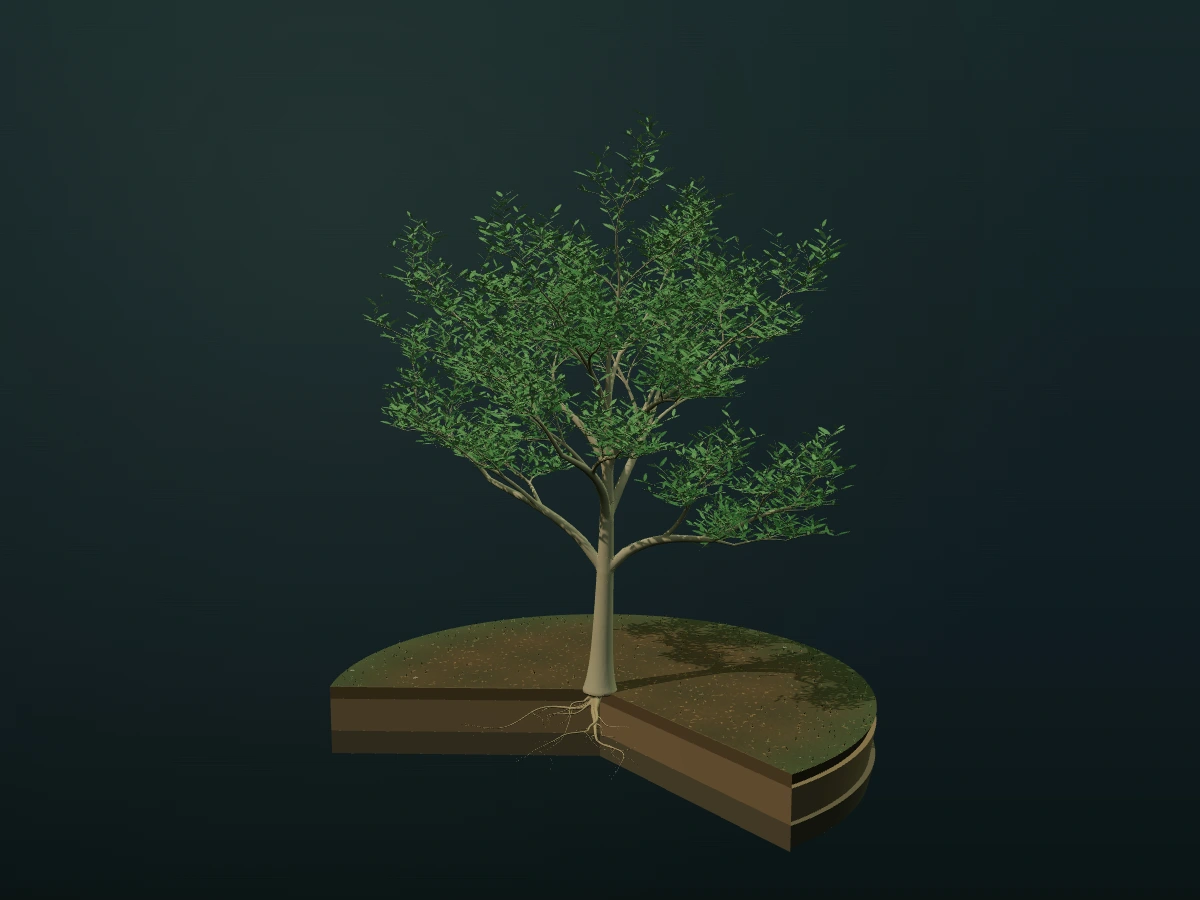
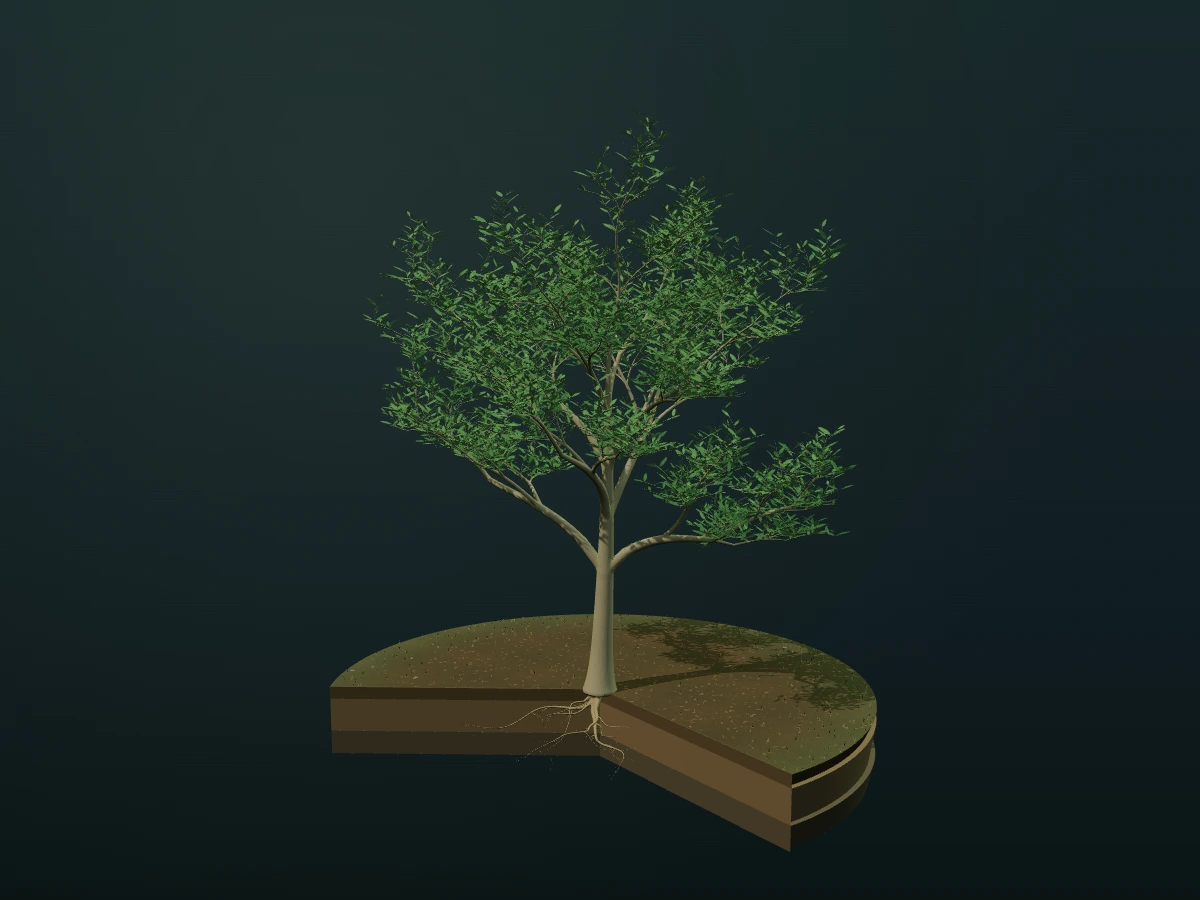
Seasonal illustration; the same plant, age and camera across four views.
Seasonal record
No fixed regional flowering or fruiting calendar is assigned from the reviewed sources.
- Flowering
- Timing not documented
- Fruiting / dispersal
- Timing not documented
Leaf renewal
Evergreen[1]
A green canopy can persist while individual leaves age and are replaced. Evergreen does not mean that every leaf lasts indefinitely or that flowering and fruiting are continuous.
Reading these views
Season names organize these four views, not a universal calendar. Hemisphere, local climate, cultivar and management can change timing; months are shown only when explicitly recorded. In tropical or monsoonal settings, rainfall and growth flushes may matter more than four temperate seasons. The guide does not invent a wet/dry-season schedule.
The views emphasize crown structure. Buds, small flowers, individual retained leaves and fine reproductive changes may be unresolved; model age and fruit count are not production forecasts.
No separate on-tree fruit display is configured for this record.
Seasonal references
- World Agroforestry · botanical account ↗apps.worldagroforestry.org
03 / Foliage
A closer look at the organs
Leaves
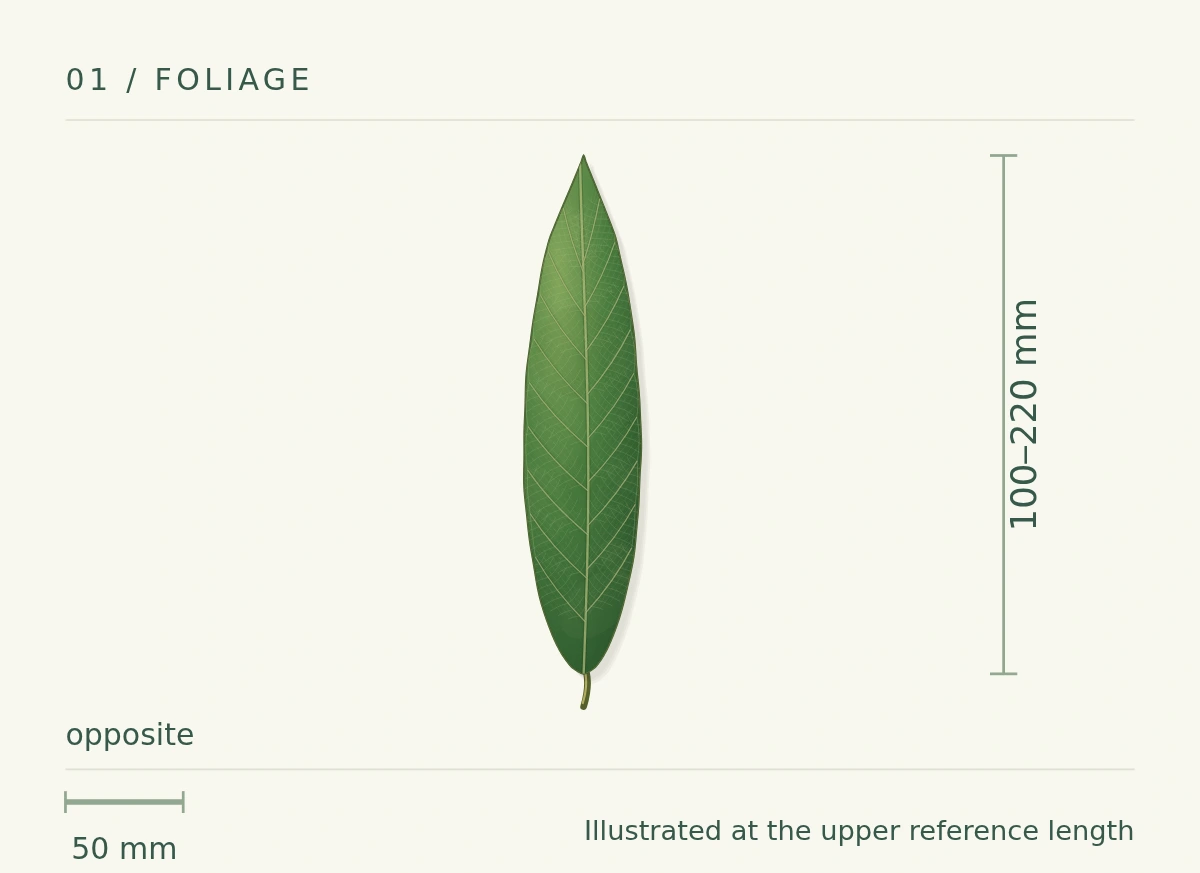
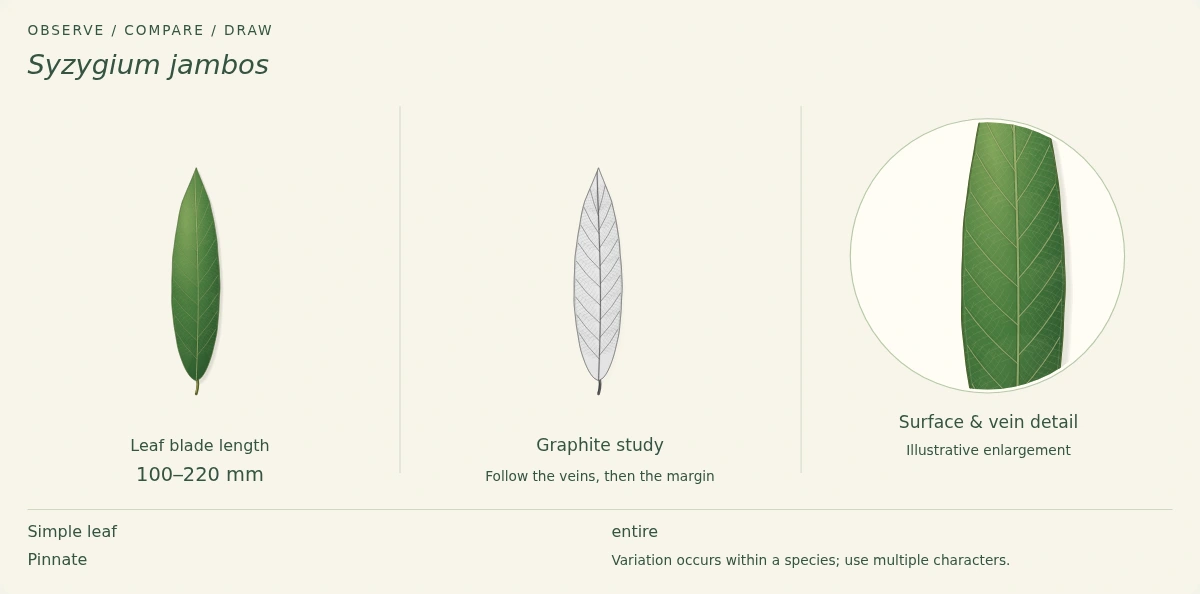
- Leaf blade length
- 100–220 mmSource notes
Long, narrow, leathery leaves are arranged in opposite pairs.
Simple leaf · entire · Pinnate · opposite
Seasonal notes
The four-season rendering is an ArborAI comparison; local rainfall and temperature control actual leaf turnover.
- Flowering reference
- Not documented
04 / Fruit & seed
Named structures, separate scales
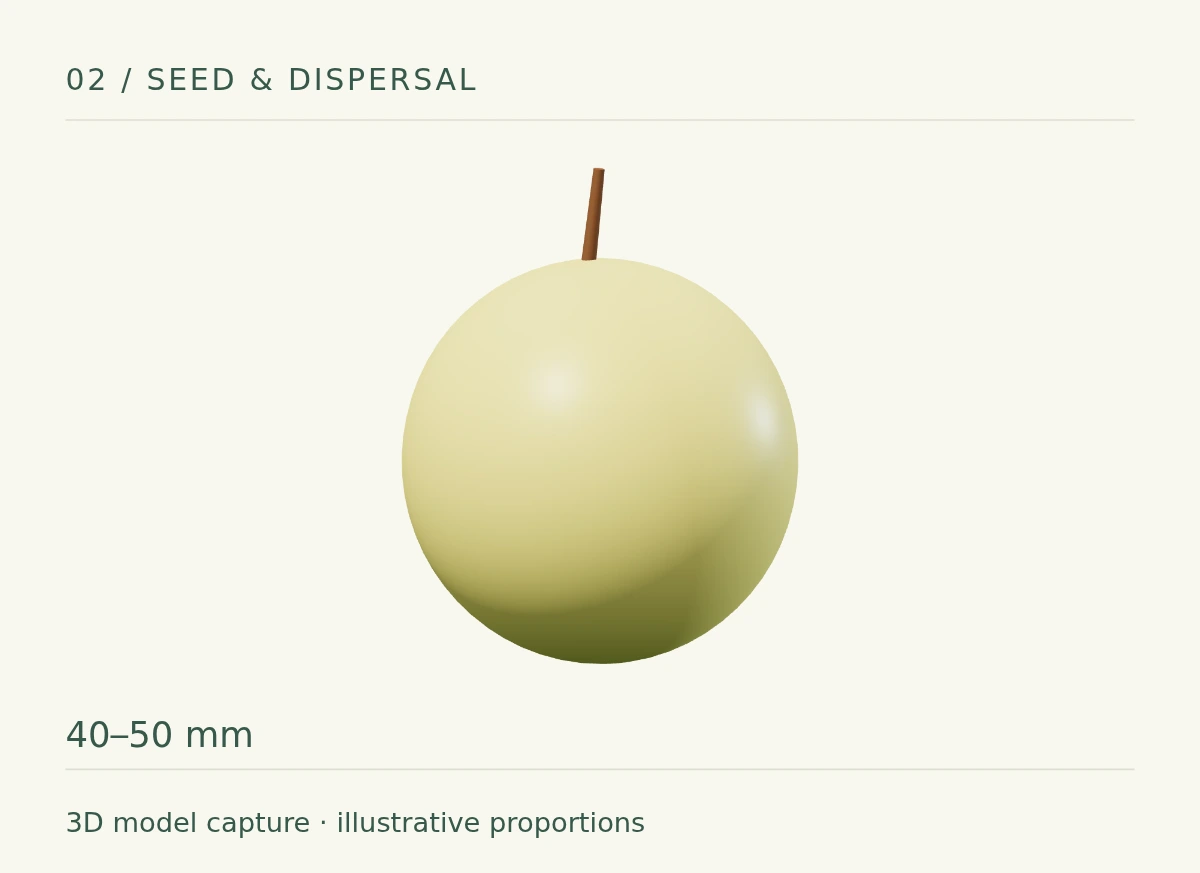
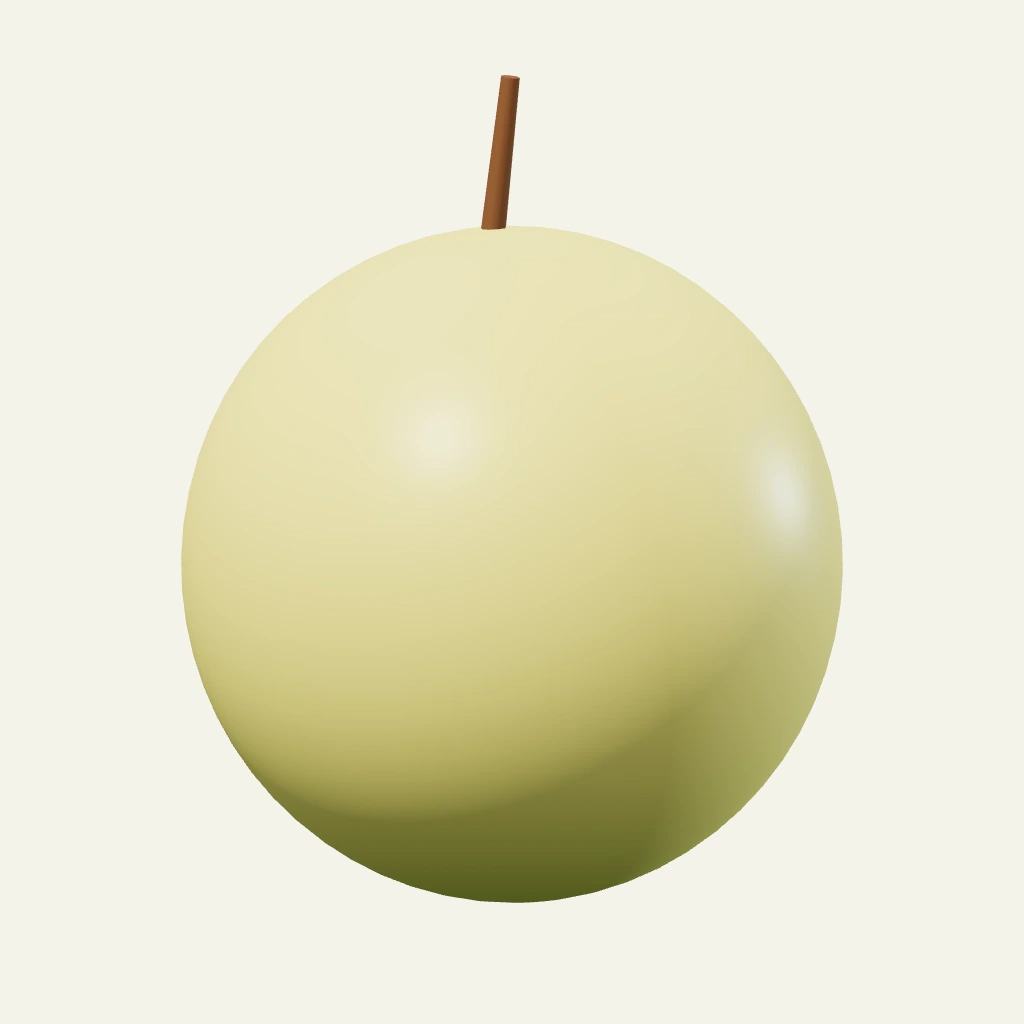
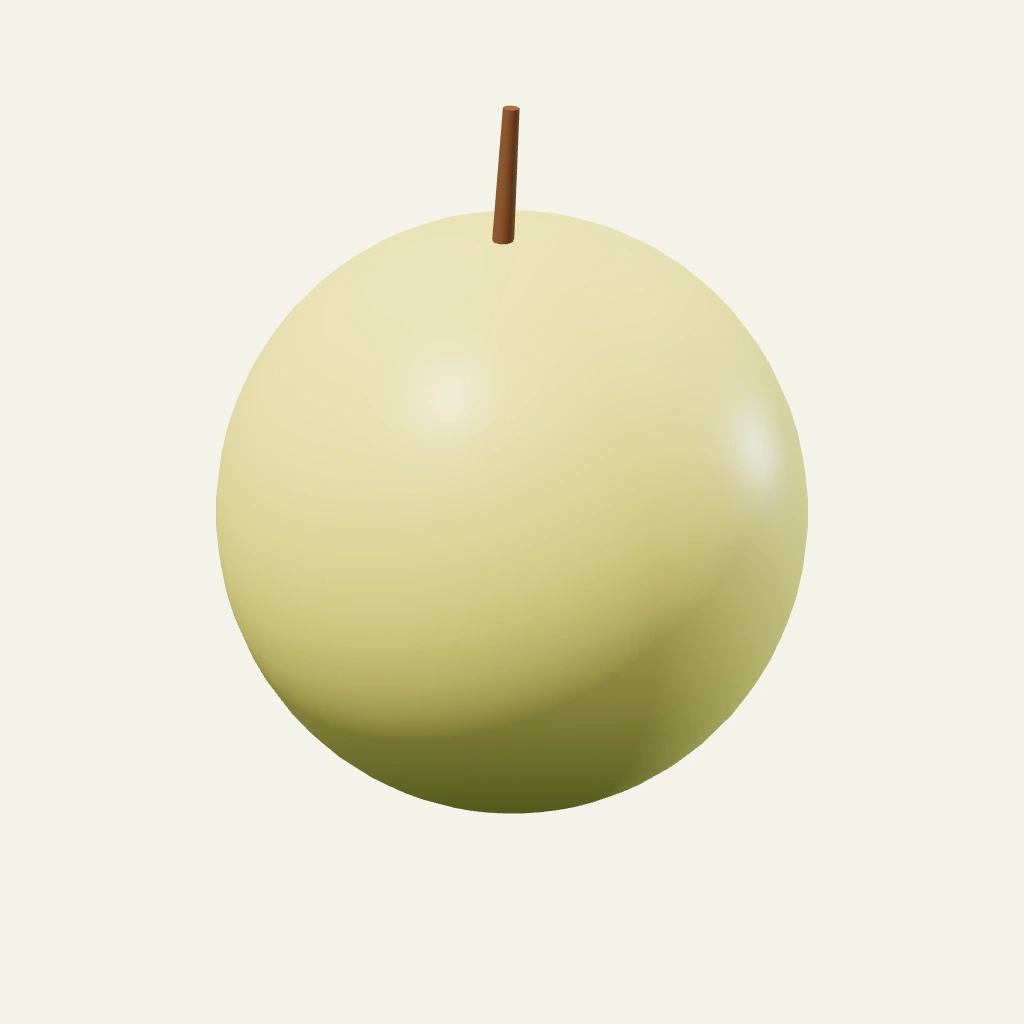
Fruit / dispersal unit
- Whole fruit length
- 40–50 mmSource notes
Pale-yellow round to ovoid fruits retain a calyx; cream flowers have many conspicuous stamens.
- Fruiting reference
- Not documented
No fixed regional flowering or fruiting calendar is assigned from the reviewed sources.
Organs are enlarged independently. Refer to the named measurement, not image size.
05 / Habitat
Native range & growing context
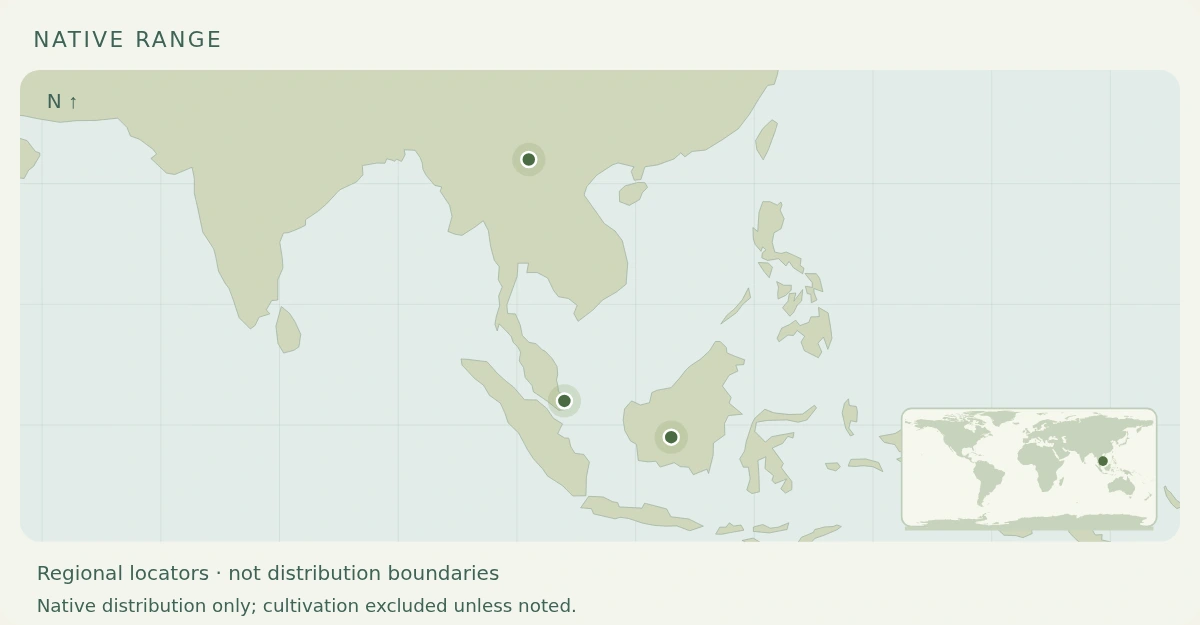
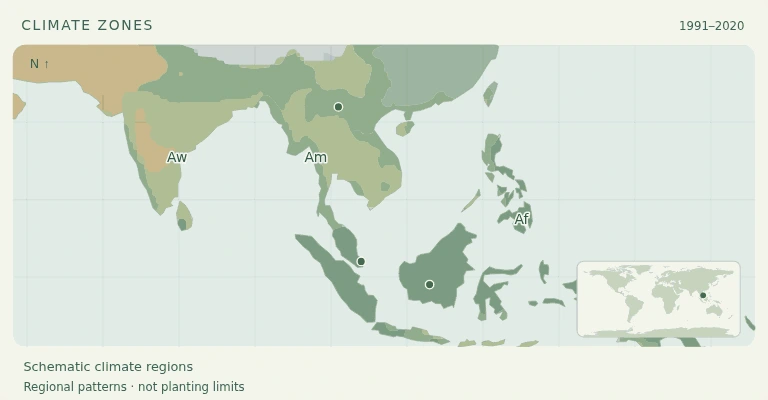
Native range & growing context
Southern Yunnan in China, and western Malesia.
- Reference spread
- Not documented
- Moisture
- Not documented
- Growth tendency
- Not documented
- Life span
- No numerical lifespan is assigned; model age is an ArborAI illustration parameter.
Regional context, not a measured occurrence or suitability map.
06 / Sources & interpretation
Read the evidence behind the illustration
Names & classification
- Family
- Myrtaceae
- Genus
- Syzygium
- Synonyms
- —
- Long, narrow, leathery leaves are arranged in opposite pairs.
- Pale-yellow round to ovoid fruits retain a calyx; cream flowers have many conspicuous stamens.
- A wide evergreen crown can be as broad as the tree is tall.
ArborAI botanical teaching models. Branch positions, crown proportions, root paths, organ display sizes and model ages are illustrative, not measured specimens or calibrated growth forecasts.
ArborAI botanical teaching models. Branch positions, crown proportions, root paths, organ display sizes and model ages are illustrative, not measured specimens or calibrated growth forecasts.
- World Agroforestry · botanical account ↗apps.worldagroforestry.org
- Royal Botanic Gardens Kew · Plants of the World Online ↗powo.science.kew.org
Plant data and references · 8
| Reference heightm | [7.5, 12]Reference adult stature from the cited account; geography, growing conditions and management affect size. This is not a universal maximum or a planting prescription.apps.worldagroforestry.org |
|---|---|
| Native range | Southern Yunnan in China, and western Malesia.Current accepted species distribution; model locators are authored.powo.science.kew.org |
| Leaf measurementmm | [100, 220]The measurement describes the named leaf unit; petiole length and the dimensions of a whole compound leaf are separate.apps.worldagroforestry.org |
| Seed measurementmm | [40, 50]Length of the named reproductive unit. The measurement describes the named reproductive unit; enclosed seeds and visible accessory structures are separate.apps.worldagroforestry.org |
| Leaf morphology | Long, narrow, leathery leaves are arranged in opposite pairs.Diagnostic adult foliage; illustrated positions and counts remain authored.apps.worldagroforestry.org |
| Reproductive morphology | Pale-yellow round to ovoid fruits retain a calyx; cream flowers have many conspicuous stamens.Named reproductive structure; fruit walls, seeds and accessory structures are distinguished.apps.worldagroforestry.org |
| Reference retentioncategory | EvergreenThe four-season rendering is an authored comparison; local rainfall and temperature control actual leaf turnover.apps.worldagroforestry.org |
| Architecture | A wide evergreen crown can be as broad as the tree is tall.Qualitative architecture; all geometric proportions remain authored.apps.worldagroforestry.org |